
10 Best Atlanta Summer Activities for 2026
Search results for the best Atlanta summer activities usually point to the same recreation list. That misses how summer works for homeowners, property managers, and business operators. The season puts pressure on physical space. Guests come over, leases turn, offices reshuffle, renovation projects start, and storage areas that were ignored in spring suddenly slow everything down.
A better summer plan starts with the backlog.
In practice, the most productive seasonal projects are cleanouts, debris removal, and space preparation. Clearing a garage before weekend hosting creates usable square footage. Emptying a stockroom before a retail reset makes inventory easier to manage. Removing leftover material from a rental or event site cuts delay, safety risk, and labor waste. If the goal is a smoother season, organized removal work usually delivers a better return than adding another event to the calendar.
That is the commercial angle missing from most roundups. Summer activities are not only things to attend. They are also projects that improve how a property functions. For homeowners, that can mean reclaiming patios, attics, basements, and side yards. For multifamily and rental operators, it means faster unit preparation and cleaner common areas. For offices, warehouses, and storefronts, it means getting rid of obsolete furniture, damaged fixtures, and equipment that still takes up valuable room.
The trade-off is straightforward. Entertainment fills a day. A well-planned cleanout improves the space for the rest of the season, especially when teams use a professional junk removal service for homes, offices, and properties to handle hauling, sorting, and responsible disposal.
1. Outdoor Decluttering and Garage Clean-Out Events
A neighborhood cleanout event does more than get junk to the curb. It gives people a fixed deadline to deal with the pile they’ve been stepping around for months. In Atlanta, that matters because summer calendars fill fast, and if a garage sale or shared cleanup day isn’t scheduled early, it usually doesn’t happen.
For homeowners, the win is obvious. You clear out broken chairs, extra storage bins, dead lawn tools, and old seasonal gear before cookouts and family visits start piling up. For property managers, a building-wide cleanout can reduce clutter around breezeways, storage lockers, and maintenance areas in one coordinated push.

What works best
The strongest version is a hybrid event. Residents sort items into sell, donate, recycle, and haul-away categories before the day starts. That prevents the most common failure point, which is everyone showing up with mixed piles and no plan for what happens after the sale ends.
A few practical moves make these events smoother:
- Set an early start time: Atlanta heat is easier to manage when unloading, sorting, and browsing happen in the morning.
- Create a removal zone: Put broken furniture, unusable yard tools, and bulky items in one marked area for pickup.
- Line up post-event hauling: If the goal is actual space recovery, schedule removal in advance through Fulton Junk Removal services.
- Separate donation items first: Usable goods disappear faster when they’re clean, grouped, and easy to access.
Practical rule: If participants have to decide on the spot whether something is trash, donation, or recycling, the event slows down and clutter stays behind.
What doesn’t work is treating a garage sale as a disposal strategy by itself. Unsold items usually return to the garage unless someone owns the cleanup plan from the start.
2. Backyard Renovation and Summer Entertaining Space Preparation
Summer entertaining starts with removal, not decorating. In Atlanta, the backyard usually fails for a simple reason. Too much worn-out material is still sitting in the footprint where people want to cook, sit, or host.
The pattern is predictable. A homeowner buys a new dining set before the broken chairs are gone. A property manager schedules patio upgrades while old planters, scrap lumber, and a dead grill still block the work area. The result is delay, extra handling, and a space that feels crowded even after money has been spent.
Backyards, side patios, pool areas, and shared outdoor spaces all benefit from the same sequence. Clear the site first. Then decide what belongs there.
Clear first, design second
This order saves time and usually saves money. Once the junk is out, it becomes much easier to see circulation paths, shade needs, dining zones, and storage problems that were hidden by clutter. It also prevents a common mistake in summer projects, which is paying to move the same bulky items twice.
A practical cleanup plan usually includes:
- Remove damaged and low-value items first: Broken seating, rusted grills, cracked pots, warped storage benches, and leftover project debris should leave before any new purchases arrive.
- Open up usable square footage: A cleared yard shows where guests will walk, where furniture fits, and whether the layout supports dining, lounging, or family use.
- Combine outdoor waste where possible: Bulky junk, yard debris, and light renovation leftovers are often easier to schedule in one coordinated pickup.
- Document the reset: Photos of the cleared space help owners and leasing teams plan the next phase and show visible improvement.
For homeowners, the benefit is obvious. The yard becomes usable faster.
For rental and commercial properties, the trade-off matters even more. Every extra week of clutter delays landscaping, staging, maintenance, and tenant-facing improvements. Teams that want a vendor familiar with property cleanouts and jobsite-ready removal can review Fulton Junk Removal’s approach to residential and commercial cleanup projects.
The mistake is trying to style around debris. Outdoor spaces perform better when removal happens first, layout decisions happen second, and new furniture arrives last.
3. Commercial Office Summer Cleanouts and Workspace Optimization
Summer is a smart time to reset an office because teams are already moving around. Vacation schedules, flexible work patterns, and slower decision cycles create a window for clearing old furniture, obsolete storage, and retired equipment without turning the workplace into a constant disruption zone.
Offices often hold onto the wrong things. A broken credenza stays because no one wants to own the removal. A file room keeps expanding even after the workflow changed. Retired monitors and cords pile up in an IT closet because the equipment is “temporary.” Then temporary becomes permanent.
What facilities teams should target first
Start with what steals space without adding value. In most offices, that includes unused desks, damaged chairs, nonfunctional shelving, boxed print materials nobody references, and old electronics waiting for a decision.
For managers who need a vendor that understands commercial cleanouts and responsible disposal, this is also the point to review how Fulton Junk Removal approaches office and business projects.
A cleanout tends to work when the process is departmental, not building-wide all at once. Operations, HR, IT, and facilities should each sign off on their own removal categories. That cuts down on the classic problem where a pickup gets delayed because one team suddenly decides an obsolete cabinet still “might be useful.”
Offices don’t get cleaner because people want cleaner space. They get cleaner because someone defines what leaves, who approves it, and when the truck arrives.
Atlanta’s summer appeal also makes office-adjacent team outings more common. Urbanize noted Atlanta ranked at the top in WalletHub’s 2024 summer travel analysis and highlighted attraction diversity that supports outings at places like Ponce City Market’s Skyline Park and Chastain Park in its coverage of Atlanta’s summer travel standing. If a company is planning events, this is the season to make the office itself easier to return to.
4. Post-Event and Venue Cleanup Services for Summer Festivals and Gatherings
Atlanta’s warm-weather calendar creates traffic for parks, venues, and public gathering spaces. Cleanup isn’t the glamorous part, but it’s the part that protects the next booking. Event managers who wait until the end of the night to think about removal usually end up with slower breakdowns, missed handoff times, and debris left in the wrong places.
That’s especially relevant in a city where major summer gathering areas stay active. Piedmont Park remains one of Atlanta’s anchor outdoor spaces, and Watkins Real Estate Advisors notes that the park spans 189 acres, draws more than 1 million visitors annually, and hosts well-known events including the Atlanta Jazz Festival. Heavy use is good for the city. It also means venues and organizers need faster, cleaner resets.
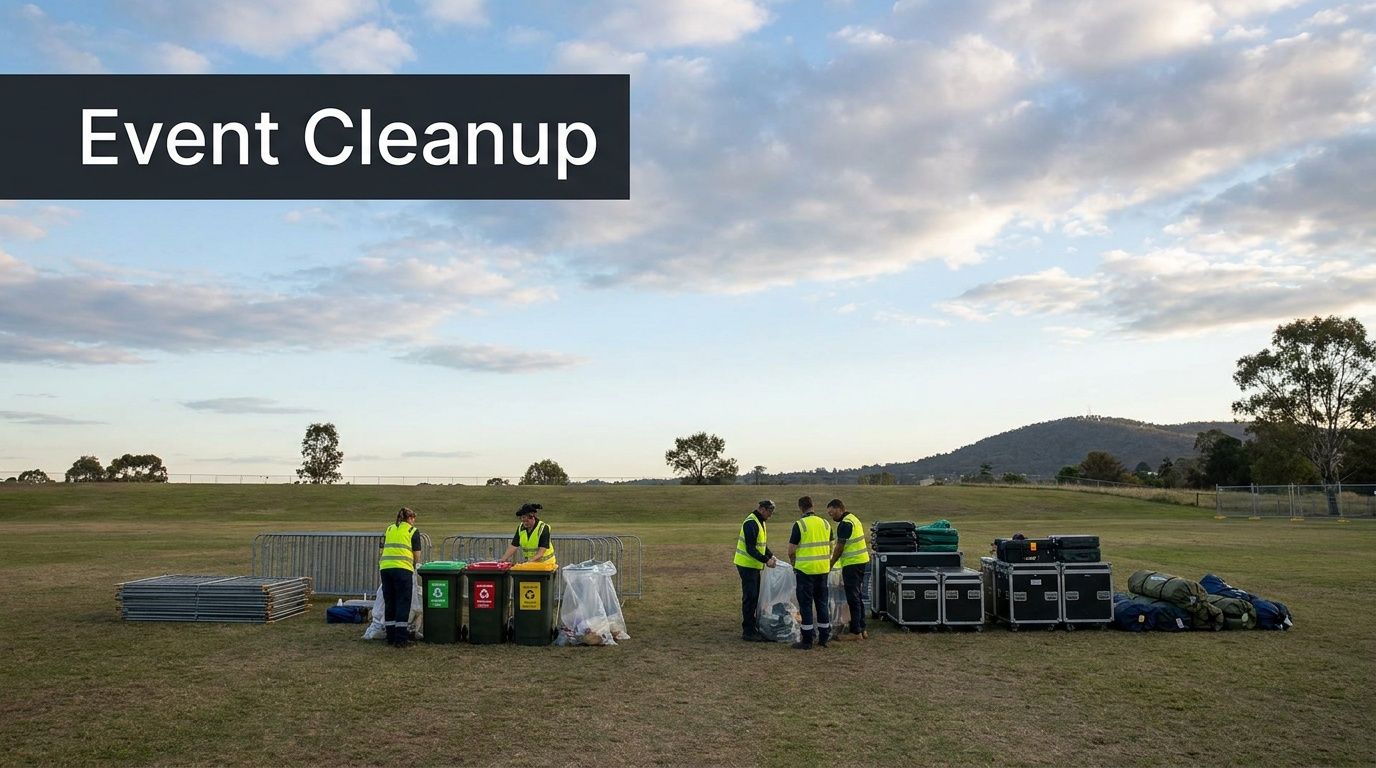
The event cleanup plan that actually holds up
A solid event cleanup plan starts before setup begins. You need a map for vendor waste, public trash, staging leftovers, signage, damaged materials, and bulky discard items. If all debris goes into one stream, breakdown takes longer and recovery options shrink.
The practical version usually includes:
- Preassigned debris zones: Vendors and staff need designated drop points.
- Immediate post-event pickup: Waiting until the next day makes cleanup harder, especially in public-facing spaces.
- Separate handling for bulky items: Pipe and drape, signage, pallets, and damaged furnishings need a different removal path than bagged waste.
- Photo documentation: Venue managers need proof that the site was restored.
What doesn’t work is assuming custodial staff can absorb an event-scale mess. They can maintain a site. They usually can’t replace a dedicated post-event removal operation on short notice.
5. Renovation and Construction Debris Management for Home Improvement Projects
Summer is when renovation schedules get serious. Kitchens get opened up. Bathrooms get rebuilt. Flooring gets replaced. Outdoor structures get repaired. The debris side of those projects is usually underestimated, and that mistake slows everything down.
Contractors can work around a lot. They can’t work efficiently around piles of drywall, trim, old cabinets, busted tile, and boxed fixtures that should’ve left the site days earlier. If you want a cleaner project timeline, debris has to move on a schedule, not “when there’s time.”
Keep the site usable
The cleanest renovation jobs separate active work areas from disposal areas from day one. That sounds basic, but plenty of projects skip it. Then the garage fills with demolition material, new materials arrive, and nobody has room to stage safely.
For homeowners, landlords, and project managers, a direct hauling partner proves helpful. Scheduling through Fulton Junk Removal is less about convenience than about keeping the job moving and reducing clutter around trades.
A few choices matter more than people think:
- Schedule recurring pickups: One large haul at the end often creates too much on-site congestion in the middle.
- Keep recyclable materials separate where possible: Metals and certain reusable items are easier to divert when they aren’t mixed into a single debris pile.
- Coordinate with the GC or lead contractor: Removal timing should follow demo and delivery phases, not guesswork.
If the renovation connects to an event-heavy property or gathering space, planning details from resources like Modern Lyfe’s event coordinator checklist template can also help teams think through site flow, staging, and recovery in a more operational way.
The biggest mistake is letting the debris plan become an afterthought. Once that happens, clutter starts dictating the project.
6. Estate and Downsizing Cleanouts for Relocating Atlanta Residents
Not every summer activity has to be fun to be worthwhile. Downsizing and estate cleanouts are often emotional, slow, and full of decisions people have postponed for years. They still belong on a practical list of the Best Atlanta Summer Activities because they can restore a property, simplify a move, and make the next step manageable.
Summer often gives families the best chance to gather, sort, and make decisions together. That matters when siblings live in different places, or when a sale, transfer, or assisted-living move has a fixed timeline.
Handle the emotional side without stalling the project
The cleanouts that go well separate sentimental review from physical removal. If every box becomes a family discussion in the middle of loading, the process freezes. It’s better to create clear categories: keep, review, donate, recycle, remove.
For local moves and property transitions, Fulton Junk Removal’s Atlanta service area page is the relevant place to confirm coverage and scheduling options.
A few practical realities help here:
- Start with non-sentimental rooms: Garages, laundry areas, utility rooms, and storage spaces create momentum.
- Remove obvious discard items early: Broken furniture and unusable household goods take up mental space as much as physical space.
- Coordinate with listing prep: If the home will be sold, the cleanout should support staging, repairs, and photography.
The families who finish these projects fastest usually aren’t less emotional. They just make decisions in batches instead of item by item.
What doesn’t work is trying to preserve every possibility. That approach leaves homes half-cleared and deadlines uncomfortably close.
7. Seasonal Storage Clearance and Attic/Basement Restoration
Attics and basements are where delayed decisions go to age. Atlanta homeowners often use these spaces as overflow for holiday decor, sports equipment, old paperwork, hand-me-down furniture, spare electronics, and boxes nobody has opened in years. Summer is one of the better times to reset them because people are already in organizing mode and preparing for guests, travel gear, and home projects.
This kind of cleanout pays off in two ways. First, it gives you functional storage again. Second, it reduces the chaos that spills into garages, closets, and living areas when hidden storage stops working.
Sort for use, not memory
The biggest trap in attic and basement projects is treating every stored item as if it still has an active purpose. Most doesn’t. The smarter question is simple: if this item stayed, where would it live and when would it be used?
A practical sort usually works best in phases:
- Keep only current-use categories together: Camping gear, tools, holiday items, and emergency supplies should each have one home.
- Pull out damaged materials immediately: Water-damaged boxes, broken shelving, and old electronics don’t deserve another season in storage.
- Work in short sessions: Heat, dust, and decision fatigue make marathon sorting less effective.
Atlanta summer guides often focus on major attractions, but they also point to practical local fun tied to gear, movement, and outdoor time. GetYourGuide’s Atlanta summer roundup highlights Ponce City Market’s Skyline Park and notes the adjacent BeltLine’s trail network, both of which reinforce a simple point. Summer gear and activity supplies need organized, accessible storage if people are going to use them.
If you’re helping a family reduce possessions before a move, broader decision frameworks like this guide for downsizing in Perth can still be useful as a process reference. What doesn’t help is “organizing” clutter into newer bins and putting it back where it started.
8. Rental Property Turnover and Unit Preparation for Summer Leasing
For property managers, summer isn’t just a season. It’s a deadline machine. Move-outs stack up, incoming tenants expect quick readiness, and every day a unit sits half-cleared costs time and leasing momentum.
This is one of the most operationally important Best Atlanta Summer Activities because turnover speed affects revenue, maintenance scheduling, and resident experience all at once. The issue usually isn’t just trash. It’s leftover furniture, abandoned household goods, damaged shelving, patio items, storage spillover, and all the debris that keeps painters, cleaners, and flooring crews from starting on time.
Fast turnover depends on sequence
The cleanest unit turnovers follow a strict order. Document the unit. Remove contents and debris. Then cleaning, maintenance, and touch-ups can happen without crews working around one another.
Property teams should avoid two common mistakes:
- Waiting for final maintenance notes before starting removal: Obvious junk should leave immediately.
- Mixing tenant abandonment with regular turnover debris: Sensitive situations need better documentation and handling.
- Letting common areas become staging zones: Hallways, breezeways, and dumpster pads can become a second problem fast.
Atlanta’s summer popularity adds another layer. A city with strong visitor pull and active seasonal movement puts extra pressure on residential presentation and turnaround standards. In practice, clean turnover operations lease better because prospects don’t just judge the unit. They judge the management quality behind it.
What doesn’t work is thinking of junk removal as the last step. For rentals, it’s one of the first.
9. Yard Waste Management and Landscaping Debris Removal
Landscaping creates visual improvement fast, but only if debris leaves just as fast. Cut limbs, shrub trimmings, storm cleanup, old mulch piles, dead plant material, and torn-out beds can make a property look worse in the middle of an upgrade than it did before work began.
This matters more in Atlanta summers because outdoor spaces get used heavily. Patios, walkways, pool areas, and shared community grounds need to stay presentable while projects move. If debris sits too long, it attracts complaints, blocks access, and makes the property feel half-finished.

Pair removal with the landscaping schedule
The simplest improvement here is timing. Removal should happen during the project or right after major cutting and clearing, not days later. That keeps crews from working around old piles and keeps residents or guests from seeing the mess longer than necessary.
For managers handling multiple properties or recurring maintenance, it helps to coordinate hauling and documentation through Fulton Junk Removal’s contact page.
A few field-tested practices help:
- Separate woody debris from mixed waste: Cleaner sorting usually makes downstream handling easier.
- Don’t let one cleanup pile become the permanent yard corner: That happens often on commercial properties.
- Bundle seasonal exterior work: Tree trimming, fence cleanup, and patio clearing are easier to close out together.
Atlanta summer content often celebrates the city’s free and outdoor-friendly side, from parks to trails to hidden local spaces. Secret Atlanta’s summer activity guide reflects that broader demand for accessible outdoor use. Clean yards and maintained grounds matter because they make people want to spend time outside in the first place.
10. Retail and Small Business Summer Inventory Clearance and Fixture Removal
Retailers and small businesses rarely get a perfect pause button. Summer fixture changes, seasonal product transitions, back-room cleanouts, and layout refreshes have to happen while the business keeps operating. That’s why inventory clearance and fixture removal are such useful summer projects. Done well, they create room for merchandising, safer storage, and easier movement for staff.
Done poorly, they leave aisles blocked, stockrooms overpacked, and old fixtures sitting around long after the reset should’ve been finished.
Remove what no longer earns its footprint
Every store has items that survive on indecision. Outdated display tables. Old shelving components. Broken seating. Packaging waste from previous seasonal rollouts. Overstock that should’ve been liquidated or donated. If it doesn’t support current sales or current storage, it’s taking up expensive room.
The practical approach is to tie removal to the merchandising calendar. Schedule hauling before new displays arrive, not after. For restaurants and service businesses, the same rule applies to dining room updates, patio refreshes, and equipment-area reorganizations.
Atlanta’s popularity as a summer destination supports this kind of reset. Visitors and locals alike move through shopping and entertainment districts all season, and businesses benefit when the space feels active rather than crowded. The biggest mistake is trying to “save for later” every fixture that might someday be useful. Most of that inventory becomes dead storage.
Top 10 Atlanta Summer Activities Comparison
| Service | 🔄 Implementation Complexity | ⚡ Resource Requirements | 📊 Expected Outcomes | 💡 Ideal Use Cases | ⭐ Key Advantages |
|---|---|---|---|---|---|
| Outdoor Decluttering and Garage Clean-Out Events | High, multi-party coordination, permits, weather planning | Moderate–High, volunteers, marketing, staging, bulk pickup | Quick space reclaimed, donations/sales, community engagement | Neighborhood garage sales, building-wide summer cleanouts | Builds community, diverts waste, generates small revenue ⭐⭐⭐ |
| Backyard Renovation & Entertaining Space Prep | Medium, coordinate landscapers and bulky removals | High, heavy-lift crews, debris hauling, recycling options | Improved outdoor aesthetics, increased usable space and appeal | Backyard makeovers, pool/patio preparation, rental property upgrades | Enhances curb appeal and safety; enables redesign ⭐⭐⭐⭐ |
| Commercial Office Summer Cleanouts & Optimization | High, cross-department planning, data/security needs | High, certified IT disposal, crews, documentation, off-hours work | Modernized workspace, better productivity, compliance reports | Office modernization, IT asset disposal, facility audits | Certified destruction, sustainability reporting, productivity gains ⭐⭐⭐⭐ |
| Post-Event & Venue Cleanup for Festivals/Gatherings | Medium, advance scheduling, variable debris volumes | High, rapid crews, large-capacity hauling, sorting stations | Fast venue turnaround, regulatory compliance, restored sites | Festivals, concerts, street fairs, corporate events | Rapid response; supports event sustainability and brand image ⭐⭐⭐ |
| Renovation & Construction Debris Management | High, continuous coordination, hazardous material handling | High, daily pickups, heavy equipment, certified disposal | Safer jobsites, on-schedule projects, environmental compliance | Home renovations, roof replacements, major remodels | Keeps projects on schedule; ensures compliant disposal ⭐⭐⭐⭐ |
| Estate & Downsizing Cleanouts for Relocations | Medium, emotionally sensitive, valuation decisions | Moderate, sorting teams, donation coordination, hauling | Rapid property readiness, maximized donations, reduced stress | Senior relocations, estate settlements, family move-outs | Compassionate service; donation coordination; transparent pricing ⭐⭐⭐ |
| Seasonal Storage Clearance (Attic/Basement) | Medium, intensive sorting in confined, dusty spaces | Moderate, protective gear, hauling, donation partnerships | Reclaimed storage, improved safety, reduced pests/mold risk | Attic/basement declutter, pre-renovation storage prep | Large space gains; safety and preservation benefits ⭐⭐⭐ |
| Rental Property Turnover & Unit Preparation | High, tight timelines, legal/sensitive coordination | Moderate–High, rapid crews, cleaning partners, documentation | Minimized vacancy, market-ready units, predictable turnovers | Apartment turnovers, eviction cleanouts, short-term rentals | Speeds leasing, reduces vacancy losses, professional documentation ⭐⭐⭐⭐ |
| Yard Waste & Landscaping Debris Removal | Low–Medium, seasonal scheduling and pile sorting | Moderate, chipping/compositing, trucks, disposal routes | Maintained landscape appearance, composting/diversion, fire/pest risk reduction | Tree trimming, garden renovations, storm debris removal | Supports sustainability; improves property safety and appearance ⭐⭐⭐ |
| Retail & Small Business Inventory Clearance & Fixture Removal | Medium, careful scheduling to avoid customer disruption | Moderate, off-hours crews, careful fixture handling, disposal | Faster store transitions, improved merchandising, minimal downtime | Store rebrands, seasonal merchandise changes, fixture upgrades | Minimizes downtime; preserves valuable fixtures; flexible scheduling ⭐⭐⭐ |
From Clutter to Clarity: Partner with Atlanta’s Eco-Friendly Cleanup Experts
Summer in Atlanta is full of obvious activity options. Parks, markets, attractions, and events all deserve the attention they get. But from an operations standpoint, the more valuable summer projects are often the ones that improve the spaces behind everyday life. A cleared garage makes weekend plans easier. A reset patio gets used more. A fast rental turnover protects occupancy. A cleaned-out office, warehouse, or retail back room supports better work.
That’s the argument for treating cleanouts as part of the Best Atlanta Summer Activities. They aren’t side chores. They’re enabling projects. They make homes more usable, businesses more efficient, and properties easier to manage during a season when space gets tested hard.
There’s also a sustainability issue that too many cleanup projects ignore. Removal is only half the job. The harder question is where everything goes next. That’s where standard junk hauling often falls short. Mixed loads head out quickly, but too much useful material ends up treated like waste.
Fulton Junk Removal takes a different route because the company operates within the Beyond Surplus ecosystem. That changes the value of the service for commercial clients and for environmentally conscious homeowners. Instead of defaulting to landfill disposal, Fulton works hand in hand with Beyond Surplus to sort and process electronics, metals, furniture, and other recoverable materials for recycling, repurposing, or donation whenever possible.
For offices, warehouses, and property managers, that matters in practical terms. You’re not just clearing space. You’re making compliance and sustainability reporting easier, especially when projects involve electronics, fixtures, or mixed commercial material. Bundled junk removal and recycling pickup also reduces the coordination burden on internal teams. One partner handles the physical cleanout, and the Beyond Surplus connection supports responsible downstream handling.
That combination is especially useful for facilities managers, office managers, operations leaders, sustainability directors, building engineers, and property teams that need speed without sacrificing accountability. The same applies to landlords turning units, contractors managing debris, and event teams handling cleanup after gatherings.
If you’re investing time and money into a summer reset, the disposal plan shouldn’t be the weakest part of the project. It should reinforce the reason you did the work in the first place. Clear the space. Improve how it functions. Then make sure the material leaves responsibly.
If you’re planning a summer cleanout in Atlanta, Fulton Junk Removal can help you move faster and dispose smarter. From garages, attics, and estate cleanouts to office, retail, warehouse, and property management projects, the team handles haul-away with an eco-conscious approach backed by Beyond Surplus recycling and reuse solutions.
