
Where to Recycle Electronics Atlanta: 2026 Guide
That stack of retired laptops in the office closet usually stays there until a lease turnover, renovation, or compliance review forces action. The same thing happens with broken monitors in warehouse corners, old access panels from tenant buildouts, and a box of dead chargers at home. Electronics recycling gets treated like a small cleanup task right up until it becomes a logistics problem.
If you're searching for where to recycle electronics in Atlanta, the main challenge is choosing the right option for the material, the volume, and the level of risk. A homeowner with a few cables and a router can use a public drop-off. A property manager clearing abandoned units needs labor, loading, and haul-away. An IT team retiring devices with storage drives needs documented handling and a recycler that can support business requirements.
Atlanta has legitimate public options. Keep Atlanta Beautiful runs free electronics recycling events on the second Saturday of each month at 320 Irwin Street, Atlanta, GA 30312, near I-75, and accepts electronics, batteries, and scrap metal, according to Georgia Tech support guidance on personal electronics recycling. That same guidance points people toward county and nonprofit programs across metro Atlanta.
The gap shows up when the job is bigger than a carload. Consumer drop-offs help with small DIY loads, but they usually do not cover lifting, sorting mixed material, transporting equipment from a job site, tracking chain of custody, or issuing recycling documentation. For businesses, those details are often the difference between a clean closeout and a project that drags on.
That is why this guide sorts Atlanta's options by use case.
Some locations make sense for residents who want a simple, low-cost drop-off. Others are better for schools, offices, landlords, and facilities teams that need pickup, data-sensitive handling, or a full cleanout tied to recycling. For companies dealing with electronics plus furniture, fixtures, and general debris, integrated providers such as full-service junk removal and cleanout solutions can save staff time and reduce vendor coordination. Public resources also leave open questions about documentation and business service expectations, a limitation noted in the same context by Atlanta Computer Recycling's overview of where to recycle electronics.
1. Fulton Junk Removal
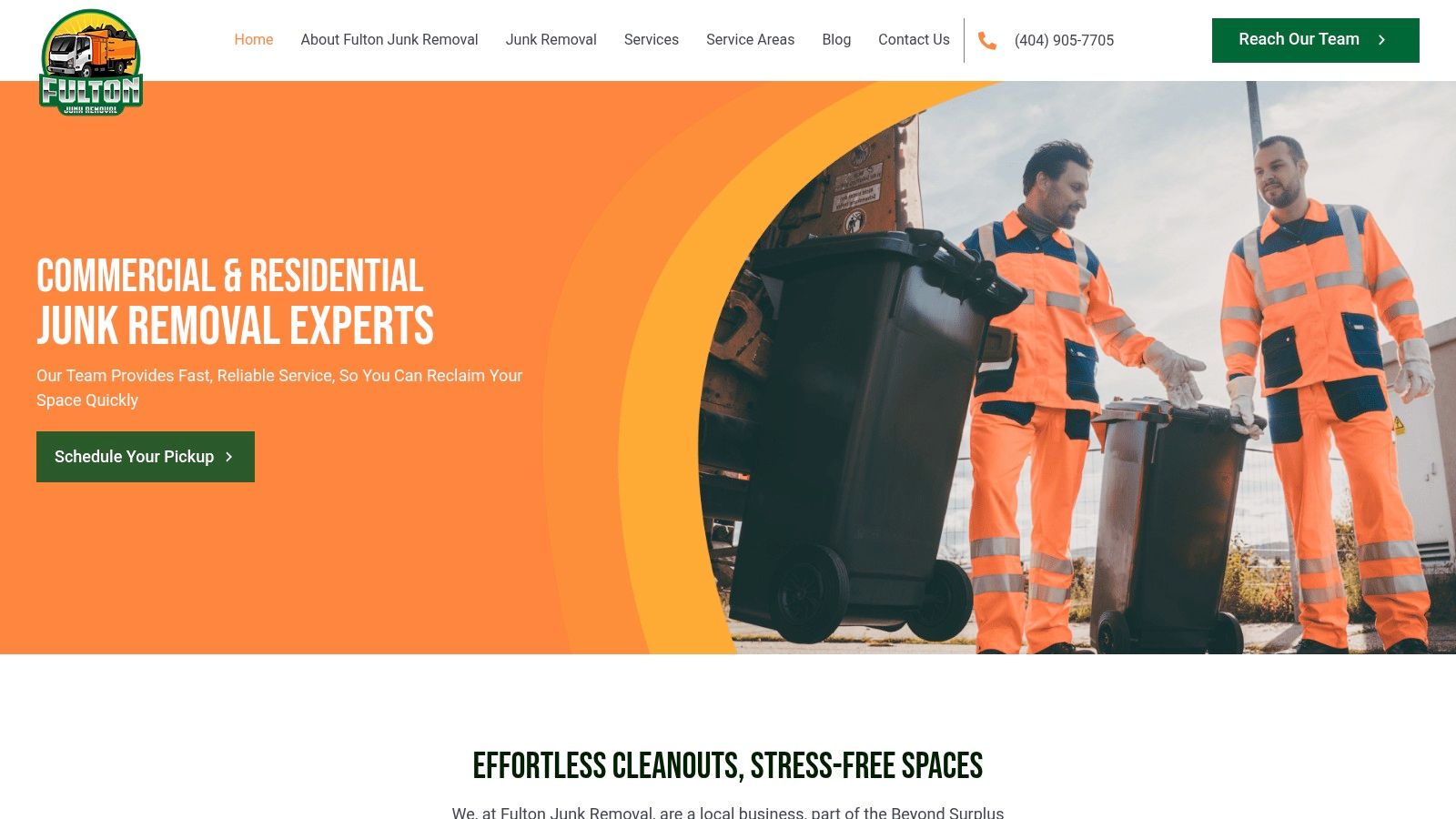
A common Atlanta cleanout starts the same way. An office is vacating, a retail space is turning over, or a property manager needs a unit cleared fast. The electronics are only part of the pile. There may also be shelving, broken furniture, packaging, fixtures, and general debris. In that situation, a recycling drop-off list does not solve the actual job.
Fulton Junk Removal fits the cases where removal labor matters as much as responsible recycling. For offices, warehouses, retail spaces, and property managers, the value is the combined workflow: crews remove the material, load it, haul it, and route electronics through an established recycling channel with Beyond Surplus. Staff is not stuck sorting every item, booking multiple vendors, or making separate trips across the city.
That difference shows up fast on larger jobs. A DIY drop-off works for a few devices in the trunk. It breaks down when the load includes stacked monitors, abandoned tenant equipment, back-room electronics, or an office closeout with mixed junk that still has to leave the site the same day.
Where it works best
The strongest use case is a commercial cleanout with electronics mixed into everything else. Fulton handles the physical side of the project, while the recycling path is already built in through Beyond Surplus. That saves time for facilities teams and office managers, especially when the alternative is coordinating one company for hauling and another for electronics recycling.
For businesses that care about records, this setup also makes practical sense. The hauling and the electronics stream are tied together from the start, which is often easier to manage than trying to reconstruct what went where after pickup. If you need service across the city, Fulton’s Atlanta junk removal coverage area gives a clear starting point for scheduling.
Practical rule: If electronics are mixed into a larger cleanout, use one provider that can remove the full load and account for the electronics stream properly.
Speed is another advantage. During lease turnovers, renovations, evictions, and office moves, a major cost is often delay. A full-service crew can clear the space in one visit, which is usually more useful than saving money on recycling but stretching the project over several days.
Trade-offs to know before you book
This option is not aimed at someone with one laptop, a router, and a box of cords. Full-service removal costs more than a free or low-cost drop-off, and that trade-off only makes sense when labor, lifting, access, or volume are part of the problem.
Pricing is also quote-based rather than posted as a flat online menu. That is normal for cleanouts, since access, load size, and item mix affect the job. It does mean you need to request an estimate through Fulton Junk Removal services instead of comparing fixed recycling fees line by line.
Best fit
- Office and warehouse cleanouts: Good choice when staff time is more expensive than handling removal in-house.
- Property managers: Useful for unit turnovers with electronics, furniture, and general debris in the same load.
- Businesses that need a documented recycling path: Better fit than a basic haul-away service.
- Homeowners with bulky mixed loads: Worth considering when the job goes beyond a simple e-waste drop-off.
2. Beyond Surplus (Electronics Recycling & ITAD)
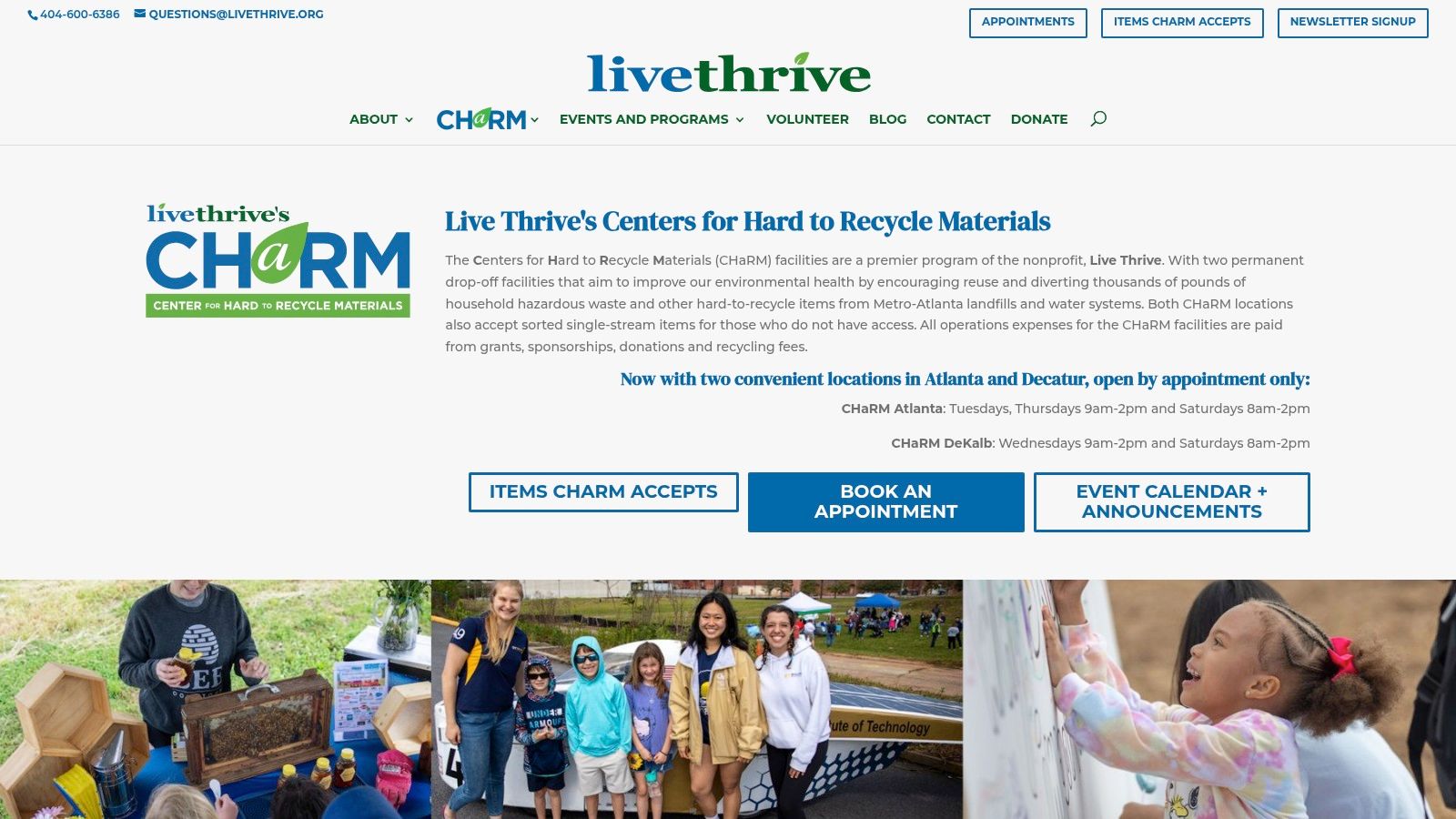
Beyond Surplus is the cleaner fit when the main issue is electronics themselves, especially data-bearing devices. If you’ve got old desktops, laptops, servers, loose drives, or small office electronics and you want a recycling partner rather than a junk hauler, the process becomes more specialized.
The practical appeal is straightforward. Residential users can drop off equipment after requesting a drop-off number, and business clients can arrange pickup service by quote. For many residential drop-offs, Beyond Surplus provides data destruction and a certificate or receipt, which is exactly the kind of detail people often realize they need only after the equipment is already gone.
Why businesses like it
This is the kind of provider that makes sense for office managers, IT coordinators, and small companies that don't generate constant e-waste but still want documentation when they do recycle. You’re not paying for full cleanout labor if you don’t need it. You’re getting a recycling-first process with an emphasis on secure handling.
That can pair well with broader hauling support in the city. If you need the recycling side plus a physical cleanout, Atlanta junk removal coverage gives businesses another route for combining pickup with responsible downstream processing.
Ask one question before handing over any device with storage: What paperwork do I get after this leaves my hands?
Where it falls short
Beyond Surplus isn't the easiest option for every residential customer. The home side is centered on drop-off, not routine household pickup, unless you’re arranging business service.
It also isn't the simplest route for mixed junk. If your project includes furniture, shelving, packaging waste, and obsolete electronics in one room, a recycling-only provider can leave you managing the rest separately. For pure electronics, though, that narrower focus is often a benefit rather than a drawback.
Good choice when
- You need data destruction documentation: Especially for drives and workstations.
- You have a business IT load: Pickup by quote is more practical than piecemeal drop-off.
- You want broad acceptance for common computer equipment: Better than retailer programs with narrower scope.
3. Live Thrive CHaRM (Center for Hard to Recycle Materials)
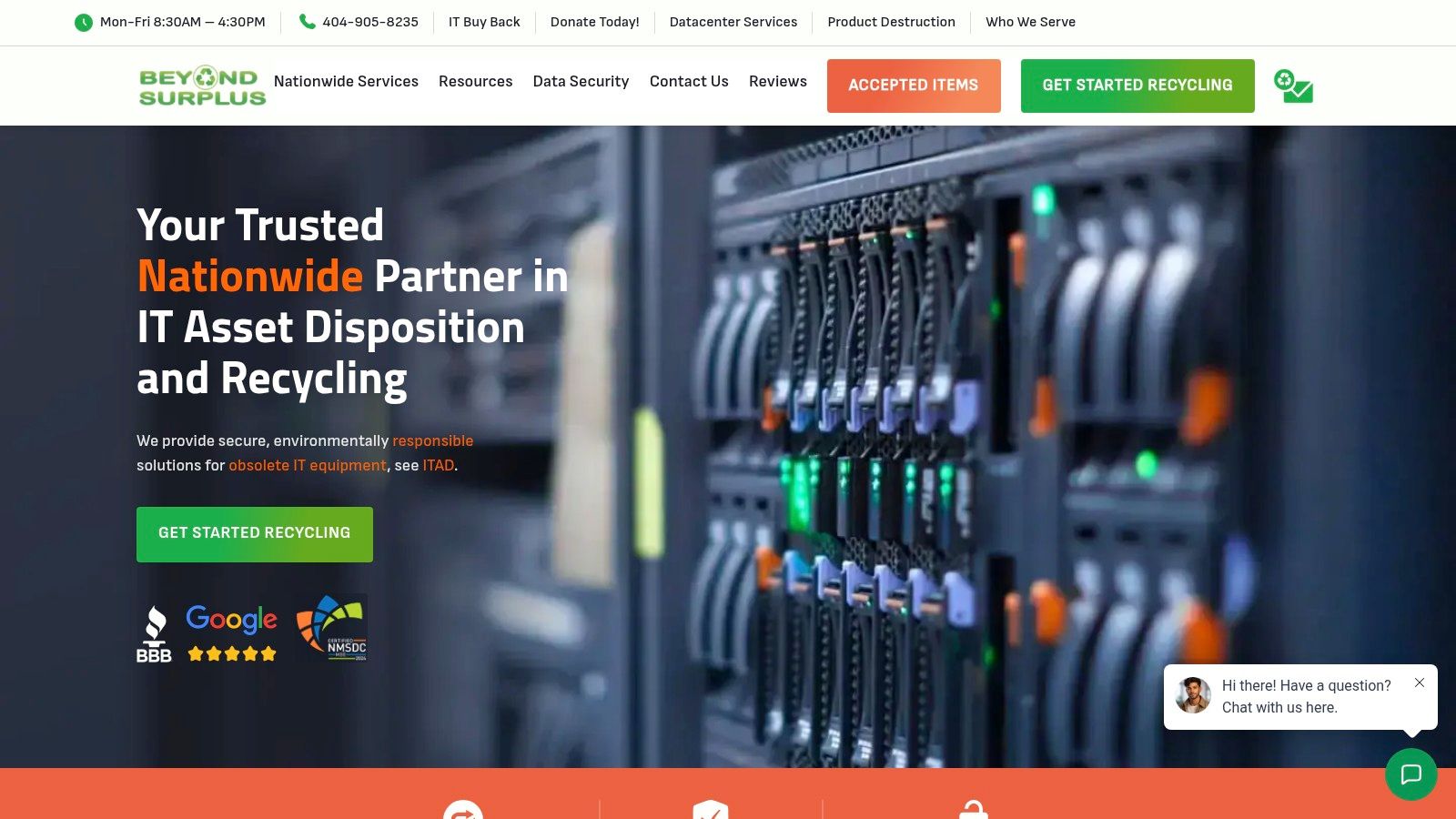
CHaRM is one of the most useful answers for households that don't just have electronics. They have the whole garage problem. Paint cans, chemicals, Styrofoam, batteries, and a dead printer all sitting in the same pile.
That mixed-load strength is what separates CHaRM from most electronics recyclers. Instead of making three different trips, residents can use a nonprofit facility built around hard-to-recycle materials that don't belong in curbside bins.
Best use case
CHaRM makes the most sense for residents doing a real purge. If the project looks like spring cleaning, downsizing, or a move-prep cleanup, CHaRM can be more efficient than visiting separate drop-off sites for each category.
The trade-off is process. Appointments are required, hours are limited, and some items carry fees. That's not a flaw. It's how the operation manages sorting and responsible handling. But it means spontaneity doesn't work well here.
For people who need hands-on removal instead of self-hauling, a service background like about Fulton Junk Removal helps explain why many clients move from DIY recycling to full-service pickup once the volume gets real.
What CHaRM does well
- Mixed household loads: Better than electronics-only centers.
- Resident guidance: Useful when you aren't sure what belongs where.
- Special materials: Strong option when hazardous items are part of the cleanup.
What to watch
If your only goal is getting rid of two laptops and some cables, CHaRM can be more process-heavy than necessary. Retail drop-off or a simple recycler is easier.
If you're a business, it usually isn't the first place I'd send you. CHaRM is resident-oriented. Commercial clients generally need clearer handling around pickups, asset lists, and documentation than consumer nonprofit sites are built to provide.
4. Reworx Recycling
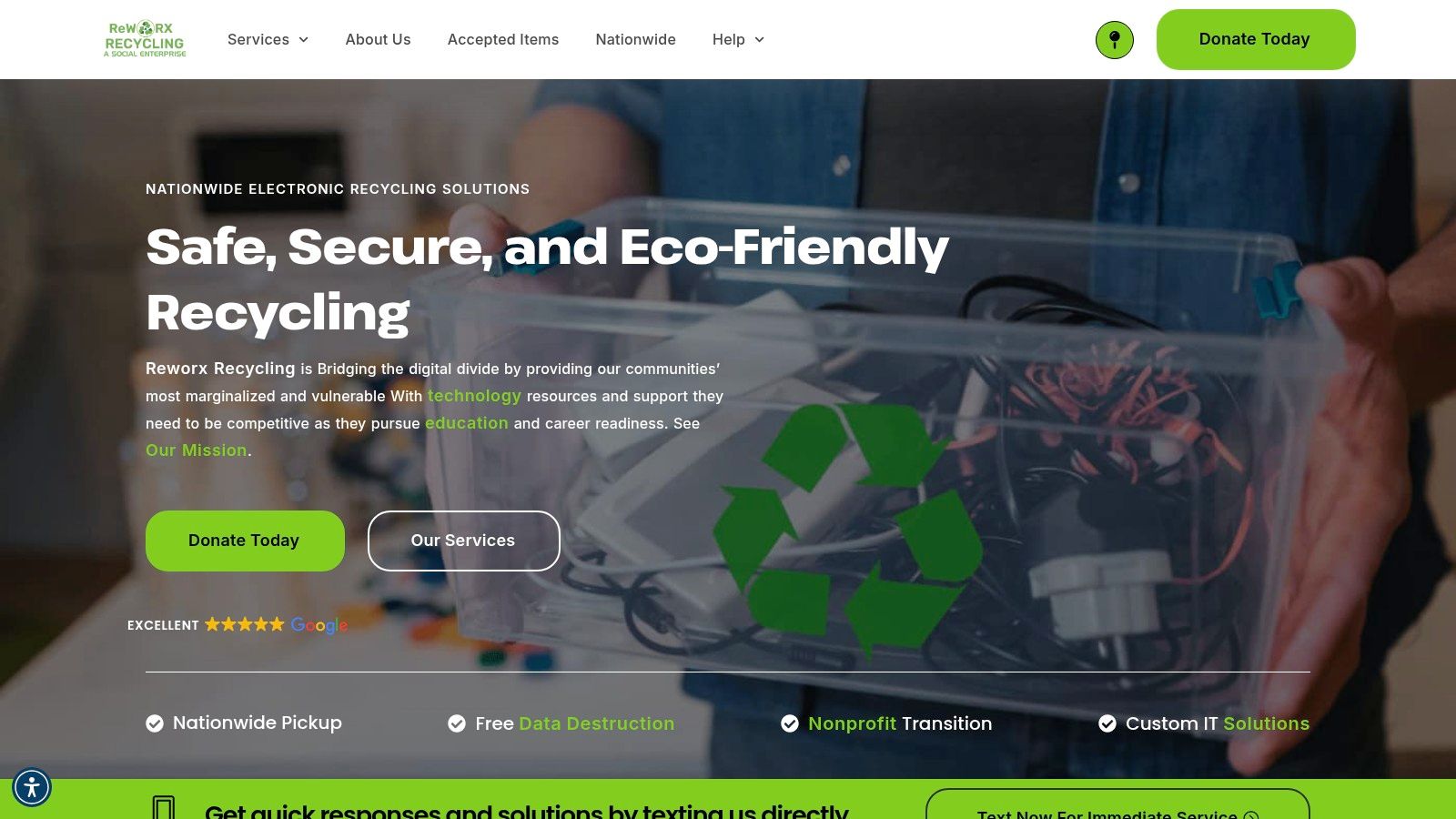
Reworx Recycling is one of the more practical local choices when convenience matters as much as responsible processing. It stands out because it offers weekday staffed drop-off plus a secure after-hours drop box for smaller electronics, which solves a real problem for people who can't get to a recycler during normal business hours.
That after-hours option is especially useful for residents and small offices with laptops, phones, or accessories that fit the box. The facility is positioned around monitored handling and data security, so it feels more deliberate than leaving equipment at a generic collection point.
Where Reworx fits
For DIY users, Reworx sits in a sweet spot between county programs and bigger business-focused ITAD vendors. It’s local, it’s accessible, and it has a reputation for no-cost computer and e-waste disposal through its nonprofit model, as described by Reworx Recycling.
The best use case is a controlled electronics-only drop. Not a house cleanout. Not a major office decommission. A focused trip with devices you can sort and transport yourself.
If your situation has already outgrown self-hauling, it’s usually better to stop forcing it and ask for direct help through Fulton Junk Removal contact options.
Small-item drop boxes are great for convenience. They're not a substitute for chain-of-custody planning on a business cleanout.
Limits that matter
The after-hours box doesn't solve everything. Larger items still need staffed drop-off, and battery restrictions apply. That means you need to read the rules before loading the car.
Reworx is also best when your materials are mostly electronics. If the project includes furniture, scrap fixtures, cardboard, or general junk, you’ll still need another disposal path. For a disciplined e-waste run, though, it’s one of the better local options.
5. eWaste ePlanet (eWeP ITAD), Doraville
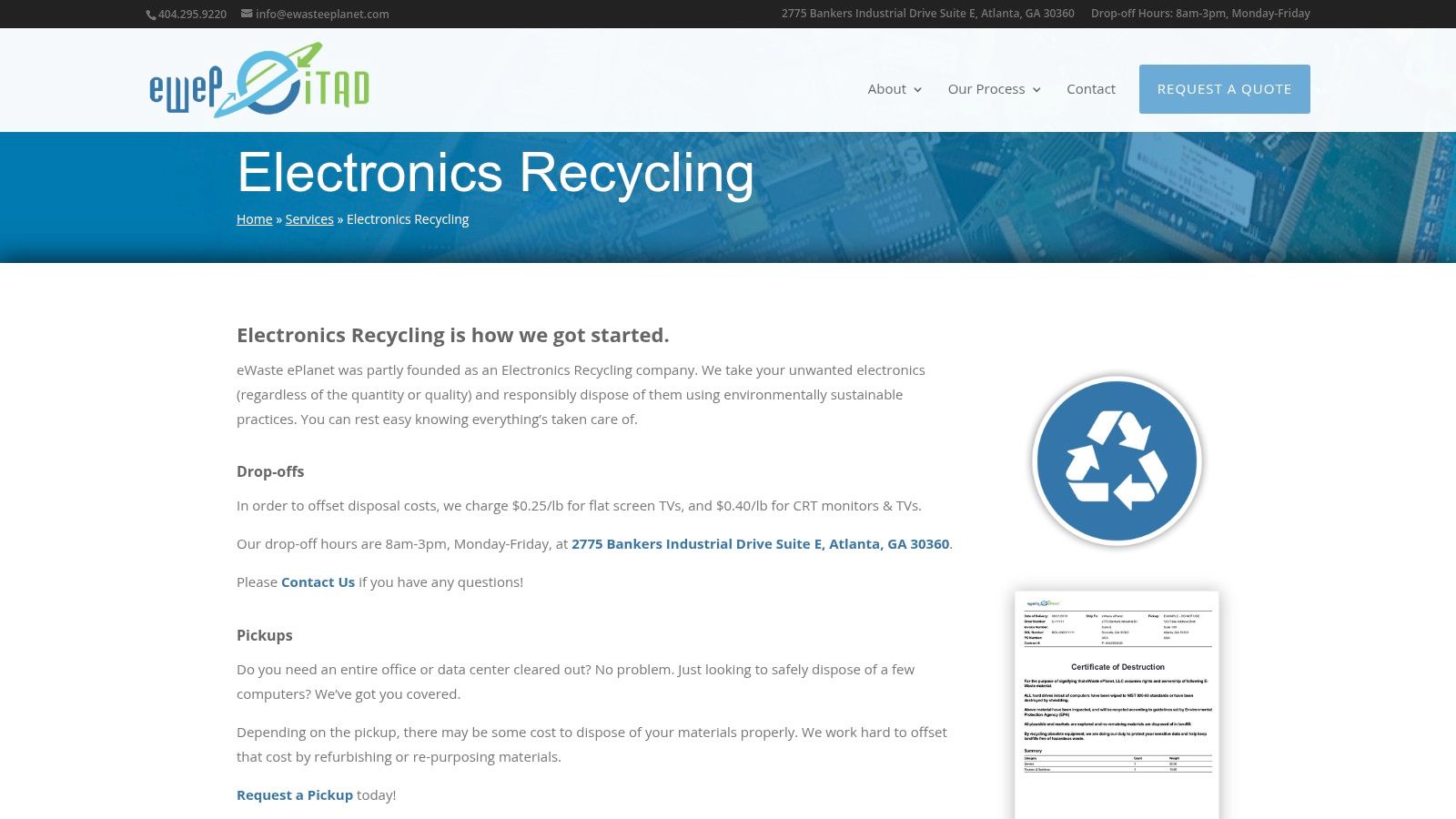
You load up a few old monitors, a dead TV, and a box of office electronics, then realize the hard part is not the drive. It is finding a recycler that tells you the rules before you unload. That is where eWaste ePlanet in Doraville earns its place.
eWaste ePlanet works well for people who want clear intake policies and for businesses that need paperwork after the drop-off. It publishes resident hours, spells out what it accepts, and offers certificates of recycling or destruction. From an operator's standpoint, that matters because vague intake rules create wasted trips, disputed charges, and loose documentation.
Where eWaste ePlanet fits
This is a practical option for two groups. First, residents with screens who want posted TV and monitor pricing instead of guessing at the counter. Second, companies handling retired computers, peripherals, or small batches of IT equipment that still need a documented recycling trail.
That middle position is useful in Atlanta. Some outlets are built for convenience. Others are geared toward full IT asset disposition projects. eWaste ePlanet sits between those two use cases and does a good job when the load is electronics-focused and the person dropping off wants predictable handling.
For larger projects, the limits show up fast. If the job includes cubicles, old chairs, storage room junk, or mixed commercial debris along with electronics, a recycler-only trip becomes inefficient. In those cases, a provider that covers broader Atlanta-area junk removal service areas is usually the cleaner solution because hauling and electronics recycling can be coordinated in one pickup.
The trade-off
The catch is convenience. Drop-off is tied to weekday hours, so it is not the easiest fit for residents who need evenings or weekends.
Cost is the other factor. Some TVs and monitors carry per-pound fees, which can surprise people expecting every electronics item to be free. I usually tell clients to treat that as a sorting decision. If you have one or two screens, a posted fee schedule is manageable. If you have a larger screen-heavy load, compare total cost and labor before committing to the trip.
Best for
- Residents dropping off TVs or monitors who want published pricing
- Small to midsize business cleanouts that need recycling or destruction certificates
- Electronics-only loads that are organized, boxed, and ready for weekday drop-off
6. Goodwill of North Georgia (Dell Reconnect partner)
You finish cleaning out a home office and end up with a working laptop, an old printer, two keyboards, and a box of cables. That is the kind of load Goodwill handles well. For basic consumer tech, especially computer gear, Goodwill of North Georgia is often the easiest drop-off option in metro Atlanta.
The Dell Reconnect model gives this option a practical advantage. Equipment that still has reuse value can stay in circulation instead of going straight into the scrap stream. For households, students, and small offices with a light batch of standard devices, that is usually the right first stop.
When Goodwill makes sense
I point people here when the goal is simple disposal without a special trip across town. A neighborhood Goodwill works well for desktop accessories, older computers, and similar IT items that are easy to carry in and leave at the donation counter.
It is also a good fit for people who care about the reuse side of the process, not just recycling. If a device is still usable, keeping it in service is usually a better outcome than breaking it down for materials right away.
Where people run into trouble
Goodwill is not a catch-all electronics outlet. Acceptance can vary by location, and the problem items are usually TVs, large displays, and non-computer electronics. Call first if your load includes anything outside the usual PC category.
Business users should also be realistic about the limits. Goodwill is a donation and reuse channel, not a compliance-focused recycling partner. If the job requires inventory tracking, data destruction documentation, or pickup for a larger office cleanout, use a dedicated ITAD recycler or a full-service provider such as Fulton Junk Removal that can remove mixed items and route electronics to the proper downstream recycler.
Best for
- Home office cleanouts with computers, accessories, and small peripherals
- Students and renters donating usable tech during a move
- Small, low-risk drop-offs where convenience matters more than reporting
7. Best Buy Electronics & Appliances Recycling
Best Buy is useful because it’s familiar, widespread, and easy to understand. A local store's location is often already known, which matters when the main barrier to recycling is procrastination.
For Atlanta residents, Best Buy is a practical option for small electronics, accessories, and some home tech. It also offers haul-away service for certain TVs and appliances when you’re buying replacements, which can simplify one-for-one swaps during a home upgrade.
What works well
Retail recycling shines when convenience beats specialization. You can bring in a few acceptable items while shopping and get the task off your list. Best Buy also publishes program FAQs and household limits, which is better than showing up blind.
The limits are the trade-off. The program is designed for household intake, not for clearing storage rooms or processing office refreshes. If you try to use retailer recycling for a business load, you'll usually hit item restrictions or store-specific acceptance issues fast.
Strong use cases
- Small consumer devices: Good for accessories and common home electronics.
- Replacement purchases: Helpful when a new appliance or TV is being delivered.
- Quick neighborhood drop-off: Better than waiting until a larger pile builds up.
What doesn't work
Don't rely on Best Buy for commercial decommissions, mixed junk removal, or projects where data security paperwork matters. That's not the program's purpose.
It also isn't the place to assume every item is accepted. Always check current store rules before loading the car, especially for screens and larger devices.
8. Staples Free Tech Recycling
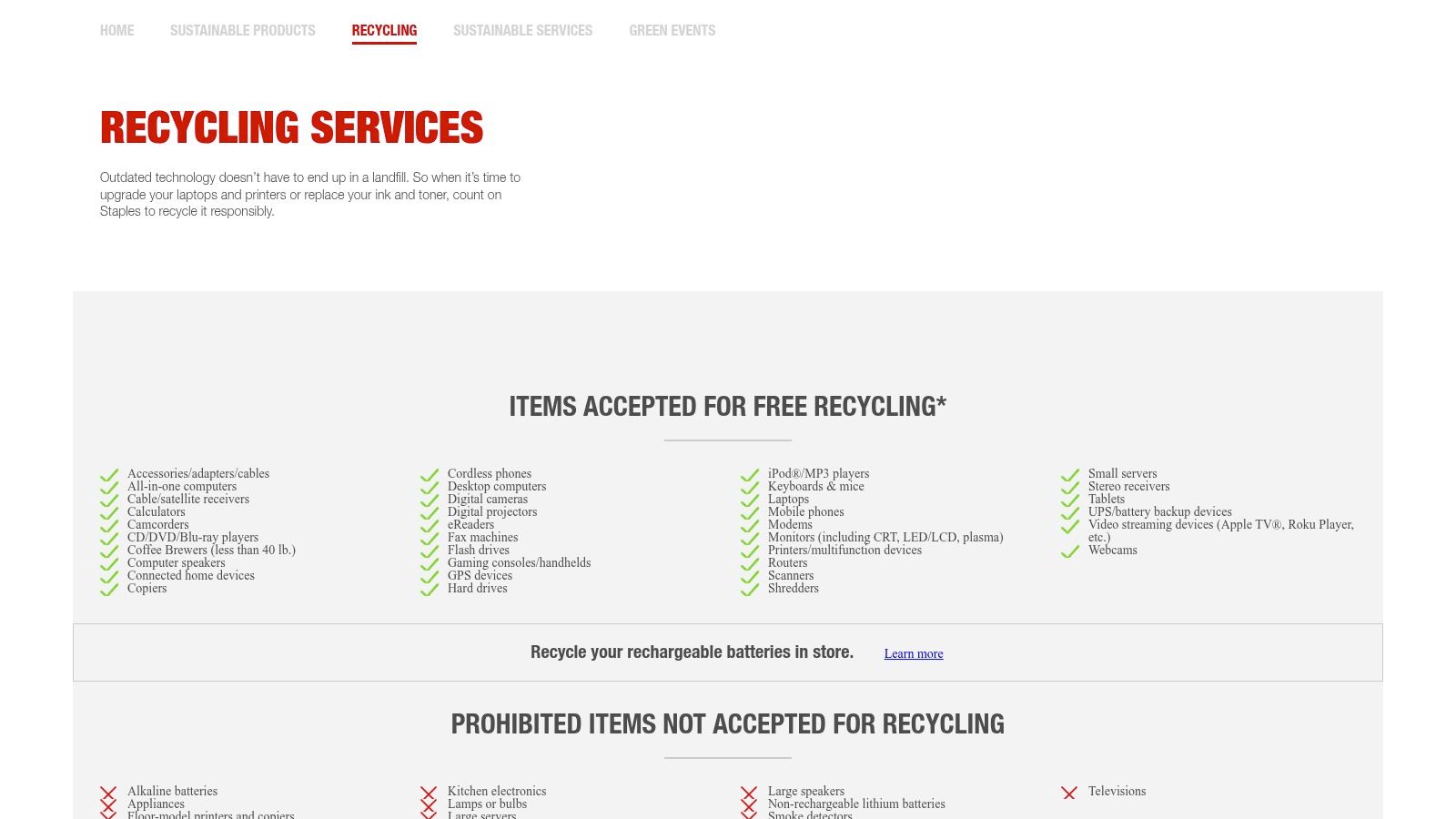
Staples is one of the better low-friction options for home office cleanup. If you’ve got old keyboards, mice, cables, routers, small printers, or worn-out accessories from a remote-work setup, Staples is often the quickest errand-level solution.
The key is staying within scope. Staples offers free in-store recycling for many small electronics and accepts rechargeable batteries through Call2Recycle, but it isn't a catch-all program. TVs aren't accepted, and stores can have some discretion.
A good fit for small-item volume
Staples is especially handy for the kind of clutter that accumulates subtly. Charger bins, retired docking stations, dead headsets, and random peripherals. Those items rarely justify a dedicated recycling trip on their own, but they’re perfect for a retail drop-off.
The published daily limit is seven items per customer per day through Staples recycling services, which tells you exactly where the line is between "small office cleanup" and "I need a different plan."
For Atlanta businesses with more than a few items, retail convenience becomes inefficient. Staff shouldn't make repeated store runs with serialized office equipment unless the load is minimal.
Practical downside
Staples is not for televisions, and it’s not built for large-scale electronics turnover. It also won't replace a certified recycler when you need reporting or destruction documentation.
Still, for everyday small tech, it does the job well. Sometimes the best recycling option is the one you'll use this week instead of putting off for another month.
9. DeKalb County Sanitation, Electronics Recycling (Seminole Road Landfill)
DeKalb County's electronics recycling program is one of the better government-run options for residents on the east and southeast side of the metro. The value here is clarity. County program pages usually spell out accepted items, event details, and referral guidance for materials they don't take.
For residents near Ellenwood or nearby Atlanta neighborhoods, that makes planning easier than guessing with a private drop-off site. It’s also useful for people who prefer an official public program over retailer intake.
Why residents use it
County recycling works best when you want a defined process and don't need special handling beyond standard acceptance rules. The county provides an e-recycling flyer and an events calendar, which is practical if you're trying to avoid a wasted trip.
This is the kind of option that works well for a few approved household electronics and not much else. If your load is straightforward, the county path is often enough.
Good reasons to choose DeKalb County
- Official public guidance: Clearer than many private websites.
- Useful for local residents: Especially if the site is already on your side of town.
- Helpful referrals: Good when the county doesn't accept a specific item type.
Limits to keep in mind
This isn't a business ITAD solution. It also isn't where I'd send someone who needs on-site data destruction receipts or post-project reporting.
County programs are structured around public convenience, not corporate compliance. If that documentation matters, use a certified recycler or a full-service provider that can support the paperwork side of the project.
10. uBreakiFix by Asurion, Tech Recycling
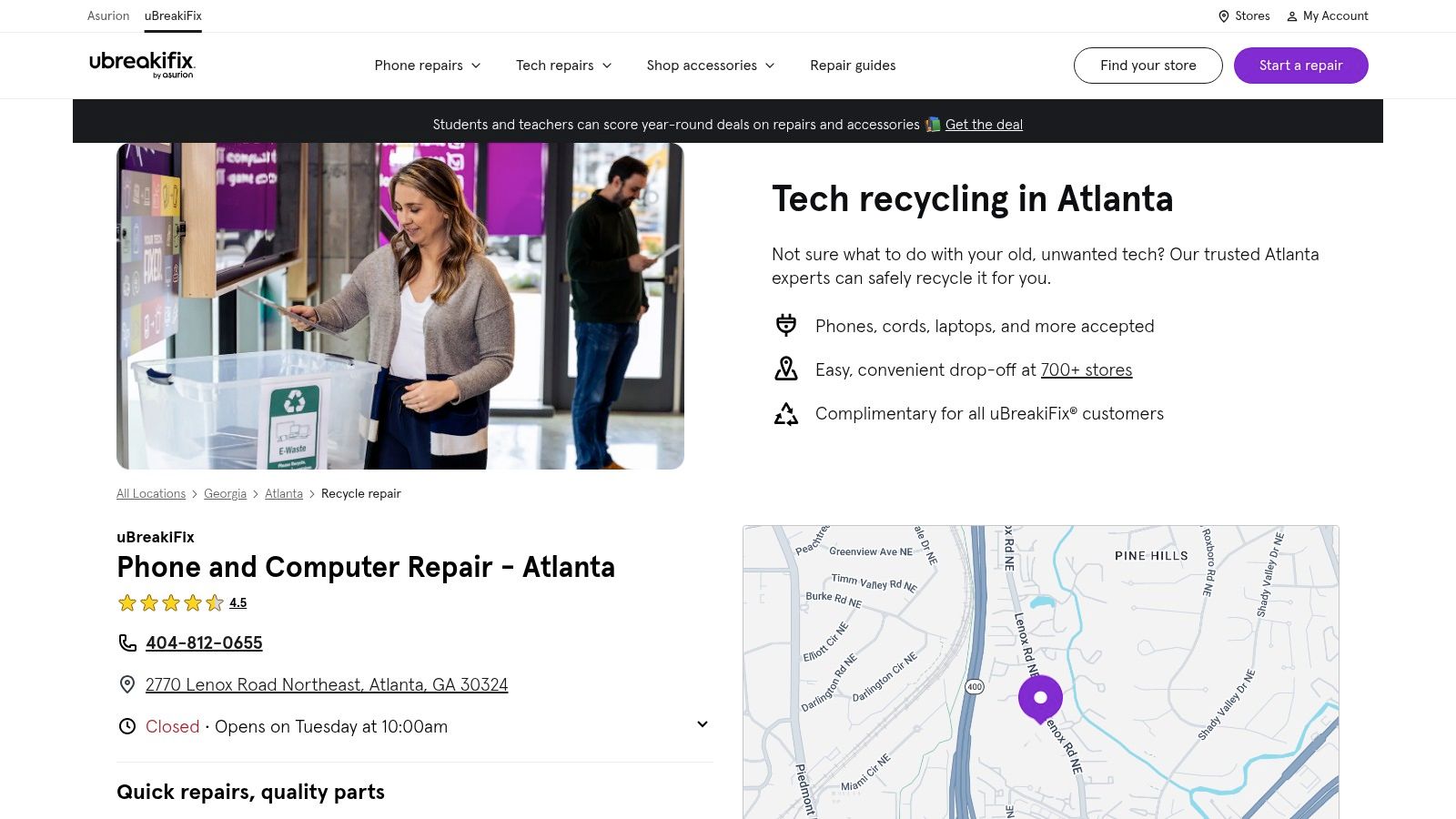
uBreakiFix is a convenient neighborhood option when you're already in repair mode. If you're dropping off a cracked phone, picking up a tablet, or dealing with an aging laptop, recycling an older device at the same storefront can be more practical than making a separate trip elsewhere.
That convenience is the whole point. Multiple Atlanta locations advertise tech recycling, and the accepted categories usually cover common consumer electronics like phones, tablets, computers, printers, consoles, and accessories.
Best real-world use
This works well for consumers who value local storefront access over specialized processing features. You don't need to drive to an industrial recycler or wait for a county event. You can handle it during a regular errands run.
It also pairs naturally with repair decisions. If one device is worth fixing and another isn't, a neighborhood repair shop that also recycles can close that loop in one stop.
Call ahead before you load the car. Participating-store programs vary more than people expect.
Where it falls short
uBreakiFix isn't a hazardous-waste facility, and item acceptance can vary by location. Loose lithium batteries are usually where people run into issues.
It also isn't meant for bulk business loads or formal IT asset disposition. For consumer convenience, it’s strong. For chain of custody, reporting, or large office volumes, it’s the wrong tool.
Top 10 Atlanta Electronics Recycling Options
| Service | ✨ Unique features | 👥 Best for | ★ Quality & convenience | 💰 Pricing / value |
|---|---|---|---|---|
| Fulton Junk Removal 🏆 | Integrated recycling & donation; certified diversion reports ✨ | Homeowners, property managers, businesses 👥 | ★★★★★ Fast, full‑service | Transparent quotes + free estimates 💰💰 |
| Beyond Surplus (Electronics & ITAD) | Free data destruction & certificates; broad IT list ✨ | Businesses & privacy‑conscious residents 👥 | ★★★★☆ Data‑secure pickup/drop‑off | Mostly free drop‑off; business quotes 💰 |
| Live Thrive CHaRM | Accepts HHW + many electronics; appointment booking ✨ | Residents with mixed household waste 👥 | ★★★★☆ Specialized handling | Modest fees for some items; appointment required 💰 |
| Reworx Recycling | Staffed drop‑off + 24/7 secure, camera‑monitored drop box ✨ | Night/weekend drop‑offs; small electronics 👥 | ★★★★☆ Flexible timing & secure | Low/no fees for small items; pre‑registration 💰 |
| eWaste ePlanet (eWeP ITAD) | Certificates of recycling; posted TV/monitor fees ✨ | Residents & businesses with screens 👥 | ★★★★☆ Clear TV policies | Posted per‑pound TV fees; business reporting available 💰 |
| Goodwill of North Georgia (Dell Reconnect) | Refurbish for reuse; widespread donation sites ✨ | Donors seeking reuse & social impact 👥 | ★★★★☆ Convenient neighborhood drops | Typically free; location policies vary 💰 |
| Best Buy Recycling | In‑store drop‑off + optional paid haul‑away for TVs/appliances ✨ | Shoppers & small electronics drop‑off 👥 | ★★★☆☆ Convenient stores, limits apply | Free small items; fees for TVs/appliances 💰 |
| Staples Free Tech Recycling | Free small‑tech recycling; Call2Recycle batteries ✨ | Home‑office users & batteries 👥 | ★★★☆☆ Useful for small items | Free (daily limits apply) 💰 |
| DeKalb County Sanitation (Seminole Rd) | Official county program, events & referrals ✨ | DeKalb residents & nearby neighborhoods 👥 | ★★★☆☆ Government run; limited scope | Generally free/limited; event hours/rules 💰 |
| uBreakiFix by Asurion | Storefront recycling at repair locations; partner programs ✨ | Repair customers & neighborhood drop‑offs 👥 | ★★★☆☆ Convenient at participating stores | Free at participating locations; varies by store 💰 |
The Smart Choice for Atlanta's E-Waste: DIY vs. Full-Service
The right answer depends on what you're trying to solve. A lot of people search where to recycle electronics atlanta when the underlying question is simpler. Do I just need a place to drop off a few items, or do I need this entire problem removed from my plate?
If you’ve got a small residential load, DIY usually makes sense. Goodwill, Staples, Best Buy, Reworx, CHaRM, and county programs all have a place. For a laptop, old router, small printer, or box of cables, there’s no reason to pay for labor unless convenience matters more than cost.
DIY starts to break down when the load gets bulky, mixed, or sensitive. That’s the tipping point often underestimated. The problem is no longer recycling. It’s sorting, lifting, inventorying, moving, protecting data-bearing equipment, and getting everything to the right destination without turning your staff or your weekend into a logistics project.
For businesses, that threshold arrives fast. Offices don't just have two laptops. They have monitors, docks, phones, printers, telecom gear, broken accessories, maybe old server hardware, and usually a layer of non-electronic junk around all of it. Property managers run into the same issue during turnovers and evictions. Warehouses see it during reorganizations. Retail spaces see it during fixture changes and closures.
Full-service removal tied to real recycling becomes the smart option. Fulton Junk Removal handles the physical part that most recycling guides skip over. Lifting, loading, hauling, cleanout labor, and clearing space quickly. Because Fulton works with Beyond Surplus, the electronics don't just disappear into a general junk stream. They go into a recycling pipeline designed around reuse, recovery, and certified handling.
That distinction matters more than most buyers realize. Plenty of companies will haul fast. Far fewer can support the recycling side in a way that helps businesses with documentation, sustainability reporting, and confidence about where the material went. Public-facing recycling content in Atlanta often focuses on convenience, while business buyers still have open questions about destruction certificates, diversion reporting, and compliance records. That gap is real, especially for SMBs that don't have enterprise procurement teams managing disposal.
For homeowners, the value is usually stress reduction. One pickup can clear electronics and the rest of the clutter in the same visit. You don't need to separate every category, make multiple trips, or guess which outlet will reject what.
For offices and facilities teams, the value is operational. Staff stays focused on work. The site gets cleared quickly. Electronics are handled through a documented recycling path instead of being mixed into a generic haul-away load. That’s a much better fit for companies that care about data security, internal accountability, or landfill diversion.
So the short version is this. Use DIY drop-off when the load is small, simple, and easy to transport. Use a recycler like Beyond Surplus or eWaste ePlanet when the main issue is electronics and documentation. Use Fulton Junk Removal when the challenge is bigger than recycling alone and you need the job done fast, responsibly, and with less friction.
If you need to clear out electronic waste and other junk efficiently, Fulton is the practical local answer. You get one team handling the cleanup and a recycling partner behind the scenes making sure the electronics are processed responsibly instead of dumped as an afterthought.
Need electronics, office equipment, or mixed junk removed without turning it into a multi-trip project? Fulton Junk Removal handles Atlanta-area cleanouts with integrated recycling support through Beyond Surplus, making it easier for homeowners, property managers, and businesses to clear space responsibly. Request a free estimate if you want fast pickup, clear communication, and a disposal process built to keep more material out of the landfill.
