
Where to Recycle Electronics in Atlanta: 10 Local Options
Upgrading equipment creates a disposal problem that Atlanta residents and businesses still underestimate. Old laptops, switches, monitors, batteries, and cables are often treated like ordinary trash, even though they contain reusable metals, plastics, and in some cases hazardous materials that do not belong in a landfill.
The better question is not where to recycle electronics in Atlanta. It is which option fits the job.
A homeowner clearing one shelf of outdated devices usually does fine with a local drop-off program. A business retiring workstations, network gear, or storage equipment has a different set of priorities, including pickup logistics, data handling, chain of custody, and documentation. That distinction is where many e-waste guides fall short. They list locations, but they do not explain the trade-off between loading your own car for a DIY drop-off and hiring a team to remove everything from the site.
E-waste contains materials such as lead and mercury, and many organizations now need data destruction and documentation, not just disposal. That is why certified recycling and organized downstream handling matter more than convenience alone.
This guide compares the practical options across Atlanta, from nonprofit and government drop-offs to retailer take-back programs and full-service removal for larger cleanouts. For higher-volume jobs, pickup can save hours of labor and reduce handling mistakes. If that is the situation, full-service junk removal and cleanout help can make more sense than piecing together several trips to different facilities.
For anyone replacing devices instead of discarding them outright, reuse still has a place in the larger sustainability equation. Circular buying guides like where to buy refurbished iPhones UK show the other side of the process, extending device life before recycling becomes necessary.
1. Fulton Junk Removal
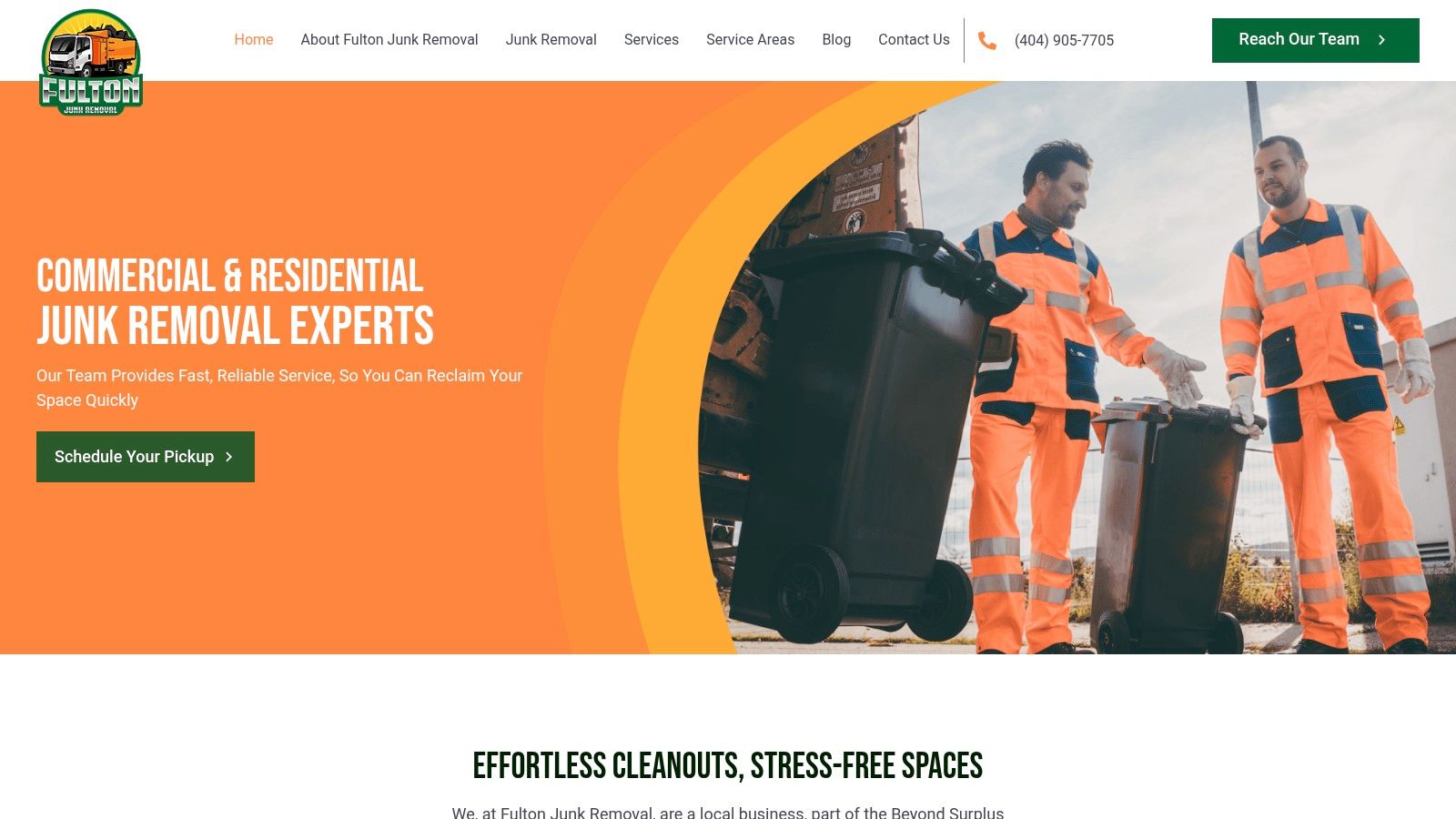
Fulton Junk Removal is the strongest option on this list when the problem isn’t just a few devices. It’s the practical choice for offices, warehouses, retail spaces, apartment turnovers, and mixed cleanouts where electronics are piled in with fixtures, metal, packaging, and general junk. Most drop-off programs are fine for a trunk load. They break down fast when you’ve got pallets, server gear, or an entire room to clear.
What makes Fulton different is the connection to Beyond Surplus. That gives the service a clear path for electronics recycling instead of treating e-waste like ordinary haul-away material. If you need a team that removes the junk and separates electronics for responsible downstream handling, this bundled model solves the part most haulers skip.
Why it works for bigger jobs
For commercial clients, the biggest issue usually isn’t whether Atlanta has a recycling center. It’s whether anyone will coordinate pickup, loading, sorting, and reporting without disrupting operations. That’s where Fulton stands out. The company handles full cleanouts while routing recyclable electronics and metals through Beyond Surplus, which makes compliance and sustainability reporting far easier than piecing together several vendors.
Atlanta’s recycling market has a clear gap here. Pickup services have become more important as office returns and renovations generate larger e-waste loads, while many public-facing listings still focus on residential drop-offs and event-style disposal according to this Atlanta-area electronics recycling overview. In practice, scheduled removal is usually the better fit when the volume is too large for a personal vehicle or when staff time is more expensive than outsourcing the whole job.
Practical rule: If your team needs dollies, access coordination, certificates, or a loading dock schedule, skip DIY drop-off and book a removal partner.
There’s also a trust issue in this category. Plenty of junk haulers say they “recycle when possible,” which often means you get no clear chain of custody and no useful documentation. Fulton’s model is stronger because the recycling side isn’t an afterthought. It’s built into the service.
Best fit and trade-offs
Fulton works best for customers who want one vendor to handle the physical removal and the electronics recycling side together. That includes offices decommissioning workstations, property managers cleaning out abandoned tenant equipment, and homeowners with mixed loads that include bulky non-electronic debris.
A few trade-offs are worth knowing up front:
- Best for bundled projects: If electronics are only part of a larger cleanout, Fulton is more efficient than making separate trips to a recycler and a dump.
- Better for convenience and documentation: Businesses that need diversion or recycling reports get more value here than from a self-serve site.
- Not a posted flat-rate service: Pricing depends on volume, access, and item mix, so you’ll need an estimate rather than instant checkout.
For service details, their junk removal service lineup gives the clearest picture of how broad the offering is. Website: Fulton Junk Removal
2. CHaRM – Center for Hard to Recycle Materials (Live Thrive) – Atlanta (Grant Park)
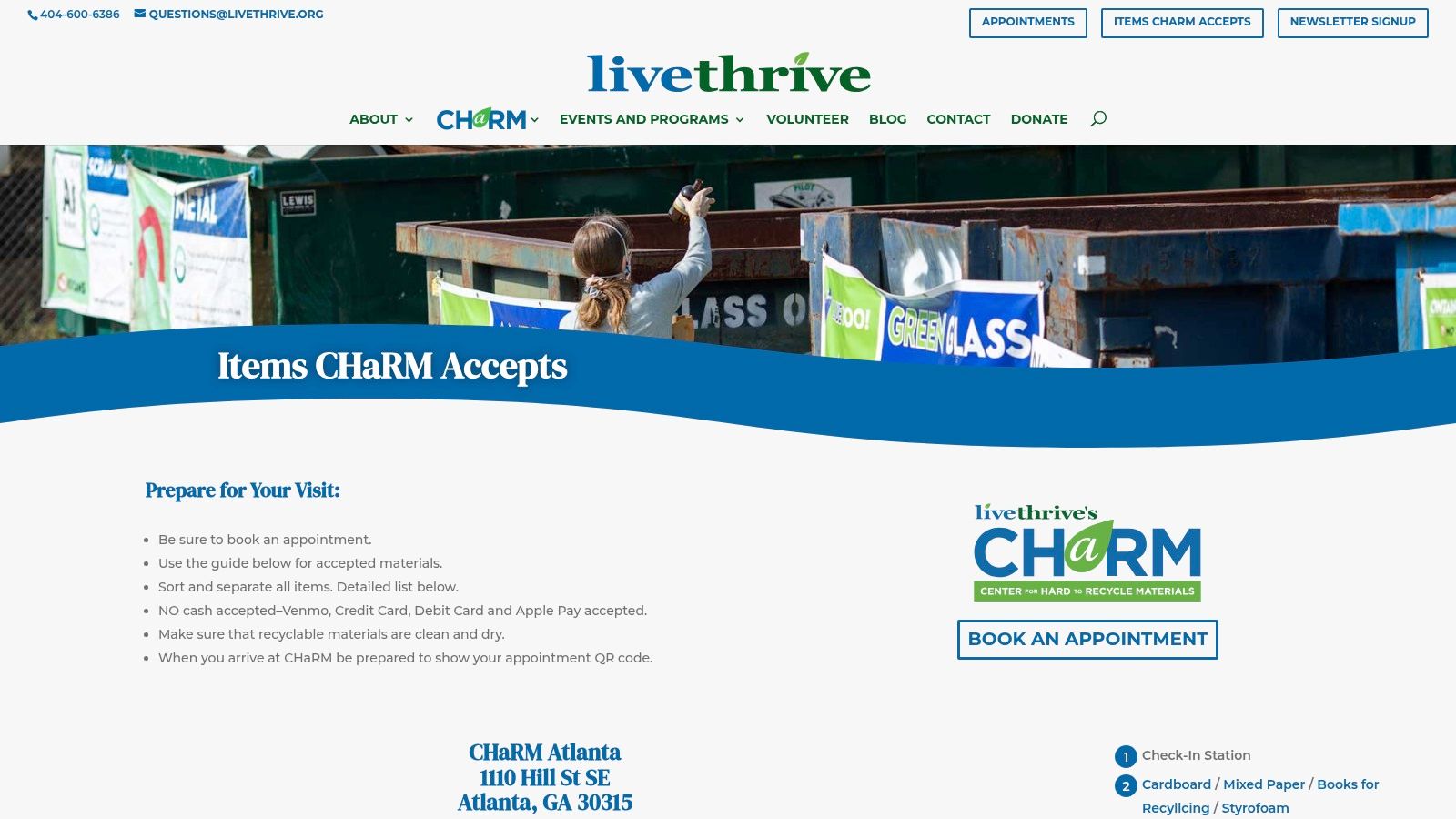
CHaRM in Grant Park works well for a specific kind of recycling job. You have a manageable load, you can sort it ahead of time, and you want a dedicated facility instead of gambling on what a retailer or general dump site will take.
That difference matters. Tossing old electronics into the landfill stream is the easy option, but it is the least accountable one. A dedicated hard-to-recycle site gives city residents a cleaner path for items like cords, batteries, and small electronics that often turn one recycling trip into three.
Where CHaRM fits best
For Atlanta households, CHaRM is one of the stronger DIY choices because it is built around specialty materials rather than regular trash handling. If the pile in your garage includes electronics plus a few other problem items, this kind of site can save time compared with bouncing between separate drop-off points.
The trade-off is labor and planning. You still need to pack the load, check accepted items, book around the facility’s process, and haul everything yourself. That is reasonable for a few boxes. It starts to break down for office cleanouts, tenant move-outs, or any job where the main problem is lifting, transport, and access coordination.
I usually separate this choice into two lanes. DIY drop-off makes sense when volume is modest and the materials are already sorted. Full-service removal makes more sense when the load is bulky, mixed, or tied to a deadline.
For city residents dealing with a larger pickup or a mixed cleanout, Atlanta electronics and junk removal support is often more practical than trying to force a commercial-scale load through a self-haul recycling visit.
Pros and limits
- Strong DIY option for mixed specialty recyclables: Useful if electronics are only part of what you need to unload.
- Better intake clarity than a general disposal site: Dedicated facilities usually post clearer acceptance rules, which cuts down on wasted trips.
- Less efficient for bigger jobs: Self-haul and appointment-based workflows are harder on businesses, property managers, and anyone without help loading.
Website: CHaRM Atlanta
3. CHaRM DeKalb – Live Thrive (Decatur)
Convenience decides whether electronics get recycled or shoved into a closet for another year. CHaRM DeKalb matters because it gives Decatur and east-metro residents a realistic drop-off option close to home, which is often the difference between action and procrastination.
For the right load, this site is efficient. A few laptops, cables, small peripherals, or a sorted batch of household electronics fits the model well. You load the car, follow the site rules, and handle the drop-off yourself.
That self-haul trade-off is the key point.
CHaRM DeKalb works best for residents and small offices with manageable volume. It is less practical once the job includes multiple rooms of old equipment, heavy items, or a deadline tied to a move-out. At that point, the main problem is not finding a recycling address. It is labor, transport, and keeping the job organized from pickup through final disposition. For north-side projects that need removal rather than a DIY run, full-service electronics pickup in Sandy Springs is usually the cleaner option.
Best fit
CHaRM DeKalb is a strong choice if you live on the east side and want a known nonprofit drop-off channel without driving into central Atlanta. It also helps if your items are already sorted and you are comfortable checking acceptance rules before loading up.
Pros and limits
- Better option for Decatur and nearby DeKalb: Shorter drive means people are more likely to finish the recycling job.
- Good match for small, organized loads: Works well when electronics are boxed, manageable, and ready to unload.
- Less effective for large cleanouts: Businesses, landlords, and office managers usually need pickup, not another trip to coordinate.
For a household cleanup, that is a fair trade. For an office decommission or tenant turnover, it usually is not.
Website: CHaRM DeKalb
4. Keep North Fulton Beautiful – Sandy Springs Recycling Center
Keep North Fulton Beautiful is the practical north-metro option for residents who want a local center with a community-service feel rather than a large commercial recycler. It works well because it’s predictable. People are more likely to recycle electronics when the site has stable hours, a known process, and a clearly posted list of what gets accepted.
This center is particularly useful if you’re in Sandy Springs or nearby and don’t want to drive toward the core of Atlanta just to unload a few devices. It also helps that the organization recommends a broader set of partners for electronics recycling across the area, including eWaste ePlanet, Novus Solutions, and Atlanta Recycling Solutions, while Sandy Springs Recycling Center itself offers free recycling for residents of Sandy Springs and Johns Creek with some item exclusions noted in Reworx’s Atlanta roundup.
Best use case
This isn’t the place I’d send a warehouse manager with mixed debris and old IT gear. It is the place I’d send a resident who wants a known local destination and doesn’t mind checking item rules before making the trip.
The posted fee structure for certain screens and specialty items is a plus, not a minus. Clear fees are better than vague “maybe accepted” language. You can decide before loading the car whether the trip makes sense.
- Good local convenience: Strong option for north Fulton residents who want to stay local.
- Detailed item guidance: Better than guessing at a retailer counter.
- Not broad enough for all needs: Some acceptance details depend on residency or item category.
If you’re scheduling a larger property cleanout in the area, Sandy Springs junk removal support is the more practical route.
Website: Keep North Fulton Beautiful electronics recycling
5. City of Roswell Recycling Center
A city-run center appeals to a certain kind of user for good reason. Municipal programs tend to be straightforward. You show up during posted hours, follow city rules, and combine the electronics drop-off with other household recycling tasks in the same trip.
Roswell’s center fits that pattern. It’s a solid option for north-metro residents who prefer a government-run outlet over a private recycler or nonprofit appointment system. If you already use the center for other materials, adding old electronics is easy.
Why municipal centers still matter
Municipal sites usually work best when your load is modest and you value routine over flexibility. They’re less useful when you’ve got mixed business junk, uncertain item categories, or a tight timeline. A city center is built for orderly intake, not for clearing a corporate storage room before lease turnover.
For Roswell residents, the convenience is hard to beat because you can handle electronics and standard recycling errands together. That’s the kind of practical detail that gets old devices out of garages instead of into the trash.
The best recycling option is often the one you’ll actually use this week, not the “perfect” one across town.
Trade-offs worth noting
- Good for household recycling runs: Especially useful if electronics are only part of what you’re dropping off.
- Less suited to business cleanup: Municipal programs usually aren’t built around IT asset handling or bulk loading.
- Always verify current item rules: City policies can change, and screen categories often need extra attention.
For larger clearouts in North Fulton, Roswell junk hauling and cleanout service is the more efficient route. Website: City of Roswell Recycling Center
6. DeKalb County Sanitation – Seminole Road Landfill (E‑Recycling Drop‑Off)
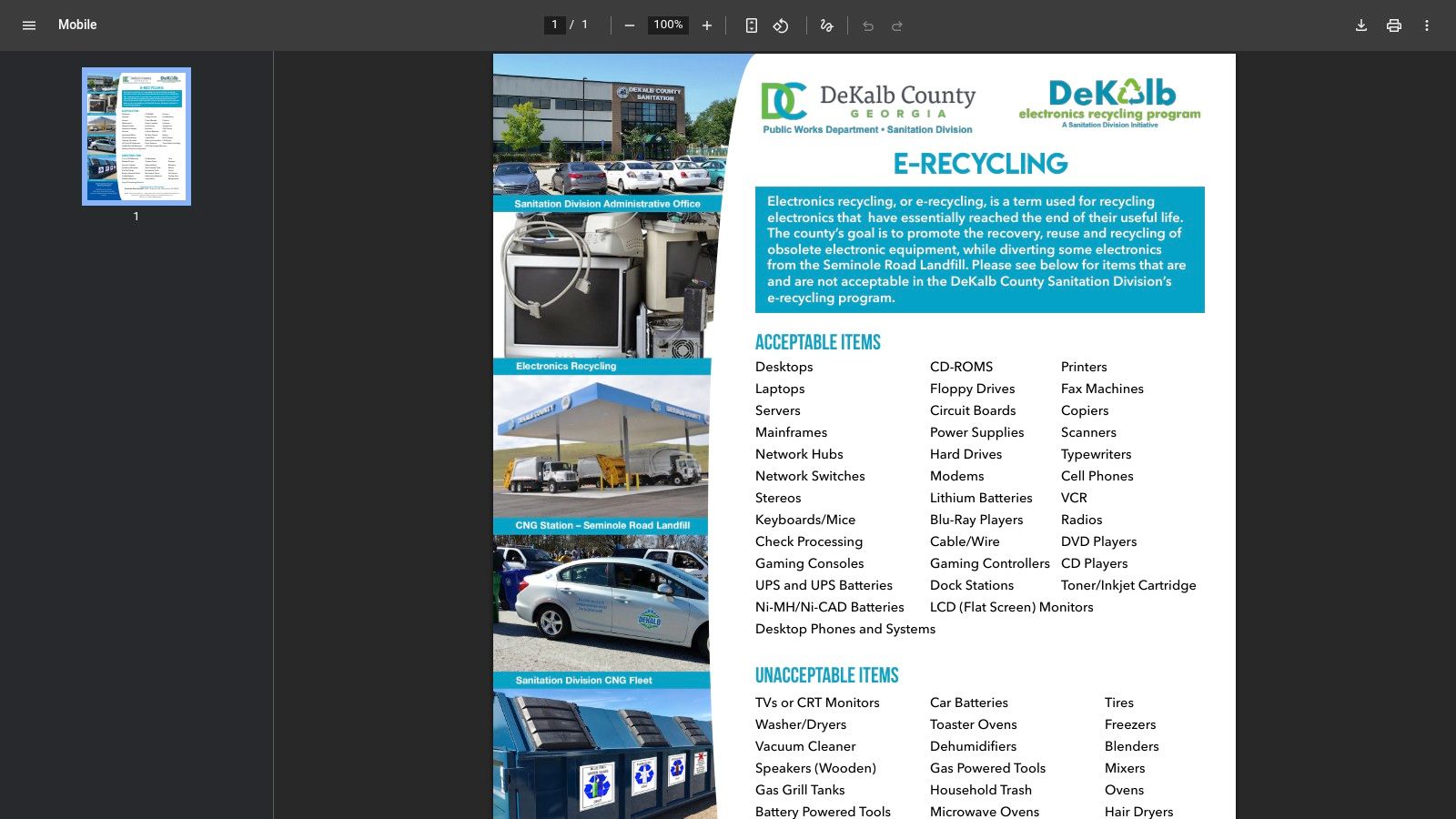
Using a landfill site for recycling sounds contradictory, but county e-recycling programs can be useful if they publish a clear accepted and prohibited list. That’s the key value here. You’re not guessing whether they want servers, laptops, or peripherals. The county spells out scope.
For east and southeast metro residents, Seminole Road can be the practical answer when you want an official county program and don’t need the broader extras that nonprofits or private ITAD vendors provide. It’s functional, not elegant.
Where this option makes sense
County-run drop-off is strongest when you have mainstream electronics and want a simple official outlet. It’s weaker when your load includes excluded screen types or when you need detailed documentation for compliance or internal reporting.
That distinction matters. If you’re a homeowner dropping off accepted devices, county service is often enough. If you’re a business retiring equipment with data concerns, “accepted” isn’t the same thing as “managed to your policy standard.”
A county list also helps avoid wasted trips, which is one of the most common frustrations in electronics recycling. If a center clearly excludes certain items, that’s useful information. It tells you to reroute those materials before loading the truck.
- Strong point: Published rules help you sort before arrival.
- Weak point: Limited scope means you may still need a second outlet for excluded items.
- Best for: Residents with straightforward e-waste and no need for extra handling services.
Website: DeKalb County e-recycling flyer
7. eWaste ePlanet (Doraville/Chamblee area)
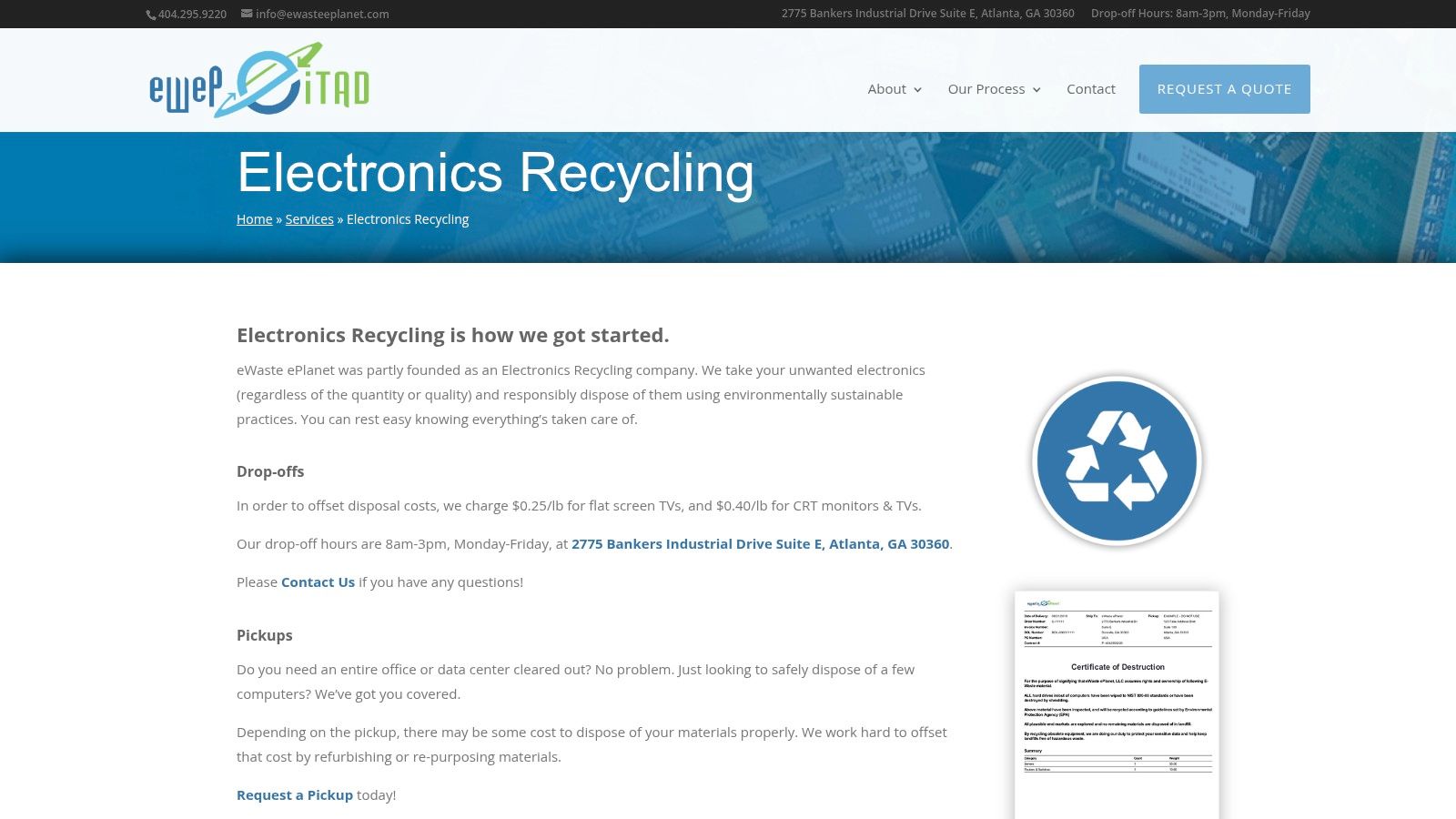
eWaste ePlanet sits in a useful middle ground. It’s more business-oriented than a municipal drop-off, but it’s still accessible enough for public drop-offs during weekday hours. That’s a good combination for small companies, church offices, clinics, and residents who care about data handling.
The biggest reason to consider it is documentation. If you want data sanitation or shredding and a certificate of recycling or destruction, that’s more meaningful than hearing only “we take electronics.” A lot of organizations don’t need full enterprise ITAD, but they do need proof that drives and devices weren’t casually discarded.
Better than retail for IT-heavy loads
For gear like office equipment, AV hardware, and data-bearing devices, eWaste ePlanet is generally a better fit than a store counter. Retail programs are convenient for lightweight consumer loads. They’re not ideal for batches of business equipment or anything that requires a certificate.
What I like about this type of provider is that fees for difficult categories are usually spelled out. That may not feel exciting, but transparent fees save time. Ambiguity is what creates bad recycling habits, because people postpone the trip or throw things away instead.
Who should use it
- Businesses with moderate loads: Good for offices that need pickup options and records.
- Residents with data concerns: Better than basic drop-off if hard drives are part of the mix.
- Not ideal for weekend errands: Public access is limited to weekdays.
Website: eWaste ePlanet electronics recycling
8. Beyond Surplus (Smyrna/Atlanta)
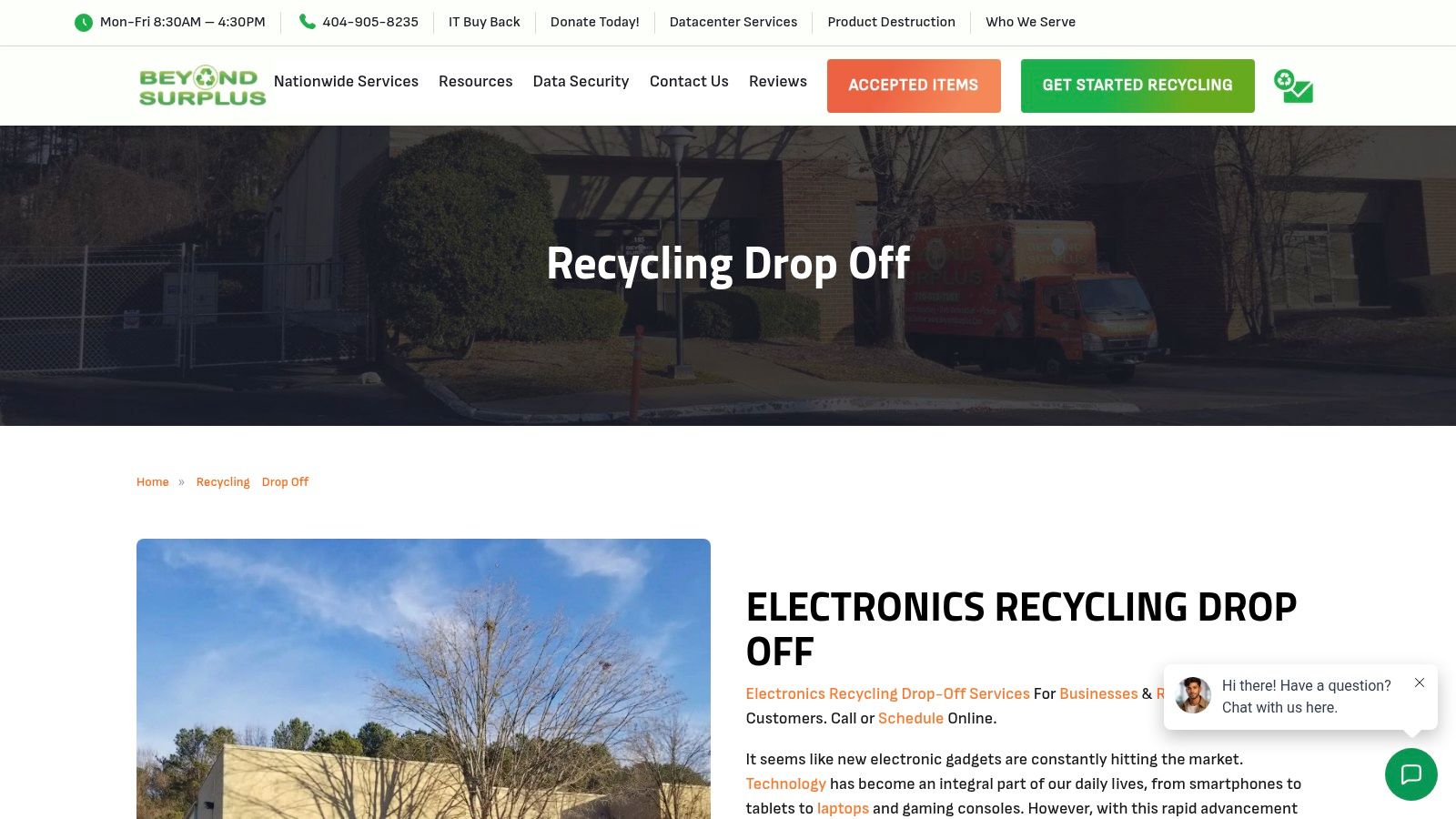
Beyond Surplus fits the middle ground that a lot of Atlanta residents and small businesses need. It is more capable than a basic public drop-off, but it does not force you into a full property cleanout just to get rid of computers, cables, and old office electronics.
That distinction matters in practice.
If the load is mostly devices, monitors, networking gear, or other e-waste, a specialist recycler is usually the cleaner choice. If the job also includes desks, shelving, packaging, and general junk, a removal crew is often the better tool. For readers comparing those two routes, this breakdown of full-service junk removal for mixed cleanouts helps clarify where a hauler fits and where an electronics recycler makes more sense.
Best use case: electronics-heavy loads with some service options
Beyond Surplus works well for people who want more than a bin in a parking lot. Drop-off is the obvious option for local users, and mail-in service can help for selected smaller items. For businesses, the bigger selling point is support around data-bearing devices and recycling documentation.
That is the trade-off. A dedicated recycler like this is a better fit when the priority is handling electronics correctly. It is a weaker fit when the primary problem is labor, access, or a mixed-volume cleanout across an office, warehouse, or rental property.
DIY recycling vs. pickup service
For a resident with a few laptops, printers, or cords, DIY drop-off is usually the lower-cost path. You sort the items, transport them yourself, and use a recycler built for e-waste.
For an office closing, an IT refresh, or a space with electronics scattered across multiple rooms, that DIY model breaks down fast. Staff time gets wasted, loading becomes the bottleneck, and non-electronic junk still has to be handled separately. In those cases, a full-service removal company or a recycler with business pickup can save time even if the per-job cost is higher.
Practical fit
- Strong choice for electronics-focused loads: Good for computers, peripherals, cables, and related devices.
- Useful for businesses with compliance concerns: Data destruction support and certificates matter more than convenience alone.
- Less suited to mixed cleanouts: If the job includes furniture, trash, or renovation debris, use a hauler instead of forcing everything through an e-waste channel.
Website: Beyond Surplus free electronics recycling
9. Best Buy (Multiple Atlanta-area stores)
Best Buy is the convenience pick. If you’ve got a small number of consumer devices and you’re already running errands, retail recycling is hard to beat. It’s familiar, easy to find, and less intimidating than a dedicated recycling yard.
That convenience is also the limit. Best Buy is not where I’d send a facilities manager, a contractor finishing a renovation, or anyone with bins of office electronics. It’s a household option first.
Best for fast, light consumer drop-offs
The upside is obvious. Multiple metro locations make it easier to act now instead of putting the old router and keyboard back in the closet. Retail acceptance programs also work well for common, low-volume electronics where the customer doesn’t need detailed documentation.
The downside is just as clear. Item limits, store-by-store acceptance differences, and fee-based categories mean you need to check policy before loading up. That’s normal for retail, but it makes the option less reliable for bigger or mixed loads.
- Most practical for residents: Quick trips, small electronics, and common accessories.
- Weak fit for businesses: Not built around chain of custody or bulk retirement.
- Good companion option: Useful when replacing gear and recycling old consumer devices at the same time.
For customers comparing a retail drop-off to a full-service removal company, more about Fulton Junk Removal helps clarify where convenience ends and project support begins. Website: Best Buy recycling program
10. Reworx Recycling – Drop‑Off Center (Smyrna)
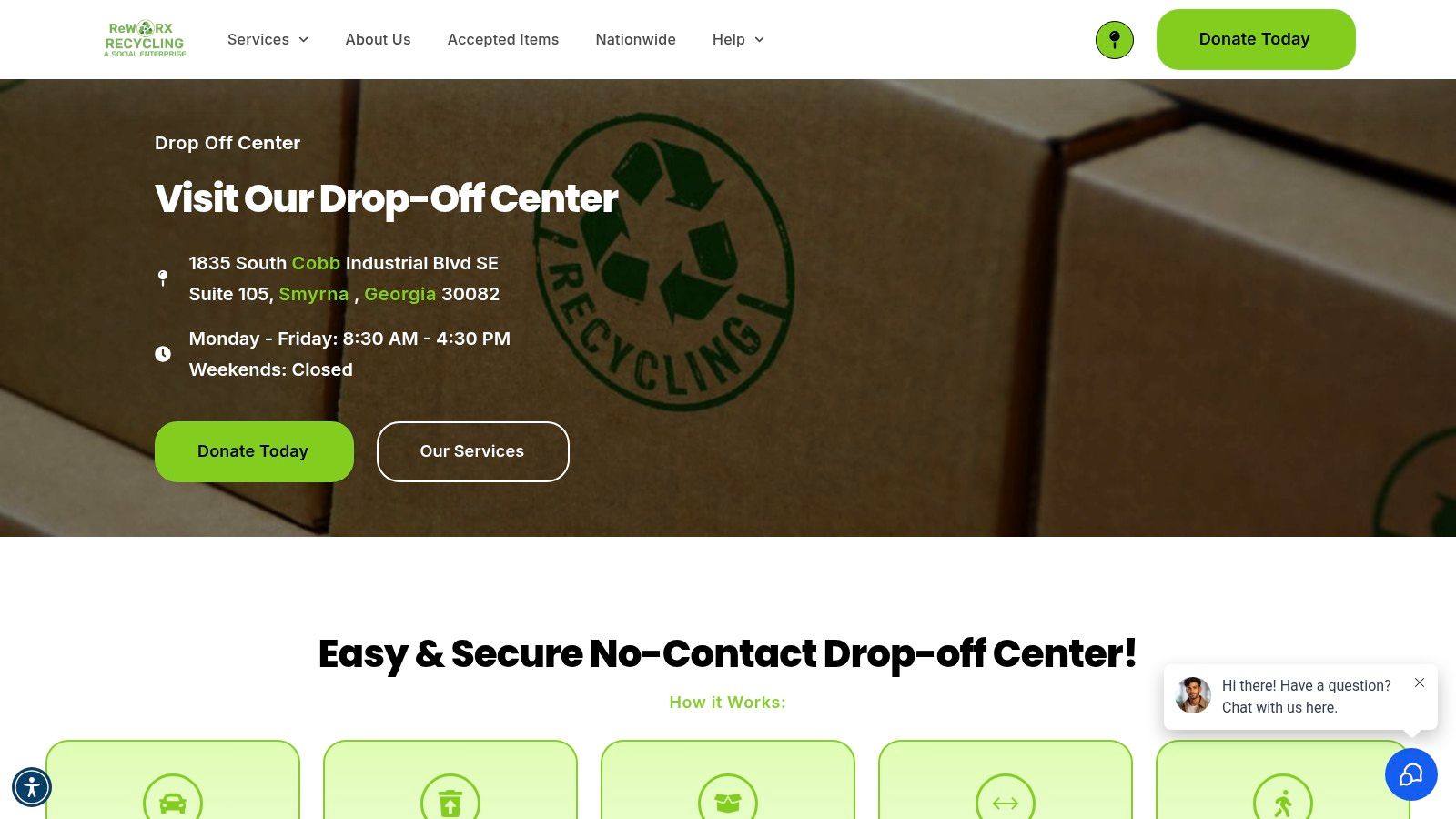
Reworx is a strong local name in Atlanta electronics recycling, especially for people who want a direct drop-off center with business capabilities behind it. The self-service setup is appealing because it keeps the visit quick. You unload, confirm acceptance, and move on.
It also helps that Reworx has credibility in the local nonprofit recycling space. For many users, that matters. They don’t just want disposal. They want to know the material is entering a process built around reuse and responsible recycling, not just getting transferred somewhere opaque.
Strong local recycler with business depth
Reworx is particularly useful if you want a local specialist that can serve both everyday drop-offs and more structured business needs. The same location logic applies here as with other good recycling programs. If it’s easy to reach and easy to use, more equipment gets recycled instead of stored indefinitely.
Atlanta also has a serious commercial recycling backbone behind providers like this. Certified operators in the region include STS Electronic Recycling, which runs a 600,000 sq ft R2v3-certified facility and emphasizes zero-landfill processing, secure wiping, and compliance documentation for enterprise gear. That doesn’t make every local drop-off center identical, but it shows the metro area has mature infrastructure for electronics recovery beyond basic public collection.
When to choose Reworx
- Choose Reworx for straightforward drop-offs: Good for residents and small offices that can self-transport.
- Use it when documentation may matter later: Certificates or receipts on request are helpful.
- Skip it for weekend-only schedules: Weekday access can be limiting.
Website: Reworx Recycling drop-off center
Atlanta Electronics Recycling, Top 10 Comparison
| Service | Core features ✨ | Experience ★ | Price / Value 💰 | Target 👥 | Notes 🏆 |
|---|---|---|---|---|---|
| 🏆 Fulton Junk Removal | Full-service haul‑away + direct recycling & donation; certified diversion reports | ★★★★★ Fast local response, upfront estimates, clear communication | 💰 Transparent, upfront pricing; free estimates | 👥 Homeowners, tenants, property managers, contractors, businesses | 🏆 Eco-first, compliance-ready; local within ~1‑hour |
| CHaRM – Grant Park | Purpose-built drop‑off for hard‑to‑recycle items; appointment system ✨ | ★★★★ Reliable flow, education programs | 💰 Residents: most electronics free; TVs/monitors & business items fee-based | 👥 Residents & small businesses | Nonprofit mission; appointments can book out |
| CHaRM DeKalb (Decatur) | Same hard‑to‑recycle focus + events; appointment/registration ✨ | ★★★★ Consistent experience with CHaRM Atlanta | 💰 Same transparent fee structure (TVs/monitor fees) | 👥 East-side residents & community groups | Adds capacity for DeKalb/Decatur area |
| Keep North Fulton Beautiful | Regular hours drop‑off; accepts many electronics; fee schedule ✨ | ★★★★ Predictable, community-supported service | 💰 Fees for CRTs/LCDs; some resident discounts/limits | 👥 Sandy Springs / Johns Creek residents | Hosts periodic bulky/e‑waste events |
| City of Roswell Recycling Center | City-run center; broad materials accepted; curbside options ✨ | ★★★ Predictable municipal hours | 💰 Some item fees (example: TVs); verify current rates | 👥 Roswell / North Fulton / East Cobb residents | Good for combining with household recycling |
| DeKalb County Sanitation (Seminole Rd) | County e-recycling outlet with published accepted list ✨ | ★★★ Official program; clear rules to avoid wasted trips | 💰 Free for accepted items; TVs/CRTs not accepted | 👥 East / southeast metro residents | Check hours/procedures before visiting |
| eWaste ePlanet (Doraville) | Commercial recycler; data sanitation/shredding; certificates ✨ | ★★★★ Business & residential drop‑off (weekdays) | 💰 Posted per‑lb fees for TVs/CRTs; battery fees apply | 👥 Businesses, IT depts, households | Certificates of destruction included |
| Beyond Surplus (Smyrna) | Free drop‑off for many items; mail‑in labels; DoD‑compliant erasure ✨ | ★★★★ Fast no‑contact drop‑off; receipts available | 💰 Mostly free; fees for printers/copiers or special services | 👥 Residents, small businesses, IT asset owners | Mail‑in option + after‑hours drop box; certified receipts |
| Best Buy (Atlanta stores) | Retail drop‑off for common consumer electronics; trade‑in options ✨ | ★★★ Convenient store locations; item limits apply | 💰 Select items free; some TVs/monitors may incur fees | 👥 Consumers / household customers | Limits per household/day; trade‑in offsets purchases |
| Reworx Recycling (Smyrna) | Self-unload, no‑contact drop‑off; business pickup services ✨ | ★★★ Straightforward, no‑contact process | 💰 Fees may apply for some categories; weekdays only | 👥 Residents & businesses needing documentation | Certificates available on request; verify accepted items |
From Drop-Offs to Cleanouts: Choosing Your Best Option
A common mistake is treating all electronics recycling options as if they solve the same problem. They don’t. A nonprofit appointment-based center, a city recycling yard, a retail take-back counter, and a full-service junk removal company all play different roles. Picking the right one comes down to workload, logistics, and risk.
If you have a small, clean, sorted load, drop-off is usually the best deal. CHaRM, Reworx, municipal centers, and retail programs all work well when the material fits in a car and you’ve got time to handle it yourself. That model is efficient for households, small home offices, and anyone replacing a few devices at a time. It also works for people who want to combine electronics disposal with other hard-to-recycle categories in one trip.
For businesses, the decision usually shifts from cost to labor and documentation. It’s not just about where to recycle electronics in Atlanta. It’s about who’s going to disconnect the equipment, move it safely, keep data-bearing devices separate, coordinate pickup, and provide records afterward. That’s where many DIY options stop being practical. Even a free drop-off can become expensive once you factor in staff time, vehicle use, scheduling, and the risk of mishandling drives or regulated waste streams.
Certified processing matters more on the commercial side. Atlanta-area recycling guidance regularly points people toward standards such as R2 and e-Stewards because responsible handling isn’t just about avoiding the landfill. It’s also about upstream vendors, downstream accountability, and avoiding the kind of vague disposal chain that leaves companies exposed. If your organization has internal sustainability reporting, client security expectations, or asset disposition policies, basic haul-away isn’t enough.
Fulton Junk Removal offers a strong practical advantage. Most junk removal companies are built to clear space fast. That solves only half the problem. Fulton pairs removal with Beyond Surplus so electronics and recyclable materials move into a recycling and reuse system rather than getting treated like ordinary debris. For offices, warehouses, retail spaces, and property managers, that’s the difference between “it’s gone” and “it was handled responsibly.”
The bundled model also simplifies mixed jobs. That’s common in practice. An office cleanup rarely consists of only old laptops. It usually includes cables, broken chairs, shelving, packaging, scrap metal, and general junk. Sending staff to one site for electronics and another for everything else is inefficient. Using a removal partner that can sort and route recyclable electronics appropriately is usually the cleaner operational choice.
For residents, the choice is simpler. If you’ve got a few items and don’t mind a drive, use a drop-off center or retail program. If you’re moving, downsizing, or clearing a garage with electronics mixed into a larger junk pile, full-service removal saves time and reduces hassle. That’s especially true when bulky items, stairs, loading effort, or uncertain item categories are involved.
The larger point is environmental, not just logistical. Landfilling electronics wastes recoverable material and creates unnecessary risk from substances that shouldn’t be tossed into standard trash streams. Responsible recycling does the opposite. It keeps usable devices in reuse channels where possible, separates materials that can be recovered, and routes hazardous components through facilities set up to manage them properly.
Atlanta gives you more than one good answer. Use CHaRM, Reworx, a municipal center, or Best Buy when the load is light and self-service makes sense. Use Fulton Junk Removal when the project is bigger, mixed, time-sensitive, or tied to business compliance and sustainability goals. The right choice isn’t the most popular one. It’s the one that gets the material out of your space and into the right downstream process.
Need help with more than a box of old electronics? Fulton Junk Removal can handle full cleanouts, pickups for offices and properties, and bundled electronics recycling through Beyond Surplus so your items are removed responsibly instead of dumped with ordinary junk.
