
7 Best Atlanta Spring Festivals for 2026
Atlanta in spring usually starts the same way. You pick one weekend outing, then suddenly your calendar is full of park festivals, neighborhood parades, outdoor concerts, and that one event everyone keeps texting you about. By mid-March, the city is moving, the dogwoods are out, and every good parking spot feels gone before lunch.
That’s why a simple roundup isn’t enough. If you’re looking for the Best Atlanta Spring Festivals, you need more than event names. You need to know which festivals are easiest to get around, which ones are best for families, which ones reward early arrival, and which ones require a real logistics plan if you're managing staff, vendor gear, booth materials, or post-event cleanup.
This guide is built for both sides of festival season. It’s useful if you’re an attendee deciding where to spend your weekends, and it’s just as useful if you manage property, operations, vendor setup, or event cleanup. Atlanta’s spring calendar is packed, but the experience varies a lot from festival to festival. Some are transit-friendly and easygoing. Others are excellent once you accept that parking will be the hardest part of your day.
If you're producing activations or sponsor experiences, it also helps to think beyond attendance and into setup flow, staging, storage, and guest engagement. For branded event teams planning fan-facing experiences, AI photo booths for sports events are one example of the kind of activation that works well in high-traffic festival environments.
Here are the Atlanta spring festivals worth planning around in 2026, with the practical trade-offs most roundups skip.
1. Atlanta Dogwood Festival
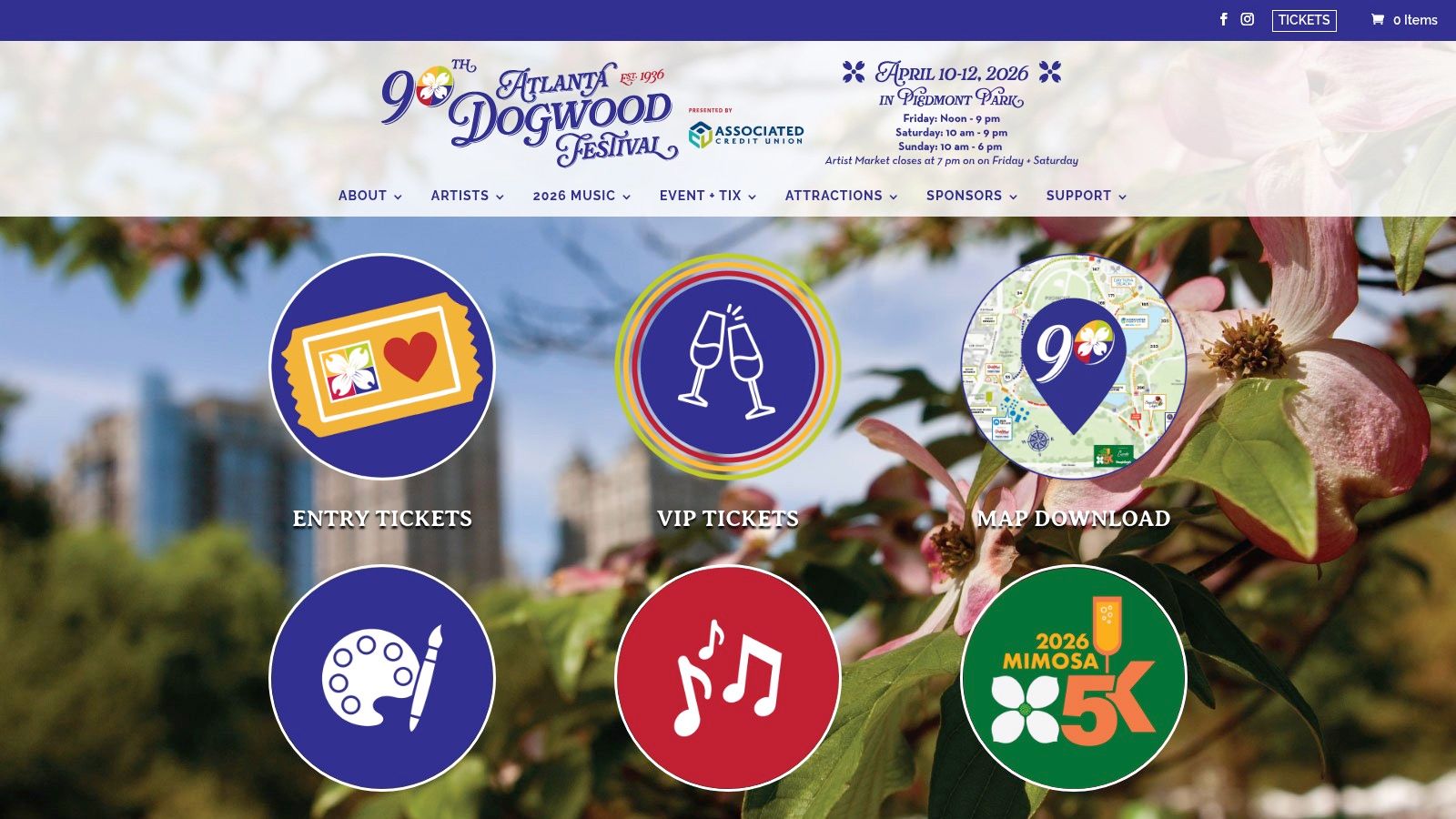
The Atlanta Dogwood Festival belongs on any serious Best Atlanta Spring Festivals list because it isn’t just popular. It’s foundational. The festival enters its 90th year in 2026, runs April 10 to 12, 2026 at Piedmont Park, and is described as the longest-running festival in Atlanta and the third oldest fine arts festival in the United States in Atlanta on the Cheap’s spring festival roundup.
That history matters because the event feels mature in the best way. It knows what it is. You go for the art market, the spring atmosphere, the music, the food, and the very Atlanta experience of seeing Piedmont Park turn into a citywide social hub.
Why it still works
Dogwood is broad without feeling random. The fine art focus gives the festival structure, while the music stages, family activities, and vendor mix keep it from becoming too niche.
If you like festivals where you can spend a full day without forcing the agenda, this is one of the safest bets in town.
- Best for art-first visitors: The juried artist presence gives the market more consistency than many neighborhood festivals.
- Best for mixed groups: Families, casual browsers, and serious art buyers can all find their lane.
- Best for central access: Midtown makes it one of the easier festivals to combine with lunch, dinner, or a full in-town weekend.
Practical rule: Don’t drive in assuming park-adjacent parking will be easy. Dogwood rewards MARTA, rideshare, and patience.
What to plan for
The trade-off is obvious. Everyone knows Dogwood, so everyone shows up. Crowds are part of the experience, and if you’re the type who hates bottlenecks around food lines or crowded walkways, go early in the day and be deliberate about your route through the park.
For vendors, sponsors, and nearby property teams, Dogwood also highlights a less glamorous reality. Big, established festivals generate a lot of leftover material after load-out, from broken displays to booth waste and packaging. Teams working in and around Midtown often need quick turnaround support, especially when the next booking or park use is already lined up. If you’re coordinating cleanup in the area, Atlanta junk removal support is often more useful than trying to stack everything in back-of-house space and deal with it later.
One niche but memorable add-on is the festival’s dog-friendly Atlanta energy. If your crew leans into pet-themed merch or side events, custom dog t-shirt printing fits the same playful audience.
2. Inman Park Festival & Tour of Homes
Inman Park Festival feels different from the big park festivals because the neighborhood is the venue. That changes everything. You’re not walking into a fenced event footprint. You’re moving through one of Atlanta’s most historic neighborhoods, where streets, homes, porches, and commercial pockets all shape the day.
That’s why this one stands out. It has the atmosphere of a local tradition, not a traveling event format dropped into a park.
The real draw
The appeal here isn’t just music or food. It’s the combination of an eccentric parade, a walkable street festival, and the Tour of Homes, which gives the weekend a sense of place that many larger festivals can’t match.
The volunteer-run character also shows. Inman Park tends to feel more community-rooted than corporate.
- Best for neighborhood energy: If you want Atlanta character instead of generic festival sprawl, this is a strong pick.
- Best for walkers: The setting rewards people who are comfortable moving block to block rather than camping in one spot.
- Best for architecture fans: The Tour of Homes adds a dimension most spring festivals do not have.
Trade-offs that matter
The same layout that makes Inman Park charming can make it logistically messy. Street closures affect approach routes, and casual drivers often underestimate how much easier the day gets if they park farther out and walk in. If you’re meeting friends, pick a landmark before arrival. Cell service and crowd flow aren’t always your friend once things fill in.
The parade and homes tour make this festival memorable. They also make “I’ll just pop in for an hour” less realistic than people think.
For attendees, the best move is to treat it like a roaming day. Wear shoes you trust, carry light, and expect route changes. For neighborhood residents, popup sellers, and property teams, the challenge is what happens after crowds clear. Temporary signage, extra furniture, packaging, and promotional materials tend to linger longer in residential settings than they do in a park venue. That cleanup is often slower because people assume they can handle it piece by piece, then end up storing the mess in garages, alleys, or basements.
The festival website, Inman Park Festival & Tour of Homes, is the best place to confirm the current schedule and ticketing details before you go. This is one of those Atlanta weekends where planning ahead pays off more than usual.
3. SweetWater 420 Fest
SweetWater 420 Fest is for people who want more concert energy than craft market energy. If your ideal festival day means stages, beer, larger crowds, and a stronger sense of programmed entertainment, this one usually lands.
The event also carries a sustainability identity that’s more visible than at many music festivals. That doesn’t automatically make logistics easier, but it does shape the experience and the expectations around waste, vendor operations, and site behavior.
Where it fits best
This is the festival I’d recommend to groups who want a spring music weekend without pretending they’re mainly there for browsing booths. The music is the center of gravity.
The family policy also matters if you’re bringing younger kids, since children 8 and under are allowed free with a ticketed adult according to the event details in the planning brief. That makes it more flexible for families than some music-first events, even though it still feels built primarily for adult attendees.
- Best for music-focused groups: You go here for performances first.
- Best for beer fans: The SweetWater identity is part of the draw, not a side feature.
- Best for people comfortable with event rules: Re-entry limits and venue policies matter more here than at open neighborhood festivals.
Logistics can make or break the day
The big caution with 420 Fest is access. No on-site parking sounds manageable until you remember that a lot of attendees will make the same transit and rideshare calculations at the same time. Build in more arrival buffer than you think you need.
If you’re producing booths, pouring samples, staffing sponsor space, or hauling activation materials, this is also where cleanup planning needs to happen before the event, not after it. Music festivals create awkward waste streams. Crushed displays, packaging, dead signage, flooring scraps, empty product containers, and miscellaneous gear don’t fit neatly into standard venue trash handling.
On-site lesson: Sustainability branding only works when the back-end hauling plan is real.
That’s where a company’s cleanup system matters. Fulton Junk Removal works with Beyond Surplus so electronics, metals, and other recyclable materials can be processed separately instead of being treated as one landfill pile. For commercial teams, that bundled haul-away and recycling approach is often more practical than asking staff to sort leftovers in a loading zone after a long event day.
For event specifics and ticket updates, use the official SweetWater 420 Fest website. This is the kind of festival that rewards reading the rules before you leave home.
4. Brookhaven Cherry Blossom Festival
Brookhaven Cherry Blossom Festival is one of the easiest recommendations for families and mixed-age groups because the value proposition is simple. It’s free, it’s city-run, and it keeps a daytime schedule that makes the whole weekend more manageable.
That setup matters more than people think. A lot of spring events are fun once you’re there, but they require a level of stamina or improvisation that isn’t ideal for parents, grandparents, or anyone trying to coordinate multiple people.
Why it’s easy to like
The event takes place March 28 to 29, 2026 in Blackburn Park, and the city frames it as a community festival with music, a juried artists market, food vendors, and a 5K through its Brookhaven Cherry Blossom Festival page. For a municipal event, it usually strikes a good balance between polished and relaxed.
Because admission is free, the pressure level is lower. You can go for a shorter visit without feeling like you need to “get your money’s worth.”
- Best for families: Daytime hours and broad programming make timing easier.
- Best for casual attendees: You can browse, eat, catch music, and leave without overcommitting.
- Best for planners who like clarity: City-managed events tend to publish logistics more cleanly than loosely organized neighborhood festivals.
What can get annoying
The downside is predictable. Free festivals attract broad crowds, and traffic around the site can tighten up quickly. If you hate circling for parking, arrive earlier than feels necessary.
Weather is the other wild card. Daytime park events are great when the weather cooperates and noticeably less charming when it doesn’t.
For nearby businesses, multifamily properties, and event support teams, Brookhaven also shows how even “easy” festivals create messy overflow. Sign packages, pop-up décor, spare fixtures, and leftover event supplies often get parked in storage rooms or garages and forgotten after the weekend. If you’re managing spring turnover in nearby North Fulton areas at the same time, Sandy Springs junk removal service can help clear bulky leftovers before they become semi-permanent storage problems.
The official festival website is still the right starting point for parking, volunteer, and schedule updates. With city-run events, the published logistics are often worth reading instead of guessing.
5. Atlanta Jazz Festival
Atlanta Jazz Festival has a different pace from the other entries on this list. It’s less about constant movement and more about settling in. You claim your patch of park, build your day around the lineup, and let Piedmont Park do a lot of the work.
That’s part of why it has such staying power. It’s not trying to be every kind of festival at once.
What makes it special
The festival is produced by the City of Atlanta over Memorial Day Weekend and runs for three days in Piedmont Park from May 23 to 25, 2026 according to the official Atlanta Jazz Festival website. Because it’s free and built around high-level jazz programming, it attracts a broad crowd without losing its musical identity.
This one works especially well for people who prefer an event with room to breathe. Even when attendance is heavy, the experience is less frantic than many music festivals.
- Best for music listeners: You can sink into performances instead of treating music as background noise.
- Best for picnic-style groups: Blankets, lawn chairs, and longer hangs fit naturally here.
- Best for holiday weekends in town: If you’re staying in Atlanta for Memorial Day, this is one of the strongest anchor events.
The practical downside
Holiday weekend crowds are real, and nearby parking gets difficult fast. If you want a smooth day, commit to transit, rideshare, or a longer walk. Don’t show up late and expect easy access near Piedmont Park.
For vendors and operations teams, jazz festivals can look deceptively low-impact because the atmosphere is calm. The cleanup side tells a different story. Food service waste, broken vendor materials, staging remnants, and end-of-event packaging still need to move quickly, especially when public park use turns over on a fixed timeline.
Quiet festivals still leave loud messes behind once breakdown starts.
That’s where commercial hauling matters. For venue partners, mobile vendors, and regional property teams handling festival-related overflow north of the city, Roswell junk removal support can make it easier to move materials out without clogging storage, docks, or maintenance areas after a long weekend.
If your ideal spring festival means world-class music without an admission charge, Atlanta Jazz Festival remains one of the city’s strongest annual traditions.
6. Atlanta Film Festival & Creative Conference
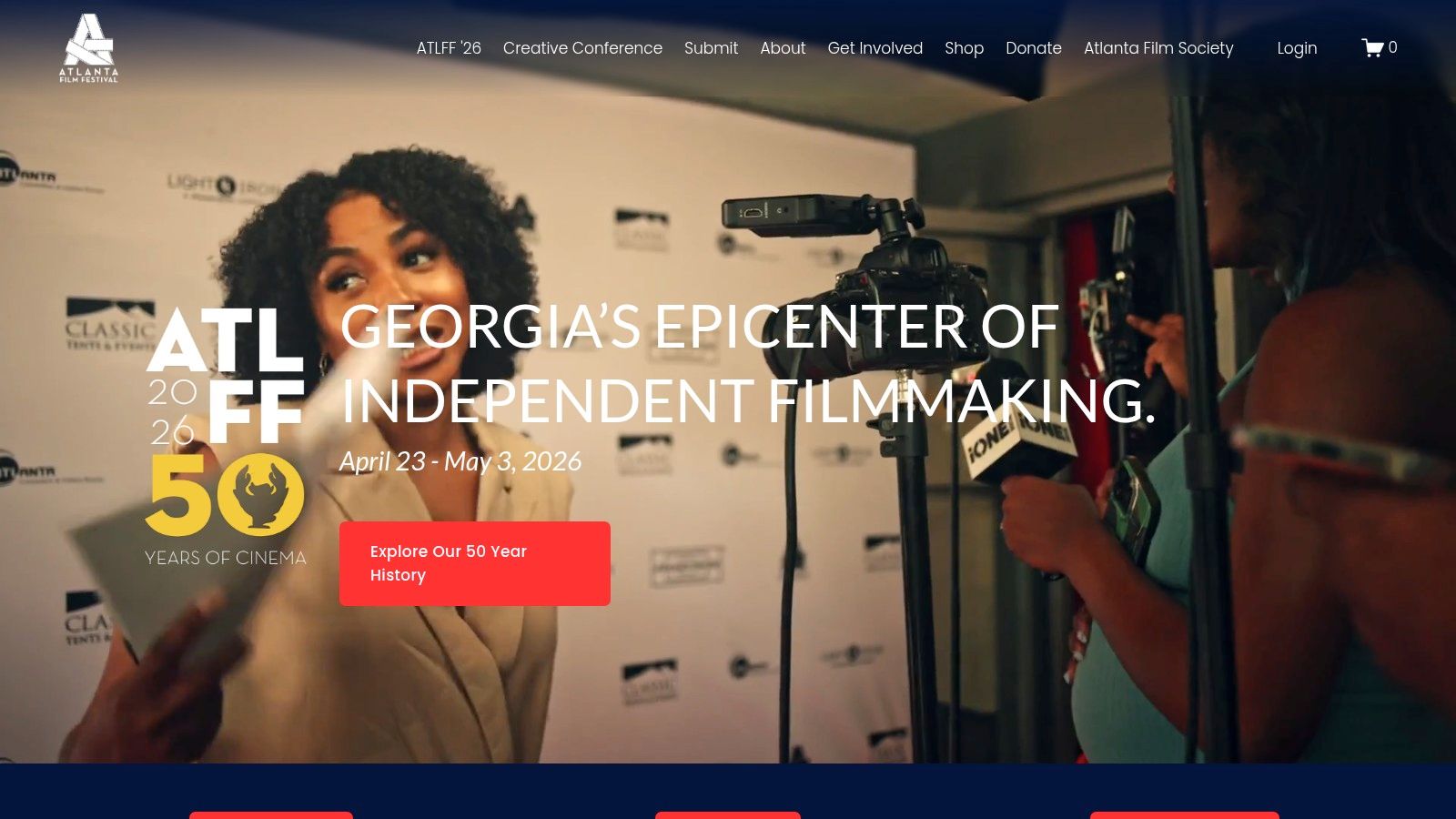
Not every spring festival in Atlanta happens on a lawn, and that’s exactly why the Atlanta Film Festival earns a place here. When pollen, heat, or crowd fatigue starts wearing thin, a film festival with real industry programming can be the smarter spring pick.
The festival runs April 23 to May 3, 2026, and the planning brief notes that it celebrates its 50th year in 2026. It also includes an 11-day schedule with features, shorts, and conference programming.
Best for people who want more than a weekend outing
This is the most professionally useful event on the list for filmmakers, marketers, media teams, students, and creative businesses. You’re not just attending for entertainment. You’re attending because the panels, workshops, and networking can justify the time.
The multi-venue format also changes the rhythm. Instead of one giant all-day site, you’re selecting screenings and events with more intention.
- Best for creatives and industry attendees: The conference element gives it practical value beyond the screenings.
- Best for bad-weather weekends: Indoor programming is a relief during unpredictable spring stretches.
- Best for schedule-builders: If you like curating your own experience, this event gives you options.
The trade-offs are all about planning
The downside is fragmentation. Multiple venues mean more travel decisions, more timing pressure, and more chances to miss something because you assumed moving across town would be quicker than it is. High-demand screenings can also tighten up availability.
For brands, production teams, and event marketers, film festivals create a different cleanup profile than outdoor music events. Less mud, more printed material. Less beverage waste, more signage, booth assets, set pieces, electronics, and temporary display hardware. Those materials shouldn’t all go into the same disposal stream, especially when some can be recycled and some may still have reuse value.
If you’re coordinating office, studio, or event support in the North Fulton corridor, Alpharetta junk removal service is relevant when festival leftovers spill back into storage rooms, creative workspaces, or loading areas after the event run.
The best way to plan this one is through the official Atlanta Film Festival site. Treat it like a conference, not just a casual outing, and the experience improves immediately.
7. Atlanta Science Festival

Atlanta Science Festival is the most educational entry on this list, but it’s still a festival in the fun sense, not the homework sense. That distinction matters. The best science programming gives families and students hands-on reasons to stay engaged, and this event has built its reputation around exactly that.
The planning brief describes it as a two-week, region-wide STEM celebration scheduled for March 7 to 21, 2026, with about 150 events across metro Atlanta. It also notes that the Exploration Expo in Piedmont Park is free and includes more than 100 activity booths delivered by 80-plus partner organizations.
Why families and schools keep coming back
This isn’t just one event footprint. It’s a network of events with a major public-facing expo at the center. That format is useful because families can choose the large, high-energy experience or target smaller satellite events that fit their interests better.
For schools, youth programs, and parents who want a spring outing with actual educational value, this is one of the strongest picks in the city.
- Best for curious kids: The hands-on element makes a big difference.
- Best for school and family scheduling: A multi-event calendar gives you more flexibility than a single weekend festival.
- Best for people who like purpose-driven outings: You leave with more than photos and snacks.
What to know before you go
The Expo can feel crowded, especially around the most interactive stations. If your kids hate waiting, arrive early and prioritize the booths that matter most before drifting into general browsing.
The other practical issue is registration discipline. Region-wide events often require separate signups, and it’s easy to assume everything is drop-in when it isn’t.
“Pick your must-do stations first. Wandering works better after you’ve covered the high-interest booths.”
From an operations standpoint, science events also create unusual material streams. Demonstration setups, teaching materials, booth structures, printed collateral, electronics, and leftover supplies can pile up quickly once school groups, nonprofits, and partners break down. For organizations that don’t want those materials sitting in offices, classrooms, garages, or community storage rooms afterward, Johns Creek junk removal support can help move out bulky leftovers and route recyclable items more responsibly through the Beyond Surplus system.
For scheduling and registration, use the official Atlanta Science Festival website.
Top 7 Atlanta Spring Festivals Comparison
| Festival | Implementation Complexity 🔄 | Logistics / Efficiency ⚡ | Resource Requirements | Expected Outcomes 📊 | Ideal Use Cases 💡 | Key Advantages ⭐ |
|---|---|---|---|---|---|---|
| Atlanta Dogwood Festival | Medium 🔄🔄, multiple stages, juried market, VIP areas | Moderate ⚡⚡, transit-friendly but crowd management needed | Permits, vendors/artists, stage crews, volunteers | Strong arts exposure, family programming, high attendance | Arts shoppers, families, community outing | Long history, central location, diverse programming |
| Inman Park Festival & Tour of Homes | High 🔄🔄🔄, parade logistics and timed home tours | Moderate ⚡⚡, walkable but street closures affect access | Large volunteer base, parade permits, ticketed tour coordination | High community engagement and neighborhood fundraising | Historic-home enthusiasts, parade-goers, local supporters | Volunteer-run, historic charm, curated Tour of Homes |
| SweetWater 420 Fest | High 🔄🔄🔄, multi-stage production and alcohol service | Moderate ⚡⚡, MARTA access; last-mile/re-entry limits | Commercial permits, security, staging, vendor management | High-energy music event with strong beer and sustainability focus | Music fans, craft-beer drinkers, Earth Day audiences | Festival scale, craft-beer emphasis, sustainability programs |
| Brookhaven Cherry Blossom Festival | Low–Medium 🔄🔄, city-managed daytime event | Moderate ⚡⚡, easy schedule but tight parking/traffic | City staff, vendors, stages, volunteer support | Free family entertainment with notable headliners | Families, daytime community outings, casual attendees | Free admission, city-run logistics, family-oriented |
| Atlanta Jazz Festival | Medium 🔄🔄, multi-stage city production over holiday weekend | Moderate ⚡⚡, large crowds; limited nearby parking | City production, artist contracts, large staging, security | High-quality free national jazz programming | Jazz enthusiasts, large-audience cultural outings | Nationally recognized lineup, iconic park setting, free entry |
| Atlanta Film Festival & Creative Conference | High 🔄🔄🔄, multi-venue scheduling plus conference tracks | Moderate ⚡⚡, distributed venues require planning; ticketed | Venue rentals, screening equipment, accreditation, staff | Industry networking, filmmaker exposure, award eligibility | Filmmakers, industry pros, cinephiles seeking panels | Academy-qualifying status, strong industry programming |
| Atlanta Science Festival | High 🔄🔄🔄, two-week, ~150 events with many partners | Moderate ⚡⚡, popular free Expo can be crowded; registrations | Partner organizations, volunteers, interactive materials, venues | Strong educational impact, K–12 engagement, public outreach | Families, schools, STEM outreach and community partners | Extensive partner network, hands-on Expo, strong K–12 focus |
Beyond the Festivals Keeping Atlanta Beautiful
Atlanta’s spring festival season is one of the city’s best arguments for itself. You see it in Piedmont Park when the lawns fill up, in neighborhood streets when local traditions take over, and in the way people make time for art, music, film, science, and community once the weather turns. The Best Atlanta Spring Festivals aren’t just entertainment. They’re a yearly reminder that Atlanta knows how to gather.
But festival season also puts pressure on the city in ways most visitors never think about. Every successful event leaves behind something. Sometimes it’s as small as food packaging and vendor boxes. Sometimes it’s temporary fencing, broken displays, signage, staging scraps, unused materials, or equipment that gets shoved into a garage, dock, storage room, or maintenance area because nobody has time to deal with it that night.
That’s true for large public events and for smaller ripple effects around them. Restaurants near venues bring in extra supplies. Property managers clear space before activations. Sponsors build temporary installations. Schools, nonprofits, and community groups hold side events. Then Monday shows up, and someone has to reclaim the space.
The smart approach is simple. Enjoy the festivals, but treat waste and cleanout planning as part of the event, not as an afterthought. For attendees, that means using the bins that match the material, carrying less disposable stuff into the park, and not leaving chairs, coolers, signs, or broken gear behind when the day is over. For organizers and vendors, it means knowing what can be reused, what needs recycling, and what should be hauled out quickly so sites, sidewalks, loading zones, and storage areas don’t stay clogged.
This matters even more for commercial teams. Offices, warehouses, apartment communities, venues, and retail locations don’t have the luxury of letting festival-related clutter sit for a week. Delayed cleanup slows the next tenant turnover, the next booking, the next delivery, or the next event setup. It also makes sustainability claims look thin if everything ultimately gets mixed together and dumped.
That’s where a more circular cleanup model makes practical sense. Fulton Junk Removal, working with Beyond Surplus, handles haul-away while separating electronics, metals, and other recyclable materials for more responsible processing. For property managers, facilities teams, and event operators, that kind of bundled removal and recycling is useful because it helps clear space quickly while supporting internal sustainability and compliance goals.
The broader point is straightforward. Festival season should leave Atlanta energized, not overloaded. The same city that celebrates spring so well also benefits when residents, vendors, and organizers clean up with intention. Better packing, better disposal habits, and faster post-event removal all make a visible difference.
So go enjoy the dogwoods, the parades, the jazz sets, the film screenings, and the science booths. Bring the lawn chair, wear the comfortable shoes, take MARTA when it makes sense, and plan for the crowds when the event deserves it. Then finish the job properly. That’s how Atlanta stays welcoming through the busiest stretch of the spring calendar.
If you need post-event hauling, office cleanouts, property turnover removal, or bundled recycling support in metro Atlanta, Fulton Junk Removal is a practical local option for fast, responsible cleanup.
