
10 Best Scenic Spots in Atlanta Georgia for 2026
Atlanta venues look easy on the front end. The lawn is booked, the catering is confirmed, the branding wall is delivered, and everyone’s focused on guest experience. Then the event ends. Pallets, broken signage, mixed recycling, catering leftovers, staging scraps, and e-waste from check-in gear are still sitting on-site. That’s the part property managers, facilities teams, and event organizers have to solve fast.
That’s why the best scenic spots in Atlanta Georgia matter for more than photos. They’re working venues. Parks, heritage sites, and riverfront locations double as backdrops for company retreats, nonprofit galas, community activations, and employee wellness events. A good site gives you views and foot traffic. A great site also gives you enough operational clarity to plan setup, breakdown, hauling, and diversion without disrupting the next booking.
The hard part isn’t finding somewhere beautiful. Atlanta has no shortage of that. The hard part is matching the venue to the event and then building cleanup into the run of show before the first truck arrives. Open green spaces create flexibility, but they also spread waste streams across a wider footprint. Historic venues look polished, but they usually require more careful handling during breakdown. Natural areas are memorable, but they leave very little room for sloppy disposal practices.
For commercial teams, the safest approach is simple. Treat cleanup as part of venue strategy, not an afterthought. That means knowing where the waste will be generated, what can be recycled, what needs donation routing, and who can clear the site quickly without defaulting everything to landfill.
If you're planning an activation, retreat, or public-facing gathering, this guide looks at Atlanta’s standout scenic venues through that operational lens. It’s written for the people who still have work to do after the crowd leaves. For broader planning ideas, it also helps to review strong corporate event solutions before you lock the venue and vendor list.
1. Piedmont Park
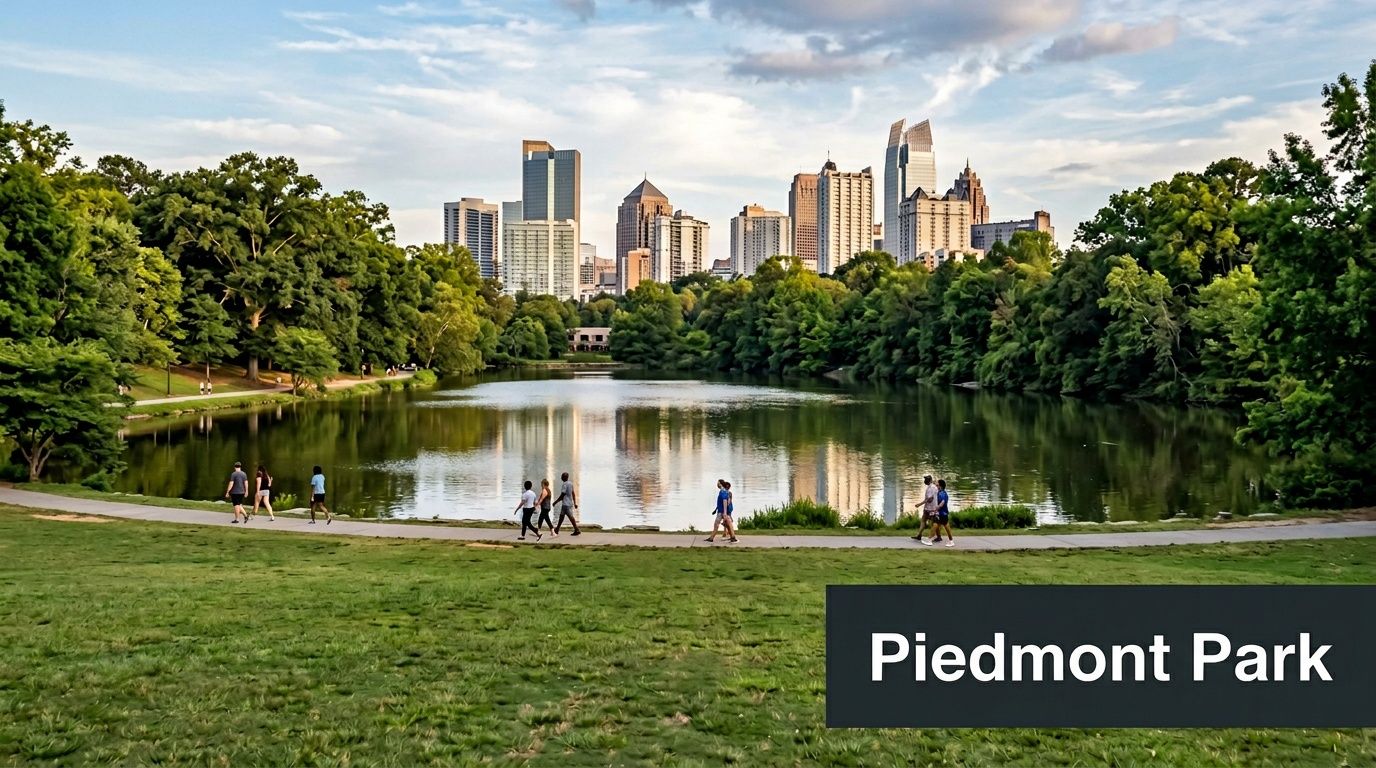
A sponsor tent is going up near the lawn, catering is stacking deliveries at the curb, and guest check-in opens in two hours. Piedmont Park suits that kind of event because it gives planners a recognizable Atlanta backdrop in a central location, while still offering enough room to separate guest-facing activity from service operations. The park spans more than 200 acres, according to Piedmont Park Conservancy, which explains why it stays in rotation for company outings, public activations, and nonprofit gatherings.
Its real value for commercial use is operational flexibility. You can stage programming across lawns, paths, and waterfront-adjacent areas without forcing every vendor into the same footprint. For teams scheduling recurring outdoor events, Fulton Junk Removal already supports Atlanta commercial cleanup and hauling services that fit this kind of urban park setup.
Why it works for commercial events
Piedmont Park is a strong fit when visibility matters and buildout needs to stay efficient.
The skyline helps with branding and photography, but the bigger advantage is circulation. Guests can move naturally through the site while event staff maintain separate zones for supplies, back-of-house storage, and post-event collection. That division matters once pallets, signage, boxed swag, floral waste, and catering debris start piling up.
The trade-off is exposure. A busy public park leaves very little room for a sloppy teardown, especially if your event ends close to another permitted use or a heavy recreational window.
A few use cases make sense here:
- Brand activations: The location is easy for attendees to find and easy for brands to promote.
- Employee events: Open space supports wellness programming, team games, and casual seating layouts.
- Community fundraisers: Multiple activity areas help planners reduce bottlenecks and distribute waste stations more intelligently.
Cleanup reality at a high-traffic venue
Piedmont Park regularly hosts large public events, including the Atlanta Jazz Festival and the Atlanta Dogwood Festival, as listed by Piedmont Park Conservancy. For property managers and event teams, the lesson is straightforward. Cleanup needs a site plan, a hauling window, and clear material separation before load-in starts.
I’ve seen the same problem at parks like this more than once. The event itself runs well, then teardown stalls because cardboard, food waste, damaged décor, and vendor leftovers all end up in one holding area. That slows removal, raises labor time, and makes diversion harder to document.
Practical rule: Schedule haul-away to match the teardown schedule, not the optimistic version of it.
What works:
- Pre-labeled collection zones: Staff and vendors sort faster when streams are obvious.
- Tight pickup timing: Fast removal keeps public-facing areas clear and reduces complaints.
- Material planning before event day: Cardboard, metals, reusable fixtures, and landfill trash should each have a destination.
What creates problems:
- Mixed debris from multiple vendors: Sorting after the event costs more and recovers less.
- Late decisions on surplus items: Donations and reusable event materials need routing in advance.
- Crews blocking guest paths during breakdown: In a park with steady foot traffic, bad staging creates safety and appearance issues fast.
2. Stone Mountain Park
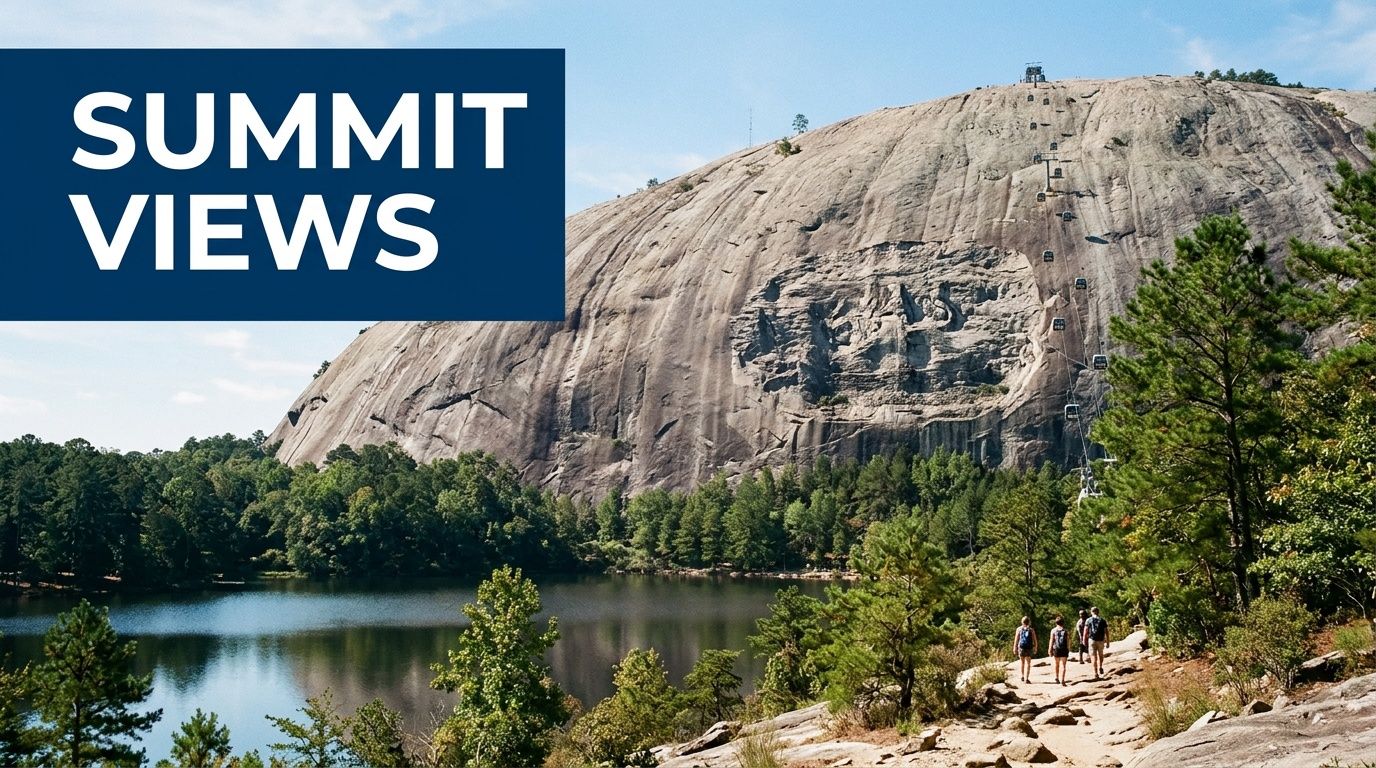
A corporate picnic looks simple on paper until teardown starts across a venue the size of Stone Mountain Park. One group is breaking down signage near the lawn, a caterer is holding boxed leftovers by a service road, and guest traffic is still moving through scenic areas you cannot afford to clutter with carts and bagged debris. At this kind of site, beauty sells the event. Operations protect it.
Stone Mountain Park works best for planners who want scale, strong visual identity, and enough room to separate programming across multiple activity areas. The mountain, the lake, the trails, and the ride-access summit experience give commercial events a built-in backdrop, which can reduce spending on temporary décor. The trade-off is operational spread. Cleanup crews, vendors, and hauling partners need a tighter site plan here than they would at a smaller urban venue.
That matters for property teams and event managers focused on sustainability. Waste does not collect in one predictable pile. It shows up in guest areas, vendor staging zones, parking adjacencies, and post-event storage points.
As noted earlier from Stone Mountain Park's visitor information, the site is large, heavily visited, and built around multiple attractions. Those conditions are good for attendance and brand impact. They also raise the risk of missed pickups, contaminated recycling, and slow resets if disposal planning starts too late.
Where Stone Mountain Park works for commercial events
This venue is a strong fit for:
- Large company outings: The setting carries the experience without much scenic build-out.
- Client entertainment events: The summit views and landmark setting make the venue memorable.
- Multi-part programs: Teams can split check-in, dining, recreation, and presentations across separate areas.
- Public-facing sponsor events: A recognizable destination can improve turnout, but only if operations stay controlled.
The cleanup challenges are different from a compact park. Distance matters. Access matters. So does timing. A recycling station placed for guest convenience may be a poor choice for removal efficiency if trucks and crews cannot reach it without crossing active pedestrian paths.
At Stone Mountain Park, waste planning should follow access routes first and guest flow second. If those two plans conflict, teardown slows and contamination rises.
What usually produces better results:
- Zone-based teardown plans: Assign separate timelines for catering, rentals, décor, and general trash.
- Back-of-house consolidation points: Pull materials to service-friendly areas before the main haul-away window.
- Clear stream separation: Cardboard, metals, pallets, and landfill debris should never wait for sorting after the event.
- Pre-event surplus removal: Old fixtures, stored equipment, and leftover materials consume staging space that crews need on event day.
One more venue consideration deserves attention. Stone Mountain includes a highly visible historic feature tied to the Confederate Memorial Carving. For commercial event teams, that is not just a cultural note. It affects brand fit, guest expectations, signage decisions, and how public-facing cleanup activity is managed around sensitive, high-visibility areas.
For large outdoor venues like this, Fulton Junk Removal helps teams keep the site presentable without turning sustainability into an afterthought. The practical goal is simple. Remove material fast, sort what can be recovered, and keep the venue looking event-ready from load-in through final pickup.
3. Atlanta BeltLine Park System
The Atlanta BeltLine is different from the other entries because it isn't one venue. It's a corridor. That changes everything for event logistics.
For planners, the appeal is obvious. BeltLine-adjacent events feel current, connected, and embedded in Atlanta’s daily life. For property managers, the BeltLine isn't just scenic. It's tied directly to leasing demand, neighborhood identity, and turnover pressure.
A strong business case in this list comes from the real estate sector. Properties along Atlanta's BeltLine, especially in Reynoldstown, have shown 25% year-over-year value growth, and the same source notes a full BeltLine rent premium that puts these properties in the same competitive tier as waterfront locations. If you manage assets near the Eastside Trail, appearance and cleanup speed aren't cosmetic issues. They affect premium positioning.
Where the BeltLine shines
A corridor venue works best for:
- Neighborhood activations: Brands can tap into existing foot traffic instead of generating all attendance themselves.
- Resident events: Multifamily properties near the trail can host programming that feels local instead of generic.
- Wellness outings: Walking routes and open-access movement are easier to organize than at a closed venue.
The downside is fragmentation. Waste isn't generated in one ballroom or one fenced lawn. It shows up in staging areas, side entrances, check-in stations, hospitality carts, and post-event storage zones.
What property teams often miss
BeltLine events blur the line between venue cleanup and property operations. A leasing event might create banner waste, furniture packaging, abandoned promo items, and old office electronics all in one day. If your hauler only does basic pickup, your team still has to figure out what happens to the recyclable material later.
That’s where a Fulton Junk Removal and Beyond Surplus approach fits better than standard hauling. The removal side clears the site. The recycling side handles electronics, metals, and reusable material more responsibly, which is far more useful for mixed-use buildings and commercial portfolios than a landfill-only approach.
What works:
- Recurring service for active properties: BeltLine frontage creates a constant need for quick resets.
- Diversion reports for ownership groups: Premium properties often need documentation, not verbal assurances.
- Tight turnover scheduling: Faster cleanouts matter more where demand is already high.
What doesn't:
- Treating the trail like a single event pad: It's an active public corridor, not an isolated field.
- Combining office junk with event debris: It slows sorting and usually increases contamination.
4. Centennial Olympic Park
Centennial Olympic Park is the venue for teams that need downtown energy and a polished event backdrop. It doesn't offer wilderness or retreat-style quiet. It offers visibility, adjacency to major attractions, and a setting that already reads as civic and event-ready.
That makes it a strong choice for conferences, sponsor events, media-facing gatherings, and product launches tied to the downtown core. If a brand wants a recognizable Atlanta location without asking guests to travel far from hotels or convention activity, this is one of the cleanest options.
Best fit for high-visibility programming
This park works when presentation matters as much as programming. Guests already expect movement, noise, and nearby activity downtown, so a branded event feels natural here.
That said, downtown venues expose sloppy operations fast. A delayed load-out, stacked trash bags, or leftover displays can undermine a polished event in less than an hour. This isn't the kind of setting where crews can disappear into the background and sort things out later.
"If the event is public-facing, the cleanup plan needs its own timeline, supervisor, and staging map."
That advice matters most for multi-day corporate gatherings. One teardown window usually isn't enough if you're handling décor, production waste, catering overflow, and sponsor material all at once.
What works in practice
For Centennial Olympic Park, the strongest approach is layered support:
- Pre-event clearing: Remove obsolete promo inventory, stored fixtures, and old equipment before vendor load-in.
- Mid-event service: Multi-day events often need a reset between programming blocks.
- Post-event sweep: Final haul-away should include signage, broken displays, pallets, and recyclable material, not just bagged trash.
What often fails is underestimating the amount of non-trash material generated by polished events. Branded environments create a surprising volume of foam board, step-and-repeat structures, wire, crates, and electronics. If those streams aren't separated early, recovery gets harder and disposal costs usually rise.
For sustainability teams, this is also a strong venue to insist on documentation. A downtown corporate event often includes stakeholders who want proof that material was recycled or repurposed where possible. Fulton’s partnership with Beyond Surplus is useful here because e-waste and recyclable materials don't have to be managed as an afterthought after the haul-away is done.
5. Kennesaw Mountain National Battlefield Park
Kennesaw Mountain attracts a different kind of event. It isn't about spectacle. It's about focus.
For leadership retreats, outdoor team sessions, and history-minded gatherings, the setting encourages slower programming and smaller operational footprints. That usually reduces waste volume, but it also removes the margin for careless handling. At a historic outdoor site, one messy catering breakdown or poorly managed staging area stands out immediately.
Why smaller groups do well here
This venue works best for organizations that want the event to feel intentional. Executive teams, nonprofit boards, and smaller department groups often get more value from a scenic site like this than from a louder downtown location.
The trade-off is convenience. Guests may love the scenery and trails, but support infrastructure won't feel as forgiving as a major urban event venue. You need a tighter plan for deliveries, leftovers, and post-event removal.
For North Fulton and nearby operators planning support around the northern metro, service coordination often overlaps with https://fultonjunkremoval.com/service-areas/roswell/.
Practical cleanup decisions
The most common mistake at a place like Kennesaw Mountain is assuming that a lower-key event creates low cleanup needs. That's only partly true. Waste may be lighter, but it's often more awkward: boxed lunches, rented furniture wrap, directional signage, coolers, floral material, and leftover printed collateral.
A better approach is to focus on containment rather than volume.
- Set one base area: Keep supplies, breakdown materials, and pickup staging in a single controlled zone.
- Schedule next-day removal only if materials are secured: If not, same-day service is safer.
- Route usable leftovers: Extra event supplies, unopened materials, or reusable furnishings shouldn't automatically become disposal.
This is also where respectful handling matters. Historic locations call for cleaner operating habits. Crews should minimize visual clutter during teardown and avoid dragging out cleanup longer than necessary. A scenic battlefield setting can support strong corporate programming, but only if the operation stays disciplined from setup through final haul-away.
6. Grant Park
Grant Park is one of the better options for organizations that want a scenic Atlanta setting with a more established neighborhood feel. It doesn't have the scale of Stone Mountain or the corridor dynamics of the BeltLine. What it offers instead is character.
That matters for family-oriented company days, nonprofit gatherings, community events, and sponsor-supported local programming. The mature natural setting and surrounding historic identity give events more warmth than a generic open field.
Where Grant Park fits best
Grant Park tends to work well for:
- Company picnics and family days
- Fundraisers with a local community angle
- Seasonal neighborhood events
- Partner events tied to Southside organizations
The practical advantage is tone. The venue feels less corporate, which is often exactly what the organizer wants. Guests relax faster in spaces that don't feel overproduced.
The drawback is that historic-feeling venues make visible waste look worse. Temporary fencing, stacked beverage cases, abandoned kids' activity materials, and broken décor read as neglect much faster in a park like this than they do at an industrial event site.
What cleanup should look like
At Grant Park, crews should aim for quiet efficiency. Fast isn't enough if the removal process creates its own mess.
A few habits make a big difference:
- Break down décor close to the source: Don't drag fragile or messy materials across wide sections of lawn.
- Separate donation candidates immediately: School-supply leftovers, unopened activity materials, or reusable furnishings can often be rerouted.
- Avoid peak visitor conflict: Pickup timing matters when families and general park users are moving through the same space.
This is a good venue for organizers who care about image but don't need high-gloss production. It's also a smart place to use an eco-conscious partner instead of a basic dump-run crew. If your event messaging includes neighborhood engagement or environmental values, landfill-first hauling undercuts that story quickly.
Grant Park rewards planners who keep the footprint modest, control the staging area, and wrap cleanly. When that happens, the venue feels effortless. When it doesn't, every leftover item becomes part of the guest memory.
7. Arabia Mountain National Heritage Area
Arabia Mountain stands out because the setting does a lot of the work for you. Granite outcrops, open sky, and a more rugged natural feel give outdoor gatherings a distinct atmosphere without expensive production layers.
For sustainability-focused companies, environmental groups, and teams planning outdoor retreats, that's a major advantage. The venue aligns naturally with programming around conservation, wellness, and community stewardship. The operational standard should match that tone.
Best for mission-driven outdoor events
Arabia Mountain is a strong fit when the event itself is tied to values:
- Corporate sustainability retreats
- Volunteer appreciation gatherings
- Outdoor leadership sessions
- Environmental education programs
The trade-off is obvious. A heritage environment gives you less room for careless event habits. If your team relies on mixed debris piles, disposable décor, or loose breakdown procedures, this isn't the right setting.
The location rewards planners who can keep materials light, mobile, and recoverable.
How to manage waste without fighting the venue
The best cleanup strategy here is simple. Bring in less, sort early, and remove everything quickly.
Field note: Natural heritage sites aren't forgiving. If you have to ask whether a material can sit overnight, the answer is usually no.
That principle changes vendor decisions. Choose signage that can be reused. Avoid bulky decorative installs unless the removal plan is already confirmed. Keep catering compact and packaging-conscious.
For this type of venue, Fulton Junk Removal’s role is less about brute-force hauling and more about disciplined recovery. If your event generates electronics, metal displays, or recyclable packaging, the Beyond Surplus connection makes a real difference because those materials can be processed more responsibly instead of disappearing into a mixed load.
One caution from the available research matters here too. Current scenic spot content around Atlanta offers limited guidance on seasonal viability, crowding, and weather effects for outdoor locations, including nearby trail-oriented destinations, according to this note on seasonal and weather-dependent planning challenges. In practice, that means event teams should build extra caution into weather backup planning rather than assuming every scenic site performs the same year-round.
8. Atlanta History Center
The Atlanta History Center is the polished choice on this list. If Piedmont Park is flexible and Stone Mountain is expansive, this venue is controlled, refined, and better suited to higher-touch events.
That makes it a strong option for executive dinners, donor events, board gatherings, and premium corporate functions where the venue itself signals quality. The gardens and historic context add visual value without pushing the event into a casual outdoor format.
For organizations in North Fulton and the broader business corridor, nearby service planning often connects with https://fultonjunkremoval.com/service-areas/alpharetta/.
Why this venue requires a different cleanup style
At the Atlanta History Center, the issue isn't usually waste volume. It's presentation.
A warehouse cleanout can tolerate visible loading. A cultural venue can't. Cleanup has to feel controlled, discreet, and timed around guest flow and facility expectations. That changes crew behavior. Dollies, wrapping material, floral breakdown, and catering residue all need tighter handling.
This is one of the few scenic venues where discretion matters as much as speed.
Smart post-event handling
The strongest approach here is to split cleanup into phases.
- Immediate reset: Remove guest-facing clutter as soon as the event ends.
- Back-of-house consolidation: Sort recyclables, donation candidates, and general debris out of sight.
- Final haul-away: Clear the rest once the site is operationally quiet.
What works especially well:
- Donation routing for excess materials: Premium events often leave behind usable décor elements or unopened supplies.
- Electronics recycling for production gear: Check-in tablets, cords, batteries, and small accessories shouldn't end up mixed with banquet waste.
- Quiet coordination with venue staff: This isn't a venue for improvising truck placement or pickup timing.
What doesn't work is treating a heritage institution like a festival ground. Loud, extended teardown and loosely sorted materials can undo the professionalism of the event very quickly.
For office managers and facilities leaders, this venue also illustrates a broader point. High-end events produce a surprising amount of recoverable material. If you already use one provider for junk removal and another for recycling, coordination gaps usually show up after the guests leave. Bundled service removes that handoff problem.
9. Chattahoochee River National Recreation Area
The Chattahoochee River National Recreation Area is the strongest option for teams that want an outdoor event to feel outdoors. River access, wooded trails, and dispersed gathering points make it ideal for wellness programs, employee appreciation outings, and low-friction team-building events.
It’s also the venue on this list where bad cleanup habits create the biggest environmental mismatch. If your event messaging talks about sustainability while your breakdown plan produces mixed loads and abandoned material, people notice.
For companies and properties in the north side corridor, local support often aligns with https://fultonjunkremoval.com/service-areas/sandy-springs/.
Best use cases for the river corridor
This setting works well for:
- Wellness days
- Kayak or paddle-based outings
- Department retreats
- Environmental volunteer events
- Casual employee gatherings with movement built in
The challenge is dispersion. Guests, supplies, and waste aren't concentrated in one place. If you use several access points or activity stations, your cleanup has to be routed the same way.
That usually means the post-event plan needs more supervision, not more labor. A small but well-managed crew often outperforms a bigger team that's working without clear zones.
Leave-no-trace isn't optional
At riverfront sites, the right standard is pack-out discipline. Anything less is asking for problems.
What works:
- Assign one person to own each waste stream: Recycling fails when everyone assumes someone else is watching it.
- Use compact staging tools: Smaller collection points are easier to remove without impacting the site.
- Schedule pickup based on access conditions: Not every area is equally convenient for removal vehicles or crews.
The cleaner your event looks during breakdown, the easier it is to protect both the site and your brand.
This is one of the best examples of why Fulton’s Beyond Surplus partnership matters for commercial clients. Outdoor teams increasingly want sustainability reporting they can effectively use. If your event produced e-waste, metal, or recyclable packaging, it helps to have one coordinated path from pickup to responsible processing instead of a patchwork of vendors and assumptions.
10. Sweetwater Creek State Park
Sweetwater Creek State Park is the venue for organizations that want scenery with some edge. The trails, water, and mill ruins create a more rugged experience than most in-town parks, which makes the site well suited to leadership retreats, wellness programming, and smaller company outings that want something less polished and more memorable.
For South Fulton area planning and nearby property support, local coordination may run through https://fultonjunkremoval.com/service-areas/south-fulton/.
Why it stands out
Sweetwater works best when the event is intentionally modest in footprint. You don't choose this setting to build a giant branded environment. You choose it because the surroundings already give people something to engage with.
That lowers décor needs but raises expectations for operational discipline. Protected natural spaces don't give organizers much leeway. If the event leaves visible waste or disrupts the natural surroundings, the venue stops feeling special fast.
A better way to handle breakdown
This is one of the easiest places to justify bundled junk removal and recycling. Many event teams generate two very different waste types here: standard event debris and a smaller stream of recyclable material like beverage containers, cardboard, electronics, and metal hardware from check-in or AV support.
When those items stay mixed, everything gets harder. When they're separated on-site and removed together through one coordinated service path, the cleanup is faster and the sustainability story is stronger.
A practical approach:
- Pre-stage sorting points: Keep recyclable material out of general trash from the beginning.
- Book a post-event sweep: Natural sites benefit from one final pass after primary teardown is complete.
- Document what was recovered: If the retreat ties into ESG or internal sustainability goals, don't leave reporting to guesswork.
Sweetwater is also a strong reminder that scenic value isn't only for destination events. Office managers, property teams, and local operators can use the same cleanup mindset on nearby buildings and outdoor common areas. A well-maintained property near a scenic corridor benefits from the same principles as the event itself: clear the clutter quickly, recover what can be recycled, and don't let short-term convenience damage long-term appeal.
Top 10 Scenic Spots in Atlanta: Comparison
| Park | 🔄 Implementation complexity | ⚡ Resource requirements | 📊 Expected outcomes | 💡 Ideal use cases | ⭐ Key advantages |
|---|---|---|---|---|---|
| Piedmont Park | Moderate, permits, staging, weather planning | Medium–High, staff, cleanup crews, shuttles | High visibility & large-attendance events with proper cleanup | Corporate events, festivals, team-building | Central location, extensive event infrastructure |
| Stone Mountain Park | High, large-scale logistics, crowd control, multi-day coordination | High, hospitality, parking management, waste diversion | Major brand exposure and multi-day retreat capabilities | Large corporate retreats, signature public events | Iconic landmark with varied activities and facilities |
| Atlanta BeltLine Park System | Moderate, linear logistics, section closures, permit variability | Medium, frequent maintenance, volunteer coordination, localized pickups | Strong community engagement and sustained neighborhood activation | Community markets, wellness programs, property maintenance | Connectivity across neighborhoods and cultural programming |
| Centennial Olympic Park | High, complex permitting, intensive coordination, security needs | High, professional staffing, vendors, advanced logistics | Maximum brand exposure and high-profile event outcomes | Product launches, conventions, large-scale corporate events | World-class infrastructure adjacent to major attractions |
| Kennesaw Mountain National Battlefield Park | Moderate, remote logistics and permit coordination | Low–Medium, transport, limited on-site amenities | Focused, high-engagement retreats with educational value | Team-building retreats, executive strategy sessions | Historical setting and expansive scenic space |
| Grant Park | Low–Moderate, neighborhood coordination and aging infrastructure | Medium, pavilion services, zoo coordination, local staffing | Community-oriented events and family-friendly activations | Family days, fundraisers, neighborhood festivals | Historic charm and access to Zoo Atlanta |
| Arabia Mountain National Heritage Area | Moderate, conservation rules and remote access planning | Low–Medium, pack-out protocols, limited services | Low-impact, sustainability-focused events with heritage value | Environmental company retreats, outdoor education | Unique geology and strong conservation focus |
| Atlanta History Center | Medium–High, strict historic preservation rules and policies | High, premium catering, staffing, and restoration-grade cleanup | Upscale, reputation-enhancing events with tight facility protection | Executive dinners, fundraising galas, board meetings | Cultural prestige and elegant event spaces |
| Chattahoochee River NRA | High, dispersed sites, multi-access coordination, permitting | Medium–High, multi-point pickups, environmental safeguarding | Extensive outdoor programs emphasizing wellness and stewardship | Multi-site retreats, paddling adventures, eco-events | Long river corridor with diverse recreation opportunities |
| Sweetwater Creek State Park | Moderate, rugged terrain and strict leave-no-trace enforcement | Low–Medium, limited amenities, targeted cleanup crews | Rustic, immersive retreats with emphasis on environmental compliance | Leadership retreats, overnight team-building, outdoor workshops | Historic ruins and dramatic natural scenery |
Make Every Event Sustainable with Fulton Junk Removal
A scenic venue can carry an event a long way. It can improve attendance, strengthen brand perception, and make even a simple program feel more valuable. But the venue doesn't protect your reputation on its own. Operations do.
That’s the part many teams underestimate. They spend weeks choosing the right park, trail access point, or heritage property, then leave waste handling to the final hour. By then, the avoidable problems have already been built in. Mixed debris slows teardown. Recyclable material gets contaminated. Temporary staff doesn't know what should be donated, what should be recycled, and what needs disposal. The result is usually the same: longer reset times, more landfill waste, and a venue that doesn't look nearly as good at the end of the event as it did at the start.
The best scenic spots in Atlanta Georgia deserve better than that, and so do the organizations using them.
Fulton Junk Removal approaches cleanup as an operational service, not just a truck-and-labor task. That matters for property managers turning over event spaces, office managers coordinating company gatherings, facilities directors handling multiple vendor streams, and event teams that need a site restored quickly and professionally. The job isn't only removing what's left behind. It's managing the removal in a way that protects the venue, supports scheduling, and aligns with the standards the event promised in the first place.
The Beyond Surplus partnership makes that more useful for commercial clients. Most junk haulers will remove almost anything, but they won't give much thought to what happens next. Fulton can pair haul-away with responsible recycling through Beyond Surplus, including electronics, metals, and other recyclable materials that shouldn't be treated like ordinary trash. That reduces landfill dependency and gives organizations a cleaner path for sustainability reporting.
For commercial properties and events, that bundled approach solves several problems at once:
- Faster site recovery: One coordinated team can handle junk removal and recyclable material without creating vendor handoff delays.
- Better sustainability alignment: Recyclables and reusable items have a defined downstream process, not a vague promise.
- Cleaner reporting: Diversion documentation helps facilities teams, sustainability managers, and ownership groups support compliance and internal goals.
- Less operational drag: Property managers and event organizers don't have to chase separate vendors to finish one cleanup cycle.
It also scales well across use cases. A corporate retreat at a scenic park needs a different plan than a downtown activation, a multifamily resident event, or a post-festival cleanout. Fulton can support each with the same core principle: remove material quickly, recover what can be responsibly recycled, and leave the site ready for the next use.
That’s especially important in Atlanta, where many of the most attractive venues are also heavily used public or cultural spaces. Parks, river corridors, and historic properties don't just need to be cleaned. They need to be respected. Efficient hauling matters. So does discretion. So does keeping recyclable and reusable material out of the landfill when practical.
If you're planning an event, managing a venue, or preparing a property near one of these high-traffic scenic destinations, build the cleanup plan before the event starts. Decide where the material will go, who owns each waste stream, when the pickup window opens, and what documentation you'll need afterward. That’s what keeps scenic venues scenic.
If you need a fast, reliable, and more sustainable cleanup partner, Fulton Junk Removal can help with commercial junk removal, event debris haul-away, office and property cleanouts, and bundled recycling support through Beyond Surplus. Get a free estimate and build a cleanup plan that protects your venue, shortens downtime, and keeps more material out of the landfill.
