
7 Best Family Attractions in Atlanta GA for 2026
Planning a family trip to Atlanta often starts the same way. You open a few tabs, spot the Georgia Aquarium, add a zoo, maybe a museum, then realize downtown parking, timed tickets, naps, snack stops, and traffic can make a fun day feel like a logistics drill. That’s where a tighter plan helps.
This guide to the Best Family Attractions in Atlanta GA keeps the focus on places that reliably work for families, plus the details that matter once you’re loading the stroller, packing spare clothes, and deciding whether a half-day outing is enough. Atlanta’s family attraction mix is unusually strong, with at least 15 distinct family attractions across museums, interactive centers, theme parks, gardens, and nature sites, according to Discover Atlanta’s family fun roundup. That variety is great for parents, but it also means not every “top attraction” fits every age group or schedule.
You’ll find sample half-day and full-day ideas, realistic trade-offs, and practical notes on transit, food, and timing. If your family also likes bigger ride-focused outings, this guide pairs well with planning a family trip to a theme park.
1. Georgia Aquarium
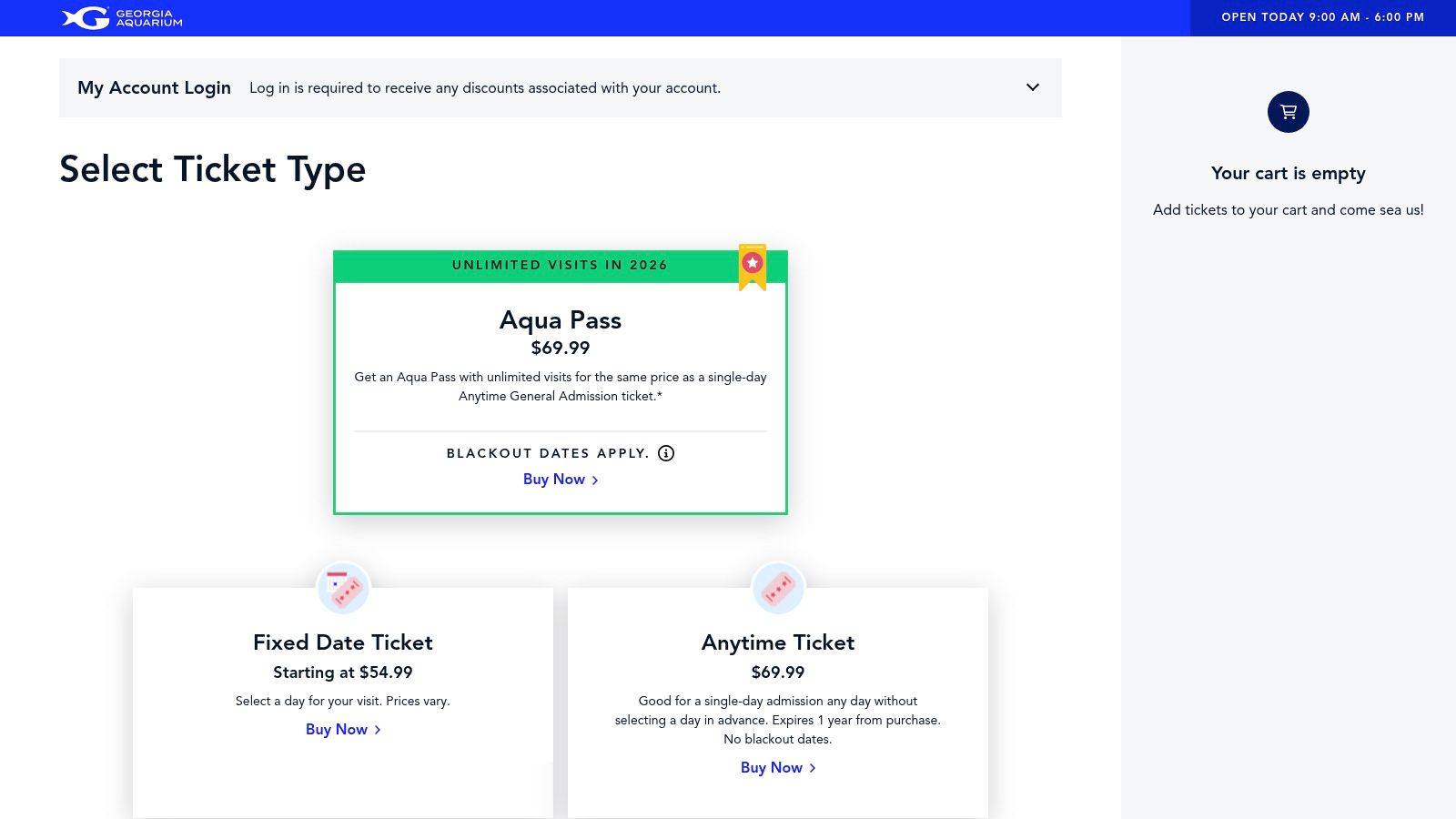
Georgia Aquarium tickets belongs near the top of any first-time Atlanta list. It opened on November 23, 2005, and Discover Atlanta describes it as the world’s largest aquarium, with over 10 million gallons of water, more than 100,000 animals from 500 species, and a downtown location at 225 Baker Street NW near Centennial Olympic Park in its family fun itinerary.
That scale matters in practice. Families aren’t walking through one big tank and leaving. You’re covering multiple galleries, different pacing needs, and usually at least one child who wants to stand at the same window for much longer than planned.
Why it works so well for families
The signature draw is Ocean Voyager, including a 60-foot acrylic tunnel where kids can watch whale sharks overhead, with the species reaching up to 30 feet long in the same Discover Atlanta write-up. The aquarium also stands out for variety. Big-view galleries pull in older kids and adults, while touch pools and interactive zones help younger children stay engaged.
What works:
- Mixed-age appeal: toddlers can focus on movement and color, while older kids latch onto species and habitats.
- Stroller-friendly layout: one of the easier major attractions for families with little kids.
- Easy combo day: the downtown setting makes it simple to pair with another nearby stop.
What doesn’t:
- Peak crowds hit hard: weekends and holidays can turn the most popular galleries into slow-moving bottlenecks.
- Add-ons raise the total: parking, food, and premium experiences can push this into “whole-day budget item” territory fast.
Practical rule: Book the earliest entry your family can realistically make. The first hour is usually when the experience feels most manageable.
Half-day and full-day plan
A half-day visit works best if you arrive early, focus on Ocean Voyager first, then circle back to touch-friendly or kid-led exhibits before lunch. That’s the cleanest option for toddlers or anyone still napping.
A full-day version makes sense if you want a slower pace, a show, a long lunch break, and time to revisit favorites without rushing. If you live nearby and are trying to reclaim space before a move or big family outing, local cleanup planning can pair well with services in Atlanta.
For food, downtown gives you the most flexibility. The simple move is to eat either before peak lunch or after it. Families who wait until everyone is already tired usually end up overpaying for convenience and dealing with longer lines.
2. Zoo Atlanta
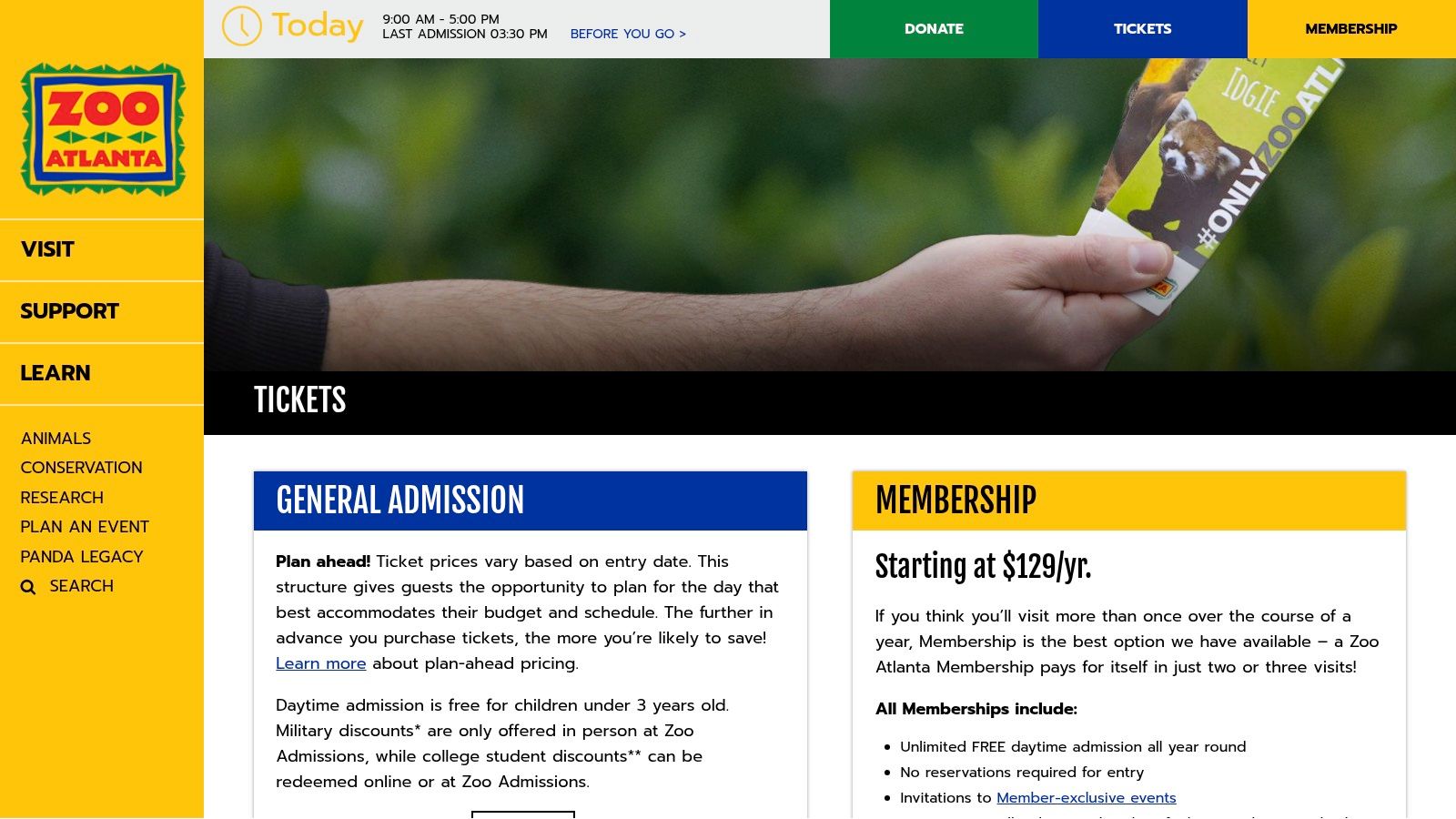
A common Atlanta family dilemma starts around 10:30 a.m. The kids are excited, the adults are already doing time and energy math, and nobody wants a day that turns into miles of walking followed by a parking headache. Zoo Atlanta tickets usually solve that problem well because the visit feels manageable. You can see marquee animals, work in a ride or play break, and still leave with enough energy for lunch or a park stop.
Its best advantage is pacing. Zoo Atlanta is easier to handle than the city’s larger all-day attractions, especially for families with toddlers, preschoolers, or grandparents in the group. The habitat mix still feels substantial, but the footprint makes it simpler to keep naps, snack breaks, and bathroom stops from derailing the day.
Why Zoo Atlanta works for families
The zoo fits best as a planned half-day outing, though a full day can work if you build in downtime. Families usually get the most value by arriving close to opening, heading to the most popular animal areas first, and saving kid-directed extras for later. That order matters on warm days, when attention drops fast and lines feel longer than they are.
You’re coming for the big draws: great apes, elephants, giraffes, and the children’s areas. Keeper talks and shaded stretches help, too. So do the ride options when kids need a reset that is not another snack.
There are trade-offs:
- Buy ahead if your date is firm: advance ticket pricing is often better than waiting.
- Parking needs a plan: Grant Park can get tight on busy weekends, so late arrivals add friction fast.
- Heat changes the visit: summer afternoons are tougher here than an early start, even with shaded sections.
- Full-day expectations need adjusting: younger kids rarely need every corner of the zoo to feel like they got a complete experience.
The smartest Zoo Atlanta day is usually the one that ends before everyone gets tired and stubborn.
Half-day and full-day plan
A half-day visit works best for most families. Arrive near opening, go straight to the headline habitats, then let the kids choose one ride or play-focused stop before an early lunch. That gives children some control without turning the morning into constant negotiating. If you drove in from the northern suburbs and are also juggling errands or home prep, it can help to bundle the day with other practical stops in Sandy Springs junk removal service areas.
A full-day version works best if you treat the zoo as the anchor and Grant Park as the second act. Do the zoo in the morning, take a real lunch break, then spend the afternoon at a slower pace nearby instead of trying to cross Atlanta for another timed attraction. Parents often overpack these days. The better move is one ticketed stop, one outdoor reset, and an easy dinner.
Food planning matters more here than many families expect. Eating after the zoo is usually easier than forcing lunch at peak heat and peak hunger. Grant Park and nearby neighborhoods give you better options for kid-friendly meals, and a sit-down lunch after you exit tends to feel calmer than trying to keep everyone happy in the middle of the visit.
3. Fernbank Museum of Natural History

Fernbank Museum tickets is the easiest recommendation for families who want a smart indoor-outdoor day without downtown intensity. Dinosaurs bring kids in. The outdoor spaces keep them moving once museum fatigue starts.
This is one of the few attractions where the reset button is built in. If the exhibits start feeling too structured, you can shift outside and salvage the day.
Why Fernbank is a practical choice
Discover Atlanta identifies Fernbank Natural History Museum as one of the metro’s key family attractions and notes its forest trails in the city’s broader family attraction mix. That matters because Fernbank isn’t just a museum stop. It gives you room to change pace without leaving the property.
The usual wins:
- Strong rainy-day backup: if weather shifts, the indoor side still carries the visit.
- Lower-stress parking: free parking is a genuine advantage for families.
- Good age range: young kids get the spectacle of dinosaur displays, while older kids usually engage more with science and nature content.
The limitations are more about planning than quality. Rotating films and exhibits mean you should check the current lineup before promising a specific experience to your kids.
Best itinerary style
Half-day is enough for many families. Start with the biggest permanent draws first, then use the outdoor boardwalks and nature areas as your cooldown phase before lunch.
A full-day visit works when you want to include a film, spend meaningful time outside, and avoid rushing through the museum halls. That’s especially useful with mixed-age groups, because someone can linger while someone else burns off energy.
Some families overpack Fernbank with “educational goals.” Don’t. The better strategy is to let one or two exhibits lead the day and use the outdoor sections as breathing room.
If you’re coming from the north side, pairing Fernbank with a relaxed meal afterward is usually smarter than forcing a second attraction. That keeps the day memorable instead of overprogrammed. Families balancing outings with home organization often use cleanup support in Sandy Springs when a packed calendar leaves no time to deal with garages, storage rooms, or move-out piles.
4. Children’s Museum of Atlanta

Children’s Museum of Atlanta hours and tickets is not trying to entertain everyone equally. That’s why it works. If your kids are toddlers or in the early elementary range, this can be one of the smoothest outings in the city. If you’re bringing teens, it probably isn’t the best standalone choice.
The museum’s strength is that it’s built around participation, not observation. Kids touch things, climb, role-play, build, and move. Parents spend less time saying “look” and more time following their child’s lead.
Who should choose this one
This attraction is best for:
- Toddlers and preschoolers: plenty of hands-on play with manageable visit length.
- Families needing indoor reliability: hot day, cold day, rainy day, it still works.
- Downtown combo planners: it’s easy to pair with another nearby attraction if your kids still have energy.
The main drawback is just as important. Adults can’t enter without a child, so group logistics matter if you’re splitting caregivers or meeting relatives separately. Timed sessions also mean spontaneity can backfire.
How to structure the day
For a half-day, build the whole outing around the museum. Pick an early session, arrive with snacks already handled, and plan lunch afterward. That avoids breaking momentum.
For a full-day, combine it with a downtown walk, park time, or another nearby attraction with a very different rhythm. The museum works best as the active, hands-on portion of the day, not the slow scenic portion.
The city’s family attraction cluster downtown makes this kind of combo planning easier than it is in spread-out metro areas. You don’t need heroic cross-town driving to build a complete day.
A kid-friendly food stop nearby is usually the right move after the museum, not before. Kids tend to play harder than parents expect in these spaces, and hunger shows up fast afterward. Families in north metro communities who are clearing out playrooms, garages, or moving boxes before hosting visiting relatives often lean on support in Roswell.
5. Center for Puppetry Arts

Center for Puppetry Arts hours and ticket prices is the most distinctive attraction on this list. It isn’t trying to compete with aquariums, zoos, or giant museums. It offers a smaller, arts-focused outing that feels personal and screen-free.
That smaller scale is a feature, not a compromise. Families with kids who get overwhelmed in huge venues often do much better here.
What stands out
The combination of museum exhibits, live performances, and a Create-A-Puppet workshop gives the visit a nice arc. Kids watch, explore, then make something. Parents don’t have to manufacture the fun. The venue does the sequencing for you.
This is also one of the better choices when:
- You want a lower-pressure day: navigation is simple.
- You need a shorter outing: not every family trip needs to consume the whole day.
- You have creative kids: hands-on art and theater land differently than animal exhibits or science displays.
The downside is schedule dependence. Performance calendars drive the experience, and some dates are better than others.
“Check the show calendar first, then build the day around it.” That one decision usually matters more here than parking strategy or lunch planning.
Half-day and full-day use
For a half-day, center everything on the performance time. Arrive early enough for the museum, do the show, then add the puppet-making activity if available. That’s a complete outing.
For a full-day, pair it with another Midtown activity or a relaxed park stop rather than another high-stimulation indoor attraction. The center works best when it gives the day a creative anchor.
Parents often underestimate how appealing this is to adults who grew up with puppetry and character-based media. It’s one of the better mixed-generation picks if grandparents are joining. If you’re coordinating a larger family visit from the north suburbs and need space cleared beforehand, help in Alpharetta can make those pre-visit cleanouts easier.
6. Atlanta Botanical Garden
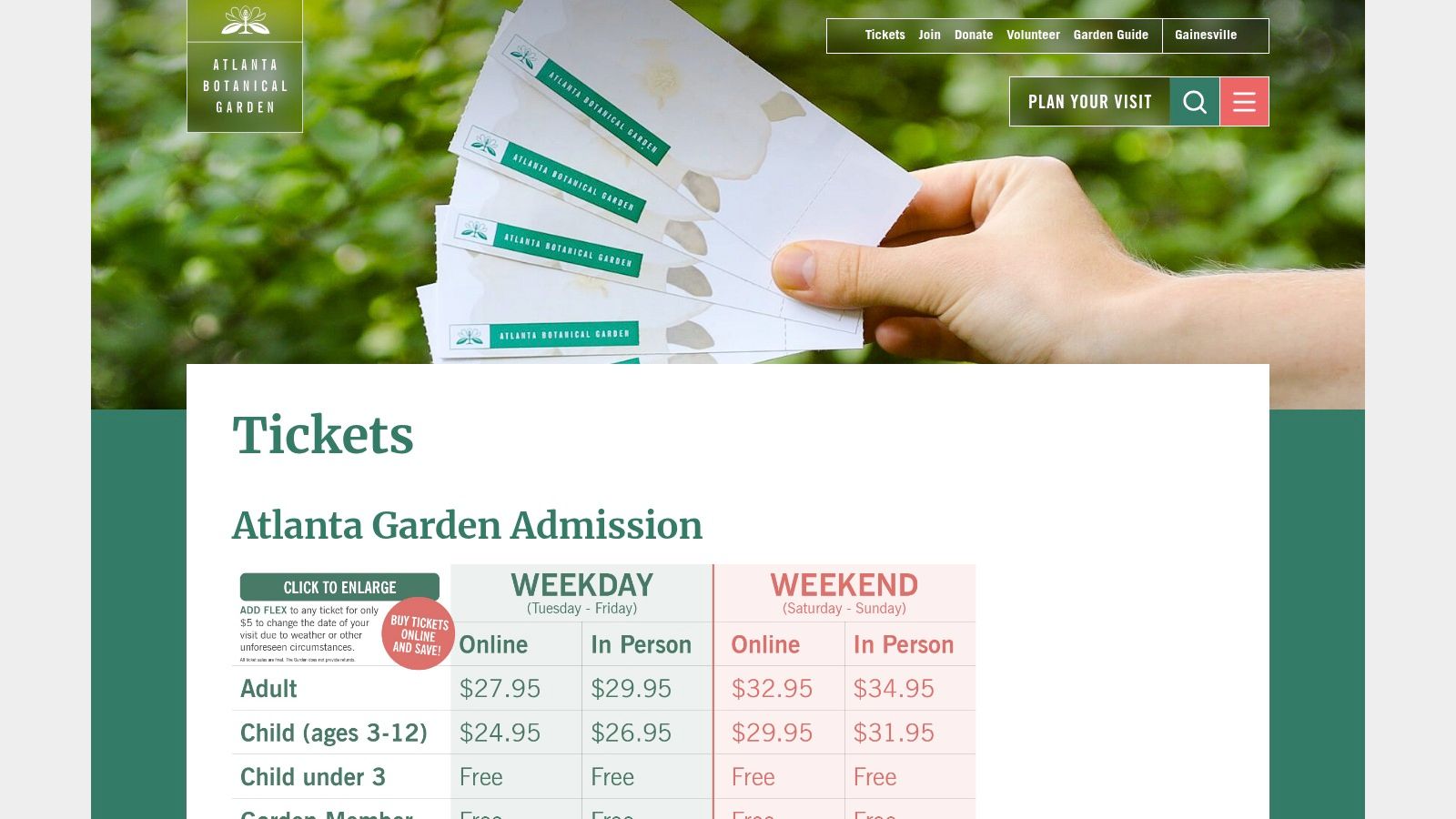
A good Atlanta Botanical Garden day usually starts the same way for families. Kids arrive with mixed expectations, one parent worries it will be too quiet, and then the Children’s Garden, open paths, and visual variety do the work. Atlanta Botanical Garden tickets are worth booking when you want an outdoor attraction that feels organized without feeling rigid.
Its biggest advantage is pacing. Families can move slowly, stop often, and still feel like they saw enough. The location beside Piedmont Park also gives parents a built-in backup plan if attention spans fade early or the weather shifts.
This stop works best for families who want fresh air without committing to a full hiking day. It is also one of the better choices for grandparents, toddlers, and siblings with different energy levels because nobody has to keep one fixed pace the whole time.
Why it works for parents
The garden solves a few common planning problems at once:
- There is room to spread out. Kids are less boxed in than they are at many indoor attractions.
- Shaded paths and indoor conservatory space help with heat. That matters in warmer months.
- The Children’s Garden adds movement and play. The visit does not depend on kids passively admiring plants.
- Piedmont Park sits next door. That makes it easy to turn one attraction into a half-day or full-day plan without extra driving.
The trade-offs are real. Timed entry means late arrivals can throw off the whole morning, parking in Midtown can add cost and frustration, and outside food restrictions matter if your child is picky or needs a very specific snack routine. Parents who plan this like a loose stroll often end up more stressed than parents who choose an entry time, parking plan, and lunch spot in advance.
Half-day and full-day itinerary ideas
For a half-day, book an earlier entry and treat the garden as the main event. Start with the larger visual highlights first, then head to the Children’s Garden before energy drops. After that, decide whether the family still has momentum. If yes, walk into Piedmont Park for extra free-play time. If not, leave before the tired phase turns a calm outing into a cranky one.
For a full-day, pair the garden with a slow Midtown schedule instead of another ticket-heavy attraction. Garden in the morning, lunch nearby, then Piedmont Park in the afternoon works well for families who need a balance of structure and downtime. This is one of the better places in Atlanta to build a day that does not feel overscheduled.
A practical note on budget. This attraction can feel reasonable on its own, but the total climbs fast once you add paid parking, lunch, and a second attraction. Families trying to keep the day lighter on spending usually get better value by combining the garden with park time rather than stacking another admission charge nearby.
Planning tips that make the day easier
Drive if you have a stroller, diaper bag, or younger kids who may need a quick exit. MARTA can work for older children, but many families find the last stretch less appealing in heat or rain. If you do drive, look at parking options before you leave home rather than circling Midtown with impatient kids in the back seat.
For food, keep expectations simple. Nearby casual spots and park-adjacent options are usually a better fit than trying to force a long sit-down meal after the garden. If your child melts down when hungry, schedule lunch immediately after the children’s areas rather than trying to squeeze in one more exhibit first.
Parents who use the garden well usually do one thing right. They treat it as a flexible outdoor day with structure, not as a box to check quickly. That mindset leads to a much smoother visit.
7. World of Coca‑Cola

World of Coca‑Cola ticket information is one of the easiest attractions to add when you need a downtown day that doesn’t demand a full morning-to-close commitment. It’s interactive, centrally located, and usually easier to fit into a mixed itinerary than families expect.
This is not the most educational stop in the city, and it’s not the most active either. Its value is convenience and range. Brand history, immersive exhibits, and the tasting room give different age groups something to do without requiring a major time investment.
Where it fits best
World of Coca‑Cola works particularly well for:
- Short-to-medium visits: good when your family doesn’t have the stamina for another long attraction.
- Mixed-age groups: younger kids engage with the sensory side, while adults often enjoy the nostalgia and branding history.
- Bundled downtown days: its location makes it easy to combine with other nearby plans.
The main limitation is obvious. If your family avoids sugary drinks or doesn’t care about beverage branding, part of the appeal drops off. Crowds can also make the tasting areas feel less fun than intended.
Itinerary approach
For a half-day, use it as the anchor and keep the rest of the schedule light. You can visit, grab lunch nearby, and leave downtown before the day drags.
For a full-day, it’s better as the second attraction than the first. Families often have more patience for self-guided exhibit spaces once they’ve already done one big must-see activity.
Downtown Atlanta is easiest when you commit to a walkable cluster instead of driving between every stop. Fewer transitions usually means fewer arguments.
Because this attraction sits close to other family draws, it’s one of the better options for visitors staying in the city center without wanting a car-heavy day.
7 Best Family Attractions in Atlanta, Comparison
| Attraction | Complexity 🔄 (implementation/process) | Resources & Cost ⚡ (staffing/ticketing/parking) | Expected Outcomes ⭐ (quality/experience) | Ideal Use Cases 📊 (impact/when-to-go) | Key Advantages 💡 (tips/strengths) |
|---|---|---|---|---|---|
| Georgia Aquarium | High, large-scale operations, timed-entry logistics | High, premium admission, parking/add-ons; Aqua Pass for frequent visitors | Memorable, awe-inspiring marine encounters and live presentations | First-time visitors, mixed-age family days, marine enthusiasts | Iconic Ocean Voyager habitat, diverse shows, stroller/sensory resources |
| Zoo Atlanta | Moderate, compact, walkable layout with seasonal exhibits | Moderate, dynamic (date-based) pricing; limited on-site parking; CityPASS available | Close-up animal viewing, strong ape/panda exhibits and keeper talks | Half-day family outings, young children, wildlife-focused visits | Manageable size, shade/indoor exhibits, frequent keeper interactions |
| Fernbank Museum of Natural History | Low–Moderate, indoor/outdoor mix; rotating exhibits to check | Low–Moderate, free parking; general admission often includes films; CityPASS option | Educational, nature- and dinosaur-focused experiences year-round | Science-curious families, outdoor trail exploration, less-crowded alternative | Life-size dinosaur displays, WildWoods boardwalks, free parking |
| Children’s Museum of Atlanta | Low, timed sessions control flow; child-accompaniment rules | Moderate, reservation recommended; fully indoor so weather-independent | Highly engaging, hands-on STEM and arts play for early learners | Toddlers/elementary kids, rainy/hot days, educational playdates | Interactive exhibits, daily programs, ACM reciprocal discounts |
| Center for Puppetry Arts | Low, small venue; show schedules determine visit timing | Low, lower-cost overall; workshops and shows may be extra | Creative, screen-free performances and hands-on puppetry workshops | Arts-focused families, workshops, intimate group visits | Jim Henson artifacts, Create-A-Puppet workshops, compact and navigable |
| Atlanta Botanical Garden | Moderate, outdoor seasonal exhibits, timed-ticketing options | Moderate, variable admission, $5 online/phone processing fee; some indoor spaces | Relaxing outdoor exploration with children's garden and seasonal displays | Pair with Piedmont Park, outdoor play, seasonal exhibitions | Canopy walk, Lou Glenn Children’s Garden, shaded trails and conservatory |
| World of Coca‑Cola | Low–Moderate, self-guided flow with optional guided segments | Moderate, standard admission; tasting room included; CityPASS eligible | Interactive brand-centric experience with tasting and themed exhibits | Short-to-mid length downtown visits, mixed-age groups, brand-curious visitors | Vault and Scent Discovery exhibits, Taste It! sampling, easy to combine with other attractions |
Making Your Atlanta Family Adventure Unforgettable
The Best Family Attractions in Atlanta GA aren’t just the biggest names. They’re the places that match your kids’ ages, your budget, your tolerance for crowds, and the amount of energy your family has that day.
That’s the part many guides miss. A great Atlanta outing usually comes down to pacing, not ambition. The Georgia Aquarium is a clear must-do for many first-time visitors, but it isn’t automatically the best choice for every single day. Zoo Atlanta often wins for a shorter animal-focused trip. Fernbank is stronger when you want indoor and outdoor flexibility. The Children’s Museum of Atlanta can be the easiest win for younger kids. The Center for Puppetry Arts offers something more creative and less hectic. Atlanta Botanical Garden shines when you want a calmer outdoor plan. World of Coca‑Cola works well when convenience and a downtown combo day matter most.
A few planning habits make almost every trip smoother:
- Book ahead when timed entry applies: waiting to decide day-of usually gives you fewer choices and more stress.
- Choose one anchor attraction per day: two major stops can work, but only if one is clearly the priority.
- Eat on your schedule, not the crowd’s: early lunch or late lunch is usually easier on both budget and patience.
- Leave space between activities: kids rarely move through a day as efficiently as adults imagine.
- Match the venue to the weather: indoor museums and the aquarium help on difficult weather days, while the garden and zoo are better when outdoor time feels like a treat.
Atlanta also rewards families who think geographically. Downtown attractions cluster well, and Midtown pairings can make a full day feel smoother. That matters because less driving means fewer transitions, fewer parking decisions, and less chance that your afternoon starts with tired kids stuck in traffic.
If you’re planning a staycation, hosting out-of-town family, or trying to make the most of weekends without overspending, don’t feel pressured to cram in everything at once. Better trips usually come from picking the right attraction for the right day, then letting the plan breathe. If you need ideas for the days you stay in, this list of fun at home family activities is a useful complement to Atlanta outings.
Atlanta gives families plenty of options. The win is choosing the one that fits your real day, not the idealized one on paper.
If your family outings are part of a bigger reset, moving, downsizing, clearing a garage, or getting a rental ready, Fulton Junk Removal can help you reclaim space without adding another stressful project to your week. They handle fast cleanouts for homes, apartments, offices, warehouses, and event spaces, and as part of Beyond Surplus, they also support responsible recycling for electronics, metals, and other reusable materials. That’s a practical fit for Atlanta families, property managers, and businesses that want less clutter and less landfill waste.
