
10 Best Places for Photos in Atlanta GA for 2026
You’re usually not looking for “a nice background.” You’re looking for a shot that does a job.
Maybe that job is building a photography portfolio. Maybe it’s making a listing thumbnail stop the scroll. Maybe it’s showing a cleaned-out office, retail suite, or rental unit in a way that feels open, current, and easy to picture in use. In Atlanta, the setting matters, but what matters more is whether the frame feels intentional. Clean lines help. Good light helps more. A clutter-free foreground often makes the difference between a strong image and a busy one.
That’s why the Best Places for Photos in Atlanta GA aren’t just scenic. They’re places that give you structure. Skyline edges, water reflections, historic textures, public art, and open green space all help you build a more controlled composition. The same principle applies indoors. A property with excess furniture, old electronics, storage overflow, or move-out debris is harder to photograph well. Before the camera comes out, the space has to read clearly.
If you’re shooting properties, this is also where prep beats editing. Wide lenses can’t fix crowded rooms. Better staging starts with removal. If you need a refresher on composition and room prep, these essential tips for taking real estate photos are a useful baseline.
Here are ten Atlanta spots that consistently work, plus the trade-offs that matter when you have to deliver usable images.
1. Piedmont Park
Piedmont Park is the safest recommendation on this list because it gives you range without forcing you into one style. You can shoot skyline portraits, family sessions, engagement work, brand content, or clean environmental portraits and not feel like every frame came from the same corner.
The park spans 189 acres and has drawn over 6 million visitors annually, so it’s popular for a reason. Lake Clara Meer is the obvious anchor. The skyline view reads immediately as Atlanta, and the water gives you reflections that soften a corporate-looking frame.

What works best here
Early is better. Before the park fills up, you can use paths, lawns, and the lake edge without constantly waiting for pedestrians to clear. That matters for portrait sessions, but it matters just as much when a property manager wants polished marketing images that feel calm rather than crowded.
A few practical moves help:
- Use the lake deliberately: Reflections near sunrise or sunset can simplify a frame and make even a basic portrait look more finished.
- Treat the skyline as a secondary element: If the buildings dominate, the shot starts to feel like a cityscape instead of a people photo.
- Scout weekdays first: It’s easier to identify cleaner angles when you’re not fighting event traffic.
Practical rule: In busy parks, don’t chase emptiness. Find angles where trees, water, and distance do the clearing for you.
For commercial teams in north metro areas, the same thinking applies to property prep. If a room is packed, remove first, then shoot. Teams handling turnovers near Johns Creek usually get better photo results when garages, storage rooms, and overflow areas are cleared before staging starts.
2. The Battery Atlanta
If Piedmont Park gives you organic variety, The Battery gives you control. Clean paving, newer construction, storefront lighting, signage, and modern materials make it useful for branding shoots, retail content, lifestyle work, and polished social media assets.
This location works best when you want Atlanta to look current. Not historic. Not gritty. Not overly formal.
Where photographers get tripped up
The mistake here is shooting everything too wide. Wide frames can flatten the scene and make it look like generic mixed-use development. The better move is to use repeating architecture, shadow lines, and outdoor seating areas to build depth.
Golden hour is the sweet spot because the buildings pick up warmth without losing shape. After dark, the area can look great, but mixed light becomes a real issue. If you’re balancing storefronts, signage, and ambient street light, skin tones can shift fast.
Try this approach:
- Work corners and walkways: They create leading lines without looking forced.
- Use event energy selectively: A little movement helps. Full crowds usually don’t.
- Watch background branding: Random logos can turn a clean shoot into a clearance problem for commercial use.
This is also the kind of environment that teaches a useful staging lesson. Clean architecture looks expensive because visual noise is low. The same logic helps office suites and retail vacancies. Before a leasing shoot, remove old displays, dead electronics, damaged fixtures, and storage leftovers. Teams serving Roswell often need that kind of fast reset before updated marketing photos go live.
3. The Georgia Aquarium
The Georgia Aquarium gives you something most Atlanta locations don’t. Controlled drama indoors. You get glass, color, motion, and low-light atmosphere in one place. For editorial-style portraits, family sessions with kids, or brand imagery that needs a more immersive look, it can produce frames that feel very different from the usual skyline set.
The trade-off is technical. Indoor aquatic photography isn’t forgiving.

How to keep the images usable
Start with expectations. You’re not going there for bright, airy consistency. You’re going there for mood, silhouette, color contrast, and movement. That means you need to accept that some frames will be more cinematic than technically perfect.
A few things help immediately:
- Use faster shutter speeds: Marine subjects move unpredictably, and low light makes blur easy to miss on the back screen.
- Control reflections: A polarizer can help on some exterior glass, but your position relative to the tank matters more than the filter.
- Scout before committing: Different gallery areas produce very different color casts and exposure challenges.
Glass always records more than the fish. It records your angle, your background, and every bright object behind you.
For commercial photographers, the lesson is familiar. Reflective surfaces expose clutter fast. The same thing happens in offices, lobbies, and model units. Old monitors, cords, boxes, and stacked supplies show up in windows and polished surfaces even when they’re technically “out of frame.” Businesses booking cleanouts in Atlanta usually get a second benefit besides reclaimed space. Their photos stop looking accidentally busy.
4. Eastern Atlanta Market BeltLine Trail Area
This area works when you want texture that doesn’t feel manufactured. Brick, steel, murals, worn surfaces, signage, and trail-side movement all give you a more lived-in Atlanta look. If your subject needs edge, local flavor, or a less polished commercial backdrop, this stretch is often stronger than the cleaner developments.
It’s especially good for brand sessions that would look too sterile in modern plazas.
The trade-offs matter here
This isn’t a place where every angle is automatically good. Background clutter can build quickly. Bikes, parked cars, delivery activity, random temporary signage, and foot traffic all compete with the subject. That’s why timing matters as much as lens choice.
Overcast conditions often outperform bright sun here because murals and textured walls hold color better without harsh contrast. Morning can also help if you want more directional light on brick and metal.
What tends to work:
- Layer foreground and mural backgrounds: A little depth makes urban art feel integrated instead of pasted behind the subject.
- Keep compositions tighter than you think: Too much environment can dilute the strongest textures.
- Check access before treating storefronts as backdrops: Some spaces feel public but function like active business frontage.
This area also mirrors a common property-photo challenge. “Character” can turn into “mess” fast. Exposed brick and industrial elements photograph well only when the clutter is removed first. In warehouses, creative offices, and adaptive reuse properties, that usually means clearing broken shelving, scrap material, outdated electronics, and leftover tenant debris before trying to sell the vibe.
5. Centennial Olympic Park
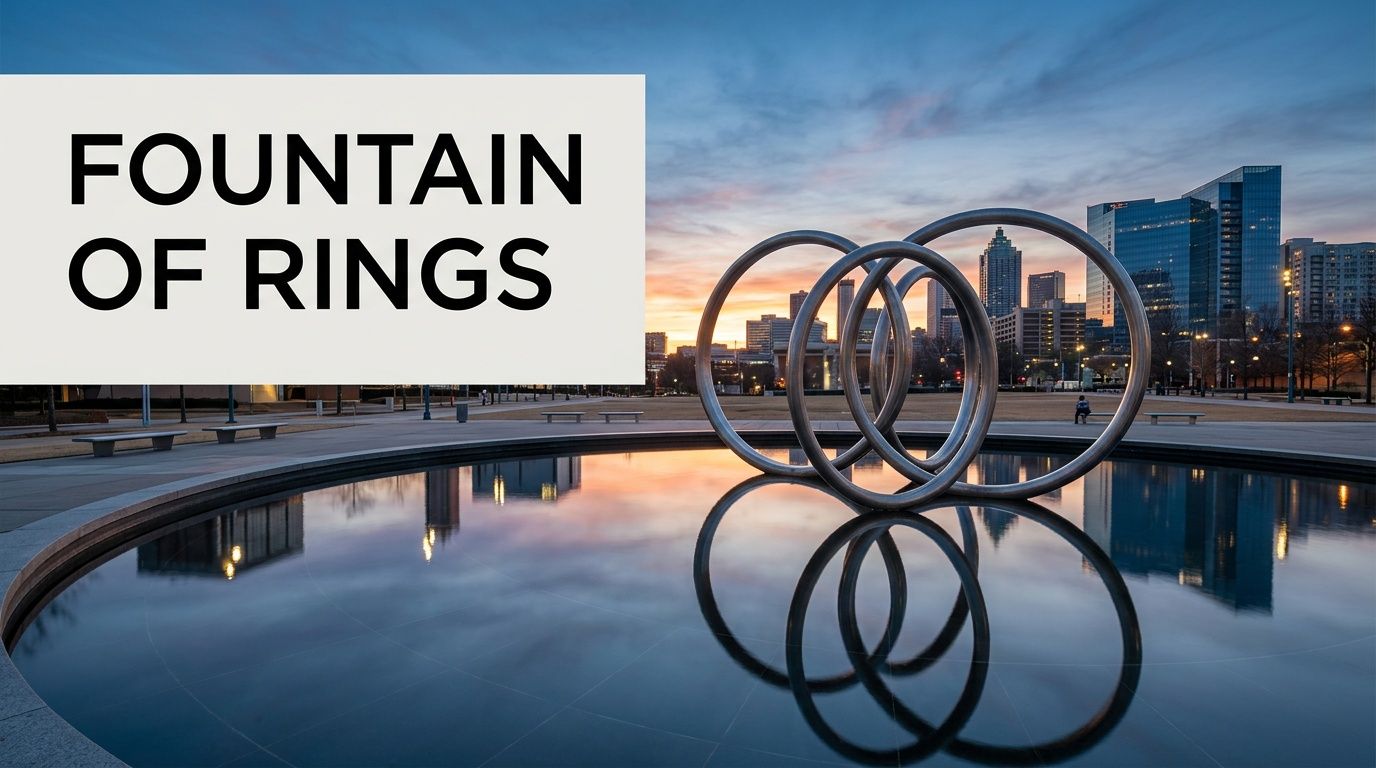
Centennial Olympic Park is useful when you need order. The layout is formal, the hardscape is recognizable, and the Fountain of Rings gives you a built-in focal point. For visitors, tourism content, conference marketing, and structured portrait work, it’s one of the easier downtown locations to shoot efficiently.
What it does best is give you symmetry.
Best use of the space
Go early if you want clean frames. In a downtown park, empty background space is valuable because it lets the architecture and water features do the work. Later in the day, you can still get good photos, but the park becomes more about energy than precision.
The strongest compositions usually rely on one of two approaches:
- Centered framing: Useful for formal, graphic shots with the fountain or ring motifs.
- Layered city framing: Better when you want the park to feel connected to downtown rather than isolated from it.
Water can also help soften a corporate-looking frame. If you’re shooting executives, event teams, or convention visitors, placing them near water features often produces friendlier images than planting them against plain stone or open plaza.
The parallel for real estate and property marketing is straightforward. Clean geometry sells. Buyers respond well to spaces where the structure reads clearly. If a listing has too many movable items in the frame, the eye loses the room’s shape. Removing extras before photography often does more than adding decor.
6. Inman Park Historic District
Inman Park is where you go when you want architecture to do more of the storytelling. Victorian details, porches, mature landscaping, and older materials create images with depth and personality before you add a person to the frame.
For portrait work, it’s one of the strongest neighborhoods in the city because the background doesn’t need to shout.
Why it photographs well
Historic residential areas usually work because the scale is human. You get façades, sidewalks, fences, steps, and gardens that support a subject instead of overwhelming them. Inman Park does that especially well.
Midday can be useful here for architectural details because broad daylight reveals trim, brickwork, paint texture, and porch elements more evenly than dramatic directional light. Golden hour is better if the goal is warmth and mood rather than documentation.
A good way to work this neighborhood is to think in layers:
- A house detail for the tight shot
- A porch or gate for the medium shot
- A tree-lined street for the wide environmental frame
Historic neighborhoods reward restraint. One doorway, one window line, or one fence detail often says more than a full-house wide shot.
There’s also a practical lesson for sellers. Older homes can be beautiful and still photograph poorly if storage creep has taken over side yards, porches, sheds, or basement access points. Architectural charm only reads as charm when the distractions are gone. For historic properties, junk removal isn’t just cleanup. It’s visual preservation before the listing photographer arrives.
7. The High Museum of Art
The High Museum is one of the cleanest visual environments in Atlanta. It’s strong for architectural photography, editorial portraits, and modern brand imagery because the lines are disciplined and the surfaces feel intentional.
If your subject needs a refined backdrop, this location is hard to beat.
Use the architecture, don’t fight it
The biggest mistake here is trying to make the museum feel casual. It isn’t. The better move is to lean into geometry. Stairs, railings, curves, negative space, and bright surfaces all help create images that look polished without requiring heavy styling.
Exterior shots usually benefit from warm directional light, while interior work depends more on available access and lighting rules. Either way, this is a location where wardrobe and props matter more than usual. Busy colors and cluttered accessories can fight the architecture immediately.
A simple working method:
- Shoot wide for structure first: Establish the lines and shapes before adding movement.
- Move to detail studies: Hands on a rail, a silhouette on stairs, a reflection in glass.
- Keep the frame clean: If one stray bag or jacket lands in the corner, it will show.
The same aesthetic applies to premium listings and office interiors. Minimal, deliberate visuals read as more valuable. Property teams around Sandy Springs often benefit from clearing old furniture, surplus equipment, and e-waste before photography because modern spaces punish clutter more than traditional ones do.
8. Druid Hills Historic District
Druid Hills gives you a quieter, more composed version of residential Atlanta. Tree-canopied streets, established homes, and a planned neighborhood feel make it especially strong for elegant portraiture, neighborhood branding, and residential lifestyle imagery.
It doesn’t rely on spectacle. That’s the point.
Where this location shines
This is a strong place for shoots that need calm. If the subject is a family, a professional service brand, or a homeowner who wants a timeless setting, Druid Hills usually outperforms louder backgrounds.
The mature canopy does a lot of the work. It frames roads naturally, softens hard light, and gives depth to even simple walking shots. Midday can create interesting shadow patterns under trees, while late-day light warms bark, lawns, and façades.
A few cautions are worth noting:
- Respect that it’s residential: Don’t assume every lawn, drive, or stair is fair game.
- Watch parked cars: They can undercut an otherwise classic composition.
- Use elevation carefully: Slight changes in height can make the street plan and greenery feel more intentional.
This neighborhood also reflects what good residential marketing should aim for. Order, maturity, and ease. A well-maintained property photographs better when exterior clutter is gone, especially around side entrances, patios, driveways, and storage areas. If the front elevation is elegant but the side yard is piled with old materials, the listing feels less premium immediately.
9. Old Fourth Ward Street Art Scene Auburn Avenue and Sweet Auburn District
Old Fourth Ward and the Sweet Auburn area give you some of the most culturally resonant imagery in the city. Murals, historic context, active streets, and evolving visual layers make the area strong for portraiture, editorial work, and community-centered brand content.
This is not a backdrop-only location. It works best when the photographer pays attention to the place itself.
How to shoot it well
Respect comes first. Murals and street-facing walls are part of a living neighborhood, not interchangeable props. If you’re photographing people here, the best sessions usually feel connected to the area rather than merely staged against it.
Overcast weather can be ideal for mural color, while golden hour can add shape and depth to surrounding architecture. Daytime is the better choice for both light quality and a more workable pace.
Use a documentary mindset:
- Include context in some frames: Curb edges, storefronts, signage, and neighboring textures can help the image feel grounded.
- Don’t overcorrect every imperfection: Some grit belongs in the frame.
- Choose murals with room to breathe: Tight alleys and crowded sidewalks can make portraits feel cramped.
This part of Atlanta also illustrates a useful distinction in staging. Authentic doesn’t mean chaotic. In redevelopment areas, adaptive spaces, and mixed-use properties, you want visual character without abandoned-item energy. Removing dumped furniture, renovation leftovers, and obsolete equipment helps the property feel active and cared for instead of unfinished.
10. Forsyth Park and Surroundings
Forsyth Park and the nearby streets are a good choice when you want greenery without the scale or activity level of the city’s biggest parks. Mature trees, open lawn, neighborhood context, and fountain elements give you enough variety for portraits, family sessions, and relaxed branding work.
It’s less showy than some other options. That can be an advantage.
A dependable choice for softer images
This location works particularly well for people who don’t want a heavy downtown identity in the frame. The canopy creates natural framing, and the surrounding homes can add quiet architectural context without dominating the image.
Early morning is usually best if you want cleaner compositions. Parks read differently when they’re calm. Once the foot traffic builds, the atmosphere gets livelier, but the frame gets harder to control.
Focus on these elements:
- Use the trees as structure: They can guide the eye and shape the composition more effectively than open lawn alone.
- Let the fountain support, not dominate: Water is a useful accent, but it can easily become the entire picture.
- Watch the edges of the frame: Small distractions in neighborhood parks stand out fast.
For homeowners preparing listing photos in areas like Alpharetta, this is the same principle in another form. A calm, spacious image depends on what’s absent. Clear the old patio furniture, damaged yard items, unused planters, and garage overflow first. Then the greenery has room to register.
Top 10 Atlanta Photo Spots Comparison
| Location | 🔄 Implementation Complexity | ⚡ Resource Requirements | ⭐📊 Expected Outcomes | 💡 Ideal Use Cases | ⭐ Key Advantages |
|---|---|---|---|---|---|
| Piedmont Park | 🔄🔄, Moderate (permits for commercial, weekend crowds) | ⚡⚡, Low–Medium (free access, parking; permit for pro shoots) | ⭐⭐⭐ 📊, Versatile, high-quality natural and skyline backdrops | 💡 Portfolio, commercial promos, event documentation | ⭐ Diverse subjects (lake, meadows, skyline) |
| The Battery Atlanta | 🔄🔄, Moderate (event days busy; possible permissions) | ⚡⚡, Medium (parking fees, some shoot approvals) | ⭐⭐⭐ 📊, Polished, modern commercial-ready images | 💡 Branded lifestyle, evening/night product shoots | ⭐ Clean contemporary architecture and lighting |
| The Georgia Aquarium | 🔄🔄🔄, High (permits, interior limits, crowd flow) | ⚡⚡⚡, High (admission fees, specialized gear, permits) | ⭐⭐⭐ 📊, Unique, high-impact marine and architectural content | 💡 Editorial features, unique subject shoots, controlled indoor production | ⭐ Weather-independent, rare subject matter |
| Eastern Atlanta Market (BeltLine) | 🔄🔄, Moderate (public access, private-wall permissions) | ⚡⚡, Low–Medium (mostly free; may need owner access) | ⭐⭐ 📊, Authentic, gritty urban editorial imagery | 💡 Street art, documentary, local business before/after | ⭐ Evolving murals and authentic industrial textures |
| Centennial Olympic Park | 🔄🔄, Moderate (heavy foot traffic; commercial permits) | ⚡⚡, Low–Medium (public access; permit for paid shoots) | ⭐⭐⭐ 📊, Iconic, recognizable imagery for branded content | 💡 Corporate branding, event coverage, landmark shoots | ⭐ Iconic Fountain of Rings and maintained plazas |
| Inman Park Historic District | 🔄🔄, Moderate (residential sensitivity, limited access) | ⚡⚡, Low–Medium (public streets; homeowner permission for private shots) | ⭐⭐ 📊, Strong historical/architectural storytelling | 💡 Historic home documentation, preservation before/after | ⭐ Distinct Victorian/Queen Anne architectural character |
| The High Museum of Art | 🔄🔄🔄, High (admission, interior restrictions, exhibit rules) | ⚡⚡⚡, Medium–High (entry fees, permits, careful lighting) | ⭐⭐⭐ 📊, Polished, museum-quality architectural and interior imagery | 💡 Corporate art installations, refined brand photography | ⭐ Iconic modernist architecture and controlled interiors |
| Druid Hills Historic District | 🔄🔄, Moderate (private residences, canopy lighting challenges) | ⚡⚡, Low–Medium (public but may need resident agreements) | ⭐⭐ 📊, Refined residential imagery with heritage appeal | 💡 Estate cleanouts, architectural documentation, quiet portraits | ⭐ Planned Olmsted landscapes and mature tree canopies |
| Old Fourth Ward Street Art Scene | 🔄🔄, Moderate (community sensitivity; changing murals) | ⚡⚡, Low (public access; engage community for access) | ⭐⭐ 📊, Culturally rich, documentary-strength visuals | 💡 Cultural storytelling, mural documentation, small business case studies | ⭐ Strong cultural narrative and evolving public art |
| Forsyth Park and Surroundings | 🔄, Low (smaller park, fewer crowds; some closures) | ⚡, Low (free access, easy logistics) | ⭐⭐ 📊, Intimate natural and neighborhood landscape images | 💡 Local property reclamation, natural-focused portfolios | ⭐ Mature oak canopy and quieter, local atmosphere |
From Cluttered to Camera-Ready Staging Your Property
The best outdoor photo spots in Atlanta all share one trait. They read clearly. Whether it’s the skyline edge at Piedmont Park, the modern lines at the High Museum, or the historic texture in Inman Park, each location gives the eye a focal point and removes confusion. Good property photos work the same way.
For property managers, real estate agents, landlords, and homeowners, the fastest path to better listing images usually isn’t buying more decor. It’s subtracting what doesn’t belong. Old recliners in a sunroom. Broken shelving in a garage. Extra desks in an office. Unused electronics, cords, filing cabinets, and storage bins that drag the eye away from the room itself. A camera records all of it.
That’s why staging starts earlier than often realized. Before pillows, art, or accessories, there’s clearance. The room has to breathe. Floors need to open up. Corners need to be visible. Storage areas need to stop reading like overflow zones. If you’re preparing a sale, rental, turnover, or marketing package, a cleanout is often the most practical upgrade you can make before booking photography. For a good framework, this guide on how to stage a house is a helpful complement to the photo-planning side.
For commercial spaces, the stakes are even higher. Offices, warehouses, retail units, and common areas need to look organized, functional, and compliant. A cluttered back office suggests poor operations. A storage-heavy lobby makes a building feel smaller. An empty suite with leftover fixtures and e-waste doesn’t look “ready.” It looks delayed.
Fulton Junk Removal’s approach stands out. The team doesn’t just haul away unwanted material. Through Beyond Surplus, they pair removal with responsible recycling for electronics, metals, and other recoverable materials. That matters if you’re a property manager, facilities lead, office manager, operations manager, or sustainability team trying to improve presentation without sending everything straight to landfill. Bundled junk removal and recycling pickup can also make reporting and compliance easier for businesses that need documentation around responsible disposal.
The visual payoff is immediate. Cleaner rooms photograph larger. Cleaner exteriors photograph newer. Cleaner workspaces photograph as better-run. And once the clutter is gone, every other staging choice starts to work harder.
If you’re getting a home, office, warehouse, or rental unit ready for photos, Fulton Junk Removal can help you clear the space before the camera arrives. The team handles fast cleanouts, bulky-item removal, and eco-conscious recycling through Beyond Surplus, so homeowners, property managers, and businesses can create a cleaner, sharper, more marketable look without adding landfill-heavy waste to the process.
