
R2 Certified Telecom Recycling Atlanta: A Business Guide
An Atlanta office finishes a telecom upgrade on Friday. By Monday, the old switches, desk phones, wireless gear, patch panels, and rack parts are still sitting in the closet, the suite needs to be turned, and nobody wants to guess which items still hold configurations, credentials, or storage media.
That is the problem with retired telecom equipment. It is mixed material that creates three jobs at once. Facilities needs the space cleared without tying up the loading dock. IT needs controlled handling for anything that may store data or network settings. Property and operations teams need records that show the equipment left the site through a legitimate recycling channel instead of disappearing into scrap.
Fast removal alone does not solve that.
In practice, the risk usually starts with sorting. A pile of old telecom hardware can include non-data items, data-bearing devices, batteries, boards, cabling, and metal rack components in the same room. If a crew treats all of it like general junk, the business can lose chain of custody, lose audit support, and create avoidable environmental exposure.
Busy managers usually need one call that gets the room cleared and sends the electronics into the right downstream process. That is why Atlanta companies often start with a commercial cleanout provider such as Fulton Junk Removal's Atlanta service. The next question is whether the telecom equipment itself is being handled under the controls your compliance team expects.
Introduction
If you're dealing with obsolete telecom hardware, speed matters. So does restraint. The fastest way to clear a closet is often the worst way to protect your business.
A standard junk hauler sees a pile of equipment. A compliance-minded recycler sees asset classes, data-bearing devices, hazardous fractions, and reporting requirements. Those are not the same job, and treating them like the same job is where companies create avoidable risk.
In Atlanta, this shows up in ordinary situations. An office downsizes and leaves a server room full of mixed hardware. A warehouse upgrades connectivity and stacks old access points, routers, and wall-mounted telecom gear near the dock. A property manager inherits abandoned electronics after a tenant exit and needs the suite turned quickly without sending business equipment to the landfill.
Old telecom equipment shouldn't leave your site as anonymous scrap. It should leave as documented inventory moving through a controlled process.
The practical standard is simple. If the equipment may contain data, firmware, credentials, call history, configuration files, or removable media, the removal plan has to address those issues before anyone focuses on speed.
That's why businesses searching for R2 certified telecom recycling Atlanta aren't really shopping for a badge. They're looking for a way to solve three problems at once:
- Space recovery: Clear telecom rooms, racks, and storage areas without disrupting the site.
- Data control: Keep drives, appliances, and data-bearing network gear inside a documented chain of custody.
- Compliance proof: Finish with records that show what was picked up, how it was processed, and what was destroyed or recycled.
The companies that handle this well don't improvise. They use a repeatable workflow, verify the downstream path, and separate general junk from electronics that require certified handling.
Why R2 Certification Matters for Your Telecom Equipment
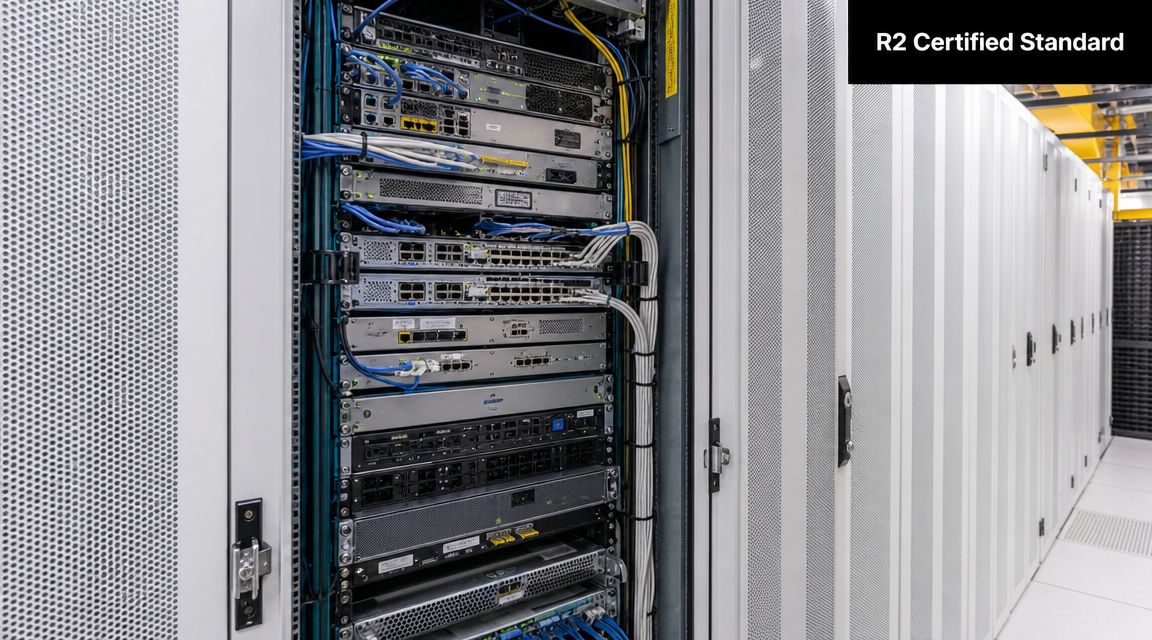
R2 certification matters because telecom equipment retirement is a controlled process with chain-of-custody, data security, and downstream handling requirements. For Atlanta businesses, that matters most when the load is mixed. A telecom room rarely contains only scrap metal. It usually includes switches, routers, firewalls, phones, UPS units, cabling, rack components, and devices that may still hold credentials, stored logs, or configuration data.
R2 sets a higher bar for how that material is received, sorted, stored, sanitized, documented, and sent to approved downstream vendors. The point is not the badge by itself. The point is whether the process prevents loose handling, undocumented transfers, and disposal decisions made after the equipment has already left your site.
What R2 changes in practice
In practical terms, an R2-aligned workflow changes four parts of the job:
- Data handling: Equipment with storage, retained settings, or user information is identified early and routed for sanitization or destruction under documented procedures.
- Asset tracking: Pickup and processing records follow the load so the client is not relying on memory or verbal confirmation.
- Facility controls: Electronics are stored and processed in a controlled environment, not left in open staging areas with mixed debris.
- Downstream verification: The recycler documents where materials go after sorting instead of treating the handoff as somebody else's problem.
That last point matters more than many property managers expect. A vendor can advertise certified recycling, but the essential question is whether the facility handling your telecom equipment operates within that certification scope and whether the paperwork matches the material removed from the building.
Why telecom gear needs tighter handling
Telecom loads create risk because they combine low-risk and high-risk items in the same pickup. Rack rails, brackets, and empty enclosures do not require the same controls as firewalls, appliances, PBX hardware, desk phones, or servers. If the crew treats the whole room as bulk junk, the sensitive devices get managed at the lowest standard on the truck.
That is where operations break down.
A general hauling company can clear the space. A certified electronics workflow can clear the space and preserve records, isolate data-bearing devices, and route materials correctly. Those are different jobs, even when they happen on the same day.
| Removal approach | What usually happens |
|---|---|
| General junk hauling only | Space gets cleared, but electronics handling, data control, and downstream documentation may be limited |
| Certified telecom recycling workflow | Equipment is separated by type, secured, documented, and processed through a controlled recycling stream |
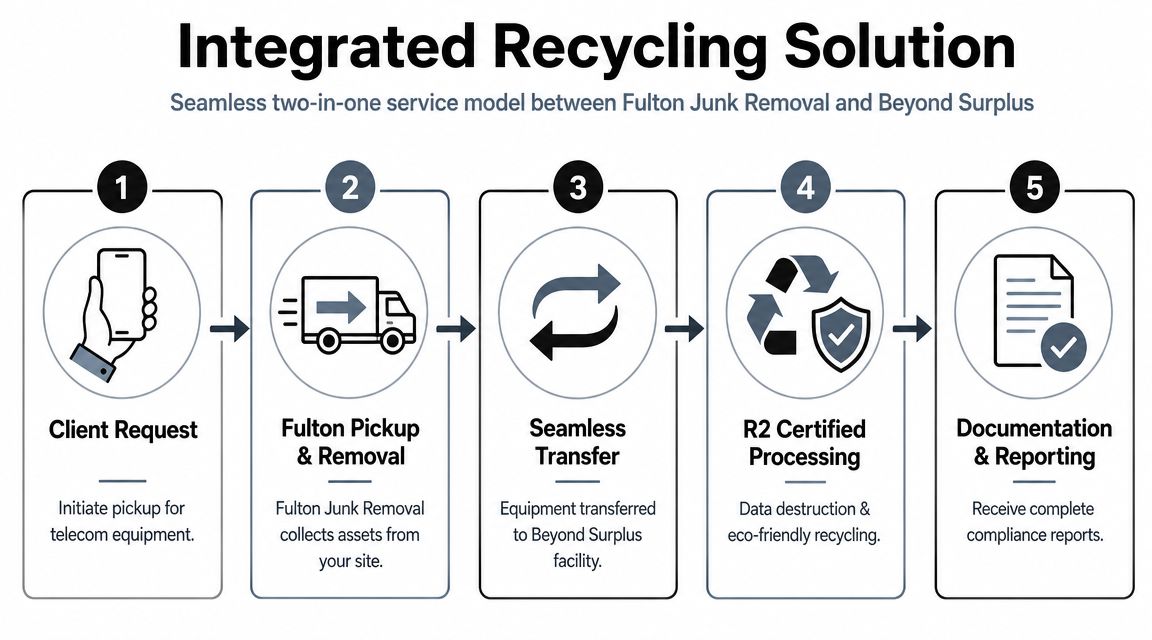
For busy managers, the better model is one call that handles both sides correctly. Fulton Junk Removal's commercial removal team manages the site access, labor, and physical cleanout. Beyond Surplus handles the electronics stream that requires certified processing and reporting. That split is practical because it removes the usual coordination problem. The client does not have to book one vendor for the pickup, another for the telecom gear, and then reconcile separate records after the fact.
A reliable process should prove custody, data handling, and final disposition with documentation, not marketing language.
The Fulton and Beyond Surplus Integrated Recycling Solution
For most commercial clients, the hard part isn't deciding to recycle telecom equipment. The hard part is coordinating the job without slowing down a move, turnover, renovation, or decommission.
Atlanta and Georgia already have an established R2-certified recycling ecosystem for telecom and networking equipment. Local operators in the market promote secure pickup, large processing capability, and NIST 800-88 compliant data destruction before responsible recycling, as described in this Atlanta networking equipment recycling overview. That matters because it means certified telecom recycling in this market is operationally realistic, not a niche exception.
The useful model for clients is simple. One team handles the physical cleanout. The electronics stream gets separated and transferred into the proper recycling workflow.
How the integrated workflow works
A typical commercial pickup runs best in this order:
Site review
The client identifies what's being removed. That may include telecom gear, office electronics, metal, furniture, packaging, and general cleanout debris.On-site separation
The crew separates electronics and telecom hardware from material that belongs in conventional junk removal channels.Controlled loading
Data-bearing and higher-risk devices are handled as a tracked electronics stream, not tossed into mixed debris.Transfer for processing
Electronics move to Beyond Surplus for the recycling, recovery, and documentation side of the job.Final reporting
The client receives the records needed for internal files, audits, or sustainability reporting.
That's a better fit for offices, warehouses, retail spaces, telecom rooms, and tenant turnovers because it cuts down on vendor overlap. Instead of scheduling one company for junk and another for ITAD, the cleanout is managed through one operational lane. Fulton Junk Removal's commercial services reflect that bundled approach.
What clients should do before pickup day
Preparation improves both security and efficiency. The clients who get the cleanest outcomes usually do a small amount of pre-work:
- Group like assets together: Keep phones, switches, routers, servers, UPS units, and loose electronics in separate areas if possible.
- Flag data-bearing devices: Mark equipment that may contain storage, configuration data, or removable media.
- Identify access constraints: Let the crew know about stairs, elevators, dock limits, security escorts, and after-hours rules.
- Set aside items that aren't leaving: Don't leave rollback equipment mixed into the disposal pile.
- Name one release contact: One person should confirm what is authorized to leave the site.
What doesn't work is a vague instruction like “take everything in the back room.” That creates confusion fast when active spares, reusable assets, and scrap are all sitting together.
Preparing for Your R2 Certified Telecom Recycling Pickup
Pickup day goes smoothly when the site is organized before the truck arrives. It doesn't need to be perfect. It does need to be deliberate.
Most telecom cleanouts include a mix of obvious equipment and forgotten equipment. The obvious list includes switches, routers, phones, servers, PBX hardware, access points, patch panels, and rack components. The forgotten list usually includes power supplies, batteries, wall-mount units, transceivers, loose drives, cabling bins, and small appliances that got left behind after prior upgrades.
The checklist that saves time and trouble
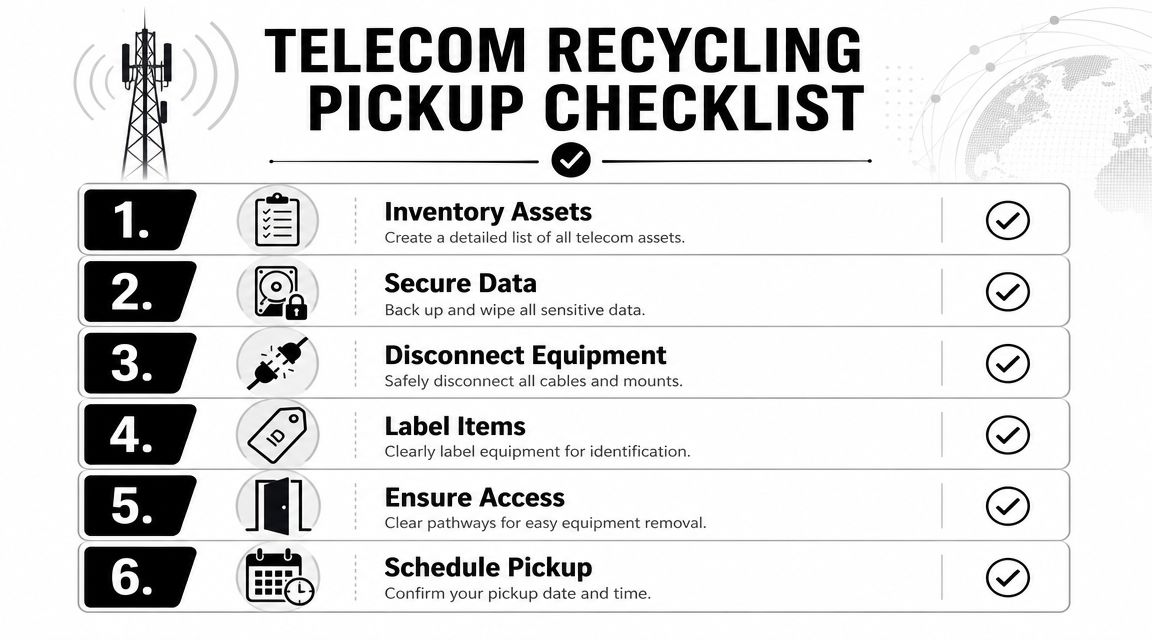
Use this short prep list before scheduling an Atlanta pickup through Fulton's local service area page:
Before release, separate your telecom gear into three groups: data-bearing devices, non-data electronics, and non-electronic junk. That one step prevents most pickup-day mistakes.
Build a basic inventory
A spreadsheet is enough. List the major categories and, when available, note model and serial information for higher-risk devices.Disconnect equipment safely
Remove assets from the network and power source before pickup. If something is still live, say so before the crew touches it.Label uncertain devices
If you're not sure whether an appliance stores data, label it for review instead of guessing.Clear access paths
Racks in tight closets, mezzanines, storage rooms, or former tenant suites slow the job if pathways are blocked.Keep batteries and specialty components visible
Don't bury them in boxes of cable or general debris.
What happens once the truck arrives
The strongest pickups follow a clear chain. The team confirms scope, removes authorized material, stages electronics separately, loads them under control, and moves them into the downstream recycling process.
That matters because telecom equipment often leaves in mixed lots. A single job can include reusable units, scrap-only units, loose peripherals, damaged hardware, and material that needs destruction rather than recovery.
A good pickup doesn't try to solve that on the loading dock. It keeps the categories intact so final processing can happen correctly later.
Here's where clients usually help the most:
| Client action | Why it matters |
|---|---|
| Mark approved pickup zones | Prevents accidental removal of active or reserved gear |
| Identify restricted equipment | Keeps questionable devices from being mixed into a general load |
| Provide site access details early | Avoids delays with docks, elevators, and building security |
Your Guide to Documentation and Compliance Reporting
The paperwork is where a telecom recycling project either becomes defensible or falls apart.
R2v3 third-party certification covers more than 50 operational and environmental performance areas, and businesses get the most value when they verify the exact facility, confirm scope, and request downstream due diligence records plus asset-level reporting, as explained in Securis' article on why businesses need R2-certified e-waste recycling. The same source notes that strong vendors provide pickup logs, chain-of-custody records, data-sanitization certificates, and materials-recovery reports.

The documents that matter most
For commercial telecom recycling, these records do the heavy lifting:
Pickup log
Shows when equipment left the site and ties the removal to a real event, not a vague invoice.Chain-of-custody record
Tracks handoff from pickup through processing. This is one of the first documents auditors ask for when sensitive electronics are involved.Data sanitization or destruction certificate
Confirms how qualifying data-bearing assets were handled.Materials recovery or diversion report
Helps facilities, procurement, and sustainability teams document what was reused, recycled, or routed through recovery channels.
How to review the paperwork like a practitioner
Don't just ask whether documents will be provided. Ask what each document identifies.
A weak certificate might say only that materials were destroyed. A usable one should connect the disposition back to your pickup, your asset group, or your identifiable inventory set. The stronger the chain between release and report, the easier your internal review becomes.
This is also where broader data-handling controls matter. If your company is tightening recordkeeping or internal policy, Nutmeg Technologies' compliance guide is a useful companion resource because it frames compliance as an operational discipline, not a one-time formality.
The logo on a recycler's website matters less than the audit trail attached to your actual load.
What to ask for before approving release
A short pre-approval checklist helps:
| Ask this question | Why it matters |
|---|---|
| Which facility will process this load? | Certification applies to facilities, not vague brand claims |
| What is the facility's scope? | Some locations handle different workflows |
| What records will we receive after processing? | Prevents disputes about what “documentation” actually means |
| Can you support downstream due diligence? | Important when your internal audit team wants more than a certificate |
If a vendor can't answer those questions clearly, the process is still too loose.
Frequently Asked Questions about Atlanta Telecom Recycling
Can you handle a small pickup of just a few items
Yes, but the right question isn't just whether a company will do it. The right question is whether the job can be handled economically and compliantly.
That's a common concern in Atlanta because many businesses don't have a full data center to clear. They may have a few racks, a stack of phones, several routers, and some office electronics left over from a move. Industry commentary on local electronics recycling points out that property and office managers often want one truck for telecom gear, office electronics, and general junk because fast turnover matters more than managing multiple specialty vendors, as discussed in this Atlanta electronics recycling overview.
What kinds of telecom equipment are usually accepted
Acceptance depends on the recycler's workflow and scope, which is why you should confirm the item list before scheduling. In practice, businesses commonly need removal for:
- Core networking gear: switches, routers, firewalls, network appliances
- Telecom systems: PBX hardware, VoIP phones, conference phones, gateways
- Infrastructure equipment: access points, controllers, rack hardware, patch panels
- Support hardware: UPS units, power supplies, batteries, cabling, adapters
If you have mixed-material items, battery-backed units, or equipment with firmware locks, ask about them directly rather than assuming an R2 certificate covers every asset type.
Can telecom recycling be bundled with an office cleanout
Often, yes. That's one of the most practical options for offices, warehouses, and property managers because telecom gear rarely sits alone. It usually shares space with old monitors, printers, cubicles, shelving, packaging, and general move-out debris.
Bundling works well when the on-site crew separates streams correctly. General junk goes one way. Electronics and telecom gear go through the controlled recycling channel. That saves time and simplifies scheduling.
If your priority is turnover speed, ask about the routing plan for each material stream before the truck is booked.
What affects pricing
Pricing depends on the job conditions, not just the item count.
The biggest variables are usually site access, equipment volume, how much labor is needed to remove mounted or racked gear, whether the load is mixed with general junk, and what reporting the client requires afterward. A neat staged pickup is easier to execute than a scattered removal across multiple closets and floors.
What should we ask before approving a recycler
Use a short due diligence screen:
Verify the exact facility
Ask where the equipment will be processed.Confirm the service scope
Make sure the vendor handles the type of telecom gear you have.Ask about data-bearing devices
Don't assume phones, appliances, and network hardware are non-sensitive.Request reporting details up front
Know whether you'll receive pickup logs, destruction records, and recovery reporting before the job starts.
Conclusion
Telecom recycling is easy to underestimate because the equipment looks familiar. It's still old electronics, but it often carries business data, security settings, batteries, mixed materials, and audit exposure. That's why disposal by convenience is usually the wrong standard.
For R2-certified telecom recycling, the practical methodology is to use a facility that can prove documented downstream control and data-security sanitization. R2-certified facilities are independently audited, and the strongest workflow includes sorting, sanitizing storage media, segregating materials, and obtaining downstream vendor confirmations, as outlined by SERI's R2 program guidance. For Atlanta businesses, that means the process matters more than the label alone.
The most workable model for commercial clients is integrated. One coordinated pickup clears the site. Telecom and electronics are separated from ordinary junk. The downstream recycling path is documented. The client gets space back and receives records that support compliance review.
If you're an office manager, facilities director, property manager, or IT lead dealing with a telecom cleanup, keep your vendor screen simple. Ask where the gear goes, how data-bearing assets are handled, what records you'll receive, and whether mixed cleanout material can be managed in the same project.
When you're ready to line up a commercial pickup, use Fulton Junk Removal's contact page to start the conversation and define the scope before anything leaves the building.
Need a cleanout that handles telecom gear, office electronics, and general business junk in one coordinated job? Fulton Junk Removal can help you organize the pickup scope, clear the site, and route eligible electronics through Beyond Surplus for responsible recycling and documentation.
