
7 Best Atlanta Street Food Spots for 2026
Atlanta’s best meals don’t always happen at a table with a reservation. Sometimes you’re walking the BeltLine, trying to feed a mixed-age group at a park, planning lunch for an office pop-up, or looking for one place where everyone can order something different without turning lunch into a negotiation. That’s where street food wins.
Atlanta’s culinary energy isn’t limited to polished dining rooms. It shows up in carts, trucks, market stalls, and food halls that make it easy to eat well without a lot of ceremony. The city’s modern food hall era took off when Krog Street Market opened in 2014 and helped turn communal, street-food-style dining into a major local habit, according to The Infatuation’s Atlanta food hall ranking. That shift matters because it changed how Atlantans eat in groups. Fast, varied, casual, and often better than expected.
For this guide, the focus is practical. Where should you go when you want something memorable, not fussy, and realistic for actual life in Atlanta? Which spots work for quick desserts, family outings, office catering, festival eating, or weather-proof backup plans? And where do the trade-offs show up, especially with rotating schedules, parking, crowds, and cleanup?
That last part matters more than most food roundups admit. Street food creates great public moments, but events, truck pods, and community gatherings also leave behind packaging, drink containers, and setup waste. If you’re organizing anything larger than a casual meetup, clean operations count. Even your promotional setup matters, from signage to listings and image prep. If you’re updating event-facing business listings, this Google Profile Image Size Guide is a useful side reference.
1. King of Pops
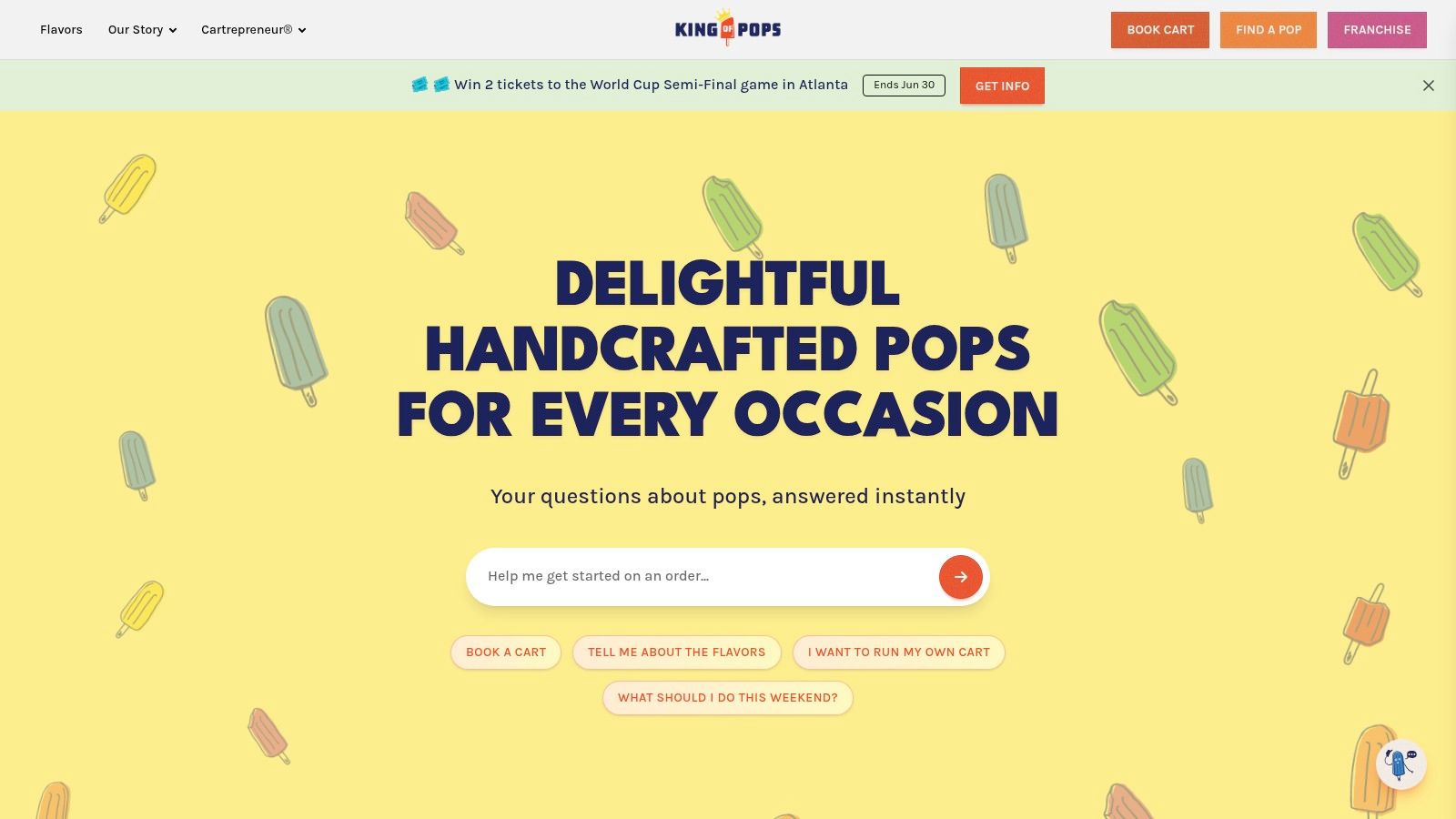
King of Pops works because it doesn’t try to be more complicated than it needs to be. When you need a fast dessert that feels local, easy to carry, and friendly for a crowd that includes kids, teens, and adults with different dietary preferences, a pop cart is hard to beat.
This is one of the most practical picks on the list for parks, BeltLine walks, brewery meetups, and daytime community events. A plated dessert slows things down. A frozen pop doesn’t. That’s the appeal.
Where it fits best
King of Pops is strongest in situations where movement matters. People can grab a pop and keep walking. Nobody needs a table, and cleanup is usually simpler than with heavier desserts.
For event planners, the staffed pop-cart option is the bigger advantage. It gives you a recognizable Atlanta brand and a service format that’s fast enough to keep a line from becoming the event.
A dessert vendor only works at a public event if service stays simple. King of Pops gets that format right.
There’s also a practical visibility benefit. Since carts show up around the city at parks, festivals, and other public gatherings, the brand feels woven into Atlanta life rather than locked into one address.
What works and what doesn’t
The upside is convenience. Seasonal flavors keep things interesting, and the cart model travels well to outdoor settings where a food truck menu might feel too heavy or slow.
The downside is predictability. Daily locations aren’t fixed in the way a storefront is, so you have to check the company’s channels the day you’re going. If you show up assuming a cart will be in the same place it was last weekend, you might miss it.
A few practical trade-offs stand out:
- Best use case: Outdoor gatherings, school-friendly events, and low-friction dessert service.
- Main limitation: You need to verify where the cart is that day.
- Why it’s memorable: It feels specific to Atlanta without requiring a full meal commitment.
For homeowners or community organizers, that matters. Not every event needs a full vendor lineup. Sometimes adding one fast dessert option makes the whole setup feel more complete without adding much operational complexity.
If you’re planning a cleaner event footprint, dessert carts also create a different waste profile than a full meal service. Fewer bulky containers and fewer abandoned half-finished plates. That doesn’t eliminate cleanup, but it can make post-event pickup much easier.
You can track current locations, event booking details, and pop-cart options through the King of Pops website.
2. Yumbii
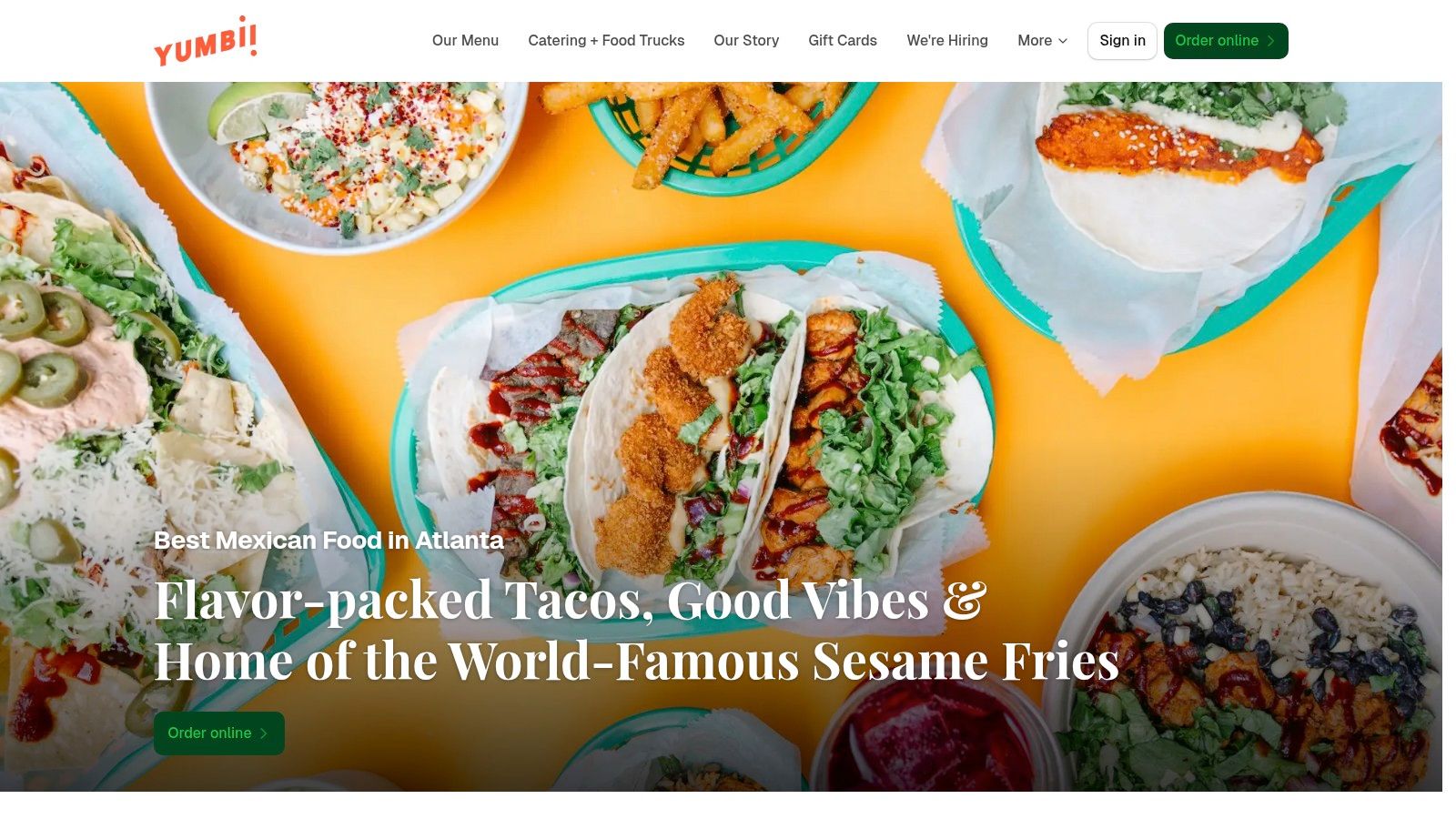
Yumbii is one of the safest recommendations when you need street food that can please both adventurous eaters and people who just want lunch to be obviously good. Korean-Mexican fusion sounds niche until you watch a group order tacos, bowls, loaded fries, and wings without much hesitation.
That’s why Yumbii works so well for office lunches and mixed crowds. The flavors are bold, but the format is familiar enough that nobody feels like they’re gambling on an obscure menu.
Why groups tend to like it
Fusion can go wrong when it feels engineered for novelty. Yumbii tends to avoid that problem because the menu still reads like approachable street food. Tacos make sense. Bowls make sense. Fries loaded with punchy toppings make sense.
Vegetarian-friendly choices help too. If you’re ordering for a workplace or a neighborhood gathering, having a few easy options matters more than having a giant menu.
- Strongest order context: Team lunches, brewery stops, and casual catering.
- Operational plus: Fixed locations often make menu browsing and ordering easier than truck-only concepts.
- Real drawback: Truck schedules can shift, so same-day verification is part of the routine.
For North Fulton and nearby business communities, this kind of format is especially useful when staff want something fast but more interesting than standard sandwich catering. If you’re coordinating service in that direction, Fulton Junk Removal’s Roswell commercial cleanup coverage is relevant on the back end for post-event debris, packaging, and leftover setup materials.
Practical trade-offs
Yumbii’s biggest strength is menu clarity. When a vendor publishes fixed-location ordering information, customers don’t have to decode a social feed just to figure out what lunch looks like. That reduces friction.
The limitation is that the truck side of the business still moves. Hours and appearances can change, especially around events and private bookings. That isn’t unusual for Atlanta trucks, but it’s still the detail that trips people up.
Ordering rule: If a truck is involved, confirm the location the same day. Don’t plan around a screenshot from earlier in the week.
One more thing makes Yumbii stand out in a Best Atlanta Street Food Spots roundup. It bridges the gap between true mobile food culture and the reliability of brick-and-mortar operations. That hybrid model is useful. You get the energy of a truck with more operational structure than many truck-only brands can offer.
For menus, truck updates, storefront details, and catering information, use the Yumbii website.
3. Tex’s Tacos
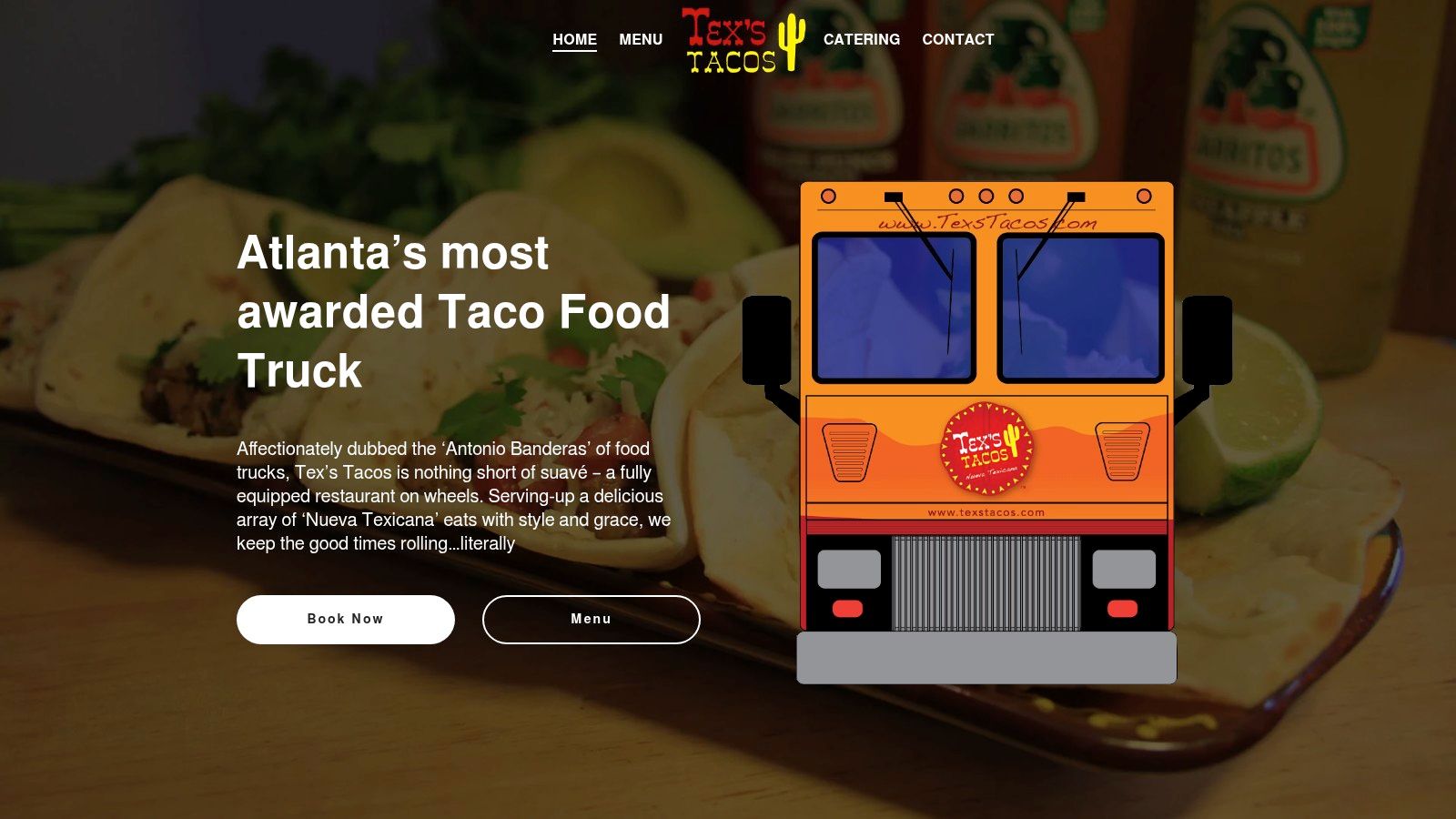
Tex’s Tacos is the kind of truck you book when you don’t want to explain the menu to anyone. Carne asada, al pastor, grilled chicken, quesadillas, burritos. People know what they want before they reach the window, and that keeps lines moving.
That sounds simple, but simplicity is a real advantage in high-volume settings. At office parks, brewery nights, and private events, straightforward ordering usually beats a concept that needs a long introduction.
Why it’s reliable for events
Tex-Mex travels well. That matters more than trendiness when food has to hold up for a rush. Tacos and quesadillas can move quickly, and burritos make late-day or evening service easier for guests who want something filling.
For event hosts, a broad menu is useful because it reduces ordering hesitation. The more obvious the choices, the faster people commit and the less likely a line will stall.
If you’re planning a corporate gathering or resident event in North Fulton, it helps to pair food that serves fast with cleanup support that can keep the property usable right after. Fulton Junk Removal’s Alpharetta service area is built for exactly that kind of fast turnaround.
The trade-offs to know
Tex’s Tacos is better for reliability than for discovery. If you want the most unusual thing you’ll eat all month, this isn’t necessarily that truck. If you want a crowd to leave happy, it’s a strong bet.
There’s also no fixed daily location to depend on. Public appearances are often social-driven, so you have to verify where it’ll be. Event pricing can also vary depending on what you’re booking, which is normal for mobile vendors but worth planning for in advance.
- Best for: Large groups, casual private events, and easy lunch service.
- Less ideal for: Diners looking for a highly experimental menu.
- Planning note: Ask early if your event has timing constraints or a narrow service window.
What works especially well here is familiarity without feeling generic. A lot of people say they want exciting food, but when the line forms, they order what they can recognize fast. Tex’s Tacos is built around that reality.
The practical result is fewer delays, fewer abandoned carts from indecision, and a cleaner guest flow. For public or semi-public events, that often matters as much as flavor.
You can book the truck and check current details through the Tex’s Tacos website.
4. The Blaxican
The Blaxican has a point of view. That alone puts it in a different category from trucks that mainly compete on convenience. Its “Mexican Soul Food” identity gives you tacos and burritos built around Southern staples like collards, mac and cheese, and pulled pork alongside more traditional options.
That mix makes the truck memorable at festivals and pop-ups. People talk about it because the menu has a hook, not because it’s just another place to grab tacos.
What makes it stand out
Fusion can feel forced when there’s no local logic behind it. The Blaxican works because Southern food and Atlanta crowd preferences already overlap in a natural way. The truck doesn’t feel imported from someone else’s trend cycle. It feels tied to this city.
That matters when you’re choosing vendors for public events. A truck that sparks curiosity without alienating less adventurous eaters usually performs better than a concept that only serves one narrow audience.
Crowd note: The Blaxican works best when you want one vendor that can attract both regular taco eaters and people who want something more distinctive.
Another advantage is staying power. The truck has been part of Atlanta’s mobile food scene for more than a decade, which says something practical about demand and adaptability. In a market where schedules, locations, and vendor lineups change constantly, longevity counts.
Who should choose it
The Blaxican is a good pick for festivals, branded events, and office activations where food needs to be part of the conversation. It gives guests something to remember beyond “we had catering.”
The downside is that purists may not care for the concept. If someone wants classic taco-truck simplicity with no interpretive layer, they may prefer a more traditional vendor. Public schedules can also be irregular, so checking before you go isn’t optional.
A few reasons it earns a place among the Best Atlanta Street Food Spots:
- Distinct identity: It doesn’t blur into the city’s larger taco scene.
- Event strength: Menus built for fast service and social buzz tend to perform well at gatherings.
- Range: Traditional and fusion items make it easier to serve mixed preferences.
For organizers, this kind of truck can also help with event flow. Vendors with a clear concept tend to attract intentional lines rather than random wandering. That makes placement, queue control, and cleanup planning easier than setups where people hover indecisively around a broad but unfocused menu.
For bookings, menu details, and public appearances, check The Blaxican website.
5. Atlanta Food Truck Park & Event Center
Atlanta Food Truck Park & Event Center solves one of the most annoying parts of food-truck dining. You don’t have to chase one truck across town and hope the post you saw is still accurate. Instead, you go to one outdoor site on the Westside and work from a rotating lineup.
That makes it especially useful for groups. If everyone wants something different, a truck park is often smarter than picking a single vendor and hoping nobody complains.
Why the format works
Pod-style food setups reduce decision friction. One person can get tacos, another can look for something heavier, and a family can spread out without turning lunch into a logistics problem.
The setting also makes planning easier for event-minded visitors. There’s outdoor seating, regular programming, and a structure that’s easier to get around than a one-off festival lot.
If you’re handling community events, school gatherings, or neighborhood activations on the south side of the metro, Fulton Junk Removal’s South Fulton cleanup support is the kind of operational backup worth lining up early, especially when multiple vendors mean more packaging, signage, and end-of-day debris.
The real trade-off
The benefit of variety comes with a quality gamble. Since lineups rotate, your experience depends on who’s there that day. Some visits will feel strong from top to bottom. Others may have one standout and a few filler options.
Hours and truck counts can also shift with season, event schedule, and weather. That means this is a plan-ahead destination, not a “we’ll figure it out in the parking lot” destination.
- Best for: Groups, families, and anyone who wants multiple vendors in one stop.
- Main caution: Check the lineup and operating details before heading over.
- Big planning advantage: Easier than tracking several independent trucks around the city.
For event professionals, this type of venue is also a good reference point for service design. Shared seating, rotating vendor capacity, and centralized guest flow all help explain why truck parks can outperform isolated trucks for larger audiences. If you’re sourcing infrastructure for your own event, this guide to essential catering equipment is a useful operational companion.
The park’s current lineup, schedule, and event details are available through the Atlanta Food Truck Park & Event Center website.
6. Chattahoochee Food Works
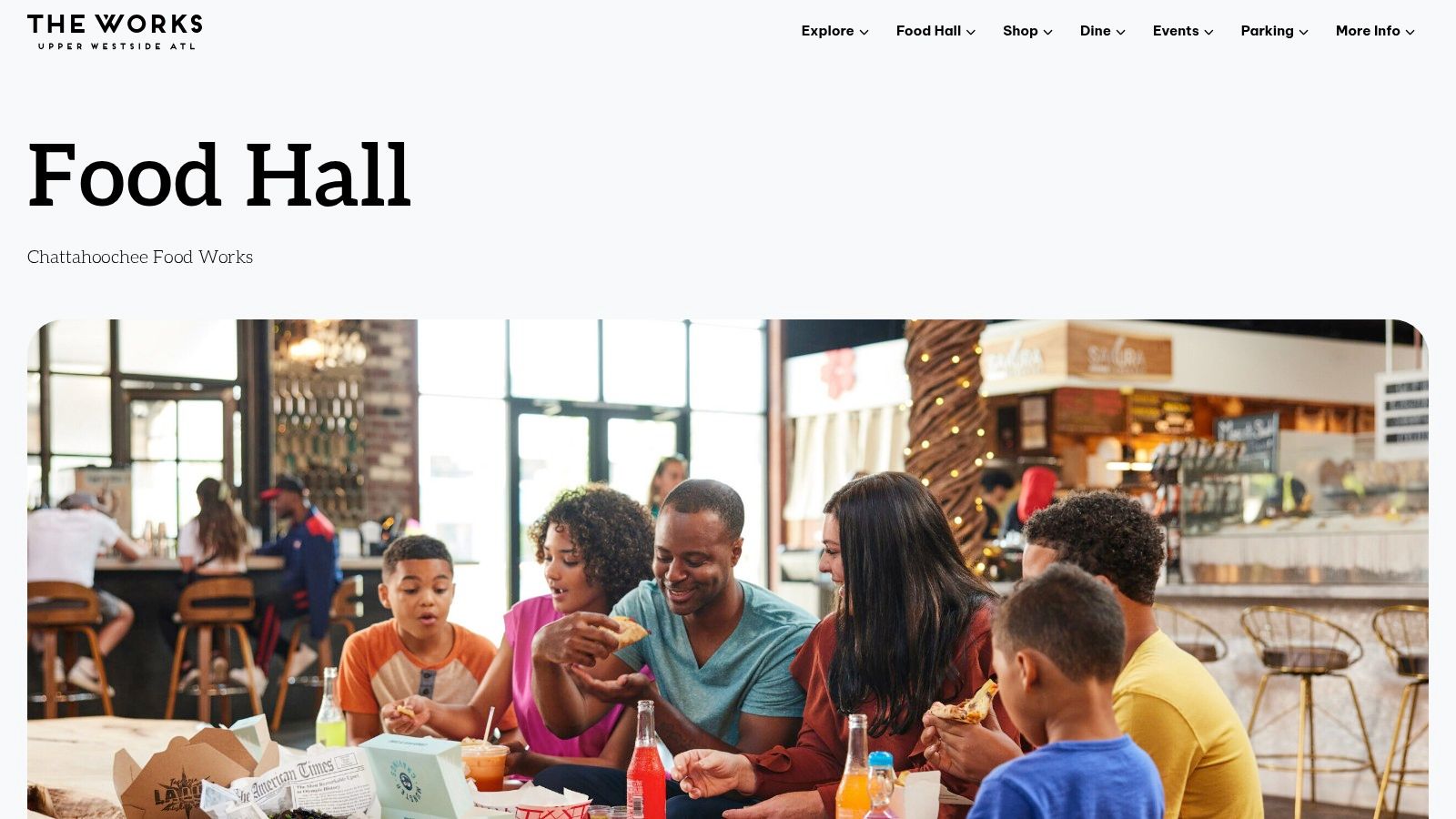
A summer storm rolls in, half the group wants dumplings, someone else wants tacos, and nobody wants to eat standing in a parking lot. Chattahoochee Food Works solves that problem better than most Atlanta street-food-style destinations.
It delivers the range people want from trucks and market stalls, but with indoor seating, stable hours, and a setup that works for families, office lunches, and larger meetups. That trade-off matters. You lose a little of the scrappy curbside feel, but you gain predictability, cleaner shared space, and a much easier visit when weather or timing is working against you.
Chattahoochee Food Works also reflects a real shift in how Atlanta eats. Food halls have become part of the city's casual dining routine, especially for groups that do not want to build an afternoon around chasing one vendor across town. In practical terms, it is one of the easiest places to satisfy different tastes without splitting up.
Why it works beyond the food
For event organizers, this kind of venue is useful to study. Centralized ordering zones, common seating, and shared cleanup points reduce friction for guests and simplify post-service turnover. Those same principles apply at neighborhood festivals, office activations, and apartment community events where food variety can quickly turn into trash overflow if nobody plans for it.
That is where smart cleanup support matters. For events in the city, Atlanta junk removal and post-event cleanup support can help clear packaging waste, signage, and bulk debris before the space becomes a problem for vendors, property teams, or the next day's foot traffic.
What to expect before you go
The main downside is cost. Food halls usually price in convenience, atmosphere, and location, so a meal here can run higher than a single truck stop or old-school counter spot.
Crowds are the other issue. Peak lunch and weekend periods can make seating harder to find, especially if your group arrives in waves. Go a little early or a little late if you want the easier version of the experience.
Chattahoochee Food Works earns its place on this list because it is dependable. It gives you street-food energy in a format that is easier to use, easier to plan around, and easier to keep clean after high-traffic events.
Current vendors, events, and details are on the Chattahoochee Food Works page at The Works.
7. Municipal Market (Sweet Auburn Curb Market)
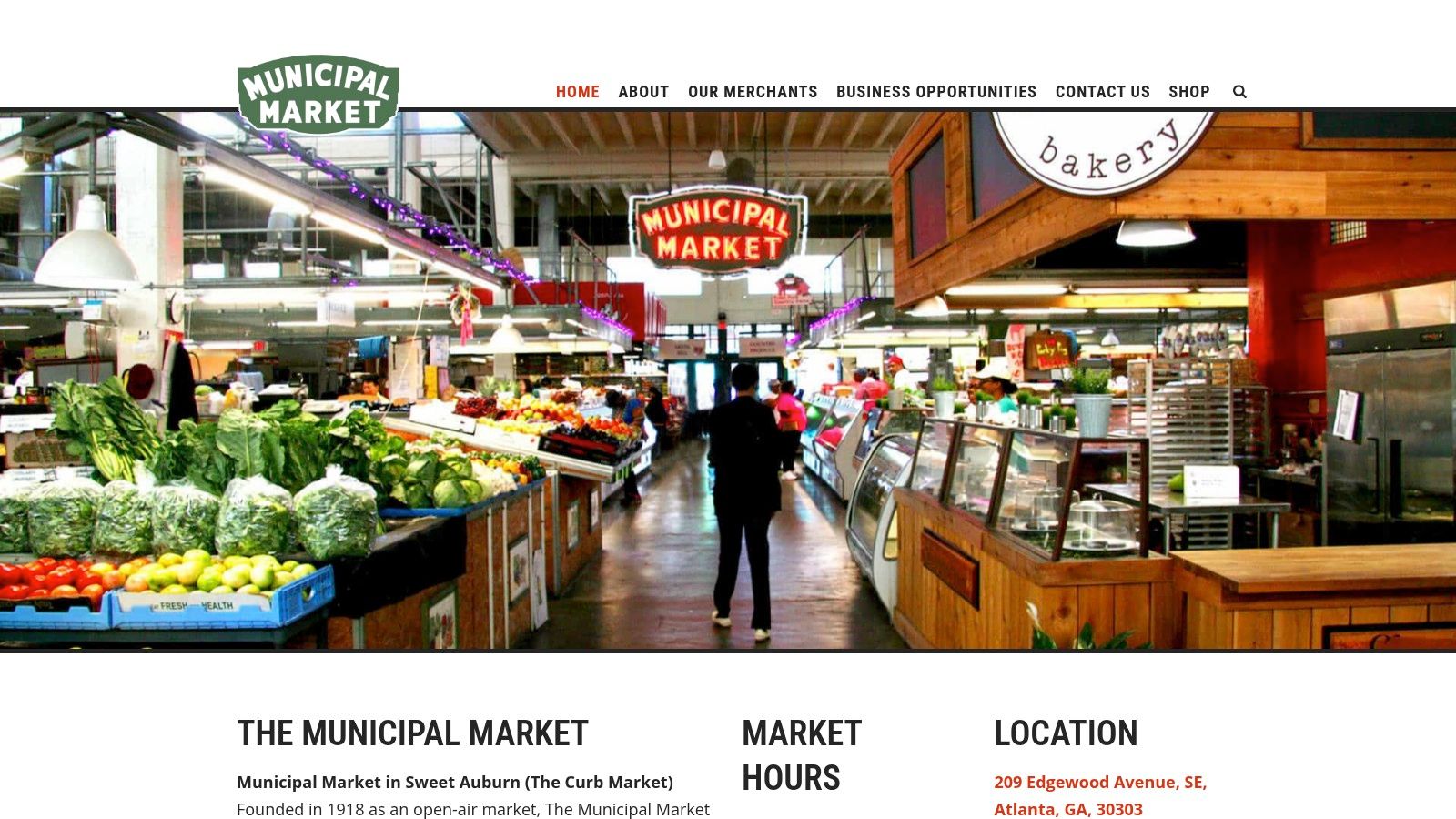
Municipal Market feels different from the newer food hall model. It’s a historic public market in Sweet Auburn, and that history changes the experience. You’re not just choosing lunch. You’re stepping into a market with long neighborhood significance and a vendor mix that still feels local rather than overly curated.
For people who like street-food-style meals but want something more grounded than a pop-up or truck chase, this is one of the best stops in the city.
What makes it worth the trip
The practical draw is concentration. Municipal Market brings together more than 30 small businesses and quick-serve vendors in one place, which makes it easy to sample different local operators without building a whole itinerary around it. That scale also makes it useful near downtown when time is limited and the group isn’t fully aligned.
Unlike trendier dining setups, the market gives you a mix of food stalls, produce, and specialty shopping in one venue. That creates a more lived-in experience. It feels like part of the city’s daily rhythm, not only its leisure culture.
Travel + Leisure recognized Krog Street Market among the world’s best food halls and in the top 10 in America, and Roundabout Atlanta notes Krog’s benchmark status in Atlanta’s food hall growth while placing it at 99 Krog St NE with 15+ stalls. Municipal Market isn’t trying to imitate that polished benchmark. Its value is in offering a more historic, market-first version of varied casual eating.
Practical limitations
Municipal Market works best as a daytime move. It’s closed Sundays, and some stalls keep limited hours, so checking individual merchants before a targeted visit is smart. Seating and crowd conditions also vary depending on when you arrive.
If you’re organizing downtown-area events, production days, or property cleanouts near the urban core, Fulton Junk Removal’s Atlanta service area is the local support piece that pairs well with busy venues and quick turnarounds.
A few reasons this market stays relevant:
- Local depth: Independent vendors give it more personality than a chain-heavy setup.
- Efficient variety: You can build lunch around several stalls without much planning.
- Historic character: The setting adds context that newer concepts can’t replicate.
There’s also a broader practical point. Public markets often create less confusion than scattered street vendors because guests understand the layout quickly. That’s good for lunch breaks, small group visits, and event scouting. Predictable circulation usually means smoother cleanup as well.
You can review vendors, hours, and current information at the Municipal Market website.
Top 7 Atlanta Street Food Spots Comparison
| Option | Implementation Complexity 🔄 | Resource Requirements ⚡ | Expected Outcomes 📊⭐ | Ideal Use Cases 💡 | Key Advantages ⭐ |
|---|---|---|---|---|---|
| King of Pops | Low, simple mobile cart ops and seasonal rotation | Low, staffed carts, cold storage, permits | High impulse sales at outdoor events; kid‑friendly demand | Parks, BeltLine, festivals, staffed event carts | Fast service, strong local brand recognition |
| Yumbii | Moderate, multiple formats (trucks + storefronts) | Moderate, commissary/truck gear, diverse ingredients, online ordering | High customer appeal from bold fusion flavors | Crowd events, catering, fixed‑location ordering | Distinctive Korean‑Mexican fusion; veg options |
| Tex’s Tacos | Low, streamlined Tex‑Mex menu for quick service | Low, standard truck equipment; efficient prep for large groups | Consistent satisfaction; scales well for events and late‑night | Office parks, breweries, festivals, catering | Reliable favorites; proven catering experience |
| The Blaxican | Moderate, fusion prep with varied accompaniments | Moderate, diverse ingredients, festival‑ready truck setup | High social buzz; standout flavor combinations | Festivals, pop‑ups, events wanting unique flavors | Unique “Mexican Soul Food”; strong local identity |
| Atlanta Food Truck Park & Event Center | Low for guests, moderate for organizers (coordination) | High, venue infrastructure, seating, programming | High convenience and variety; vendor quality varies by day | Groups seeking variety, family outings, large events | One‑stop sampling; easier parking and planning |
| Chattahoochee Food Works | Low for diners; moderate vendor coordination | High, indoor facilities, multiple vendor operations | Consistent, weather‑proof dining; rotating concepts | Indoor group meals, diverse cuisine sampling, bad weather | Wide cuisine selection under one roof; curated vendors |
| Municipal Market (Sweet Auburn Curb Market) | Low, established market layout and stall model | Moderate, stall infrastructure and merchant operations | Broad local vendor sampling; strong cultural value | Daytime lunches, downtown visits, local food exploration | Historic venue with 30+ independent vendors |
Taste of the Town, Street Food, and Smart Cleanup
A Saturday food event in Atlanta usually looks great at noon. Kids are holding King of Pops on the BeltLine, someone is carrying Yumbii tacos back to a brewery table, and a market stall is working through a lunch rush. By 3 p.m., the job changes. Compostable trays are mixed with plastic bottles, vendor boxes are stacked behind tents, and someone has to decide what gets recycled, what gets hauled off, and how fast the site can turn over for the next use.
That practical side matters because the best street food spots in Atlanta are tied to different operating conditions. Trucks such as Yumbii, Tex’s Tacos, and The Blaxican bring energy, mobility, and strong event appeal, but they also require tighter coordination on staging, trash access, grease handling, and pickup windows. Food halls and markets such as Chattahoochee Food Works and Municipal Market trade some of that spontaneity for predictable seating, weather protection, shared restrooms, and easier waste collection. For planners, that trade-off is often more important than one extra menu option.
The pattern across this list is simple. Good street food draws a crowd. Good event planning accounts for what that crowd leaves behind.
That is why cleanup should be part of vendor selection, not an afterthought after service ends. If a pop vendor relies on single-use wrappers, add clearly marked bins close to the queue. If a taco truck is serving a large office activation, confirm where cardboard, supply pallets, and food packaging will be consolidated before breakdown starts. If a food hall meetup is the better fit, use the venue’s built-in waste and seating systems to reduce the amount of temporary equipment you need to bring in.
The same logic applies to compliance. Event hosts should ask vendors about permits, handwashing setup, power needs, and disposal practices before signing them for a community gathering or corporate event. Food quality gets people to show up. Operational discipline determines whether the event feels professionally run from start to finish.
Pro-Tip for Event Organizers: Partner with a service that understands commercial waste and recycling. Fulton Junk Removal, part of the Beyond Surplus family, specializes in event cleanup and commercial junk removal. They offer bundled services that go beyond simple trash hauling, ensuring that recyclables, electronics, and other materials are diverted from landfills. This commitment to eco-friendly disposal helps you meet sustainability goals and keeps our shared public spaces pristine. By planning for cleanup with a circular, eco-friendly solution, you contribute to the long-term health of Atlanta's vibrant community culture.
That service model is useful in Atlanta because event waste is rarely just bagged trash. It often includes broken signage, leftover promotional materials, packing foam, metal fixtures, pallet wrap, and sometimes electronics from check-in stations or temporary production setups. Fulton Junk Removal handles the haul-away side while Beyond Surplus supports responsible processing for recyclable materials, which helps venues, offices, and property managers keep cleanup aligned with sustainability goals instead of sending everything to the landfill.
For readers picking a lunch stop, the takeaway is easy. Atlanta’s best street food spots reflect how the city eats: outdoors when the weather cooperates, indoors when convenience matters, and across neighborhoods that each bring their own rhythm. For organizers, the same spots offer a useful planning lesson. Strong food service, smart waste sorting, and fast post-event cleanup belong in one plan, especially if the goal is to keep public spaces clean and community events worth repeating.
If you’re planning an event, clearing a commercial space, or need fast post-gathering cleanup with responsible recycling built in, Fulton Junk Removal is a smart local partner. The team handles commercial junk removal, event debris, office cleanouts, and property turnover support, while Beyond Surplus helps divert recyclable materials from landfills so your cleanup is faster, cleaner, and easier to document.
