
Recycle In Atlanta: Your 2026 Complete Guide
You open the bin lid with good intentions and hit the same Atlanta problem many residents and business owners run into fast. Cardboard and bottles seem straightforward. Then you still have a broken lamp, old charging cables, a half-full paint can, and no clear answer on what belongs at the curb versus what needs a different outlet.
That confusion is normal because recycling in Atlanta is not one system. It is a set of separate channels with different rules, different access points, and different levels of accountability. A homeowner using city pickup has one set of options. A renter in a multifamily building may have fewer. A business, property manager, or office administrator often needs more than pickup. They need labor, sorting, proper downstream handling, and records that show what happened to electronics, metal, cardboard, or bulk debris after it left the site.
The practical takeaway is simple. Curbside handles part of the job. It does not cover the full waste stream.
That gap is where people make expensive mistakes. Residents toss excluded items into the blue bin and contaminate a load. Property teams leave usable or recyclable material mixed into a cleanout pile and pay landfill rates on everything. Businesses discover late that e-waste, fixtures, shelving, and old furniture may need separate handling if they want a cleaner diversion process and documentation.
There is a workable path if you want to recycle in Atlanta without guessing. Use curbside for accepted household materials. Use drop-off programs for items the city will not take. Use certified or documented commercial recycling and junk removal services when the job includes electronics, bulky items, tenant turnover, office furniture, or mixed loads that need sorting after pickup. For location-specific service context, Fulton Junk Removal provides an Atlanta service area overview that helps clarify what support is available locally.
The goal is not to recycle everything in one bin. The goal is to put each material into the right channel so less gets rejected, less goes to landfill, and both households and businesses have a process that holds up in practice.
Your Guide to Recycling in Atlanta
Atlanta recycling works best when you stop treating it like one system.
That’s often the first mistake: assuming the city bin should handle everything recyclable. It won’t. Atlanta has a curbside program for common household materials, separate channels for harder items, and a patchwork of options for apartments, offices, tech equipment, bulky cleanouts, and move-outs.
A new resident usually learns this the hard way. They flatten boxes, rinse bottles, then realize they still have batteries, old monitors, foam packaging, and a broken office chair with nowhere obvious to go. A business owner sees the same problem at a different scale. One office refresh can leave behind metal shelving, outdated laptops, cables, packaging, and furniture, all with different disposal rules.
Practical rule: Start by sorting by material type, not by room. Paper, containers, electronics, hazardous items, reusable goods, and landfill-only debris each need a different decision.
That’s especially true in Atlanta because service quality changes depending on where you live and what you need removed. A homeowner with weekly curbside pickup has one set of options. A renter in a multifamily complex has another. A facilities manager planning an office cleanout needs a process that covers hauling, chain of custody, and documented recycling outcomes.
The simplest way to think about recycle in atlanta is this:
- Curbside first for standard household recyclables
- Special drop-off for hard-to-recycle household items
- Certified processors for electronics and data-bearing devices
- Commercial hauling and recycling coordination for bulk volumes, cleanouts, and compliance-driven projects
If you use that framework, the city’s recycling system gets much easier to understand.
Atlanta's Curbside Recycling Rules Explained
A typical Atlanta recycling mistake starts with good intentions. A resident empties a kitchen bin into the blue cart, adds a bag of plastic wrap from a delivery box, drops in a half-full peanut butter jar, and assumes the sorting line will figure it out. That is where a useful curbside program starts to break down.
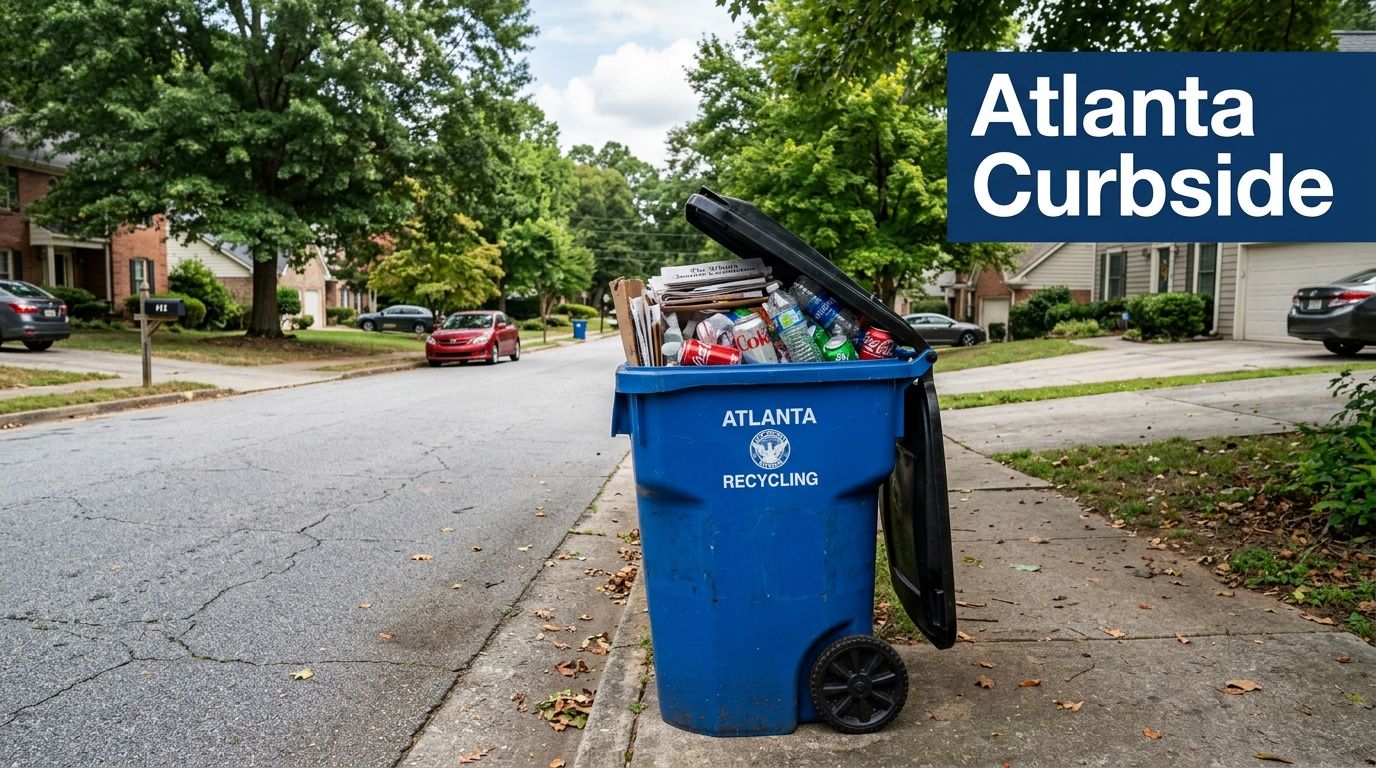
Atlanta’s curbside service works well for a narrow group of materials. It is one of the more convenient city programs in the region because residents can place standard recyclables in one cart, and glass is accepted curbside in Atlanta, which is not universal across metro systems. The trade-off is simple. Single-stream collection is easy for households, but it depends on cleaner loads and fewer borderline items.
What usually belongs in the blue bin
For most homes served by city pickup, the blue cart is meant for a short, predictable list:
- Paper products such as cardboard, mixed paper, and mail
- Plastic containers accepted in the city stream
- Metal containers like aluminum and steel cans
- Glass bottles and jars
Problems usually come from items that look recyclable but do not belong in curbside collection. Plastic bags, shrink wrap, food-soiled containers, batteries, hoses, cords, and mixed-material products are common examples. A good rule is to stop and check the item if it tangles, leaks, contains electronics, or combines several materials that cannot be separated easily.
Prep is what keeps the cart usable
Atlanta uses single-stream recycling, so accepted items go into one cart together. That convenience saves time at home, but it puts more pressure on residents to prep items correctly before pickup.
Use this routine:
- Empty containers fully. A light rinse is enough for most bottles, cans, and jars.
- Place recyclables loose in the cart. Do not bag them.
- Flatten cardboard to save space and reduce overflow.
- Set aside uncertain items until you verify whether the city accepts them.
For broader guidance on sorting, cleanouts, and material-specific disposal decisions, Fulton’s junk removal blog covers situations that go beyond what a curbside cart can handle.
Treat the blue bin like a material stream, not a storage spot for anything that might be recyclable.
Why contamination control works
Clear feedback changes household behavior. The Recycling Partnership’s Atlanta curbside project summary describes how direct resident education and cart tagging reduced contamination and improved recovery in the city program.
That matters for a practical reason. Contamination does not stay isolated to one house. One load with bagged recyclables, food residue, or tangled material creates extra sorting problems for the whole route and increases the chance that usable material gets pulled out or discarded.
What works and what does not
The households that recycle well in Atlanta usually follow a few repeatable habits:
- Keep a separate shelf or container for non-curbside items such as batteries, film plastics, cords, and light bulbs.
- Break down boxes as they come in, not on pickup day.
- Rinse food containers before they dry out. It is easier and faster.
- Leave out questionable items instead of guessing.
The same principle scales up for businesses. A front office, retail site, or apartment property can use curbside-style recycling for standard paper and containers, but the city cart is not built for electronics, furniture, fixture debris, move-out volume, or materials that need documented handling. That is the point where municipal recycling reaches its limit and a certified commercial service becomes the better fit.
Handling Hard-to-Recycle and Bulky Items
A garage cleanout in Atlanta usually starts the same way. Cardboard and bottles can go in the cart, then you hit the pile that stops everything else. Old laptops, paint cans, a broken bed frame, loose cords, foam inserts, dead batteries, and furniture that is too damaged to donate.
That pile needs sorting before it needs pickup.
Sort by handling requirement, not by room
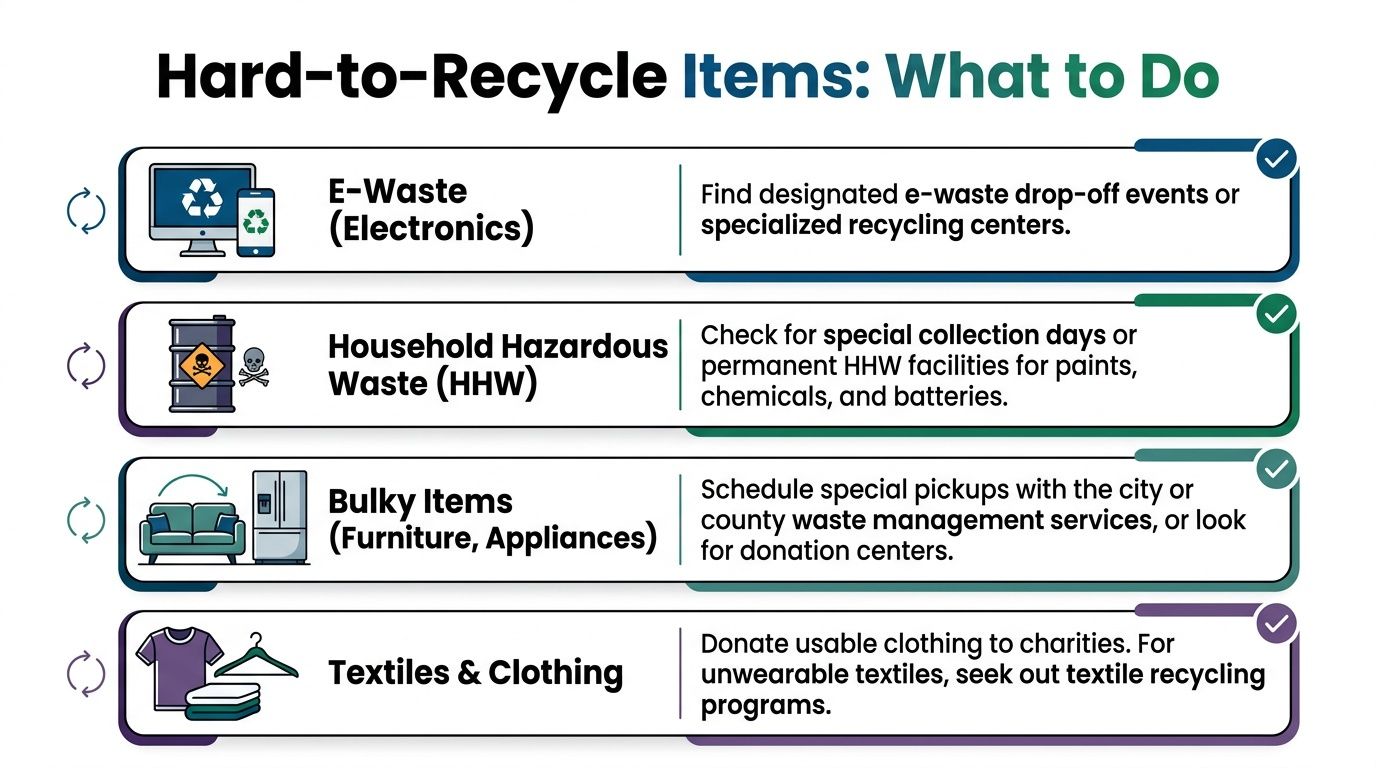
People often group items by where they came from. That slows the job down. Sort by what kind of outlet each material needs.
Electronics and accessories
Computers, monitors, printers, phones, drives, cables, and anything with a circuit board belong in an e-waste stream, not curbside.Household hazardous waste
Paint, chemicals, automotive fluids, certain batteries, and similar materials need a facility that accepts special handling.Bulky mixed-material items
Furniture, mattresses, shelving, and fixtures are hard to recycle because they combine wood, fabric, foam, metal, and plastic in one piece.Reusable goods and salvageable materials
Working appliances, usable furniture, doors, cabinets, and some fixtures may be better candidates for donation or reuse than recycling.
This first pass prevents two common problems. Good recyclable material stays out of the landfill, and restricted items do not end up in a load that gets refused.
CHaRM fills a real gap for residents
For many Atlanta households, CHaRM is the practical answer for items the blue cart does not take. It works best if the load is already sorted, fits in a personal vehicle, and can be delivered on the facility’s schedule.
According to SaportaReport’s coverage of CHaRM by Live Thrive, CHaRM operates by appointment at 1110 Hill St. SE and serves residents bringing material that needs a drop-off option outside curbside collection. The same report explains the limitation that matters most for larger jobs. CHaRM is not set up for unsorted commercial loads or materials without a defined recycling outlet.
That trade-off matters in practice. CHaRM is a strong residential tool. It is not the right channel for an office shutdown, a warehouse cleanout, or a property turnover with mixed debris and tight timing.
Electronics are a recycling job and a risk job
Old electronics are easy to underestimate. A broken printer looks like scrap until you remember it may store network settings. A dead laptop still holds a drive. A copier can contain years of retained data.
For residents, the rule is simple. Do not trash electronics, and do not hand data-bearing devices to an unknown collector.
For businesses, schools, medical offices, and property operators, the standard is higher. Devices need a documented chain of custody and a processor that can separate reuse, recycling, and data destruction correctly. That is one of the clearest lines between what the municipal system can handle and what a business-grade service has to cover.
Bulky items usually fail on logistics, not intent
Many people are willing to recycle or donate large items. The breakdown happens at loading, scheduling, and material separation.
Use this decision path:
| Item type | Best first option | Common issue |
|---|---|---|
| Usable furniture | Donation or reuse channel | Pickup windows are inconsistent |
| Broken furniture | Haul-away with material separation when possible | Mixed materials limit recycling |
| Appliances and metal fixtures | Scrap or metal recycling channel | Stairs, weight, and loading slow the job |
| Mattresses and heavily damaged goods | Specialized pickup or disposal route | Condition and contamination reduce recovery options |
For larger cleanouts, one coordinated pickup is often more efficient than trying to place every item one by one. A local example is Fulton’s junk removal and cleanout service options, which show how hauling can be organized by material type and project scope instead of treated like a single dump run.
A practical approach that works
The cleanest outcomes usually come from a simple sequence.
First, pull out anything hazardous or data-bearing. Second, separate reusable items before they get damaged in a mixed pile. Third, send standard recyclables through city or private recycling where accepted, and use a specialized hauling or processing service for the rest.
That is the full-circle reality of recycling in Atlanta. The city system handles a narrow list well when material is clean and accepted. Once the load includes electronics, bulky goods, or regulated items, you need a different channel with the equipment, labor, and documentation to finish the job properly.
Recycling Solutions for Renters and Property Managers
Multifamily recycling is where Atlanta’s system shows its biggest gaps.
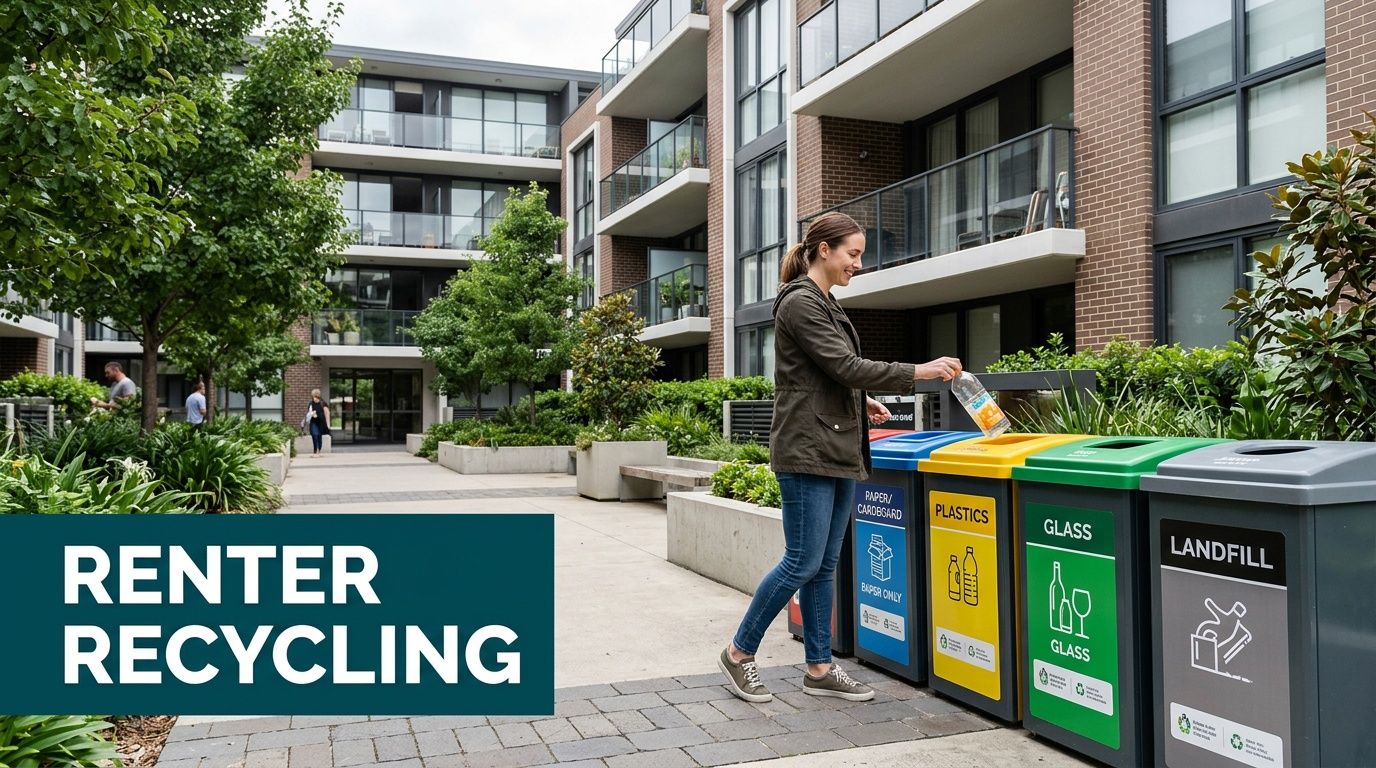
Single-family curbside gets most of the attention, but apartment residents and property managers deal with a different reality. Access is inconsistent, signage is often weak, turnover is constant, and contamination is harder to control when dozens or hundreds of residents use the same enclosure.
Why multifamily systems break down
The challenge isn’t just resident behavior. It’s infrastructure.
An Atlanta audit highlighted that up to 50% of multifamily housing units send recyclables to landfills due to inconsistent infrastructure, with participation as low as 15% in some areas and only 10% to 15% service coverage citywide, according to this Axios Atlanta report on recycling failures in multifamily housing. For property managers, that means there often isn’t a reliable, scalable system in place for daily resident use, let alone move-outs, evictions, or renovation debris.
What tenants can actually do
Renters don’t control the enclosure, but they can still improve outcomes.
- Learn your building’s rules exactly. If management provides a recycling area, find out what the hauler accepts.
- Keep a small hold area inside your unit for batteries, bulbs, and electronics that don’t belong in shared bins.
- Ask specific questions, not general ones. “Where do I take old electronics from my unit?” works better than “Do we recycle?”
Shared bins fail when nobody owns the rules. The buildings that recycle well are the ones where management makes the system visible and easy to follow.
What property managers should prioritize
The best multifamily recycling systems are boring. Residents can find the bins, the signs are clear, pickup is consistent, and staff know what happens during turnovers.
Property managers usually get the strongest results when they focus on these operational basics:
Bin access and placement
Residents won’t recycle if the enclosure is inconvenient or constantly overfilled.Move-in and move-out education
High turnover creates confusion fast. Include recycling guidance in resident materials and maintenance workflows.Turnover separation
Unit cleanouts produce cardboard, metal, electronics, textiles, and trash in a short window. Those streams need sorting before they become one mixed disposal pile.
Where private hauling fills the gap
Commercial help becomes practical, not optional. During unit turnovers and eviction cleanouts, property staff rarely have time to separate everything and drive materials to multiple outlets. A local provider that can remove junk and route recyclable materials into the right downstream channels can close that gap.
That’s especially relevant for Atlanta apartment portfolios, student housing, and mixed-use properties where waste spikes around lease cycles. The public system isn’t designed to absorb every mattress, desk, monitor, and bag of mixed move-out debris on a tight deadline.
The Commercial Advantage Certified Junk Removal and Recycling
A business cleanout in Atlanta usually fails at the sorting stage, not the pickup stage.
An office closes a floor. A warehouse clears obsolete equipment. A property team needs a unit block emptied before the next lease cycle. The material leaves the site in one rush, but it does not belong in one disposal stream. Electronics, scrap metal, cardboard, furniture, fixtures, and general trash each need a different path if the goal is landfill reduction, usable reporting, and lower compliance risk.
That is the main limit of the municipal system for commercial users. City recycling helps with routine, source-separated material. It does not solve mixed-load removals, data-bearing devices, or time-sensitive cleanouts where labor, documentation, and downstream handling all matter.
Why standard hauling leaves gaps
A basic junk haul clears space. For many businesses, that is only part of the job.
Companies with internal ESG targets, landlord reporting requirements, regulated records, or IT asset disposal policies usually need more than a pickup receipt. They need a provider that can separate recoverable material before it becomes trash, document what was diverted, and route sensitive items into certified downstream channels.
The rule is simple. The more sensitive the material, or the more mixed the load, the less useful a general disposal approach becomes.
For electronics, that trade-off shows up fast. If old laptops, servers, phones, and monitors are mixed into a general cleanout, businesses lose chain-of-custody visibility and make later audit questions harder to answer. As noted earlier, certified processing standards matter for data-bearing equipment because removal and destruction are not the same thing.
Why bundled removal plus recycling works better
Atlanta businesses usually get better results when pickup, sorting, and recycling are planned as one job.
That is the practical model behind Fulton Junk Removal's commercial cleanout and recycling approach. Fulton Junk Removal handles the labor and site removal. Beyond Surplus processes electronics, metals, and other recoverable material through documented downstream channels. For a business owner or property operator, that means fewer handoffs and fewer chances for recyclable material to be dumped into a mixed load.
The benefit is operational, not theoretical. Someone has to decide what gets reused, what gets recycled, what needs certified destruction, and what is trash. If that decision happens on the front end, diversion improves and reporting gets easier. If it happens after everything is tossed together, options shrink.
Some companies only want a truck and a crew. Others need a service model that covers labor, pickup scheduling, material separation, and audit support in one scope. If you are comparing junk removal services, that is the line to watch.
Comparing Atlanta disposal options for businesses
| Disposal Method | Recycling & Diversion | Compliance & Reporting | Best For |
|---|---|---|---|
| Standard junk hauling | Limited once loads are mixed | Usually basic | Fast removal of low-risk debris |
| Municipal or public drop-off | Works for narrow, pre-sorted categories | Limited for commercial records | Small loads with staff time to sort and transport |
| Certified e-waste recycler | Strong for electronics and data-bearing assets | Strong for chain of custody and destruction records | IT refreshes, device retirement, regulated sectors |
| Bundled commercial junk removal plus recycling | Better for mixed cleanouts when sorting is built into pickup | Useful when provider documents diversion and certified downstream handling | Offices, warehouses, turnovers, multi-material projects |
Best fit by business type
Offices and professional firms
Most office cleanouts generate a blend of paper files, furniture, cables, monitors, and small electronics. The common mistake is treating all of it as furniture removal with a few devices mixed in. Data-bearing equipment should be pulled out early and handled under a documented process.
Warehouses and industrial spaces
These projects usually involve bulky materials, loading constraints, and a wider mix of recoverable items. Metal, pallets, shelving, obsolete electronics, and packaging can often be separated if the crew is set up for it. If not, speed wins and diversion drops.
Property managers and building operators
Commercial properties need consistency. Ownership groups may ask where material went, how much was diverted, and whether anything sensitive was left behind. A provider that can remove the load and document the material path creates fewer problems after the site is cleared.
Sustainability and procurement teams
These teams usually care about the paper trail as much as the pickup. The useful questions are direct. What was recycled, what was destroyed, what went to disposal, and who handled each step?
Businesses that want to recycle in Atlanta at a higher level usually stop buying simple hauling and start buying material management.
Your Atlanta Recycling Action Plan
A common Atlanta cleanup looks the same at first. Cardboard by the door, a few bags of mixed trash, old electronics on a counter, and one blue bin that is expected to solve all of it. That approach usually works for only part of the material. The rest needs a different channel.
As noted earlier, Atlanta has made progress, but the gap between what people want to recycle and what the city system can process is still real. A good plan starts with that limitation. Curbside handles some household material well. Hard-to-recycle items, bulk loads, and business cleanouts need separate handling and better documentation.
For homeowners
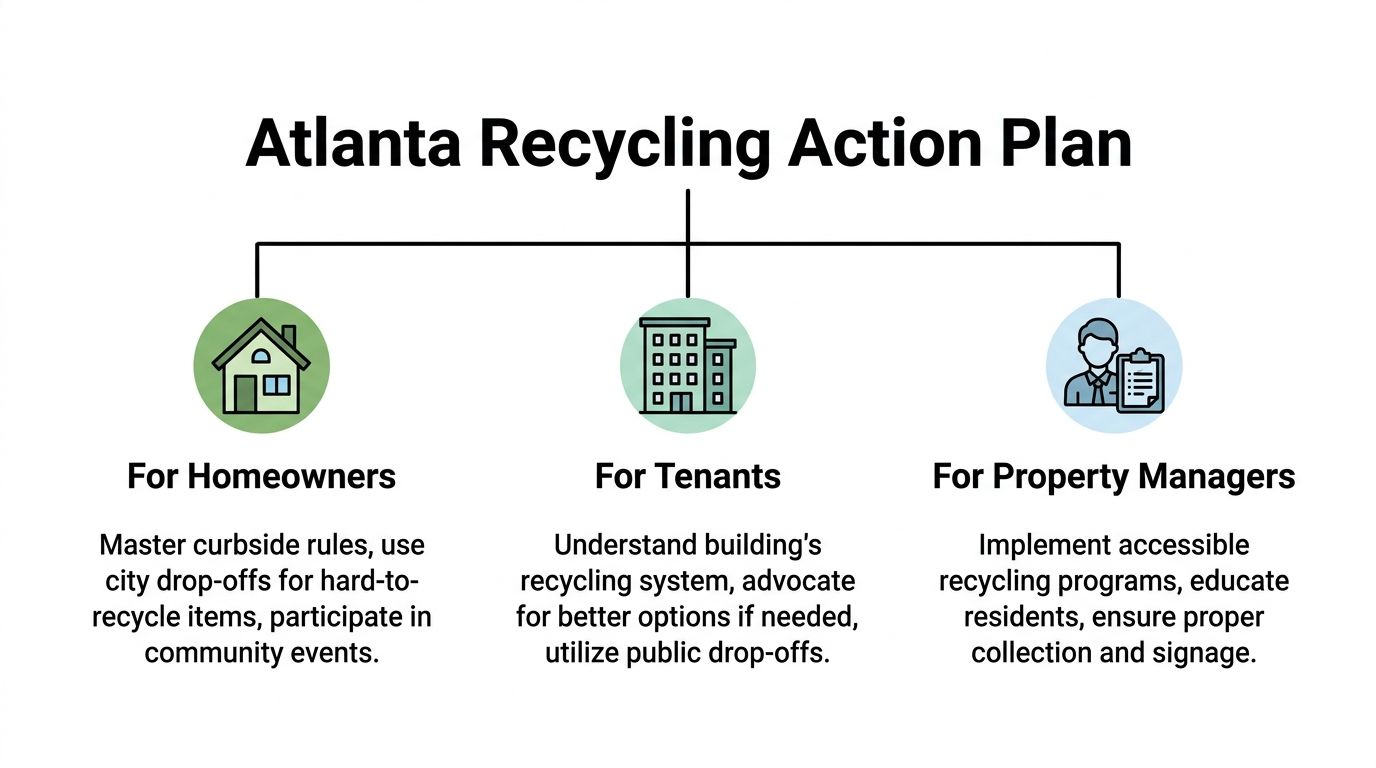
Start with the items that show up every week, then build a backup plan for everything your curbside cart does not handle well.
- Keep the blue cart clean and predictable. Paper, metal cans, glass, and accepted containers do better when they are empty, mostly dry, and free of bagged trash.
- Set aside problem items on purpose. A small shelf, bin, or garage tote for batteries, cords, bulbs, and small electronics prevents last-minute bad decisions.
- Flatten cardboard as it comes in. Delivery boxes turn into overflow fast, especially after a move or a holiday weekend.
- Wait until you have a sorted load before using drop-off options. That saves time and reduces the chance that recyclable material gets thrown away out of convenience.
For tenants
Renters usually have less control over the system, but they can still prevent contamination and push for better access.
- Verify the building setup. Apartment recycling often looks similar to city service, but collection rules, bin access, and pickup quality can be different.
- Keep electronics and batteries out of shared bins. Those items create safety and handling problems for both staff and haulers.
- Report the exact failure. “Recycling is bad here” is easy to ignore. “The recycling dumpster is missing a lid and trash is mixed in every weekend” is easier for management to act on.
- Use outside options for items your building does not handle. That is often the only practical route for small electronics, bulky packaging, and move-out leftovers.
For property managers
Recycling performance in multifamily buildings is mostly an operations issue. Residents follow the system they see every day.
- Check the enclosure from a new resident’s point of view. If trash and recycling look interchangeable, people will use them interchangeably.
- Build material sorting into unit turns. Cardboard, metal, and electronics are easier to recover before the crew creates one mixed pile.
- Train the staff who answer resident questions. Leasing teams and maintenance staff shape daily habits more than policy memos do.
- Use vendors that can show where material went. That matters when owners, regional managers, or compliance teams ask for records after a cleanout.
Good programs are visible and repeatable.
For business owners and facility teams
Commercial projects need a different standard because the volume is higher, the material mix is wider, and the reporting expectations are stricter. Curbside logic does not scale well to office closures, warehouse cleanouts, tenant improvements, or recurring bulk pickups.
- Pull sensitive devices and data-bearing equipment first. That decision affects security, recycling options, and chain-of-custody records.
- Stage materials by category before pickup. Scrap metal, cardboard, fixtures, electronics, furniture, and trash should not start in the same heap if diversion matters.
- Confirm documentation before service day. If your team needs recycling reports, destruction records, or downstream handling details, ask early.
- Choose the service level that fits the job. A small, sorted load may work through drop-off channels. A larger project usually needs a provider that can remove material, separate it properly, and document the outcome.
- Use a direct scheduling channel when timing and material handling both matter. For projects that need pickup plus recycling coordination, request service through Fulton Junk Removal's Atlanta cleanout and recycling contact page.
The practical rule is simple. Match the material to the right Atlanta outlet instead of forcing everything into one bin. That is how residents recycle more accurately, and how businesses move from basic hauling to documented material management.
Frequently Asked Questions About Atlanta Recycling
What should I do with plastic bags and plastic film
Keep them out of curbside recycling unless you have a verified local outlet that specifically accepts them. Film plastics are a common contamination problem because they wrap around sorting equipment and don’t behave like rigid containers in a single-stream system. If you can’t confirm a dedicated collection option, don’t put them in the blue bin.
Are compostable or biodegradable plastics recyclable in Atlanta
Treat them as separate from standard recycling. “Compostable” and “biodegradable” labels often confuse people into thinking those items belong with plastic containers. They usually don’t belong in curbside recycling. The safe move is to verify the handling method for the exact item and keep it out of the recycling cart unless the outlet specifically accepts it.
What’s the biggest mistake people make when they try to recycle in Atlanta
Wish-cycling.
That’s when someone throws an item in the bin because it feels recyclable, even though they’re not sure. Hoses, cords, batteries, food-soiled materials, plastic film, and mixed-material products are common examples. A smaller, cleaner stream is better than a larger stream filled with questionable items.
Besides recycling, how should I handle usable goods
Reuse comes first when the item is still functional. Furniture, fixtures, office equipment, and household goods may be better candidates for donation, internal reuse, or resale than material recycling. Recycling is valuable, but keeping a usable item in service is usually the cleaner outcome when a practical reuse channel exists.
What if I have a mixed load and no time to sort it myself
That’s usually the point where public options stop being efficient. If you’re dealing with a move-out, office cleanout, or property turnover, it helps to use a provider that can remove the load and separate recyclable categories downstream where appropriate. The key is to ask in advance how electronics, metals, reusable items, and landfill material will be handled.
If you need a practical next step, Fulton Junk Removal can help coordinate Atlanta cleanouts that involve both haul-away and responsible recycling through Beyond Surplus, which is especially useful for offices, warehouses, property turnovers, and mixed loads that don’t fit neatly into curbside or drop-off programs.
