
7 Best Food Markets in Atlanta GA for 2026
Atlanta’s food identity doesn’t live only in dining rooms. It shows up in butcher counters, produce bins, bakery cases, hot bars, and crowded Saturday stalls where shoppers compare tomatoes and ask vendors what came in fresh that morning. If you’re trying to decide where to spend your time, the options can blur together fast. Some places are best for lunch. Some are best for pantry restocks. Some are best when you need a farmer you can talk to.
That’s why this guide focuses on the Best Food Markets in Atlanta GA from a practical angle. Not just what’s famous, but what works. You’ll find downtown legacy markets, polished food halls, and international grocery institutions that reward patient browsing. You’ll also get the details that matter when you’re heading out the door: when to arrive, what to expect with parking, where crowds are worth tolerating, and which markets are better for a quick meal versus a serious shopping run.
Atlanta’s broader grocery economy is large and highly competitive. The metro grocery market spans 29 counties, serves over 6 million residents, and ranks as the 9th largest grocery market in the US and 4th in the Eastern US, according to the RetailStat Atlanta grocery market update. That scale matters because it helps explain why Atlanta supports so many different food formats at once, from producer-only markets to giant international stores to destination food halls.
The best approach is simple. Match the market to the trip. If you want a fast meal with friends, go to a hall. If you need spices, specialty produce, and pantry items, go international. If you care about direct-from-farm buying, stick with the producer-focused Saturday markets. Atlanta gives you all of those options, and each one feels different on the ground.
1. The Municipal Market (Sweet Auburn Curb Market)
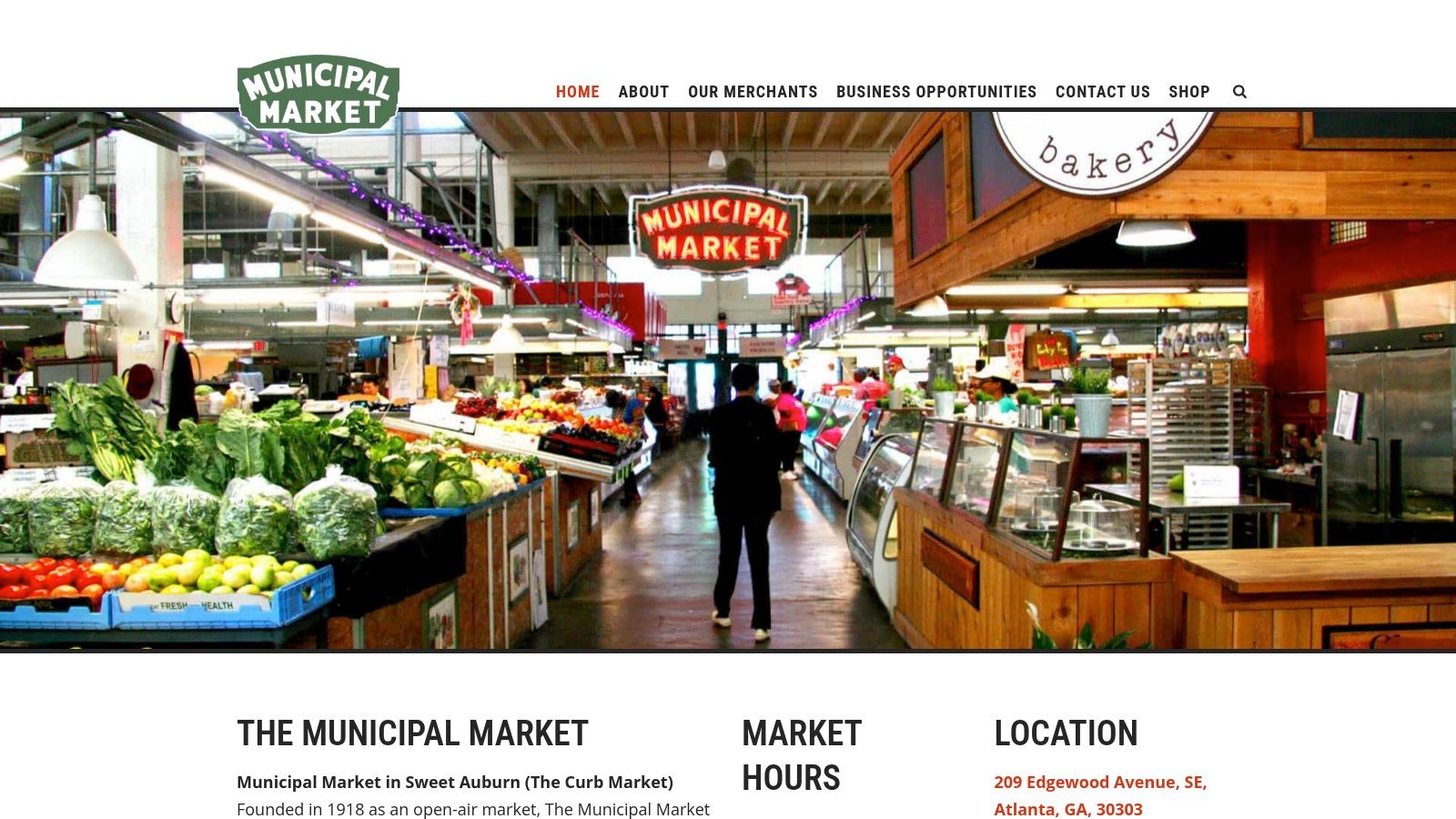
The Municipal Market is the market I recommend when someone wants Atlanta history and practical food shopping in the same stop. It sits in Sweet Auburn and brings together produce, meat, seafood, baked goods, casual meals, and small local merchants under one roof. That mix is what makes it useful. You can grab lunch, pick up groceries, and still feel like you visited a place with actual local character instead of a generic food court.
Municipal Market also stands out because it houses 30 local businesses, which gives it more range than many visitors expect from a historic market, as noted in the Discover Atlanta guide to food halls. If you like markets where different uses overlap naturally, this one delivers.
Why it works better than most downtown stops
A lot of downtown food options are built for speed, not repeat visits. Municipal Market is different. It’s useful enough for regular errands and interesting enough for out-of-town guests.
What works:
- Vendor variety: You’re not locked into one style of shopping. Meat, seafood, produce, sweets, and quick-service meals all coexist.
- Central location: It’s easy to fold into a downtown day, especially if you’re pairing it with nearby offices, attractions, or residential stops.
- Community access: Market-wide EBT acceptance matters because it broadens who can shop here and keeps the market tied to everyday Atlanta life.
What doesn’t work as well:
- Sunday closure: If Sunday is your market day, this isn’t the pick.
- Variable merchant hours: Some stalls keep different schedules, so late-day visits can feel uneven.
- Short-term turnover effects: Historic markets evolve. Vendor mix can shift, especially when upgrades or management changes affect operations.
Practical rule: Go earlier in the day if you want the fullest version of Municipal Market. Waiting until late afternoon makes the variable vendor hours more noticeable.
Logistics and who should go
Paid parking nearby is usually the simplest option. This isn’t the market for a huge suburban-style stock-up run, but it’s strong for mixed errands and fast lunches. It’s also one of the better picks if you want a market that feels tied to Atlanta rather than built for a trend cycle.
For property teams and vendors working around market corridors, the surrounding neighborhoods often need fast cleanouts tied to tenant turns, small retail resets, or event debris. If that overlaps with your work in the area, South Fulton junk removal support is a useful local service reference.
Municipal Market’s biggest strength is balance. It doesn’t try to be a luxury hall or a giant warehouse grocery. It gives you a grounded Atlanta experience with enough range to justify the trip.
2. Ponce City Market Central Food Hall
Ponce City Market is the most polished option on this list. If you’re meeting friends with different tastes, hosting out-of-town visitors, or want a one-stop food hall with reliable evening energy, this is the easy answer. The Central Food Hall packs chef-driven counters, desserts, drinks, and easy BeltLine access into one of the city’s most recognizable mixed-use destinations.
This is also one of the clearest examples of a market that doubles as an operations-heavy commercial space. Ponce City Market’s food hall runs daily with varying vendor hours, and that kind of steady traffic can lead to frequent unit turnovers and disposal needs for fixtures or equipment, according to the Ponce City Market website. Visitors won’t see that side directly, but they do feel the result. The hall tends to stay active, current, and professionally maintained.
Best use case for this market
Ponce works best when convenience matters more than budget. You’re paying for density, curation, and location. That trade-off makes sense for some trips and not for others.
Choose it when:
- Your group wants options: Few places in Atlanta let several people order completely different things and still sit together easily.
- You want BeltLine adjacency: It’s simple to build into a walk before or after eating.
- You need later hours: Compared with morning-only farmers markets, Ponce is a much easier evening plan.
Skip it when:
- You’re trying to save money: Prices tend to run above neighborhood casual spots.
- You hate paid parking: The convenience comes with that cost.
- You want deep grocery shopping: This is a food hall first, not a produce-and-pantry destination.
What to know before you go
The main rookie mistake is showing up hungry and indecisive at peak time. Ponce is easiest when one person grabs a table while everyone else orders in waves. If you wander first and decide later, you can lose time fast.
Go with a specific goal. Quick lunch, dessert stop, group dinner, BeltLine pit stop. Ponce rewards a clear plan.
The layout is friendly for visitors, and the broader complex adds enough to turn a meal into a longer outing. That’s part of the appeal. You can eat, browse, and keep moving without getting back in the car.
For businesses nearby, especially offices, retail tenants, and property managers in the urban core, Atlanta commercial cleanout coverage becomes relevant when food hall adjacent spaces need fixture removal, packaging cleanup, or turnover support.
Ponce City Market belongs on any serious Best Food Markets in Atlanta GA list because it does one thing exceptionally well. It makes group dining easy in a city where that’s often harder than it should be.
3. Krog Street Market (The Krog District)
Krog Street Market is tighter, faster, and more casual than Ponce. That’s the appeal. You’re not going here for a sprawling all-day outing. You’re going because you’re on or near the BeltLine, want a solid bite, and don’t need the extra production.
Its location in the Krog District gives it a built-in stream of walkers, cyclists, neighborhood regulars, and visitors. That traffic shapes the experience. Krog feels more like a live pass-through point than a destination built around length of stay. If you like quick-service counters, sweets, drinks, and shared seating with a little edge, it works well.
What Krog does right
Krog is strongest when you want momentum. Order, eat, move on.
A few reasons it stands out:
- BeltLine convenience: It’s one of the easiest food-hall stops to add to an Eastside Trail day.
- Fast-moving stall mix: The setup favors shorter meals and casual walk-ins.
- Shared seating energy: Good for relaxed meetups, less ideal for quiet conversations.
That practical rhythm is why Krog often works better than larger halls for locals. It asks less commitment. You can stop in for a snack, dessert, or one strong meal without planning your whole afternoon around it.
The real trade-offs
Crowding is the issue. Peak times compress the room quickly, and parking in the area can be limited and paid. If you drive over at the same time everyone else does, you’ll feel that friction before you order anything.
The other trade-off is scope. Krog doesn’t have the same “something for absolutely everyone” feeling as a larger hall. That isn’t a flaw. It just means this market is better for small groups, spontaneous stops, and people who already know what kind of meal they want.
For restaurants and vendors studying what makes food-hall concepts spread fast online, this kind of walkable setting is exactly why visual buzz matters. Strong presentation, quick service, and social momentum help, especially if you’re thinking about how to get food influencers to promote your restaurant.
If you’re choosing between Krog and Ponce, pick Krog for speed and pick Ponce for variety.
Krog Street Market earns its spot because it’s efficient without feeling sterile. That’s harder to pull off than it sounds.
4. Buford Highway Farmers Market International Grocery
Buford Highway Farmers Market is where you go when a standard grocery run won’t cut it. If you need multiple cuisines’ worth of produce, spices, sauces, meats, seafood, candies, or baked goods in one stop, this is one of metro Atlanta’s best answers. It’s less about curated ambiance and more about range. Massive range.
The first visit can feel overwhelming, and that’s normal. Buford Highway rewards shoppers who browse patiently, compare labels, and come in with at least a loose shopping plan. It’s especially good for cooks chasing specific ingredients that ordinary supermarkets either don’t stock or only stock poorly.
How to shop it without wasting time
Don’t treat this like a quick in-and-out errand on your first trip. That usually backfires. The store is large, the assortment is broad, and part of the value is discovery.
A few strategies help:
- Start with your hard-to-find list: Pantry staples from several regions are easier to locate when you know your key items first.
- Leave room for produce exploration: This is one of the strongest reasons to come here.
- Check the prepared foods and in-store stalls last: If you start there, it’s easy to lose momentum and miss your primary shopping.
The official online presence is limited, so hours and in-store details are often easier to confirm by calling or checking on site. That’s inconvenient, but it’s also part of why regulars rely more on habit than on the website.
Who gets the most out of it
Serious home cooks, restaurant staff, and shoppers building meals across different cuisines all do well here. Casual browsers can enjoy it too, but the people who benefit most are the ones who cook often and know how to turn unfamiliar ingredients into dinner.
Atlanta’s market scene includes not only polished halls but also stores like this that make the city’s food scene feel international. For shoppers interested in broader pantry exploration and global flavors, Buford Highway remains one of the most useful real-world places to start.
If you’re making a larger haul and combining food shopping with other errands north of the city, service-area planning matters too. For nearby residential or commercial cleanout work, Roswell junk removal coverage is a relevant local option.
Buford Highway Farmers Market isn’t elegant. It doesn’t need to be. Its value is selection, and in Atlanta, few places compete with it on that front.
5. Your DeKalb Farmers Market International Grocery and Bakery
Your DeKalb Farmers Market is the market for people who shop with a cart, not just a tote bag. It’s big, dense, and built for serious buying. If Buford Highway feels like a world tour by aisle, DeKalb feels like a full pantry reset with produce, bulk spices, bakery items, proteins, dairy, and prepared foods all competing for your attention at once.
This place rewards repeat visits. The first trip teaches the layout. The second trip is when you shop well.
What regulars understand quickly
The value here isn’t one trendy feature. It’s how much ground you can cover in one stop. Produce and bulk sections are a major draw, and the in-house bakery gives the store a practical edge over markets that lean mostly on raw ingredients.
Two policies matter because they surprise first-timers:
- No credit cards accepted: Bring debit, cash, check, or EBT.
- No in-store photography: Don’t assume casual phone photos are fine.
Those rules are part of the culture of the place. They don’t ruin the trip, but they do catch people off guard if they didn’t read ahead.
Best timing and real-world trade-offs
Crowds are the biggest downside. If you go at peak times, the savings and selection are still there, but the shopping experience gets slower and more stressful. A weekday visit or an off-peak run is usually the better play if you can manage it.
What works:
- Bulk shopping: Strong for pantry restocks.
- Broad international coverage: Useful if your cooking spans multiple cuisines.
- Prepared food backup: Helpful if the shopping trip runs long and you want something ready-made.
What doesn’t:
- Impulse convenience: This isn’t the easiest market for a five-minute stop.
- Payment flexibility: The no-credit-card policy is firm.
- First-visit ease: You need a little patience.
Field note: Bring a real list, but leave a little space in the budget for spices, bakery items, or produce you didn’t expect to find.
For property managers, office teams, and homeowners moving between neighborhoods, a market run like this often overlaps with larger life-admin days. If you also need space cleared in a home, office, or storage area, the broader Fulton Junk Removal service areas page is the right starting point.
Your DeKalb Farmers Market earns its place on any Best Food Markets in Atlanta GA roundup because it’s one of the few spots that can meaningfully change how you shop and cook every week, not just where you grab lunch on a Saturday.
6. Peachtree Road Farmers Market Producer-Only Market (Buckhead)
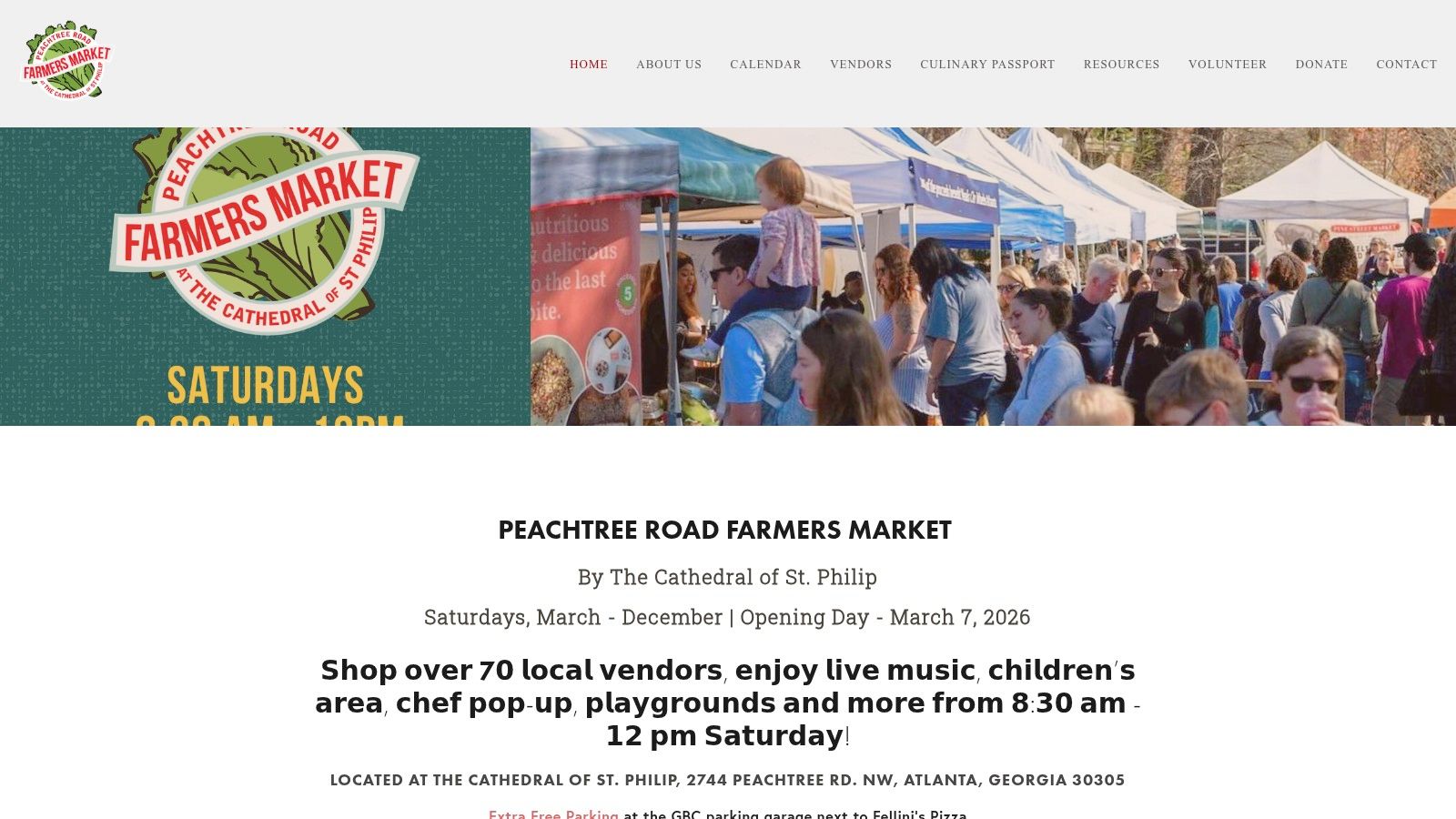
A good Peachtree Road Farmers Market visit starts before you buy anything. You pull into Buckhead early, park at the Cathedral of St. Philip while spaces are still easy to find, and get in before the most sought-after produce, eggs, and baked goods start thinning out. If your priority is direct-from-the-source shopping, this is one of the smartest Saturday stops in Atlanta.
Peachtree Road Farmers Market stands out because it is producer-only. That changes the quality of the conversation as much as the quality of the food. You are buying from the farm, dairy, bakery, or kitchen that made the product, not from a reseller filling a table with mixed inventory.
Modern Luxury highlights that the market maintains strict vendor standards in its roundup of Atlanta’s best farmers markets. For shoppers who care about sourcing, growing practices, and direct accountability, that matters.
The setting also works in its favor. The Cathedral of St. Philip location gives the market a more orderly flow than many in-town pop-ups, and published parking guidance removes some guesswork. MARTA is possible, but this is usually easiest by car, especially if you plan to buy enough produce or proteins to justify a cooler bag. Accessibility is better than at tighter street-market layouts because the grounds are easier to walk, though the busiest hours still bring stroller traffic, dogs, and short lines at popular stands.
There are trade-offs. Peachtree Road is excellent for weekly ingredient shopping, but less useful if you want a long list of ready-to-eat options or a late-morning casual browse. It is a Saturday morning market with a clear rhythm. Shoppers who arrive early get the best selection and the easiest experience. Shoppers who arrive late often get a crowded version of the same market with fewer headline items left.
A practical approach works best:
- Arrive near opening for the best produce and shortest checkout lines.
- Bring insulated bags if you are buying meat, dairy, or prepared foods.
- Use vendor conversations well. Ask what is at peak quality that week.
- Check the season before you go, since the market runs March through December.
- Carry a backup payment option because individual vendor setups can vary.
What makes this market distinct in a guide to the best food markets in Atlanta GA is not just quality. It is the clarity. You know what kind of market it is, who the vendors are, and why the sourcing standard is tighter than at many mixed markets. Some vendors also participate in community-minded programs and donation efforts through local food networks, which reinforces the market’s role beyond Saturday sales.
For households and property managers coordinating errands in North Fulton, especially around moves or larger home projects, this nearby Sandy Springs junk removal service area is the relevant local resource.
Peachtree Road Farmers Market is the Buckhead pick for shoppers who want traceable food, strong vendor standards, and a market trip that rewards planning.
7. Freedom Farmers Market at The Carter Center
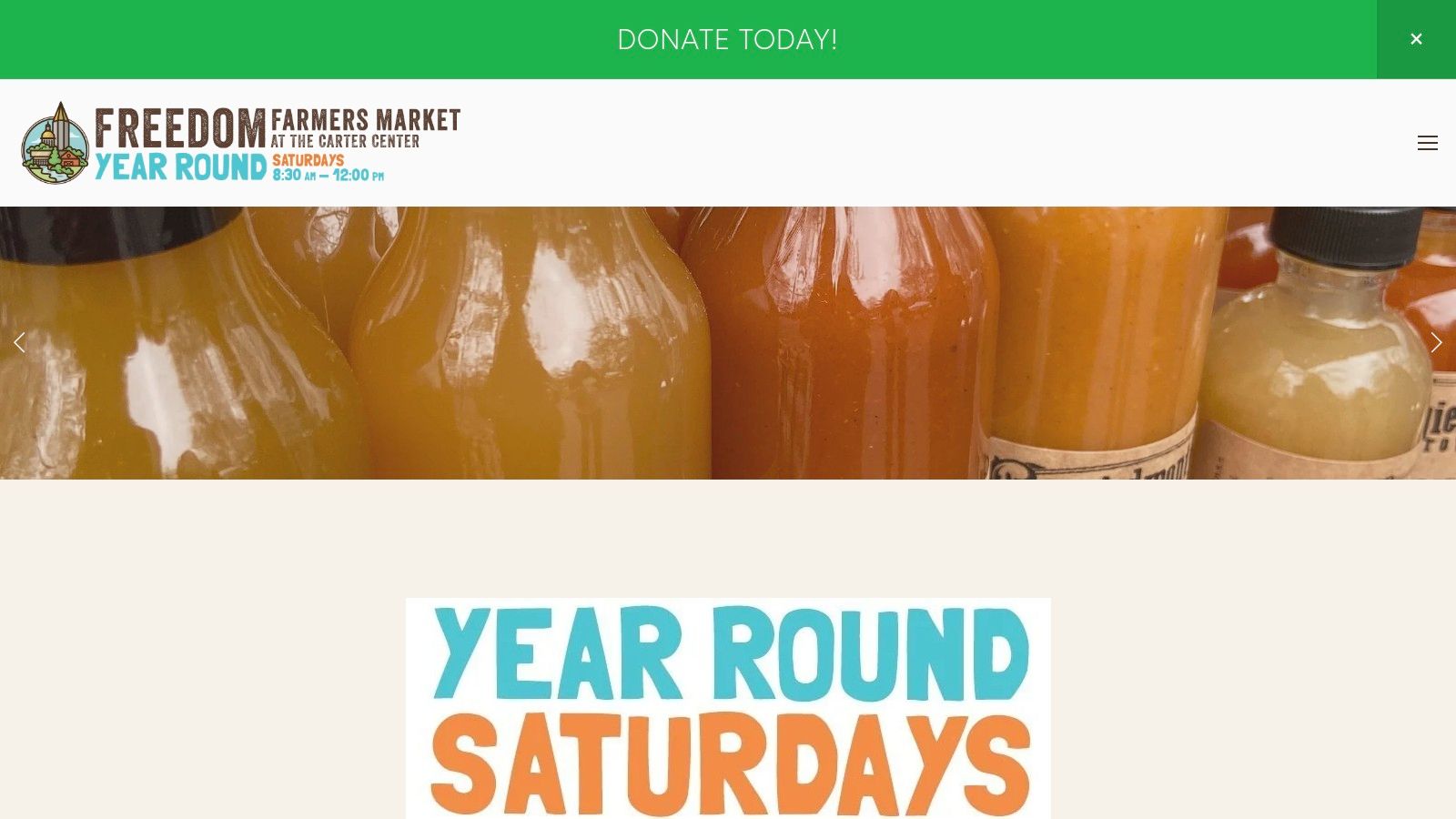
A good Saturday at Freedom Farmers Market starts with a simple plan. Pull in early, park without much fuss, make one fast pass to spot what looks best, then buy the items that can sell out first. The Carter Center setting helps because the market feels organized and calm, even when attendance is strong.
Freedom works well for shoppers who want a producer-focused market experience without committing half a day to it. The market runs year-round, rain or shine, and the vendor mix usually covers produce, meat, dairy, baked goods, pantry items, and prepared food. That makes it practical for real grocery shopping, not just coffee and a pastry.
The biggest advantage here is efficiency.
The layout is manageable, the standards are strong, and the trip is easy to pair with the rest of a Saturday. Parking is usually simpler if you arrive near opening. MARTA users can make it work too, but this is generally an easier market by car than by train. If accessibility matters, the Carter Center grounds are more forgiving than tighter in-town markets, with a setting that is easier to move through for strollers, carts, and shoppers who want a less cramped experience.
Payment is another plus. The market offers a token system for debit, credit, and SNAP/EBT, which removes a lot of the vendor-to-vendor friction that smaller markets sometimes have. Some vendors also take cards directly, but it still helps to carry a backup payment option.
A smart visit usually follows this order:
- Arrive close to opening if you want the best produce, eggs, and popular baked goods.
- Start with cold-chain items if you brought an insulated bag and know you will head home soon.
- Walk the full market once before buying pantry goods or extras.
- Ask vendors what was picked or baked most recently. You usually get better guidance than from a display sign.
- Check the market calendar before you go, especially on holiday weekends or bad-weather mornings.
Freedom also earns its place on this list because it does more than host transactions. The market has long been associated with community-oriented food access work and partnerships that connect local agriculture with broader public benefit. For shoppers who care where their money goes, that matters. It is one of the better examples in Atlanta of a market that combines local sourcing, straightforward logistics, and a clear civic purpose.
The main trade-off is time. This is still a morning market, and late arrivals get a thinner version of the experience. If you treat it like an early errand instead of a casual midday stop, Freedom is one of the easiest Atlanta markets to make part of a regular routine.
Top 7 Atlanta Food Markets: Comparison
| Market | 🔄 Operational Complexity | ⚡ Access & Resource Needs | 📊 Expected Outcomes | 💡 Ideal Use Cases | ⭐ Key Advantages |
|---|---|---|---|---|---|
| The Municipal Market (Sweet Auburn Curb Market) | Moderate, many independent vendors with variable hours and occasional upgrades | Downtown location, paid nearby parking, market‑wide EBT acceptance | Diverse, quick‑service meals and strong community engagement | Local shoppers, quick meals, EBT users, exploring vendor variety | Longstanding reputation; broad vendor mix and EBT access |
| Ponce City Market – Central Food Hall | High, mixed‑use venue with event programming and rooftop operations | Excellent BeltLine connectivity, paid parking; prices skew higher | Wide cuisine variety, consistent evening hours, strong visitor draw | Groups, tourists, events, wide dining choices | Chef‑driven counters, nationally notable food hall, event programming |
| Krog Street Market (The Krog District) | Moderate, food‑hall operations with frequent events and shared seating | BeltLine‑adjacent pedestrian access; limited/paid parking; can be crowded | Fast casual bites in a lively communal setting | BeltLine visitors, casual meetups, quick snacks | Convenient location for walkers; strong quick‑service mix |
| Buford Highway Farmers Market – International Grocery | High (operational scale/inventory complexity) but shopper experience is straightforward | 15–20 min from central Atlanta; open daily with extended hours; competitive pricing | One‑stop access to global ingredients and specialty produce | Sourcing international ingredients, specialty shopping, bulk buys | Deep international assortment and reliable specialty selection |
| Your DeKalb Farmers Market – International Grocery & Bakery | High, very large footprint, complex inventory and unique payment policy | Decatur location; no credit cards (cash, debit, EBT, checks); crowded at peaks | Strong value on produce/spices and excellent bulk options | Bulk pantry restocks, bargain produce, international staples | Exceptional value and breadth; bakery/hot bar and consistent quality |
| Peachtree Road Farmers Market – Producer‑Only (Buckhead) | Moderate, seasonal, producer‑only vendor coordination (Mar–Dec) | Saturday mornings only (seasonal); published parking guidance; SNAP/EBT accepted | High‑quality, local farm produce with chef demos and community vibe | Saturday farmers market outings, local/seasonal purchases | Producer‑only quality, SNAP doubling program, curated vendors |
| Freedom Farmers Market at The Carter Center | Moderate, year‑round weekend coordination with token/payment systems | Year‑round Saturday market; token system for SNAP/EBT; scenic walkable site | Consistent farm lineup and rotating pop‑ups; popular early sellouts | Reliable weekend farm shopping, SNAP users, specialty purveyors | Year‑round operation, curated vendors, benefit‑doubling programs |
Savoring Atlanta Your Next Food Adventure Awaits
A good Atlanta market day usually starts with a simple decision. Are you buying ingredients for the week, meeting friends for a meal, or trying to learn something about the city through food? Pick the job first, then pick the market.
That approach saves time and usually leads to a better visit. Municipal Market works well for downtown errands, local history, and an easy lunch. Ponce City Market is the practical choice for groups, out-of-town guests, and anyone who wants strong food options with straightforward parking and transit access. Krog Street Market fits shorter stops, especially if you want to pair food with a BeltLine walk. Buford Highway Farmers Market and Your DeKalb Farmers Market serve a different purpose. They are ingredient markets for shoppers who cook often, compare prices, and want real range across global cuisines. Peachtree Road and Freedom are strongest on Saturday mornings when direct farm buying, seasonality, and vendor conversations matter more than speed.
The best food markets in Atlanta GA reward planning, but they also reward curiosity. A food hall visit goes better if you know where to park, when crowds peak, and which entrance gives you the shortest walk. An international grocery trip is easier when you bring a list, leave room in the budget for unfamiliar ingredients, and check payment rules before you go. A farmers market run is usually best early, especially if you want the widest produce selection, easier parking, and time to talk with growers before lines build.
That practical side is part of what makes Atlanta’s market culture strong. These places are not interchangeable. Some are built for convenience, some for discovery, and some for producer relationships and local food circulation. Several also tie their work to the community through SNAP and EBT access, market incentive programs, donation partnerships, composting efforts, or reuse practices that keep usable materials out of the landfill. Shoppers benefit from that structure, but so do neighborhoods.
For visitors, one market per outing is usually the right call.
Let the neighborhood do some of the work. Pair Sweet Auburn with downtown landmarks and a short streetcar or MARTA connection. Build Ponce or Krog into a longer eastside day. Treat Buford Highway and DeKalb as serious shopping trips, not quick pop-ins, because both reward patience and a cooler in the car. If accessibility matters, check entry routes, elevator access, and restrooms before you leave, especially at larger properties or crowded weekend markets.
For vendors, property managers, and market operators, the logistics continue after the shoppers leave. Food businesses generate constant turnover from packaging, damaged shelving, outdated fixtures, broken equipment, and event debris. Fulton Junk Removal handles haul-away and works with Beyond Surplus to route electronics, metal, and other recyclable materials toward responsible processing when possible. That matters for businesses trying to reduce landfill waste, document cleanouts, or keep a stall turnover on schedule.
Atlanta gives you options at every level. You can shop for dinner, stock a pantry, meet farmers, or study how a city supports public markets, food halls, and neighborhood food access at the same time. The smartest way to use this guide is simple. Match the market to the errand, go at the right time, and leave enough room to buy the item you did not plan on but will absolutely use.
