
Your Guide to City of Atlanta Attractions & Waste Ops
A cleanup problem in Atlanta rarely starts with trash. It starts when a concert load-out overlaps with morning deliveries, a fundraiser flips back to public hours by sunrise, or a tenant buildout leaves bulky material in a corridor that still has to look guest-ready. Facility managers, event planners, and property teams do not experience city of atlanta attractions as a sightseeing list. They experience them as high-volume operations with irregular waste streams, tight timelines, and public visibility.
That operating reality is easy to underestimate. Visitors see aquariums, stadiums, trails, museums, and historic sites. Site teams deal with dock access, freight routes, compactor capacity, vendor debris, damaged fixtures, cardboard surges, event signage, e-waste, and disposal rules that change by material type. The primary trade-off is speed versus control. Fast removal helps the site recover. Responsible sorting, recycling, and documentation help the property avoid landfill-heavy hauling, internal rework, and avoidable compliance headaches.
Atlanta keeps pressure on those systems because the city draws heavy visitor traffic year-round. Recent local coverage on WalletHub’s Atlanta summer travel ranking reinforces what operators already see on the ground. Crowds drive revenue, but they also increase turnaround demands at venues, mixed-use districts, office campuses, and public-facing properties.
For B2B teams, the job is straightforward to define and hard to execute well. Remove bulky material quickly. Keep service areas clear. Separate recoverable items from true disposal. Leave a paper trail that supports facility standards and sustainability goals.
Fulton Junk Removal handles that work with the pace and discipline Atlanta properties need. Through Beyond Surplus, the company pairs haul-away service with responsible recycling for electronics, metals, and other recoverable materials, which makes sense for attractions, event venues, office parks, and redevelopment sites that cannot afford a landfill-first approach. Teams looking for an Atlanta junk removal partner for commercial properties and venues need a provider that can clear space fast without creating a second problem downstream.
One useful directory for operators evaluating nearby event settings is Jumbotron Venues.
1. Georgia Aquarium

A loading dock backs up after a sold-out evening event, retail cartons are stacked behind receiving, and a damaged display wall is sitting where the next vendor delivery needs to go. That is the operational reality at Georgia Aquarium. For facility managers and event teams, this attraction is not merely a marquee destination. It is a dense, high-output waste environment with public-facing standards and little room for delay.
The site combines admissions traffic, private events, food service, retail, exhibit maintenance, and back-of-house support in one downtown footprint. That creates several waste streams at once. Cardboard and pallet wrap from deliveries. Retired fixtures and event materials. Broken shelving, damaged signage, obsolete electronics, and occasional bulk items that janitorial crews are not set up to remove safely or document properly.
What works on this site
At Georgia Aquarium, timing controls cost. Crews that remove bulky material during narrow service windows help protect guest flow, dock access, and staff productivity. Planned pickups around exhibit updates, school break surges, sponsor activations, and holiday installs typically work better than waiting for a storage room or service corridor to hit capacity.
The other operational issue is separation. Mixed loads create avoidable disposal costs and make sustainability reporting harder. High-traffic attractions need a junk removal partner that can sort recyclable material, clear space quickly, and provide documentation that supports the operations team.
Fulton Junk Removal fits that model because it handles Atlanta commercial cleanouts and hauling for attractions, venues, and facilities. Through Beyond Surplus, recoverable electronics, metals, and other reusable material can be routed responsibly instead of sent out in a landfill-first load. That matters for facility leaders who are managing both appearance standards and diversion goals.
One mistake shows up often in attractions like this. Bulky item removal gets folded into custodial scope without the labor, equipment, or hauling plan to support it. The result is predictable. Storage areas fill up, dock operations slow down, and items that should have left the property days earlier become safety, fire-code, and scheduling problems.
2. World of Coca-Cola
World of Coca-Cola operates differently from the aquarium. The attraction itself is experiential, brand-driven, and retail-heavy. That means its waste profile is less about one large public exhibit environment and more about packaging, branded materials, promotional turnover, food service disposables, and gift-shop back stock.
It also sits in the same downtown attraction cluster as Centennial Olympic Park and nearby arenas and venues, all within walking distance according to the same Atlanta tourism overview already noted earlier. For operations managers, that creates a familiar problem. Public demand rises together, but loading access, dock time, and cleanup windows do not.
Brand environment means cleaner disposal standards
In a corporate museum environment, visible disorder hurts more than appearance. It affects the brand. Overflow boxes in receiving, retired displays waiting in hallways, and mixed recycling piled behind retail stock all send the wrong signal in a space designed around presentation.
The strongest approach here is a standing service relationship, not occasional emergency hauling. Weekly or scheduled pickups help because the stream is steady. Cardboard, shrink wrap, damaged displays, old promotional pieces, and retired electronics from interactive experiences all need different handling.
A practical setup often includes:
- Cardboard segregation: Keep retail cartons and shipping boxes separate from food-soiled material so more of it stays recyclable.
- Maintenance-window pickups: Align haul-outs with exhibit work and routine repairs instead of forcing engineers or guest-experience staff to manage disposal.
- Diversion reporting: Give the facility or sustainability lead a clear record of what was recycled through Beyond Surplus versus hauled away as nonrecoverable waste.
What fails in places like this is one-bin thinking. If every material goes into the same stream, recoverable value disappears. That matters when branded attractions want sustainability claims backed by actual handling practices, not solely signage.
Fulton Junk Removal’s edge is the bundled model. The crew can remove the material, and Beyond Surplus can process recyclable categories in a way that supports internal reporting and cleaner environmental messaging.
3. Mercedes-Benz Stadium
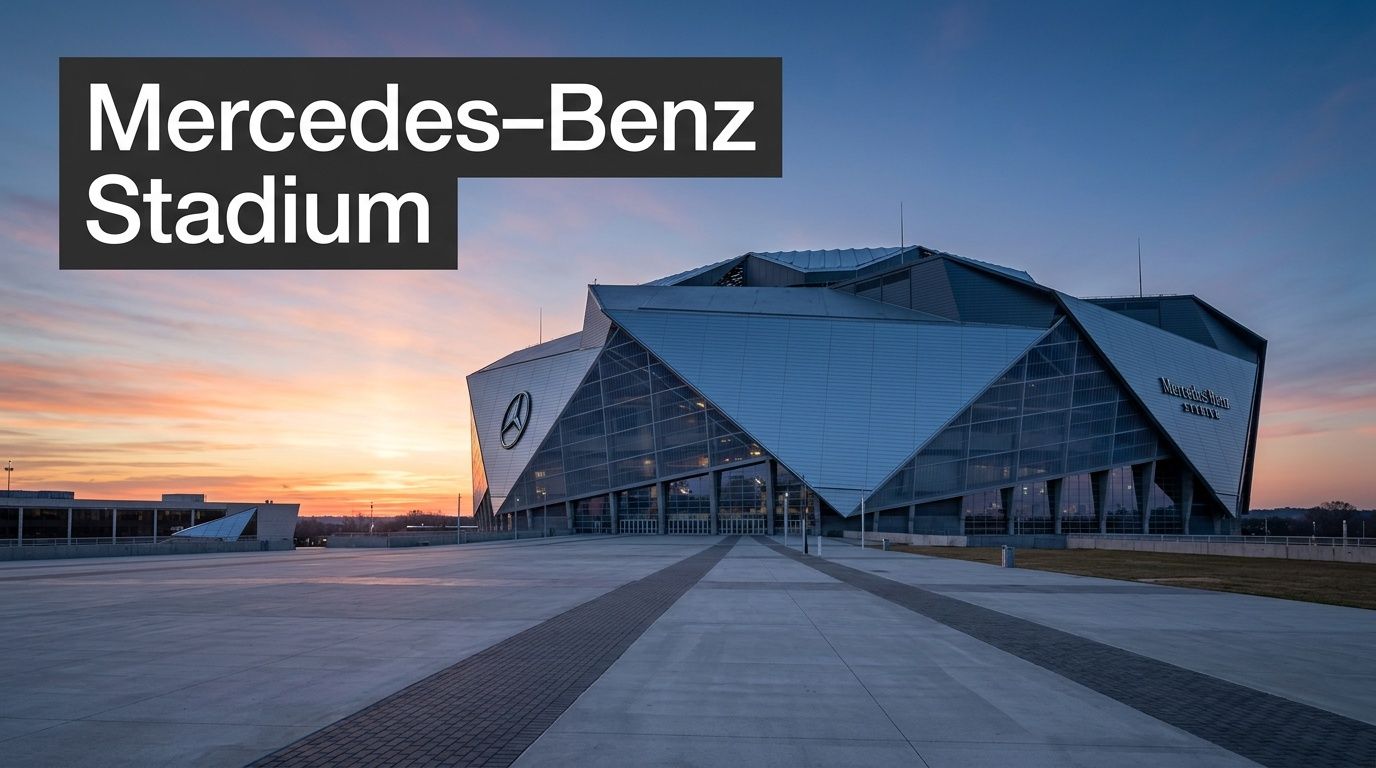
Mercedes-Benz Stadium is where event waste stops being a facilities issue and becomes a logistics system. Stadium work is about speed, access control, crew staging, and recovery after high-volume public use. The public sees the match, concert, or game. The operations team sees seat-bowl debris, concession packaging, damaged temporary equipment, sponsor materials, and back-of-house overflow that has to be removed before the next event cycle.
This is also where downtown Atlanta’s density matters. The State of Downtown report summary notes that downtown generated $84 million in annual public revenue in 2025 and grew its residential population by 44% since 2010 to more than 34,000 residents. More residents, more venues, and more mixed-use activity mean less tolerance for lingering event debris and slower service responses.
Stadium cleanup requires a response model
A venue the size of Mercedes-Benz Stadium cannot rely on a generic “call when needed” junk hauler. It needs a response model. That means pre-cleared teams, designated staging zones, approved disposal routes, and a clear rule for what gets recycled, what gets donated, and what gets discarded.
For this type of property, three practices work better than anything else:
- Dedicated account planning: One point of contact on both sides avoids confusion when timing is tight.
- Rapid-turnaround removal: Bulky items, broken fixtures, and event leftovers need to leave before the next setup crew arrives.
- Material sorting at pickup: Metals, electronics, and reusable items should be separated early, not after they are contaminated by mixed debris.
The wrong move is to push everything into compactors after a major event. That may solve the immediate sightline problem, but it frequently destroys recycling potential and creates avoidable hauling volume later.
For operators managing venues across the metro, Fulton also serves the wider region through its Georgia service areas. That matters when the same management group oversees stadium-adjacent assets, parking operations, retail, or warehouse support space beyond the city core.
4. Georgia State Capitol & Historic District
Historic properties punish careless cleanup. That is the first rule around the Georgia State Capitol and the surrounding historic district. Government buildings and preservation-sensitive structures generate junk too, but the material mix is different from an arena or tourist attraction. You see office furniture, archived storage overflow, renovation debris, fixture replacements, outdated electronics, and maintenance waste. You also see stricter expectations around documentation, procurement, and building protection.
The challenge is not only removal. It is removal without damage, noise conflicts, access mistakes, or chain-of-custody confusion.
Old buildings create modern disposal problems
Historic districts are full of materials that should not be handled casually. Millwork, old cabinetry, metal fixtures, stone-adjacent debris, and office cleanout contents frequently require careful movement through narrow corridors, older elevators, or restricted loading points. In government settings, timing can be as important as technique. A pickup that runs long can interfere with public access or scheduled use.
What works in these settings is process discipline:
- Protected routes: Floor protection, wall protection, and careful carting matter more than raw speed.
- Clear inventories: Facilities teams need to know what left, especially for office cleanouts or surplus removals.
- Segregated handling: Electronics, metals, and reusable furnishings should be separated from general debris whenever practical.
Historic sites do not need aggressive hauling. They need quiet, documented, low-disruption removal by crews that understand that a scratched doorway can cost more than the haul itself.
What does not work is sending a residential-style junk crew into a civic or preservation environment. Those jobs need commercial coordination. Fulton Junk Removal fits better because the company is built around commercial cleanouts and can pair haul-away with Beyond Surplus recycling, which is especially useful when government or institutional clients need a more responsible disposition path for electronics and metal items.
5. Georgia World Congress Center
Convention centers generate some of the most frustrating waste in the city because much of it is temporary by design. Booth walls, pallets, carpet remnants, foam packaging, printed graphics, crates, damaged display pieces, and post-show furniture all appear fast and disappear under deadline.
Attractions and event venues in Atlanta benefit from the city’s strong travel demand, and convention activity feeds the same operational pressure. In practical terms, a large convention facility does not need another hauler with a truck. It needs a removal partner that understands move-in and move-out cycles.
Trade show waste is predictable, but only if you plan for it
At a place like the Georgia World Congress Center, the common failure is waiting until teardown begins to decide what should be saved, recycled, donated, or discarded. By then, labor is rushed and materials get mixed together.
A better system starts before exhibitors arrive. Property and event teams should define staging rules, identify where bulk pickup crews can stand by, and communicate what Fulton can take directly. Signage, booth fragments, excess packaging, and old electronics from exhibitors all need distinct handling.
Useful practices include:
- Vendor communication: Tell exhibitors early what materials can be recycled and where pickups happen.
- Staging lanes: Separate reusable materials from demolition debris before labor crews break down booths.
- Post-show sweep scheduling: Book a final junk haul after exhibitors leave but before the next event load-in starts.
Convention work is one of the clearest examples of why Fulton’s partnership with Beyond Surplus matters. Exhibitor waste frequently includes electronics, cables, display hardware, and metal components that should not go straight to a landfill. Bundled removal plus recycling gives event operators a cleaner story for sponsors and a more usable record for internal sustainability teams.
This is one of the strongest fits among city of atlanta attractions because the material volume changes by event, but the basic pattern never does. Fast setup. Fast teardown. No room for disposal mistakes.
6. Atlanta BeltLine

A Saturday festival wraps on the BeltLine, a nearby retail tenant is clearing damaged fixtures, and a contractor two blocks over needs debris removed before morning trail traffic picks up. That is the BeltLine operating reality. For facility managers, event planners, and property managers, this attraction functions less like a destination and more like a long, active corridor with shifting access, mixed stakeholders, and constant public visibility.
The BeltLine creates a waste problem that is spread out instead of centralized. Crews may be working near parks, apartment communities, restaurants, pop-up vendors, and active redevelopment sites in the same service window. A bad pickup plan slows pedestrians, frustrates tenants, and mixes recyclable material with event trash or construction debris.
Public use changes the cleanup standard. Operators cannot treat BeltLine-adjacent work like a basic curbside bulk haul.
The practical challenge is staging. There is rarely one reliable loading area, and crews often have to work around cyclists, pedestrians, delivery schedules, ADA access routes, and neighborhood noise expectations. That pushes scheduling and crew discipline ahead of raw truck capacity. Smaller footprints, tighter arrival windows, and clear material separation usually matter more than sending the largest vehicle available.
The Hilton article on hidden gems in Atlanta helps explain why the BeltLine draws steady foot traffic, with its trail activity, murals, and public gathering appeal. For operators, that popularity raises the cost of sloppy hauling. Overflow from vendor booths, abandoned event materials, broken furnishings, pallets, fencing, and packaging waste can sit in full public view if removal timing is off by even a few hours.
Fulton Junk Removal is a strong fit for BeltLine-linked properties because the company can handle the mixed stream that builds up around these sites without defaulting to landfill disposal. Usable metal, cardboard, electronics, and other recoverable materials need to be pulled out before they are contaminated by food waste, wet paper goods, or general litter. That is where an eco-friendly process matters in concrete terms. Better sorting protects diversion rates and gives property teams cleaner reporting.
The strongest operating plan often includes three controls:
- Off-peak removal windows: Schedule bulk pickups outside heavy trail and event traffic to reduce safety risks and tenant friction.
- Separate waste streams: Keep vendor leftovers, property cleanouts, and contractor debris in different staging areas so disposal and recycling stay accurate.
- Tight access coordination: Confirm route access, loading limits, and on-site contacts before the truck arrives, especially near mixed-use buildings and public gathering zones.
I have seen BeltLine-area jobs go sideways for one simple reason. Teams wait until debris is already visible to the public. By then, access is worse, materials are mixed, and labor costs rise because crews have to sort on the spot.
A planned partner solves that problem earlier. Fulton Junk Removal gives Atlanta operators a way to clear bulky waste, protect public-facing spaces, and route recyclable material responsibly across one of the city’s most complicated attraction zones.
7. Underground Atlanta
Underground Atlanta creates a classic mixed-use cleanup problem. Retail, dining, entertainment, historic structures, and event activity all share the same footprint. That means no single waste stream dominates for long. One week the issue is retail back stock and cardboard. The next week it is food-service overflow. Then it is event setup debris, damaged fixtures, or tenant turnover junk.
This kind of site rewards flexibility more than scale. Large trucks help, but adaptability matters more.
A district like this needs after-hours discipline
Underground and similar entertainment districts work best when hauling happens after public-facing activity drops. Early-morning or after-hours pickups reduce tenant friction and avoid pushing carts through active guest areas.
Property managers should also resist a common mistake. They should not let individual tenants invent separate disposal habits with no central standard. That frequently creates uneven dock use, hidden pileups, and avoidable contamination of recyclable materials.
A stronger operating model includes:
- Retail coordination: Remove fixture debris, shelving, and cardboard on a recurring schedule.
- Food and event timing: Keep post-event or high-volume hospitality cleanup separate from routine tenant pickups.
- Bulk-call procedures: Give tenants a defined path for larger removals so back hallways do not become storage rooms.
In this scenario, Fulton Junk Removal fits well with urban mixed-use properties. The company can support store resets, tenant move-outs, seasonal decor removal, and event leftovers while routing eligible materials through Beyond Surplus for recycling. For district managers, that creates a more centralized solution than relying on many small vendors with inconsistent standards.
The public may know Underground Atlanta as a destination. Operators know it as a place where one blocked service corridor can slow multiple businesses at once.
8. Atlanta History Center
The Atlanta History Center is a useful reminder that cultural institutions generate commercial waste too. According to the Tripadvisor attractions overview for Atlanta, the Atlanta History Center was founded in 1926 and sits on a 33-acre site with the Southeast’s largest history museum and three historic houses. That setting changes the disposal conversation. Preservation, programming, archives, gardens, events, and guest services all intersect.
This is not the place for rough handling or “one load and done” thinking.
Donation and recovery matter more here
Museums and history institutions frequently have items that are not trash but no longer fit current use. Surplus office furniture, old exhibit support pieces, shelving, event materials, and outdated electronics may still have reuse or recycling value if they are sorted correctly. The wrong partner will landfill it all because that is faster for them. The right partner will ask better questions before loading.
For a site like this, practical service should include careful handling, quiet scheduling, and attention to where the material goes after pickup. That is one reason Fulton’s model is a strong match. Beyond Surplus gives the operation a legitimate route for electronics, metals, and other recoverable items.
A facility or event lead in north metro areas can also coordinate regional support through Alpharetta-area service coverage, which helps when the same organization manages storage, satellite offices, or offsite event operations beyond Buckhead.
Institutions built around history should not have to choose between operational efficiency and responsible disposal. They can clear space fast and still prioritize reuse and recycling.
What does not work is combining fragile-area logistics with generic construction-style hauling. Cultural properties need cleaner movement paths, more communication, and better material separation.
9. Hartsfield-Jackson Atlanta International Airport
Airports are attractions only in the broadest Atlanta sense, but operationally they are one of the city’s demanding environments. The public sees terminals, shops, restaurants, and flight boards. Operations teams see around-the-clock concessions, tenant turnover, damaged baggage equipment, packaging waste, office cleanouts, and strict security protocols.
The reason this belongs on a city of atlanta attractions list is simple. Airports shape traffic, commercial activity, and visitor flow across the whole metro. They also require a higher level of discipline from any outside vendor.
Compliance changes everything
At an airport, access is the first hurdle. Timing is the second. Documentation is the third. A crew can have the right truck and still fail if it cannot meet site-specific rules, coordinate with operations, or work within approved windows.
That makes airport hauling distinct from retail or office jobs. The pickup itself is only one part of the assignment. The rest is compliance, communication, and reliability.
The most effective practices are straightforward:
- Pre-approved scheduling: Avoid ad hoc pickups whenever possible.
- Clear load definitions: State whether the removal includes office furniture, electronics, concession equipment, or mixed debris.
- Documented disposition: Track recyclable categories, especially electronics and metals, for internal reporting.
For airport-adjacent logistics, vendor space, and southside commercial properties, Fulton can support teams through its South Fulton service area. That is useful for operators managing warehouses, support offices, and off-airport facilities tied to aviation traffic.
What does not work in airport-related environments is improvisation. If your cleanup partner needs to “figure it out on site,” you have already chosen the wrong partner.
10. Atlanta Corporate Office Parks & Tech Hubs
Not every high-value Atlanta cleanup happens at a tourist landmark. Some of the biggest recurring opportunities sit in office parks, headquarters campuses, and tech-heavy workplaces that support the city’s economic engine. Downtown remains a major employment center, with 28% of city jobs concentrated there according to the previously cited downtown report. The same report also notes nearly 500,000 square feet of retail leasing in 2025 and more than 5,000 housing units in the pipeline, which signals a broader pattern of reconfiguration, move-ins, move-outs, and property resets across the market.
For junk removal, office and tech environments create a different kind of complexity. Less food waste. More furniture churn. More electronics. More urgency around data-sensitive equipment and minimal business interruption.
The best office cleanout is boring
That is not a criticism. It is the goal. A well-run corporate cleanout should feel uneventful to everyone except the facilities team that planned it. No blocked entrances. No loud demolition in the middle of business hours. No confusion about what happens to monitors, servers, metal shelving, or cubicle systems.
The strongest office cleanout programs often include:
- Transparent scope: Define what leaves, what stays, and what goes to recycling.
- Business-hour protection: Use evening or low-disruption windows for larger removals.
- IT and electronics routing: Send eligible devices and components through Beyond Surplus rather than treating them like bulk trash.
For northside portfolios and business campuses, Fulton also serves Sandy Springs commercial properties. That matters for property managers and office administrators who oversee multiple addresses and want one vendor standard across all of them.
One more practical point. Office parks sometimes underestimate how much junk comes from “small” changes. A suite refresh, one department relocation, or one storage-room cleanup can produce enough material to clog operations if nobody books removal in advance. What works is recurring support for churn, not one-time emergency calls.
Top 10 Atlanta Attractions Comparison
| Venue | 🔄 Implementation Complexity | ⚡ Resource Requirements | 📊 Expected Outcomes | 💡 Ideal Use Cases | ⭐ Key Advantages |
|---|---|---|---|---|---|
| Georgia Aquarium | Medium–High: scheduling around exhibits and animals, access constraints | Specialized cleaning, protective gear, coordinated crews | Clean event/guest areas; maintain biosecurity and recycling records | Post-event debris removal; seasonal display take-downs | High visitation = recurring demand; prestige venue |
| World of Coca‑Cola | Medium: regular flows, predictable but continuous foot traffic | Daily janitorial teams, cardboard recycling systems, event crews | Consistent waste diversion and timely exhibit upkeep | Daily/weekly service contracts; corporate events | Steady volume; strong brand partnerships |
| Mercedes‑Benz Stadium | Very High: tight 24‑hr turnarounds, large-scale coordination | Large crews, rapid‑response gear, heavy-duty equipment | Rapid full‑venue clearance between events | Post‑game/post‑concert cleanups; emergency turnarounds | Massive, repeatable contracts; high revenue potential |
| Georgia State Capitol & Historic District | High: regulatory oversight, preservation sensitivity | Certified hazmat handlers, trained staff, permit management | Compliant hazardous disposal and careful historic handling | Office renovations; historic preservation projects | Stable government contracts; reputation boost |
| Georgia World Congress Center | High: compressed timelines between multi-day events | Large teams, staging/sorting systems, recycling partnerships | Fast booth/display removal and bulk recycling | Trade shows, conventions, large exhibitions | Predictable event calendar; scale economies |
| Atlanta BeltLine | High: environmental regulations and multi‑stakeholder logistics | Heavy equipment, contamination expertise, certifications | Compliant construction/site clearance and long‑term project support | Construction debris removal; demolition salvage | Long‑term, phased contracts; sustainability alignment |
| Underground Atlanta | Medium: after‑hours access and many small operators | Flexible scheduling, retailer coordination, event crews | Regular retail/event waste removal and seasonal changeovers | Retail closures, seasonal festive cleanups, events | Frequent small contracts; repeat local business |
| Atlanta History Center | Medium–High: fragile artifacts and scheduled programs | Trained handlers, donation/recycling channels, careful logistics | Safe exhibit/grounds cleanups and sustainable disposal | Exhibit changeovers; garden/grounds maintenance | Niche expertise in fragile item handling; institutional clients |
| Hartsfield‑Jackson Airport | Very High: 24/7 ops, strict security and regulatory controls | TSA‑cleared staff, continuous shifts, compliance systems | Continuous high‑volume waste management and regulatory reporting | Concession waste, terminal renovations, daily services | Massive, consistent volume; extensive long‑term opportunities |
| Atlanta Corporate Office Parks & Tech Hubs | Medium: corporate procurement and data/security needs | IT asset disposal, flexible crews, reporting for clients | Predictable recurring revenue from office transitions | Office cleanouts, relocations, IT equipment removal | High margins; repeat business and scalable contracts |
Your Partner in Sustainable Atlanta Operations
Atlanta’s best-known destinations succeed because visitors rarely see the mess behind the experience. Someone clears the broken fixtures after an event. Someone removes old displays before a refresh. Someone empties a storage room before a tenant turnover. Someone sorts metal, electronics, and reusable material before it becomes landfill-bound mixed debris. In well-run properties, that “someone” is not a random truck service called at the last minute. It is a planned operating partner.
This is the primary insight from reviewing city of atlanta attractions through a facilities lens. Every major site has a different waste pattern, but the same operating questions show up again and again. How fast can the material be removed? Can the crew work around visitors, tenants, or staff? Will they protect the site? Can they handle bulky items, electronics, packaging, fixtures, and odd-lot debris in the same job? And equally important, can they help the property avoid the landfill-first habit that makes sustainability reporting harder and disposal outcomes worse?
Fulton Junk Removal answers those questions better than a standard hauler because the company is built for commercial realities. The job is not merely to make debris disappear. The job is to keep venues, properties, offices, and mixed-use assets operational with as little disruption as possible. That means flexible scheduling, fast response, clear communication, and crews who understand that loading docks, service corridors, and tenant timelines matter.
The partnership with Beyond Surplus is what makes the model stronger. Most junk removal companies treat recycling as a side note. Fulton can bundle junk removal with direct processing for electronics, metals, and other recyclable materials through Beyond Surplus. For offices, warehouses, property managers, event venues, and sustainability teams, that is a practical advantage. It helps reduce landfill reliance. It supports internal environmental goals. It also makes compliance and reporting easier because the disposition path is more deliberate.
This matters even more in a city with this level of activity. Atlanta combines tourism, sports, conventions, government, redevelopment, and corporate growth in a tight geographic footprint. A downtown venue may need post-event hauling on one day and office cleanout support the next. A property manager may need unit turnover debris removed from one site and e-waste pickup from another. A contractor may need renovation debris cleared without slowing active public use nearby. Those are not edge cases in Atlanta. They are normal operating conditions.
A responsible cleanup partner should be able to support all of that without forcing clients to coordinate separate vendors for hauling, recycling, and special material streams. Fulton’s structure is built for exactly that use case. The team can clear space quickly, while Beyond Surplus helps ensure recyclable materials are handled responsibly rather than pushed into the easiest disposal route.
One other Atlanta-facing business resource that may be relevant for venue and event planners is Logo Water Atlanta Ga.
If you are managing attractions, office parks, event spaces, retail districts, warehouses, or mixed-use properties across metro Atlanta, the question is not whether waste will show up. It will. The smarter question is whether your current process turns that waste into another operational problem. Fulton Junk Removal gives you a way to solve it with speed, control, and a more sustainable outcome.
Need a reliable crew for event debris, office cleanouts, retail fixture removal, warehouse junk hauling, or recurring property pickups? Fulton Junk Removal helps Atlanta businesses, facility teams, and property managers clear space fast while routing electronics, metals, and other recyclable materials through Beyond Surplus for responsible processing. Request a quote to simplify cleanup, reduce landfill waste, and keep your operation moving.
