
7 Sources for City of Atlanta News in 2026
Managing a property, running a business, or organizing an event in Atlanta means dealing with change before it shows up at your loading dock. A road closure shifts delivery windows. A new city initiative changes turnover pressure in certain neighborhoods. A major event tightens access, parking, and cleanup timing. If you wait for problems to become visible on site, you’re already behind.
That’s why city of atlanta news matters as an operations tool, not just a way to keep up with headlines. The right source can tell you when sanitation schedules change, when a public meeting signals a zoning shift, when a housing push will create unit turnover, or when traffic and weather will wreck a pickup route. For facilities teams, property managers, office administrators, warehouse operators, and event coordinators, local news is part of planning.
Atlanta’s own history explains why. The city’s role as a transportation hub started in 1837, when the Georgia General Assembly chose the site at the end of the Western & Atlantic Railroad line, a decision that set Atlanta up as a rail terminus linking the Midwest to the Southeast, according to the History of Atlanta overview. Logistics has always shaped this city. It still does.
The sources below aren’t just media brands. They’re operational intelligence channels. Used well, they help you route crews, prepare cleanouts, track development pressure, and avoid getting surprised by city activity that affects physical space.
1. The Atlanta Journal-Constitution (AJC)
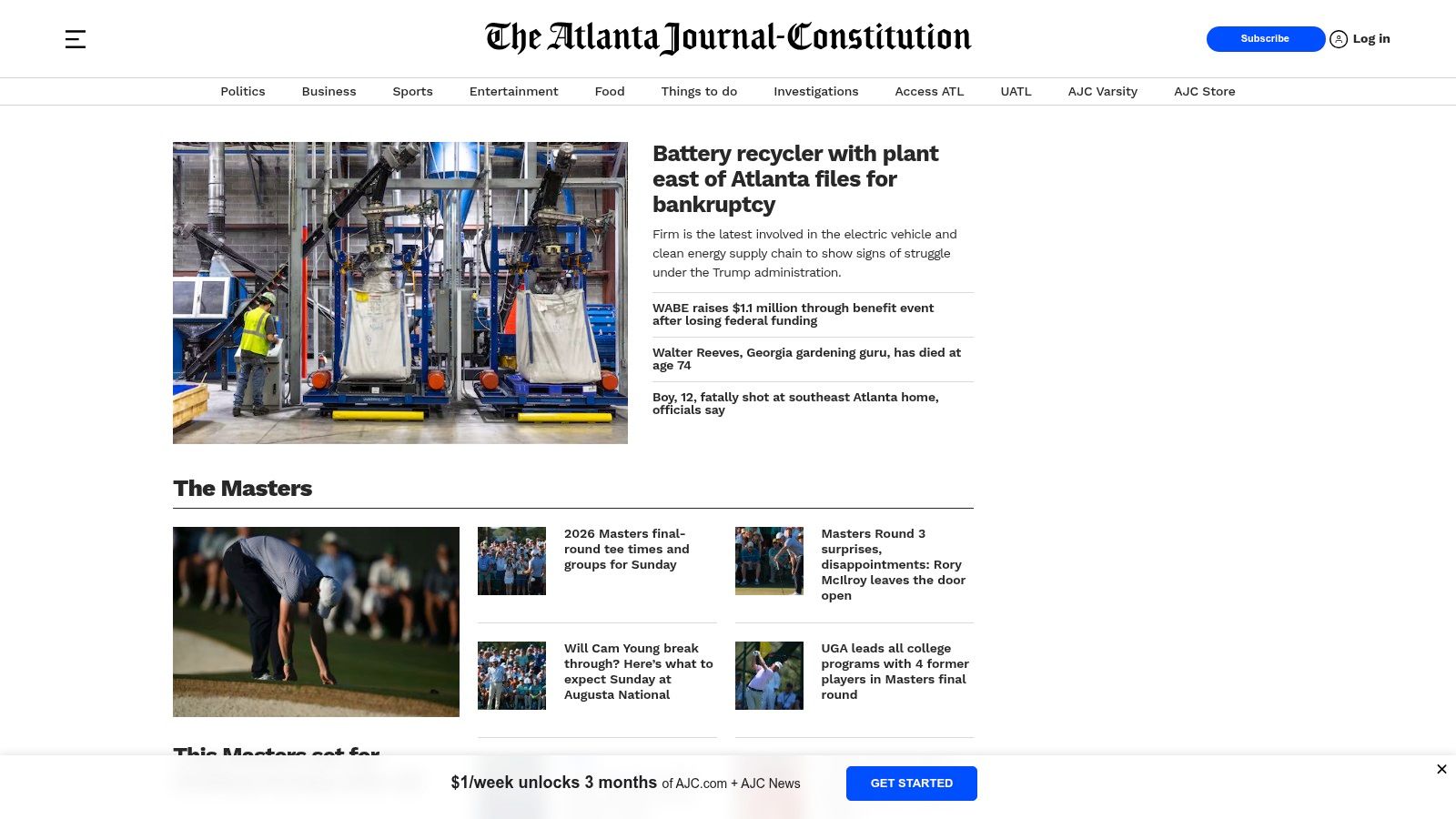
If you need one broad source that touches nearly every operational pressure point in metro Atlanta, start with the Atlanta Journal-Constitution. It’s the outlet I’d put in front of a regional operations manager who needs to watch City Hall, courts, transportation, neighborhood change, business moves, and major disruptions from one place.
AJC is strongest when an issue starts in public policy and ends up affecting buildings, routes, or staffing. A zoning dispute can signal redevelopment pressure. A public safety story can change site access plans. A transit or road story can affect field scheduling before your dispatcher notices the pattern.
Where it helps most
Property managers should watch it for development and neighborhood coverage. Office teams should watch for downtown and Midtown changes that affect access, parking, and move timing. Contractors and warehouse operators should watch transportation and metro infrastructure reporting.
The trade-off is simple. Breadth is excellent. Access can be uneven if your team doesn’t have a subscription.
A practical way to use it is to assign one person to scan it early, then convert anything relevant into an internal action note. Don’t forward raw links to everyone. Send a decision.
- Flag physical impacts: Note stories tied to closures, redevelopment, permitting friction, public meetings, or neighborhood disputes.
- Separate signal from noise: Sports and general interest stories matter less than items that affect staffing, traffic, compliance, or customer access.
- Build location filters: Teams operating in the city should pair AJC monitoring with local service planning for Atlanta cleanout coverage.
Practical rule: If a news item could change access to a building, timing of a turnover, or disposal needs after a project, it belongs in your ops review.
AJC is not the cheapest way to monitor city of atlanta news. It is often the most complete.
2. WABE (90.1 FM / PBS)
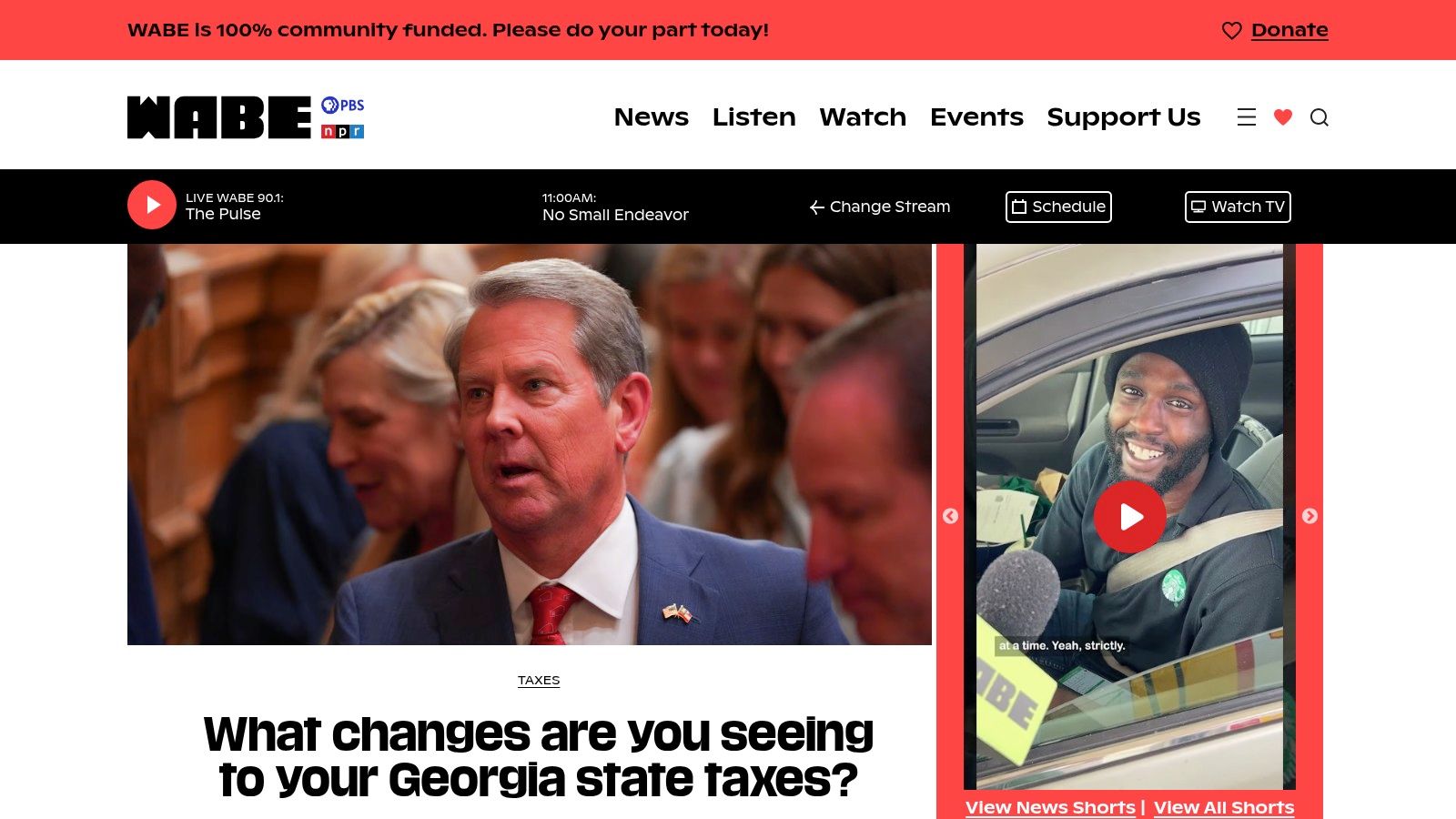
WABE is where you go when you need to understand why something is happening, not just that it happened. For operators, that difference matters. A headline tells you there’s pressure. WABE often gives you the policy context that tells you whether that pressure is temporary, structural, or likely to expand.
That’s useful in Atlanta because city operations are often shaped by housing, transit, sustainability, and neighborhood equity issues that don’t show up as immediate emergencies but do change workload over time.
Best use for operations planning
WABE is especially valuable for facilities leaders, sustainability managers, and property groups trying to read around corners. If a long-form interview or local policy segment points to increased housing turnover, public infrastructure work, or service changes, that’s your cue to review vendor readiness.
This matters in southern Atlanta, where disparity issues have direct operational consequences. A local report on the north-south divide described lower median household incomes of $15,000 to $32,000, rent burden of 65% to 77%, high school completion rates of 65% to 78%, uninsured rates of 34% to 39%, and diabetes rates of 22% to 24% in southern neighborhoods, according to WSB-TV's reporting on Atlanta disparities. Those conditions can translate into tougher move-outs, deferred disposal, clutter in rental stock, and more urgent cleanout needs that standard city coverage often treats as background instead of an operational reality.
WABE won’t always be first on a breaking story. That’s not the point.
Good operations teams use one source for speed and another for meaning. WABE is the meaning source.
For companies building sustainable cleanup and recycling workflows, that context matters. Teams that need hauling plus responsible processing often end up looking for a partner that can handle both. That’s the lane Fulton Junk Removal fills well, especially when property turnover and material diversion need to happen together.
3. ATL.Direct (City of Atlanta official newsroom)
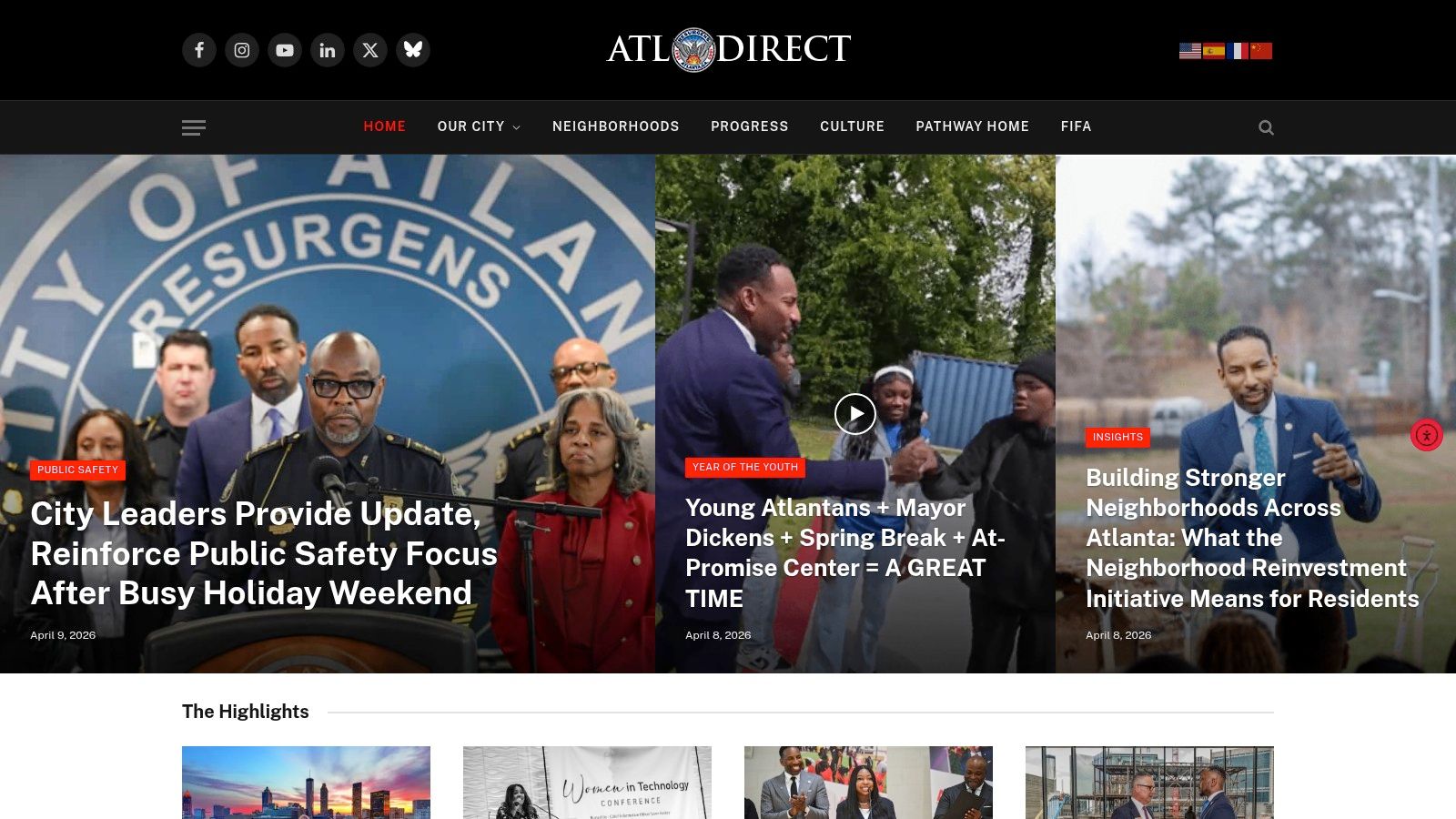
When you need the city’s exact position, schedule, or announcement, go straight to ATL.Direct. This is the official newsroom, so it’s not where you go for critique or independent analysis. It is where you go for first-source notices.
That distinction is important. If your question is, “What’s the city saying about this service change, event plan, department update, or initiative?” ATL.Direct is often the cleanest answer.
Best for official notices
Use it for sanitation updates, departmental announcements, infrastructure communications, and city-led program rollouts. It’s also useful when major public events or city campaigns create access restrictions, staffing demands, or post-event debris planning issues.
For example, housing and homelessness policy can create direct operational needs for shelters, turnover units, encampment cleanup, and relocation support. The City of Atlanta has highlighted homelessness initiatives totaling $60 million, including a $50 million bond and a $10 million trust, and described an unhoused population of over 3,000 along with a goal of 20,000 affordable units by 2030 in its official city news release on homelessness initiatives. If you manage properties, community facilities, or contractor schedules, those aren’t abstract policy figures. They point to real cleanup volume and timing pressure.
What it does not do well
ATL.Direct won’t tell you what critics think. It won’t always surface the second-order consequences for landlords, office parks, or warehouse operators. That’s why it works best when paired with independent reporting.
Still, for same-day execution, official beats speculative.
- Use it to confirm dates: Event prep, service advisories, and public works timing should come from the city first.
- Use it to brief clients: Official wording helps when tenants or stakeholders want a documented city notice.
- Use it to plan responsible disposal: If a city initiative is likely to create cleanout demand, line up a provider with transparent processes, such as Fulton Junk Removal’s company background.
If your team only checks one source before a city-sensitive job, make it ATL.Direct.
4. WSB-TV Channel 2 Action News (ABC)
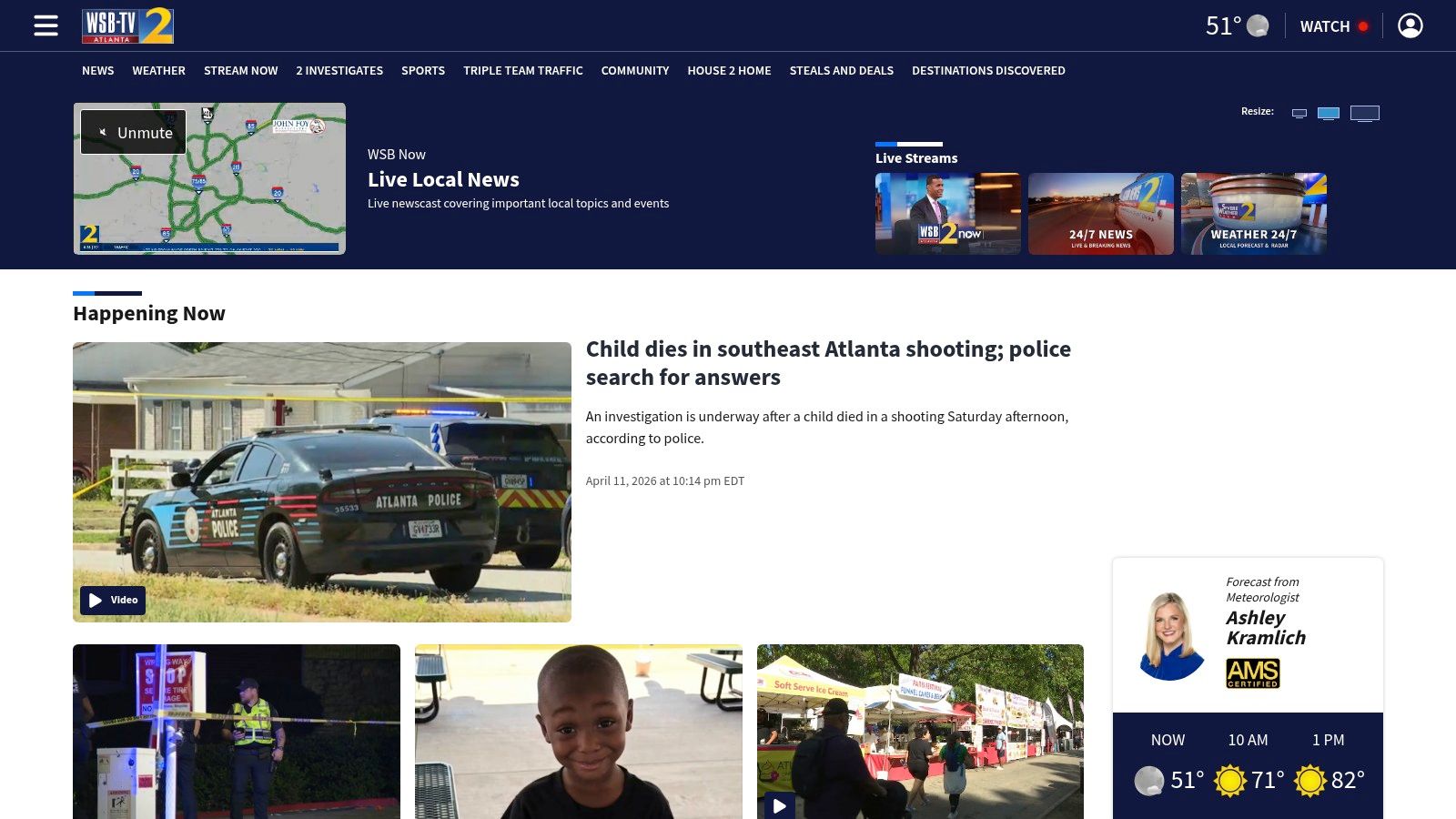
WSB-TV Channel 2 Action News is the day-of operations source. If crews are already rolling, if weather is moving in, if there’s a police situation near a property, or if traffic conditions are changing fast, this is one of the best local tools to keep open.
TV news has a clear advantage in the field. It’s built for immediacy. You don’t need a long read when a route is blocked or a storm cell is headed toward an outdoor loadout.
When speed matters more than depth
I’d lean on WSB-TV for:
- Morning route decisions: Check traffic and breaking incidents before trucks leave.
- Weather-sensitive work: Delay outdoor pickups, event teardown, or open-top hauling if conditions look unstable.
- Neighborhood disruption checks: Confirm whether a developing story near a property is isolated or likely to restrict access.
This is especially useful south of the city, where operators often deal with a mix of residential turnover, commercial cleanup, and longer drive times between stops. If your teams cover that footprint, it helps to pair local alerts with service planning for South Fulton junk removal coverage.
The trade-off
WSB-TV is built to move quickly, so nuance can be thinner than what you’ll get from print or public radio. The desktop experience can also feel cluttered if you’re trying to scan in an office.
That said, when local conditions shift in real time, speed wins.
If a field supervisor asks, “Can we still get in and out of that property this afternoon?” WSB-TV is often the fastest useful answer.
For city of atlanta news, I’d treat WSB-TV as an alert layer. It tells you when to pause, reroute, or call the client before your crew arrives.
5. 11Alive (WXIA / NBC)
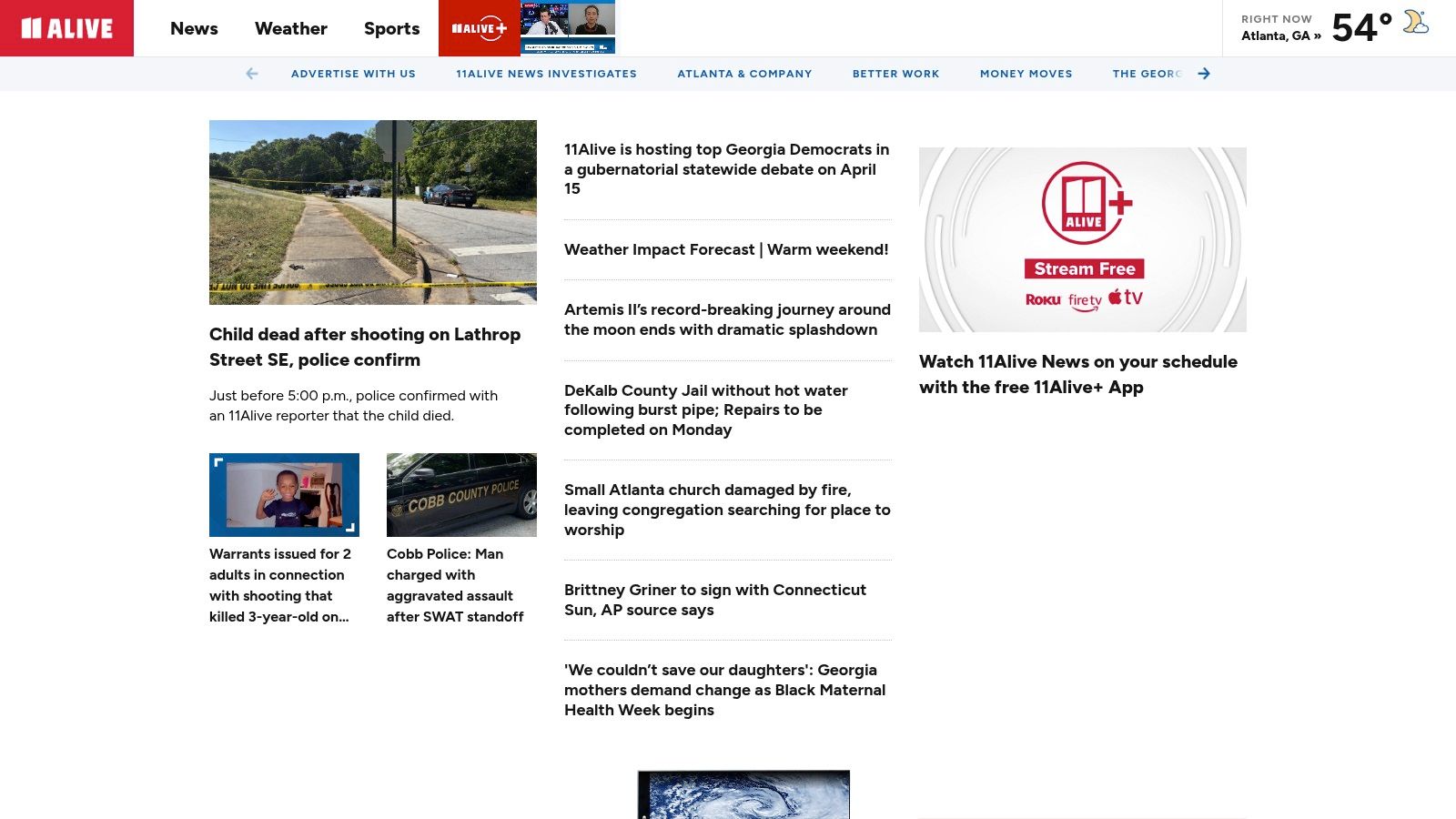
11Alive is the easiest local source to hand to a distributed team that needs simple, fast access without much setup. That matters more than people admit. A tool only helps if crews and coordinators use it.
For office managers, maintenance teams, event staff, and mobile supervisors, 11Alive works well because the format is direct. Open the app, check traffic, weather, and major local developments, then move on.
Why field teams use it
It’s good for short decision cycles. A facilities manager doesn’t need a long policy breakdown while juggling vendors. An event coordinator doesn’t want to search through multiple sections to confirm whether weather or traffic is about to disrupt breakdown.
The downside is the same thing that makes it convenient. TV-style reporting can be brief. You may get the headline impact without the deeper policy or development context behind it.
Use 11Alive for immediate checks, then escalate to another source if the issue appears structural.
A practical workflow looks like this:
- Quick scan at shift start: Weather, incidents, neighborhood updates.
- Midday recheck for mobile teams: Especially if crews are crossing multiple service areas.
- Escalate only when needed: If the issue affects lease-up, construction, city policy, or recurring access problems, move to AJC, WABE, or ATL.Direct.
This works well for companies covering the northern side of the metro too. Teams scheduling pickups around office corridors and residential properties often benefit from location-based planning tied to Sandy Springs service coverage.
Best fit
11Alive is not the outlet I’d use to anticipate long-range changes. It is the outlet I’d use when an operations coordinator needs a clean read on what’s happening right now, with as little friction as possible.
That makes it a practical part of a city of atlanta news stack, especially for crews who don’t sit at desks all day.
6. Atlanta Business Chronicle
The Atlanta Business Chronicle earns its place for one reason. It shows commercial movement earlier than many general outlets do.
If you work in office cleanouts, warehouse transitions, retail resets, property turnovers, or facility support, business news isn’t just for executives. It’s where you spot future workload. A company expansion can lead to furniture liquidation. A relocation can trigger phased move-outs. A development story can signal construction debris, leasing activity, and vendor opportunities.
Best for lead generation and forecasting
This is the source I’d assign to business development, facilities leadership, and operations planning, not to field crews. It’s a management tool.
Look for stories about:
- Office moves: Likely to create furniture removal and e-waste needs.
- Industrial leasing and warehouse changes: Often tied to pallet disposal, obsolete inventory, and clean-sweep projects.
- Commercial real estate development: Useful for timing bids, outreach, and subcontractor relationships.
- Corporate expansions or consolidations: A strong signal for phased cleanup work.
What it does better than general news is connect physical space to business decision-making. You’re not just seeing that a building changed hands. You’re seeing the kind of transaction that often creates operational churn.
The main trade-off
Most of the best material sits behind a subscription. That’s a real limitation for smaller teams. But if commercial accounts matter to your business, the subscription usually makes more sense than spending time chasing scattered signals across free sources.
Watch business moves, not just bad news. A cleanout opportunity usually starts with a lease, funding event, expansion, or relocation notice.
For operators, Atlanta Business Chronicle is less about daily disruption and more about pipeline visibility. It helps you prepare before the dumpsters are full and before the move manager is calling every hauler in town.
7. SaportaReport
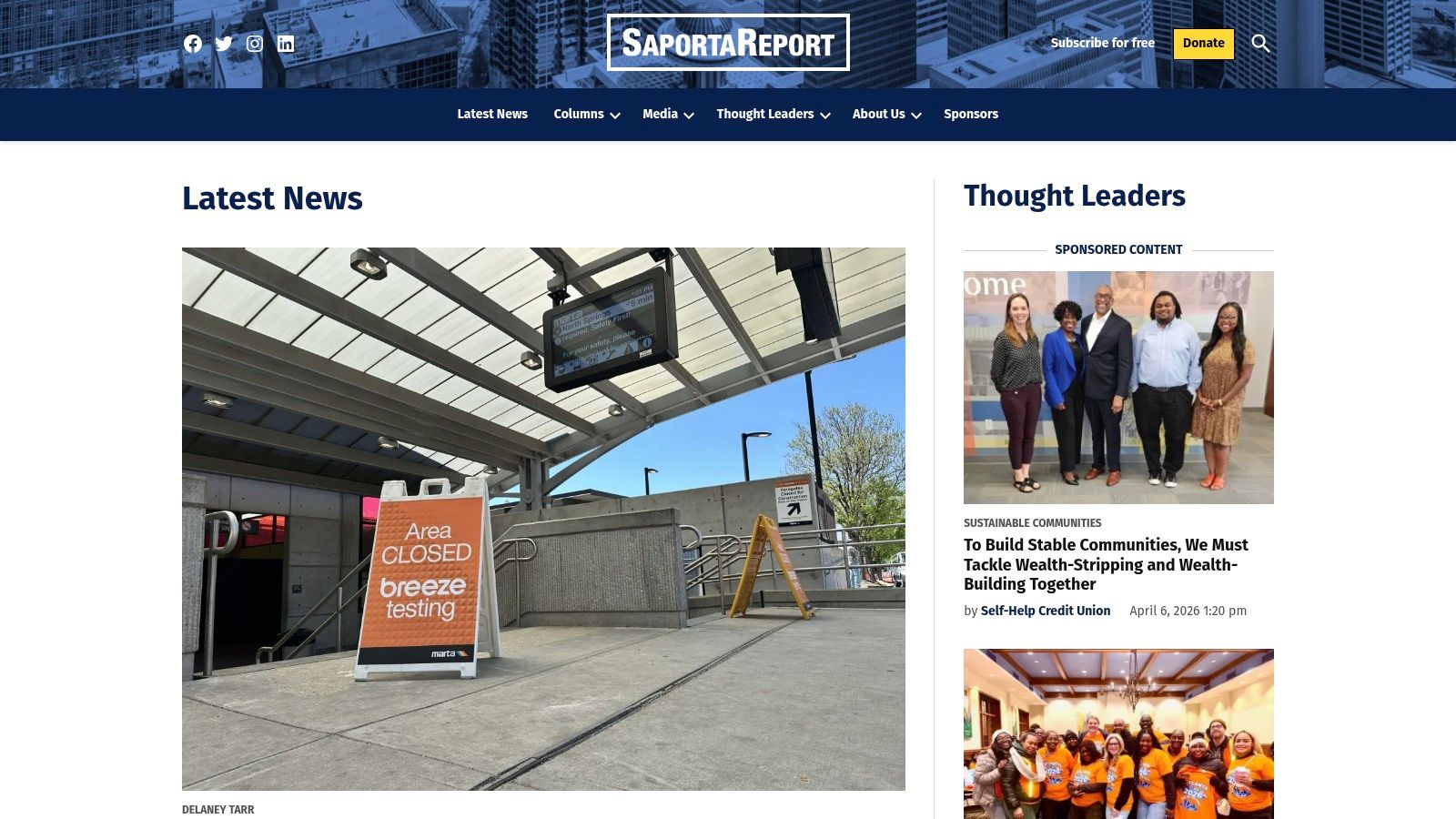
SaportaReport is where policy-heavy local reporting becomes useful to people who manage real property and physical operations. It’s smaller than the biggest local outlets, but that’s part of the value. The coverage often stays focused on civic machinery that larger organizations may cover more sporadically.
If you care about transit, development, housing, philanthropy, and long-range city direction, this is a strong source to keep in rotation.
Why it matters for operators
A lot of operational stress starts long before the urgent phone call. It starts with planning boards, infrastructure debates, neighborhood redevelopment pressure, and public-sector priorities that slowly reshape demand.
SaportaReport is useful when you want to answer questions like these:
- Will this corridor get busier or more constrained over time?
- Is this neighborhood likely to see more redevelopment-driven turnover?
- Are local institutions investing in projects that change service demand nearby?
That kind of coverage helps building managers and facilities teams avoid reactive planning. If transit work, housing policy, or civic redevelopment is moving in a certain direction, you can adjust vendor relationships, cleanup scheduling, and site logistics before the disruption feels urgent.
The limitation
You won’t get the same publishing volume you’d get from a major daily outlet or TV newsroom. That’s fine. SaportaReport isn’t the place for minute-by-minute alerts. It’s the place for smart monitoring of how Atlanta is changing.
For city of atlanta news, that’s valuable because so many operational problems in this market are tied to longer civic patterns, not just breaking events. Use it to understand the city behind the work order.
City of Atlanta News: 7-Outlet Comparison
| Outlet | 🔄 Implementation Complexity | ⚡ Resource Requirements | 📊 Expected Outcomes | 💡 Ideal Use Cases | ⭐ Key Advantage |
|---|---|---|---|---|---|
| The Atlanta Journal‑Constitution (AJC) | Moderate (large daily newsroom workflow, digital paywall management) | High (reporters, editors, investigations, digital platform) | High: frequent metro updates and enterprise investigations (⭐⭐⭐) | Daily operational awareness, investigative background, planning around development | Broadest metro coverage and strong investigative capacity |
| WABE (90.1 FM / PBS) | Moderate (audio production and long-form programming cadence) | Medium (studio staff, producers, public-funding model) | Medium: context-rich interviews and explainer pieces (⭐⭐) | Deep dives on policy, civic context, interviews with leaders | In-depth, context-rich journalism and public-service focus |
| ATL.Direct (City of Atlanta official newsroom) | Low (centralized communications and press release publishing) | Low-Medium (city communications staff and video feeds) | High for official accuracy: authoritative notices and advisories (⭐⭐) | Official schedules, service advisories, event planning, closures | Primary, first-source for official city information and advisories |
| WSB‑TV Channel 2 Action News (ABC) | High (live TV/streaming operations and continuous updates) | High (field crews, weather/traffic teams, broadcast infrastructure) | Very high for timeliness: fast breaking news and severe weather (⭐⭐⭐) | Real-time incident response, route planning, day-of operational alerts | Rapid breaking-news and strong weather/traffic coverage |
| 11Alive (WXIA / NBC) | Moderate-High (streaming + TV production, app distribution) | High (live streaming, radar, push-notification systems) | High for accessibility: timely alerts and live weather (⭐⭐) | Quick checks for traffic incidents, severe weather, field teams | Free, easy access streaming with strong live severe-weather coverage |
| Atlanta Business Chronicle | Moderate (specialized business reporting and subscription services) | Medium (industry reporters, data/tools, newsletters) | Medium: actionable market intelligence and leads (⭐⭐) | Commercial real estate, permitting, corporate moves, B2B sales planning | Insider development/permitting news and market intelligence |
| SaportaReport | Low-Moderate (smaller civic newsroom with focused beats) | Low (sponsorship and contributor support, lean staff) | Medium: policy-centric context and foresight (⭐⭐) | Long-range planning, transit/housing policy, zoning foresight | Deep, policy-focused reporting and veteran local analysis |
Turn Information into Action with Strategic Cleanouts
Good local intelligence only pays off when it changes what your team does next. That’s the part many businesses miss. They track the news, talk about the news, and still wait too long to schedule the work the news made predictable.
A property manager reads about neighborhood turnover pressure but doesn’t line up a cleanout partner until after a tenant leaves a unit full of unwanted furniture. An office manager sees signs of an expansion or relocation but waits until the move date is close to figure out e-waste, surplus desks, and storage-room overflow. An event organizer follows city updates and weather coverage but doesn’t secure post-event debris removal until the venue is already under pressure to reset.
The smarter approach is to treat city of atlanta news as an early trigger for action. If an outlet signals a likely move, redevelopment shift, public event, shelter turnover, construction phase, or service disruption, that’s the moment to lock in cleanup logistics. Not later.
That’s where Fulton Junk Removal fits. We handle the practical side after the operational signal appears. When a site needs to be cleared fast, we remove the material, coordinate pickup windows, and keep the process simple for property managers, office teams, warehouse operators, and event staff.
The difference is what happens after the truck is loaded. Many haulers focus only on removal. Fulton Junk Removal works with Beyond Surplus to process electronics, metals, and other recyclable materials more responsibly. That bundled approach matters for businesses that care about landfill reduction, internal sustainability goals, and cleaner documentation around what left the property.
For offices, that means furniture, electronics, and miscellaneous surplus can move through one coordinated process. For warehouses, it means obsolete inventory, scrap, fixtures, and mixed material can be handled without treating everything as trash. For property managers, it means unit turnovers and bulky-item cleanouts can happen fast while still supporting more responsible disposal. For facilities and EHS teams, it makes compliance and sustainability reporting easier because recycling and diversion are already built into the workflow.
The news tells you what’s changing. The cleanup plan determines whether that change becomes a manageable project or an expensive scramble. Reliable execution is what closes the gap.
If you need a local partner that can turn Atlanta news-driven disruptions, turnovers, and cleanouts into an organized project, contact Fulton Junk Removal. We help offices, property managers, warehouses, contractors, and event teams clear space quickly, with transparent service and responsible recycling support through Beyond Surplus.
