
Find Your Best Recycle Center Atlanta Options 2026
A lot of Atlanta recycling decisions don’t start with a soda can. They start with a deadline.
A property manager has a unit turnover with old furniture, broken shelving, paint, cardboard, and a stack of abandoned electronics in the leasing office. An operations manager is decommissioning cubicles, printers, monitors, and metal fixtures before a move. A facilities lead has a loading dock full of packaging waste and no clear answer on what belongs in curbside, what needs a special processor, and what creates compliance risk if handled wrong.
That’s where the phrase recycle center atlanta gets more complicated than most search results suggest. Public recycling options exist. Some work well for households and small, sorted loads. But once you’re dealing with office cleanouts, multifamily properties, warehouse surplus, or anything that mixes recyclables with junk, the actual issue isn’t just where to drop materials off. It’s how to move them efficiently, document what happened, and avoid turning a recycling effort into contamination, delay, or liability.
Navigating Atlanta's Complex Recycling World
An Atlanta manager staring at a large cleanout usually has three problems at once. First, the space has to be cleared fast. Second, someone needs to separate landfill waste from recyclable material. Third, the process needs to hold up if ownership, tenants, or internal leadership ask where everything went.

For households, the answer might be simple. For commercial properties, it rarely is. Atlanta’s curbside system has improved, but it still has limits. Atlanta's curbside recycling program rose from 11% participation in 2017 to 23% between September 2024 and January 2025, yet it still trails the EPA benchmark of 26%, according to an Atlanta Journal-Constitution audit report. That gap matters because it shows two things at once: the city has made progress, and there’s still a lot of recoverable material not making it into the right stream.
Why commercial projects get messy fast
A clean office closeout doesn’t produce one waste type. It produces many. Cardboard from move boxes, metals from shelving, e-waste from monitors and docking stations, confidential devices that need secure handling, and bulky nonrecyclable debris all show up together.
Public systems aren’t built to manage that kind of mixed load in one move. They’re built around household routines. Weekly carts work when materials are steady, light, and already separated. They don’t work well when a manager needs a floor emptied by Friday.
Operational reality: The hardest part of recycling in Atlanta isn’t finding a place that accepts one category of material. It’s coordinating all categories without slowing the project down.
What managers actually need
For business and property teams, a workable recycling plan usually comes down to five practical requirements:
- Speed: The material has to leave on schedule.
- Sorting discipline: Recyclables need to stay clean enough to remain marketable.
- Documentation: Teams often need records for landlords, ownership groups, or sustainability reporting.
- Compliance awareness: Multifamily and commercial environments carry obligations that homeowners don’t.
- Scalability: A one-car drop-off model won’t solve a warehouse purge.
Managers serving the city often start by looking for local service geography, and Atlanta-area service coverage matters because hauling logistics drive cost, speed, and scheduling.
Atlanta has recycle center options. The question is whether those options match the size, timing, and compliance burden of your job.
Your Guide to Public Recycle Centers and Curbside Rules
If you’re handling standard household recyclables, Atlanta gives you two basic public paths. One is curbside collection through the blue cart system. The other is specialized drop-off for materials that don’t belong in curbside.
How curbside works in Atlanta
Atlanta residents place loose, clean, dry recyclables in blue carts for weekly pickup. The city’s Department of Public Works collects common materials such as paper, plastics, metals, and glass, though glass is handled through a separate processing path from the other blue-cart materials. The practical rule is simple: if the item is dirty, wet, or mixed with nonrecyclables, it can create trouble for the whole load.
For a household, curbside is convenient because it’s built into routine service. For a business or multifamily site, curbside usually works best only for day-to-day generation of normal recyclables, not for one-time cleanouts or turnover events.
Where drop-off centers fit
Some materials don’t belong in a curbside cart at all. That’s where specialty facilities come in, with CHaRM Atlanta being the best-known example for hard-to-recycle items. It serves an important role, especially for residents with smaller loads that are sorted in advance.
CHaRM is located at 1110 Hill Street SE and operates by appointment on Tuesday and Thursday from 9 a.m. to 2 p.m. and Saturday from 8 a.m. to 2 p.m., according to SaportaReport’s overview of CHaRM. That same report notes that CHaRM diverted 4.8 million pounds of waste in 2021, which shows how valuable the facility is for the city’s recycling ecosystem.
Why public options have limits
The public model starts to strain when the load is large, mixed, or tied to a deadline. CHaRM requires sorted, clean items and uses an appointment system. It also uses card or Venmo payment rather than a commercial hauling workflow. That’s reasonable for residents bringing a carload of material. It’s not a practical setup for an office decommission, an eviction cleanout, or a property turnover with furniture, electronics, and general junk mixed together.
Here’s the simplest way to think about Atlanta’s public system:
| Public option | Best use | Where it falls short |
|---|---|---|
| Curbside blue cart | Routine household recyclables | Not built for bulky, mixed, or special waste |
| CHaRM drop-off | Presorted hard-to-recycle items in small volumes | Appointment-based and awkward for commercial-scale loads |
Public recycle center atlanta options are useful. They just weren’t designed to be a full logistics solution for businesses and properties.
A practical decision rule
Use public recycling when the material is already separated, the volume is modest, and you can work within the facility’s rules and schedule.
Look for a commercial solution when any of these apply:
- Bulk volume: The load won’t fit in normal household trips.
- Mixed material: Junk, recyclable commodities, and special waste are combined.
- Tight turnaround: The property has to be cleared on a project timeline.
- Reporting need: Ownership or internal teams want a record of diversion.
That distinction saves time. It also prevents the common mistake of trying to force a commercial cleanout into a household recycling model.
Decoding What You Can and Cannot Recycle
The fastest way to ruin a recycling load is wishcycling. That’s when people toss questionable items into the bin and hope the facility sorts it out later. In practice, that habit creates contamination, slows processing, and pushes material out of the recycling stream.
Atlanta has shown that education works. A multi-year local project reduced curbside contamination by 31% for single-family households, according to The Recycling Partnership’s Atlanta project summary. That result matters because cleaner material is easier to process, easier to market, and less likely to be discarded.
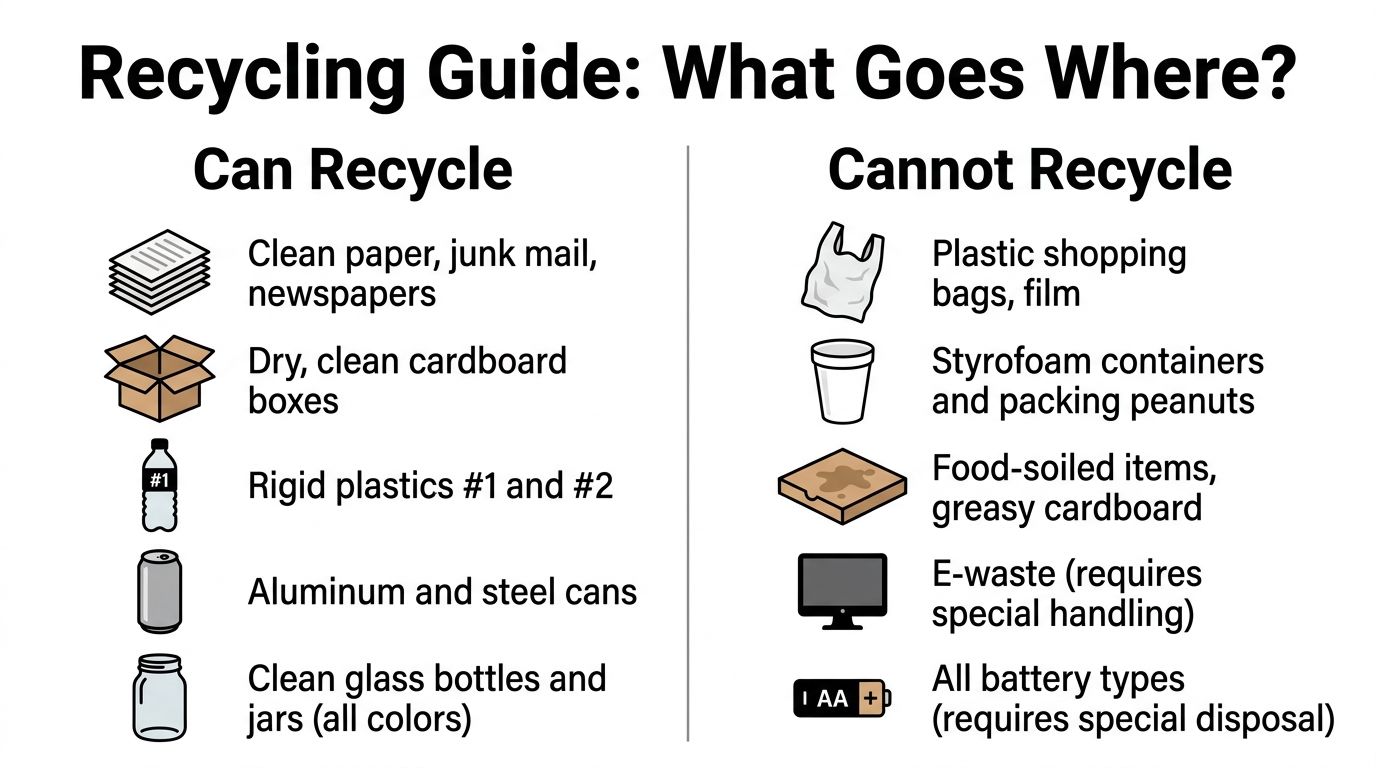
The materials that usually work
A basic recycle center atlanta search often leads people to broad lists. What matters more is whether the material is clean, dry, and in the accepted category.
- Paper products: Clean office paper, junk mail, and newspapers usually belong in recycling.
- Cardboard: Boxes need to be dry and free of heavy food residue. Flattening helps storage and hauling.
- Common rigid plastics: Bottles and containers are more likely to work than soft film or flexible packaging.
- Cans: Aluminum and steel cans are standard recyclable commodities.
- Glass containers: Bottles and jars are recyclable, but glass may need a separate route depending on the local collection system.
The materials that cause trouble
The most common rejection issues are predictable.
- Plastic bags and film: These wrap around sorting equipment and don’t belong in standard carts.
- Foam products: Styrofoam cups and packing materials usually require special handling, if accepted at all.
- Food-soiled paper: A greasy pizza box contaminates otherwise good fiber.
- Electronics: Monitors, cords, keyboards, and devices are not curbside recyclables.
- Batteries: These create safety and processing problems when mixed into standard recycling.
Clean and dry beats ambitious. If your team isn’t sure an item belongs, hold it out for review instead of throwing it in with good recyclables.
Why sorting rules exist
Atlanta’s processing system relies on machinery and manual quality control. A facility can recover value from standard commodities when the stream stays predictable. It struggles when bags, liquids, batteries, and odd materials show up mixed into paper, cans, and plastic containers.
That’s why office managers need internal rules, not just bins. Labeling helps, but placement matters too. A recycling bin next to a coffee station without a trash can nearby usually becomes a contamination magnet. In offices and common areas, the system has to match how people dispose of things.
For teams that want a broader local perspective on clutter, removal, and material handling practices, the Fulton Junk Removal blog is a useful reference point.
A quick floor-level test
Before anything goes into a recycling stream, ask three questions:
- Is it one of the standard accepted material categories?
- Is it clean enough that residue won’t spread to other items?
- Does it need a specialty processor instead of curbside?
If the answer to the third question is yes, keep it out. That’s especially important for electronics, batteries, chemicals, and anything with breakage or leak risk.
Managing E-Waste, Batteries, and Hazardous Materials
Standard recycling equipment isn’t built for every item that businesses throw away. The gap becomes obvious during office moves, IT refreshes, retail fixture replacements, and maintenance cleanouts. That’s when managers discover that a printer, a lithium battery, and a half-full paint can all require different handling.
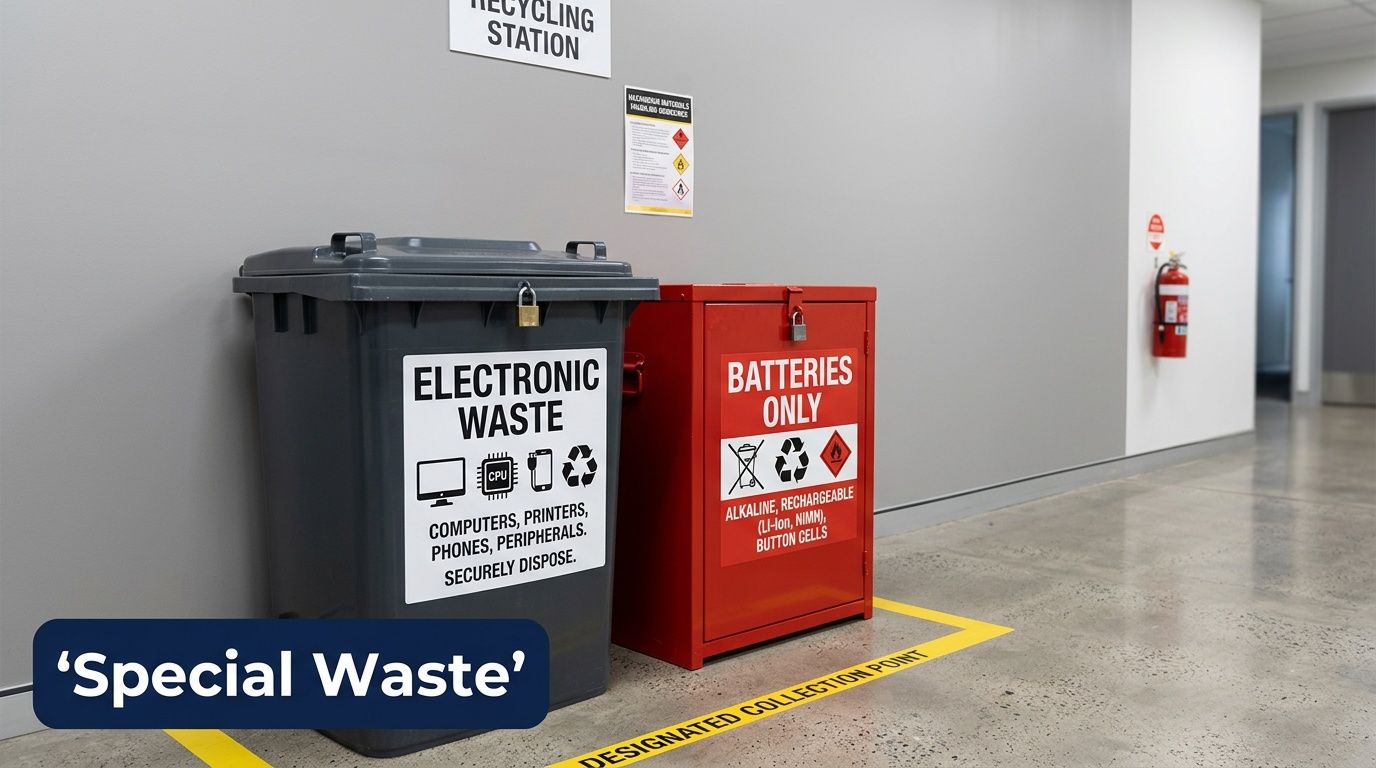
According to the City of Atlanta’s recycling process page, Atlanta’s Material Recovery Facility uses advanced sorting equipment such as optical sorters and magnets for standard recyclables. It cannot handle e-waste or hazardous items, which need separate processors to avoid contaminating recyclables and to manage materials like lead and mercury safely.
E-waste needs its own path
Electronics are one of the biggest trouble spots in commercial recycling because they look recyclable, but they don’t belong in standard commodity streams. Desktops, monitors, laptops, servers, networking gear, printers, and accessories all need a different chain of custody.
For businesses, the issue isn’t only environmental handling. It’s also asset control. Devices may store data, contain drives, or include components that need secure downstream processing. Even low-value electronics should be treated as controlled material until they’ve been properly processed.
Batteries and lamps are easy to mishandle
Batteries often get tossed into desk cleanouts or rolling carts because they’re small and easy to miss. That’s exactly why they cause problems. They don’t belong with paper, plastics, or mixed junk.
Fluorescent lamps, ballasts, and similar maintenance waste also need separate handling. The same goes for partially used chemicals, old paint, and maintenance-room leftovers that build up over time in multifamily and commercial properties.
A practical special-waste workflow
Managers need a simple internal process that separates special waste before a haul is scheduled.
- Stage electronics separately: Keep monitors, CPUs, printers, cables, and devices in a designated area.
- Isolate batteries: Use a clearly marked container that staff can’t confuse with regular recycling.
- Flag maintenance waste early: Paint, bulbs, and chemicals shouldn’t sit in the same pile as general cleanout debris.
- Control access: Special-waste staging should be supervised, especially during move-outs and large cleanouts.
If an item can leak, spark, shatter, or store data, don’t send it with regular recycling.
Why businesses need more than a drop-off address
A recycle center atlanta directory may tell you where some items go. It won’t manage packing, pickup coordination, loading, labor, segregation, or reporting. That’s why special waste becomes a project management issue, not just a disposal question.
For companies trying to align cleanouts with broader removal work, commercial and specialty hauling services show how junk removal, recycling, and sensitive material handling often need to be coordinated as one operation rather than treated as separate errands.
Why DIY Recycling Fails for Offices and Properties
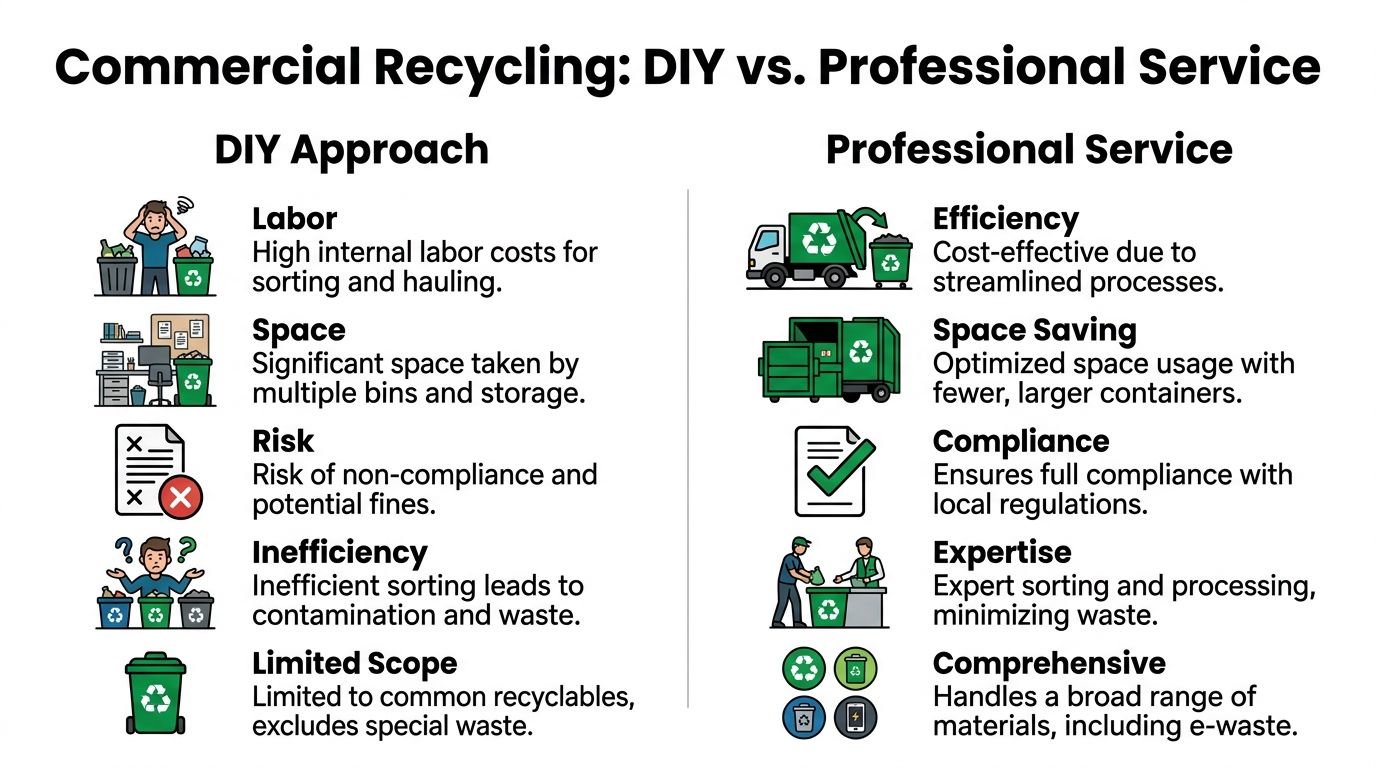
DIY recycling sounds efficient on paper. In practice, commercial teams usually end up paying for it in labor, clutter, confusion, and avoidable risk.
A facilities team starts with good intentions. They set aside cardboard, stack old electronics in a storage room, ask maintenance to handle metal separately, and tell office staff to use labeled bins. Then the project gets busy. Someone mixes trash into the recycling area. The electronics sit longer than expected. Bulky junk blocks access. The manager still has to schedule hauling, document the outcome, and explain to leadership why the cleanout dragged on.
The ordinance problem for multifamily properties
This issue becomes more serious in apartment and multifamily environments. Atlanta’s mandatory recycling ordinance for properties with 6 or more units requires owners to provide specified recycling container capacity and contract private haulers, with non-compliance risking fines of up to $1,000 per day, as outlined in this overview of the Atlanta multifamily recycling ordinance.
That changes the discussion. Recycling isn’t just a nice operational extra for many properties. It’s part of compliance. And compliance fails quickly when a site tries to improvise.
The hidden costs of handling it in-house
DIY systems usually break for reasons that don’t show up in a simple disposal budget.
- Staff time gets consumed: Maintenance and office teams spend hours sorting, moving, staging, and making repeat trips.
- Storage space disappears: Vacant units, loading docks, and back rooms become temporary holding areas.
- Contamination increases: Once mixed material enters the pile, someone has to re-sort it or send more to disposal.
- Documentation gets weak: Many teams can say material left the property. Fewer can show what was recycled, where it went, and how it was handled.
Businesses often underestimate the cost of using employees as ad hoc waste coordinators. That labor has a real price, even if it doesn’t show up as a line item labeled recycling.
Cleanouts create mixed-stream chaos
Offices and properties don’t produce neat, single-material loads. They generate a messy combination of commodities, bulky waste, reusable items, and specialty material. A unit turnover can include cardboard, mattresses, electronics, paint, blinds, clothing, shelving, and broken furniture all at once. An office decommission can combine cubicles, wire, metal, paper, monitors, and general trash.
Public drop-off and curbside systems don’t solve the mixed-stream problem. They solve narrow categories within it.
Space planning matters more than people think
Another overlooked issue is storage. If a business decides to stage materials for later drop-off or sorting, it needs secure room to do that without blocking operations. During renovations, moves, or phased cleanouts, temporary storage can help, especially when the site needs to separate reusable assets from outbound waste. A practical resource on that side of the decision is Container Self Store's storage guide, which covers how small businesses think through storage pressure during transitions.
Why professional coordination wins
The key benefit of a professional approach isn’t just hauling. It’s coordination. One plan for labor, access, material segregation, compliant routing, and final reporting beats a patchwork of bins, staff errands, and partial solutions.
Teams evaluating providers often want to know whether the company understands local property work, scheduling pressure, and mixed-load realities. That’s where background and operating model matter, and who Fulton Junk Removal is and how the company works gives useful context for that kind of evaluation.
Fulton Junk Removal Your Partner in Compliant Recycling
For Atlanta businesses, the strongest recycling strategy usually isn’t a better drop-off routine. It’s a better operating partner.
Fulton Junk Removal approaches cleanouts as a materials management problem, not just a hauling job. That matters because most commercial projects involve more than one stream at the same time. A warehouse cleanout may include scrap metal, packaging, office furniture, obsolete electronics, and plain trash. A property turnover may include reusable items, recyclable commodities, and materials that need special processing. Sending everything to one endpoint is easy. It’s also where traditional junk hauling falls short.
The difference between hauling and managed diversion
Most junk removal companies are set up to clear space. That solves the visible problem. It doesn’t necessarily solve the downstream one.
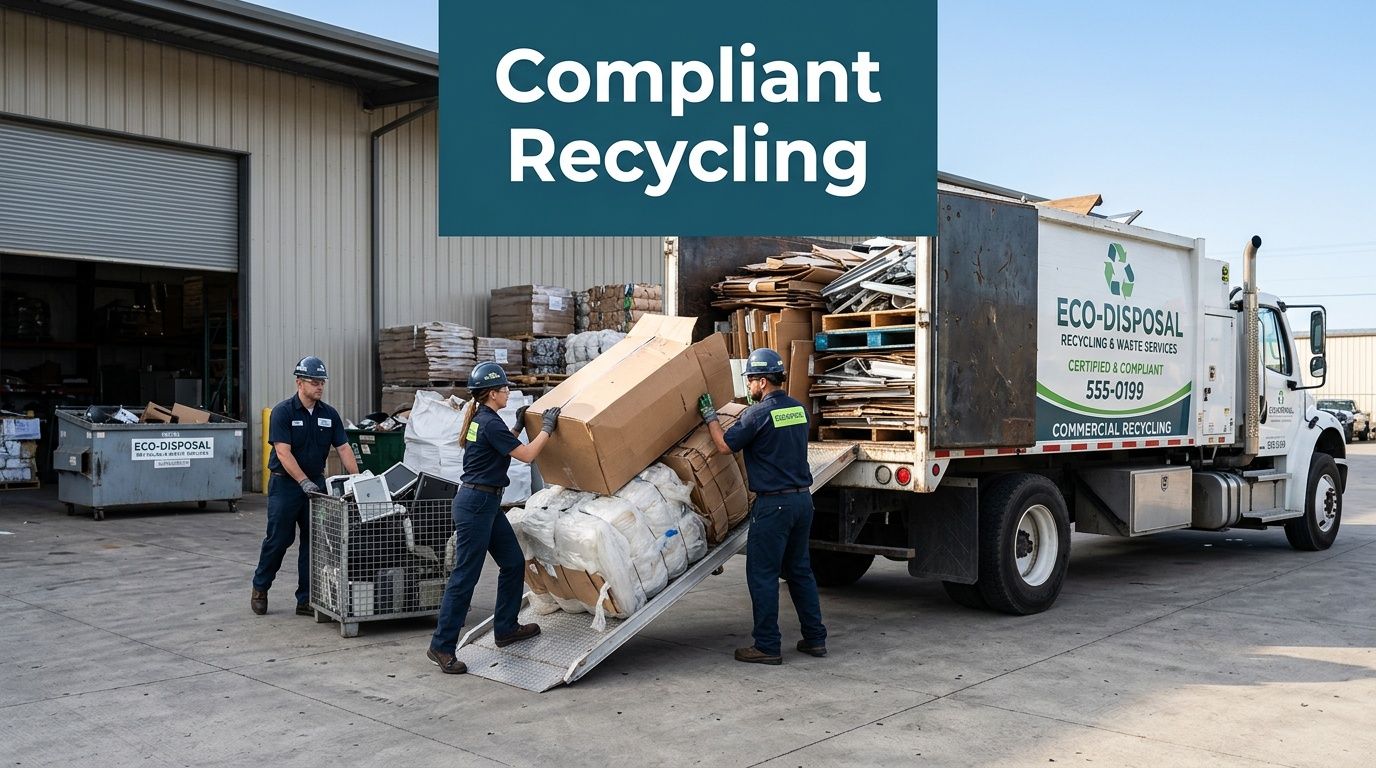
Fulton operates under the Beyond Surplus model, which changes what happens after pickup. Instead of treating the load as a single disposal category, the service is built to separate what can be recycled or repurposed from what belongs in disposal. That is especially important for electronics, metals, and other recoverable materials that businesses increasingly don’t want landfilled if there’s a responsible route available.
How the model works on real projects
In practical terms, the process is straightforward:
- Assess the site and material mix. Offices, warehouses, retail spaces, and multifamily properties don’t generate the same waste profile.
- Remove the junk that needs to go. The space gets cleared without forcing the client to coordinate multiple vendors.
- Route recyclable and recoverable material appropriately. Through Beyond Surplus, electronics, metals, and similar items can move into responsible recycling and reuse channels instead of default landfill disposal.
- Document the outcome. For many clients, that reporting piece is just as important as the physical pickup.
That bundled structure is what makes the service useful for operations managers and property teams. It reduces handoffs. It also reduces the chance that recyclable material gets mixed into general disposal because nobody had time to separate it.
What works: one coordinated pickup with downstream sorting and reporting.
What doesn’t: one vendor for junk, another for electronics, a third for metal, and internal staff trying to bridge the gaps.
Where this helps most
The strongest fit is any project where material diversity and timing collide.
- Office decommissions: Desks, chairs, filing systems, monitors, cables, printers, and general debris leave at the same time.
- Warehouse cleanouts: Pallet waste, racking components, packaging, and obsolete equipment need sorting by material type.
- Property management projects: Unit turnovers, evictions, common-area cleanups, and estate-related cleanouts often contain both junk and recoverable material.
- Retail and administrative refreshes: Fixture changes, signage removal, electronics replacement, and back-room cleanups create mixed streams quickly.
Why reporting matters
A lot of recycling conversations still focus only on pickup. Commercial clients usually need more than that. They need a record. Ownership groups, procurement teams, ESG stakeholders, and internal operations leaders often want proof that materials were handled responsibly.
That’s one reason the Fulton and Beyond Surplus pairing is practical. It supports diversion reporting and responsible recycling documentation, which gives clients something stronger than a verbal assurance that material was “taken care of.” For property managers, that can support resident communication and owner reporting. For businesses, it can support internal sustainability records and cleaner vendor accountability.
Good recycling service removes two headaches at once. It clears the space and clarifies the paper trail.
Why this is better than forcing public systems to do commercial work
Atlanta’s public recycling assets are valuable, but they aren’t designed to absorb every office purge or multifamily cleanout. CHaRM is important, curbside matters, and specialty processing remains necessary. The issue is that businesses need those downstream channels coordinated on their behalf.
That’s where an integrated provider has an edge. The client doesn’t need to decide which team handles the furniture, which one takes the e-waste, who separates metal, and how to document the result. The project gets managed as one operation.
Who should choose this route
If you’re a homeowner with a small, sorted load, a public recycle center atlanta option may be enough.
If you manage any of the following, the professional route is usually the smarter one:
- An office with obsolete electronics and furniture
- A multifamily property with recurring turnover cleanouts
- A warehouse with metal, equipment, and packaging waste
- A business that needs sustainability or diversion records
- A site where labor time and scheduling are already tight
For teams ready to organize a compliant cleanout instead of piecing one together, the next step is simple. Start with a direct conversation through Fulton Junk Removal’s contact page.
Making the Smart Recycling Choice in Atlanta
Atlanta gives residents and businesses real recycling outlets. The challenge is matching the outlet to the job.
For homeowners and tenants with small, sorted loads, the DIY path can work. Curbside handles routine household recyclables. Specialized drop-off centers help with certain materials that don’t belong in the cart. If the load is light, clean, and easy to separate, that model is perfectly reasonable.
Commercial work is different. Offices, warehouses, retail spaces, and multifamily properties create mixed streams under time pressure. Those projects need labor, routing, staging, documentation, and compliance awareness. They also need someone making material decisions in real time so recyclable items don’t get buried in disposal because the site has to move fast.
The practical choice for managers
A good rule is to decide based on complexity, not ideals.
Use a public option when the material is already sorted and the timeline is flexible. Use a professional service when the cleanout includes bulky debris, electronics, multiple material categories, or any reporting requirement. That’s the dividing line most managers learn the hard way.
What smart operators prioritize
The best recycling choice usually protects four things at once:
- Time on site
- Staff bandwidth
- Compliance posture
- Landfill diversion
Those goals don’t conflict when the job is structured correctly. They conflict when a business tries to run a commercial cleanout through systems built for household drop-offs.
The right recycling plan isn’t the one with the most bins. It’s the one your team can execute cleanly, document confidently, and repeat without disruption.
If you’re comparing recycle center atlanta options, don’t stop at who accepts a material. Ask who can manage the whole job.
Frequently Asked Questions About Atlanta Recycling
Can a business use public recycle centers in Atlanta
Yes, but that doesn’t mean it should for every project. Public options are best for smaller, pre-sorted volumes that fit the facility’s rules and schedule. Once the load includes furniture, e-waste, bulky debris, or mixed materials, the process becomes much harder to manage.
Are office electronics okay in regular recycling bins
No. Electronics need separate handling. Standard recycling systems are designed for common commodities like paper, cans, and certain plastics, not devices that may contain sensitive components or hazardous materials.
What usually causes recycling loads to be rejected
The biggest problem is contamination. Food residue, plastic bags, batteries, wet paper, foam, and random nonrecyclables can turn a good load into a disposal problem. For businesses, this often happens when bins are poorly labeled or when staff use recycling as a catch-all for anything that looks reusable.
Is CHaRM a good fit for property managers
It can help with certain presorted items, but it isn’t built as a commercial cleanout solution. Appointment requirements, sorted-material expectations, and small-load logistics make it better for residents or limited specialty disposal than for large turnover or decommission projects.
What items need special recycling instead of standard processing
Keep these out of regular recycling:
- Electronics: monitors, laptops, printers, cables, servers
- Batteries: alkaline, rechargeable, lithium-ion
- Hazardous materials: paint, chemicals, fluorescent lamps
- Soft plastics and film: bags, wrap, shrink film
- Food-soiled fiber: greasy or wet cardboard and paper
Why do property managers need documentation
Because “removed” isn’t the same as “properly handled.” Managers may need records for ownership groups, compliance obligations, tenant communication, or internal sustainability tracking. A documented process creates accountability and reduces disputes later.
Is professional recycling only about environmental goals
No. It’s also about operations. Professional coordination helps clear space faster, reduces the burden on staff, lowers the risk of mishandling special waste, and gives managers a cleaner process from pickup through final reporting.
If you need more than a drop-off location, Fulton Junk Removal helps Atlanta businesses, offices, warehouses, and property managers clear space with a more responsible process. Through its connection with Beyond Surplus, the company combines junk removal with recycling and reuse pathways for electronics, metals, and other recoverable materials, making cleanouts easier to manage and easier to document.
