
Top 10 Recycle Centers in Atlanta for 2026
A common Atlanta recycling job starts with a simple plan and turns into three separate errands. A resident loads a few boxes, a broken chair, and old paint cans into the trunk, only to find that one site takes cardboard, another handles household hazardous waste, and neither wants mixed debris. For a business, the demands are greater. An office cleanout or apartment turnover can involve labor, transport, electronics handling, and proof of where the material went.
That is the core decision this guide helps solve. Atlanta has plenty of recycling outlets, but they serve very different jobs. Some are best for residents with small, sorted loads and time to self-haul. Others fit scrap metal, glass, paint, or electronics. Commercial cleanouts, tenant turnovers, warehouse purges, and renovation debris usually call for a different approach, especially when staff time, chain of custody, or diversion reporting matter.
The City of Atlanta publishes a residential recycling services overview, and Live Thrive operates well-known CHaRM drop-off programs for harder-to-place household materials. Those options are useful, but they do not solve every disposal problem. Mixed loads are where people lose time. Acceptance rules vary by site, prep requirements change, and one rejected item can turn a quick drop-off into half a day of sorting and driving.
This guide works as a decision framework, not just a list of addresses. It sorts Atlanta's recycling options by volume, material type, and compliance needs, then shows where DIY makes sense and where a professional team is more efficient. If you already know your project needs hauling, sorting, and responsible downstream handling, start with full-service junk removal and recycling support. That route is often the better operational choice for offices, property managers, contractors, and facility teams that need the job finished in one move, with less guesswork and better documentation.
1. Fulton Junk Removal
Fulton Junk Removal is the best fit when the problem isn't a few sorted items. It's a mixed commercial or residential cleanout that needs labor, hauling, recycling judgment, and a documented end result. That's a different job than driving to a drop-off center with neatly separated bins.
What makes Fulton stand out is the connection to Beyond Surplus. That gives customers a bundled path for junk removal plus responsible downstream processing for electronics, metals, and other recyclable materials. If you're clearing an office, warehouse, storage room, rental unit, or event site, one crew can remove the load and route recoverable material through a recycling-first workflow instead of treating the whole job like landfill trash.
Best use case
This is the practical choice for businesses and property teams that don't have time to self-haul to three or four locations. It also works well for homeowners with bulky items, garages full of mixed material, or move-out debris that isn't realistic to sort alone.
Use Fulton when you need any of the following:
- One-trip removal: Mixed loads can be picked up in one visit instead of splitting electronics, scrap, furniture, and cardboard into separate drop-offs.
- Compliance support: Businesses can get certified recycling and diversion reporting through the Beyond Surplus side of the operation.
- Less operational drag: Staff doesn't lose a day loading trucks, waiting in line, and figuring out which site accepts what.
- Flexible scope: The company handles single-item pickups, full cleanouts, bulky removals, and recurring property or event work.
A lot of "green" hauling claims fall apart once you ask what happens after pickup. Fulton has a stronger answer than most because the recycling component is built into the model, not added as a vague promise. You can review the company’s junk removal service options to see how that applies to homes, offices, properties, and specialty jobs.
Practical rule: If your team needs chain of custody, diversion reporting, or fast turnover on a space that affects operations, don't DIY the load.
Trade-offs to know
Fulton isn't trying to be a statewide drop-off directory. It's a local service solution for Atlanta and nearby cities, which is ideal if you want fast response in the metro area but less relevant if you're coordinating work far outside that footprint.
Pricing is also estimate-based rather than published as a flat menu. In practice, that's normal for mixed loads, stairs, labor-heavy removals, and commercial cleanouts. The upside is clearer scoping before the crew arrives. The downside is that you need to request a quote.
Bottom line. For commercial recycling, property turnovers, office cleanouts, and bulky mixed loads, Fulton is the most efficient option in this list because it combines pickup, recycling, and documentation in one process.
2. Live Thrive CHaRM Atlanta
A common Atlanta recycling problem looks like this: a resident has half-used paint, an old laptop, a box of chemicals, and a mattress that curbside service will not take. CHaRM Atlanta is built for that kind of load. It fills the gap between standard household recycling and hiring a truck for a full cleanout.
For residents, that makes CHaRM one of the better DIY options in the city, especially when the material is already separated and the load fits in a car or small trailer. For property managers and business operators, the same facts point to the limit. CHaRM works best for controlled, specialty drop-offs. It is not the efficient choice for mixed bulk debris, tenant turnover volume, or jobs where labor and schedule control matter as much as disposal.
Best use cases
The Atlanta CHaRM site is a strong fit when the decision is straightforward. The material is on CHaRM's accepted list, the load is sorted before arrival, and someone on your side can handle the transport.
That usually makes sense for:
- Households with hard-to-recycle items: Paint, electronics, chemicals, glass, mattresses, and other problem materials that do not belong in curbside carts.
- Multifamily residents without good curbside options: Useful for people who need a legal, designated outlet for specialty waste.
- Small property or maintenance teams: A practical outlet for occasional specialty items after minor cleanups, as long as volume stays manageable.
The main advantage is control. You know where the material is going, and you can match each stream to a facility that is set up to handle it properly. If you're comparing self-haul against pickup service, Fulton’s Atlanta recycling articles and cleanout guidance can help you sort through the trade-offs.
CHaRM Atlanta is a good resident-focused specialty drop-off site. Professional hauling makes more sense once the job includes mixed loads, repeated pickups, or operational deadlines.
Trade-offs to plan for
The friction points are practical, not theoretical. Appointment requirements and limited operating windows are manageable for a homeowner planning a Saturday run. They are harder to work around for commercial teams, maintenance staff, or anyone trying to clear space fast.
Fees on certain materials can also change the math. For a few specialty items, paying a posted drop-off fee is usually reasonable. For larger projects, the actual cost often becomes staff time, loading labor, vehicle use, and multiple trips.
That is why CHaRM Atlanta fits one category in a broader decision framework. Use it for small, sorted specialty loads. Move to a professional recycling and junk removal partner when volume, labor, documentation, or turnaround time becomes the bigger issue.
3. Live Thrive CHaRM DeKalb
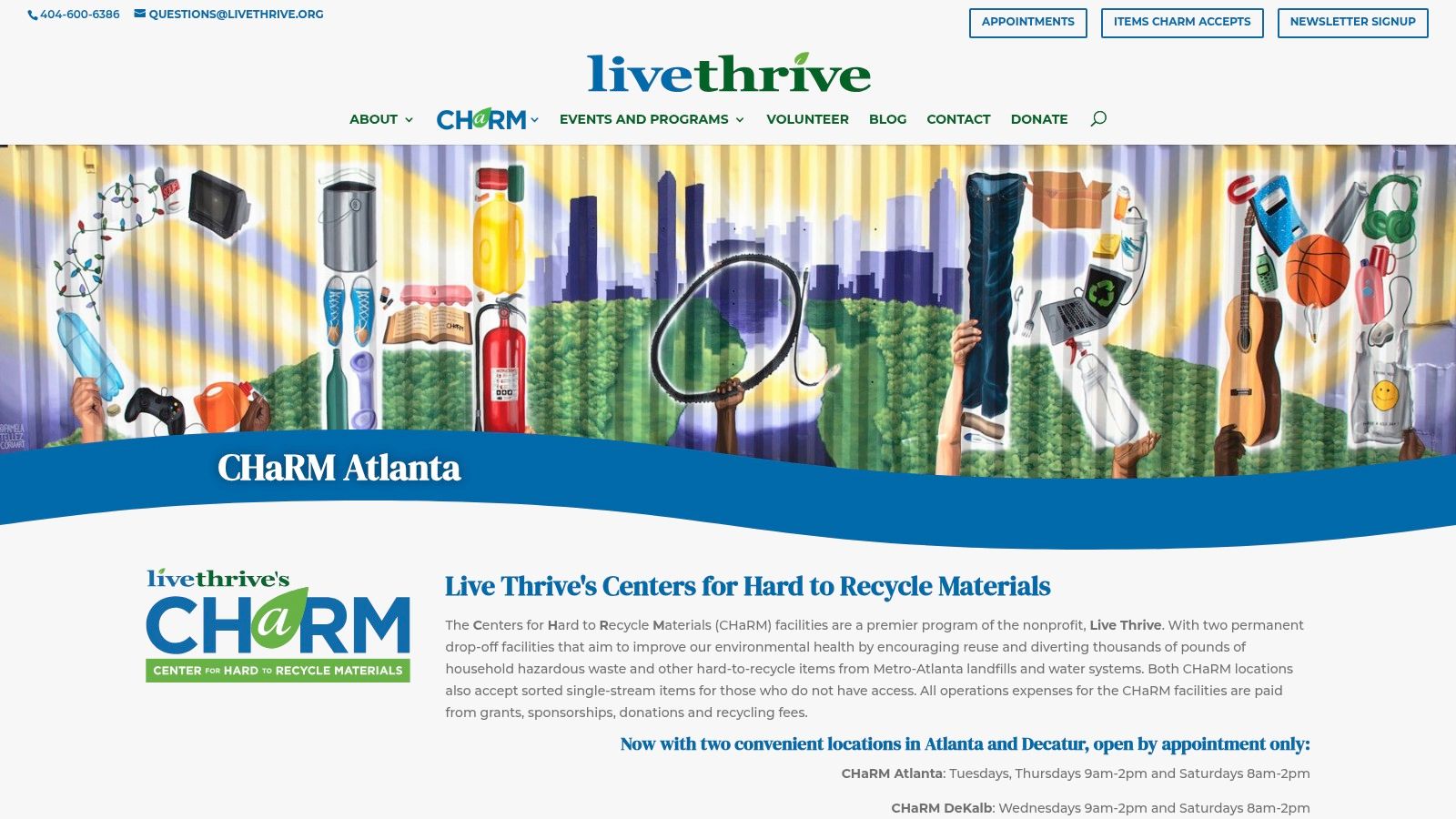
A Decatur resident with a trunk full of paint, old electronics, and bagged glass has a different job than a property manager clearing units across three buildings. CHaRM DeKalb serves the first case well. It is a resident-friendly specialty drop-off option for east-side users who can sort material in advance and make the trip themselves.
That distinction matters in Atlanta. This guide is about choosing the right recycling channel, not just finding the nearest address. CHaRM DeKalb fits the DIY side of the framework. It is best for smaller, separated loads where the user can handle transport, unloading, and any site rules without tying up a crew or delaying a larger cleanup.
Best fit for this site
CHaRM DeKalb makes the most sense when convenience is geographic, not operational. If you're in Decatur or eastern DeKalb, the shorter drive can make self-haul practical for occasional specialty recycling that curbside programs do not handle well.
Good use cases include:
- Household specialty loads: Electronics, paint, glass, and similar materials that need a dedicated drop-off outlet.
- Small-volume cleanup leftovers: A few boxes or containers from a garage, basement, or condo storage room.
- Light-duty property maintenance runs: Sorted material from minor turnovers or routine upkeep, as long as staff time and trip volume stay reasonable.
For residents and smaller jobs inside the city, Atlanta-area junk removal and recycling service options become more useful once the load stops being easy to self-haul.
Where the trade-off shows up
The DeKalb location is a good tool, but it still requires labor on your side. Someone has to separate the material, load it safely, drive it over, wait if needed, and unload according to the site's process. For a homeowner handling a one-off run, that is usually acceptable. For a business, HOA, contractor, or multifamily operator, those steps can turn a recycling plan into lost maintenance hours.
Material mix also changes the decision. A sorted carload is manageable. A mixed cleanout with bulky items, tenant debris, or repeated pickups is a different category entirely. At that point, a professional service usually wins on speed, documentation, and control.
CHaRM DeKalb is strongest as a specialty drop-off outlet for small, prepared loads. It is not a substitute for commercial recycling support when volume, scheduling, or compliance starts driving the job.
4. Keep Atlanta Beautiful community recycling centers
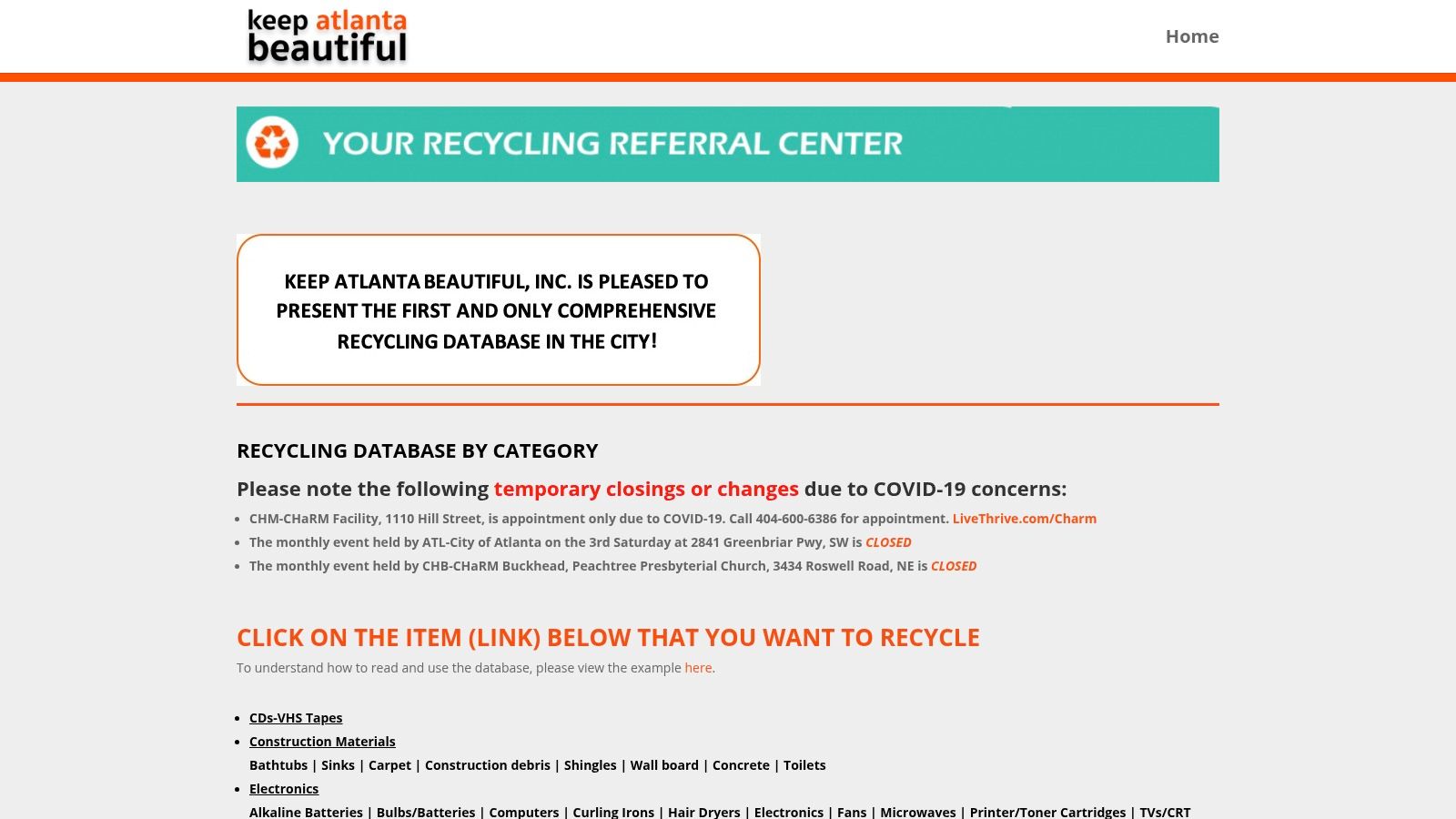
A common Atlanta problem looks like this. You have a trunk full of cardboard, a few bags of recyclables, maybe some electronics or Styrofoam, and your building either has limited recycling access or rules that are unclear. Keep Atlanta Beautiful's community recycling events work well for that exact size of job.
These are scheduled neighborhood drop-off events, not full-time recycling centers. That distinction matters. For residents, they can be one of the easiest ways to clear a small, sorted load without driving across the metro to a specialty facility. For property managers, contractors, and office teams, they are usually too limited on timing, volume, and accepted material to serve as a dependable operating plan.
Best fit
Keep Atlanta Beautiful is strongest as a resident-focused DIY option for light loads that are already separated. It is a practical choice for:
- Apartment and condo residents: Especially in buildings where recycling access is inconsistent.
- Intown households with overflow material: Useful when curbside service is not enough.
- Occasional hard-to-recycle items: Good for certain electronics, Styrofoam, and other items that do not belong in the standard bin.
The appeal is simple. The events are local, the process is approachable, and first-time users usually find them easier to handle than a specialty drop-off site with stricter procedures.
The trade-off is reliability.
Because these are calendar-based events, access depends on the schedule. Miss the date, arrive with the wrong material, or show up with more volume than the event is set up to receive, and the trip may not solve the problem. That is manageable for a resident with one carload. It is a poor fit for recurring cleanouts, multifamily turnovers, or commercial back-of-house recycling.
If the job is tied to a deadline, labor hours, or tenant turnover, pickup service usually makes more sense. Teams handling larger north-metro cleanouts often save time with a provider that already covers Roswell junk removal and recycling pickups, rather than trying to piece the job around event dates.
Community recycling events are useful for small, prepared loads. They are not built for mixed debris, repeated pickups, or commercial-scale volume.
For current schedules and accepted materials, check Keep Atlanta Beautiful.
5. Roswell Recycling Center
Roswell Recycling Center is one of the better north-metro municipal options because it covers a broad mix of common materials in one place. That matters if you want fewer trips and clearer rules.
For Roswell residents and businesses, the center works as a practical one-stop outlet for paper, plastics, metals, glass, electronics, appliances, tires, and certain automotive fluids. Municipal oversight also tends to make the rules easier to verify than at loosely documented private drop-off operations.
Best fit
This center is most useful for north-side homeowners, small businesses, and facilities teams working on manageable, separated loads. If you have a pickup truck with electronics, cardboard, metal, and a few special items, Roswell can save time compared with piecing together multiple drop-offs.
Good scenarios include:
- Small business cleanouts: Especially when the material is already separated.
- Resident bulk recycling runs: Better than relying only on curbside for overflow material.
- North-metro operations: Convenient if the job site or property is already in Roswell.
For larger turnover work or mixed-load hauling in the area, a pickup-based service may still be more efficient. Businesses handling cleanouts nearby can compare that route through Fulton’s Roswell service area details.
Trade-offs
The center is access-controlled. If you're outside Roswell, that can end the conversation immediately. Some special items may also involve fees, so it pays to review the current policies before loading a truck.
For eligible users, though, Roswell is one of the most complete municipal recycling options in the metro. See current rules and hours at the Roswell Recycling Center.
6. Smyrna Recycling Center
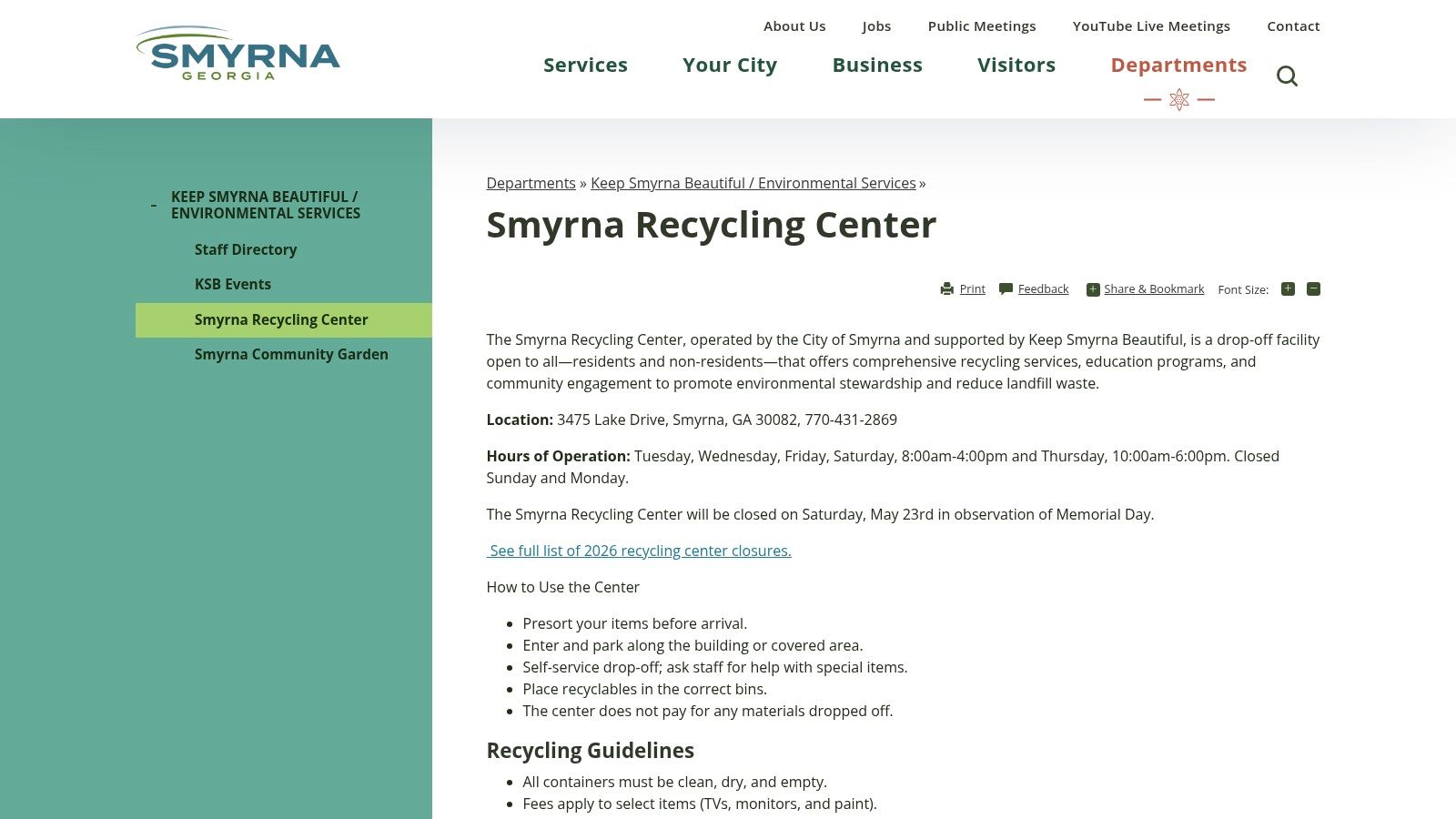
Smyrna Recycling Center is one of the more user-friendly public options because it combines consistent hours with a broad enough acceptance list to make the drive worthwhile. It's especially useful for west-side and northwest-metro users who want a straightforward drop-off experience.
One detail that makes Smyrna more flexible than some municipal sites is that it serves residents and non-residents. That widens its value beyond city boundaries and makes it relevant to more people searching for recycle centers in atlanta.
What it does well
Smyrna is a good fit for standard recyclables, glass, electronics, and some special streams such as paint. The center also does a solid job communicating accepted items and fees, which is more important than many people realize. Confusion at the gate is one of the main reasons drop-off recycling turns into wasted time.
This site is strongest when you have:
- A sorted personal load: Boxes, bottles, e-waste, and similar items you can unload quickly.
- Predictable scheduling needs: The operating hours are easier to work around than event-only sites.
- Moderate volumes: More than curbside can take, but less than what would justify a full hauling crew.
Where it falls short
Smyrna isn't a bulky debris solution. If you're dealing with furniture, unsorted property cleanout material, or construction waste, this isn't the right lane.
That distinction matters. A lot of users think "recycling center" means "place that handles all recyclable stuff." In practice, each facility is narrow. Smyrna is a strong community recycling center, not a mixed-load disposal partner.
You can check accepted items, fees, and hours at the Smyrna Recycling Center.
7. DeKalb County glass recycling drop-off program
A common Atlanta cleanout problem looks like this: the boxes are broken down, the cans are bagged, and the glass is still sitting in the garage because curbside rules are inconsistent or the risk of contamination is too high. DeKalb County's dedicated glass drop-off program solves that specific problem well.
Glass is one of the hardest materials to handle in mixed recycling. Once bottles and jars break in a single-stream load, they can contaminate paper and other commodities and raise processing costs. A glass-only drop-off keeps the stream cleaner and gives residents a more reliable outlet for a material that often causes confusion at the cart.
Best use case
This program fits households with a steady amount of food and beverage glass, especially if curbside service does not inspire much confidence. It also works for HOAs, small multifamily properties, and community managers that can collect a modest volume of clean bottles and jars and deliver them on a regular schedule.
The value is practical:
- Cleaner glass handling: Bottles and jars stay separate from mixed recyclables.
- Simple prep: Rinse the containers, remove obvious contaminants, and drop one material type.
- Good for recurring loads: Better as an ongoing routine than a one-time overflow fix.
For a resident with a few bins of sorted glass, the DIY trip makes sense. For a property manager dealing with turnover debris, bulk trash, cardboard, and glass at the same time, a dedicated drop-off stops being efficient. At that point, a certified junk removal partner with recycling-first processes is usually the better operational choice.
Main limitation
This program is narrow by design. It does not address electronics, scrap metal, cardboard, furniture, or mixed commercial waste. Businesses that need documented handling, scheduled pickups, or support across multiple material streams will outgrow this option quickly.
For residents in DeKalb who need a dependable place for sorted glass, it is a strong niche solution. Check container locations and participation rules through DeKalb County glass recycling.
8. SA Recycling Atlanta yards
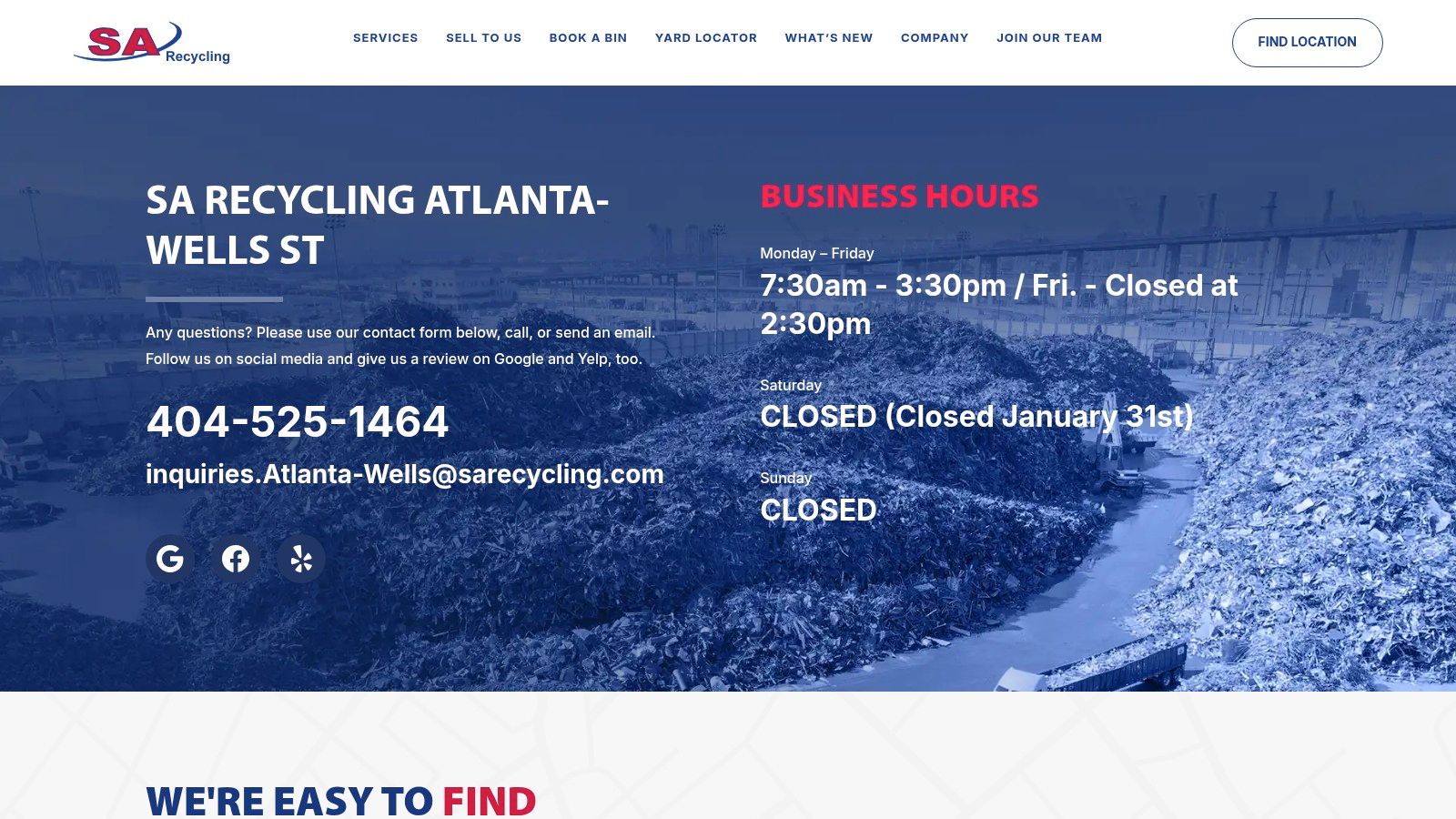
If your load is mostly metal, a scrap yard beats a general recycling center almost every time. SA Recycling’s Atlanta-area yards are the right fit for ferrous and non-ferrous scrap, appliances without prohibited components, metal fixtures, wire, and renovation leftovers.
This is one of the few categories where the recycler may pay you rather than charge you, depending on the material. That's especially useful for contractors, maintenance teams, fabricators, and property operations crews who accumulate enough metal to make separation worthwhile.
Where SA Recycling makes sense
Choose a scrap yard when the load is clearly metal and reasonably clean. Mixed junk slows everything down and may be rejected. If your team separates metal at the job site, the yard process is usually fast.
Strong use cases include:
- Renovation scrap: Metal framing, fixtures, conduit, and similar items.
- Facility maintenance waste: Shelving, equipment parts, and obsolete metal hardware.
- Contractor loads: Wire, aluminum, steel, and other commodity metals.
If your project also includes non-metal junk, old electronics, furniture, and mixed debris, the yard-only route can become inefficient. That's where a hauling company with a recycling-first model is more useful. Fulton explains that broader disposition approach on its company background page.
The catch
Scrap yards are transactional and material-specific. They aren't there to help you sort a messy cleanout or advise on hazardous items. They also won't take ordinary trash just because it rode in on the same truck.
For clean metal loads, though, SA Recycling is exactly what you want. Review yard specifics at SA Recycling Atlanta Wells St..
9. eWaste ePlanet eWeP ITAD
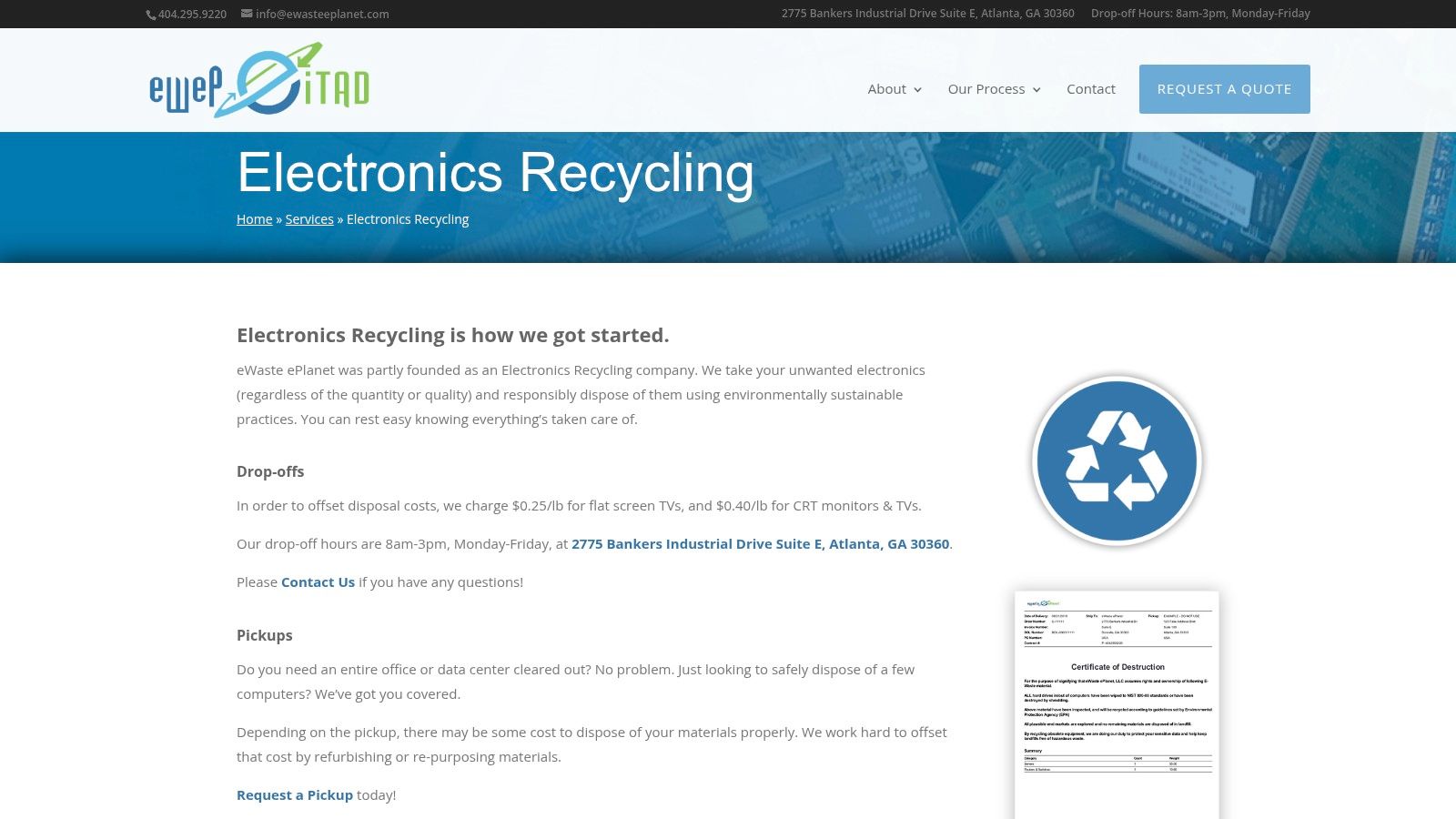
For electronics, certification and documentation matter more than convenience alone. eWaste ePlanet, operating as eWeP ITAD, is built for that part of the market. It offers electronics recycling, business pickup, and documentation such as certificates of recycling and destruction.
That makes it more suitable for IT teams, offices, medical admin environments, and businesses retiring devices that may still hold data. If the asset has storage media, the conversation shouldn't stop at "can someone recycle this?" It should include chain of custody and proof of destruction.
Why this category is growing
Atlanta’s tech infrastructure is expanding quickly. The metro’s data center market posted 705.8 MW of net absorption in 2024, the highest in the U.S., while construction activity rose 76 percent year over year. More servers, networking gear, endpoint devices, and refresh cycles mean more organizations need formal IT asset disposition, not casual e-waste drop-off.
eWeP ITAD is a good fit for:
- Office electronics cleanouts: Monitors, PCs, peripherals, and related equipment.
- Compliance-minded IT teams: Especially when data-bearing assets are involved.
- Small to mid-sized business pickups: Better than assigning staff to self-haul sensitive equipment.
Limits to keep in mind
Public drop-off hours are weekday daytime only, which can be inconvenient for households. Some items also carry fees. That's normal in electronics recycling, but you still need to plan for it.
For business users, those drawbacks are usually outweighed by the paperwork and process control. Visit eWaste ePlanet electronics recycling for accepted items and pickup details.
10. Metro Green Recycling
Metro Green Recycling belongs in this list because construction and renovation waste often gets left out of conversations about recycle centers in atlanta. That's a mistake. Office buildouts, retail resets, warehouse reconfigurations, and residential renovations all create recyclable material streams that don't belong in standard drop-off channels.
Metro Green is geared toward construction and demolition loads such as wood, drywall, roofing, concrete, rock, metal, and cardboard. If you're a contractor or project manager trying to improve diversion on a job, this is closer to the right model than any household-focused center.
Best operational fit
This option works when the load is jobsite debris and the crew can deliver material in the format the facility accepts. It also helps when your reporting requirements go beyond "we took it away" and into actual diversion management for a project owner.
Use Metro Green for:
- Remodeling debris: Mixed C&D loads from renovation work.
- Concrete and inert material: When a site supports that stream.
- Contractor logistics: Especially across multiple active job sites.
What doesn't work
This isn't a good answer for a resident with a few items in the trunk. It's also not the easiest path for mixed property cleanout material that includes furniture, electronics, and general junk.
That's an important distinction for commercial users too. A construction recycler is ideal when the load looks like construction waste. If it looks like an office purge or a tenant abandonment, a junk removal and recycling partner is usually the better match.
You can review facilities and accepted materials at Metro Green Recycling.
Atlanta Recycling Centers, 10-Site Comparison
| Service / Core Features | Target Audience 👥 | Sustainability & Compliance ✨/★ | Pricing & Access 💰 | Availability / Area |
|---|---|---|---|---|
| Fulton Junk Removal 🏆 | Homeowners, property & facility managers, events | Integrated recycling & donation; certified diversion reports ✨ ★★★★★ | Transparent upfront pricing; free estimates 💰 | Atlanta metro (~1‑hr radius); fast response crews |
| Live Thrive, CHaRM Atlanta | Residents, property managers, small businesses | Accepts HHW & hard‑to‑recycle items; certificates & education ✨ ★★★★ | Posted fees for some items; clear prep guidance 💰 | Appointment required; Tue/Thu/Sat hours |
| Live Thrive, CHaRM DeKalb (Decatur) | Eastside residents, multifamily managers | Same broad acceptance & documentation as CHaRM Atlanta ✨ ★★★★ | Fees for select items; clear guidance 💰 | Appointment required; Wed & Sat hours |
| Keep Atlanta Beautiful, Community Events | Intown residents, multifamily building users | Community-driven diversion; electronics & Styrofoam pickup ✨ ★★★ | Mostly free; event-based drop-off 💰 | Monthly Saturday events (Buckhead, Old Fourth Ward) |
| Roswell Recycling Center (City of Roswell) | Roswell residents & businesses (ID required) | Broad streams (e‑waste, tires, appliances); staffed guidance ★★★★ ✨ | Some item fees; municipal rates posted 💰 | Tue–Sat; on‑site assistance |
| Smyrna Recycling Center | Residents & non‑residents, community groups | Consistent recyclables + electronics; education focus ★★★★ ✨ | Fees for TVs/paint/etc.; posted rules 💰 | Regular posted hours (Tue–Sat; extended Thu) |
| DeKalb County Glass Drop‑off Program | DeKalb residents, east‑side users | Dedicated glass stream to improve recyclability ✨ ★★★★ | Free for residents 💰 | Multiple county container locations; glass only |
| SA Recycling, Atlanta Yards (Scrap Metal) | Households, contractors, businesses | Metal commodity recycling; recovers ferrous & non‑ferrous ★★★★ | Pays for acceptable metals; prices vary daily 💰 | Multiple yards; quick yard processing |
| eWaste ePlanet (eWeP ITAD) | Businesses & residents needing data/security | ITAD services with chain‑of‑custody & certificates ✨ ★★★★ | Transparent fee schedule; business pickups available 💰 | Weekday drop‑off hours; business pickup offered |
| Metro Green Recycling, C&D Center | Contractors, renovation & demo crews | Mixed C&D & concrete recycling to boost diversion ★★★★ ✨ | Tip fees by material (often below landfill) 💰 | Multiple metro locations; call for site rates |
The smart choice when to go pro with commercial recycling
A facilities manager clears out two suites after a tenant move-out. By noon, the loading dock is packed with old desks, monitors, loose cardboard, broken shelving, and a few items no one wants to claim. At that point, the decision is not "Where is the nearest recycling center?" It is "What gets reused, what gets recycled, what needs special handling, and who is going to document it?"
That distinction is the primary dividing line in Atlanta recycling. Drop-off centers work well for small, sorted loads. Commercial projects usually do not arrive sorted, labeled, and ready for one clean trip across town.
Offices retire equipment in uneven waves. Property turnovers create mixed piles. Retail backrooms, warehouses, multifamily properties, and renovation jobs generate material that has to be separated, loaded safely, routed to the right downstream outlets, and tracked if a client, owner, or internal sustainability team asks for proof later. As noted earlier, Atlanta's recycling system also puts more responsibility on generators to make sure material reaches the correct outlet, especially outside simple household drop-offs.
Why DIY breaks down for commercial loads
The biggest cost is usually not the disposal fee. It is labor and disruption.
Someone on staff has to decide what goes where, pull usable recyclables out of mixed debris, check acceptance rules, load vehicles, make the trips, wait through unloading, and deal with items a site refuses. Add electronics and the job gets more sensitive. Add a landlord, corporate reporting requirement, or move-out deadline and the margin for error gets smaller fast.
Common failure points show up the same way across commercial jobs:
- Staff time gets diverted: Maintenance teams, office managers, or site supervisors end up doing hauling work instead of their actual jobs.
- Loads get split across multiple vendors: Metal goes to one yard, e-waste to another outlet, cardboard somewhere else, and the leftover pile often heads to disposal for speed.
- Documentation stays incomplete: A business may know material left the site, but not have a clean record of what was recycled and where.
- Recoverable material gets missed: Bulky items, fixtures, and mixed recyclables often get landfilled because no one has time to sort them properly on-site.
For a resident with a trunk load, that may be manageable. For a business, it usually is not.
Why Fulton makes sense for businesses and property managers
Fulton Junk Removal fits the part of the market that municipal sites and specialty drop-offs are not built to handle well. Mixed loads, bulky material, tight timelines, occupied properties, and jobs where one pickup is worth more than five separate trips.
The Beyond Surplus connection strengthens that model. Electronics, metal, and other recyclable streams can be routed through an integrated process instead of forcing a customer to coordinate separate outlets on their own. That gives businesses a cleaner chain of handling and certified diversion reporting for internal tracking, client reporting, or compliance needs.
The need for integrated service is greater in a metro where specialty recycling demand keeps growing. Live Thrive has described sustained demand for hard-to-recycle and bulky materials through its Atlanta programs at Live Thrive. That still leaves a gap for pickup-based service, mixed commercial loads, and projects that need labor, hauling, sorting, and documentation in one scope of work.
If the job affects occupancy, deadlines, reporting, or data security, control matters more than convenience.
The practical decision rule
Use a DIY drop-off center when the load is small, already sorted, accepted by the site, and easy to move in a personal vehicle or light-duty work truck. That route makes sense for cardboard, a few approved electronics, separated glass, or a modest scrap load.
Hire a professional service when the material is mixed, bulky, time-sensitive, data-bearing, or tied to a turnover, renovation, cleanout, or reporting requirement. That is where Fulton Junk Removal, working with Beyond Surplus, becomes the better operational choice.
For Atlanta businesses, property managers, and residents dealing with more than a simple carload, the right choice comes down to volume, material type, and accountability. A drop-off center solves a small, clean, self-managed job. A certified commercial partner handles pickup, sorting, responsible downstream routing, and the paperwork that often matters after the truck leaves.
If you need an Atlanta partner that can remove junk, sort recyclable material responsibly, and provide documentation for commercial cleanouts, contact Fulton Junk Removal. It's a practical fit for offices, warehouses, property turnovers, renovation debris, and bulky mixed loads that local drop-off centers were not designed to handle.
