
How to Prepare for Movers: Essential Tips for a Smooth Move
If there’s one secret to a successful move, it’s this: start early and declutter ruthlessly. Giving yourself a two-month head start turns a mountain of a task into a series of manageable molehills. It’s your chance to methodically sort, pack, and plan without the last-minute chaos, paving the way for a move that’s smoother and easier on your wallet.
Your Pre-Move Game Plan Starting Eight Weeks Out
A stress-free move isn't about luck; it's about having a solid game plan. When you start eight weeks out, you're laying the foundation for everything that follows. This is the time to get your documents in order, figure out a budget, and get the right professionals booked before their schedules fill up. It also helps to get familiar with some overarching strategies to make moving less stressful.
This infographic breaks down a practical 8-week timeline to get you started on the right foot.
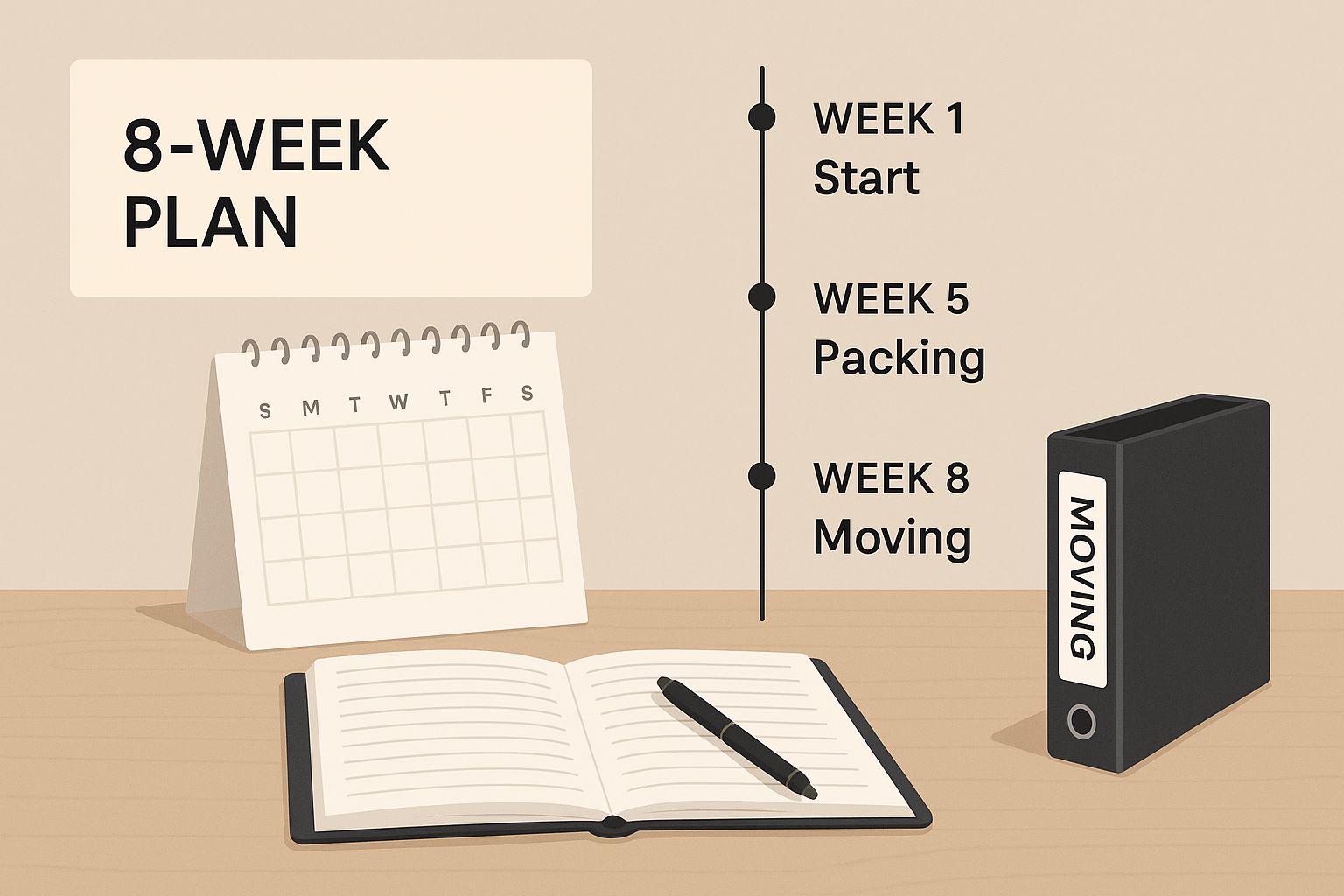
As you can see, tackling the big-ticket items like budgeting and booking movers early on prevents some major headaches down the road.
The First Crucial Steps
Before you even touch a box, create a moving binder or a dedicated digital folder. This will be your command center for quotes, receipts, checklists, and contracts. It’s a simple move that keeps you from scrambling for important papers later.
At the same time, it’s critical to map out a realistic moving budget. Think beyond just the movers—factor in packing supplies, potential storage fees, and any equipment rentals. Booking your movers early is more important now than ever. Since 2020, moving costs have shot up by 30–80%, and with nearly 29% of companies planning more price hikes in 2024, locking in your rate early can save you a significant amount of cash.
The most impactful thing you can do eight weeks out is to begin decluttering. Every item you get rid of now is one less thing to pack, move, and unpack later.
Kicking Off The Decluttering Process
This is the perfect time to launch your first wave of decluttering. Don't start with the kitchen; that's just asking for trouble. Instead, tackle the spaces you use the least, like the attic, basement, or that spare room closet that’s become a black hole for forgotten stuff.
As you go, sort everything into three piles: keep, donate/sell, and discard. Simple.
If you’re a business or a homeowner staring down a mountain of clutter—especially old electronics or bulky furniture—bringing in a professional service is a game-changer. An eco-friendly junk removal company ensures that your unwanted items are handled the right way. For instance, Fulton Junk Removal works hand-in-hand with Beyond Surplus, a circular, eco-friendly solution, to make sure items are recycled or disposed of responsibly. You can learn more about their commitment to sustainability and see how we work to keep junk out of landfills.
This initial cleanout doesn't just lighten your moving load; it sets a responsible, environmentally-conscious tone for your entire move.
Decluttering with a Sustainable Strategy
Every single item you decide not to move is a win—for your wallet, your back, and your sanity on moving day. It's best to think of decluttering not as some dreaded chore, but as the smartest cost-saving move you can make. The less stuff you have, the less you'll spend on boxes, packing tape, movers' time, and space on the truck.
The best way to start is to just pick a room. Any room. Then, sort everything into four simple piles: keep, sell, donate, and recycle. You have to be a little ruthless here. For anything you haven't touched in the last year, ask yourself honestly if it's worth the cost and effort to haul it to a new home.
Turning Clutter into a Circular Solution
Sooner or later, you'll hit the big question: what do I do with everything in the "recycle" pile? This is where most people get stuck, especially when dealing with old electronics, office equipment, or bulky metal items that can't just be tossed in the recycling bin.
This is exactly where a sustainable strategy makes all the difference. While most junk removal companies take everything to the landfill, Fulton Junk Removal works hand-in-hand with Beyond Surplus to recycle electronics, metals, and other materials responsibly. This partnership diverts items from landfills, ensuring they’re repurposed or recycled. It’s a huge relief for environmentally conscious homeowners and businesses looking for a circular, eco-friendly solution.
A huge part of prepping for movers is simply lightening the load. By focusing on responsible disposal, you don't just save money—you also contribute to a circular economy by minimizing waste and maximizing reuse.
For offices, warehouses, and property managers, this kind of integrated service is a game-changer. Fulton Junk Removal can handle the entire physical cleanout, and Beyond Surplus ensures every recyclable item is processed correctly. This bundled junk removal and recycling pickup makes compliance and sustainability reporting easier, turning a logistical headache into a smooth, eco-friendly process.
As you sort through everything, a little extra guidance can go a long way. To help you streamline the process even more, check out these additional tips for decluttering your home. Putting in the effort now will make your entire move easier and more sustainable from the very start.
Packing and Labeling Like a Professional
Good packing is your first line of defense against damaged belongings. When you’re prepping for the movers, the care you put into packing is what determines whether your stuff arrives in one piece. Let’s walk through the techniques that keep everything secure and easy to handle from start to finish.
First things first, gather the right supplies. This is about more than just a few old cardboard boxes. You’ll want to stock up on sturdy packing tape, bubble wrap, packing paper (unprinted newsprint is a great, cheap option), and good markers.
Here’s a tip from experience: use small boxes for heavy items like books. It keeps them from becoming impossibly heavy. Save the large boxes for lighter, bulky things like pillows, blankets, and linens.
A Foolproof System for Labeling
An effective labeling system is non-negotiable. Seriously. It’s the difference between a smooth move-in day and total chaos. Instead of just scribbling "Kitchen Stuff" on the box, create a system that tells movers exactly where each box goes with just a glance.
A fantastic method is color-coding. Assign a specific color to each room in your new place—say, blue for the main bedroom, green for the kitchen, and yellow for the living room. Slap a piece of colored tape on each box or use a colored marker. This simple visual cue helps movers drop boxes in the right spot without having to read a single label, which speeds up the whole unloading process dramatically.
Pro Tip: Make sure to label at least two sides and the top of every box. That way, you can always see what’s inside, no matter how the boxes are stacked in the truck or piled up in your new home.
The All-Important 'Open First' Box
Finally, put together an “Open First” box. Think of this as your moving day survival kit. It should be the very last thing loaded onto the truck and the absolute first thing you bring inside. It’s filled with everything you’ll need immediately.
So, what goes in it?
- Essential Toiletries: Toothbrushes, soap, and at least one roll of toilet paper. Trust me on that last one.
- Basic Tools: A box cutter is a must, along with a simple screwdriver and maybe an Allen wrench set if you have furniture to reassemble.
- Chargers: For your phones, laptops, and any other device you can't live without.
- Simple Kitchenware: A coffee maker, a couple of mugs, paper plates, and utensils.
Having this box ready means you won’t be digging through a mountain of cardboard just to make a cup of coffee or find a phone charger on your first night. For more insights on making your move easier, check out the other helpful articles on our moving and decluttering blog.
Nailing the Logistics on Moving Day
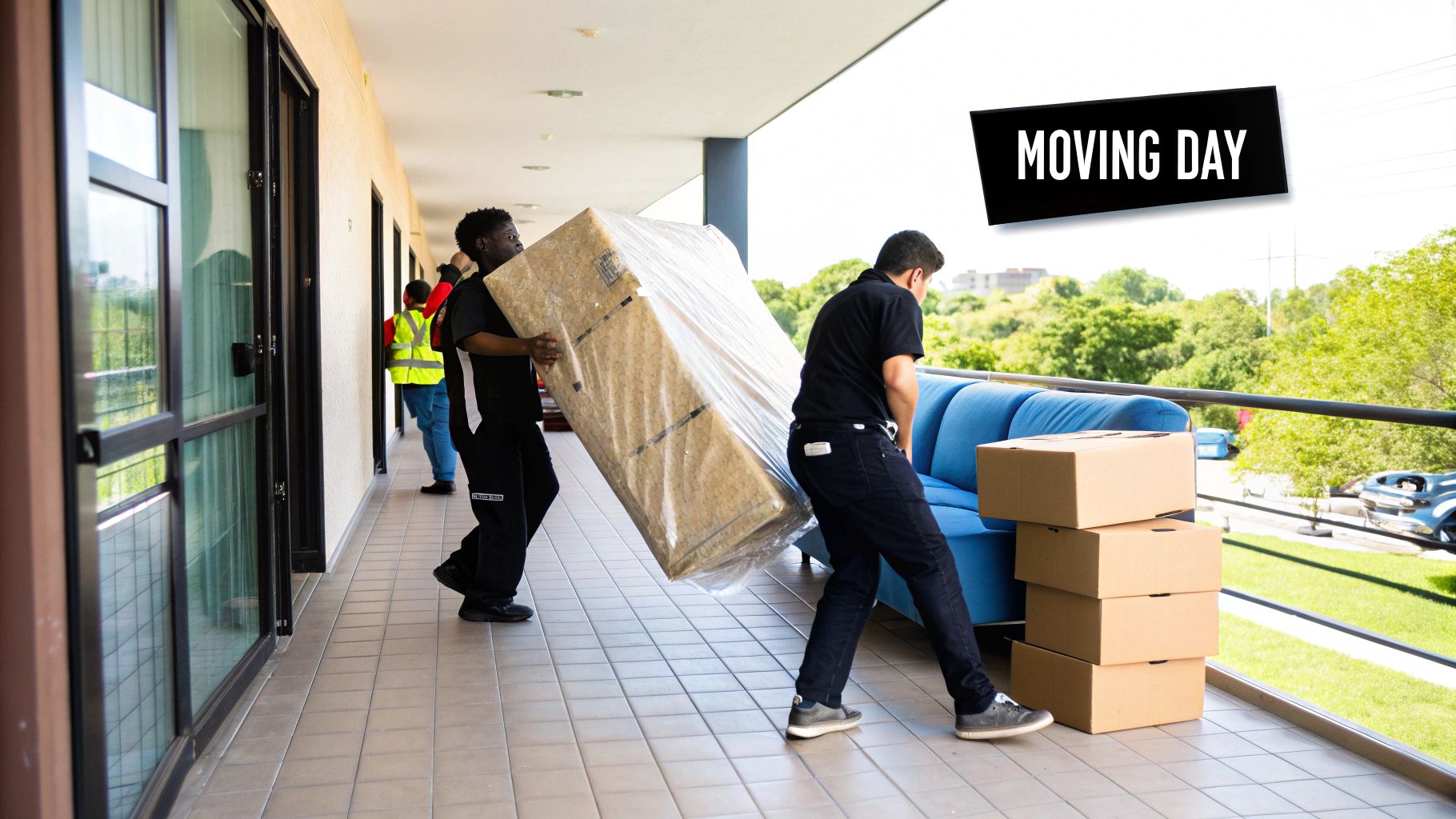
You’ve done the hard work of decluttering and packing. Now it’s time to focus on execution. Moving day is all about managing the details to sidestep chaos and make sure everything unfolds without a hitch, from the moment the movers arrive until the last box is on the truck.
First things first, call your moving company the day before the move. This is a quick but critical step. You'll want to double-check their arrival window, confirm how many crew members are coming, and get a final clarification on how payment works. Trust me, locking this down now prevents any awkward surprises when you're in the middle of everything.
Prepping Your Space for a Smooth Flow
On the morning of the move, your goal is to create a safe and efficient runway for the crew. Start by clearing pathways from every room all the way to the exit. That means rolling up rugs, getting door mats out of the way, and moving any small furniture that could become a tripping hazard.
Protecting your property is just as important. Lay down cardboard or old blankets in high-traffic areas to save your floors from scuffs and scratches. If you're managing a commercial move, this is also when you need to sync up with building management.
For businesses, the logistics get a bit more complex. Make sure you’ve covered:
- Booking Elevator Access: Reserve the service elevator for your scheduled time slot to avoid frustrating delays.
- Securing Parking: Designate a clear, close parking spot for the moving truck. The shorter the walk, the faster the move.
- Notifying Neighbors: Give other tenants a heads-up about the move to manage expectations around noise and shared spaces like hallways.
Being present and prepared on moving day is your superpower. It lets you direct the process with confidence, answer questions on the fly, and point out which boxes need a little extra care.
Finally, try to stage all your boxes near the entrance. Grouping them together makes the load-out process way faster for the crew. And if your move includes a major office cleanout, you can easily schedule a pickup for leftover furniture and old electronics. Just get in touch with Fulton Junk Removal for a free estimate to coordinate a final sweep.
Your Final 48 Hours and Post-Move Plan
The last two days before the movers show up are all about the small details that make a huge difference. Now’s the time for one last walkthrough to catch anything you might have missed. You want to make sure every last box is taped up, labeled, and ready to go.
This is also when you tackle those final, practical tasks. Make sure to defrost the freezer at least 24 hours ahead of time and get major appliances disconnected. I always recommend packing a cooler with plenty of water, snacks, and any must-have medications. It seems like a small thing, but it keeps everyone’s energy and spirits up on moving day.
A Strategy for Post-Move Success
Once the truck pulls up to your new home, your job switches from packer to director. The key to a smooth unloading process is guiding the moving crew effectively. Don't make them guess—put a simple sign on each door (Kitchen, Main Bedroom, etc.) so they know exactly where to take each color-coded box without having to ask you every five minutes.
This simple bit of prep saves a ton of time and lets you focus on a smart unpacking strategy instead of playing traffic cop.
Your goal for the first day isn't to unpack everything. It’s to reclaim a sense of normalcy by setting up the essentials. Start with the bedrooms and the kitchen to get these crucial areas functional as quickly as possible.
Just being able to make the beds and brew a pot of coffee can turn a chaotic mess of boxes into a comfortable home base. As the moving industry continues to grow—with the global market expected to hit USD 147.7 billion by 2033—this kind of careful planning is what separates a stressful move from a seamless one. You can read more about moving industry trends to see why having a solid plan is so important.
After the essentials are handled, you can work through the rest of the boxes room by room. And if you end up with leftover junk or furniture that just doesn’t fit the new space, check out the Fulton Junk Removal service areas to schedule a quick pickup and get it out of your way.
Common Questions About Preparing for Movers
Even the most buttoned-up moving plan can leave you with a few lingering questions. When you’re getting ready for the movers to arrive, the last thing you want is uncertainty. Let’s tackle some of the most common questions we hear from homeowners and businesses to make sure you feel completely confident on moving day.
Scheduling and Insurance
One of the first things people ask is, "When is the best time to move?" If you have some flexibility, aim for the off-peak season between October and April. Moving demand skyrockets from May to September, which means higher prices and tighter schedules.
Want an extra pro tip for savings? Book your move for the middle of the week and the middle of the month. Weekends and the end of the month are always the busiest times.
Another huge concern is insurance. While movers are legally required to offer basic coverage, it’s often not enough, especially if you have valuable furniture or electronics. It’s almost always worth it to opt for Full Value Protection or look into a separate third-party policy. That small investment buys you serious peace of mind knowing you’re fully covered if anything gets damaged along the way.
What Movers Will and Won't Take
It’s absolutely critical to know what your movers can't legally transport. For safety reasons, they are prohibited from handling hazardous materials. That means you’ll need to find another way to deal with items like:
- Gasoline and propane tanks
- Fireworks and ammunition
- Paint, aerosols, and cleaning supplies
- Perishable foods and plants
Before you get too far into packing, ask your moving company for their complete list of non-allowable items. This saves you from a last-minute scramble to figure out how to dispose of things they have to leave behind.
You’ll often find that the very items movers can’t take are the same things you shouldn’t just toss in the trash. This is where an eco-friendly junk removal service becomes a lifesaver, especially for businesses that need to responsibly get rid of old electronics or chemicals.
Finally, let's talk tipping. While it’s not required, tipping your movers is a standard way to show your appreciation for a tough job well done. A good rule of thumb is $4-$5 per hour for each mover. On a typical eight-hour day, that works out to about $40 per person, which you can hand directly to them after the truck is unloaded.
Once the move is over, you might be looking at a pile of leftover junk, old furniture, or boxes of stuff that just won’t fit in the new place. Fulton Junk Removal offers a seamless, eco-conscious solution. We partner with Beyond Surplus to make sure your unwanted items—from office electronics to household clutter—are recycled or disposed of responsibly, not just dumped in a landfill. Clear out the post-move clutter and start fresh by scheduling your free estimate with Fulton Junk Removal.
