
The Real Price of Cardboard Recycling for Business
Let's be honest, the price of cardboard recycling isn't some fixed number you can just look up. It’s a moving target, shaped by how much cardboard your business generates, how clean it is, and what the market is willing to pay for it at any given moment. Most companies see this cost show up as a per-ton charge, a per-pickup fee, or a flat monthly rate. Getting a handle on these models is the first real step toward managing your waste budget and hitting those sustainability targets.
Your Guide to Commercial Cardboard Recycling Prices
Let’s cut through the confusion. For offices, warehouses, and property managers, the "price" of recycling is less of a simple tag and more of a calculation. Unlike trash hauling where the goal is just to make it disappear, recycling is all about turning your waste into a valuable commodity. This means the service fee is directly tied to your cardboard's actual market worth.
A lot of businesses are surprised when they find out they have to pay for recycling, especially since cardboard has value. But that fee covers the real-world logistics: the trucks, the fuel, the drivers, and the facility staff who sort and process everything. The money made from selling the baled cardboard helps offset those expenses, but your final bill is the balancing act between the recycler's operational costs and the commodity's value. This is exactly why a smart strategy is so important for your bottom line.
Key Factors Influencing Your Cost
Three main things really drive the price you'll pay. If you can get these right, you can seriously optimize your costs.
- Volume: This is the big one. The sheer amount of cardboard you produce matters most. Higher, more consistent volumes make your material much more attractive to recyclers.
- Quality: Clean, dry cardboard is king. Anything contaminated with food waste, plastic wrap, or styrofoam is a problem. Good quality material gets a better price and means lower processing fees for you.
- Market Demand: The value of recycled cardboard swings with local and global demand. It's a commodity, just like lumber or steel, and its price changes, directly impacting your service costs.
This is where all three of those factors come together to determine your final price.
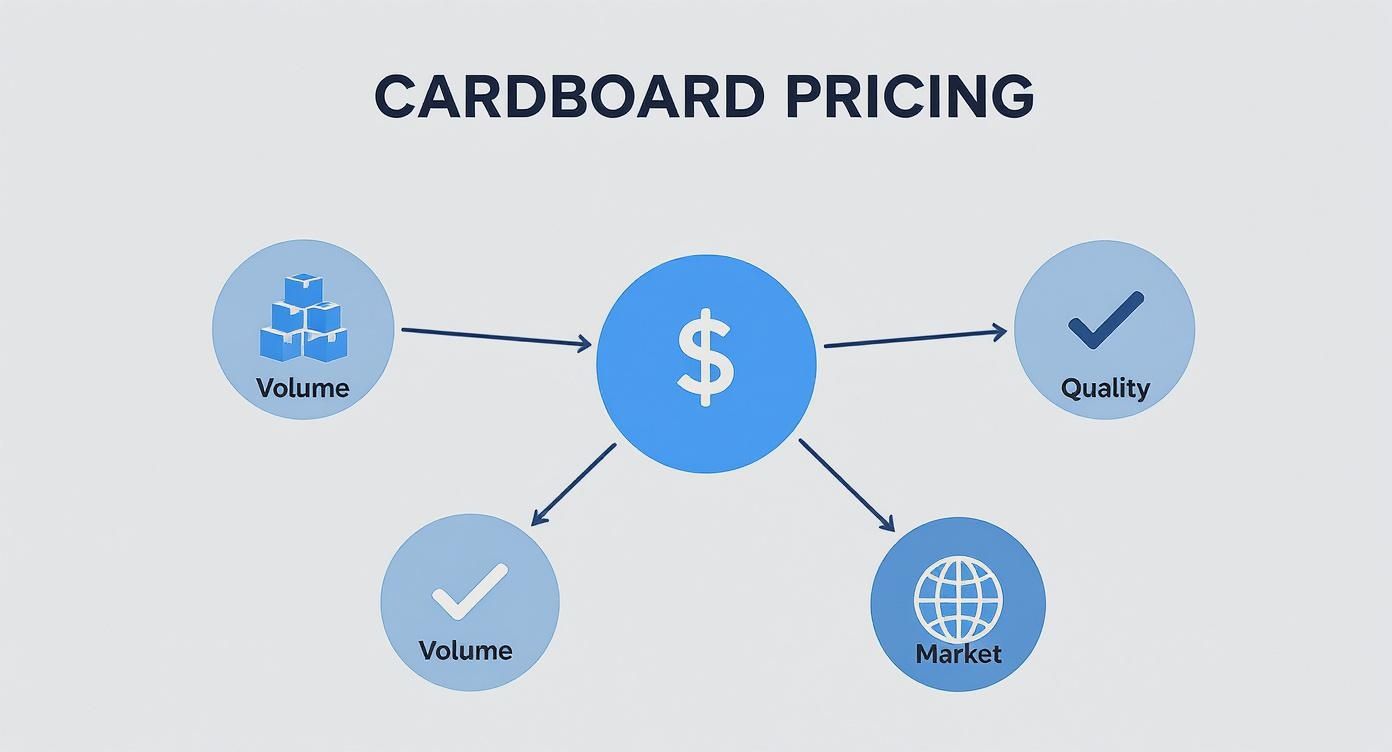
As the graphic shows, a business that can produce a high volume of clean cardboard when the market is strong is going to get the absolute best pricing. Simple as that.
To help you understand how you might be billed, here's a quick breakdown of the common pricing models you'll encounter.
Quick Guide to Cardboard Recycling Pricing Models
This table summarizes the common billing structures for commercial cardboard recycling, helping you identify which model best fits your business needs.
| Pricing Model | Best For | Key Cost Factors |
|---|---|---|
| Per Ton | Businesses with high, consistent volumes (e.g., distribution centers, large retailers) that can fill a large container or trailer quickly. | Commodity market price, material quality (cleanliness), and transportation distance to the recycling facility. |
| Per Pickup | Businesses with fluctuating or lower volumes (e.g., offices, small retail shops) that need regular but not massive pickups. | Container size, frequency of service, and ease of access for the collection truck. |
| Flat Monthly Fee | Companies that want predictable, budget-friendly pricing and have a relatively stable amount of cardboard each month. | A bundled rate based on your estimated volume, container rental, and scheduled pickup frequency. |
Choosing the right model depends entirely on your operations, so it pays to know your options before signing a contract.
Integrated Solutions for Predictable Pricing
Trying to manage all these moving parts can feel overwhelming. That’s why an integrated waste management partner makes such a difference. While most junk removal companies take everything to the landfill, we recycle through Beyond Surplus to minimize waste and maximize reuse. Fulton Junk Removal, operating under Beyond Surplus, provides a complete circular, eco-friendly solution that goes beyond traditional junk hauling.
We offer bundled junk removal + recycling pickup, where all electronic waste and recyclable materials are directly processed by Beyond Surplus. This not only streamlines your operations but also makes sustainability compliance and reporting significantly easier.
This approach gives you clear, predictable pricing while guaranteeing your materials are kept out of the landfill. By combining all your disposal needs under one roof, you gain much better control over both your budget and your environmental footprint.
Take a look at our full range of commercial services to see how an integrated strategy can work for your facility.
Why Cardboard Prices Fluctuate Like a Commodity
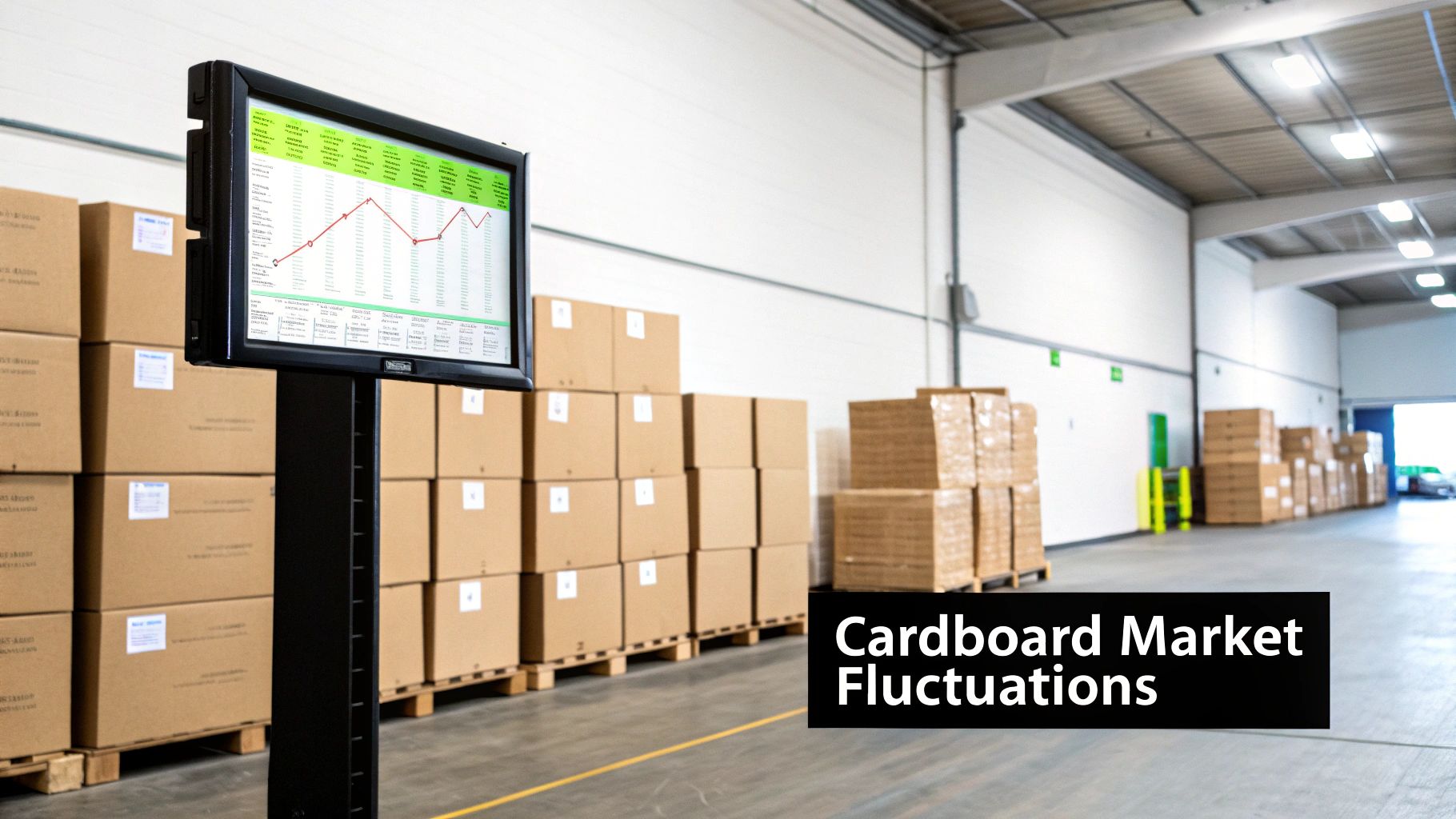
Ever look at your cardboard recycling bill and wonder why the cost changed out of the blue? It's a common headache for property managers and warehouse operators alike. The reason isn't random—it's because used cardboard, known in the industry as Old Corrugated Containers (OCC), is a global commodity.
Think of it just like oil, grain, or steel. Its value isn't set in stone; it’s constantly shifting based on the classic forces of supply and demand. This means the price of cardboard recycling services is directly tied to a complex international market that most businesses never see.
When global manufacturing is booming, factories need more raw materials—including recycled paper pulp—to create new products. This high demand drives up the value of your baled cardboard, which can actually help lower your overall service costs.
The E-commerce and Manufacturing Effect
The explosion of e-commerce is a perfect, real-world example of this. As online shopping continues to surge, so does the demand for shipping boxes. This creates a massive need for recycled cardboard, putting upward pressure on its market value. Simply put, more boxes being shipped means more raw material is needed to produce them.
On the flip side, a slowdown in global manufacturing has the opposite effect. If fewer goods are being produced, the demand for recycled pulp drops. This leads to an oversupply of used cardboard, causing its commodity price to fall. When the material itself is worth less to processors, your recycling service fees often go up to compensate.
The global cardboard market is a dynamic arena where prices can shift dramatically. In the United States, for instance, cardboard prices hit USD 555.57 per metric ton in the second quarter of 2025, pushed by a combination of surging e-commerce demand, rising raw material costs, and new import tariffs.
This constant movement is exactly why static, predictable pricing is so rare in the world of commercial recycling.
Regional and International Factors
Beyond simple supply and demand, other forces are always at play. International trade policies, like new import restrictions or tariffs, can instantly disrupt the flow of materials and send market prices swinging. A country that was once a major buyer of U.S. recycled cardboard might suddenly change its policies, creating a surplus here at home overnight.
Local factors matter, too. Regions with more advanced sorting and processing facilities can often handle materials more efficiently, which can influence pricing in that area. Transportation costs are another huge variable; the farther your facility is from the processing plant, the more it will impact the final cost you pay.
Understanding these market forces helps explain why your recycling bill isn't always predictable. It also shows why working with a knowledgeable waste management partner is so important. By staying informed, you can better anticipate and manage your operational expenses.
Three Factors That Directly Impact Your Recycling Bill
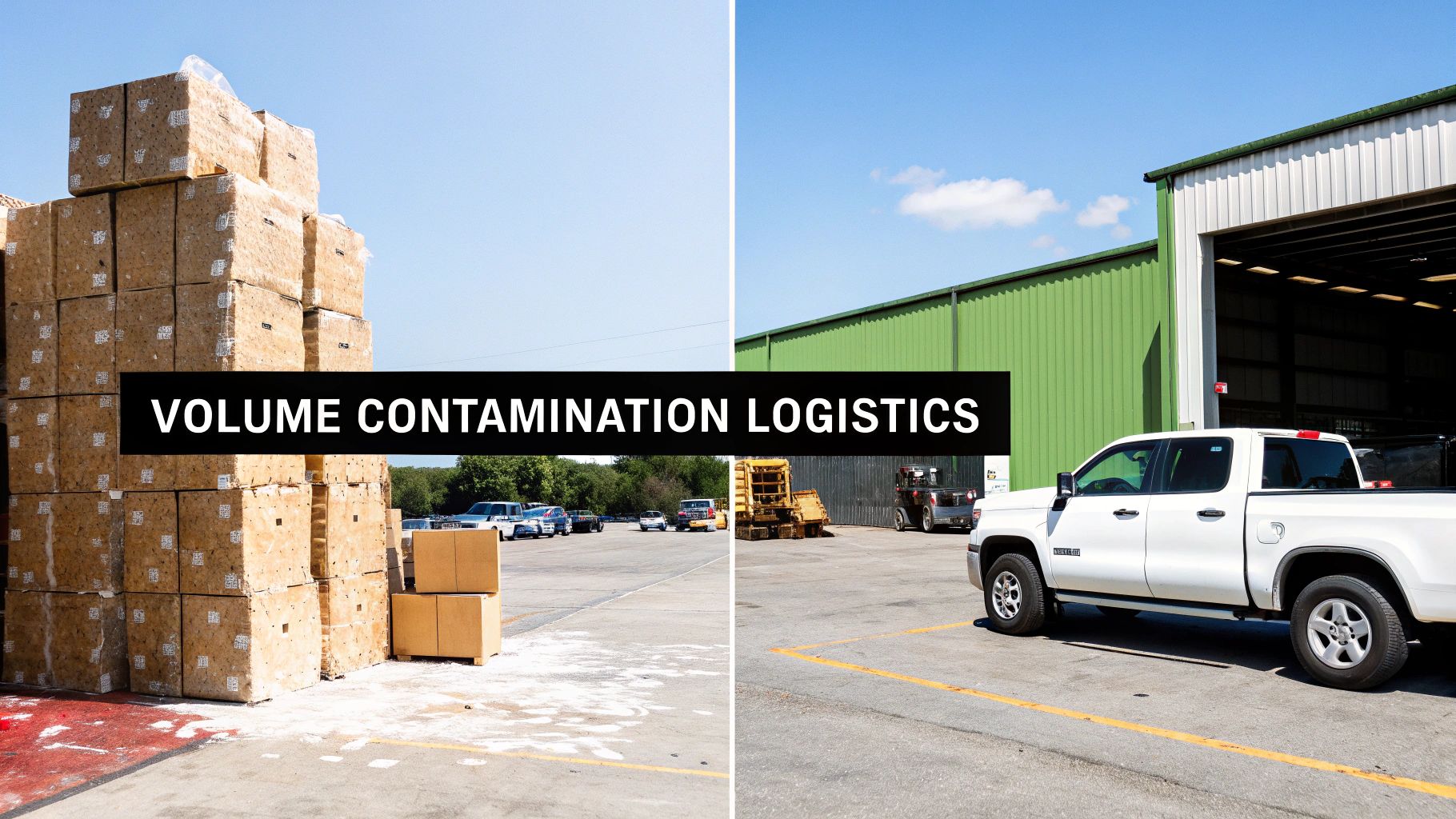
While the global markets set the baseline price for cardboard, what your business actually pays comes down to three things happening right on your property. Getting a handle on volume, contamination, and logistics is the key to finally taking control of your waste management costs.
Think of it this way: the easier you make it for a recycler to grab a large, clean load of cardboard, the less they're going to charge you. Let's break down exactly how each piece of this puzzle affects your bottom line.
Volume and Density
It all starts with how much cardboard you’re generating. Recyclers live and breathe economies of scale, which means bigger, more predictable loads are always more valuable to them. A distribution center churning out tons of cardboard every week will have much more leverage than a small office with just a few boxes.
But it’s not just about the sheer amount—it's about density. A dumpster full of loose, unflattened boxes is mostly just air. That's a huge waste of space and incredibly inefficient to haul away.
A baler is the game-changer here. By compacting your cardboard into tight, uniform blocks, you can pack way more material into every single pickup. That efficiency boost often leads directly to better rates, since your hauler can collect more weight in fewer trips with less work.
Basically, investing in a baler can seriously lower the price of cardboard recycling by making every collection count.
Contamination Levels
Contamination is the silent killer of recycling budgets. It’s like doing laundry—you wouldn't throw a muddy work shirt in with your whites. In the same way, one greasy pizza box or a bunch of plastic wrap mixed in with clean cardboard can ruin an entire bale.
When a recycling facility gets a contaminated load, they have to pay people to sort out the junk. Sometimes, the whole batch is so spoiled it has to be rerouted to a landfill, completely defeating the purpose. Those extra costs get passed right back to you in the form of higher fees.
Keep an eye out for these common contaminants that drive up your bill:
- Food and grease: Pizza boxes are the classic culprit, but any food-soiled or wet cardboard is a problem.
- Plastic packaging: This includes shrink wrap, bubble wrap, packing peanuts, and plastic bags.
- Styrofoam and wax coatings: These materials can't be processed with regular cardboard fiber.
Keeping your cardboard stream clean is probably the single most powerful thing you can do to get the best possible price.
Logistics and Accessibility
Finally, the simple, practical details of how your cardboard gets picked up play a massive role in what you pay. The easier it is for a truck to get to your container and get the job done, the lower the hauler’s operational costs are—and the lower your bill will be.
Ask yourself these questions about your setup:
- Pickup Frequency: Are you paying for weekly pickups when your volume only justifies a bi-weekly schedule? Those extra trips add up fast.
- Site Accessibility: Is your dumpster tucked away in a tight corner that’s a pain for drivers to navigate? Extra time and tricky maneuvering can cost you.
- Equipment: Are you renting a container or a baler? Those rental fees are baked into your total cost.
At Fulton Junk Removal, we specialize in building smart, eco-friendly waste plans that solve these exact problems. We work hand-in-hand with Beyond Surplus to recycle electronics, metals, and other materials responsibly. This partnership diverts items from landfills, ensuring they’re repurposed or recycled—a system that appeals to environmentally conscious businesses. To see how we put this commitment into practice, check out our story about Fulton Junk Removal. Our unique model ensures your materials are managed the right way, helping you hit both your financial and sustainability targets.
Actionable Strategies to Lower Your Recycling Costs
Knowing what drives your recycling bill is half the battle; actually lowering it is where the real work begins. For warehouses, offices, and property managers, cutting the price of cardboard recycling boils down to a few smart moves that boost both your efficiency and the quality of your materials. These practical steps can start saving you money right away while sharpening your company's green credentials.
One of the most powerful things you can do is make your cardboard denser. Investing in a baler is a game-changer. It takes loose, bulky boxes and crushes them into tight, easy-to-stack cubes. This dramatically increases the weight you can fit into a single pickup, which means fewer trips for your hauler. It's like turning ten small, expensive shipments into one big, cost-effective load—the savings on fuel and labor add up fast.
Implement a Clear Internal Sorting System
The next big win comes from tackling contamination. A simple, well-communicated sorting program inside your facility can work wonders. The whole point is to keep anything that isn't cardboard—like plastic wrap, food waste, or styrofoam—out of your recycling stream.
Here are a few tactics that really work:
- Clear Signage: Use pictures and simple language at every collection point. Show people exactly what goes in the cardboard bin and what doesn't.
- Dedicated Bins: Put clearly labeled trash cans and other recycling bins right next to your cardboard containers. Convenience is key.
- Staff Training: Just a quick walkthrough with your team can make a huge difference in sorting accuracy. It prevents those costly mistakes that can ruin an entire bale.
Optimize Your Pickup Schedule and Service Agreement
Finally, take a hard look at your pickup logistics. Are you paying for a truck to show up and haul away a half-empty dumpster? That’s just throwing money away. Work with your hauler to match your service schedule to your actual needs, so you’re only paying for full loads. When you review your service agreement, push for flexibility so you can easily adjust how often they come as your business ebbs and flows.
Modern recycling centers are getting smarter, using AI-powered optical sorters and advanced automation to improve recovery rates and produce cleaner bales. This technology makes high-quality, uncontaminated cardboard even more valuable. Essentially, the investments facilities make in technology directly impact the prices they can get for their materials—and what they're willing to pay for yours.
This leap in technology means the clean, well-sorted cardboard from your facility is more valuable than ever. To dig deeper into streamlining your operations, check out this excellent a guide to reducing packaging waste for e-commerce.
At Fulton Junk Removal, we don't just haul; we help businesses put these strategies into practice. Through our partnership with Beyond Surplus, we can bundle your junk removal and recycling services, ensuring every material is handled responsibly and efficiently. If you’re ready to build a smarter, more affordable waste management plan, contact our team today for a free estimate.
A Smarter Approach to Commercial Waste Management
Let’s be honest, managing waste for most businesses is a pain. You’ve got one company for junk removal, another for trash, and maybe a third for recycling. Each has its own schedule, its own bill, and its own rules. The real problem? With this piecemeal approach, recycling often gets pushed to the side, and a shocking amount of valuable material ends up buried in a landfill.
This old, broken system just creates headaches for office and property managers and leaves sustainability goals gathering dust. It’s time for a more integrated, circular approach that pulls all your waste streams into one cohesive strategy.
The Fulton Junk Removal and Beyond Surplus Advantage
This is where Fulton Junk Removal offers a fundamentally different solution. Focused on commercial services, we operate under Beyond Surplus to deliver a circular, eco-friendly system that goes way beyond typical junk hauling. While most junk removal companies take everything to the landfill, we recycle through Beyond Surplus to minimize waste and maximize reuse.
This partnership gives our commercial clients a serious advantage. Instead of just loading up a truck and heading to the dump, we actively divert materials from the waste stream.
- Junk Removal Handled: Fulton’s team efficiently clears out old furniture, equipment, and general debris from offices, warehouses, and retail spaces.
- Responsible Recycling Guaranteed: Beyond Surplus then takes over, processing all your cardboard, electronics, and scrap metals responsibly.
- Landfill Diversion: Our core mission is to minimize landfill waste. We turn what others see as trash into a valuable resource.
This two-part system ensures that nothing is wasted. It’s simply a smarter, more sustainable way to manage your facility's output.
Streamlined Operations for Modern Businesses
For property managers, office managers, and warehouse supervisors, the benefits are immediate. Juggling multiple vendors is a logistical nightmare. Our bundled junk removal and recycling pickup services consolidate everything into one reliable point of contact.
For offices, warehouses, and property managers: Fulton handles junk removal, and Beyond Surplus ensures responsible recycling, making compliance and sustainability reporting easier.
This streamlined model gives you peace of mind, knowing your company’s waste is handled responsibly—not just hauled to the nearest dump. This operational efficiency is especially critical in the Atlanta metro area and surrounding cities, where businesses are more focused on sustainable practices than ever before. If you operate in this region, see how our local expertise can benefit you by checking out our commercial service areas.
Our entire approach is built on a solid economic foundation. The broader cardboard market was valued at USD 430.23 billion in 2024 and is projected to grow substantially. This massive market is the economic engine that makes recycling possible. Our model plugs your waste directly into this value chain, ensuring it contributes to the circular economy instead of a landfill.
Common Questions About Cardboard Recycling Prices
Digging into commercial recycling can feel a bit overwhelming, especially when it comes to pricing. The models and market forces aren't always crystal clear. To help cut through the confusion, we’ve put together answers to the most common questions we hear from offices, warehouses, and property managers about the price of cardboard recycling.
Think of this as your practical guide to making smarter waste management decisions. Once you get these key details down, you'll be in a much better position to control your costs and boost your company's sustainability efforts.
Can My Business Get Paid for Cardboard?
Yes, but there's a catch. Cardboard is a valuable commodity, but getting a direct payment—what the industry calls a rebate—usually requires a massive and consistent volume of clean, baled material. We're talking about huge distribution centers or manufacturing plants that can fill an entire semi-trailer with compacted cardboard every single week.
For most small and medium-sized businesses, the value of your cardboard is instead used to offset the hauler's costs for pickup and transport. So while you probably won't get a check in the mail, providing high-quality, easy-to-handle cardboard can definitely lower your service fees.
Is It Cheaper to Landfill Cardboard Than Recycle It?
At first glance, tossing everything into one big dumpster headed for the landfill might seem like the cheaper route. In reality, it's often a short-sighted financial move. Landfill tipping fees are always on the rise, and paying to haul a dumpster filled with unflattened cardboard boxes—which are mostly just air—is a huge waste of money. You're literally paying to haul away empty space.
A smart recycling program shrinks the amount of waste you send to the landfill, which directly leads to:
- Lower landfill disposal fees.
- Needing fewer or smaller trash dumpsters.
- Fewer trash pickups, which cuts down on hauling costs.
When you look at the long game, recycling is almost always the more cost-effective and environmentally sound choice.
How Can I Get the Best Price for My Cardboard Recycling?
Getting the best price really boils down to one thing: making your cardboard as valuable and easy to handle as possible for the recycler. The cleaner and denser your material, the better your rate will be. Focus on two key things: keep it clean by keeping food waste and plastics out, and if you have the volume, invest in a baler to compact your cardboard.
A bundled service approach is another great way to unlock better pricing. When one provider handles all your waste streams—junk removal, recycling, and regular trash—they can build a much more efficient and cost-effective plan just for you. It simplifies who you have to call and often leads to savings based on volume.
That's exactly what we specialize in at Fulton Junk Removal, in partnership with Beyond Surplus. We provide complete junk removal services while making sure all your recyclables, from cardboard to old computers, are processed the right way. This circular approach not only cuts your costs but also gives you the diversion reporting you need for sustainability compliance. It’s the whole package for businesses that care about their budget and their environmental footprint.
Ready to turn your waste management from a nagging cost into a streamlined, sustainable part of your operation? Fulton Junk Removal offers a complete solution, blending efficient junk removal with responsible, documented recycling through Beyond Surplus. Contact us today for a free, transparent estimate!
