
How to Pack for Moving Out a Stress-Free and Efficient Guide
Here’s a simple truth I’ve learned after seeing countless moves: the best ones always start by moving less stuff. The real secret to a smooth, low-stress relocation isn’t how well you pack, but how well you get rid of things first. Deciding what to keep, sell, donate, or junk before a single box gets taped shut is the game-changer. It transforms the entire process from chaos to control.
The Secret to a Successful Move Starts Before You Pack
The biggest mistake I see people make is wildly underestimating just how much stuff they actually own. What looks perfectly organized in closets, drawers, and the garage quickly becomes a mountain of boxes you have no energy to deal with.
This is why a successful move isn't about packing skills; it’s about a strategic cleanout that you start weeks in advance. By sorting through everything you have, you can slash the volume of items you need to haul to your new home.
This proactive approach completely shifts the dynamic. Instead of paying movers to transport clutter from one house to another, you’re curating a fresh start. It’s the perfect opportunity to shed items that no longer serve you, which makes unpacking a breeze and helps your new place feel intentional from day one. To keep yourself on track, an ultimate moving house packing checklist can be an invaluable guide.
Why Junk Removal Is Your First Step, Not Your Last
For many people, a good decluttering session just creates a new problem: a giant junk pile sitting in the driveway. This is where professional, eco-friendly junk removal becomes a foundational part of your moving plan.
Don't save it for the last minute. Scheduling a pickup early on eliminates the stress of figuring out what to do with that broken dresser, the old tube TV, and all the other random debris you’ve accumulated.
For homeowners, offices, and property managers, a planned cleanout isn't just about convenience—it's about responsible disposal. Moving is the perfect time to ensure your waste is handled correctly.
This is especially true if you care about where your stuff ends up. While most junk removal companies take everything to the landfill, Fulton Junk Removal operates under Beyond Surplus, a circular, eco-friendly solution that goes beyond traditional junk hauling.
When you work with a service like Fulton Junk Removal, your items are managed responsibly. We work hand-in-hand with Beyond Surplus to recycle electronics, metals, and other materials responsibly. You can learn more about our commitment to sustainability at https://fultonjunkremoval.com/about-fulton-junk-removal/. This model helps businesses meet compliance goals and makes sustainability reporting easier, turning a simple move-out into a genuinely green initiative.
Your Two-Month Moving Countdown
A smooth, low-stress move is no accident—it's the direct result of a solid plan. Trying to cram everything into the last week is a recipe for disaster. The secret is to break the whole process down into a manageable, week-by-week timeline. When you give yourself a two-month runway, you have plenty of time to tackle each stage without that dreaded last-minute panic.
This approach turns a monumental task into a series of small, achievable wins. You'll start with the big-picture logistics and decisions, then gradually shift to more hands-on tasks like sorting, decluttering, and finally, packing.
This graphic really nails the workflow. It's all about decluttering first, then sorting, then packing.
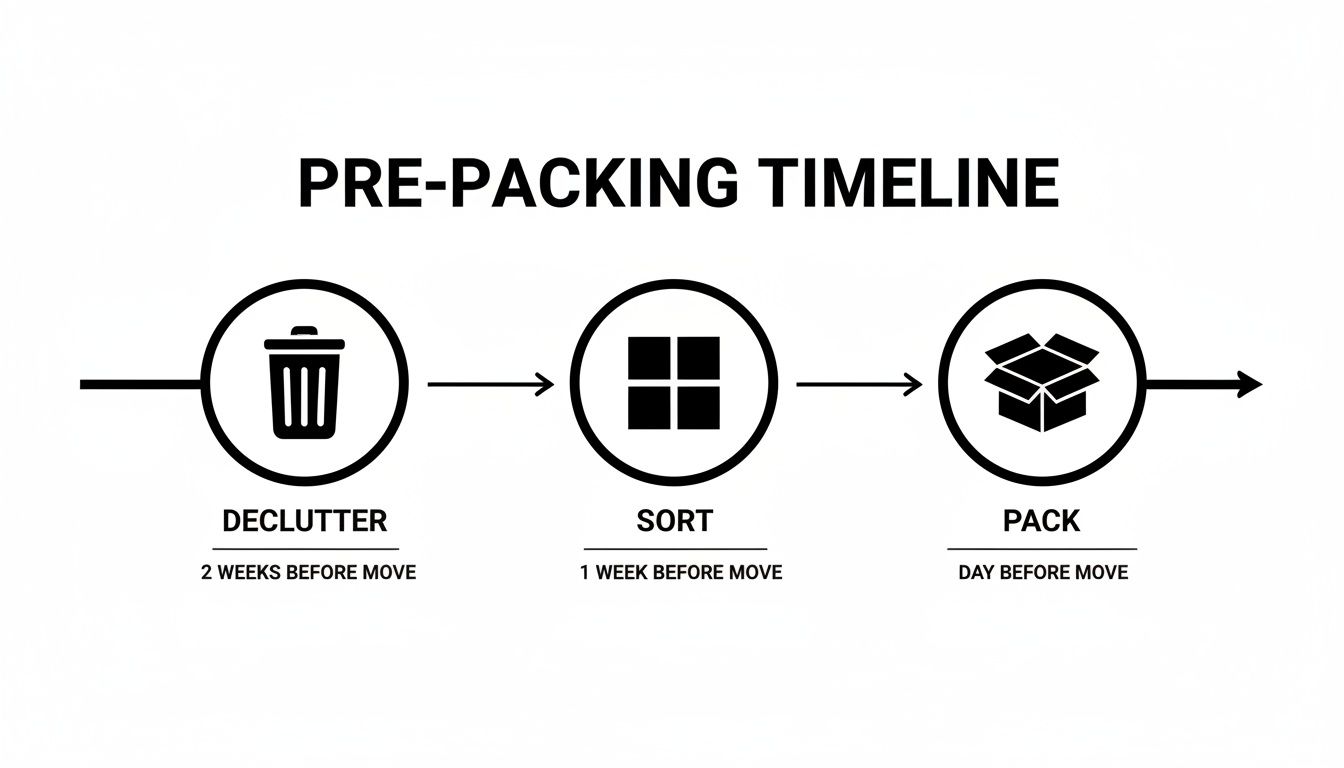
Get rid of what you don't need before you start packing. Trust me, it simplifies every single step that comes after.
To help you stay on track, I've put together a simple countdown checklist. Think of it as your roadmap to a sane and organized move.
Two-Month Moving Countdown Checklist
| Timeframe | Key Tasks | Pro Tip |
|---|---|---|
| 8 Weeks Out | Get moving quotes, create a budget, and schedule a junk removal consultation. | For office moves, book a bundled junk removal and e-waste recycling service now. It streamlines compliance and responsible disposal. |
| 6 Weeks Out | Start decluttering low-traffic areas: attics, basements, guest rooms. | Sort into "Keep," "Donate," "Sell," and "Junk" piles. Schedule your junk pickup for the end of this phase to clear out the clutter. |
| 4 Weeks Out | Gather packing supplies (boxes, tape, markers). Start packing non-essentials. | Begin with items from the spaces you just decluttered, like holiday decorations or out-of-season clothes. Label every box clearly. |
| 2-3 Weeks Out | Pack most of your belongings, room by room. Confirm details with movers. | Designate a "Do Not Pack" zone for essentials you'll need up until the last day. This includes toiletries, meds, and important papers. |
| 1 Week Out | Pack an "essentials box" for your first night. Defrost the fridge. | The essentials box should contain everything you'll need immediately: chargers, snacks, a change of clothes, and basic tools. |
| Moving Day | Supervise movers, do a final walkthrough, and clean the empty space. | Take photos of the empty, clean property before you hand over the keys. It’s great for your records and getting your deposit back. |
This timeline isn't just about packing boxes; it's about making smart decisions early on so you're not overwhelmed when moving day arrives.
Eight Weeks Out: The Planning Phase
With two full months to go, your job is to lay the groundwork. This is the time for research and booking—not for taping up boxes. One of the biggest mistakes people make is rushing this part, which almost always leads to higher costs and logistical nightmares down the road.
Here’s your initial to-do list:
- Get Moving Quotes: Don't just go with the first company you find. Get estimates from at least three different movers to compare their prices and services.
- Create a Moving Budget: Write down every potential expense you can think of. Movers, packing supplies, cleaning services, pizza for your helpers—get it all on paper.
- Schedule a Junk Removal Consultation: This is the perfect time to get your decluttering strategy in place. By scheduling a pickup for old furniture, broken electronics, and other junk now, you ensure you won't be paying to move things you don't even want.
Six Weeks Out: The Sorting and Purging Phase
Alright, six weeks to go. Now the focus shifts from planning to doing. It's time to get your hands dirty and start sorting through everything you own, deciding what to keep, donate, sell, or toss. The best way to start is in the rooms you use the least.
I always recommend tackling these spaces first:
- Attics, basements, and garages
- Guest bedrooms and spare closets
- Any off-site storage units
This is where you’ll have that "wow, I have a lot of stuff" moment. Having a junk removal service scheduled is a game-changer here, as it clears out the clutter and gives you the mental and physical space to organize what’s left. If you're not sure how to handle bulky or tricky items, just reach out to us for a free junk removal estimate.
Four Weeks Out: The Packing Kickoff
You’ve hit the one-month mark—it's officially time to start packing. The good news? Because you already decluttered, this part is going to be so much easier. First thing's first: gather your supplies. You'll need boxes in a few different sizes, quality packing tape, markers, bubble wrap, and packing paper.
Start with the non-essential items you decided to keep from those storage areas you just cleared out. We're talking about things like out-of-season clothing, specialty kitchen gadgets you rarely use, and holiday decorations.
As you pack, label each box with its contents and, most importantly, which room it belongs to in the new place. This methodical approach keeps you from living in a chaotic maze of boxes and ensures you can still find your coffee maker the morning of the move.
Declutter to Reduce Costs and Reclaim Space
Before you even think about grabbing a roll of tape or a single box, the most important step in packing for a move is getting rid of stuff. Seriously. This isn’t just about tidying up; it's a strategic move that saves you time, money, and a whole lot of stress.
By deciding what you don’t need anymore, you shrink the mountain of things you have to pack, haul, and unpack. It’s a financial and logistical game-changer. Most people are genuinely shocked by how much they own once they start emptying closets and digging through the garage.
It's a common blind spot. Surveys show that 40-50% of us overestimate our available space while underestimating how much stuff we actually have. This miscalculation is why up to 30% of household items get tossed or donated in a last-minute panic during the move.
The pros know better. They start by sorting everything into simple categories: keep, donate, sell, and junk. Taking the time to do this can slash your moving load by 25-35%, which means a smaller truck, fewer hours, and lower costs. You can dig into more moving industry trends over at consumeraffairs.com.
Adopt the One-Year Rule
Here’s a simple but brutally effective trick: the "one-year rule." As you pick up each item, ask yourself, "Have I used this in the past year?" If the answer is no, it’s a prime candidate to go.
This little rule forces you to be objective and takes the emotion out of it. It’s so easy to hang onto things "just in case," but that's how clutter takes over your life. Apply this to clothes, kitchen gadgets you thought you'd use, and old hobby supplies. You'll be amazed at how much space you free up.
Tackle Clutter Hotspots Room by Room
Don't try to declutter the whole house at once—that’s a one-way ticket to feeling overwhelmed. Instead, focus your energy on one area at a time. Start with the clutter magnets to build momentum and see the biggest results first.
Here’s how to hit those common hotspots:
- Overflowing Closets: Dump everything out. If it doesn’t fit, is wildly out of style, or hasn’t seen the light of day in a year, it's out. Be ruthless.
- Packed Garages and Basements: These spots are notorious dumping grounds for broken appliances, forgotten furniture, and half-finished projects. Sort things into clear categories like tools, seasonal decor, and pure junk.
- Kitchen Cabinets and Pantries: Go through and check for expired food, gadgets you never use (we're looking at you, bread maker), and duplicate utensils.
Decluttering isn't just about trashing things. It's about being intentional. This is your first real chance to shape your new home into a space that feels fresh, organized, and truly yours from day one.
From Clutter to Action: What to Do with Your Unwanted Items
Okay, so you've sorted everything. The "keep" pile is handled, but what about the rest? You’ve got a few great options for everything you’re letting go of.
- Organize a Yard Sale: The classic way to turn your unwanted-but-still-good stuff into a little extra moving cash.
- Donate Useful Goods: Give your gently used clothes, books, and household items a second life at a local charity.
- Sell Online: For furniture, electronics, or other higher-value items, platforms like Facebook Marketplace or OfferUp are perfect.
But for all the other stuff—the broken dresser, the ancient electronics, and all the random debris—an eco-friendly junk removal service is your best friend.
The Smart Solution for Junk: An Eco-Friendly Approach
This is where a service like Fulton Junk Removal makes a real difference, especially if you care about where your stuff ends up. While most junk removal companies take everything to the landfill, we recycle through Beyond Surplus to minimize waste and maximize reuse.
It's a circular, eco-friendly model that diverts items from landfills and ensures they’re repurposed or recycled. We can even schedule a bundled junk removal + recycling pickup, where all electronic waste and recyclable materials are directly processed by Beyond Surplus. Check our Atlanta-area service map to see if this is available for your move.
This approach is a huge win for offices, warehouses, and property managers. When Fulton Junk Removal handles the junk removal, Beyond Surplus ensures responsible recycling, making compliance and sustainability reporting easier. It turns a standard move-out into a verifiable green initiative.
A Practical Room-by-Room Packing Strategy
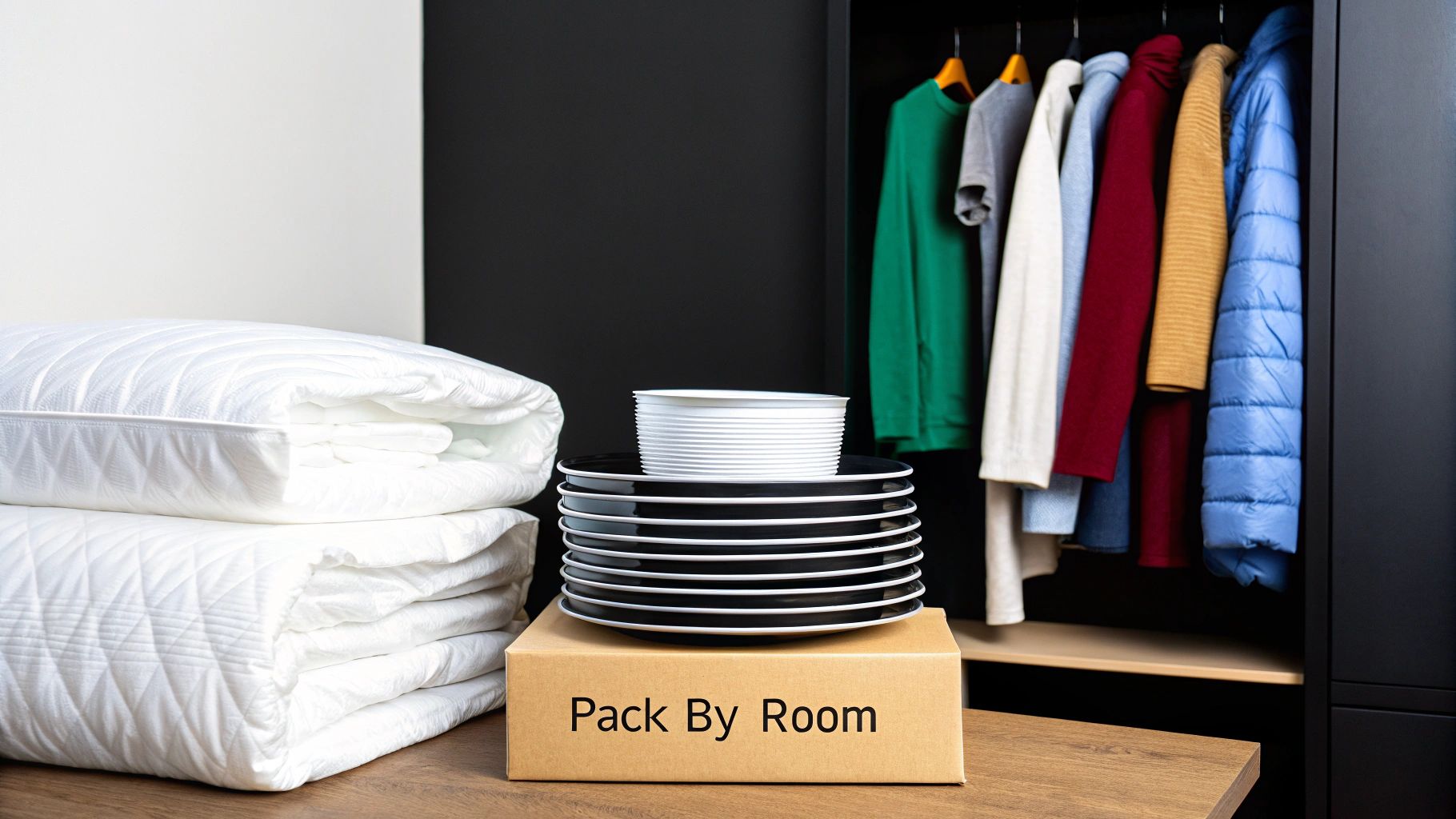
You’ve done the hard work of decluttering, and now you’re left with only the things you actually want to move. The mission has changed from purging to protecting. A smart room-by-room packing plan is more than just stuffing boxes—it's about making sure everything arrives in one piece and that unpacking on the other side is a logical, stress-free process.
A methodical approach is your best defense against chaos. Every year, 41 million people move, yet a shocking 70% of regrets come from poor organization. More than half of all movers say they've opened boxes out-of-order because of vague labels. Our clients at Fulton Junk Removal—homeowners, businesses, and event coordinators—often find that pre-move cleanouts that cut their hauling needs by 40% make this packing stage far less daunting. You can find more stats on the moving industry at movebuddha.com.
Let's walk through how to tackle each major part of your home with techniques that work in the real world.
Conquering the Kitchen
Let’s be honest: the kitchen is usually the biggest headache. It’s packed with fragile, heavy, and weirdly shaped items. My advice? Start here. It requires the most time and attention to detail, so getting it done first is a huge win.
Begin with the things you barely use—that specialty bundt pan, the fine china from your wedding, or the juicer you can live without for a few weeks. Save your daily essentials like the coffee maker, a couple of plates, and a set of silverware for last. Pack these into a box clearly marked "OPEN FIRST."
Here are some tried-and-true tricks for kitchen items:
- Plates and Bowls: Whatever you do, don't stack them flat. Wrap each one in packing paper and stand them on their side (vertically) in a small, sturdy box. This drastically reduces the chances of them cracking under pressure.
- Glasses and Mugs: Stuff the inside of each one with crumpled paper before you wrap the outside. Use boxes with cardboard dividers if you have them; they’re worth their weight in gold for keeping glassware safe.
- Pots and Pans: These are your secret weapons. Nest smaller pots inside bigger ones, using kitchen towels or packing paper between them to stop scratches. You can also stuff them with smaller things like spice jars or utensils to save a ton of space.
Packing the Bedroom and Closets
The bedroom is mostly about fabrics and personal belongings. It might seem easier than the kitchen, but a little strategy here will save you hours of work when you’re trying to settle in.
Wardrobe boxes are a lifesaver. They’re tall boxes with a metal bar across the top, letting you move clothes straight from your closet on their hangers. No folding, and more importantly, no ironing later. For clothes in drawers, try rolling them instead of folding. It’s a classic space-saving hack that also minimizes wrinkles.
Pro Tip: Vacuum-sealed bags are non-negotiable for bulky bedding, pillows, and winter coats. They can shrink these items by up to 75%, freeing up a massive amount of room in the moving truck.
For jewelry, use a pill organizer to keep track of small earrings and rings. To stop delicate necklaces from becoming a tangled nightmare, thread them through drinking straws before packing. For more ideas on getting organized, check out the decluttering tips on the Fulton Junk Removal blog.
Securing the Living Room and Electronics
The living room is where the expensive, fragile stuff lives—your TV, sound system, and gaming consoles. Careful prep and a little documentation are key here.
Before you unplug a single thing from your entertainment center, pull out your phone and snap a picture of the back. You'll thank yourself later when you're trying to remember which cable goes where. Use painter's tape to label the cords themselves so you know exactly what they connect to.
Here’s how to handle your electronics like a pro:
- Use Original Packaging: If you were smart enough to save the original boxes for your electronics, this is their moment to shine. They were literally designed for this job.
- Wrap Securely: No original box? No problem. Wrap each component carefully in blankets, towels, or bubble wrap. Place them in a box that’s a snug fit and stuff any gaps with soft material to keep things from sliding around.
- Label Correctly: Mark these boxes "FRAGILE" in big, bold letters and draw arrows showing which way is up. This tells your movers that the contents need extra care.
This is also the perfect time to get rid of any old electronics you're not taking. Don't let an ancient monitor or a broken printer take up valuable space on the truck. A bundled junk removal and e-waste pickup ensures they're handled the right way. At Fulton Junk Removal, we work directly with our partner Beyond Surplus to make sure these materials are diverted from landfills—a critical service for our eco-conscious residential and business clients.
Creating a Labeling System That Actually Works
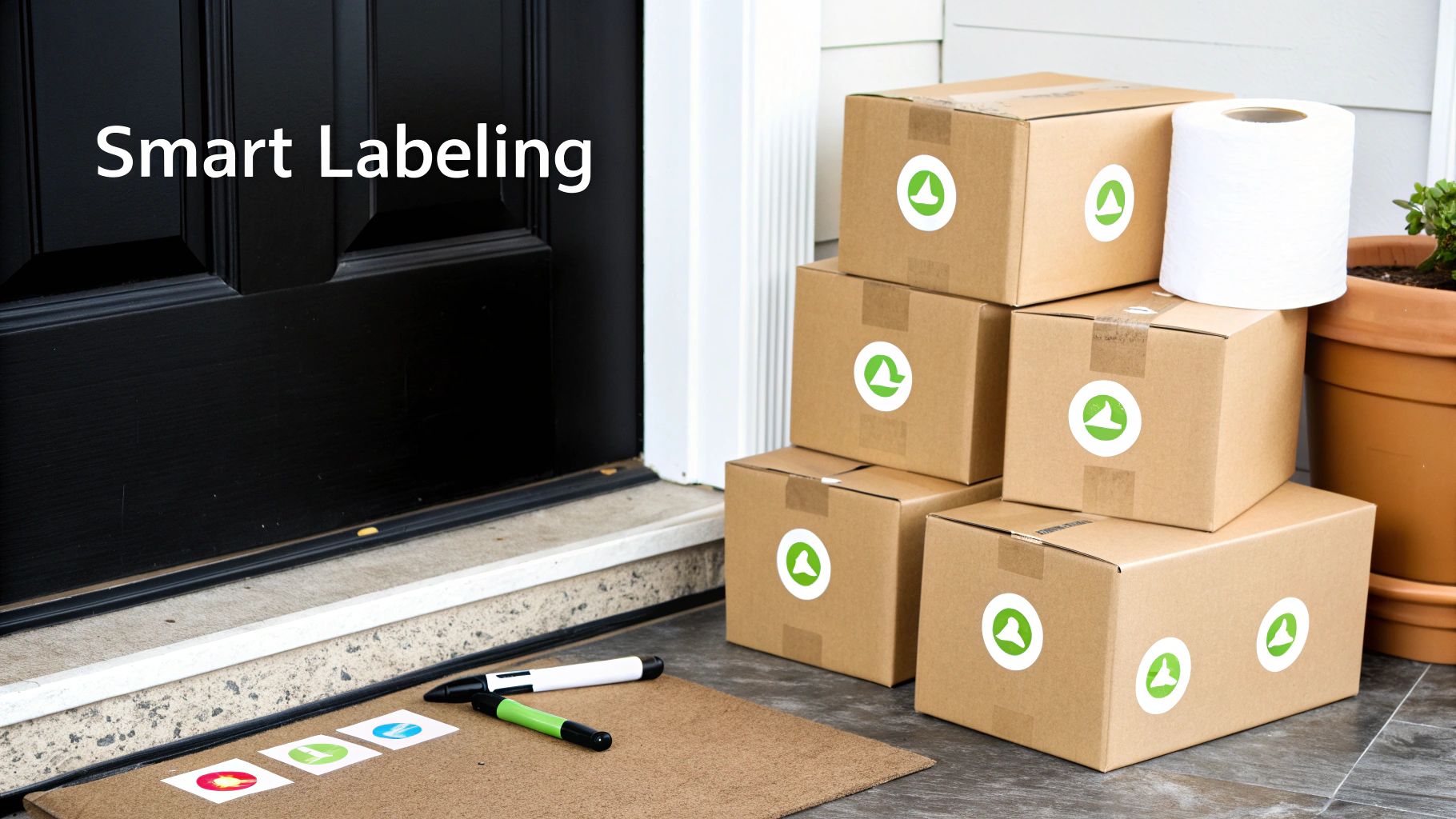
Let’s be honest, unpacking is often worse than packing. The reason? A mountain of mystery boxes. Scribbling "Kitchen" on the side of a box is a start, but a truly great labeling system is what separates a smooth move-in day from total chaos.
A solid label tells movers exactly where to put a box and helps you find the coffee maker without tearing through ten different containers. At a minimum, every label needs three key things: the destination room, a quick summary of what’s inside, and any handling notes like "Fragile" or "Heavy."
The Color-Coding Method for Homes
For most home moves, color-coding is my go-to recommendation. It’s simple, visual, and almost foolproof. You just assign a specific color to each room in your new place.
- Assign Your Colors: Maybe blue is for the main bedroom, green is for the kitchen, and yellow is for the living room. Keep a note on your phone so you don't mix them up.
- Label Every Box: Slap a colored sticker or a big swatch of colored marker on at least two sides of every box. This way, you can spot the color no matter how the boxes are stacked.
- Mark the Rooms: This is the magic step. When you get to the new house, put a matching colored sticker on the doorframe of each room. Now, movers can match the box color to the door color without asking you a single question.
This visual system makes unloading so much faster and ensures that heavy boxes end up where they belong the first time. No more dragging that "Books – Heavy" box up the stairs twice.
The Numbered Inventory System for Complex Moves
When you're dealing with high-value items, an office move, or any situation where you need tight control, a numbered inventory system is the professional standard. It’s more work upfront but offers an incredible level of organization, which is a lifesaver for insurance purposes.
With this method, every single box gets a unique number. That number corresponds to a detailed master list—usually a spreadsheet or an app—that tells you exactly what’s inside.
For property managers and businesses, this system is a game-changer. It makes tracking assets for compliance a breeze and simplifies sustainability reporting, especially when you’re recycling electronics and other materials with a certified vendor.
For instance, box #117 might correspond to the entry: "Living Room – Video Game Console, Controllers, and Cables." If that box ever goes missing or you desperately need to find a specific cable, your inventory list has the answer.
This is the exact meticulous approach we use for our commercial cleanouts at Fulton Junk Removal. We partner directly with Beyond Surplus to track every item, especially e-waste, ensuring it’s all responsibly recycled. It gives our business clients total peace of mind and makes their move-out process incredibly efficient.
Managing the Final Cleanout and Handover
With the boxes packed and the truck booked, you're on the home stretch. But there's one last crucial step: preparing your old space for its next occupants.
Whether you're a renter gunning for that 100% security deposit back or a homeowner looking for a smooth closing, a meticulous handover is non-negotiable. This isn’t just about a quick vacuum—it's the final sweep that leaves the place looking its best.
This last phase often involves minor repairs, like spackling nail holes or touching up scuffed paint, which are common requirements in lease agreements and sales contracts. A deep clean is also a must, hitting everything from the inside of kitchen cabinets to dusty baseboards.
Navigating the Final Cleaning and Debris Removal
Once your stuff is out, the real cleaning begins. The goal is to make the property spotless for handover. Let's be honest, after the exhaustion of moving, most people opt to hire professional house cleaning services to tackle the heavy lifting—wiping down all surfaces, deep cleaning appliances, and mopping floors.
This is also your last shot to deal with everything left behind. You know what I'm talking about: the furniture that didn't sell, the old printer you found in a closet, or the debris from that last-minute wall repair. A rapid-response junk removal service is the perfect solution for this final clear-out.
For property managers, offices, and warehouses, a professional cleanout isn't just about speed—it's about compliance and responsible disposal. A streamlined service that handles both junk removal and certified recycling simplifies sustainability reporting and guarantees the property is market-ready on a tight timeline.
Eco-Friendly Solutions for Last-Minute Junk
Don't let leftover items turn into a last-minute panic. A planned final pickup provides total peace of mind, especially when you want to handle it responsibly.
Instead of just sending everything to a landfill, Fulton Junk Removal works directly with Beyond Surplus to ensure items are actually recycled or repurposed. Our bundled junk removal and recycling pickups guarantee that all electronic waste and other recyclables are handled the right way.
Ready to leave your old property completely clear? You can explore our comprehensive Atlanta-area cleanout services to schedule your final sweep.
Common Questions About Packing for a Move
Even with the perfect checklist, a few questions always pop up when you're deep in the trenches of packing. Getting the right answers can be the difference between a smooth move and a last-minute scramble. Here are a few of the most common things we get asked.
When Is the Best Time to Schedule Junk Removal During a Move?
The sweet spot is about 2-4 weeks before your moving day. This timeline is ideal because it's right after you've done your big decluttering sweep but before you've started seriously packing boxes. Getting rid of all that unwanted stuff first clears the decks and gives you much more space to work.
For businesses handling an office move or property managers overseeing a tenant cleanout, scheduling a bundled junk removal and e-waste recycling pickup early is a smart move. It streamlines the whole process and ensures everything is disposed of responsibly.
Of course, there's always a bit left over. A smaller, final pickup the day before you move can be a lifesaver for any last-minute debris.
How Should I Pack Fragile Electronics Like TVs?
If you saved the original box and packaging, you're golden. That's always the safest bet. If not, don't worry—you can still pack it safely. Your best bet is to wrap the TV or monitor securely in thick moving blankets and find a sturdy box with as little extra space as possible.
Crumple up packing paper and stuff it into any gaps to keep the screen from shifting around in transit. It's that movement that causes damage.
Pro Tip: Before you unplug a single cable, snap a few photos of the back of your TV or computer setup. Trust me, you'll thank yourself later when you're not guessing which cord goes where. Always label the box 'FRAGILE' in big, bold letters and draw arrows to show which side is up.
What Is the Biggest Packing Mistake People Make?
Hands down, the single biggest mistake is waiting too long to start. It's so easy to underestimate just how much stuff you've accumulated over the years and how long it actually takes to pack it all properly.
This procrastination almost always leads to a frantic, chaotic rush in the final days. That’s when stress skyrockets, and things get broken.
The best way to sidestep this common pitfall is to begin decluttering a good 6-8 weeks before your move. It might sound early, but it's the key to an organized, less stressful transition.
Ready to take that final step toward a clean, stress-free handover? For fast, eco-friendly cleanouts in the Atlanta area, let Fulton Junk Removal handle what's left behind. Schedule your free estimate today at https://fultonjunkremoval.com.
