
10 Atlanta Computer Recycling Free Options for 2026
A cleanup usually starts small. A few retired laptops sit in a storage room, then someone adds two monitors, a dead printer, a box of cables, and a couple of desktops nobody wants to touch because the hard drives might still hold company data. At that point, the search for atlanta computer recycling free stops being about price alone. It becomes a choice about security, labor, timing, and who will document what happened to the equipment.
Free recycling works well in the right situation. If you have a small load, working devices, and time to drive to a drop-off, community programs and nonprofits can be a good fit. Paid service earns its keep when the job includes pickup, stairs, office cleanout labor, data destruction records, or mixed loads that include both electronics and general junk. If your goal is to keep usable equipment out of the landfill, it also helps to start with a few smart waste recycling ideas that put reuse ahead of disposal.
Doing this right matters for two practical reasons. First, computers and accessories contain materials that should be routed through proper reuse and recycling channels. Second, data risk does not disappear just because a device is old.
Atlanta has solid free options, but they serve different needs. Some are best for residents unloading a car trunk. Some are better suited to organizations with larger volumes or reusable equipment. And some jobs call for a professional crew that can handle pickup, clear the space fast, and move electronics through a compliant downstream process. This guide is built to help you choose the right path, not just find the nearest drop-off.
1. Computer Junk Removal Services – Fulton Junk Removal
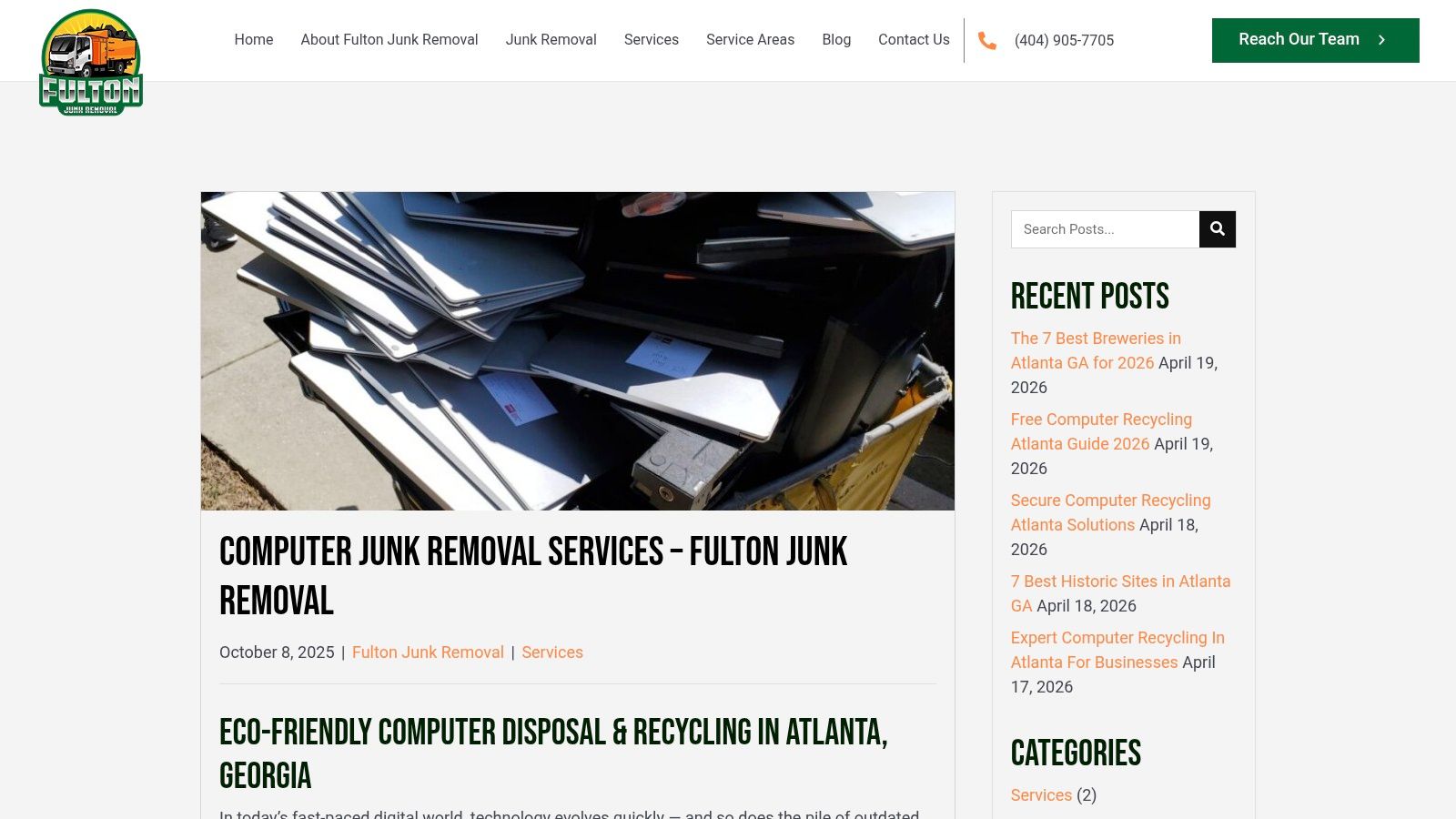
Fulton Junk Removal is the strongest fit when the search for atlanta computer recycling free starts with one need, but the actual job is bigger. That happens all the time. A business wants old computers gone, then remembers there are cubicles, wire shelving, printers, chairs, and boxed peripherals in the same space.
This service works because it isn’t just hauling. Fulton operates with Beyond Surplus, so electronics can move into a more responsible recycling and reuse stream instead of getting treated like general junk. For offices, warehouses, and property managers, that matters because one vendor can clear the room and still keep the electronics side aligned with recycling and documentation needs.
Where it wins
Atlanta’s commercial recycling market has matured around secure handling. Providers commonly offer DoD 5220.22-M 3-Pass wiping, chain-of-custody documentation, and serialized tracking as a baseline expectation, with on-site shredding available as an added service through some vendors in the market, according to Atlanta computer recycling compliance guidance. Fulton’s value is that it pairs that recycling mindset with actual cleanout execution.
That’s the difference between a recycler and an operational solution. A recycler may want a sorted load at the dock. Fulton can help get the load out of the building first, especially across Atlanta service areas.
Practical rule: If your electronics are mixed into a larger cleanout, “free recycling” often stops being the real question. Labor, logistics, and chain of custody become the real job.
Best use cases
- Office decommissions: You need computers, monitors, and related clutter removed on a schedule that doesn’t interrupt operations.
- Property management turnovers: Former tenant electronics and mixed debris need one coordinated pickup.
- Compliance-sensitive loads: You want secure handling and reporting, not just a promise that drives were “taken care of.”
- Large residential cleanouts: Free drop-off sounds good until you’re loading multiple trips yourself.
The trade-off is straightforward. This isn’t the option for someone with one keyboard and an old laptop who’s happy to drive to a drop-off center. It’s the option for customers who want speed, labor, responsible routing, and fewer handoffs. Some very small items may have free drop-off paths through partners, but most larger removals will be treated as a service job, which is appropriate for what’s being solved.
2. Goodwill of North Georgia
For simple drop-off, Goodwill is one of the easiest names to trust. The Dell Reconnect setup is useful for households and small offices that have common computer gear and want a straightforward place to donate or recycle it without turning the task into a project.
The biggest advantage is accessibility. Multiple donation locations make it easier to choose the nearest stop, unload, and move on. That convenience matters more than people think. The harder a recycling trip is, the more likely those devices sit in a closet for another year.
Where it fits best
Goodwill is strongest when the equipment is portable, mostly standard, and not especially sensitive from a compliance standpoint. A retired family desktop, an old laptop, cables, keyboards, and accessories are the classic fit.
- Best for: Household cleanouts, small office refreshes, nonprofit-minded donors
- Less ideal for: Bulk corporate loads, strict chain-of-custody needs, buildings that need pickup
- What to verify first: Whether your local store accepts the exact display items you have
If you need pickup, Goodwill usually isn’t the answer. If you need an easy drop-off with community benefit, it often is.
The practical caution is volume. For larger business donations, call first. Locations can vary in what they’ll take on a given day, especially when the load includes bulky displays or unusually large quantities. Start at Goodwill of North Georgia.
3. Live Thrive CHaRM Atlanta
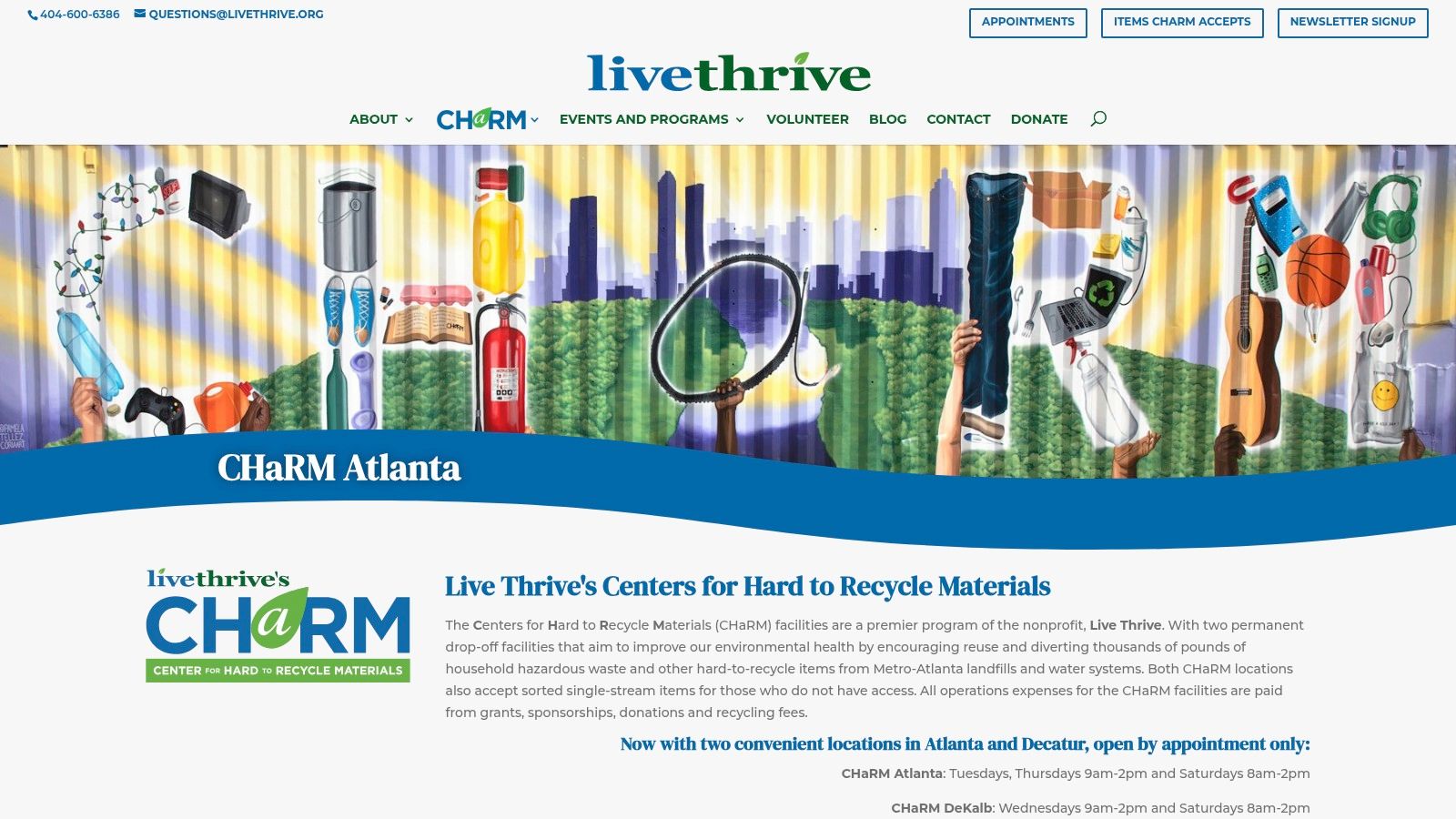
CHaRM is a good answer when computers are only part of the load. That’s what makes it different from computer-only recyclers. If your garage or utility room cleanup includes old electronics, bulbs, paint, and other difficult materials, CHaRM can save you from making separate trips.
The drive-through format helps. Staff assistance also reduces the guesswork that causes people to leave with half their load still in the car.
The real trade-off
CHaRM is efficient, but it isn’t “everything is free.” Some electronics are accepted at no charge, while display devices often require a fee. That’s common in this category because screens are more expensive to process than basic towers or small electronics.
For a homeowner who wants one organized drop point, that’s still a fair trade. For someone with a large stack of monitors, a business pickup service may make more operational sense.
- Best for: Mixed hard-to-recycle household loads
- Not best for: Pickup service, urgent office cleanouts, highly documented IT disposition
- Watch for: Operating days and accepted-item changes
The site is worth checking before you load up the car. Start with Live Thrive CHaRM.
4. Atlanta Computer Recycling
A common Atlanta scenario looks like this. An office is clearing out a storage room full of retired desktops, monitors, and networking gear, and someone on the team searches for free computer recycling. The free part can be real, but only when the load is large enough to make pickup efficient. That is the key filter with Atlanta Computer Recycling.
For businesses, this option fits best when the volume is meaningful and the equipment is already concentrated in one place. That is very different from a homeowner with a couple of laptops or a small stack of accessories. In smaller-load cases, drop-off is usually the practical route. In larger decommissions, pickup can save time and reduce internal labor.
The bigger reason companies choose a dedicated computer recycler is control. IT teams and office managers are not just trying to get rid of equipment. They also need a clear process for retired hardware, especially when hard drives, business records, or client information may still be on the devices.
Free community options have their place. They work well for light residential loads and people who can handle their own transport. A dedicated recycler like this one is a better fit when the job starts to look operational: more equipment, more handling, more sensitivity around data, and less room for delays.
That distinction matters. If the project also includes desks, cubicles, boxed miscables, or general junk, a full-service cleanout company such as Fulton Junk Removal can be the better call because the electronics are only one part of the job. If the load is primarily IT equipment and you can meet the recycler’s service conditions, Atlanta Computer Recycling is a more focused outlet.
You can review the company’s current services at Atlanta Computer Recycling.
5. E-Recycle USA Atlanta
E-Recycle USA sits in the practical middle ground. It’s local, it handles common IT and office electronics, and it works for both public drop-off and larger business recycling needs. That flexibility makes it useful for companies that don’t need a full cleanout vendor but do want more than a basic donation counter.
This is the kind of option I’d point to when the load is electronics-heavy and operationally clean. By that I mean boxed devices, retired workstations, peripherals, and standard office electronics that are already separated from furniture and trash.
Where it works well
- Residents with a manageable load: You can bring equipment in directly.
- Small businesses: You may not have enough volume for a major decommission, but still need a proper outlet.
- Offices with some sensitivity around drives: Secure destruction options matter here.
The trade-off is similar to most recyclers in this category. Specialty items can trigger fees, and hours may not match your ideal schedule. That’s not a flaw so much as a reminder to confirm accepted materials before showing up. You can check current details at E-Recycle USA Atlanta.
6. Sustain Atlanta Electronics Recycling
Sustain Atlanta is a simple option for households and small offices that want clear intake rules. That alone has value. Some recyclers make you hunt through pages or call before you can tell whether they’ll take your equipment.
What stands out here is the straightforward positioning around common devices such as computers, laptops, and phones, with a separate fee structure for TVs. I prefer that kind of transparency because it lets customers decide quickly whether the trip is worth it.
Practical fit
If your load is mostly computer gear, this can be a clean drop-off choice. If your pile includes a lot of televisions, budget for that part instead of assuming all electronics are treated the same.
- Good fit: Home users, small office drop-offs, common e-waste categories
- Less good fit: Customers who need pickup or enterprise documentation
- Smart move: Separate free computer items from fee-based display items before arrival
One caution on article claims in this space. Many sites talk broadly about “free electronics recycling,” but the accepted list often matters more than the headline. Review Sustain Atlanta Electronics Recycling with that in mind.
7. PCs for People Atlanta
A common Atlanta cleanout scenario looks like this. There are ten retired laptops, a few older desktops, and nobody is sure whether the goal is donation, recycling, or secure disposal. PCs for People is a good option when some of that equipment may still be usable and the donor wants community benefit to matter in the decision.
That reuse-first model is the main reason to consider them. A working laptop that can be refurbished and placed back into use usually creates more value than sending the same unit straight into material recovery. For schools, churches, nonprofits, and households with functional devices, that distinction matters.
Best use case
Choose this route when social impact is part of the objective and your equipment is reasonably current, complete, or still functional. It can fit office refreshes with lighter volumes, resident drop-offs, and donation-minded organizations that want a credible outlet for older computers.
Paid service is usually the better call when the project includes high volume, tight pickup scheduling, or formal data handling requirements. That is the trade-off. Free or mission-driven programs can be a strong fit for the right load, but they are not built for every compliance or logistics need.
Start with one question: is this equipment still useful to someone else? If yes, reuse is often the better first path.
The practical issue is screening. Condition, accepted item categories, and drop-off details can change, so mixed loads should be sorted before anyone starts driving around Atlanta. Review current program details at PCs for People Atlanta.
8. CL3 Technology
A common Atlanta scenario is a garage or small office with a manageable pile of old desktops, monitors, keyboards, and cables that needs to go somewhere this week. CL3 Technology fits that kind of job well. It appeals to residents and smaller organizations that want a local electronics recycler and do not need a full cleanout crew, onsite pickup coordination, or enterprise reporting.
The free option has real value, but only for the right load. If your equipment is standard e-waste, already gathered in one place, and easy to transport, a drop-off recycler like this can save money and keep usable materials out of the landfill.
The decision point is paperwork and handling standards.
For a homeowner dropping off a few obsolete devices, basic recycling access may be enough. For a business, medical office, school, or property manager, the better question is what happens after the drop-off. If drives are involved, ask about data destruction procedures, chain of custody, and what documentation you will receive once the material is processed. That is where free recycling and paid service start to separate.
Paid pickup services earn their keep when the job includes volume, labor, scheduling pressure, or compliance exposure. Free recycling can be a solid fit for sorted, lower-friction loads. It is a weaker fit when your team needs equipment removed from multiple offices, tracked by asset type, or documented for internal policy and risk control.
Review current acceptance details and service information at CL3 Technology electronics recycling.
9. New Life Technology Group
New Life Technology Group is a good example of a nonprofit model that goes beyond disposal. If you’d rather see old devices refurbished and redirected into a community program, this is the kind of organization worth considering.
That approach is especially appealing for school drives, office donation events, and companies replacing fleets of still-usable machines. The social value is clearer when hardware can go back into service instead of moving straight to commodity recovery.
Best use case
I’d put this near the top for donation-minded businesses with organized loads. If your devices are relatively complete and still useful, a mission-based refurbisher can be a better outlet than a general recycler.
- Strong fit: Device donation drives, school partnerships, bulk office donations
- Watch for: Confirming the active drop-off location and current intake rules
- Likely friction point: Some display categories may carry fees or restrictions
For someone searching atlanta computer recycling free, this is one of the better choices when the goal is community reuse first. You can verify current programs at New Life Technology Group.
10. eWaste ePlanet
eWaste ePlanet is one of the better hybrid options because it serves both public drop-off customers and business ITAD needs. That matters if you want one provider that can handle a home office one month and a corporate equipment refresh the next.
Its appeal is the blend of recycling, data destruction, and corporate disposition services. For organizations, buyback and downstream processing options can make the conversation more strategic than simple disposal.
Why it stands out for business users
Atlanta’s ITAD market has shifted toward value recovery. Providers increasingly assess equipment condition, remarket usable assets, and share resale revenue with the original organization instead of treating every retirement as a pure disposal cost, according to ReWorx Atlanta ITAD guidance. That’s the framework business buyers should understand when comparing eWaste ePlanet to simpler drop-off recyclers.
This doesn’t mean every load has resale value. It means businesses should stop assuming retired hardware only creates costs.
For residents, the simpler question is accepted items and any fees on displays. For companies, ask about certificates, chain of custody, and whether usable hardware can offset part of the project. You can start with eWaste ePlanet.
Atlanta Free Computer Recycling, 10-Provider Comparison
| Service | Key features ✨ | Data Security & Compliance ★ | Convenience & Pickup 👥 | Price & Value 💰 |
|---|---|---|---|---|
| Fulton Junk Removal – Computer Junk Removal 🏆 | DoD/NIST data destruction; integrated recycling & donation; certified diversion reports | ★★★★★ DoD/NIST-certified; certified recycling documentation | Local same‑region pickup; fast response; free estimates | 💰 Transparent upfront pricing; eco‑centric; small-item partner drop‑offs |
| Goodwill of North Georgia (Dell Reconnect) | Free drop‑off; devices refurbished via Dell; supports workforce programs | ★★ Reuse-focused; not guaranteed certified erasure | Multiple donation centers; drop‑off only (no pickup) | 💰 Free drop‑off; nonprofit benefit |
| Live Thrive CHaRM (CHaRM) | Drive‑through for hard‑to‑recycle items; staff assistance; diversion reporting | ★★ Diversion reporting; limited certified data services | Drive‑through drop‑off; staff help; limited days/hours | 💰 Mostly free; fees for TVs/monitors |
| Atlanta Computer Recycling (Ecycle Atlanta) | No‑fee for many IT items; business pickups for decommissions | ★★★★ Data destruction services available | Residential drop‑off; scheduled business pickups for bulk | 💰 No‑fee list for common gear; fees for some displays/batteries |
| E‑Recycle USA (Atlanta) | Public drop‑off; handles wide range of IT & office electronics | ★★★★ Secure/certified data destruction options | Public drop‑off; business cleanout services; limited weekend hours | 💰 Mostly free; some specialty fees may apply |
| Sustain Atlanta Electronics Recycling | Free recycling for common devices; published TV fee | ★★★ Processes devices responsibly; limited cert detail | Drop‑off convenience for households/small offices | 💰 Free for most devices; TV recycling ≈ $25/unit |
| PCs for People – Atlanta | Refurbish for low‑income households; mission reuse; ITAD options | ★★★★ Certified data handling & refurbishment | Drop‑off; business pickups/ITAD available; limited hours | 💰 Free/low‑cost recycling; strong community impact |
| CL3 Technology | Free recycling for most electronics; serves residents & businesses | ★★★ Clear free‑recycling claim; limited public cert info | Residential drop‑off; business recycling services | 💰 Free for many items; verify specialty item policies |
| New Life Technology Group | Computers for Kids refurbishing; free bulk pickups; data wiping | ★★★★ Data wiping & refurbishment for redistribution | Free residential drop‑off; free commercial bulk pickups | 💰 Free drop‑off & pickups; mission‑driven reuse |
| eWaste ePlanet (eWeP ITAD) | Public drop‑off; corporate ITAD & buyback; event partnerships | ★★★★ Complimentary data destruction on request; certs for orgs | Public drop‑off; corporate pickups; active in local events | 💰 Free for many items; TVs/monitors may incur fees |
Final Thoughts
The best atlanta computer recycling free option depends on what problem you’re solving. If you’ve got a few laptops and you don’t mind driving, free drop-off is often the cleanest answer. Goodwill, CHaRM, PCs for People, and several local recyclers can all work well when the load is small, sorted, and easy to transport.
If you’re a business, the decision usually comes down to volume, security, and labor. Free pickup in Atlanta often starts only when the load reaches business-scale thresholds, and that’s reasonable because recyclers have to cover transport and processing through resale or materials recovery. If your project is a real office clear-out, not just a stack of CPUs, the right question isn’t “Can I get this for free?” It’s “Who can remove it efficiently, document the chain of custody, and keep recyclable material out of the landfill?”
Residential customers need to be especially careful with assumptions. Atlanta’s market has a real residential versus business service gap. Some recyclers that show up for “free pickup” searches don’t offer home pickup at all, and ReWorx explicitly states that no residential pick-ups are available at this time. That’s why so many homeowners end up frustrated after a few phone calls. Free often means drop-off, not doorstep service.
There’s also a convenience gap that people underestimate. Loading monitors, towers, and printers into your own vehicle is one thing. Doing that while clearing a garage, moving out of a condo, or turning over office space is another. In those situations, a paid removal service can be the lower-friction and lower-risk choice, especially when electronics are mixed with furniture, fixtures, and general junk.
The responsible approach is usually this:
- Use free drop-off when your load is small, you can transport it safely, and you don’t need pickup labor.
- Use a nonprofit refurbisher when devices still have useful life and community reuse matters.
- Use a business recycler or ITAD provider when data-bearing assets and documentation are part of the job.
- Use a bundled cleanout service when electronics are only one part of a larger removal project.
That last category is where Fulton Junk Removal stands apart. For offices, warehouses, property managers, and large residential cleanouts, pairing junk removal with Beyond Surplus recycling creates a cleaner process. One team removes the material. The electronics move through a responsible recycling path. And you don’t have to coordinate separate vendors just to reclaim your space.
If you need more than a basic drop-off, Fulton Junk Removal is the practical local choice for computer and electronics removal in Atlanta. The team handles pickups, cleanouts, and mixed-load jobs, then works with Beyond Surplus to route recyclable electronics responsibly, with the kind of documentation and service flow that businesses, property managers, and large cleanout customers need.
