
7 Best Live Music Venues in Atlanta GA for 2026
Atlanta’s Stage is Set: Your Guide to the City’s Top Venues
If you’re trying to pick a concert spot in Atlanta tonight, you’re probably balancing a few practical questions at once. Do you want pristine sound or neighborhood character. Do you need a seat, or are you fine camping on a general admission floor for two hours. Are you planning a full night out with dinner and drinks, or just trying to get in, catch the set, and get home without fighting miserable parking?
That’s what makes the Best Live Music Venues in Atlanta GA such a useful topic to compare directly. In this city, the room matters almost as much as the artist. A great venue can make a mid-tier show feel unforgettable. A poor layout, weak sight lines, or sloppy crowd flow can flatten even a strong lineup.
Atlanta gives you both ends of that spectrum. You’ve got historic rooms with real personality, polished new builds designed around production, flexible mid-size clubs that reward fans who care about sound, and bigger entertainment-district venues that work best when you plan the logistics ahead of time. For regular concert-goers, those differences shape everything from where you stand to how early you arrive.
For operators, there’s another layer. The best-run venues don’t just book well. They turn rooms efficiently, keep bars moving, manage exits cleanly, and handle post-show cleanup without dragging into the next event day. That’s especially true in a city with a heavy live calendar and mixed venue formats.
This guide gets to the point. These are the Atlanta venues that stand out for fan experience, booking identity, room design, and practical operations, with honest trade-offs on what works and what doesn’t.
1. The Tabernacle
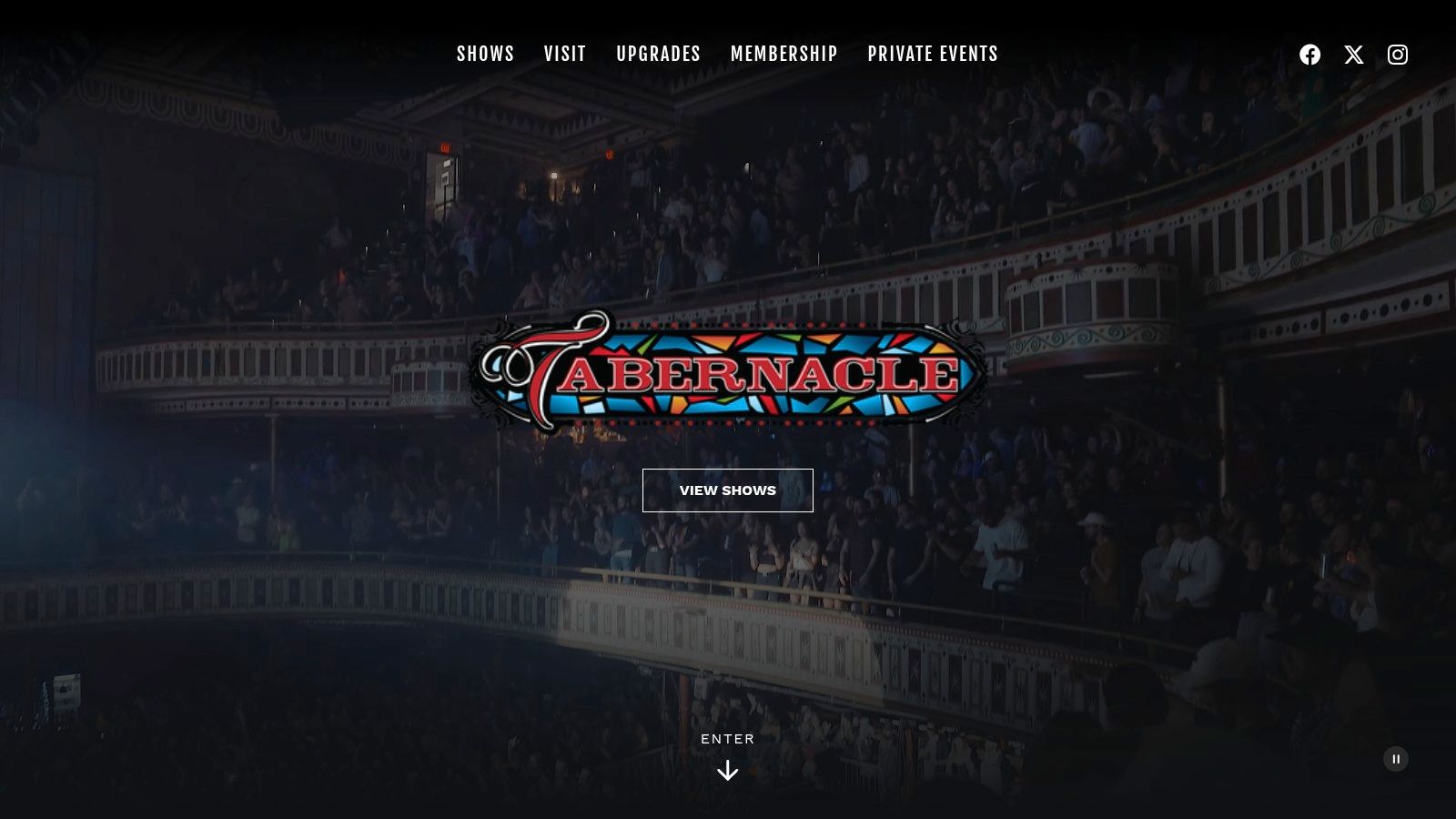
You feel The Tabernacle before the opener walks onstage. The lobby traffic is tight, the room rises above you, and the old church bones give the night a sense of occasion that newer venues rarely match.
That is why it stays near the top of this list for fans who want a major tour stop without committing to an arena show. The building dates to 1884 and has operated as a concert venue since the 1990s, so the appeal is not just nostalgia. The architecture changes how the show lands. High ceilings, layered sight lines, and a room with visible history make even familiar acts feel bigger.
For concert-goers, the value is straightforward. You get a downtown venue with real character, a strong booking profile, and enough scale to attract national acts while still feeling connected to the stage. The floor is mostly standing room, though, so comfort depends on your tolerance for crowds and how early you arrive. Balcony access can improve the experience, but it is not a substitute for planning.
Why fans keep coming back
The Tabernacle works best for people who care about atmosphere and sound more than elbow room. The former church design helps the room feel full in a good way. It also tends to give live bands a little more depth than many generic mid-size rooms.
Practical rule: Choose The Tabernacle for the setting, the acoustics, and the energy. Skip it if you need easy parking, lots of personal space, or guaranteed seating.
Its downtown location is part of the draw. If you are staying nearby, meeting friends before the show, or building a full night around dinner and drinks, it is one of the easier venues to fold into that plan.
Trade-offs operators should pay attention to
The same density that creates energy also creates pressure on entry, bar lines, exits, and cleanup. Well-run historic venues know that the guest experience does not end at the encore. Fast turnover, clear waste sorting, and a disciplined reset crew protect the next event day and keep a high-traffic room from feeling worn down.
For event managers, The Tabernacle is a useful model. A venue with heavy foot traffic needs a cleanup plan that covers cups, food waste, restroom replenishment, dock access, and last-load haul-off without clogging downtown operations. Teams managing similar event volume in the metro area often rely on South Fulton junk removal support for post-event hauling when in-house crews need backup capacity.
A few practical notes:
- Best for: Big club-scale tours, especially rock, pop, hip-hop, and comedy.
- Best arrival move: Get there early if you want a stronger balcony position or less stressful entry.
- Best fan fit: People who want atmosphere and can handle a mostly standing-room show.
- Best operator takeaway: Historic venues need cleanup systems that protect the building as much as the schedule.
Official event details and ticketing run through the Tabernacle website.
2. The Eastern
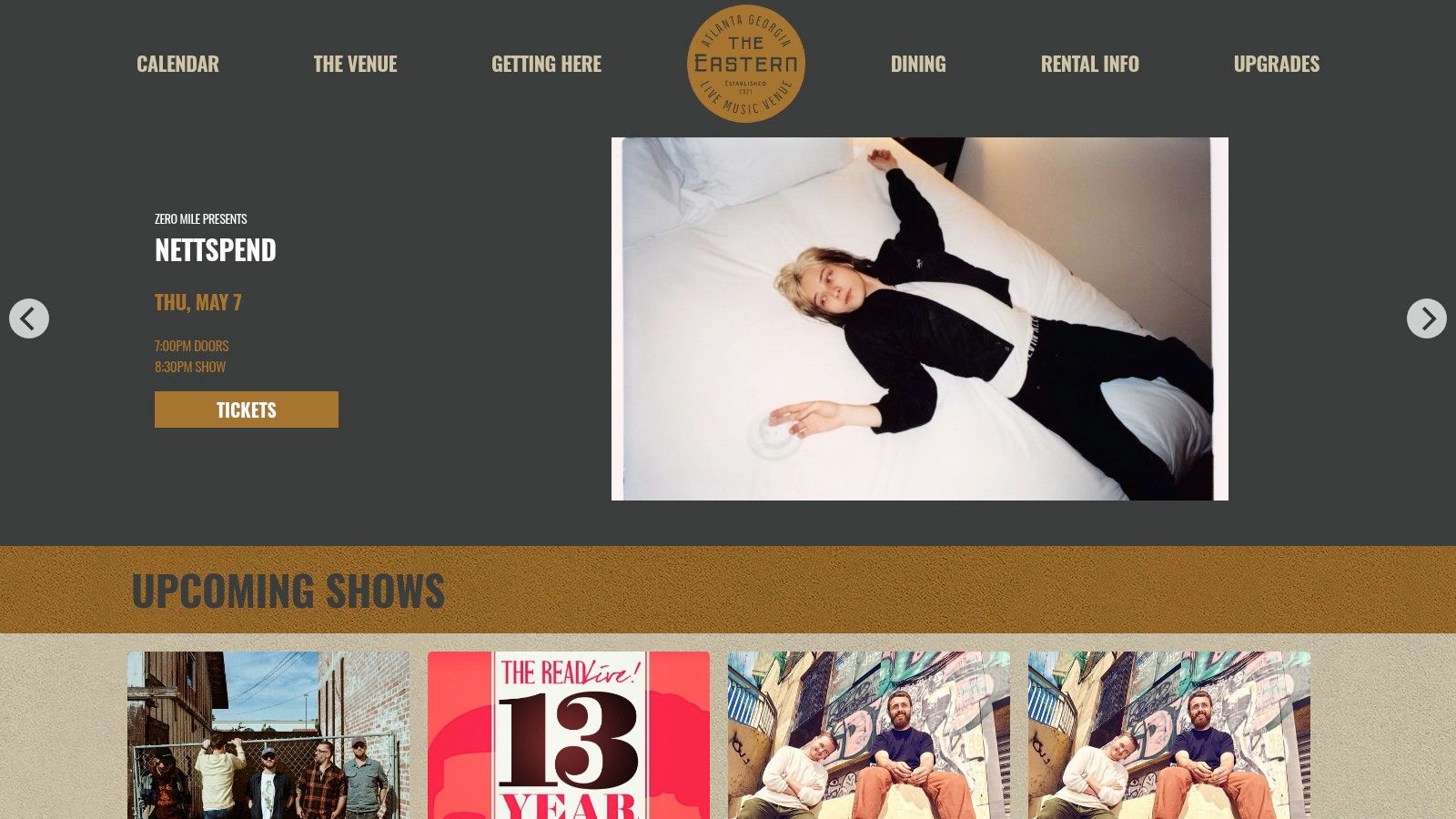
The Eastern is the venue I point people to when they want modern production and clean sight lines more than nostalgia. It feels purpose-built for the current touring cycle. You notice that fast, from the tiered layout to the way the room handles crowd movement and stage visibility.
That matters in Atlanta, where plenty of older rooms have charm but also inherit awkward angles, uneven bar access, or sight-line compromises. The Eastern solves a lot of that by design. If your priority is seeing the stage clearly without constantly repositioning, this venue is near the top of the list.
Best fit for fans who care about production
The house setup feels contemporary in the best way. Strong in-house audio and lighting, a rooftop bar, and a covered performance area give it more than a single-room identity. It’s the kind of venue where pre-show time doesn’t feel wasted.
Cashless operations and AXS ticketing also make the experience more efficient than some legacy spaces. That won’t matter to everyone, but it usually means fewer surprises at the point of purchase and a smoother entry flow.
Good modern venues remove friction before the opener starts. The Eastern does that better than most.
The BeltLine-adjacent setting helps too. It’s one of the easier venues to build a full evening around, especially if your group wants food or drinks nearby rather than a parking-lot-to-door experience.
Where it falls short
The downside is familiar. A lot of shows are still standing-room heavy, so don’t pick The Eastern expecting a sit-down theater experience unless the event specifically says so. The rooftop is also an amenity, not a guarantee for every schedule and every guest plan.
For venue operators, rooms like this also set a higher standard behind the scenes. Fans expect clean transitions, quick bar service, and a polished front-of-house environment because the building itself feels polished. That’s why post-event turnover matters as much as the stage package.
A few specifics worth keeping in mind:
- Best for contemporary touring acts: Indie, alternative, electronic, and crossover bookings make sense here.
- Best fan advantage: The multi-tier design rewards people who want options beyond camping at barricade.
- Best operations lesson: Newer venues work best when every support service is just as organized, including regional hauling help like South Fulton event cleanup support.
You can check calendars, venue policies, and entry details on The Eastern’s official site.
3. Variety Playhouse
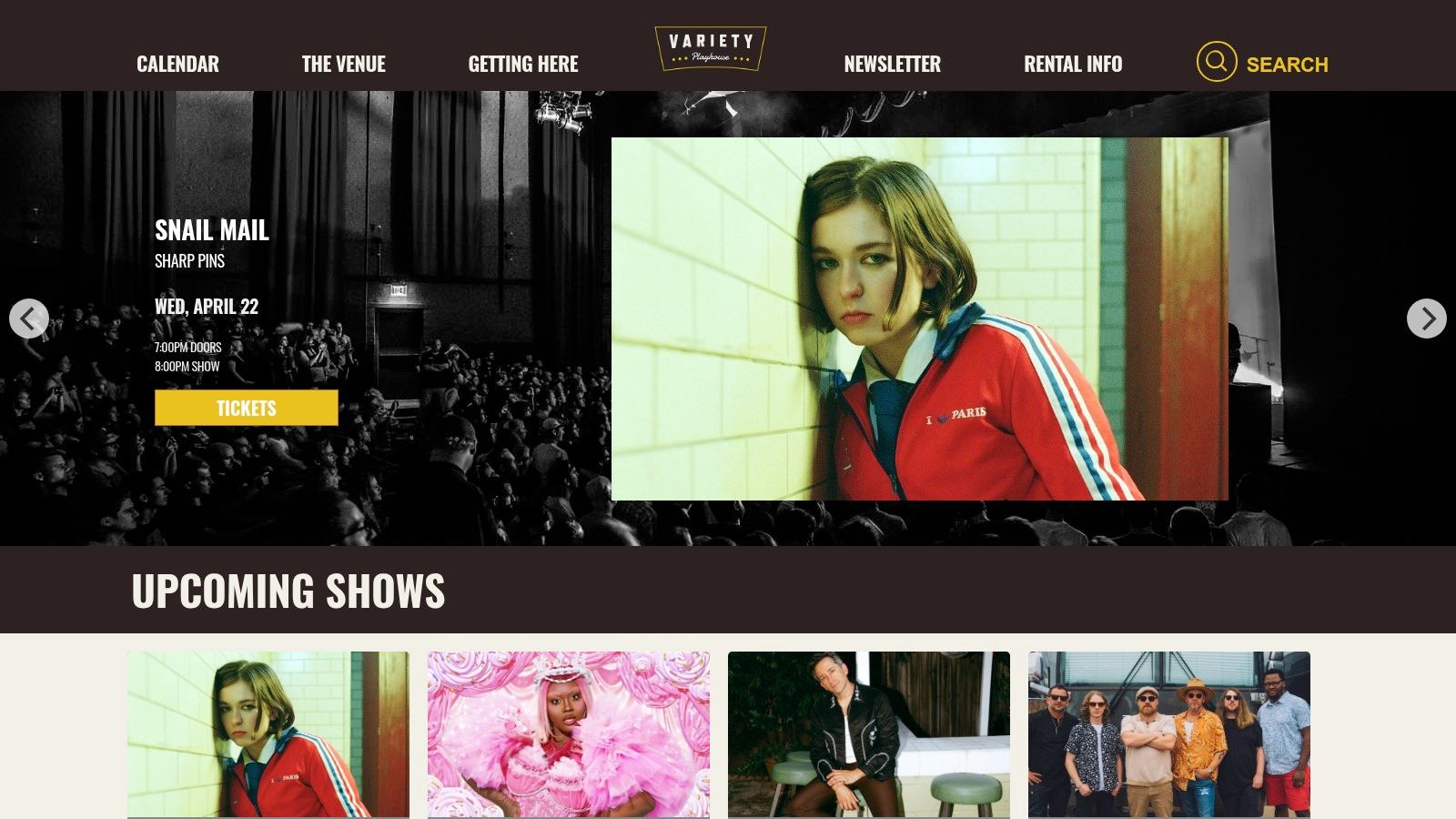
Variety Playhouse earns its place on any serious Best Live Music Venues in Atlanta GA list because it solves a problem that a lot of rooms ignore. Not every fan wants to stand all night. In a city full of general admission floors, a venue with a hybrid setup instantly becomes more useful.
Set in Little Five Points, this room carries neighborhood energy without feeling cramped or improvised. It has the kind of local identity that makes even a routine weekday booking feel a little more memorable.
Why the layout matters
The biggest practical advantage is the mix of fixed seating and open areas. That gives Variety Playhouse broader appeal than many similarly sized rooms. You can go there for the music without committing to a full standing-room experience, which is a real selling point for older fans, date nights, and anyone catching a show after a long workday.
The renovated historic-theater feel helps too. You still get character, but the room doesn’t rely on character alone. Sound is usually the reason people come back.
If you’re comparing it to a more aggressive club room, Variety often wins on comfort. If you’re comparing it to a formal theater, it usually wins on vibe.
What to plan around
Little Five Points is part of the appeal and part of the hassle. Parking can tighten quickly, and on busy nights you may end up circling or walking farther than expected. For general admission events, even when seats exist in the room, the better ones can still come down to arrival time.
That means this isn’t a venue where showing up at the last second always works in your favor. Fans who like optionality should arrive early enough to choose, not just accept what’s left.
A quick breakdown:
- Best for comfort-minded music fans: Great if you want intimacy without the full standing-room penalty.
- Best pre-show pairing: Little Five Points bars and restaurants make this an easy neighborhood night out.
- Watch for event specifics: General admission rules can affect seating access more than first-time buyers expect.
For operators and property teams, venues with mixed seating and neighborhood foot traffic often need disciplined reset work after events, especially when furniture movement, concession waste, and staging materials pile up. Regional support such as Sandy Springs cleanout service can make those turnarounds easier for teams managing multiple properties.
Official show information is available on the Variety Playhouse website.
4. Terminal West
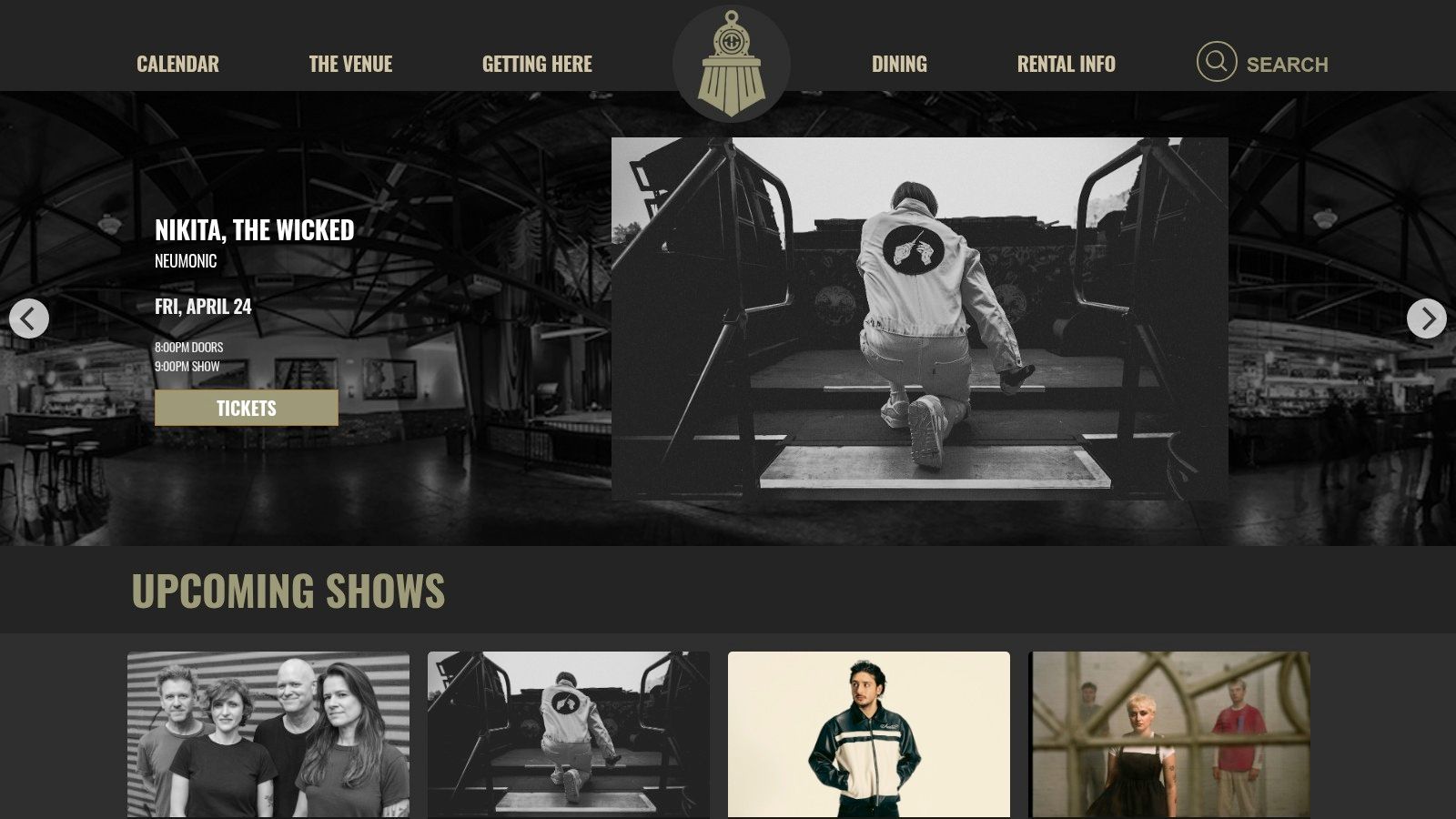
You feel Terminal West before you overanalyze it. Walk into the room on a strong booking night and the appeal is obvious. The stage feels close, the crowd usually stays engaged, and the sound has enough detail to reward people who care how a mix lands in a midsize venue.
That is why Terminal West continues to hold a strong place in Atlanta’s venue ecosystem. Inside the King Plow Building in West Midtown, it operates in the range many rooms struggle to get right. Large enough to attract credible touring acts, small enough to keep the set personal. According to a Hello Landing profile of Atlanta music venues, Terminal West opened in 2010, holds about 600 people, hosts roughly 150 shows a year, draws around 90,000 visitors, and has earned a 4.8 Google rating from more than 1,200 reviews.
What Terminal West gets right
This room works best for fans who care more about performance quality than creature comforts. Sightlines are generally solid, the room scale suits indie and electronic acts especially well, and the venue has the kind of programming discipline that keeps the calendar interesting instead of padded.
The sound reputation is earned. In a room this size, bad audio gets exposed quickly. Terminal West has avoided that trap, which is a big reason repeat customers keep coming back.
Stationside also helps. Food and drink options tied closely to the venue make it easier to turn a concert into a full evening, and operators should pay attention to that model because on-site dwell time usually translates into better per-head revenue.
For a midsize room, Terminal West stays focused on the fundamentals that actually shape the night: booking, sound, and crowd energy.
Trade-offs to plan around
The compromises are practical ones. Seating is limited, and the King Plow parking deck can slow down departure after a sold-out show. Fans who want an easier exit or first choice of standing position should not cut arrival time too close.
For venue managers and event teams, Terminal West is also a good example of how a busy calendar creates cleanup pressure. Back-to-back weekend use and heavy concession traffic can leave a surprising amount of material to clear once the house empties. Under those conditions, fast post-show removal becomes critical, especially if the next event load-in starts early.
Well-run venues do not treat cleanup as an afterthought. They build for speed, recycling access, and crew safety. That means clearly labeled waste streams, fast sorting of cardboard and cans, and a removal plan that keeps bags, broken displays, and staging debris out of guest-facing areas by the next morning. Teams supporting properties beyond central Atlanta often use regional help such as Alpharetta junk removal support for event turnover or Roswell junk removal coverage when schedules tighten.
Show calendar, FAQs, and box-office details live on the Terminal West website.
5. The Masquerade
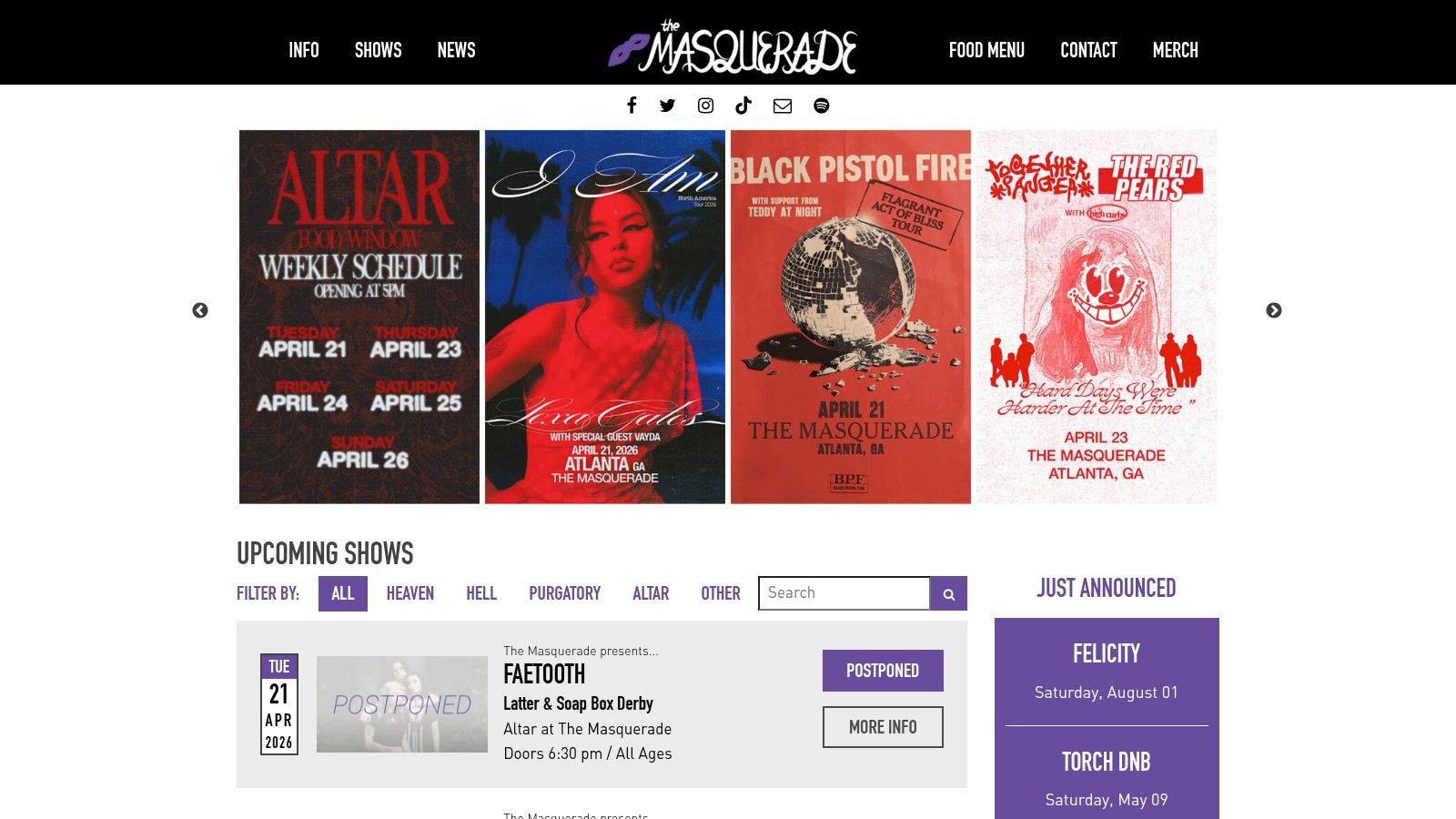
The Masquerade is less about polish and more about range, legacy, and scene credibility. If you like alternative, punk, metal, EDM, and artists that don’t always fit the city’s more mainstream rooms, it remains one of Atlanta’s core venues. Its current setup at Underground Atlanta gives it multiple identities under one brand.
That multi-room format is the reason it belongs on this list. Heaven, Hell, Purgatory, and Altar let the venue match different crowd sizes and different types of bookings without forcing every show into the same shape.
Best for discovery and scene depth
Some venues are good because they’re comfortable. The Masquerade is good because it’s culturally useful. It still acts as a pipeline room for emerging acts and a dependable stop for touring artists whose audiences want sweat, density, and a less polished atmosphere.
The broader Atlanta live music guide from Explore Georgia notes that The Masquerade hosts nearly 700 shows yearly, and its three-stage setup at Underground Atlanta amplifies disposal and breakdown needs after performances in this Atlanta live music roundup. For fans, that volume means constant variety. For operators, it means serious wear-and-tear discipline.
A venue with this many moving parts only works when staff can reset rooms fast and keep each one distinct.
That’s the hidden operational challenge here. Multi-room venues don’t just clean one floor and lock up. They clear confetti, beverage waste, temporary structures, and occasional damaged gear across several spaces.
What fans should know before going
This is still mostly a standing-room experience. If you need space, a coat check, or softer edges operationally, The Masquerade isn’t trying to be that. Bag restrictions and garage congestion are common friction points, especially after larger events.
Still, for the right crowd, those are acceptable trade-offs. You go because the booking mix is deep and the room identities feel different enough to matter.
A few practical notes:
- Best for genre fans: Alternative, underground, heavy, and high-energy lineups are the strongest fit.
- Best buying tactic: Check the room assignment before tickets sell out, because the experience changes a lot by stage.
- Best facility takeaway: A high-volume venue with multiple rooms benefits from outside hauling support, including regional coverage like Alpharetta junk removal service.
Show schedules, policies, and box-office info are on The Masquerade’s official website.
6. Center Stage Atlanta
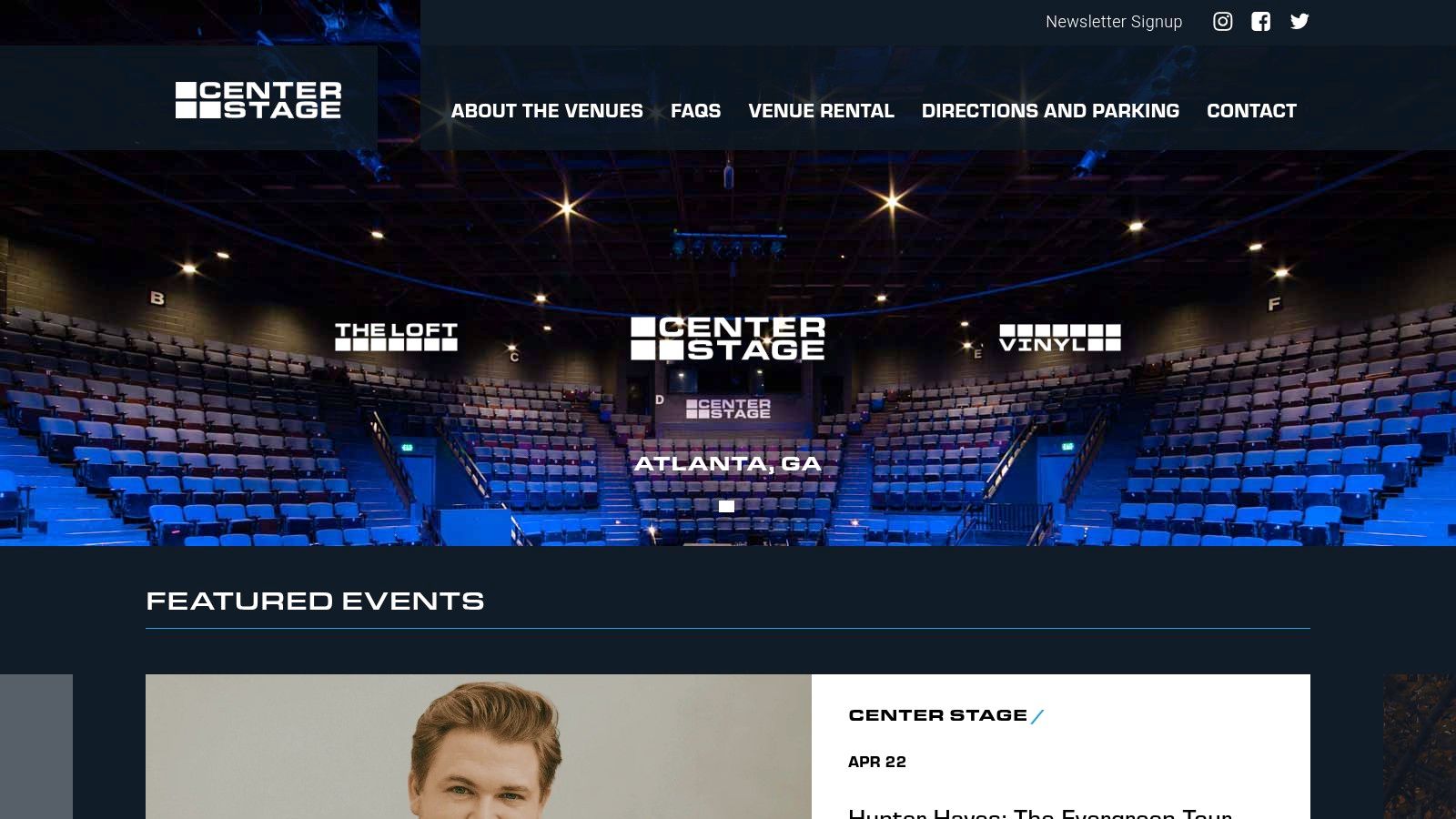
Center Stage Atlanta is one of the most practical venues in the city because it isn’t really one venue. It’s a multi-room complex in Midtown that includes Center Stage Theater, The Loft, and Vinyl. That setup makes it useful for both fans and promoters, since artists can land in a room that fits the draw instead of being stretched into a bad match.
From a concert-goer’s perspective, the main strength is flexibility. You can see a more established touring act in one room, then catch a smaller or more niche booking in another, all under the same operational umbrella.
Why the multi-room setup matters
This venue works well for people who actively explore lineups instead of only chasing obvious headliners. The size range across the rooms creates a natural progression for artists and a lower-friction way for fans to discover someone new. That’s different from a standalone club where every show has to feel roughly the same.
Midtown also helps. If you’re visiting Atlanta or booking a hotel for a weekend run of events, Center Stage is one of the easier venues to pair with transit, dining, and a walkable schedule. That makes it especially appealing for comedy, mixed-format bookings, and tours that attract out-of-town attendees.
The main trade-off
The challenge is inconsistency in the details. Policies, seating, and room feel vary by event and by space, so you can’t treat a ticket at Vinyl the same way you’d treat a ticket in the main theater. Fans who don’t read the event page carefully can end up surprised.
That isn’t a flaw so much as the cost of versatility. A complex that can host different scales and formats will always ask more of the attendee upfront.
What it does best:
- Best for variety: Few Atlanta addresses offer this many room types in one place.
- Best for planners: Midtown access works well for business travelers and hotel-based visitors.
- Best for mixed programming: Music, comedy, and special events all fit naturally.
If you want a venue that balances central location, experienced operations, and flexible booking scale, Center Stage remains one of the stronger all-around choices. Event details and calendars are available on the Center Stage Atlanta website.
7. Coca-Cola Roxy
Coca-Cola Roxy fills a useful lane in Atlanta’s venue ecosystem. It’s larger than the city’s mid-size clubs but more approachable than a full arena, which makes it a reliable stop for high-demand touring acts that need a bigger room without losing all intimacy. Located at The Battery Atlanta near Truist Park, it’s built for event traffic, dining adjacency, and a polished entertainment-district experience.
The two-level design is its best feature. A general admission floor paired with a seated balcony gives fans a real choice in how they want to experience the show.
Where the Roxy stands out
Purpose-built rooms usually beat retrofitted rooms for sight lines and accessibility, and that’s the main advantage here. The venue feels designed rather than adapted. If you prefer a cleaner production environment, more predictable entry procedures, and a layout that supports both floor energy and balcony comfort, the Roxy does that well.
For larger club-scale tours, it’s a strong compromise. You still get enough crowd intensity to feel part of the show, but you avoid some of the drawbacks of very small rooms, especially when demand spikes.
The Battery setting also makes logistics easier if your group wants food, drinks, or a hotel nearby. For some fans, that convenience alone is enough to justify choosing a Roxy show over a venue with more character but worse planning friction.
What can frustrate people
The biggest issue is traffic. Event-area congestion can get messy, especially when venue schedules overlap with Braves activity or other Battery events. Parking costs and road management can change by the day, so assuming a simple in-and-out is a mistake.
That doesn’t make the venue bad. It just means the experience depends more heavily on planning than at a standalone neighborhood room.
A few notes worth remembering:
- Best for bigger touring acts: Ideal when an artist has outgrown intimate clubs but doesn’t need an arena.
- Best seat strategy: Balcony can be the smarter buy if you value comfort and a full-stage view.
- Least enjoyable approach: Driving in late with no parking plan.
For tickets, event policies, and venue information, go to the Coca-Cola Roxy website.
Top 7 Atlanta Live Music Venues Comparison
| Venue | Operational complexity 🔄 | Resource requirements ⚡ | Expected outcomes 📊 | Ideal use cases 💡 | Key advantages ⭐ |
|---|---|---|---|---|---|
| The Tabernacle | Medium, multi‑level layout, downtown traffic and crowd flow | Moderate, parking costs, standing‑room floor, Ticketmaster sales | Strong acoustics, big‑show energy in a mid‑size setting | National rock/pop/comedy tours that want an intimate arena feel | Historic character, excellent sight lines and acoustics |
| The Eastern | Medium‑High, modern production demands, rooftop operations, cashless policies | High, in‑house PA/lighting, production rigging, AXS cashless setup | Top‑tier production values, clear sight lines, polished fan experience | Production‑heavy acts and fans seeking modern amenities near BeltLine | State‑of‑the‑art systems, rooftop bar, consistent production |
| Variety Playhouse | Medium, renovated historic theater with hybrid seating and neighborhood access | Moderate, some reserved seating, limited parking, weekday box office | Intimate sound, comfortable seated options alongside GA areas | Fans preferring seats or mixed GA/seated shows; neighborhood evenings | Hybrid seating, praised acoustics, Little Five Points vibe |
| Terminal West | Low‑Medium, compact room, venue access via King Plow campus (parking bottlenecks) | Low, smaller capacity, in‑venue food service, partner box‑office network | Very intimate, up‑close performances with strong sound quality | Indie/electronic/Americana acts and intimate showcases | Consistently strong sound, curated lineup, on‑site dining option |
| The Masquerade | High, multiple rooms/stages, crowd routing, genre‑specific logistics | Moderate, simultaneous shows across rooms, mostly standing, attached parking deck | Diverse nightly lineups, strong emerging‑act pipeline, high scene density | Alternative/metal/punk/EDM scenes and multi‑room billings | Four distinct stages, deep legacy in underground scenes |
| Center Stage Atlanta | Medium, multi‑room complex with variable policies by room | Moderate, flexible configurations, transit/hotel access, experienced staff | Scalable event delivery from small to mid‑size with reliable operations | Comedy, special events, and discovering national/regional acts | Multiple rooms at one address, flexible setups, central location |
| Coca‑Cola Roxy | Medium‑High, larger two‑level hall with event‑area traffic considerations | High, large capacity production, ADA accommodations, higher parking/traffic costs | Arena‑adjacent scale with purpose‑built sight lines and strong production | Acts larger than mid‑size clubs but smaller than arenas; high‑demand tours | Large capacity, purpose‑built production and accessibility |
Beyond the Encore A Guide for Venue & Event Managers
The crowd is out, the bartenders are closing tabs, and the room looks like a different business than it did three hours earlier. That final reset often decides whether an Atlanta venue is ready for the next booking or stuck paying for overtime, delayed load-ins, and preventable disposal problems.
Fans usually judge a venue by sound, sightlines, drink lines, and how fast they can get in and out. Operators have a second scorecard. Cleanup speed, dock access, waste separation, fixture recovery, and post-event documentation all affect margins and scheduling. The venues that feel polished to guests usually run disciplined back-of-house systems too.
That standard matters in Atlanta. The city keeps a busy live music calendar across clubs, theaters, and large outdoor properties, so turnover time has real value. One slow overnight cleanup can block repairs, vendor pickups, or the next day’s setup.
Outdoor venues make the pressure obvious. Discover Atlanta’s live music venue overview highlights the scale of local amphitheaters, where post-show waste and reset logistics can quickly become a major operations job. For venue teams, faster cleanout is not just a housekeeping win. It protects booking flexibility and keeps the site usable for crews, staff, and guests.
Well-run venues treat sustainability as part of operations. They separate cardboard, metals, and recyclable containers before the mixed trash pile grows. They pull electronics, damaged fixtures, cables, and other specialty items out of the general stream. They also work with haulers who can confirm where material went after pickup, which helps with landlord reporting, internal ESG goals, and basic accountability.
That approach serves both audiences in this guide. Concert fans get a better venue experience when exits, concourses, restrooms, and entry points stay clean and functional from show to show. Venue managers get a repeatable cleanup system that cuts friction after events and keeps more material out of the landfill.
Fulton Junk Removal is positioned for that kind of post-event work. In partnership with Beyond Surplus, the company handles bulk haul-away while routing recyclable and reusable material through a more responsible process. That is useful for venues, event producers, offices, and warehouse-adjacent properties dealing with electronics, metal fixtures, cardboard, furniture, and mixed back-of-house debris.
The practical advantage is simple. One team handles pickup and removal. Beyond Surplus processes eligible material for recycling or reuse. That setup reduces vendor sprawl and gives operations leaders a clearer chain of custody for what left the property.
Clean venues signal disciplined management. Fans notice it, touring crews notice it, and property stakeholders notice it too.
The same operating discipline applies well beyond amphitheaters. Atlanta venue coverage usually stops at lineups, cocktails, neighborhood appeal, and room size. It rarely addresses the recurring waste stream behind a packed calendar, especially in spaces handling food service, branded installs, temporary staging, merch overflow, and damaged event materials.
If you run a venue, event property, or mixed-use entertainment site, build the cleanup plan before the next heavy weekend. Set disposal categories in advance. Assign who handles electronics and bulky debris. Confirm pickup windows, loading access, and what reporting comes back after the haul. If you need broader industry guidance for venues, start there, then pair it with a local hauling and recycling partner that can execute reliably on site.
A strong venue reputation is built before doors open, during the set, and after the room clears. In Atlanta, post-event cleanup is part of the show people remember, even if they never see it happen.
If you need fast, reliable post-event cleanup, office or warehouse cleanouts, or eco-conscious haul-away service anywhere around metro Atlanta, contact Fulton Junk Removal. The team handles bulky junk removal, electronics pickup, and sustainability-focused recycling support through Beyond Surplus, so you can clear space quickly and keep more material out of the landfill.
