
Atlanta Recycle Guide: Curbside, Commercial & Junk Removal
When people search atlanta recycle, they’re usually not asking an abstract question. They’re standing in front of something real: a garage packed with broken shelving, an office storage room full of dead monitors, or a rental unit after move-out with cardboard, furniture, metal, and mystery junk mixed together.
That’s where recycling gets confusing fast. The city’s blue cart handles a lot, but not everything. Some items belong in a drop-off program. Some require special handling. And if you manage a business, office, warehouse, or apartment property, recycling isn’t just a nice gesture. It ties directly to compliance, tenant expectations, and waste costs.
Your Complete Guide to Recycling in Atlanta
A common Atlanta cleanup looks like this. You’ve got cardboard from deliveries, old paper files, empty cans, a few glass bottles, maybe a busted printer, a stained couch, and a mattress nobody wants to touch. Some of that fits the city system. Some of it absolutely doesn’t.
That’s why a practical atlanta recycle plan starts with one question: what stream does this item belong in? For households, the answer often begins with curbside single-stream recycling. For property managers and businesses, it usually means a mix of container service, special pickups, and separate handling for electronics, bulky items, and turnover debris.
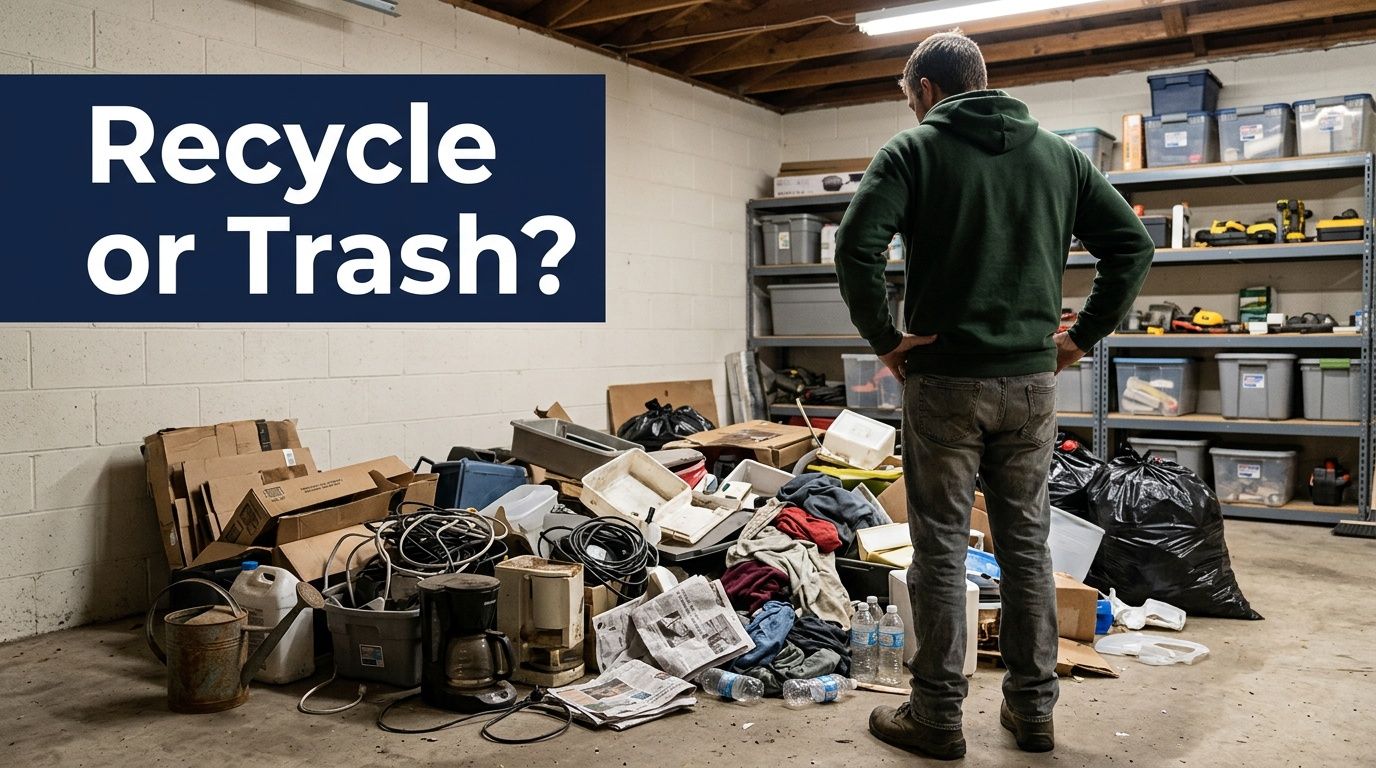
The difference between a clean recycling load and an expensive mixed-waste haul usually comes down to sorting early. If paper stays dry, metals stay loose, and electronics stay out of the trash pile, you’ve got options. If everything gets piled together with food residue, loose trash, and broken bulky items, landfill disposal becomes far more likely.
Where people get stuck
Most Atlanta residents and facility teams run into the same problems:
- Curbside limits: The blue bin won’t solve bulky cleanouts, renovation leftovers, or electronics removal.
- Contamination: Bags, food residue, and wishcycling can turn recyclables into reject material.
- Operational hassle: Offices and apartment properties often have recyclable material, but no simple internal process to separate it.
- Reporting pressure: Commercial operators increasingly need documentation for waste reduction and responsible handling.
Clean recycling isn’t mostly about good intentions. It’s about putting the right material in the right channel the first time.
For local cleanouts, that usually means combining city knowledge with a removal partner that understands diversion, not just hauling. That’s the gap many customers are trying to close when they start with Fulton Junk Removal.
Mastering Atlanta's Curbside Recycling Program
Atlanta’s curbside system is the foundation of local residential recycling. It serves over 100,000 households and uses a single-stream setup, which means accepted paper, plastics, metals, and glass all go into the same cart without household sorting. The city’s results have improved, but contamination still matters a lot.
According to an AJC report on Atlanta’s recycling audit and program progress, contamination reached 41% in 2017. An education initiative later produced a 19% decrease in contamination on treated routes. By FY2023, the program collected nearly 20,000 tons of recyclables. A 2025 city audit reported a 23% recycling rate, which was more than double the 2017 level but still below the EPA benchmark cited in that report.
What belongs in the blue cart
For most homes, curbside works best when you think in broad categories:
- Paper products: clean paper, newspaper, cardboard, and similar dry fiber
- Plastic containers: accepted household plastics that fit the city program
- Metal containers: aluminum and steel cans
- Glass containers: bottles and jars accepted in Atlanta’s program
The program only works well when those items are empty, clean, and dry. That’s not a slogan. It’s the difference between material that can move through sorting equipment and material that gets rejected.
What causes problems
The most common failure point is contamination. Residents often throw in bagged recyclables, food-soiled paper, loose trash, or random items that “seem recyclable.” That practice is usually called wishcycling. It creates extra labor, lowers commodity quality, and can knock usable material out of the stream.
Here’s the quick reference most households need.
| Atlanta Curbside Recycling Cheat Sheet | |
|---|---|
| Accepted in Blue Bin | Not Accepted (Keep These Out) |
| Clean paper and cardboard | Plastic bags |
| Empty plastic containers accepted by the city | Food waste |
| Aluminum and steel cans | Bagged recyclables |
| Glass bottles and jars accepted by the city | Bulky items |
| Clean, dry mixed recyclables placed loose in the cart | Electronics |
| Standard household recyclables in the city’s single-stream program | Paint, chemicals, and other special waste |
How to recycle curbside without causing rejects
A few habits make the system work better:
- Keep items loose. Don’t bag recyclables.
- Rinse containers. They don’t need to be spotless, but they can’t be full of residue.
- Flatten cardboard when possible. It saves space and helps collection.
- Leave out “maybe” items. If it’s a hose, toy, greasy box, or broken household object, it probably doesn’t belong in the cart.
- Separate cleanup waste from recycling before pickup day. Mixing move-out debris with recyclables is where many loads go wrong.
Practical rule: If an item is dirty, soft-film plastic, hazardous, electronic, or bulky, stop before putting it in the blue bin.
Households dealing with overflow, move-outs, or mixed material pickups often need a second channel beyond city service. In those situations, local service coverage matters, especially if you’re trying to sort a larger load in Atlanta junk removal service areas.
From Your Curb to a New Product The Recycling Journey
Many view recycling as the moment the truck leaves the curb. The important part starts after that.
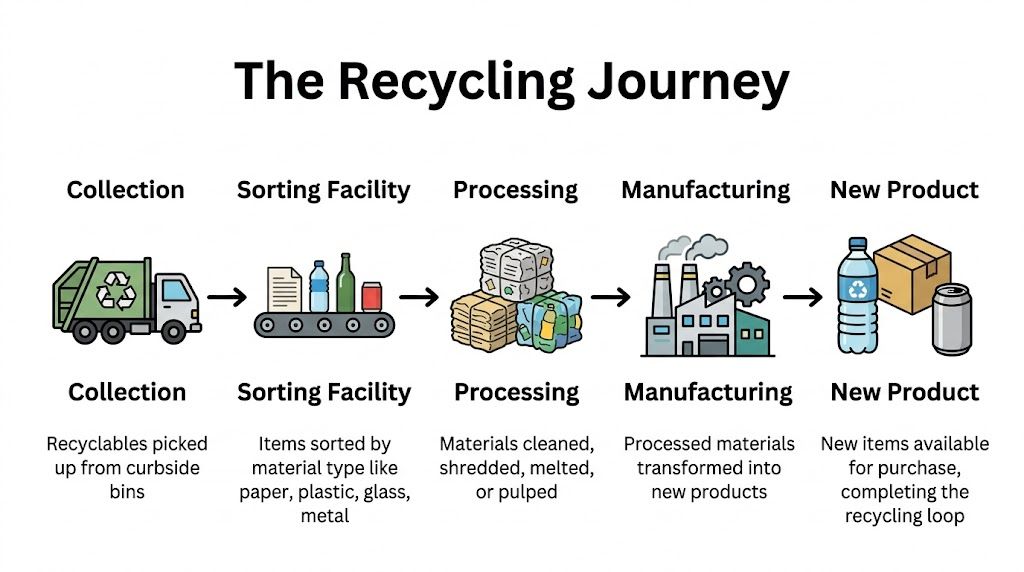
Atlanta’s accepted curbside recyclables, excluding glass in the city’s described process, move through a chain that depends on clean material and mechanical sorting. The city outlines that path through Atlanta’s recycling process and Pratt facility overview. Recyclables are collected, transferred, and then sorted at Pratt Recycling’s Material Recovery Facility in Conyers.
What happens inside the MRF
At the MRF, machines do the heavy separation work. The city describes optical scanners, air classifiers, and magnetic and eddy current separators that sort paper, plastics, aluminum, and steel into commodity streams. For clean inputs, recovery rates there exceed 90%.
That’s why preparation matters so much at the household and business level. A clean bottle or can is a processable commodity. A bag of wet mixed waste isn’t.
Why contamination hurts the whole system
Once material reaches a sorting line, the equipment is designed for specific item types moving at speed. Paper needs to stay dry enough to become usable fiber. Containers need to be recognized and separated correctly. Loose film and bagged material can interfere with screening and sorting.
The city’s process description also notes that sorted materials are baled into 1,000 to 1,500 pound units and sold to re-processors. It cites baled aluminum at $0.80 to $1.20 per pound. That economic side matters. Clean material has value. Contaminated material creates handling cost and can lose marketability.
A recyclable item doesn’t become useful because it entered a blue cart. It becomes useful when a processor can actually sort it, bale it, and sell it.
What the end market needs
A functioning recycling system depends on predictable output. Re-processors want fiber, metal, and plastic streams that meet quality specs. That is why a damp load of cardboard, a bag of mixed office trash, or random debris from a cleanout can ruin what should have been a recyclable shipment.
The same city resource says this process diverts roughly 50,000 tons from landfills annually based on audits. That’s a major operational outcome, but it only works when the incoming material is properly prepared.
For residents, the lesson is simple: don’t treat the cart like a maybe-bin. For offices, retail sites, and apartment turnovers, the lesson is broader. Sorting has to happen before the load gets compacted into junk.
What to Do with Items That Cant Go in Your Recycling Bin
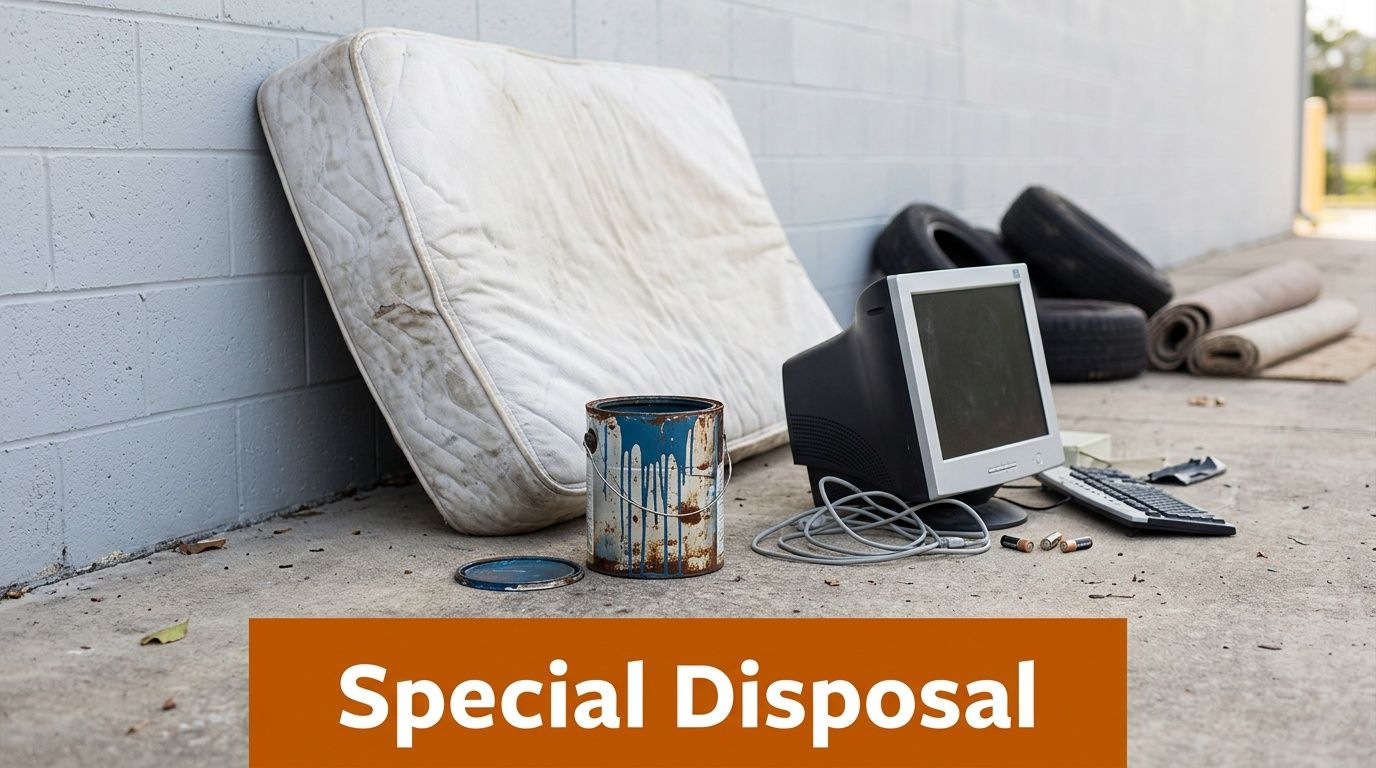
The blue bin is useful, but it has hard limits. Mattresses, damaged furniture, paint cans, old monitors, loose batteries, and renovation leftovers don’t belong in curbside recycling. Putting them there creates contamination, missed pickup issues, and in some cases a safety problem.
Common items that need a different outlet
When a household or property cleanup goes sideways, it’s usually because people try to force one disposal method onto everything. Atlanta cleanouts work better when you split materials by type.
- Electronics: computers, monitors, printers, and related devices should be handled separately for responsible recycling and data protection.
- Bulky household items: mattresses, couches, shelving, and damaged furniture often need bulk pickup or a haul-away service.
- Paint, chemicals, and similar materials: these need special disposal pathways, not curbside carts.
- Appliances and metal-heavy items: many can be recycled, but they usually require separate collection.
- Move-out mixed debris: this often needs on-site sorting because cardboard, reusable items, scrap metal, and trash are all mixed together.
Useful Atlanta options
For residents handling specialty materials, local drop-off resources can help. Atlanta residents often rely on the Center for Hard to Recycle Materials, commonly called CHaRM, for items that don’t belong in curbside service. City transfer and sanitation options can also help with bulky waste depending on the item and service rules.
For electronics, the biggest mistake is treating them like ordinary junk. Devices can contain sensitive data and components that should be recovered responsibly. The practical move is to separate them early, keep them dry, and avoid stacking them into general trash.
A better way to handle a cluttered cleanup
If you’re clearing a garage, preparing a home for sale, or turning over a rental, sort in this order:
- Set aside obvious recyclables like cardboard, paper, metal cans, and clean containers.
- Pull out electronics before anything gets loaded or broken.
- Identify bulky items that need separate removal.
- Bag actual trash only after sorting so recyclables don’t disappear into mixed waste.
- Use specialty drop-off or pickup channels for the materials curbside won’t take.
The easiest way to lose recyclable material is to start cleaning without creating separate piles.
That’s especially true during move-outs and renovations, where speed usually beats judgment unless someone is managing the streams intentionally.
Commercial Recycling Your Guide to Compliance and Sustainability
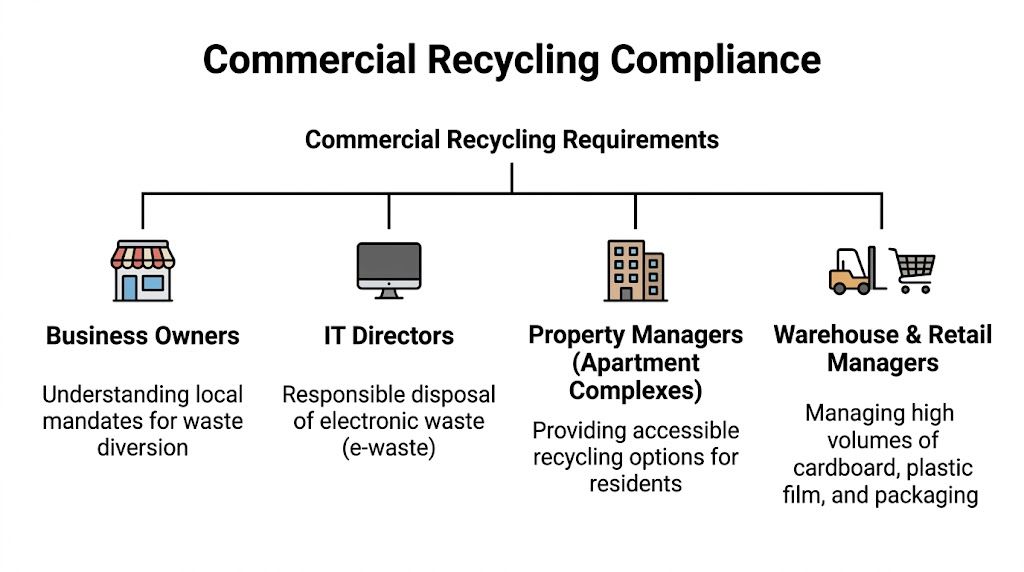
For commercial properties in Atlanta, recycling is an operations issue, a legal issue, and a reporting issue. Offices, apartment communities, retail sites, and warehouses generate recyclable material every day, but the hard part isn’t producing it. The hard part is building a system people will use.
Atlanta’s multifamily challenge makes that clear. A summary of Atlanta’s multifamily recycling ordinance and access gap notes that 40% of Atlanta’s residents live in multifamily units, while recycling rates there lag 20% to 30% behind single-family homes because of infrastructure gaps. That same source explains that Ordinance 07-O-1335 requires multifamily properties to provide recycling containers and private hauling services, with annual tonnage reporting to the city. It also notes that proper implementation can achieve 20% to 40% diversion rates and lower waste bills by 10% to 15%.
What compliance looks like in practice
For property managers, compliance isn’t just ordering a bin and hoping tenants figure it out. The ordinance framework requires accessible recycling service, private hauling, and reporting. If containers are poorly placed, too small, or unlabeled, contamination rises and participation drops.
The same ordinance summary states that owners can face fines up to $1,000 per day for non-compliance. That gets attention quickly, but the day-to-day pain is often simpler than a fine. Overflowing trash rooms, cardboard pileups, and contaminated containers create complaints, extra labor, and higher hauling friction.
Why businesses struggle even when they want to recycle
Commercial recycling programs usually fail for operational reasons, not philosophical ones.
- Office settings: Staff members toss food, coffee cups, paper, and packaging into the same bin because the signage is weak or the containers are poorly placed.
- Warehouse and retail environments: Cardboard and packaging film build up fast, but crews prioritize speed unless there’s a defined collection routine.
- Apartment properties: Residents won’t walk across a parking lot to use a poorly marked enclosure, especially during move-in and move-out periods.
- IT and facilities teams: Old electronics often sit in storage because nobody wants to risk data exposure or schedule multiple vendors.
What works better
The properties that recycle consistently usually share a few habits:
- Accessible container placement: Recycling has to be as easy as trash.
- Clear labels at point of disposal: People don’t memorize accepted materials.
- Separate handling for electronics and bulky turnover items: These shouldn’t flow into the regular waste stream.
- Routine tonnage tracking: If management can’t measure outputs, reporting becomes guesswork.
A commercial recycling program succeeds when custodial teams, tenants, vendors, and managers all know where material goes before a cleanup starts.
For sustainability teams, there’s another benefit. A documented diversion process supports internal reporting far better than a generic haul-away receipt. That matters for ESG discussions, vendor reviews, and property-level operating standards.
The Fulton Junk Removal Advantage Integrated Recycling Services
A lot of junk removal still follows the same basic model. A truck arrives, the crew loads fast, and mixed material leaves the site with very little separation. That approach clears space, but it doesn’t solve much if your goals include recycling, data handling, or diversion reporting.
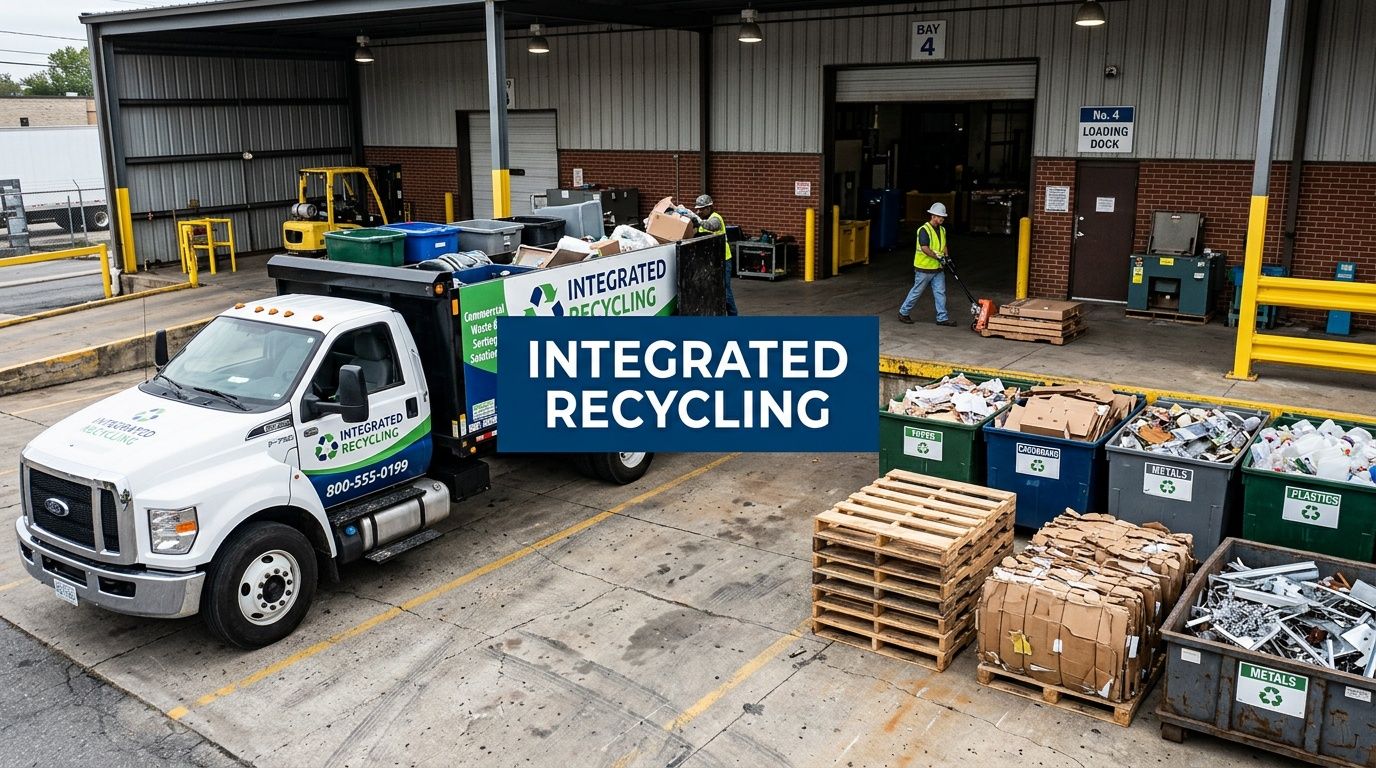
The more responsible model starts before loading. Crews separate cardboard from trash, pull electronics out of mixed piles, keep metals recoverable, and identify items that belong in dedicated recycling channels instead of a disposal load.
What integrated recycling changes
For commercial cleanouts, one of the biggest advantages of an integrated model is simplification. Office managers and property teams don’t want to coordinate one vendor for furniture, another for e-waste, another for scrap metal, and another for reporting. They want one process that separates streams correctly.
That’s where Fulton Junk Removal fits operationally. Through its connection with Beyond Surplus, it can pair haul-away service with separate recycling handling for electronics, metals, and other recyclable materials through its service lineup. For an office decommission, warehouse cleanup, or apartment turnover, that means fewer mixed loads and a cleaner chain of custody for materials that shouldn’t be landfilled by default.
Where this matters most
Integrated recycling tends to matter most in jobs where ordinary city service doesn’t apply well:
- Office cleanouts: old monitors, cables, chairs, shelving, boxed paper files, and packaging
- Warehouse resets: pallets, metal fixtures, cardboard, obsolete equipment, and mixed backroom debris
- Retail and restaurant transitions: display materials, small equipment, seating, stockroom clutter, and outdated electronics
- Property turnovers: furniture, appliances, cardboard, tenant leftovers, and electronics left behind
- Estate and whole-home cleanouts: material comes out mixed, and on-site sorting is the only way to preserve diversion
What works and what doesn’t
What works is early separation, clear downstream handling, and documentation when needed. What doesn’t work is loading everything together and trying to sort after the fact, especially when food residue, broken glass, textiles, and electronics have all been compacted into one truck.
For businesses, the practical value is less about marketing language and more about process control. A facilities manager can close out a site faster when removal and recycling are coordinated. A property manager can keep turnover timelines tighter when bulky debris and recyclables leave in one managed operation. An IT or operations team can keep electronics out of general waste without adding another standalone project.
Mixed loads create disposal problems. Separated loads create options.
That’s the core trade-off. If your cleanup is simple and small, city channels may be enough. If the job includes electronics, bulky material, or compliance pressure, integrated removal and recycling usually makes the waste stream more manageable.
Actionable Tips for Less Waste and Better Recycling
The best recycling results usually come from small habits repeated every day. Households, offices, and apartment properties don’t need a complicated system. They need a few rules that people can follow when they’re moving quickly.
Habits that improve atlanta recycle results
- Keep recyclables empty, clean, and dry. Residue ruins paper and attracts contamination in mixed loads.
- Leave recyclables loose. Plastic bags create sorting problems and don’t belong in the main stream.
- Create a holding area during cleanouts. A separate space for cardboard, metal, electronics, and trash prevents everything from becoming mixed waste.
- Don’t guess on odd items. Hoses, toys, broken decor, stained textiles, and random household pieces usually aren’t curbside recyclables.
- Flatten boxes early. Cardboard expands faster than people expect during move-outs and deliveries.
Better setup for homes and workplaces
A lot of recycling problems start with layout. If trash is closer than recycling, people use trash. If the only recycling container is in a loading area or hidden in a break room, contamination goes up because nobody knows the intended flow.
Try this instead:
- Put recycling and trash next to each other so the choice is obvious.
- Use simple labels with examples instead of generic recycling symbols.
- Give electronics their own collection point rather than letting them pile up under desks or in maintenance rooms.
- Train during active transitions such as move-ins, office restacks, and vendor cleanouts.
Waste reduction matters too
The cleanest recycling load is the one that never had to exist. Reuse, donation, repair, and smarter purchasing all reduce pressure on bins and hauling budgets. For homeowners tackling clutter before a move or renovation, practical organization advice can help before disposal even starts. A useful outside resource is this guide on decluttering your home, especially if you need a simple sorting method before deciding what gets recycled, donated, or removed.
For local cleanup planning, it also helps to review more material-specific guidance from the Fulton Junk Removal blog.
Small sorting decisions made at the start of a cleanup are usually more important than big disposal decisions made at the end.
Your Next Step Toward a Cleaner Atlanta
Atlanta recycling works best when each material goes to the right outlet. The blue cart handles a lot for households. Specialty drop-offs and separate pickups handle the items curbside can’t. Commercial properties have another layer to manage, because access, hauling, and reporting all affect compliance.
That’s why the smartest atlanta recycle approach isn’t just “throw less away.” It’s building a repeatable system for homes, offices, properties, and cleanouts. Clean paper and containers belong in curbside. Electronics need a dedicated channel. Bulky mixed debris often needs on-site sorting before anything leaves the property.
For homeowners, that means less confusion during garage cleanouts, moves, and renovations. For businesses and property managers, it means fewer contaminated loads, better operational control, and a clearer path to documenting responsible disposal.
If you’re planning a cleanout and need a practical next step, start with a conversation about the material you have. A mixed office closure, unit turnover, or whole-home cleanup usually becomes easier once someone separates what can be recycled from what belongs in disposal. You can request that help directly through Fulton Junk Removal contact options.
If you need a local team to remove bulky items, separate recyclable material, and coordinate responsible handling through Atlanta-area recycling channels, Fulton Junk Removal offers a straightforward starting point for homes, offices, warehouses, and property cleanouts.
