
Your Ultimate 10-Step Cross Country Move Checklist for 2026
Relocating across the country is a significant undertaking, a logistical puzzle involving countless decisions and deadlines. For Atlanta-area homeowners, tenants, and businesses, a well-structured plan is not just helpful; it's essential for a smooth transition. This comprehensive cross country move checklist is designed to be your roadmap, breaking down the entire process into manageable, timeline-based steps. We will guide you from the initial decluttering phase months before your move to the final tasks of settling into your new space.
This guide provides actionable insights for every stage, whether you're a property manager coordinating a unit turnover, an office manager overseeing a corporate relocation, or a homeowner preparing for a new chapter. A critical first step is efficiently and responsibly downsizing. This is where strategic partners become invaluable. For instance, services like Fulton Junk Removal, working hand-in-hand with Beyond Surplus, can handle the removal of unwanted furniture, electronics, and debris. This partnership ensures that your items are recycled or repurposed, not just sent to a landfill, simplifying sustainability goals for businesses and offering peace of mind to residents.
By following this checklist, you will gain clarity on what to do and when to do it. We'll cover everything from obtaining moving quotes and managing utilities to packing an essentials box for your first night. For an overarching strategy and comprehensive insights into managing every phase of your relocation, consider this complete guide to planning a cross-country move. Let's begin transforming this complex project into a series of clear, achievable tasks.
1. Declutter and Identify Items for Removal
The first, most crucial step in any successful cross country move checklist is to systematically declutter your space. This process involves evaluating every item you own and deciding whether it’s truly worth the cost and effort to transport hundreds or thousands of miles. Moving is expensive, and every pound adds to the final bill. By identifying broken, outdated, or unwanted items now, you significantly reduce moving volume and expenses, starting your new life with a clean, organized slate.

Inspired by popular movements like the KonMari Method, this initial purge is your biggest opportunity to save money and simplify logistics. For homeowners in Atlanta downsizing to a smaller apartment or businesses relocating offices, this means shedding old furniture, outdated electronics, and accumulated clutter that won't fit or serve a purpose in the new location.
Why It's a Priority
A cross-country move magnifies the cost of clutter. A professional junk removal service is not just a convenience; it's a strategic financial decision. Instead of paying movers to pack, load, and transport a worn-out sofa or non-functional appliances, you can have them responsibly hauled away beforehand. This is especially critical for commercial moves where outdated office furniture, e-waste, and warehouse junk can inflate moving costs exponentially.
Key Insight: The cost to remove an item is almost always less than the cost to move it across the country. Prioritizing decluttering sets the foundation for a more efficient and affordable relocation.
Actionable Tips for Effective Decluttering
- Start Early: Begin the process 6-8 weeks before your move date. Tackle one room or area at a time, such as the garage, attic, or basement, to avoid feeling overwhelmed.
- Sort Strategically: Use a simple four-box method: Keep, Donate, Recycle, and Junk. Be ruthless in your decisions. If an item hasn't been used in over a year, it's a prime candidate for removal.
- Schedule Professional Removal: Arrange for a junk removal service 2-3 weeks before your movers are scheduled. This clears out the space, making it easier for the moving crew to navigate.
- Focus on Responsible Disposal: For businesses and environmentally conscious homeowners, partner with a service that prioritizes recycling. While most junk removal companies take everything to the landfill, Fulton Junk Removal works hand-in-hand with Beyond Surplus to recycle electronics, metals, and other materials responsibly, minimizing waste and maximizing reuse.
2. Schedule Professional Junk Removal Services
After decluttering, the next critical step in your cross country move checklist is to book a professional junk removal company. This is not just about convenience; it's a logistical necessity for handling the bulky, hazardous, or unwanted items that moving companies either refuse to take or charge exorbitant fees to transport. Scheduling this service early ensures that everything you decided against keeping is removed efficiently, leaving a clear and accessible space for your movers.
This proactive step is vital for large-scale residential cleanouts, such as an Atlanta homeowner clearing out two decades of accumulated items from a garage, or for commercial relocations where outdated office furniture and e-waste must be disposed of properly. For offices, warehouses, and property managers, Fulton handles the junk removal, and our partner Beyond Surplus ensures responsible recycling, making compliance and sustainability reporting easier.
Why It's a Priority
Moving companies are transporters, not disposal experts. They often have restrictions on what they can carry, typically excluding items like old paint, propane tanks, and large quantities of e-waste. Instead of facing last-minute surprises and extra fees, arranging for a junk removal service beforehand provides a definitive solution. This is especially true for property managers clearing units or businesses needing to meet sustainability goals during a relocation.
Key Insight: Booking junk removal before your movers allows you to get a more accurate moving quote based on your actual inventory, preventing unexpected costs and ensuring a smoother move day.
Actionable Tips for Scheduling Junk Removal
- Book in Advance: Contact a junk removal service 4-6 weeks before your moving date to secure your preferred time slot, especially during peak moving season.
- Separate and Stage Items: Clearly separate junk items from those you are keeping. This prevents confusion and helps the removal crew work quickly and efficiently.
- Inquire About Prohibited Items: Confirm which items your moving company will not transport (e.g., hazardous materials, old tires, certain electronics) and ensure your junk removal service can handle them.
- Choose Bundled Services: Fulton can offer a bundled junk removal and recycling pickup, where all electronic waste and other recyclable materials are directly processed by Beyond Surplus. This integrated, eco-friendly solution goes beyond traditional junk hauling. Explore our comprehensive services to see how we manage both junk hauling and responsible recycling.
3. Create a Detailed Moving Inventory and List
After decluttering, the next strategic step in your cross country move checklist is creating a comprehensive inventory of everything you plan to transport. This process involves meticulously documenting each box and item, noting its contents, condition, and intended room in your new home. For a long-distance move, an accurate inventory is not just an organizational tool; it's your primary record for insurance purposes and a roadmap for a smooth unpacking process.
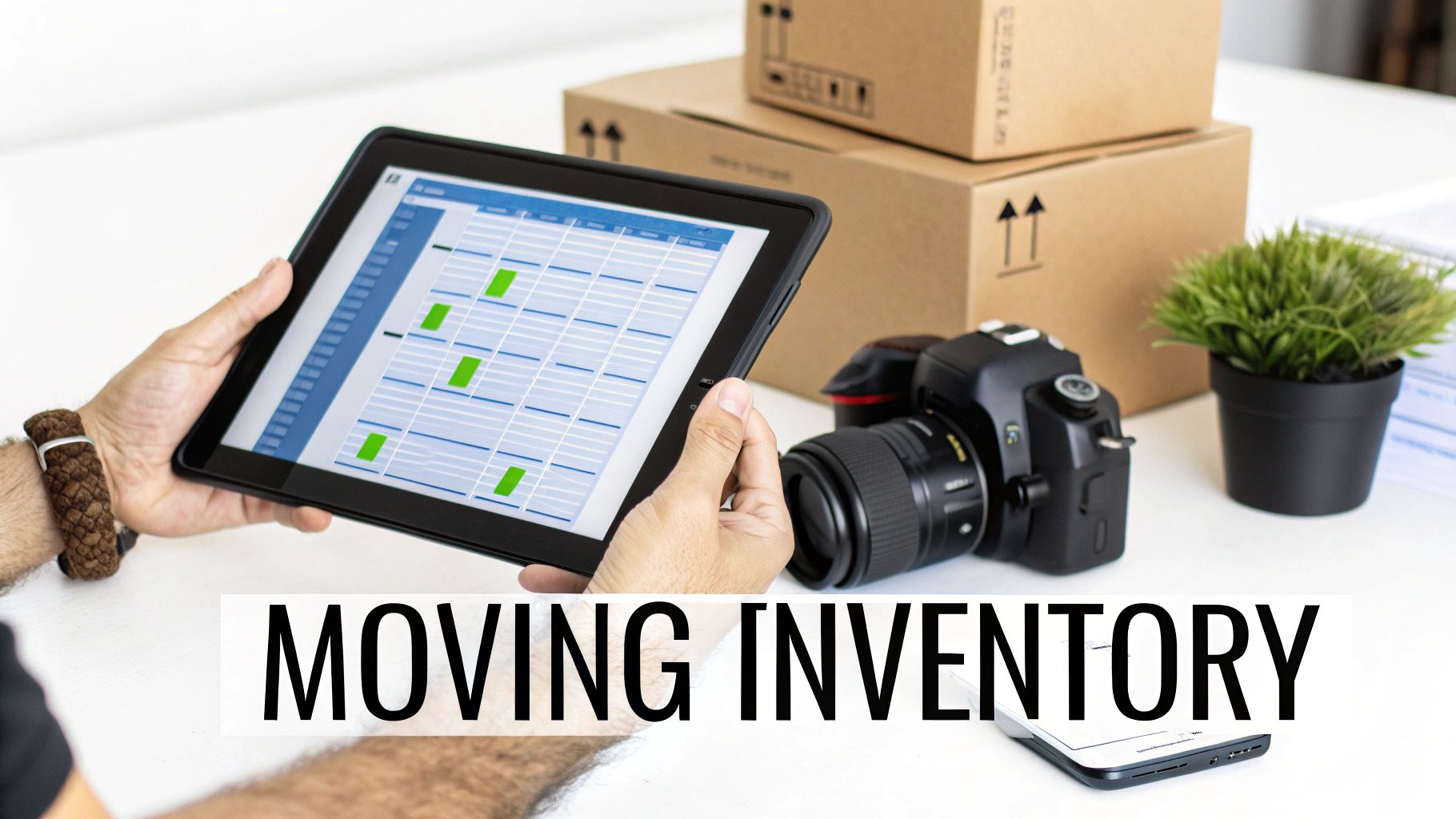
This detailed log is invaluable for anyone, from families moving across states to businesses relocating their headquarters. An Atlanta-based business, for instance, can use a digital inventory to track high-value IT equipment, ensuring every server and monitor is accounted for upon arrival. It provides peace of mind and simplifies verifying that everything arrived safely and in its original condition.
Why It's a Priority
A detailed inventory is your best defense against lost or damaged items. During a cross-country relocation, boxes pass through many hands, and having a documented list with photographic evidence is crucial for filing a successful insurance claim. It also streamlines communication with your moving company, allowing you to easily identify any special handling requirements for fragile or valuable items. For property managers overseeing an estate cleanout, a precise inventory ensures all assets are accounted for before final removal and disposal.
Key Insight: Your moving inventory serves as proof of possession and condition. In the event of a dispute or a claim, a well-documented list is non-negotiable and provides critical leverage.
Actionable Tips for Effective Inventory Management
- Go Digital: Use an app like Sortly or a simple Google Sheet to create a shareable, easily accessible inventory. This allows you to add photos and detailed notes from your phone.
- Assign Unique IDs: Number every box and log it in your inventory spreadsheet. Note the contents and the destination room (e.g., "Box #27: Kitchen – Glassware").
- Photograph Everything: Take clear photos of valuable items, such as electronics and artwork, before packing them. Also, snap a picture of the contents of each box before you seal it.
- Use a Color-Coding System: Assign a specific color sticker to each room (e.g., blue for the primary bedroom, green for the kitchen) and place a sticker on each corresponding box. This makes it easy for movers to place boxes in the correct rooms.
4. Obtain Moving Quotes from Multiple Carriers
After decluttering, the next critical task on your cross country move checklist is to secure competitive and transparent pricing from professional movers. This involves obtaining detailed quotes from at least three to five reputable moving companies. Comparing these estimates allows you to analyze pricing, available services, insurance coverage, and timelines, ensuring you find the best value and avoid unexpected costs on moving day.
This step is essential for both residential and commercial relocations. A family moving from Atlanta to California might find a price variance of over $3,000 between carriers for the same inventory. Similarly, an office manager coordinating a large-scale move must compare bids to stay within budget while ensuring all sensitive equipment is handled correctly. Getting multiple quotes empowers you to make an informed financial decision.
Why It's a Priority
A cross-country move is a significant investment, and prices can vary dramatically between carriers based on their operational models, scheduling, and included services. Skipping this step can lead to overpaying by thousands or partnering with an unreliable company. By soliciting multiple quotes after you have decluttered, your inventory list will be accurate, leading to more precise estimates and preventing last-minute price hikes for underestimated volume.
Key Insight: A detailed, in-home or on-site estimate is the gold standard. It provides the most accurate quote and allows you to vet the company's professionalism firsthand, minimizing the risk of budget overruns.
Actionable Tips for Securing Quotes
- Time It Right: Request quotes 4-6 weeks before your move, but only after you've completed your initial decluttering and junk removal. This ensures the inventory assessed is what you actually plan to move.
- Insist on In-Home Estimates: For residential moves, always request an in-person walkthrough. For commercial moves across our diverse service areas, demand an on-site evaluation to accurately assess office furniture, warehouse equipment, and electronics.
- Clarify Quote Types: Ask each carrier if their quote is binding (a guaranteed price), non-binding (an estimate that can change), or binding-not-to-exceed (your final cost won't go over the estimate).
- Verify Credentials: Ensure any potential mover is licensed and insured. Check their U.S. Department of Transportation (DOT) number and look for reviews from reputable sources like the American Moving & Storage Association.
5. Arrange Utilities Disconnect and Connection
One of the most critical logistical tasks on any cross country move checklist is managing the seamless transition of your utility services. This involves coordinating the disconnection of electricity, gas, water, internet, and cable at your old Atlanta residence and ensuring they are activated at your new home before you arrive. A misstep here can leave you without power or internet on move-in day, creating unnecessary stress during an already busy time.
This step requires meticulous planning, as different providers, cities, and states have unique procedures and lead times. A family moving from Georgia to California must navigate a new set of providers like PG&E or SoCal Edison, while a business relocating its office needs to ensure its internet and phone systems are migrated without any operational downtime.
Why It's a Priority
Properly scheduling your utilities prevents service gaps and costly overlaps. Failing to disconnect services at your old home can result in you paying for usage after you’ve moved out. Conversely, forgetting to schedule activation at your new home can mean arriving to a dark, cold house with no way to communicate or work remotely. This coordination is just as important as the physical move itself.
Key Insight: A well-managed utility transition is the backbone of a smooth move-in day. Plan your disconnect and connect dates carefully to ensure you have essential services from the moment you arrive.
Actionable Tips for Utility Coordination
- Create a Master List: Six weeks before your move, compile a list of all your current utility providers with account numbers and contact information. Research and add the providers for your new address.
- Schedule in Advance: Contact each provider 3-4 weeks before your move. Schedule the disconnection at your old home for the day after you move out and the activation at your new home for the day before you arrive.
- Confirm and Document: After scheduling, confirm the dates and request confirmation numbers. On move-out day, take photos of your final meter readings for your records.
- Provide a Forwarding Address: Ensure all old providers have your new address to send final bills or refund any security deposits. This also prevents final notices or bills from being missed.
- Don't Forget the Final Cleanout: Once utilities are managed, the final cleanout is the last step. Whether it's leftover furniture or move-out debris, a professional service can clear the property efficiently. You can contact us to learn how we handle final move-out cleanouts for homes, apartments, and commercial properties.
6. Update Address with Government and Financial Institutions
Once you’ve handled the physical items, the next critical task in your cross country move checklist is managing your digital and paper trail. This involves systematically updating your mailing address with every entity that needs it, from the IRS and Social Security Administration to your bank and subscription box services. Failing to do so can lead to missed bills, identity theft risks, and a major headache trying to track down important documents after you’ve already relocated.
This administrative step is as crucial for a business changing its corporate headquarters as it is for a homeowner moving from Atlanta to the West Coast. A formal change of address ensures a seamless transition, preventing disruptions in services, payroll, and official communications. For property managers, this process includes updating records with municipal services and insurance carriers to maintain compliance.
Why It's a Priority
Updating your address is a non-negotiable step for maintaining financial and legal continuity. Forgetting to notify a creditor can lead to missed payments and damage your credit score, while a business that fails to update its registration could face legal penalties. This administrative task directly impacts your financial health, legal standing, and peace of mind during a period of significant upheaval.
Key Insight: Proactively managing your change of address is a foundational part of a secure and organized move. Start the process 4-6 weeks in advance to give institutions enough time to process the change.
Actionable Tips for a Smooth Address Update
- Start with USPS: File your official Change of Address online at usps.com at least two weeks before your move. This will forward most of your mail for up to 12 months.
- Create a Master List: Make a comprehensive list of all institutions to notify. Prioritize government agencies (IRS, SSA, DMV), financial institutions (banks, credit cards, loans), and your employer first.
- Update Insurance Policies: Contact your homeowner's, renter's, and auto insurance providers. Your new location will affect your premiums, and your coverage must be valid at the new address from day one.
- Notify Subscriptions and Services: Don’t forget about magazines, streaming platforms, meal kit deliveries, and online shopping accounts to prevent deliveries from going to your old home.
7. Research and Reserve New Housing in Destination State
With your move-out logistics underway, the next critical task in a cross country move checklist is securing a place to live in your new city. Whether you're a remote worker relocating to a competitive tech hub like Austin or a family moving for a job transfer, finding and reserving housing from afar requires a proactive and organized approach. This step involves more than just browsing listings; it’s about aligning your new home’s availability with your movers’ arrival to ensure a seamless transition.
Popularized by real estate platforms like Zillow and Apartments.com, the long-distance housing search has become more manageable. However, it still demands due diligence, from virtually touring properties and vetting neighborhoods to understanding local rental laws. Securing your housing early prevents the stress and expense of temporary accommodations, allowing you to settle in immediately upon arrival.
Why It's a Priority
A cross-country move has many moving parts, and your arrival date is a fixed point that everything else revolves around. Reserving your new home locks in a critical date, allowing you to finalize schedules with your moving company, arrange for utility transfers, and plan your travel itinerary. Failing to secure housing in advance can lead to a logistical nightmare where your belongings arrive before you have a place to put them, resulting in costly storage fees and the chaos of living out of a hotel.
Key Insight: Securing your new home 2-3 months in advance is not just a suggestion; it's a strategic necessity that dictates the timeline for the rest of your move, preventing costly delays and logistical bottlenecks.
Actionable Tips for Securing Housing
- Start Early and Research Deeply: Begin your search at least three months out. Use tools like Google Street View, WalkScore, and local forums to get a feel for different neighborhoods beyond the listing photos.
- Leverage Virtual Tours: Schedule live video tours with landlords or property managers to see the space in real time. Ask them to show you specific areas, like storage closets and appliance conditions.
- Budget for Application Fees: Be prepared for application fees, which can range from $50 to $200 per application in competitive markets. Have your financial documents and references ready to submit quickly.
- Negotiate and Verify Lease Terms: Before signing, clarify all terms, including lease length, pet policies, and parking. Request a flexible move-in date window (e.g., 5-7 days) to accommodate potential moving truck delays.
8. Prepare an Essentials Box and First-Night Supplies
After weeks of packing, the last thing you want is to arrive at your new, empty home late at night and have to rummage through dozens of boxes for a toothbrush or phone charger. Preparing a dedicated essentials box is a non-negotiable step in a smart cross-country move checklist. This box, or a few designated containers, holds everything your family will need to function comfortably for the first 24-48 hours before the main unpacking begins.
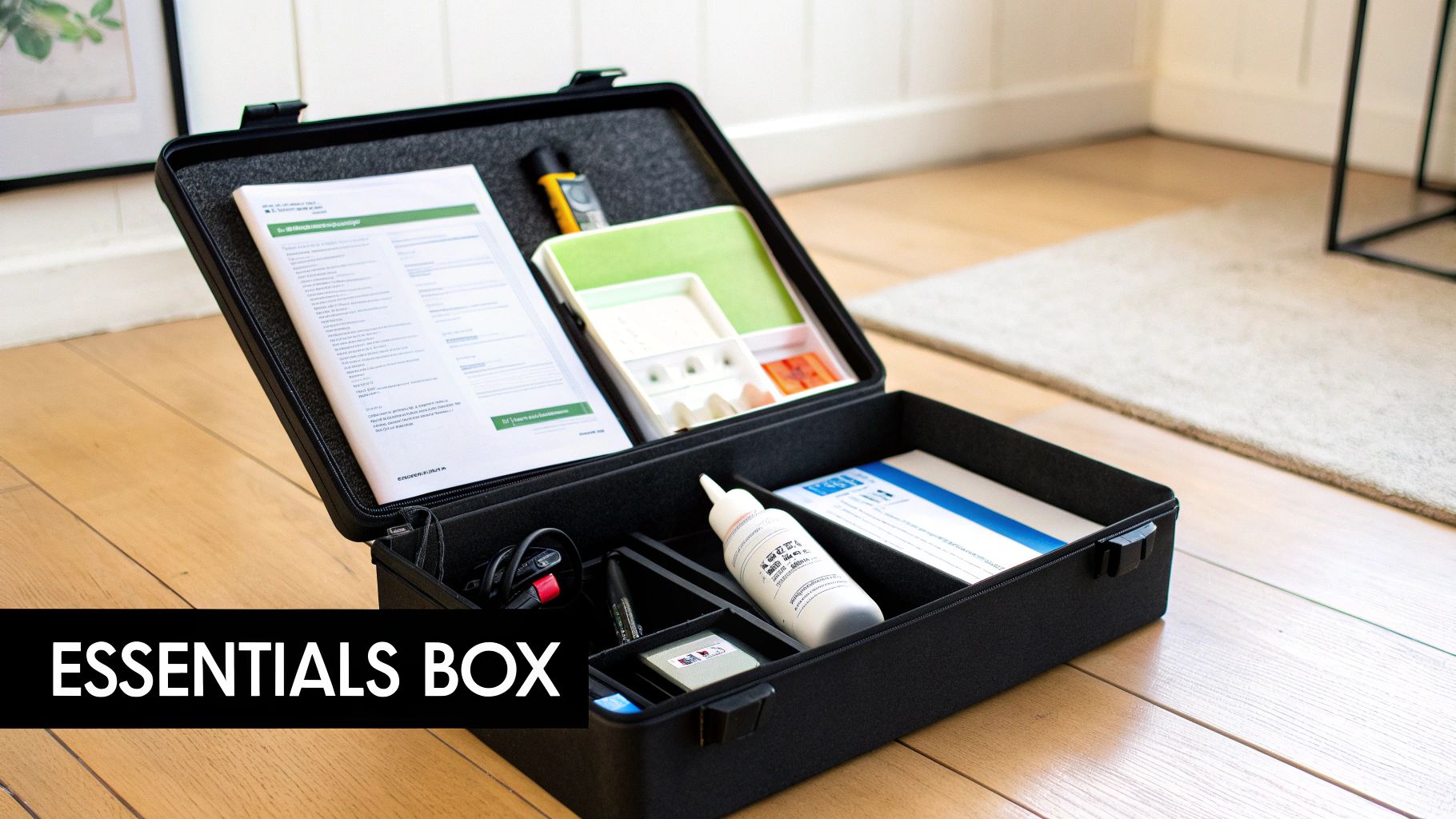
This simple act of preparation transforms a potentially chaotic arrival into a smooth transition. For a family moving from Atlanta, it means having bedding, toiletries, and snacks ready for tired children. For a business relocating, it ensures critical documents, laptops, and network cables are immediately accessible to minimize operational downtime.
Why It's a Priority
A cross-country move often means your belongings will be in transit for several days, if not longer. The moving truck might even arrive a day or two later than you do. An essentials box bridges this gap, providing immediate access to critical items without the stress of a frantic search. It’s a simple strategy that prevents unnecessary expenses like last-minute store runs for basic supplies or ordering takeout because you can't find a single pot or pan.
Key Insight: Your first night in a new home sets the tone for the entire settling-in process. An essentials box is your toolkit for a calm, controlled, and comfortable start.
Actionable Tips for Your Essentials Box
- Use Distinctive Packaging: Pack your essentials in a brightly colored bin or a clearly labeled box. Mark it "ESSENTIALS – DO NOT MOVE" or "OPEN FIRST" on all sides.
- Transport It Personally: If possible, keep this box in your personal vehicle. This guarantees you have it the moment you arrive, regardless of the moving truck's schedule.
- Pack Room by Room Essentials: Include a small roll of toilet paper, hand soap, and a towel for each bathroom. Pack basic cookware, paper plates, utensils, and a coffee maker for the kitchen.
- Remember Personal Items: Include a change of clothes for everyone, all necessary medications, phone chargers, toiletries, and important documents like passports, birth certificates, and moving contracts. For families, don't forget children's favorite toys or pet supplies.
9. Cancel or Transfer Subscriptions, Memberships, and Services
An often-overlooked yet financially critical part of any cross country move checklist is auditing and managing your recurring payments. This includes everything from gym memberships and streaming services to professional association dues and magazine subscriptions. Failing to address these can lead to phantom charges for services you can no longer use, silently draining your budget long after you've relocated from Atlanta.
This process, popularized by personal finance apps and budgeting experts, is about stopping "subscription creep" in its tracks. For a homeowner leaving Georgia, this might mean avoiding a hefty gym cancellation fee through early negotiation. For a business, it involves updating memberships and canceling local service contracts that won't apply in the new state, preventing administrative and financial headaches down the line.
Why It's a Priority
Recurring charges are easy to forget but add up quickly. A few unused subscriptions can easily cost hundreds of dollars over a year. A thorough audit prevents you from paying for a local Atlanta gym membership while you're living in another state or for services that aren't transferable. This step is about tightening your budget and ensuring your money moves with you, not against you.
Key Insight: Every subscription canceled or transferred is money saved. This financial cleanup is just as important as physical decluttering for a streamlined, cost-effective move.
Actionable Tips for Managing Subscriptions
- Audit Your Statements: Scrutinize your bank and credit card statements from the last three months to identify all recurring charges. Create a simple spreadsheet to track each one.
- Contact Providers Early: Begin contacting service providers at least four weeks before your move. Ask about their policies for relocation; some may waive cancellation fees or offer a seamless transfer.
- Request Written Confirmation: Once you cancel a service, always ask for a confirmation email or reference number. This provides proof in case of a billing dispute later.
- Update What You Keep: For subscriptions you wish to continue (like magazines or delivery boxes), update your address in their system to ensure uninterrupted service at your new home.
- Research New Local Services: As you cancel Atlanta-based services, start researching equivalents in your new city. This could include finding a new gym, library, or local professional chapter.
10. Arrange Vehicle & Pet Transport; Verify Licensing, Insurance, and Registration
A cross-country move involves more than just your household belongings; it requires careful planning for your vehicles and beloved pets. This step addresses the complex logistics of safely transporting cars and animals while simultaneously navigating the state-specific administrative tasks of transferring licenses, registrations, and insurance policies. Getting these details right prevents last-minute crises and ensures a smooth transition for every member of your family, furry or otherwise.
For an executive relocating from Atlanta for a new role, this might mean coordinating a corporate auto shipping benefit. For a military family, it involves following strict, regulated pet transport procedures. Handling these moving parts early is essential for a seamless addition to your cross country move checklist.
Why It's a Priority
Vehicles and pets are not items you can simply pack in a box. Auto transport services require advance booking, and pet travel involves veterinary visits, specific airline or ground transport carrier requirements, and health certifications. Simultaneously, your destination state has legal deadlines for updating your driver's license and vehicle registration. Failing to plan for these tasks can lead to significant logistical headaches, unexpected costs, and legal compliance issues upon arrival.
Key Insight: Coordinating vehicle, pet, and personal documentation logistics in parallel is crucial. Booking transport 4-6 weeks in advance gives you the runway needed to handle veterinary appointments and DMV requirements without a last-minute scramble.
Actionable Tips for a Smooth Transition
- Book Transport Early: Secure quotes from professional auto shippers 4-6 weeks before your move. Rates for cross-country transport can vary widely, so compare options for door-to-door versus terminal-to-terminal services.
- Prioritize Pet Well-being: Schedule a vet visit about two weeks before your move to obtain a health certificate and ensure all vaccinations are current. When preparing your pets for a cross-country move, understanding the specific requirements for domestic pet travel guidelines is crucial. Update their microchip with your new address.
- Handle State-Specific Paperwork: Research your new state's DMV requirements as soon as you have a move date. Many states, like California, have strict timelines and may require emissions testing. Gather all necessary documents (proof of residency, birth certificate, etc.) and schedule an appointment in advance.
- Update Your Insurance: Notify your auto insurance provider of your move date and new address about a week beforehand. Keep digital and physical copies of your new policy, vehicle registration, and driver's licenses in your "essentials" box.
Cross-Country Move: 10-Item Checklist Comparison
| Task | 🔄 Implementation Complexity | ⚡ Resource Requirements | 📊 Expected Outcomes | 💡 Ideal Use Cases | ⭐ Key Advantages |
|---|---|---|---|---|---|
| Declutter and Identify Items for Removal | Medium — time-intensive, emotional decisions; phased room-by-room process | Low–Medium — person-hours, sorting supplies, possible junk service fees | Reduces move volume/costs (~20–40%); streamlined packing and donations | Downsizing, estate cleanouts, long-distance moves where cost matters | Cuts moving costs; simplifies packing; prevents hauling unwanted items |
| Schedule Professional Junk Removal Services | Low — booking and coordination; scheduling constraints during peak season | Medium — service fees, access for crew, possible disposal/recycling costs | Removes bulky/hazardous items; certified recycling/donation reports | Large bulky items, estate or bulk cleanouts, items movers won't transport | Professional handling, regulatory compliance, saves time and labor |
| Create a Detailed Moving Inventory and List | Medium–High — consistent labeling and documentation required | Low — digital tools/apps, camera, time to catalog | Faster unpacking; insurance proof; quick missing-item identification | High-value moves, corporate/military relocations, insurance-sensitive moves | Protects belongings; accelerates unpacking; supports claims |
| Obtain Moving Quotes from Multiple Carriers | Medium — coordinate 3–5 estimates (in-home/virtual) and compare options | Low–Medium — time, prepared inventory for accuracy | Competitive pricing; clearer service/insurance comparisons; fewer surprises | Cost-sensitive moves, large or complex relocations, long-distance moves | Ensures best price/service; enables negotiation and budget protection |
| Arrange Utilities Disconnect and Connection | Medium — multiple providers with varying lead times and rules | Low — account info, calls; possible deposits and setup fees | Prevents service gaps/overlaps; comfortable move-in day | Moves across states, immediate-occupancy moves, multi-unit relocations | Avoids outages and overlapping charges; ensures move-in readiness |
| Update Address with Government and Financial Institutions | High — many entities, different processing times and in-person requirements | Low — documentation and time to submit updates | Continuous mail and account continuity; avoids missed bills and legal issues | Any interstate move, changes affecting taxes/benefits, estate matters | Prevents financial/legal consequences and lost documents |
| Research and Reserve New Housing in Destination State | High — market research, virtual/in-person tours, lease negotiation | Medium — application fees, deposits, time for vetting | Secures housing aligned with arrival; reduces last-minute housing risk | Competitive markets, families needing schools, remote hires | Ensures committed housing and coordinated logistics |
| Prepare Essential Items Box and First-Night Supplies | Low — one focused packing task if planned | Low — basic supplies, a clearly labeled box; keep with you if possible | Immediate access to meds/docs/chargers; functional first night | Any move, especially late arrivals, families with children/pets, elderly | Reduces stress; ensures immediate comfort and essential access |
| Cancel or Transfer Subscriptions, Memberships, and Services | Medium — audit and contact multiple providers; variable cancellation policies | Low — account access, time, possible cancellation fees | Prevents post-move charges; identifies cost savings opportunities | Anyone with recurring services, cost-conscious movers | Eliminates wasted expenses; simplifies post-move finances |
| Arrange Vehicle & Pet Transport; Verify Licensing, Insurance, Registration | High — booking carriers, vet work, DMV/license requirements, multiple deadlines | High — auto shipping costs ($800–$2,500), pet fees ($200–$500+), paperwork/time | Legal compliance for vehicles/pets; reduces travel burden; avoids fines | Moves with pets/vehicles, long-distance interstate relocations, professionals with credentials | Ensures safe transport, regulatory compliance, and immediate mobility |
Start Your Move the Right Way: Clean, Clear, and Confident
A cross-country move is more than just a logistical challenge; it's a monumental life transition. The journey from one coast to another, or from one corner of the country to its opposite, is paved with decisions, deadlines, and details. The comprehensive cross country move checklist we've outlined provides a strategic roadmap, transforming what can feel like an overwhelming endeavor into a series of manageable, sequential steps. By tackling everything from the initial decluttering phase to the final utility hookup, you are not just moving your belongings; you are engineering a smooth, efficient, and less stressful transition into your next chapter.
The power of this checklist lies in its proactive approach. It forces you to confront the biggest hurdles early on, such as securing reliable movers, creating a meticulous inventory, and most importantly, deciding what is truly worth taking with you. This initial culling process is the foundation of a successful move. It directly impacts every subsequent step, from the size of the truck you need to the time it takes to pack and unpack, ultimately defining the cost and complexity of your relocation.
From Checklist to Action: The Power of a Clean Slate
Let's distill the core principles of a successful long-distance relocation down to their most impactful takeaways. Mastering these concepts will ensure your move is built on a solid foundation of preparation and clarity.
- Intentional Downsizing is Non-Negotiable: The single most effective way to simplify a cross-country move is to reduce the volume of what you're moving. Every item you discard, donate, or recycle is one less thing to pack, pay to transport, insure, and find a place for in your new home or office. This isn't just about saving money; it's about starting fresh without the burden of unnecessary clutter.
- Logistics are a Long Game: Unlike a local move, you cannot afford to leave logistics to the last minute. Securing reputable movers, transferring utilities across state lines, updating legal documents, and arranging vehicle transport all require significant lead time. Procrastination in this area leads to limited options, higher costs, and immense stress.
- Your First 24 Hours Matter: The "essentials box" is your lifeline. After days of travel and coordinating movers, the last thing you want is to be rummaging through dozens of boxes for a toothbrush, phone charger, or important medication. Planning for your first night and day in the new space is a small detail with a massive impact on your immediate comfort and sanity.
Beyond the Landfill: A Sustainable Start for Atlanta Movers
For our Atlanta-area readers, from property managers overseeing large-scale unit turnovers to businesses relocating their headquarters, the initial decluttering phase presents a unique opportunity. The decision of what to do with unwanted items, especially electronics, office furniture, and outdated equipment, carries significant environmental and compliance implications. This is where a modern approach to junk removal becomes a critical part of your cross country move checklist.
Focussed on commercial services, Fulton Junk Removal operates under Beyond Surplus, a circular, eco-friendly solution that goes beyond traditional junk hauling. Our integrated approach ensures that while we handle the heavy lifting of your junk, Beyond Surplus processes all e-waste and recyclable materials according to the highest environmental standards. This provides a clear chain of custody, simplifies your sustainability reporting, and guarantees that your company's move aligns with corporate responsibility goals. For environmentally conscious homeowners, it offers the peace of mind that your old belongings are being repurposed, not just piled in a landfill. By choosing a sustainable path from the very beginning, your move becomes a powerful statement of efficiency and environmental stewardship.
Ready to conquer the first and most critical step of your relocation? Let Fulton Junk Removal clear the way for a seamless move by handling all your unwanted items responsibly. Visit us at Fulton Junk Removal to get a free estimate and learn how our eco-friendly junk removal and recycling services can give you the clean slate you need to start your new chapter.
