
Does Goodwill Take Furniture? An Atlanta Donation Guide
So, you've got some old furniture you're ready to part with, and Goodwill comes to mind. Does they take it? The short answer is yes, but there's a catch. They only want furniture that's in good, sellable condition.
The best way to think about it is this: would you feel comfortable giving it to a friend or family member? If the answer is yes, you're probably in good shape. If it has major stains, deep scratches, pet damage, or a wobbly leg, it's likely not going to make the cut. Following this simple rule will save you the headache of loading up your truck for a wasted trip.
The Quick Answer: Yes, But With Conditions
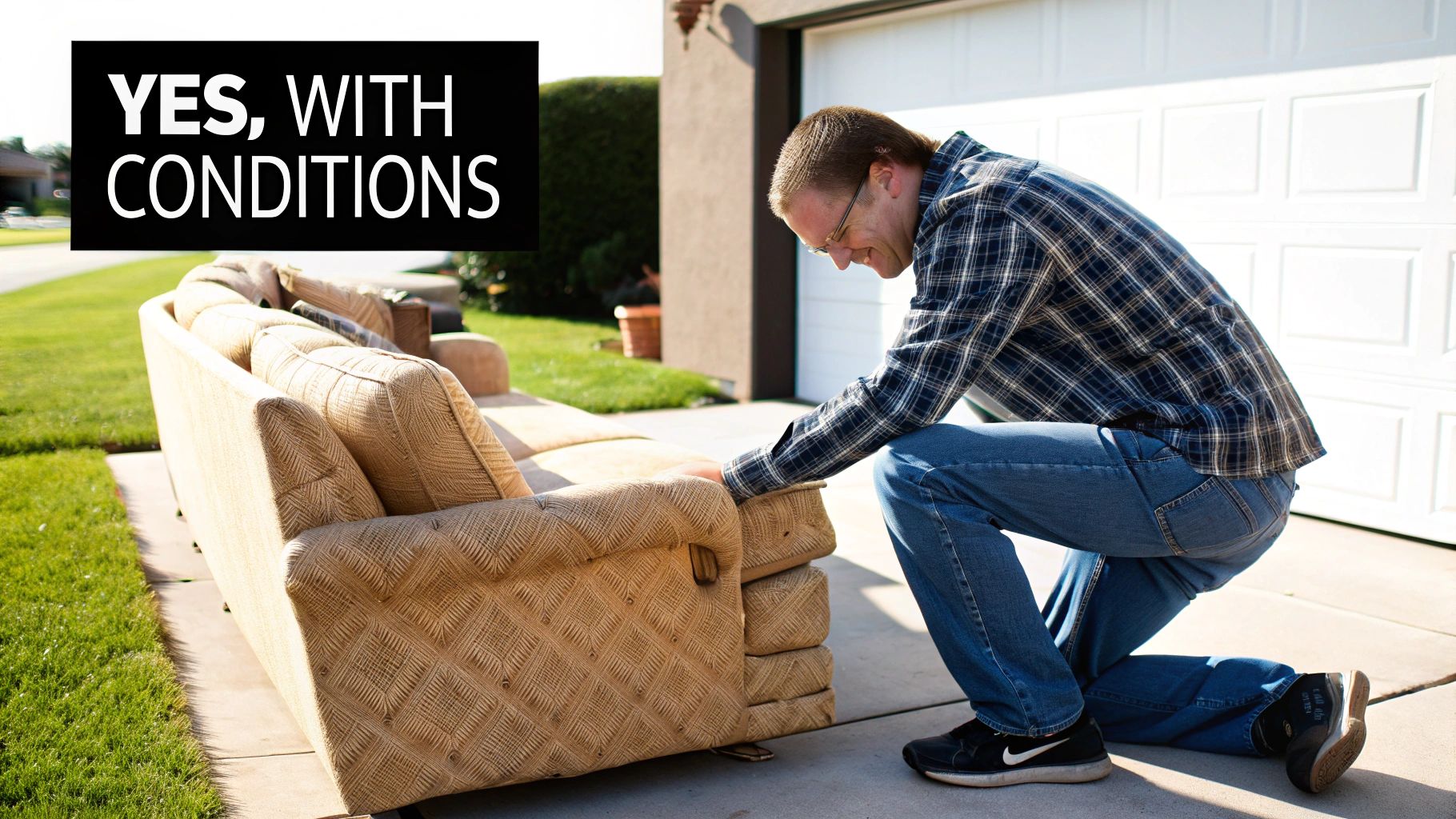
Let's get straight to it. Most Goodwill locations around Atlanta are more than happy to take your furniture donations. It’s a win-win—you clear out space, and they get quality items to support their community programs.
However, it’s not an open invitation for every single piece you want to get rid of. The golden rule is that items have to be gently used and in good shape. That means they should be clean, sturdy, and free from any major flaws like big rips, deep stains, or funky smells.
Keep in mind that what one store accepts can differ from another. A lot of it comes down to their current inventory and how much floor space they have. If a particular Goodwill is already overflowing with sofas, they might have to turn yours away, even if it's in great condition. This guide is here to give you a practical, real-world idea of whether your furniture is a good candidate before you start the heavy lifting.
Goodwill Furniture Donations At a Glance
To make things crystal clear, we put together a simple table that breaks down what Goodwill typically loves to see versus what they usually have to pass on.
| Typically Accepted (If in Good Condition) | Typically Rejected |
|---|---|
| Sofas and Loveseats | Mattresses and Box Springs |
| Coffee Tables and End Tables | Large Entertainment Centers |
| Dressers and Nightstands | Broken or Heavily Damaged Items |
| Dining Tables and Chairs | Items with Major Stains or Odors |
| Bookshelves and Small Cabinets | Baby Furniture (cribs, car seats) |
| Armchairs and Recliners | Office Cubicles or Partitions |
At the end of the day, Goodwill needs items they can sell. If they have to spend money on repairs or hauling it to the dump, it defeats the whole purpose.
The core principle is simple: Goodwill needs to resell your items to fund its community programs. If they have to spend money on repairs or disposal, it defeats the purpose of the donation.
For bigger cleanouts—like clearing out an office, a warehouse, or multiple properties—you often need a different game plan. That's where we come in. Fulton Junk Removal, operating under Beyond Surplus, is a circular, eco-friendly solution that goes beyond traditional junk hauling. We handle the items that charities can't take and ensure they're repurposed or recycled.
Check out our service areas in the Atlanta metro to see how we can help with your project.
What Furniture Goodwill Actually Wants
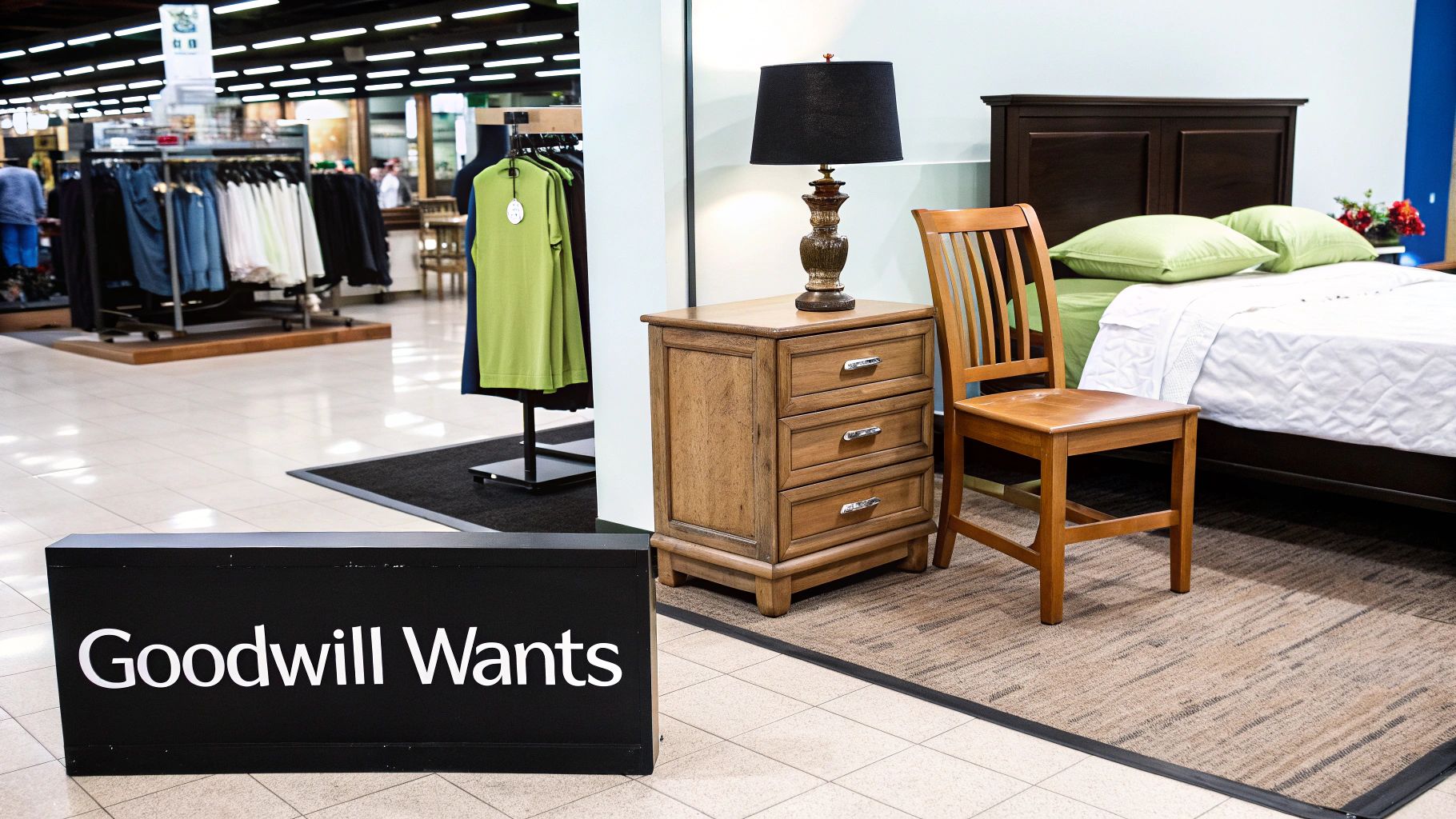
While Goodwill is grateful for a huge range of donations, they have a soft spot for certain types of furniture. To understand why, you have to think like a retailer, not a storage company. Each store has limited floor space, and their goal is to turn donations into revenue for community programs as quickly as possible.
This means they’re looking for items that are easy for their team to handle, simple for a customer to haul away, and popular with a wide audience. Smaller, in-demand pieces are a sure thing. If your donation fits that description, it’s far more likely to be accepted because it sells fast and directly fuels their mission.
The Most Wanted List
So, what furniture does Goodwill really get excited about? Based on what flies off their sales floor and what fits their operational model, a few key items are always in high demand. If you have any of these pieces in good shape, your donation will probably be welcomed with open arms:
- Coffee Tables and End Tables: Small, versatile, and easy for shoppers to fit in almost any car. They’re a perennial favorite.
- Nightstands and Small Dressers: These are bedroom essentials that people are always looking for.
- Bookcases: A staple for any home or apartment, these are easy to display and sell quickly.
- Wooden Dining Chairs: Single chairs or small sets are much easier to manage and sell than a giant, heavy dining table.
- Small Desks: Perfect for students or anyone with a home office, these are consistently popular.
This preference for smaller items also explains why bulky furniture often gets turned away. Oversized sectional sofas, massive entertainment centers, and heavy antique armoires take up way too much valuable real estate on the sales floor. They’re also a nightmare for staff and customers to move.
Condition Is Everything
Beyond the type of furniture, its condition is the single most important factor. Goodwill needs items that are clean, structurally sound, and free of major damage. A wobbly table leg, a heavily stained cushion, or a drawer that sticks will almost always be a dealbreaker. Before you load up the car, ask yourself honestly: "Would someone be happy to put this in their home right now?"
Remember, the whole point of your donation is to provide something of value that Goodwill can sell to fund its programs. An item that needs repairs or has to be thrown out actually costs the organization time and money.
This is especially true if you have unique or older pieces. To make sure you’re donating something Goodwill can use—or to explore other options—mastering valuing antique furniture is a great first step. It can help you figure out if an item's true value is better realized through donation or another avenue.
For businesses, property managers, and homeowners with furniture that doesn’t quite meet these guidelines, a different approach is often needed. Fulton Junk Removal works hand-in-hand with Beyond Surplus to recycle electronics, metals, and other materials responsibly. We can haul away the items Goodwill can’t take, making sure they are diverted from landfills—not just dumped.
Understanding Why a Donation Might Be Rejected
It’s definitely frustrating to load up your car, drive all the way to a donation center, and then have your furniture turned away. But when this happens, it’s not about you failing to donate—it’s about Goodwill sticking to its commitment to provide safe, quality goods while running a massive retail operation.
When a Goodwill employee declines an item, they’re not being difficult; they’re following a clear set of guidelines. These rules are there to make sure every single item that hits the sales floor is something a shopper would actually be happy to bring into their own home.
The Big Three Reasons for Rejection
Beyond just a vague "poor condition" label, rejections almost always come down to one of three things: structural integrity, safety issues, or logistical headaches. Each one plays a huge part in whether your old dresser makes it onto the sales floor or not.
- Structural Problems: This is the number one reason furniture gets turned down. Think wobbly chair legs, drawers that are stuck shut, or a bookshelf with a cracked frame. If an item is unstable or just doesn't function like it's supposed to, it can't be sold.
- Significant Cosmetic Damage: A few minor scuffs from everyday life are usually fine. But deep scratches, huge water stains, badly torn fabric, or heavy pet damage (stains, smells, and claw marks) are immediate red flags for the donation staff.
- Unsanitary Conditions: This one’s a big deal. Items have to be clean. Any piece of furniture with signs of mold, mildew, pest infestations, or strong, lingering odors will always be rejected on the spot for obvious health and safety reasons.
Safety and Logistical Hurdles
Sometimes, a piece of furniture can be in perfectly good shape and still get rejected for reasons that have nothing to do with how it looks. As a massive nonprofit network, Goodwill Industries has to think about safety, liability, and the physical limits of its stores and staff. Policies can differ slightly from store to store, but some items are pretty much universally declined.
Goodwill stores generally do not accept furniture showing signs of damage, large appliances, or items like mattresses due to sanitary and liability concerns. You can explore more about how Goodwill donations support communities to understand why these rules are so important.
This leads to a few common rejections that are purely about safety and logistics:
- Recalled Items: Older baby furniture, especially things like drop-side cribs or car seats, often gets turned away. If an item has ever been subject to a safety recall, Goodwill can't accept it due to major liability risks.
- Excessively Heavy Pieces: If a piece is so heavy or bulky that it takes more than two staff members to move it safely, it's a no-go. This prevents injuries and often includes things like massive old entertainment centers, oversized armoires, or solid marble-topped tables.
Your Step-by-Step Guide to Donating Furniture
Alright, you've looked over your furniture and decided it's in great shape for a new home. Awesome! But getting it from your house to Goodwill's sales floor requires a little prep work. Taking a few minutes to plan can be the difference between a smooth, successful donation and a frustrating, wasted trip.
The single most important thing you can do is call your local Goodwill ahead of time. While most locations in the Atlanta area are happy to take furniture, their storage space and specific needs can literally change by the hour. A quick phone call confirms they have room and are accepting the type of item you have, saving you a whole lot of hassle.
Drop-Off Versus Pickup
So, how do you get your furniture to them? You've got two main avenues, but one is far more common than the other.
-
Dropping It Off Yourself: This is the standard method for 99% of furniture donations. You simply load up your pre-approved item and bring it to a Goodwill donation center during their open hours. Staff are usually waiting there to help you unload and get you a receipt. It’s quick and easy.
-
Scheduling a Pickup: Let's be clear: Goodwill's pickup service is incredibly limited. It's typically reserved for massive donations, like clearing out an entire estate. It is not a service for a single couch or dresser. For almost everyone, dropping it off yourself is the only realistic way to go.
Even after you've called and made the trip, there's still a chance an item could be turned away at the door.
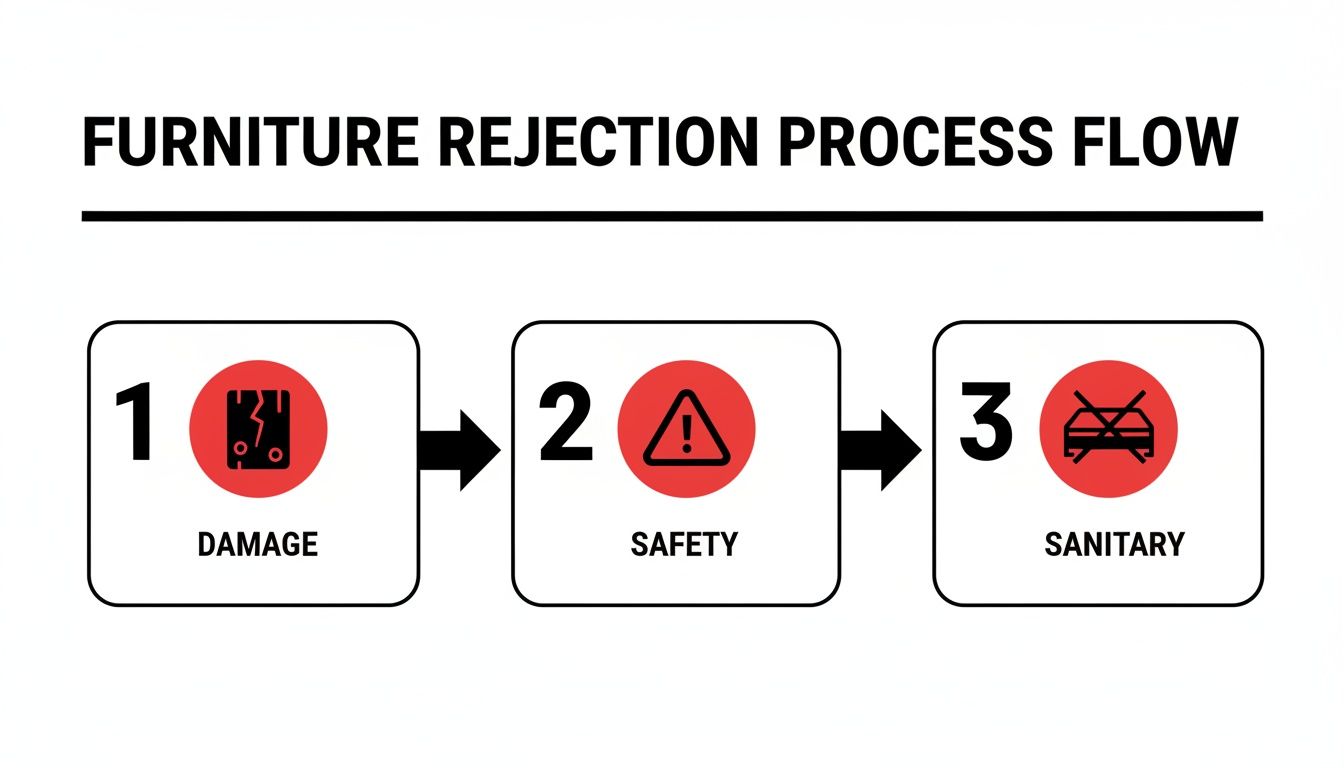
As you can see, most rejections come down to very clear issues with damage, safety, or cleanliness—which is exactly why checking your items beforehand is so critical.
Securing Your Donation Receipt
Whatever you do, don't drive away without your receipt! That little slip of paper is your key to a potential tax deduction. An attendant will offer you one when you make your donation.
You are responsible for assigning a fair market value to your donated goods. The Goodwill attendant cannot do this for you. Keep the receipt with a detailed list and photos of your items for your tax records.
Properly documenting your donation ensures you can claim the full deduction you're entitled to for your generosity.
But what about those situations where the furniture isn't quite up to donation standards, or you're dealing with a large-scale cleanout? If you've got bulky items charities can't accept, or you're managing an office cleanout, a professional service is your best bet. Contact Fulton Junk Removal for a seamless, eco-friendly solution. We handle everything from the heavy lifting to responsible disposal and donation drop-offs.
Atlanta Alternatives When Goodwill Says No
It’s always a little disappointing when you try to do the right thing and your furniture donation gets turned away. But a "no" from Goodwill is far from the end of the road for your unwanted items. Think of it this way: you just haven't found the right home for them yet.
Atlanta is full of fantastic organizations, and many of them have very specific needs. While Goodwill has a broad retail model, other charities are more specialized. The Furniture Bank of Metro Atlanta, for example, is laser-focused on getting essential furnishings to families coming out of homelessness. Habitat for Humanity ReStores take furniture donations to help fund their home-building projects for local families. A quick call to these places beforehand is always a good idea, as their needs change constantly.
When Donation Isn't an Option
So, what happens when your furniture is just too worn, damaged, or bulky for any charity to take? This is the point where most people feel stuck, figuring the only choice left is the landfill. But for items that have truly reached the end of their useful life, there are far more responsible and eco-friendly solutions.
This is exactly the gap Fulton Junk Removal was created to fill. While most junk removal companies take everything to the landfill, we recycle through Beyond Surplus to minimize waste and maximize reuse. This appeals to environmentally conscious homeowners and businesses.
Our entire model is built around a circular, eco-friendly approach powered by Beyond Surplus. We do all the heavy lifting and figure out the logistics, making sure your items get to the right recycling facilities or other sustainable channels.
This is especially critical for Atlanta’s commercial sector. Property managers dealing with apartment turnovers, businesses clearing out old inventory, and contractors managing renovation debris all need a reliable partner. Goodwill is a powerhouse, handling over 107 million donations, but its specific rules for furniture mean that smart clients often need a specialist. We work to give every piece a second chance where possible, combining convenient haul-away services with a robust recycling program. You can learn more about Goodwill's mission to support community-based programs on their Goodwill Industries page.
When you can't donate, it's good to know your other options. For instance, if you're tackling a big cleanout and thinking about renting a dumpster, you might ask, Can I put furniture in a skip? Knowing the answer helps you make a better, more informed choice.
For a completely seamless and environmentally conscious solution anywhere in the metro area, Fulton Junk Removal's Atlanta service offers a stress-free experience. We provide clear pricing, free estimates, and fast service, making us the perfect choice for responsible decluttering.
A Smarter Solution for Atlanta Businesses and Properties
For Atlanta's property managers, office managers, and facilities directors, clearing out a commercial space is a whole different ballgame. It’s not just a quick trip to the donation center. When you’re staring down an apartment turnover, an office cleanout, or a full warehouse decommissioning, you need a real, reliable solution.
This is where the typical furniture donation process just doesn't cut it. Charities have their rules, and you're left holding the bag—or in this case, the rejected desks and filing cabinets. Fulton Junk Removal offers a smarter, circular solution built for the demands of commercial properties.
We can offer bundled junk removal and recycling pickup, where all electronic waste and other recyclable materials are directly processed by our partner, Beyond Surplus. This integrated approach saves you the massive logistical headache of trying to juggle multiple vendors.
Beyond Hauling: An Eco-Friendly Partnership
Here’s what really sets us apart: our partnership with Beyond Surplus. Most junk removal companies just load up and head straight for the landfill. We don’t operate that way. Our entire mission is to divert as much as we can from the local waste stream, making sure items are repurposed or recycled responsibly.
For businesses focused on sustainability, this eco-friendly model is a game-changer.
We don’t just clear your space; we give you a transparent and accountable process. This guarantees responsible handling for everything from office furniture and scrap metal to your most sensitive e-waste, simplifying your compliance and corporate responsibility goals.
For offices, warehouses, and property managers, this is where the magic happens. Fulton Junk Removal efficiently handles the junk removal and heavy lifting, while Beyond Surplus ensures all recyclable materials are processed correctly, making compliance and sustainability reporting easier. This bundled service shows a genuine commitment to environmental stewardship.
If you're managing a commercial property cleanout and need a partner you can trust, take a look at the details of our comprehensive commercial services to see how we can make your job easier.
Frequently Asked Questions About Furniture Donations
Wrapping up the details of a furniture donation can bring a few last-minute questions to mind. Here are some quick, practical answers to common concerns people have in Atlanta, designed to help you sidestep any hitches and make the whole process a breeze.
Can I Leave Furniture at Goodwill After Hours?
Definitely not. You should never leave donations outside a Goodwill when they're closed. It’s actually considered illegal dumping.
When you leave items outside, they’re exposed to the weather and potential theft, which usually means they get damaged and become unsellable. This not only creates a safety issue but also forces the nonprofit to pay for cleanup, pulling valuable resources away from their community programs. Always wait until an attendant is on duty to accept your items.
Does Goodwill Accept Office Furniture?
This one is a "maybe." It really depends on the specific location and the item itself. Some Goodwill stores might take small office pieces like a nice desk chair or a small wooden desk if they're in great shape and could easily be used in a home.
However, Goodwill just isn't set up for large-scale commercial cleanouts. Think cubicles, massive conference tables, or a truckload of electronics—that's not their specialty.
For a job like that, you need a specialized service. Fulton Junk Removal partners with Beyond Surplus to manage commercial junk removal, making sure everything from furniture to e-waste is hauled off and recycled the right way. You can learn more about our eco-friendly methods and how we help Atlanta businesses. Find out more about Fulton Junk Removal and our circular solutions.
Will Goodwill Help Me Unload Heavy Furniture?
Goodwill's donation attendants are usually on hand to help you unload your car, but there's a limit to what they can do with extremely heavy or bulky furniture. For safety and liability reasons, they typically can't handle pieces that need more than two people to move safely.
If you can't get the furniture out of your own vehicle without a serious struggle, that's a good sign it might be too large or heavy for the donation staff to manage. This could be a reason for rejection.
Can I Repair Slightly Damaged Furniture for Donation?
Absolutely! A few minor repairs can be the difference between a rejected piece and a fantastic donation. Fixing a wobbly chair leg, putting on a new drawer knob, or touching up a few scratches can make an item stable, functional, and ready for the sales floor.
That said, furniture with major structural problems, deep stains, or significant breaks probably isn't worth fixing for donation. It’s unlikely to pass Goodwill’s quality checks, even with a bit of patchwork.
When your items are just too bulky, too damaged for donation, or part of a much larger cleanout, Fulton Junk Removal provides a seamless, eco-conscious solution. We do all the heavy lifting and make sure your old furniture is handled responsibly. Visit https://fultonjunkremoval.com to get a free estimate and book your pickup.
