
How do you dispose of a gas grill: Safe, simple steps
Getting rid of an old gas grill isn't as simple as dragging it to the curb. It’s a job that needs to be done safely and responsibly. The absolute first step, no matter what, is to disconnect and properly handle the propane tank. Once that's out of the way, you can decide whether to recycle the metal, donate the grill if it's still in decent shape, or call in a professional junk removal service to make the whole thing disappear.
Your Guide to Responsible Grill Disposal
That old, rusted-out gas grill taking up prime real estate on your patio isn't just an eyesore—it’s a bulky, awkward item that your local trash service will almost certainly refuse to pick up. A lot of homeowners get caught by surprise when they learn they can't just leave it out on trash day. That’s because grills are a mix of materials requiring special handling, from the hazardous propane tank to valuable metals and non-recyclable plastic bits.
Properly disposing of it isn’t just about following the rules; it’s a chance to be a little smarter about our waste. Instead of letting a big metal appliance rust away in a landfill for decades, you can make sure its materials get a second life. This is more important than ever, especially as grill ownership keeps climbing. The global market for grills is expected to hit around $8.3 billion by 2030, which means a lot more old grills will need a responsible end-of-life plan. You can dig into the market trends and what they mean for the environment over at Statista.
Why You Can't Just Throw It Away
Most towns and cities have clear rules against putting grills in the regular trash, and for good reason:
- Hazardous Materials: Propane tanks are classified as hazardous waste. If one ends up in a garbage truck's compactor, it can explode or start a fire. They always have to be removed and dealt with separately.
- Bulky Item Classification: Grills are too big and heavy for standard trash collection. They're considered "bulky items," which means you either need to schedule a special pickup or haul it to a designated facility yourself.
- Recyclable Metals: The body of most grills is made from steel, cast iron, or aluminum. Tossing these valuable metals into a landfill is a huge waste of resources that could easily be recycled into new products.
Choosing the Right Disposal Path
Figuring out how to get rid of your old gas grill really comes down to a few key choices, each with a different level of effort and environmental payoff. You could break it down yourself for scrap metal, find a new home for it if it's still working, or just hire a pro to handle everything.
For anyone in the Atlanta area, Fulton Junk Removal offers comprehensive junk removal services that put eco-friendly disposal first. We make sure your old grill is handled correctly from start to finish. Our partnership with Beyond Surplus means we divert every bit of recyclable material away from landfills, making it the easiest and most sustainable choice out there.
To help you decide, here’s a quick breakdown of your main options.
Grill Disposal Options at a Glance
This table sums up the most common ways to get rid of an old grill, giving you a quick comparison of the effort involved, potential costs, and how good each method is for the planet.
| Disposal Method | Key Steps | Best For | Environmental Impact |
|---|---|---|---|
| DIY Recycling | Disconnect tank, dismantle grill, sort metals, haul to a scrap yard. | People comfortable with tools who have time and a truck. | High. Ensures all valuable metals are recovered and reused. |
| Donation | Disconnect tank, clean the grill, find a local charity that accepts grills. | Grills that are still in safe, working condition. | High. Extends the life of the appliance and keeps it out of the waste stream. |
| Municipal Pickup | Disconnect tank, check local rules for bulky item pickup, schedule a collection. | Homeowners whose city offers a bulky waste program for such items. | Medium. The grill may or may not be recycled, depending on local facilities. |
| Junk Removal Service | Make a phone call, schedule a pickup. | The easiest, most convenient option, especially for bulky or multiple items. | High. A good service will prioritize recycling and responsible disposal. |
Ultimately, the best path depends on your grill's condition, how much time you have, and your local resources. Whether you do it yourself or hire a service like ours, the goal is the same: keep that big hunk of metal out of the landfill.
First Things First: Safely Handling That Propane Tank
Before you even touch the grill itself, the propane tank has to be dealt with. This is non-negotiable. Propane is a hazardous material, and those tanks can become a serious fire or explosion risk if you don't handle them correctly. Tossing one in the regular trash is a huge no-go.
Luckily, disconnecting it is straightforward. Make sure your grill is completely off and cool to the touch. Then, find the valve on top of the tank and turn it clockwise until it's completely closed—think "righty-tighty." This shuts off the gas flow. Once it's tight, you can unscrew the regulator hose that connects to the grill. Just turn that counter-clockwise, and it'll come right off.
Finding a Proper Drop-Off Location
With the tank disconnected, your next job is to get it to an approved facility. I can't stress this enough: you can never put a propane tank in your curbside trash or recycling bin. Municipal waste services, like those in Waunakee, WI, explicitly forbid propane tanks for residential pickup because they’re a safety hazard for sanitation workers and equipment.
You've got a few solid options for getting rid of it the right way:
- Tank Exchange Programs: Places like Blue Rhino or AmeriGas, which you'll find at most grocery stores and gas stations, are the easiest choice. They'll happily take your old tank when you buy a new one.
- Hazardous Waste Facilities: Your city or county almost certainly has a designated drop-off for hazardous materials. A quick Google search for something like "[Your City] hazardous waste disposal" will point you in the right direction.
- Propane Suppliers: The local shops that sell propane are often willing to take old tanks for recycling, though some might charge a small fee.
A common mistake is thinking an "empty" tank is safe. Even when it won't light your grill, a tank can hold enough residual propane vapor to be dangerous, especially under pressure or heat. Professional handling is the only safe bet.
This visual guide gives you a quick rundown of the whole process, but notice how it all starts with the most critical step—dealing with the propane tank.
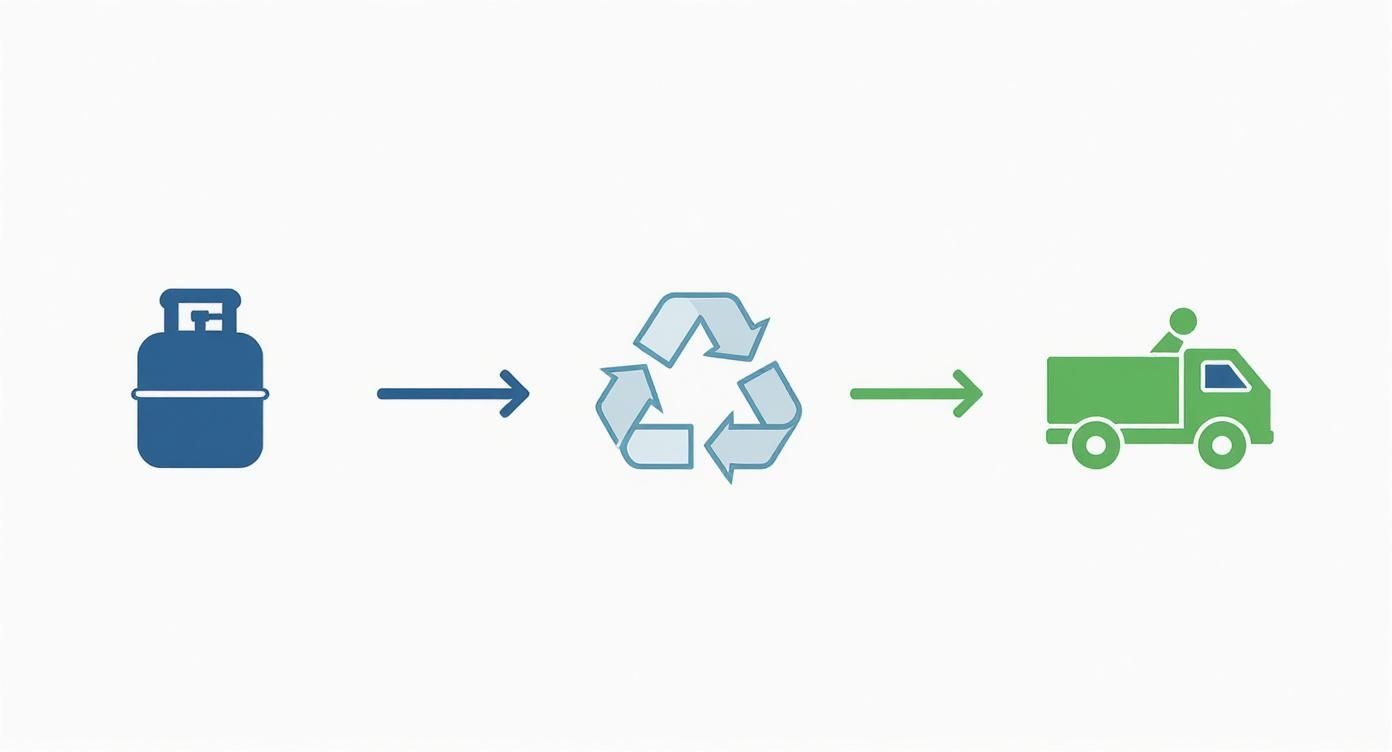
As the infographic shows, once the tank is safely out of the picture, your main options are recycling the grill, donating it, or calling in a pro to haul it away.
Transporting the Tank Safely
Getting the tank from your home to a drop-off location needs to be done with care. Always keep the tank upright and secured in your vehicle so it doesn't tip over and damage the valve. The best spot is a well-ventilated area, like a truck bed or a trunk you can leave cracked open.
Whatever you do, don't leave a tank in a hot, sealed car for a long time. The heat can cause the pressure inside to build up to dangerous levels. Your best bet is to drive directly to your destination without making any other stops along the way.
For more practical tips on getting rid of other tricky household items, take a look at the resources on the Fulton Junk Removal blog. Handling things the right way from the start makes the whole process smoother and safer for everyone.
Prepping Your Grill for Recycling or Donation
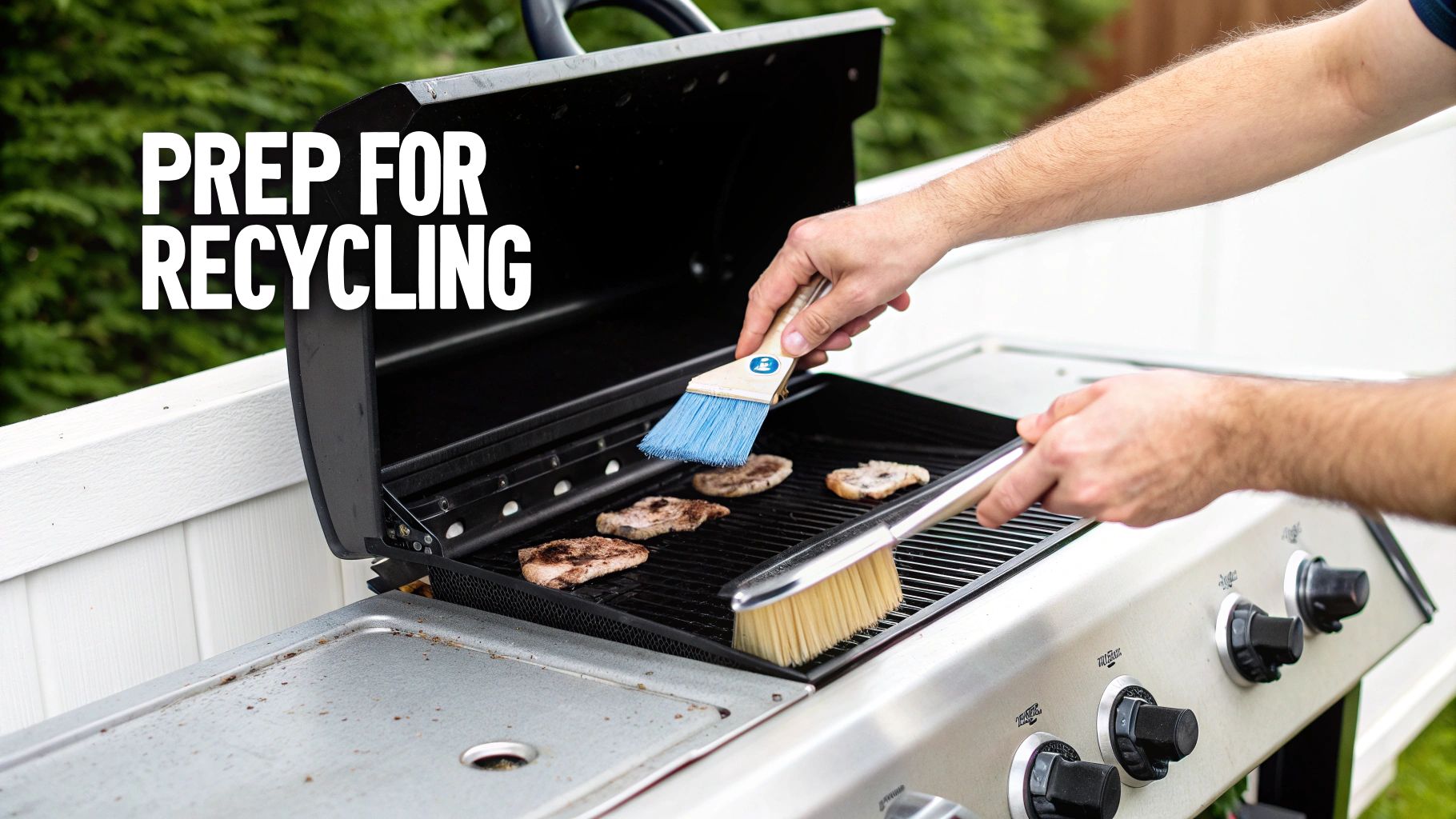
Once the propane tank is safely out of the picture, it's time to decide the fate of your old grill. Whether you're sending it to a scrap metal yard or giving it a second life through donation, a little prep work goes a long way. This small effort ensures it's accepted and handled correctly, keeping it out of the landfill.
Taking a few minutes to do this right is a meaningful contribution. Solid waste is a massive global issue—the world generates approximately 2.01 billion tonnes of municipal solid waste each year. Properly dismantling and recycling your grill prevents valuable metals from being buried and ensures every part is managed safely. You can learn more about global waste trends from The World Bank.
Breaking It Down for Recycling
If recycling is your goal, the main task is separating the metal from everything else. Scrap yards pay for metal by weight, but they won't accept a grill cluttered with plastic, rubber, and electronics.
Start by removing any obvious non-metal parts. It's usually easier than it sounds and only requires a few basic tools like a screwdriver and a pair of pliers.
- Plastic Knobs and Handles: Most control knobs just pull right off. Handles are typically attached with a couple of screws.
- Side Shelves: These are often plastic or wood and can be unbolted from the main grill body pretty easily.
- Wheels and Casters: The plastic wheels can usually be pried or unscrewed from the metal frame.
- Igniter Button and Wires: Just snip the wires connected to the electronic igniter and pop out the plastic button assembly.
With the non-metal bits gone, you're left with a much more valuable pile of steel, aluminum, or cast iron that scrap yards are happy to take.
Don't forget the guts of the grill. The cooking grates, burner tubes, and heat shields are all valuable metals. Give them a quick scrape to knock off any caked-on residue—it just makes the whole recycling process smoother.
Assessing Your Grill for Donation
Is your grill still in decent, usable shape? If the burners light up reliably and the body isn't a total rust bucket, donation is a fantastic eco-friendly option. Giving your grill a new home is the ultimate form of recycling.
Before you haul it anywhere, do an honest assessment. Ask yourself: "Would I feel comfortable giving this to a friend to use?"
- Check for Safety: Make sure there are no gas leaks from the hoses and that the whole thing is stable.
- Test the Ignition: Does the igniter work? If not, can it at least be lit easily with a match or lighter?
- Evaluate the Condition: A little surface rust is often fixable, but if the firebox or frame is rusted through, it's time for the scrap yard.
- Give It a Good Cleaning: Nobody wants a grill caked in last season's grease. A thorough cleaning is a must before you donate it.
Organizations like Habitat for Humanity ReStores are often great places to donate working appliances. However, if this process sounds like more work than you have time for, or if you're dealing with multiple bulky items, a professional service might be your best bet. Contact Fulton Junk Removal, and we can handle the assessment and make sure the grill gets to the right place, whether that’s one of our recycling partners or a local donation center.
Navigating Local Disposal Rules and Scrap Yards
Figuring out how to get rid of an old gas grill isn't always straightforward. The rules can feel like a moving target because they change from one city to the next. What's perfectly fine in one town might get you a citation in another. Your first move should always be to check with your local municipality.
A quick search for your city or county’s public works or waste management website usually clears things up. Look for terms like "bulky item pickup," "transfer station," or "special collection events." For instance, some communities give a clear green light for gas grills (minus the tank, of course) during annual pickups, while others will require you to haul it to a specific facility yourself.
Finding Your Local Regulations
Taking a few minutes to understand your area's guidelines is key to avoiding fines or the frustration of having your old grill left at the curb. Most local government websites have a dedicated section for waste disposal that spells out the process.
Here’s what you should be looking for:
- Bulky Waste Pickup: Does your regular trash service offer scheduled pickups for large items like grills?
- Transfer Station Policies: Find out where your local dump or transfer station is and, more importantly, what materials they accept.
- Special Collection Days: Many towns host annual or semi-annual events for recycling scrap metal and other hard-to-dispose-of items.
This initial legwork saves a lot of headaches and ensures you’re doing things by the book. While you're looking up local rules, you might also find info on other disposal services in your area. You can check out a map of our Atlanta-area junk removal service areas to see how we help communities with responsible junk disposal.
Taking Your Grill to a Scrap Yard
If you don't mind getting your hands a little dirty, taking your grill to a scrap metal recycler is a fantastic, eco-friendly option. It guarantees the metal gets melted down and lives to see another day as something new.
But don't just show up with the whole grill in the back of your truck. Scrap yards buy raw metal, not assembled appliances. You'll need to remove all the non-metal parts first—think plastic wheels, knobs, shelves, and hoses. The metals they’re interested in are primarily steel, aluminum, and cast iron. You won't get rich doing it, but the real payoff is knowing you kept a big, bulky item out of a landfill.
Before you head out, always call the scrap yard. Ask if they accept drop-offs from the public, what their current rates are for mixed steel or aluminum, and if they have any specific rules for preparing the metal. A simple phone call can save you a completely wasted trip.
The challenge of recycling items like grills really shines a light on the global need for better waste management systems. While a gas grill isn't what we typically think of as e-waste, it shares the same disposal headaches as other large metal appliances. Recycling rates vary dramatically worldwide, with Europe leading the way at a documented 42.8% for electronics. This just goes to show how important it is to have good systems in place for all kinds of recyclable waste. You can learn more about these global efforts in this detailed e-waste report.
The Easiest Option: Professional, Eco-Friendly Removal
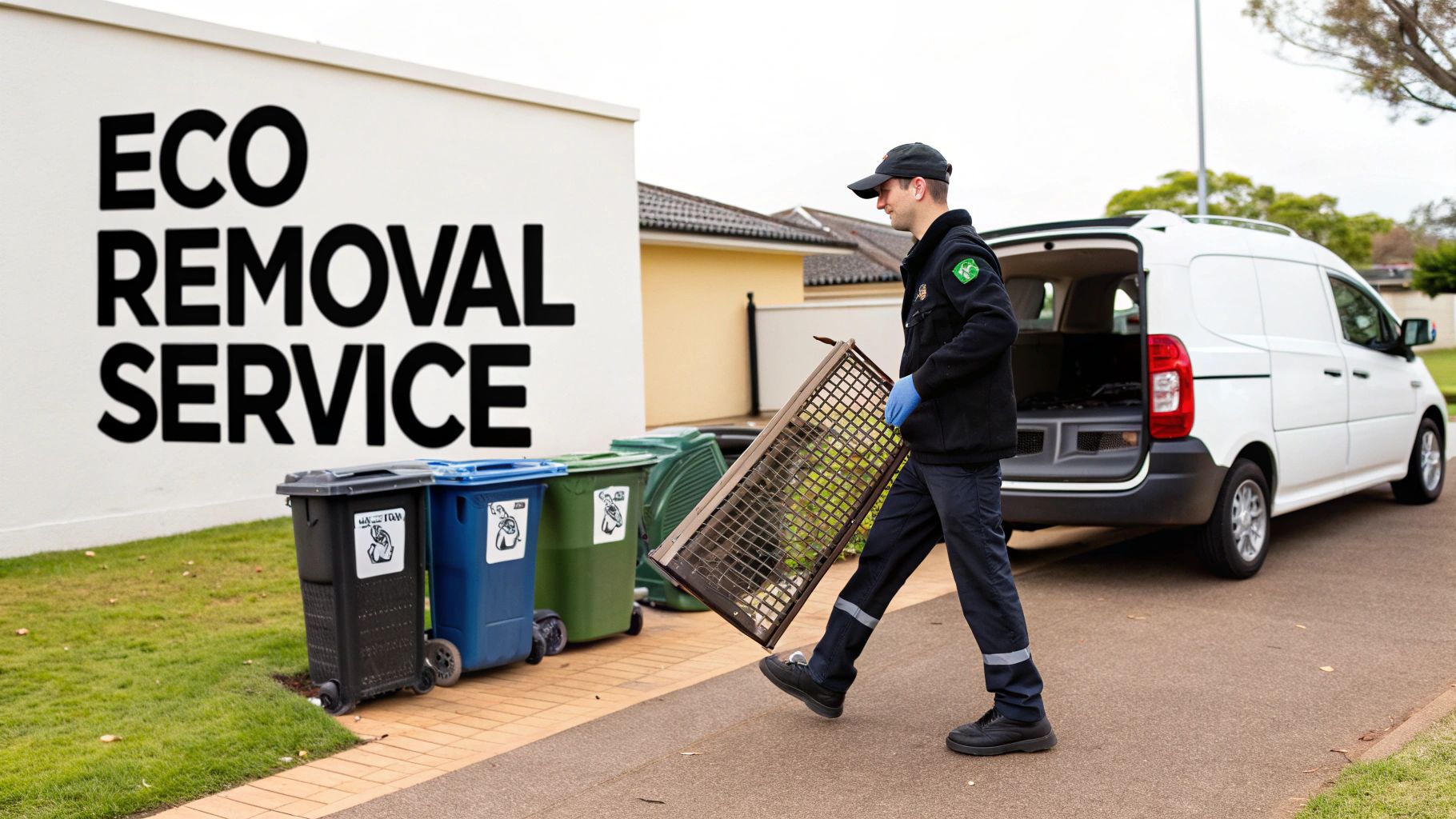
Let’s be honest. Nobody really wants to spend their Saturday wrestling a greasy, rusted-out grill into the back of their car just to haul it across town to a scrap yard. For most people, the time, effort, and mess involved in DIY grill disposal is just too much of a headache.
This is where calling in a professional junk removal service saves the day. It’s convenient, it’s safe, and when you choose the right company, it can be a surprisingly green solution.
But here’s the catch: not all junk removal companies are the same. The hard truth is that while most junk removal companies take everything to the landfill, we recycle through Beyond Surplus to minimize waste and maximize reuse.
A Different Approach to Junk Removal
At Fulton Junk Removal, we just don't operate that way. As a commercial service, we operate under Beyond Surplus, a circular, eco-friendly solution that goes beyond traditional junk hauling. Our entire business is built around genuine environmental stewardship. When we see an old grill, we don't just see junk. We see a collection of steel, aluminum, and plastic waiting to be reclaimed and given a new life.
This commitment is possible because Fulton Junk Removal works hand-in-hand with Beyond Surplus to recycle electronics, metals, and other materials responsibly. Instead of just dumping your grill, we make sure it enters a truly circular, eco-friendly system.
We work directly with Beyond Surplus to carefully dismantle every single grill. Each recyclable part is sorted and sent down the right path:
- Metals like steel and aluminum are separated for scrapping and recycling.
- Plastics from the handles, wheels, and side shelves are properly processed.
- Electronic components, such as the igniter system, are handled as e-waste.
Our mission is simple: Fulton diverts items from landfills and ensures they’re repurposed or recycled. This appeals to environmentally conscious homeowners and businesses.
The Ideal Solution for Homes and Businesses
This eco-conscious model is perfect for environmentally aware homeowners in the Atlanta area who want a guarantee that their old items will be disposed of responsibly. But it's also a game-changer for our commercial clients.
For offices, warehouses, and property managers, we offer a seamless, bundled service that combines junk removal with certified recycling. Fulton handles junk removal, and Beyond Surplus ensures responsible recycling, making compliance and sustainability reporting easier. You can even schedule a bundled junk removal + recycling pickup, where all electronic waste and recyclable materials are directly processed by Beyond Surplus.
This integrated service gives you total peace of mind, knowing your company’s disposal practices align with its corporate responsibility goals. You can learn more about Fulton Junk Removal’s unique, eco-friendly model and see how it’s making a difference for Atlanta communities.
When you hire a service like Fulton Junk Removal, you’re not just getting rid of an old grill. You're saving yourself time and back-breaking work, and you're getting the certainty that your old stuff was handled the right way—for you and for the planet.
Common Questions About Disposing of a Gas Grill
Even with the best intentions, getting rid of an old grill can bring up some tricky questions. Let's clear up a few of the most common ones so you can handle the job safely and with confidence.
Can I Leave My Old Gas Grill on the Curb for Trash Pickup?
The short answer is almost certainly no. Most city trash services, including those around Atlanta, consider grills bulky items. That means they won’t be picked up with your regular trash and require a special, pre-scheduled collection.
But here’s the most important part: leaving a grill at the curb with the propane tank still attached is a major safety hazard and is strictly forbidden everywhere. Propane tanks are considered hazardous waste. You absolutely have to disconnect it and take it to a proper recycling or exchange center before you even think about getting rid of the grill itself.
How Much Money Can I Get for Scrapping My Old Grill?
Let's be realistic—you're not going to get rich scrapping an old grill. Depending on its weight and the day's market price for steel or aluminum, you can expect to walk away with somewhere between $5 and $20.
The real win here isn't financial; it's environmental. Taking your grill to a scrap yard guarantees that all that metal gets melted down and turned into something new instead of rusting away in a landfill. Just give your local scrap yard a call first to make sure they take grills from the public and ask if they have any specific rules for preparing it.
"A common mistake is thinking an 'empty' tank is safe. Even when it won't light your grill, a tank can hold enough residual propane vapor to be dangerous, especially under pressure or heat. Professional handling is the only safe bet."
What if My Grill Is Still in Good Working Condition?
If your grill still fires up and is safe to use, donating it is a fantastic option. It’s the best form of recycling—giving the appliance a second life while helping out someone in your community.
- Charity Organizations: Places like Habitat for Humanity ReStores are often happy to take used appliances that are in good shape.
- Online Community Groups: You can post it for free on local sites like a Buy Nothing group or Facebook Marketplace. A free grill usually gets snapped up fast!
Just do the right thing and give it a good cleaning first. A quick check to make sure all the burners work and the connections are solid is also a great idea before passing it on.
Is It Safe to Put an Old Propane Tank in My Car?
Yes, you can safely transport a propane tank in your personal vehicle, but you have to follow the rules. It’s not complicated, but it is critical.
First, make sure the valve is turned clockwise until it’s completely shut. If you still have the plastic safety cap, screw it on tightly.
Next—and this is non-negotiable—the tank must be secured in an upright position. Wedge it in your trunk or truck bed so it can’t tip over, which could damage the valve. Keep the area well-ventilated, never leave a tank in a hot, sealed car, and head straight to your drop-off point.
Navigating the rules of grill disposal can be a hassle, but it doesn't have to be your problem. For a completely stress-free and eco-friendly solution, let the experts at Fulton Junk Removal handle everything. We’ll ensure your old grill and any other junk are removed quickly and recycled responsibly through our partnership with Beyond Surplus. Reclaim your space the easy way by visiting us at https://fultonjunkremoval.com.
