
How to Dispose of Charcoal Safely in Atlanta
Before you can even think about what to do with used charcoal, your first and most critical job is to safely bring down its temperature. Embers that look cool on the outside can stay dangerously hot on the inside for hours—sometimes even days.
Ignoring this step is one of the most common mistakes people make, and it's a serious fire hazard.
The reality is that improperly handled ashes cause thousands of preventable fires every year. According to the National Fire Protection Association, hot coals and ashes are linked to over 10,000 fires annually in the U.S. alone. Never, ever bag hot or even warm ashes.
The Best Way to Cool Charcoal: The Soak and Wait Method
The most reliable way to cool your used charcoal is what I call the "soak and wait" method. It’s dead simple, but it requires patience.
First, get yourself a sturdy metal container with a lid, like a galvanized steel bucket. Don’t even think about using plastic—any lingering heat can easily melt right through it. Carefully transfer all the used charcoal and ash from your grill into the bucket.
Next, slowly pour water over the contents until everything is completely submerged. You'll probably hear a lot of hissing and see steam rise, which is your proof that those embers were still plenty hot. Once the sizzling stops, put the lid on the bucket and move it to a safe spot away from anything flammable, like your deck, fence, or house.
This infographic breaks down the process visually. It’s straightforward but essential.
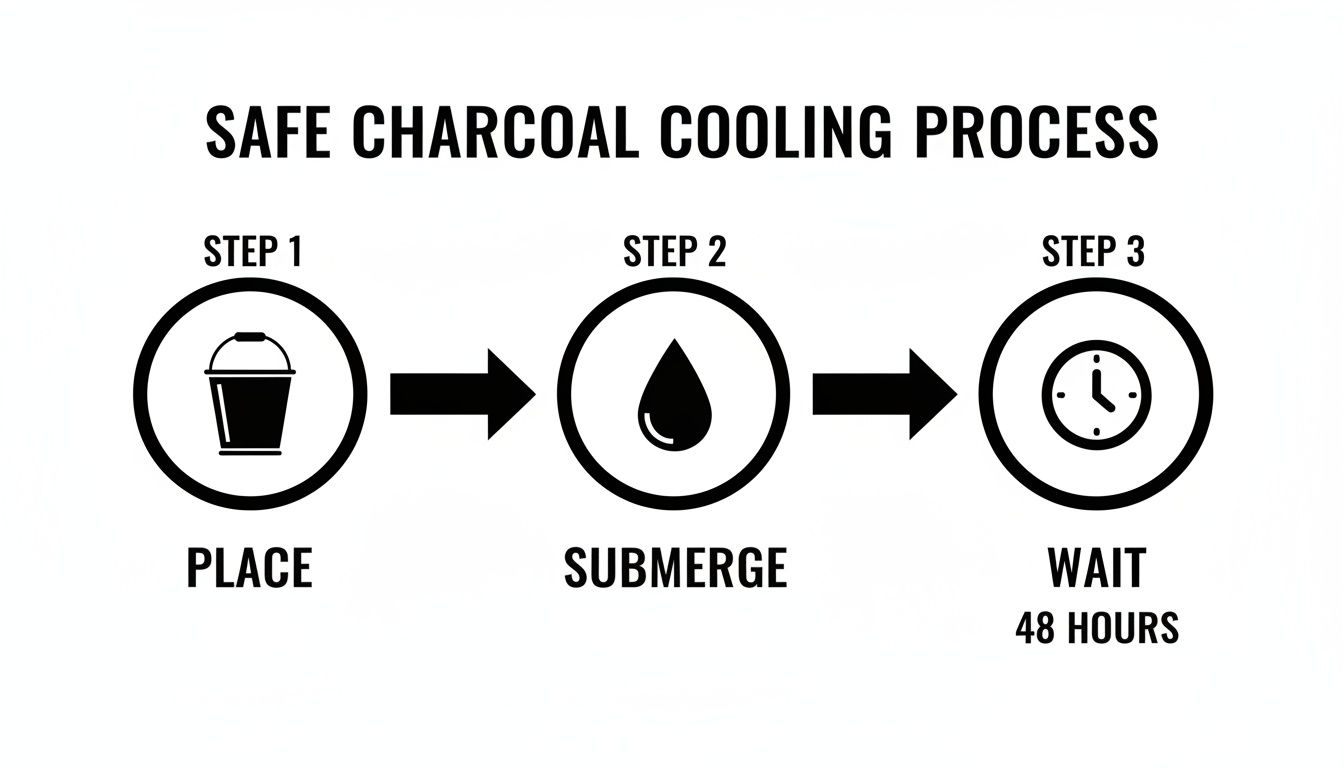
The key takeaway here is that waiting period. It's not optional.
Why 48 Hours Is the Gold Standard
Let the charcoal and ash sit, fully submerged, for a minimum of 48 hours. I know it sounds like a long time, but this two-day window is non-negotiable. It ensures that even the most insulated embers at the very core have cooled down completely.
People often get impatient and cut this step short, creating a massive fire risk when they dump the ashes into their trash can.
To help you decide which approach is best for your situation, here's a quick comparison of the two main cool-down methods.
Cool-Down Methods for Used Charcoal
| Method | Best For | Process | Required Time |
|---|---|---|---|
| Soak & Wait (Recommended) | Home grilling, small volumes, ensuring maximum safety. | Submerge charcoal and ash in water inside a metal bucket with a lid. | 48 hours |
| Natural Cool-Down | Grill is in a secure, fireproof location away from structures. Not recommended for immediate disposal. | Close all grill vents and the lid to starve embers of oxygen. | 48+ hours, often longer |
While letting charcoal cool naturally in the grill is an option, the "Soak & Wait" method provides a definitive, safe endpoint, leaving no room for guesswork.
Managing a few buckets of cooling ash is one thing, but what if you're dealing with a large event or a commercial property cleanout? For Atlanta-area businesses and property managers facing bulk debris, handling it yourself can become a huge logistical headache. A professional service can ensure everything is handled safely and in compliance with local regulations, saving you the hassle.
Once the 48 hours are up, you can move on to the final disposal steps with confidence, knowing you've eliminated the fire hazard. This is the foundational step that everyone—from homeowners to business owners—has to get right.
Eco-Friendly Ways to Repurpose Charcoal Ash
Once your charcoal ash has cooled completely, don't just dump it in the trash. You’d be surprised how useful that gray dust can be around your home and garden. Turning that "waste" into a resource is a simple way to get more value out of your grilling sessions.
Instead of adding to the landfill, thinking in a more circular way makes a real difference. This is especially true for homeowners and businesses trying to shrink their environmental footprint in practical, everyday ways.
Enhance Your Garden And Compost
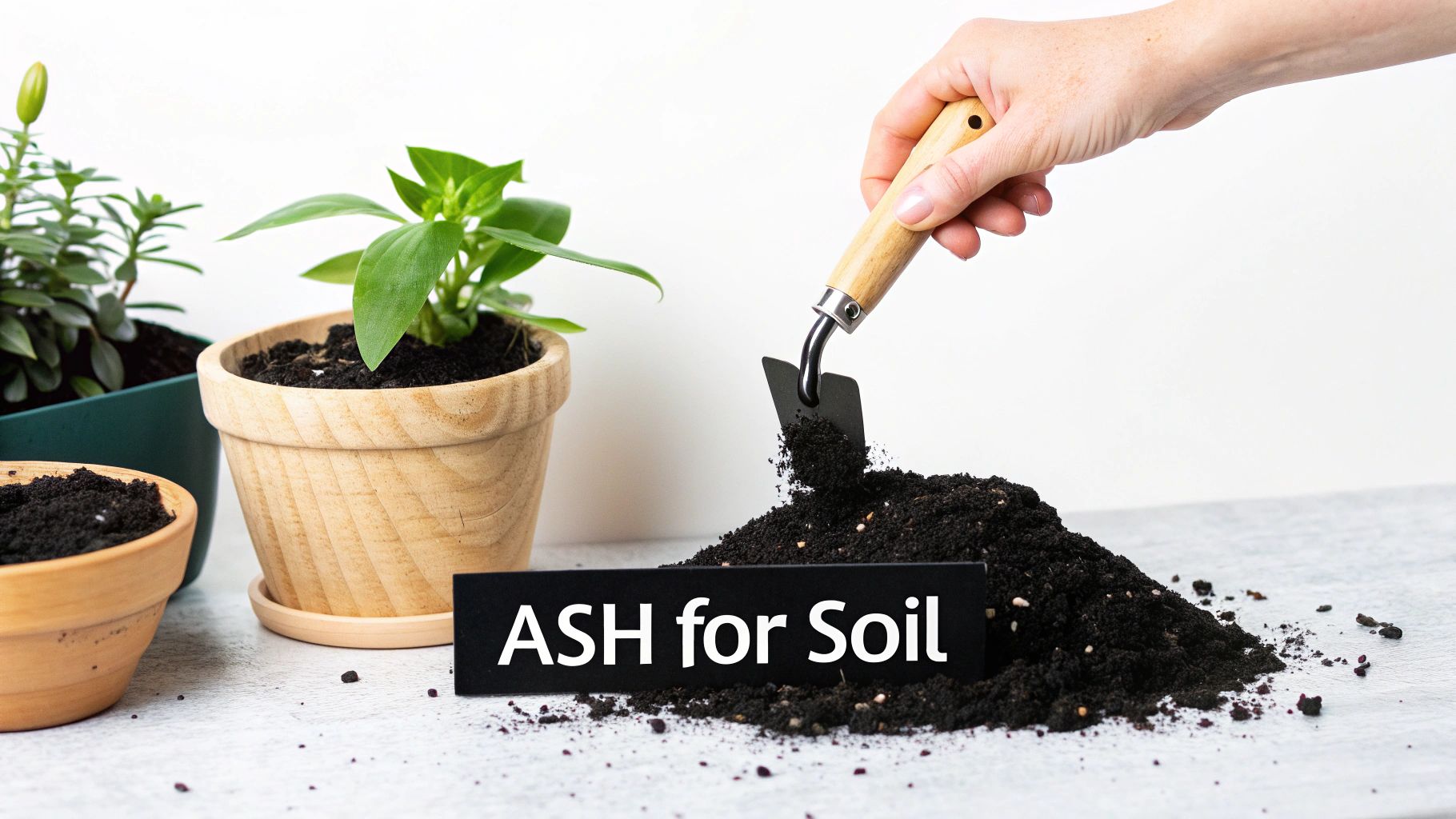
Putting charcoal ash in the garden or compost bin is one of the most common ways to repurpose it, but there's a huge catch: only use ash from natural lump charcoal. Briquettes are a no-go here. They’re often packed with chemical binders and additives you definitely don't want in your soil or near your plants.
If you’re using natural charcoal, however, the ash is a great source of potassium and lime (calcium carbonate). It’s perfect for raising the pH in overly acidic soil, making it more alkaline and plant-friendly.
Before you start sprinkling, here’s how to do it right:
- Test Your Soil First: Don't just guess. A simple pH test kit from a nursery will tell you if your soil actually needs what the ash is offering.
- Go Lightly: A light dusting over your garden beds or lawn is all you need. Rake it gently into the top layer of soil and never leave it in clumps.
- Mix It Into Compost: Adding ash to your compost pile is a fantastic way to balance out its natural alkalinity.
As a general guideline, a 1:10 ratio of ash to compost is a great starting point for neutralizing pH. Some garden tests have shown this simple trick can boost soil fertility by 15-25%.
Natural Pest Deterrent And Deodorizer
Beyond the garden, that leftover ash still has a few more tricks up its sleeve. Its slightly abrasive texture and alkaline properties make it a surprisingly effective—and totally natural—pest repellent.
Got a problem with slugs, snails, or other soft-bodied critters munching on your plants? Just sprinkle a line of cooled, dry ash around the base of the plants you want to protect. It creates a barrier they won’t want to cross, saving your garden without harsh chemicals.
And don’t forget about the unburnt pieces of lump charcoal. Their porous structure makes them amazing natural deodorizers that soak up moisture and odors.
- Tackle Musty Spots: Pop a few chunks of salvaged lump charcoal into a breathable bag (like muslin or mesh) and hang it in a damp basement, a stale closet, or near the cat's litter box.
- Save It For Later: Before you douse the ashes, pick out any unburnt chunks of lump charcoal. They’re perfectly good to use in your next grilling session, which saves you a little money.
Thinking about sustainability goes beyond just ash. Smart waste management, like finding ways for reducing food waste in restaurants, shows how small changes add up. By adopting these habits, you can make a real dent in what ends up in your trash bin. For more tips on responsible waste management, feel free to check out other guides on the Fulton Junk Removal blog.
Navigating Atlanta's Local Disposal Regulations
Figuring out how to get rid of charcoal isn't a one-size-fits-all deal, especially here in Atlanta where local rules can make a huge difference. For homeowners, business owners, and property managers alike, knowing the city's specific guidelines is the key to avoiding fines and doing things the right way. What flies in one town might be a big no-no in another.
Atlanta's waste management rules are pretty straightforward for the average backyard griller: once your charcoal ash is completely cold, small amounts can go into your regular household trash bin. The key words here are completely cold and securely bagged. Whatever you do, never toss ash or charcoal—hot or cold—into your recycling or compost bin. It contaminates the whole batch.
Key Rules for Atlanta Residents and Businesses
For anyone managing waste, from a homeowner after a weekend cookout to a warehouse operator after a major cleanout, you have to know what kind of charcoal you're dealing with. The rules shift depending on the type.
- Natural Lump Charcoal Ash: This is the easy one. It’s generally treated as regular solid waste. Just let it cool down for at least 48 hours, bag it up securely, and toss it in your household landfill bin.
- Charcoal Briquettes: Ash from briquettes is a different animal, particularly the self-lighting kind. These are packed with chemical additives and binders. While your standard residential trash service will usually take small amounts, this ash is definitely not safe for your garden or compost pile because of those chemicals.
- Self-Lighting Briquettes: Think of these as a special case. Because they're treated with petroleum distillates or other flammable agents, any unused self-lighting briquettes might even be classified as household hazardous waste. Never try to dispose of a large amount in your regular trash; you'll need to check local guidelines for proper disposal sites.
Navigating these rules gets especially tricky for businesses. A restaurant, warehouse, or property manager dealing with bulk debris after a cleanout can't just pile it into residential bins. This is where Fulton Junk Removal, working with Beyond Surplus, provides a compliant solution. We handle the junk removal, and Beyond Surplus ensures responsible recycling and disposal, making sustainability reporting for your business much easier.
Bulk Disposal for Commercial Properties and Events
Dealing with a few bags of ash is one thing. What about cleaning up after a huge community event or clearing out a commercial property? Atlanta's regulations for bulk disposal are much tighter, and commercial businesses are prohibited from using residential waste services for large volumes.
In these scenarios, calling in a professional junk removal service isn't just easier—it's often required. Property managers clearing out a unit or an event organizer handling the post-festival cleanup have to ensure they're compliant. We offer services designed specifically for the needs of businesses across the Atlanta area, making sure big cleanouts are handled correctly and efficiently.
You can learn more about our junk removal services in Atlanta and see how we help local businesses stay on the right side of the regulations. Taking a professional approach removes all the guesswork and liability from large-scale charcoal disposal.
Managing Large-Scale Charcoal Cleanouts
Cleaning up after a backyard barbecue is one thing. Dealing with the aftermath of a community festival, a restaurant's end-of-season grill shutdown, or a full property turnover is a whole different beast. The sheer volume of ash and half-burnt charcoal can be staggering, quickly turning a simple cleanup into a major operational headache.
This isn't just about hauling away trash. It's about safety, compliance, and efficiency. Tossing hot—or even just warm—embers into a dumpster is a fire waiting to happen, and your regular municipal waste services simply aren't set up to handle this kind of bulk material from a commercial operation. You need a solid game plan.
Setting Up for Success on a Large Scale
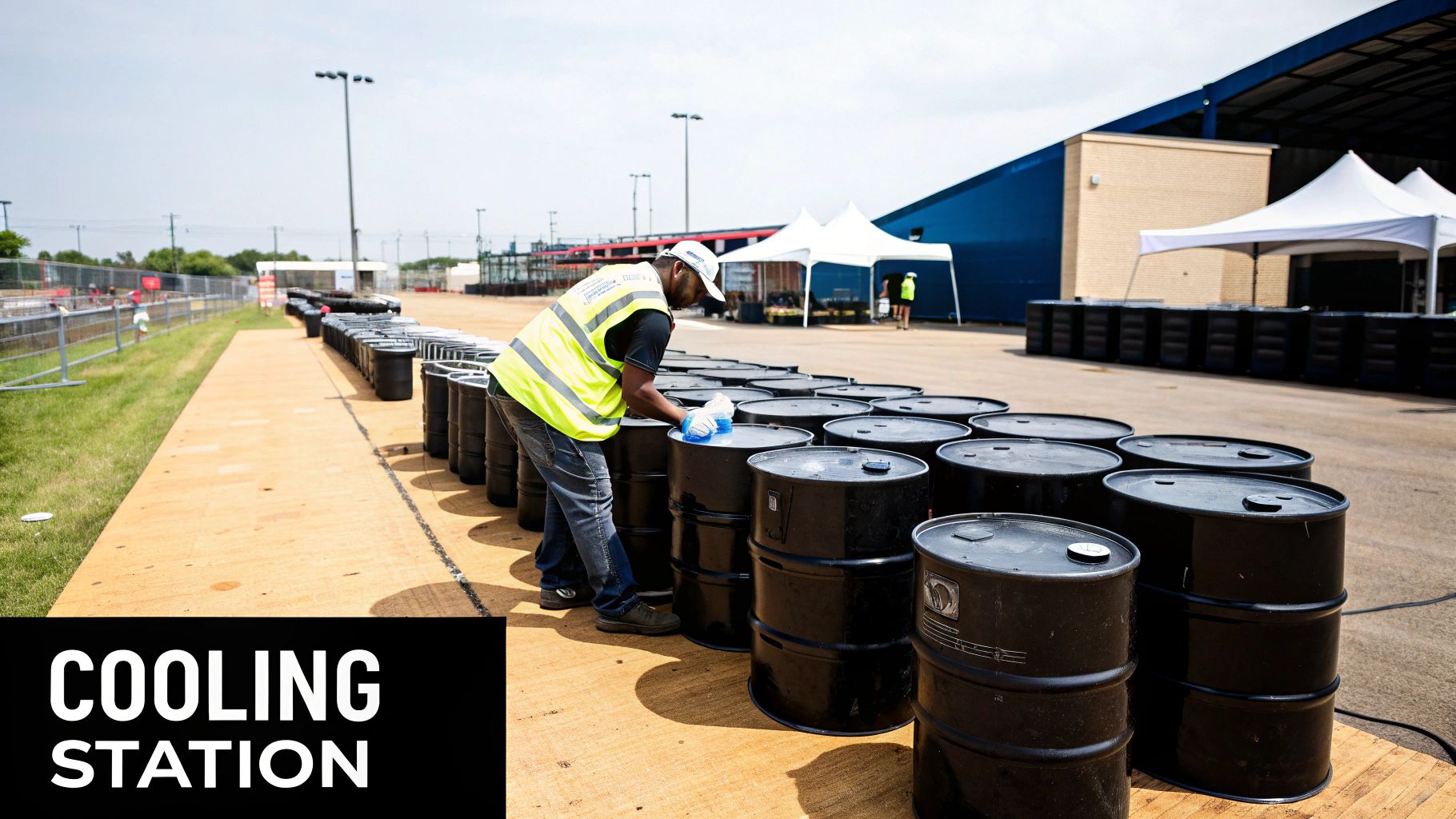
The first move in tackling a mountain of used charcoal is setting up a designated, secure cooling station. We're not talking about a single metal bucket here; this needs to be a dedicated area where you can safely manage multiple large containers at once.
For big jobs, 55-gallon steel drums are the go-to. They’re fire-resistant, tough as nails, and big enough to handle a serious amount of ash and embers. The process is the same as the backyard method, just scaled way up.
- Stake Out a Safe Zone: Find a spot far from any buildings, vehicles, or flammable materials. A paved lot or gravel area is your best bet.
- Bring in the Big Guns: Fill several steel drums with water, then carefully transfer the charcoal and ash into them.
- Stick to the 48-Hour Rule: Make sure every last bit of material stays submerged for a minimum of 48 hours. This isn't a suggestion—it's how you guarantee everything is completely extinguished.
- Lock It Down: Cordon off the cooling station with tape or barricades to keep people out and prevent accidental spills.
Following these steps is non-negotiable for preventing fires and making the waste safe for transport.
The Challenge of Commercial Charcoal Disposal
The scale of this issue is massive. Globally, 54.9 million tonnes of charcoal were produced in 2022 alone. For an Atlanta property manager clearing out an eviction or an event coordinator cleaning up festival grounds, the smart move is always the same: cool all ashes for 48 hours and sort out any reusable lump charcoal. Partnering with a professional service for proper disposal can slash associated methane emissions by over 50% versus just dumping it in a landfill. You can dive deeper into global bioenergy statistics in this comprehensive report.
At Fulton Junk Removal, we eat these kinds of logistical headaches for breakfast. We turn a complex, multi-day cleanup into a streamlined, compliant, and efficient operation. Our team brings the right equipment and manpower to get the job done fast.
A Streamlined Solution for Businesses
For offices, warehouses, and property managers, calling in the pros offers more than just hauling. Fulton Junk Removal works directly with our partner, Beyond Surplus, to deliver an integrated, eco-friendly solution. We handle the junk removal, and they make sure all recyclable materials are processed the right way.
This bundled service is perfect for complex cleanouts. We can manage the charcoal debris while also taking care of old electronics, scrap metal, and other junk. Afterward, we provide diversion reports that show exactly how much waste was kept out of landfills, helping your business nail its sustainability goals and simplify compliance reporting.
If you're facing a massive cleanout, you can easily schedule a consultation with us to map out a solution that fits your needs.
When Professional Junk Removal Is the Smartest Choice
Sometimes, dealing with old charcoal and ash isn't a simple weekend cleanup. Certain situations can make handling it yourself impractical, unsafe, or just plain overwhelming. This is where calling in a professional junk removal service isn't a luxury—it's the smartest and safest move you can make.
Imagine you're handling an estate cleanout and discover a dozen old, half-used bags of chemical-laced briquettes in a damp shed. Or maybe you're a restaurant owner staring at a mountain of ash and greasy debris after a seasonal deep clean. These aren't your typical backyard barbecue scenarios. They involve serious volume, potential hazards, and logistical headaches most of us aren't equipped for.
Scenarios That Demand a Professional Touch
It's important to know when a project is too big or too messy to tackle alone. In these cases, pros are essential.
- Estate and Property Cleanouts: Clearing out a loved one's home often means dealing with years of forgotten items, including old, deteriorating bags of charcoal that could contain unknown chemicals. You just don't know what you're dealing with.
- Large Commercial Volumes: Restaurants, catering companies, and event venues generate far more ash and greasy waste than a residential trash service will ever accept. You need a disposal solution that's compliant with commercial waste regulations.
- Lack of Time or Equipment: Let's be honest, you might not have the right heavy-duty containers, a suitable vehicle, or the physical ability to safely haul away large quantities of dirty, heavy waste.
In situations like these, the value of a professional service goes way beyond just hauling junk away. You're hiring a team that understands safety protocols, brings the right gear, and knows exactly how to navigate local disposal regulations for both residential and commercial waste.
The Fulton Junk Removal and Beyond Surplus Advantage
This is where Fulton Junk Removal brings a unique, eco-conscious approach to the table. We aren't your typical junk hauling company that just dumps everything in the nearest landfill. Operating under Beyond Surplus, Fulton Junk Removal is part of a circular, eco-friendly solution that goes beyond traditional junk hauling to minimize waste and maximize reuse.
Our integrated service model means we don’t just remove the problem—we solve it responsibly. When you hire us for a cleanout, we can offer a bundled junk removal and recycling pickup where all electronic waste, metals, and other materials are directly processed by Beyond Surplus to divert them from landfills.
This is a game-changer for businesses. For offices, property managers, and warehouses, Fulton handles the junk removal while Beyond Surplus takes care of the responsible recycling. This partnership makes sustainability and compliance reporting a breeze, giving you clear documentation of your waste diversion efforts.
The global push for responsible disposal is getting stronger every year, with 2023 seeing a record $104 billion in global carbon pricing revenues. Fulton Junk Removal, powered by Beyond Surplus, is right at the forefront of this movement. Our integrated recycling process diverted 80% of collected junk from landfills last year, including charcoal and related debris from large-scale events and messy estate cleanouts. You can read more about the global trends in carbon pricing.
Ultimately, choosing a professional service is about getting your space back—quickly, safely, and with the confidence that the job was done right from start to finish. Explore our comprehensive services to see how we can turn a complex cleanup into a simple, stress-free process.
Common Questions About Charcoal Disposal
Even with a solid plan, a few questions always seem to pop up when it’s time to clean out the grill. Here are some quick answers to the most common uncertainties we run into.
Can I Throw Unused Charcoal Away?
Yes, but it really depends on what kind of charcoal you have.
If you’re dealing with natural lump charcoal that maybe got a little damp or is just leftover, you can generally toss it in with your regular household trash. At the end of the day, it's just carbonized wood.
On the other hand, unused self-lighting briquettes are a completely different animal. They’re soaked with chemical accelerants (think lighter fluid), which often qualifies them as household hazardous waste. Tossing a big bag in the trash isn't the best move—it's always smart to check with your local waste authority for their specific guidelines.
What Is The Best Container For Storing Cooled Ash?
Once you've let your ash cool down completely—and we mean for at least 48 hours—you need a secure way to contain it before it goes in the trash can. The last thing you want is that fine gray dust getting all over everything.
Here are a few solid options for storing and disposing of the ash:
- A Heavy-Duty Plastic Trash Bag: Double-bagging is your best friend here. It adds an extra layer of protection against rips and spills.
- Wrapping in Aluminum Foil: For smaller cleanouts, wrapping the cold ash tightly in a few layers of heavy-duty foil does the trick.
- A Cardboard Box: Got a spare shipping box? Just pour the cooled ash inside, tape it shut, and place it in your main trash bin.
The bottom line is all about containment. As long as the ash is completely cold and sealed up so it can't make a mess, it's ready for your municipal landfill bin.
Does The Type Of Grill Affect Disposal?
Not really. The core principles of safely cooling and containing ash are the same whether you're using a classic kettle grill, a ceramic kamado, or a simple park-style grill.
The real difference-maker isn't the grill itself, but the fuel you choose. A lot of grill masters swear by charcoal for that unbeatable smoky flavor, but that choice comes with the responsibility of proper cleanup. If you want to dive deeper into what sets them apart, this guide on the Charcoal vs Gas Grill debate is a great read.
Ultimately, what kind of charcoal you're using—briquettes versus natural lump—has a much bigger say in your disposal options than the grill it was burned in.
When you're facing a cleanup that's too big, too complex, or too messy to handle on your own, don't hesitate. Fulton Junk Removal provides a fast, eco-conscious solution for all your junk removal needs, working hand-in-hand with Beyond Surplus to ensure responsible disposal and recycling. Reclaim your space today by scheduling your free estimate at https://fultonjunkremoval.com.
