
How to Dispose of Drywall The Right Way
Getting rid of old drywall isn't as simple as dragging it to the curb. Whether you're wrapping up a small bathroom remodel or clearing out a commercial demolition site, you've got to handle it the right way. Plain and simple, this stuff can't go in your regular trash bin.
Knowing the proper steps is about more than just following the rules—it's about safety, avoiding fines, and doing your part for the environment.
Why You Can't Just Toss It
When drywall ends up in a landfill, it causes real problems. The gypsum core breaks down and releases hydrogen sulfide gas. Trust me, you don't want that smell, and it's not good for the air or soil. Responsible disposal is a non-negotiable part of any modern construction or reno project.
Your Three Main Disposal Options
When it comes to getting rid of drywall, you generally have three roads you can take. Each one has its own pros and cons in terms of cost, effort, and green credentials.
- Recycling: This is the best choice for the planet. Clean, unpainted drywall scraps can be ground down and turned into new gypsum board or even used as a soil amendment for agriculture. The catch? Recycling facilities are strict—no nails, no tape, no paint, no contamination.
- Landfilling: If your drywall is moldy, painted, or mixed with other construction debris, a specialized Construction and Demolition (C&D) landfill is likely your only option. It's the most direct route but also the least environmentally friendly.
- Hiring a Professional Service: Got a mountain of drywall or just want someone else to handle the headache? A professional junk removal company is the easiest and most efficient solution. They’ll know exactly where to take it and how to handle it.
The Smarter, Eco-Friendly Alternative
For businesses and homeowners in the Atlanta area, there’s a better way to handle this. At Fulton Junk Removal, we operate under our sister company, Beyond Surplus, to create a truly circular, eco-friendly solution. While most junk removal companies take everything to the landfill, we recycle through Beyond Surplus to minimize waste and maximize reuse.
Fulton Junk Removal works hand-in-hand with Beyond Surplus to recycle electronics, metals, and other materials responsibly. We divert items from landfills and ensure they’re repurposed or recycled. This appeals to environmentally conscious homeowners and businesses.
This integrated approach is a game-changer for offices, warehouses, and property managers. It streamlines waste management and makes compliance and sustainability reporting easier. To see if our eco-conscious services cover your neighborhood, check out our https://fultonjunkremoval.com/service-areas/.
Often, the reason you're tearing out drywall in the first place is due to water damage. Learning how to prevent mold growth in your home is a great way to avoid this kind of project down the road. It's a serious issue on a global scale—construction waste is projected to hit a staggering 2.2 billion tons annually by 2025, and drywall is a huge piece of that puzzle.
Getting Your Drywall Ready for Proper Disposal
Before you start hauling away old drywall, a little prep work is non-negotiable. This isn't just about being efficient; it's about keeping yourself—and anyone else around—safe. Getting this stage right makes the entire disposal process a whole lot smoother.
The very first thing you need to do, especially if you're working on an older property, is a critical safety check. You absolutely cannot skip this.
That All-Important Asbestos Check in Older Homes
If your home was built before the 1980s, you have to work under the assumption that the drywall, joint compound, or even the taping mud could contain asbestos. This stuff was everywhere back then because it was great for fire resistance, but we now know its fibers are a major health hazard when they get in the air.
Looking at a piece of drywall won't tell you if asbestos is hiding inside. You can't see it, feel it, or smell it.
Crucial Takeaway: Never, ever guess with asbestos. The only way to know for sure is to get a small sample tested by a certified lab. Trying to remove asbestos-laden material yourself is not only dangerous but often illegal. It’s a job strictly for licensed abatement professionals.
Skipping this step can lead to massive fines and, more importantly, serious long-term health problems for anyone exposed. And remember, you can’t just burn old drywall; its sulfur content releases toxic SO2 gas, which is terrible for air quality.
Before you start tearing down walls, it's wise to put together a safety plan. Here’s a quick checklist to make sure you've covered all your bases.
Drywall Preparation Safety Checklist
This table outlines the essential steps to ensure you're handling drywall safely from the very beginning.
| Safety Step | Why It's Important | Recommended Action |
|---|---|---|
| Asbestos Testing | Homes built before the 1980s may contain asbestos, a known carcinogen. | Have a sample from the wall tested by a certified lab before any demolition begins. |
| Wear PPE | Gypsum dust is a major respiratory and eye irritant. Nails and sharp edges pose a physical risk. | Always wear an N95 or P100 respirator, safety goggles, and heavy-duty work gloves. |
| Dust Control | Airborne dust can spread throughout the property, causing a huge mess and health issues. | Lightly mist the drywall with water before removal. Seal off the work area with plastic sheeting. |
| Mold Assessment | Mold releases spores that can cause allergic reactions and respiratory problems. | If you see mold, handle it with extra care. Follow a proper remediation guide to removing mold from drywall. |
Following these steps isn't just about checking boxes; it’s about making sure your project doesn't create a bigger, more hazardous problem down the road.
Gearing Up With the Right PPE
Once you've confirmed the drywall is asbestos-free, it's time to protect yourself from all that dust and debris. Gypsum dust is no joke—it can really mess with your lungs and eyes. Your Personal Protective Equipment (PPE) is your first line of defense.
Your safety kit absolutely must include:
- A Real Respirator: Forget flimsy paper masks. You need an N95 or P100 respirator to filter out the fine particles you'll be creating.
- Safety Goggles: Protect your eyes from dust, flying debris, and the occasional rogue screw.
- Heavy-Duty Work Gloves: Your hands will thank you. They'll shield you from sharp drywall edges, screws, and splinters.
- Full Coverage: Wear long sleeves and pants to keep dust from irritating your skin.
Taming the Dust Cloud
Controlling dust right at the source makes the whole job cleaner and safer. A simple but incredibly effective trick is wet misting. Just lightly spray the drywall with a water bottle before and during demolition. This weighs down the dust particles so they don't float around the room.
You'll also want to seal off the work area from the rest of the house. Use plastic sheeting to cover doorways and vents. This simple containment strategy keeps the mess where it belongs and makes the final cleanup way less painful. If you run into any mold, that's a whole different ballgame requiring extra precautions. It is critical to consult a guide to removing mold from drywall for safe handling.
This chart breaks down the paths your drywall can take once it's prepped.
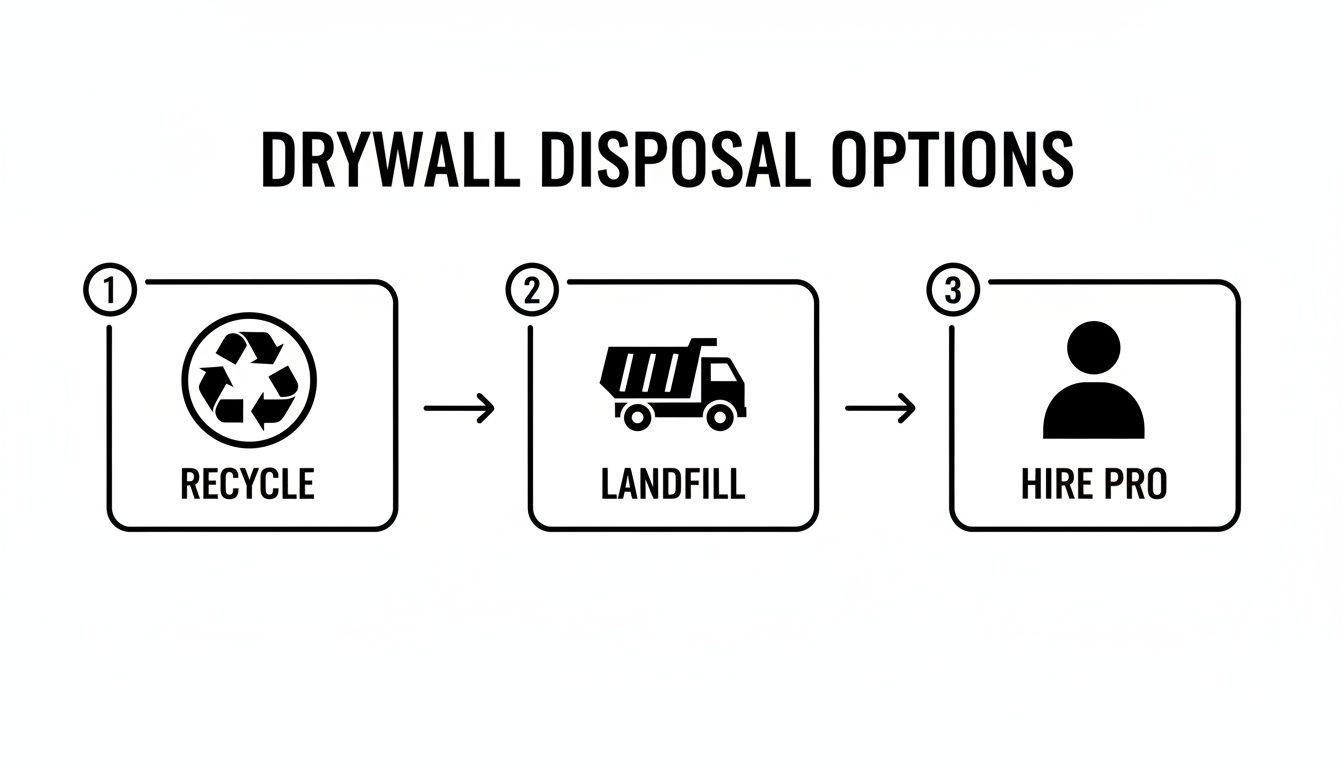
As you can see, how you prepare the material directly impacts whether you can recycle it, have to landfill it, or need to call in a pro.
Sorting Clean Drywall for a Second Life
If you want your drywall to be recycled, it has to be perfectly clean. This means separating it from everything else as you work. Set up a few different piles to make this easy.
- The "Clean" Pile: Only unpainted, untreated, pure drywall pieces go here.
- The "Contaminated" Pile: Anything with paint, wallpaper, mold, or serious water damage belongs in this pile. This is all headed for the landfill.
- The "Everything Else" Pile: All your screws, nails, wood studs, insulation, and wiring go here.
This sorting process is the single most important step for recycling. Facilities have zero tolerance for contaminants—one stray screw can ruin a whole batch. It might feel tedious pulling every last nail out, but it's what makes eco-friendly disposal possible.
Choosing Your Disposal Method: Recycling vs. Landfill
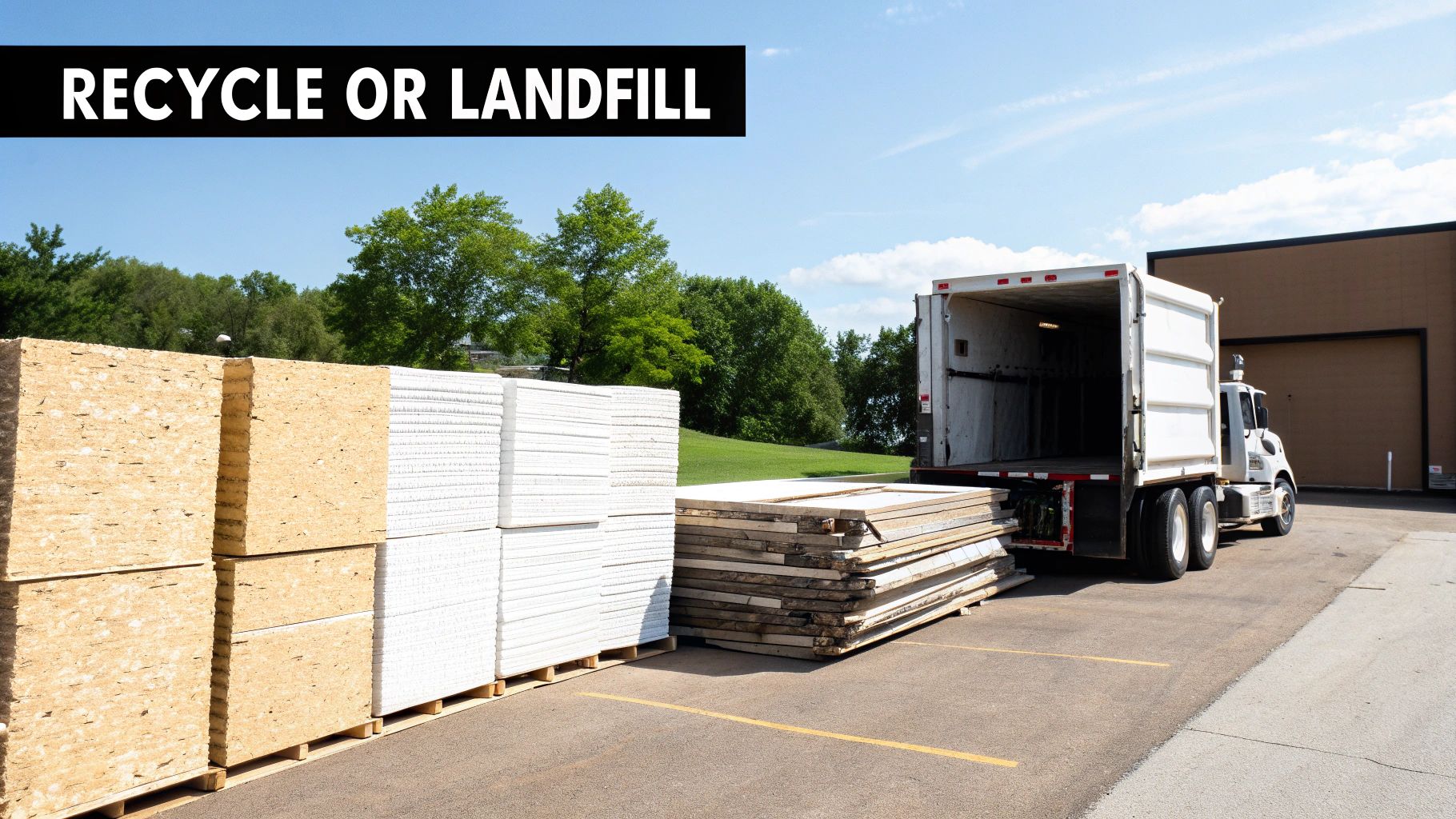
So, you've done the hard work of prepping your old drywall. The nails are out, and you’ve separated the clean sheets from the junk. Now comes the big question: where does it all go?
You're basically at a fork in the road with two main DIY options—recycling it or hauling it to the landfill. Each path has its own rules, costs, and impact on the environment. Making the right call comes down to balancing your budget, your timeline, and your commitment to doing things the green way.
The Environmental Win of Drywall Recycling
Let’s be clear: recycling your clean drywall is, hands down, the most responsible choice you can make. Drywall's main ingredient is gypsum, a mineral that’s almost infinitely recyclable. When you choose this route, you're plugging into a circular economy with some pretty serious benefits.
Just look at the positive impact:
- It Saves Natural Resources: Recycling gypsum means less demand for new mining operations. That saves energy, water, and keeps natural landscapes intact.
- It Frees Up Landfill Space: Construction and demolition (C&D) debris is a huge contributor to our landfills. Diverting tons of bulky drywall helps extend the lifespan of local sites.
- It Prevents Nasty Gas Release: When gypsum rots in a landfill without oxygen, it can release hydrogen sulfide—a toxic gas that smells like rotten eggs. Recycling avoids this problem entirely.
Recycled gypsum powder gets a second life as brand-new drywall or as a fantastic soil amendment for farms, adding crucial calcium and sulfur back into the earth.
Finding a Recycling Center and Playing by Their Rules
Your first mission is to find a facility that actually accepts drywall for recycling. A quick search for "drywall recycling near me" or "C&D recycling Atlanta" will get you started. But whatever you do, call them first.
Don't just show up with a truckload of drywall scrap. Every recycling center has its own strict acceptance policies. One phone call can save you a completely wasted trip and the headache of being turned away at the gate.
When you call, get the specifics on what they consider "clean" drywall. Most will immediately reject anything that's painted, has wallpaper, shows signs of mold, or is mixed with other debris like wood or insulation. Also, be sure to ask about their drop-off fees, which are usually charged by weight (per ton) or by the truckload.
When the Landfill Is Your Only Option
Sometimes, landfilling your old drywall is simply unavoidable. It's the less eco-friendly path, but it becomes the necessary one for any material that recycling centers won't touch.
Your drywall is destined for the landfill if it has:
- Mold or significant water damage.
- Lead paint, which is common in older homes.
- Wallpaper or thick, sticky adhesive.
- Been mixed with other non-recyclable C&D waste.
Contaminated drywall can't be recycled because those impurities would ruin the entire batch of recycled gypsum. Trying to sneak it in won't work—it will just get the whole load rejected and sent to the landfill anyway.
Navigating Construction and Demolition Landfills
Just like with recycling, you can't just dump C&D waste at your regular municipal landfill. You'll need to find a facility specifically licensed to handle construction debris. A quick search for a "C&D landfill Atlanta" should point you in the right direction.
Before you head out, call the landfill to confirm their hours, what materials they accept, and their tipping fees. These fees are what you pay to dump your waste, and they can add up fast depending on how much drywall you have. You’ll also need a solid vehicle—like a pickup truck or a rented U-Haul—to get the heavy, bulky material there safely.
For more tips on handling different kinds of project waste, you can find a ton of helpful articles on the Fulton Junk Removal blog.
When to Hire a Professional Junk Removal Service
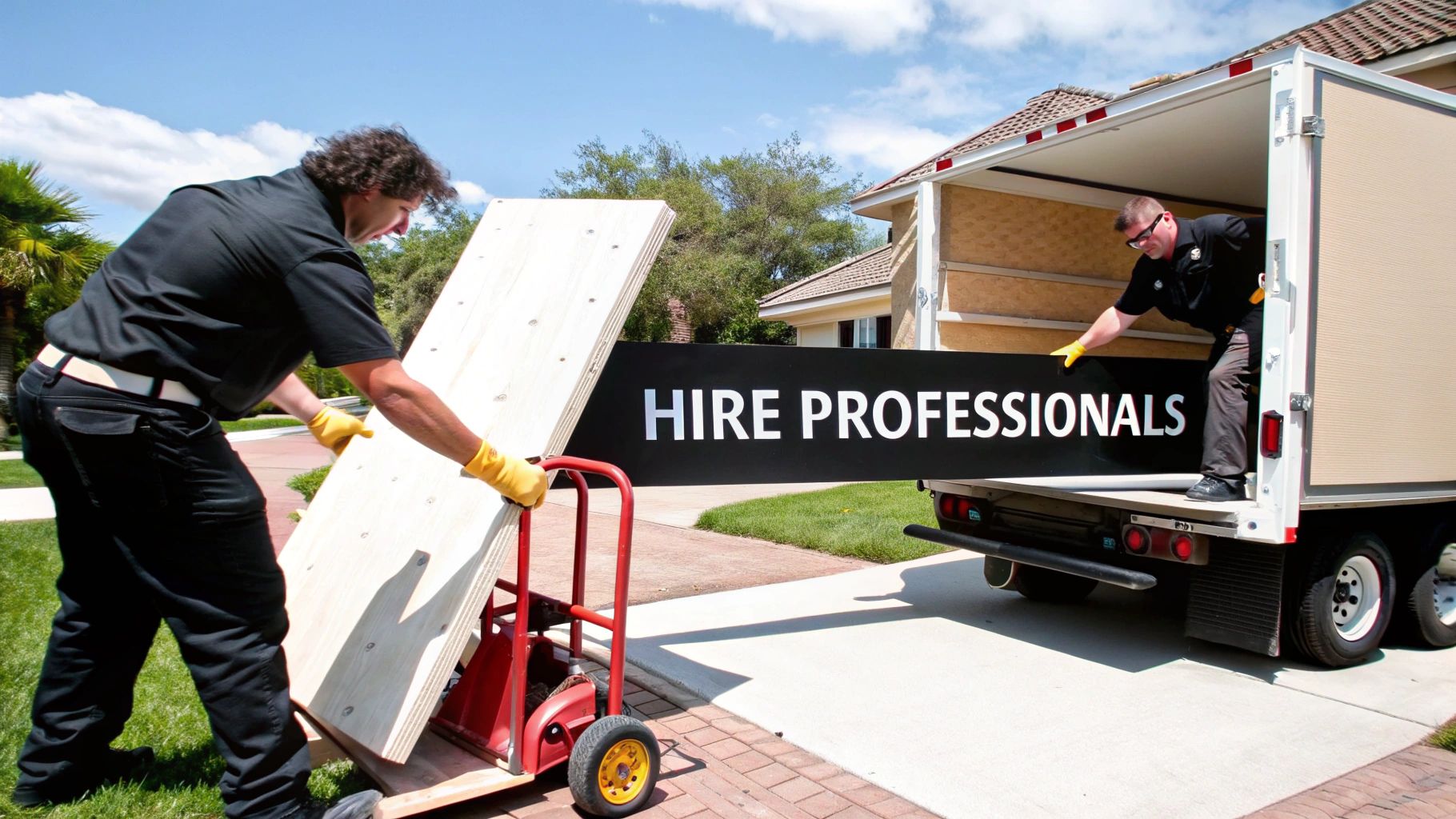
Let's be honest, the DIY route is great for small jobs. Ripping out a single damaged wall? You can probably handle that. But when you’re facing a large-scale renovation, a commercial cleanout, or you just don't have the right truck, that DIY project can quickly turn into a logistical nightmare.
This is exactly where calling in the experts becomes the smartest move you can make. Professional junk removal services are built for the heavy, dusty, and awkward reality of construction debris. They show up with the right trucks, the right crew, and the know-how to make mountains of drywall disappear, saving you from back-breaking labor and endless trips to a C&D landfill.
Signs It’s Time to Call the Pros
So, how do you know when you've crossed the line from a weekend project to a job for a professional crew? If you find yourself nodding along to any of these scenarios, it’s a strong signal that bringing in a team is your best bet.
It's time to hire experts when:
- The Sheer Volume is Overwhelming: A full-room gut or office renovation can generate hundreds, if not thousands, of pounds of drywall. That’s far too much for a standard pickup and often requires a specialized dumpster or a dedicated hauling truck.
- You're on a Tight Schedule: Let's face it, your time is valuable. A job that might take you an entire weekend to haul away can be wrapped up by a professional crew in just a few hours, keeping your renovation timeline on track.
- Safety is a Real Concern: Wrestling with heavy, broken sheets of drywall is a recipe for cuts, strains, and breathing in a ton of dust. A professional team comes equipped with the right gear and experience to manage these hazards safely.
- You're Dealing with Mixed Debris: Renovation sites are rarely just one type of waste. A professional service can handle not just the drywall but also the metal studs, old insulation, discarded furniture, and even the e-waste that comes with a bigger cleanout.
The Fulton Junk Removal and Beyond Surplus Advantage
Here's a crucial point: not all junk removal companies operate the same way. Most will simply haul your debris to the nearest landfill, and that’s the end of the story. Focussed on commercial services, Fulton Junk Removal operates under Beyond Surplus, a circular, eco-friendly solution that goes beyond traditional junk hauling.
We work hand-in-hand with Beyond Surplus to ensure your waste is handled with purpose. This partnership isn't just an add-on; it completely redefines what it means to dispose of project debris.
Fulton Junk Removal handles the heavy lifting, and Beyond Surplus ensures responsible recycling, making compliance and sustainability reporting easier. We actively divert items from landfills, which is a major win for environmentally conscious homeowners and businesses.
Our mission is to minimize waste and maximize reuse. This isn't just a marketing slogan; it's the core of how we do business. For property managers and contractors, this means you're not just clearing out a space—you're making a verifiable contribution to the circular economy.
A Streamlined Solution for Commercial Clients
For anyone managing an office, warehouse, or commercial property, waste disposal is a serious operational task with real compliance and sustainability goals attached. Trying to juggle different vendors for junk hauling, electronics recycling, and metal scrapping is a logistical headache waiting to happen.
Fulton Junk Removal simplifies everything. We offer a bundled junk removal + recycling pickup, where all electronic waste and recyclable materials are directly processed by Beyond Surplus. Imagine clearing out an entire office floor—the old cubicle walls, outdated computers, metal filing cabinets, and drywall debris from the remodel.
With our integrated service, it works like this:
- Fulton Junk Removal clears out all the junk, from drywall and old desks to carpeting and furniture.
- Beyond Surplus ensures all electronic waste and recyclable metals are processed securely and responsibly.
This unified approach makes compliance and sustainability reporting incredibly simple. We can provide the documentation you need to verify that your materials were diverted from landfills, helping your business hit its corporate social responsibility targets without any extra legwork. To see how we can tackle your next big project, check out the full list of our commercial junk removal services.
Having a single point of contact saves you time, cuts down on administrative hassle, and gives you peace of mind that your company’s waste is being managed to the highest environmental standards.
Breaking Down the Costs of Drywall Disposal
Every project, whether it’s a small bathroom update or a massive commercial site cleanup, has a budget. Knowing what drywall disposal actually costs can save you from a nasty surprise when the bill comes. The final price tag really boils down to one question: are you doing it yourself, or are you calling in the pros?
For the hands-on DIYer, a bunch of small costs can sneak up on you and add up fast. You have to think about everything from the gear you'll wear to the final drop-off fees.
Unpacking DIY Disposal Expenses
If you’re tackling the disposal yourself, your budget needs to cover way more than just gas money. Each part of the process has its own price.
- Landfill Tipping Fees: This is your biggest wild card. Most Construction and Demolition (C&D) landfills charge by weight. Here in the Atlanta area, you can expect to pay anywhere from $40 to $70 per ton. A heavy load of drywall can get pricey in a hurry.
- Recycling Center Charges: Going the green route is great, but it isn't always free. Some facilities charge a drop-off fee to cover their processing costs, though it’s often cheaper than the landfill. It's always a good idea to call ahead and ask.
- Truck Rental: Unless you’ve got a pickup truck ready to go, you'll need to rent one. Plan on spending anywhere from $30 for a couple of hours to over $100 for a full day, and that’s before mileage and fuel.
- Safety Gear: Don't even think about skimping here. A quality N95 respirator, safety goggles, and some heavy-duty gloves are non-negotiable. This will set you back about $30-$50 for decent equipment.
When you tally it all up, a small DIY project can easily run a couple of hundred dollars in disposal costs alone—and that’s not counting the hours you'll spend doing it.
How Professional Services Structure Their Pricing
When you hire a professional junk removal service, things get a lot simpler. Most companies, including us, base their pricing on the volume of debris you need gone. It really just comes down to how much space your drywall takes up in the truck.
You'll usually see pricing structured in a few ways:
- By the Truckload: This is the most common and transparent method. Services have set prices for a quarter-truck, half-truck, or full truckload, so you can get a clear estimate right from the start.
- By Total Weight: For incredibly heavy materials, some companies might price by weight, just like a landfill. This is less common for standard drywall jobs.
- Bundled Services: This is where you can find some serious value, especially on commercial projects.
Here’s a pro tip that can save you real money: break down large sheets of drywall into smaller, stackable pieces. It seriously cuts down on the total volume, meaning it takes up less space in our truck and lowers your final cost.
Getting a Realistic Cost Estimate
For a typical small bathroom remodel, you might pay a professional service somewhere between $150 and $300 to haul everything away. On the other end of the spectrum, a large commercial cleanout involving tons of material could easily run into the thousands.
The best way to know for sure is to get a direct quote. If you're managing an office or warehouse cleanout, asking about bundled deals is the smart play. A company like Fulton Junk Removal can give you a single price to haul away the drywall, old office furniture, and e-waste all at once. It's far more efficient and cost-effective than juggling multiple vendors.
For a precise, no-strings-attached estimate that fits your project, your best bet is to get in touch with our team directly. We’ll give you clear, upfront pricing that covers everything, so you know exactly what to expect.
Common Drywall Disposal Questions Answered
Even with the best game plan, a few questions always seem to pop up during a drywall project. Let's tackle some of the most common ones I hear from folks to clear up any confusion before you start hauling.
Think of this as a final sanity check to make sure your project goes off without a hitch.
Can I Just Toss Small Pieces of Drywall in My Regular Trash Can?
It’s tempting, especially for a small patch job, but the answer is almost always a hard no. Your city's trash service isn't set up to handle construction and demolition (C&D) debris, and drywall falls squarely into that category.
Sure, a tiny scrap the size of your thumb might slip by unnoticed, but anything more is a violation of local rules. Drywall doesn't belong in standard municipal landfills, and trying to sneak it in can get you fined. When in doubt, always check your local waste authority’s guidelines first.
What Actually Happens When Drywall Gets Recycled?
It's actually a pretty cool process and a great example of turning waste into a resource. Once the clean drywall hits a recycling facility, things move quickly.
- First, the boards are crushed into small, manageable pieces.
- Next, powerful machinery separates the paper backing from the gypsum core.
- That paper gets baled and sent off to become new paper products.
- The leftover gypsum powder is where the real magic happens.
That reclaimed gypsum can be used to make brand-new drywall, sold to farmers as a soil conditioner (it's great for adding calcium and sulfur), or even mixed into cement. It’s a true "closed-loop" system that cuts down on the need for new gypsum mining.
Key Insight: Recycling drywall isn't just about keeping it out of the landfill; it's about transforming waste back into valuable materials. This process dramatically reduces the environmental footprint of construction by preserving natural gypsum deposits and preventing harmful gas emissions.
What About Painted or Moldy Drywall? Can It Be Recycled?
Unfortunately, this is where the road ends for recycling. Contamination is the enemy at recycling facilities, and they have incredibly strict rules to prevent one bad batch from ruining tons of clean material.
Drywall with lead paint, visible mold, or serious water damage is an automatic rejection. Some recyclers might take a board with a light coat of modern latex paint, but you absolutely have to call and ask first. As a rule of thumb, always keep your clean, unpainted drywall completely separate from the contaminated stuff during demo.
How Does a Business Benefit from a Service Like Fulton Junk Removal?
For businesses, bringing in a professional junk removal service is about much more than just hauling away trash. It's a smart operational move that impacts your compliance, sustainability goals, and bottom line.
Whether you're managing an office, a warehouse, or a portfolio of properties, a service like Fulton Junk Removal (working with our partner Beyond Surplus) takes the entire burden off your shoulders. We ensure you're 100% compliant with local disposal regulations, eliminating legal and financial risks.
Plus, our dedication to recycling helps your company hit its corporate social responsibility (CSR) and sustainability targets—something you can actually measure and include in annual reports. To see how central this is to our work, you can read about Fulton Junk Removal's mission.
Ultimately, it saves you an enormous amount of time and frees up your team to do what they do best instead of wrestling with waste management. And since we can bundle drywall disposal with electronics and metal recycling, you get a single, clean solution for any commercial cleanout.
When your project is just too big to handle on your own, Fulton Junk Removal is here to help. We offer fast, reliable, and eco-conscious disposal services for businesses and homeowners across the Atlanta area, making sure your drywall and other junk are handled the right way. Get your free estimate today.
