
How to Get Rid of Stuff Without the Stress
That feeling of being surrounded by too much stuff is universal, yet the thought of actually getting rid of it can be surprisingly tough. If you've ever stood in a cluttered room and felt completely paralyzed, you're not alone. The connection we have with our belongings is often way more emotional than practical, turning a simple clean-out into a genuine struggle.
Why It Is So Hard to Get Rid of Stuff
This isn't just a feeling; it's a documented reality. The average American home contains a staggering 300,000 individual items. Even as our homes have nearly tripled in size over the last 50 years, about 1 in 10 Americans still rent offsite storage to handle the overflow. That statistic alone tells you how deep our attachment to "stuff" really runs. You can discover more insights about clutter statistics here.
So, why do we hang on so tightly? It turns out there are a few powerful psychological factors at play.
The Psychology Behind Clutter
- Sentimental Attachment: This is the big one. An old t-shirt isn't just a t-shirt; it's a reminder of a concert, a person, or a specific time in your life. Letting go of the object can feel like you're letting go of the memory itself.
- Perceived Future Value: The "just in case" mindset is a clutter trap. We hang onto things we haven't touched in years, convinced they might be useful someday. This creates a cycle of accumulation built on what-ifs instead of what is.
- Decision Fatigue: Every single item requires a decision—keep, sell, donate, or toss? When you're facing hundreds or even thousands of these tiny choices, your brain gets overwhelmed and shuts down. It’s easier to just do nothing.
- Guilt and Obligation: We've all been there. We hold onto items because they were gifts or family heirlooms, feeling a sense of obligation to the giver even if the item doesn't fit our home or lifestyle.
Here's the truth: your home should be a place of comfort and function, filled only with things you genuinely love or actively use. Releasing items you're holding onto out of guilt is a powerful step toward reclaiming your space for yourself.
Shifting Your Mindset for Success
Understanding these mental roadblocks is the first step to clearing them. The goal isn't just to learn how to get rid of stuff, but to build a healthier relationship with your possessions for the long haul.
By putting a clear system in place, you can move past the emotional hurdles and start focusing on the incredible freedom that comes with a clutter-free environment.
It also helps to know your options from the start, especially for bigger projects. Knowing that a service like Fulton Junk Removal and our circular mission can handle things responsibly—especially tricky items like old electronics—provides real peace of mind. This is about creating lasting change, not just a temporary fix.
A Practical System for Sorting Your Clutter
Staring down a mountain of clutter is enough to make anyone want to just shut the door and walk away. But the secret to getting rid of your stuff isn't some superhuman burst of energy; it's about having a simple, repeatable system. When you break the process down, that feeling of paralysis disappears and gets replaced with a clear, actionable plan.
The easiest and most effective way I've seen this done is with the Four-Box Method. It's exactly what it sounds like. You get four boxes, bins, or just designated areas in a room and label them: Keep, Donate/Sell, Recycle, and Dispose. From here on out, every single item you pick up goes into one of those four categories. No second-guessing, no "I'll deal with this later" pile.
This little decision tree breaks it down even further.
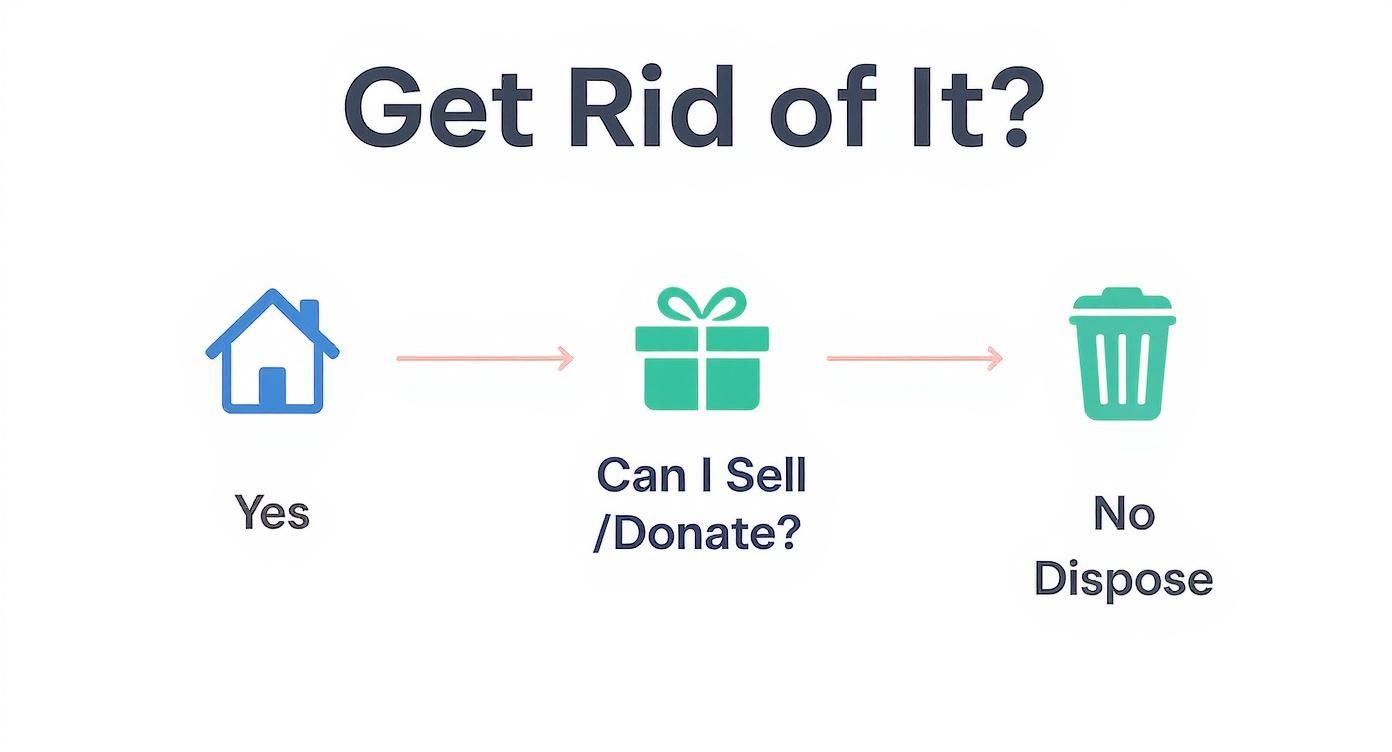
As you can see, the whole process really starts with one simple question about whether you truly need something, and then it branches out from there into responsible choices.
Defining Your Categories
Let's walk through the mindset for each category. Going in with a clear head helps you move fast and avoid getting stuck on items you feel guilty about letting go of.
The Keep Box
This box should be the hardest one to get into. Be ruthless. Ask yourself a few direct questions:
- Have I actually used this in the last year?
- Do I genuinely love it, or am I just keeping it out of obligation?
- If it broke tomorrow, would I run out and buy another one?
- Does it serve a real, current purpose in my life right now?
If you're hesitating or the answer is a flat "no," it doesn't belong here. This isn't about finding a place for everything you own; it's about making space for the things that actually matter.
The Donate or Sell Box
This pile is for all the perfectly good stuff that just doesn't serve you anymore. Think clothes that haven't fit for years, that extra set of kitchen gadgets you got as a gift, or books you've already read and enjoyed.
An item's journey doesn't have to end with you. Donating or selling gives useful objects a second life, benefiting others and keeping them out of landfills. It's a win-win for your space and your community.
Take a second to judge its potential value. Is it something you could quickly sell online or take to a consignment shop? If it's more trouble than it's worth, a local charity will be thrilled to have it.
Once you’ve cleared out the clutter, you’ll need some fresh ideas for organizing what’s left. You can find more practical tips like these over on the Fulton Junk Removal blog.
Handling Recyclables and True Junk
These last two piles are where responsible disposal really comes into play. They ensure that what leaves your home is handled the right way—not just dumped somewhere. This is where most people get tripped up, but it's simpler than you think.
The Recycle Box
This is for more than just your soda cans and Amazon boxes. Old documents, glass jars, and certain plastics all go here. But this is also the right spot for trickier items that require special handling.
A lot of people don't realize that old electronics, scrap metal, and broken appliances can't just be tossed in the trash bin. These fall into a special recycling category. A service like ours, working with our partner Beyond Surplus, specializes in this kind of thing. We make sure e-waste and metals are actually processed and recycled, not just hauled to a landfill.
The Dispose Box
This is your last resort. This box is only for things that are well and truly at the end of their life—items that are broken beyond repair, permanently stained, or otherwise unusable and non-recyclable. The goal is always to make this the smallest box of the four.
To help you make these decisions on the fly, here’s a quick-reference table.
Decision-Making Guide for Your Clutter
Use this table to quickly decide the fate of any item you're sorting through.
| Item Category | Guiding Questions | Best Disposal Method |
|---|---|---|
| Clothing & Textiles | Is it in good condition? Does it fit? Have I worn it in the last year? | Sell/Donate if wearable. Recycle at a textile drop-off if stained/torn. Dispose only if soiled. |
| Electronics & Appliances | Does it work? Is it obsolete? Does it contain hazardous materials? | Sell if new/valuable. Recycle through an e-waste program for ALL others. Never trash. |
| Furniture | Is it structurally sound? Could it be repaired or refinished? | Sell/Donate if usable. Junk Removal for bulky, broken items that can be dismantled for recycling. |
| Books, Media, & Paper | Have I read/watched it? Will I again? Is it just junk mail or old documents? | Sell/Donate books and media. Recycle all paper, magazines, and cardboard. |
| Kitchenware | Is it a duplicate? Is it broken? Do I actually use it? | Sell/Donate if in good condition. Recycle metal pots/pans. Dispose of broken glass or ceramics. |
Sorting through years of stuff can feel like a monumental task. That’s why the professional organizing industry is booming—it was valued at around $12.26 billion globally in 2025 and is expected to hit $21.16 billion by 2032. It just goes to show you're not alone in wanting expert help to reclaim your space. By using this four-box system, you’re using the exact same methodical approach the pros use to bring order back to a home.
Smart Ways to Donate, Sell, and Recycle
You’ve done the hard work of sorting your belongings. Now comes the rewarding part: turning that clutter into cash, good deeds, and responsible action. This is where you transform those piles of stuff into tangible benefits, making sure each item finds its best possible next home.
Giving away items is a fantastic way to support your community while clearing out your space. A little preparation, however, goes a long way in making sure your donations are genuinely helpful and not just another problem for a charity to handle.
Making Your Donations Count
Before you load up the car, take a few extra minutes to prep your items. Think of it as passing the item on with respect—this small effort ensures they are ready for immediate use by someone who needs them.
As a rule of thumb, only donate things in a condition you’d be happy to receive yourself. Lightly used, clean, and functional items are always in demand.
Here’s how to maximize your impact:
- Clean Everything: Give clothes a quick wash and wipe down hard goods like toys or kitchenware. This simple step makes items shelf-ready for charities.
- Keep Sets Together: If you're donating a board game, tape the box shut. If it's a set of dishes, pack them together carefully to prevent pieces from getting lost.
- Check Donation Guidelines: Not all charities accept all items. A quick visit to their website can tell you what they need most and what they can't take, saving everyone time.
Donating isn't just about getting rid of stuff; it's about giving an item a second life where it can be valued and used. Your thoughtful preparation ensures your generosity directly benefits someone else.
Turning Clutter Into Cash
For items that have more significant value, selling is an excellent option. It can put extra money in your pocket and is a powerful motivator for decluttering. You have several avenues to choose from, each with its own pros and cons.
A classic garage sale is great for offloading a large volume of household items at once, but it demands a lot of weekend work, from pricing every little thing to advertising.
Online platforms offer a wider reach but require more individual effort. Facebook Marketplace is ideal for larger items like furniture that you want to sell locally. eBay is better for collectibles or specialty items that might appeal to a national audience. And if you're cleaning out your wardrobe, you can even explore the best places to sell designer clothes for a more worthwhile return.
Pro Tips for Selling Your Stuff
To get the best price and move your items quickly, presentation is everything. A few strategic tweaks can make your listings far more appealing.
- Take Great Photos: Use natural light and a neutral background. Snap pictures from multiple angles. For clothing, showing it on a hanger looks infinitely better than crumpled on the floor.
- Write Honest Descriptions: Be clear about the item's condition. Mention any scuffs, scratches, or flaws. Honesty builds trust and prevents headaches later.
- Set a Fair Price: Do a quick search for similar items on the platform you're using. Pricing your item competitively is the key to a fast sale.
Recycling the Right Way
Recycling seems straightforward, but common mistakes can contaminate an entire batch of materials, sending it all straight to the landfill. Knowing the local rules is crucial for ensuring your efforts actually make a difference. Many people are surprised to learn that items like greasy pizza boxes or coffee cups are often non-recyclable.
The most important step is to check your local guidelines, as what's accepted can vary significantly depending on where you live. For residents in our area, you can find specific disposal information by checking the guidelines for our Fulton Junk Removal service areas.
This is especially critical for electronics, metals, and other complex materials. These items should never go in your curbside bin. They contain valuable resources that can be recovered and hazardous materials that need to be handled safely—and that’s where a professional service becomes invaluable.
Dealing with Electronics, Metal, and E-Waste
Some things just can’t go into your curbside bin. Once you’ve sorted through the clutter and made piles for keeping, donating, and selling, you're usually left with the trickiest category: old electronics, scrap metal, and bulky appliances. These items don't just take up space—they pose a real environmental threat if you just toss them out.
Figuring out what to do with a broken laptop or an old microwave is a massive headache. It's the point where so many well-intentioned decluttering projects grind to a halt. The hassle of responsible disposal is a big reason why the global home organization market is booming, expected to hit $13.27 billion by 2025 as people look for real solutions. You can read more about this trend in home organization.
The Hidden Dangers in Your E-Waste
"E-waste" is the term for any electronic device you're done with. We're talking about everything from old smartphones and computers to TVs and kitchen gadgets. These items are packed with a mix of materials—some are valuable, like gold and copper, while others are downright hazardous, like lead, mercury, and cadmium.
When these devices end up in a landfill, those toxic materials can seep into the soil and groundwater, causing serious environmental damage. That’s why throwing them in the regular trash is often illegal and always a bad idea. Proper disposal isn't just a nice-to-do; it's an environmental necessity.
The same goes for scrap metal. Old shelving, broken appliances, or leftover construction debris can be recycled almost endlessly. Recycling metal saves a tremendous amount of energy and raw materials compared to making it from scratch. Landfilling it is just a huge waste.
A Smarter Way to Handle Complex Waste
This is exactly where a specialized service stops being a luxury and becomes a crucial part of your cleanout. For homeowners and businesses, the problem isn't just finding a place that takes e-waste—it's the logistics of getting it all there. That's why Fulton Junk Removal created a seamless, all-in-one approach through our partnership with Beyond Surplus.
Most junk removal companies see an old computer or a broken washing machine as one more thing to haul to the dump. We see it as an opportunity for responsible recycling. Our process is fundamentally different.
While other haulers might just mix everything together, our entire model is built on an eco-friendly, circular philosophy. We don't just take your junk; we actively work to keep it out of landfills.
How Our Bundled Junk Removal and Recycling Works
Fulton Junk Removal works hand-in-hand with Beyond Surplus to recycle electronics, metals, and other materials responsibly. We can offer a bundled junk removal + recycling pickup, where all electronic waste and recyclable materials are directly processed by Beyond Surplus. This means you don't have to waste time making separate trips or calling different companies for your regular junk and your e-waste.
- One Simple Pickup: We show up and collect all your unwanted items in a single visit. We’ll grab the old furniture and boxes from the attic and the pile of outdated electronics in your garage.
- Direct, Responsible Processing: Every piece of electronic waste, metal, and other recyclable material goes straight to Beyond Surplus for processing. They have the expertise to dismantle, sort, and ensure every component is repurposed or recycled to the highest environmental standards.
- Maximizing Reuse, Minimizing Waste: This direct partnership guarantees we send as little as possible to the landfill while maximizing the reuse of valuable materials. Your old tech doesn't become a toxic problem; it becomes a source of recycled resources.
Making Sustainability Simple for Businesses
This integrated service is a game-changer for commercial clients like offices, warehouses, and property managers. Managing asset disposal and sticking to environmental regulations can be a huge operational burden.
Think about an office manager overseeing an equipment upgrade—they're suddenly dealing with dozens of old monitors, computers, and printers. Or a property manager cleaning out a unit, often left with abandoned appliances and electronics.
Fulton Junk Removal handles the physical cleanout, and Beyond Surplus provides the certified, responsible recycling. This two-part solution simplifies compliance, makes sustainability reporting easier, and gives you peace of mind that your company’s environmental footprint is being actively managed. It transforms a complex disposal headache into a simple, eco-conscious choice.
When to Call for Professional Junk Removal
You’ve sorted, sold, and donated. Awesome work. But now you’re left staring at the heavy hitters—the bulky, broken, or just plain overwhelming stuff that a car trunk and a strong back can't handle. While the DIY approach is perfect for smaller decluttering projects, there comes a point where you need more muscle, bigger trucks, and real expertise.
Knowing how to get rid of your stuff is one thing. Knowing when to call for help is another. Some jobs are just too big, too complex, or too time-consuming to tackle on your own. Recognizing these moments can save you from a pulled muscle, a wasted weekend, and the headache of figuring out where to legally dump an ancient refrigerator.

Signs It’s Time to Hire Professionals
If any of these scenarios sound familiar, it’s a clear signal that professional junk removal is your best move. These aren’t just simple trips to the donation center; they're logistical challenges.
- Estate Cleanouts: Handling a loved one's belongings is emotionally draining and physically taxing. A professional crew can respectfully and efficiently clear an entire property, giving you the space to focus on what really matters.
- Large-Scale Office or Warehouse Decluttering: When a business moves, downsizes, or upgrades, it creates a mountain of waste—from old cubicles to outdated tech. A professional service gets it done fast to minimize your operational downtime.
- Bulky Furniture and Appliance Removal: That old sectional in the basement or the dead freezer in the garage isn't just heavy. It's awkward, hard to maneuver, and a genuine safety risk to move. Pros have the right equipment and experience to get it out without damaging your walls (or your back).
- Property Management and Tenant Turnovers: For property managers and real estate agents, time is money. When a tenant leaves a mess behind, you need a quick, thorough cleanout to get the unit ready for the next occupant.
The Fulton Junk Removal Difference: A Circular Model
Here’s the thing: not all junk removal services are created equal. The vast majority operate on a simple, linear model: they pick up your items and drive them straight to the nearest landfill. It’s quick, but it’s also a huge contributor to our growing environmental problems.
Fulton Junk Removal does things differently. We are part of the Beyond Surplus family, which means our entire process is built on a circular, eco-friendly philosophy. We don’t just haul junk away; we actively work to divert every possible item from the landfill.
While most junk removal companies take everything to the landfill, we recycle through Beyond Surplus to minimize waste and maximize reuse. This appeals to environmentally conscious homeowners and businesses.
This unique partnership allows us to offer more than just muscle. It gives you a responsible, sustainable solution that you can feel good about. You get the peace of mind knowing your unwanted items are being handled the right way.
How Our Eco-Friendly Approach Works for You
When you hire Fulton Junk Removal, you’re getting a seamless, integrated service. We offer bundled junk removal + recycling pickups, meaning all your e-waste, scrap metal, and other recyclable materials are sent directly to Beyond Surplus for processing. No need to make separate calls or arrange different pickups. It all happens at once.
For businesses, this streamlined process is a game-changer.
- Offices and Warehouses: Fulton can haul away the heavy furniture and debris, while Beyond Surplus ensures every piece of e-waste is recycled responsibly. This makes compliance and sustainability reporting a breeze for facilities and operations managers.
- Property Managers: Our combined service ensures that everything from abandoned appliances to old carpeting is removed and processed according to environmental regulations. This reduces your liability and supports corporate sustainability goals.
Choosing a professional service like ours transforms a daunting task into a simple, responsible solution. Take a look at the full range of Fulton Junk Removal services to see how we can tackle your specific project.
DIY Disposal vs. Fulton Junk Removal
Still on the fence? Sometimes seeing it laid out helps you decide when it's time to call in the pros. Here’s a quick comparison to help you weigh your options.
| Disposal Task | DIY Approach (Time, Cost, Effort) | Fulton Junk Removal Advantage |
|---|---|---|
| Old Sofa & Mattress | Requires a truck, multiple people for lifting, and finding a proper disposal facility that accepts them (often for a fee). | We handle all the heavy lifting, transportation, and responsible disposal in one quick visit. No physical strain on you. |
| Office E-Waste Cleanout | Involves sorting devices, wiping data, and finding a certified e-waste recycler—a time-consuming and logistically complex task. | Our bundled service ensures all electronics are processed by Beyond Surplus, providing certified recycling and data security. |
| Estate or Eviction Cleanout | An emotionally and physically demanding project that can take days or weeks, involving countless decisions and disposal trips. | Our team can clear an entire property efficiently and compassionately, sorting items for donation, recycling, and disposal. |
| Construction Debris | Requires renting a dumpster, manual labor to load it, and coordinating pickup. Often involves separating different materials. | We load and haul away all debris, ensuring materials like wood, metal, and concrete are recycled whenever possible. |
Ultimately, the choice comes down to weighing your time, energy, and resources against the convenience and expertise of a professional service. For the big jobs, letting a team handle the heavy lifting is often the smartest, safest, and most efficient path forward.
Common Questions About Decluttering
Even the most organized decluttering plan can hit a wall. It usually happens right at the end, when you're faced with those last few piles that seem impossible to sort through. These are the hurdles that stop projects cold—the emotional attachments and practical what-ifs that keep stuff in limbo.
Let's walk through some of the questions we hear all the time. Getting these answers straight can give you the final push you need.
And remember, knowing you have a reliable partner for the final haul-away makes every decision easier. It's always a good idea to contact us at Fulton Junk Removal early in the process for a free estimate. That way, you know exactly what to expect when you're ready.
What Should I Do With Sentimental Items I Feel Guilty About?
This is, without a doubt, the toughest part for nearly everyone. The trick is learning to separate the physical object from the memory it holds. You don't need to keep an entire collection of something to honor a person or a moment.
Here are a few strategies that actually work:
- Create a Digital Archive: Take high-quality photos of the items. You can set up a special folder on your computer or even a private album online. This lets you revisit the memory without dedicating physical space to it.
- Keep a Small, Curated Collection: Instead of storing five boxes of your grandmother’s china, pick one or two beautiful teacups to display on a shelf. This approach honors the memory in a way that actually fits your life today.
- Pass It On: Is there another family member who might truly treasure an item that just feels like clutter to you? Giving it a new home with someone who will love it keeps the memory alive in the best way possible.
How Do I Decide What to Do With Items in a Gray Area?
This is the classic "too good to throw away, but not valuable enough to sell" dilemma. We're talking about that perfectly good (but outdated) blender, those curtains that don't match anything anymore, or the stack of books you know you'll never read again.
The answer is almost always donation.
Your "gray area" items are often exactly what local charities and shelters need. An item you see as clutter could be an essential household good for a family starting over.
Don't let the small effort of dropping off a box get in your way. The positive impact of giving these items a second life is huge, and it clears your space for good.
How Does Decluttering Affect My Home's Value?
The link between a clean, open space and a home's market value is enormous. It's not just about aesthetics. A clutter-free home looks bigger, feels more inviting, and sends a powerful signal to potential buyers that the property has been cared for.
If you’re thinking of selling, decluttering is one of the highest-return activities you can undertake. In fact, most essential real estate staging tips list it as the absolute first step before a home even hits the market.
Once you've sorted, donated, and made your decisions, let Fulton Junk Removal take it from there. We provide fast, eco-friendly removal for everything you're ready to part with—from old furniture to e-waste—making sure it's all handled responsibly. Get your free estimate today at https://fultonjunkremoval.com.
