
How to reduce landfill waste: guide for homes and businesses
To truly cut down on what we send to the landfill, we have to start thinking differently about waste. It's about more than just recycling; it's about reuse, responsible partnerships, and shifting away from that old "take-make-dispose" mindset. We need a circular approach, where things like old electronics and scrap metal are seen as resources, not trash.
Why Reducing Landfill Waste Matters More Than Ever
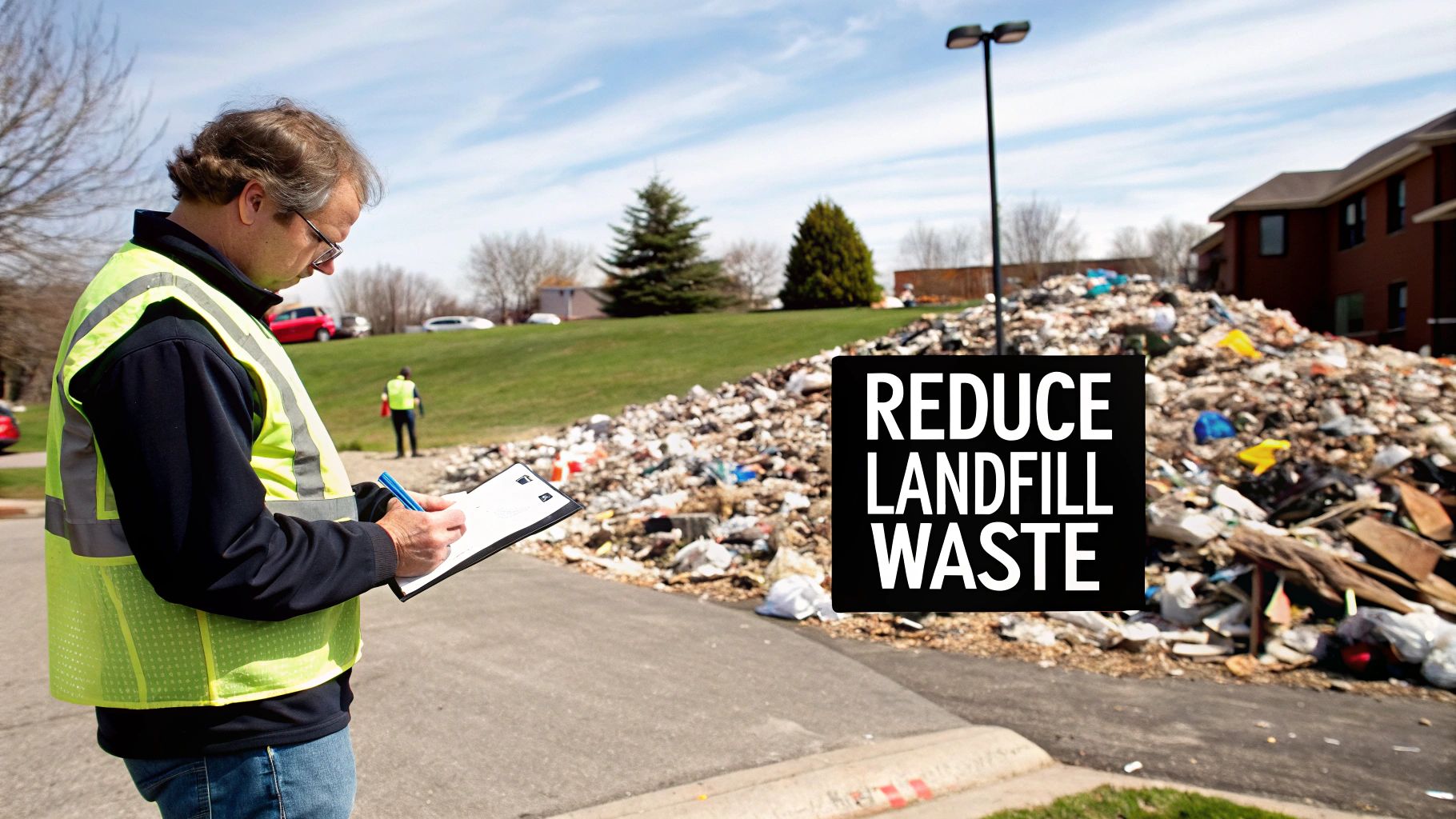
We've all been there—staring at an overflowing dumpster and feeling a bit overwhelmed by how much we throw away. It’s not just a problem at home. For offices, warehouses, and property managers, waste is a huge operational headache and a growing environmental liability. Our traditional way of doing things is hitting a wall, pushing our landfills to the brink.
The scale of the problem is staggering. The United States generates more municipal solid waste per person than any other OECD country. As of 2025, that’s an estimated 951 kg of waste per person every single year.
Even though we recycle about 30% of it, nearly half of everything we toss—a massive 447 kg per person—still ends up buried in the ground. It’s a clear sign that our current systems just aren't cutting it. Discover more about these waste generation trends and what they mean for our future.
Waste Generation Per Capita: A Global Snapshot
To put the U.S. numbers in perspective, it helps to see how we stack up against other nations. The data reveals a significant gap in both waste generation and management strategies.
| Country | Waste Generated (kg/capita) | Landfilled Waste (kg/capita) | Recycled Waste (kg/capita) |
|---|---|---|---|
| United States | 951 | 447 | 285 |
| Germany | 632 | 1 | 423 |
| Japan | 354 | 46 | 71 |
| United Kingdom | 463 | 60 | 204 |
| Canada | 777 | 334 | 186 |
These figures highlight a critical reality: while other developed nations have nearly eliminated landfilling through aggressive recycling and waste-to-energy programs, the U.S. continues to rely heavily on burying its trash.
The True Cost of Overflowing Landfills
The impact of all this waste goes far beyond just taking up space. Landfills are a major source of environmental trouble. As organic materials break down, they release methane, a greenhouse gas far more potent than carbon dioxide. On top of that, nasty liquids can leak out, contaminating soil and the groundwater we rely on.
For businesses, the consequences are hitting the bottom line. Disposal fees are climbing, regulations are getting tighter, and customers are demanding more sustainable practices. Ignoring waste is no longer an option, especially for property managers and warehouse supervisors dealing with mountains of packaging, old equipment, and tenant cleanouts.
A Smarter Path Forward: The Circular Economy
The solution isn’t just about using less; it’s about thinking smarter. A circular economy offers a powerful alternative, turning our linear "trash" system into a cyclical "resource" system. The goal is to keep materials in use for as long as possible through recycling, repurposing, and responsible recovery.
This is where an eco-friendly junk removal partner makes all the difference. While most junk removal companies take everything to the landfill, Fulton Junk Removal operates as part of a circular, eco-friendly solution that goes beyond traditional junk hauling.
As a commercial-focused service operating under our parent company, Beyond Surplus, we work hand-in-hand to recycle electronics, metals, and other materials responsibly. This ensures items are diverted from landfills and properly repurposed or recycled.
This integrated approach appeals to environmentally conscious homeowners and businesses. Fulton can offer bundled junk removal + recycling pickup, where all electronic waste and recyclable materials are directly processed by Beyond Surplus. This makes compliance and sustainability reporting easier for offices, warehouses, and property managers.
To find more ways you can make an impact, check out our other posts on the Fulton Junk Removal blog.
Practical Waste Reduction Strategies for Your Business
If you’re a property manager, an office leader, or a warehouse supervisor, you already know that waste is more than just trash. It's a real operational cost and a growing compliance headache. Let’s move beyond the generic advice and get into targeted strategies that actually make a difference for your bottom line and your brand’s reputation.
First, Know What You’re Throwing Away
The first real step toward cutting waste is figuring out exactly what you're tossing. A simple waste audit gives you the clarity you need to make smart changes. Don't worry, this doesn't have to be some complex, formal process.
Just for one week, set up a few dedicated, clearly marked bins for different materials: cardboard, office paper, plastics, electronics, and general trash. At the end of the week, take a look. Which bins are overflowing? This simple exercise will immediately show you your biggest waste streams—whether it's mountains of cardboard from shipments or a surprising pile of old electronics.
Set Up for Success with Clear Recycling Stations
Once you know what you’re dealing with, your next move is to make recycling completely effortless for everyone. Ambiguity is the enemy of a good recycling program. A vague bin just labeled "Recyclables" is a recipe for contamination, where one wrong item can spoil the entire batch.
Instead, create intuitive, clearly labeled stations with visual aids. Use images or simple text to show exactly what goes in each bin: "Flattened Cardboard Only," "Aluminum Cans & Plastic Bottles," or "Office Paper." Place these stations in high-traffic spots like kitchens, copy rooms, and loading docks. This encourages people to use them correctly and builds good habits across the company.
A well-organized disposal area does more than just boost recycling rates. It sends a clear signal that your company is committed to sustainability, turning waste management from an afterthought into a visible part of your operational excellence.
Talk to Your Suppliers to Cut Waste at the Source
A huge chunk of commercial waste, especially for warehouses and retail businesses, comes from incoming packaging. Tackling this with your suppliers is a powerful way to reduce landfill waste before it even hits your facility.
Start a conversation with your key vendors about their packaging. Ask if they offer reusable shipping containers or take-back programs for materials like pallets and crates. You’d be surprised how many suppliers are willing to work with you on sustainability, since it can often lower their own material costs too.
When it comes to tenant move-outs or office cleanouts, bringing in a specialized service is a must. Most traditional junk haulers take the path of least resistance: straight to the landfill. But an eco-conscious partner can divert a massive amount of that material. As you look for options, explore comprehensive junk removal services that build recycling right into their process. This ensures old furniture, electronics, and construction debris are handled the right way, helping you hit your sustainability goals and simplifying your compliance reporting.
How to Launch a Successful Commercial Recycling Program
A great recycling program is more than just sticking a few blue bins in the corner of the office; it’s about building a seamless system that your employees actually find easy and intuitive to use. Launching a program that works means tackling common hurdles like low participation and contamination head-on, turning good intentions into real, measurable results.
One of the first things to do is make recycling a visible priority for the whole company. You can do this by creating a "green team" with enthusiastic employees from different departments. These folks become your champions—they can help drive the initiative, answer questions, and give feedback to make sure the program stays effective over the long haul.
Creating a System That Works
Clear communication is the absolute backbone of any recycling initiative. Use simple visual guides and clear instructions right at every disposal station. This small step clears up a ton of confusion and drastically reduces the chances of contamination—where just one wrong item, like a greasy pizza box, can ruin an entire bin of perfectly good recyclable cardboard.
When you're putting your program together, don't forget about electronic waste. You'll need a solid plan for handling it, and there are comprehensive guides for finding electronics recycling facilities. E-waste is full of hazardous materials but also valuable resources, so it has to be handled by certified recyclers.
This infographic breaks down the core steps to get your business's waste reduction journey started.
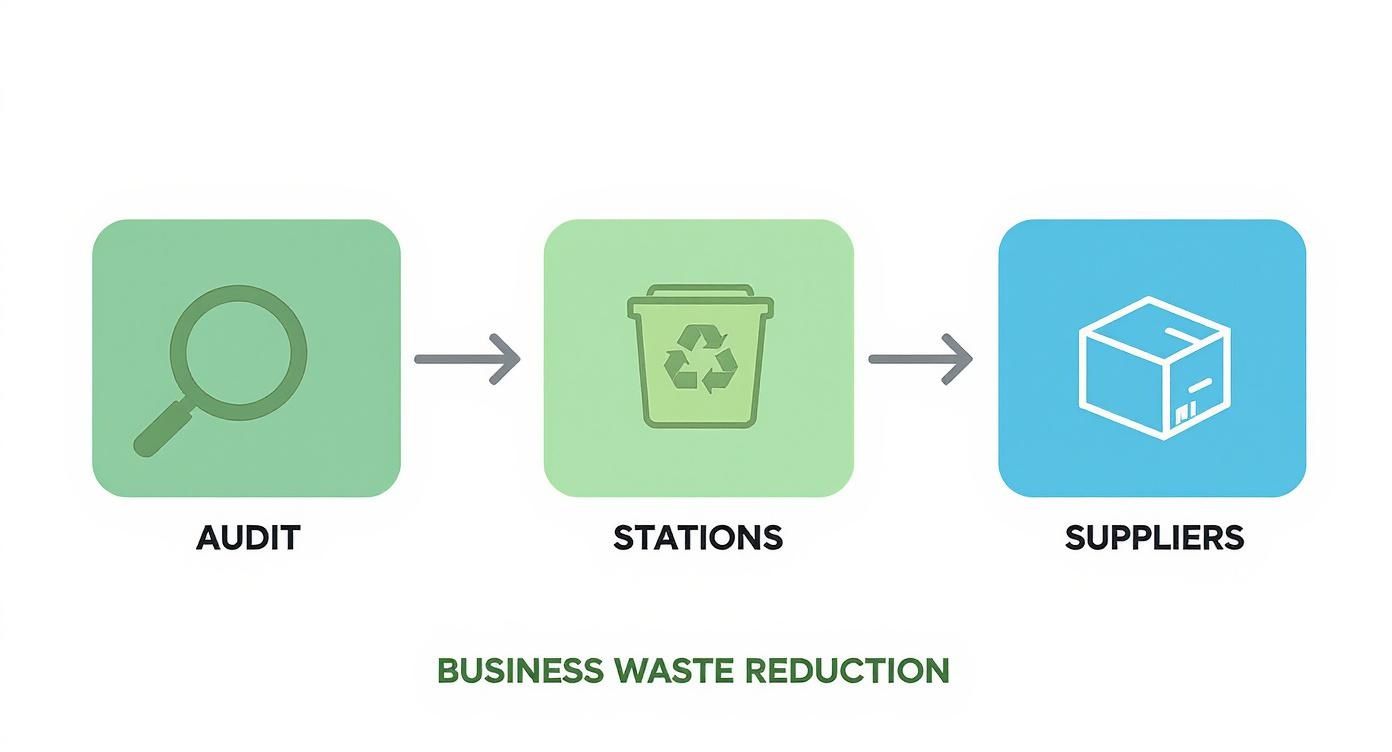
From auditing your waste stream to setting up clear stations and getting suppliers on board, it's a clear roadmap for building a program that truly delivers.
Partnering for Success
Even the best in-house recycling program needs a reliable partner to handle the materials you collect. This is where an integrated service becomes a total game-changer for property managers, office leaders, and warehouse supervisors. Let's be honest: many junk removal companies just haul everything to the landfill because it’s the easiest path.
A truly circular, eco-friendly solution goes way beyond traditional junk hauling. Fulton Junk Removal works directly with our parent company, Beyond Surplus, to ensure that the materials we collect are actually recycled and repurposed, minimizing waste and maximizing reuse. This bundled approach simplifies everything for you.
Fulton handles the junk removal, and Beyond Surplus ensures responsible recycling. With our bundled pickup services, all your electronic waste, metals, and other recyclable materials are directly processed by Beyond Surplus, making compliance and sustainability reporting easier.
This partnership model is especially valuable for larger cleanouts or when you're dealing with bulky items like old office furniture or obsolete equipment. Instead of trying to coordinate with multiple vendors, you get one point of contact who is fully committed to landfill diversion.
Ready to see how this can work for your business? Get in touch with our team today to talk about a bundled solution.
Thinking bigger, we can see how national policies and infrastructure investments have been powerful tools globally. For instance, Austria hit a 42% recycling rate even before implementing a national deposit return scheme. This just goes to show how strategic initiatives can dramatically cut down our reliance on landfills and shift national habits for the better.
Think Beyond the Bin: The Power of Reuse
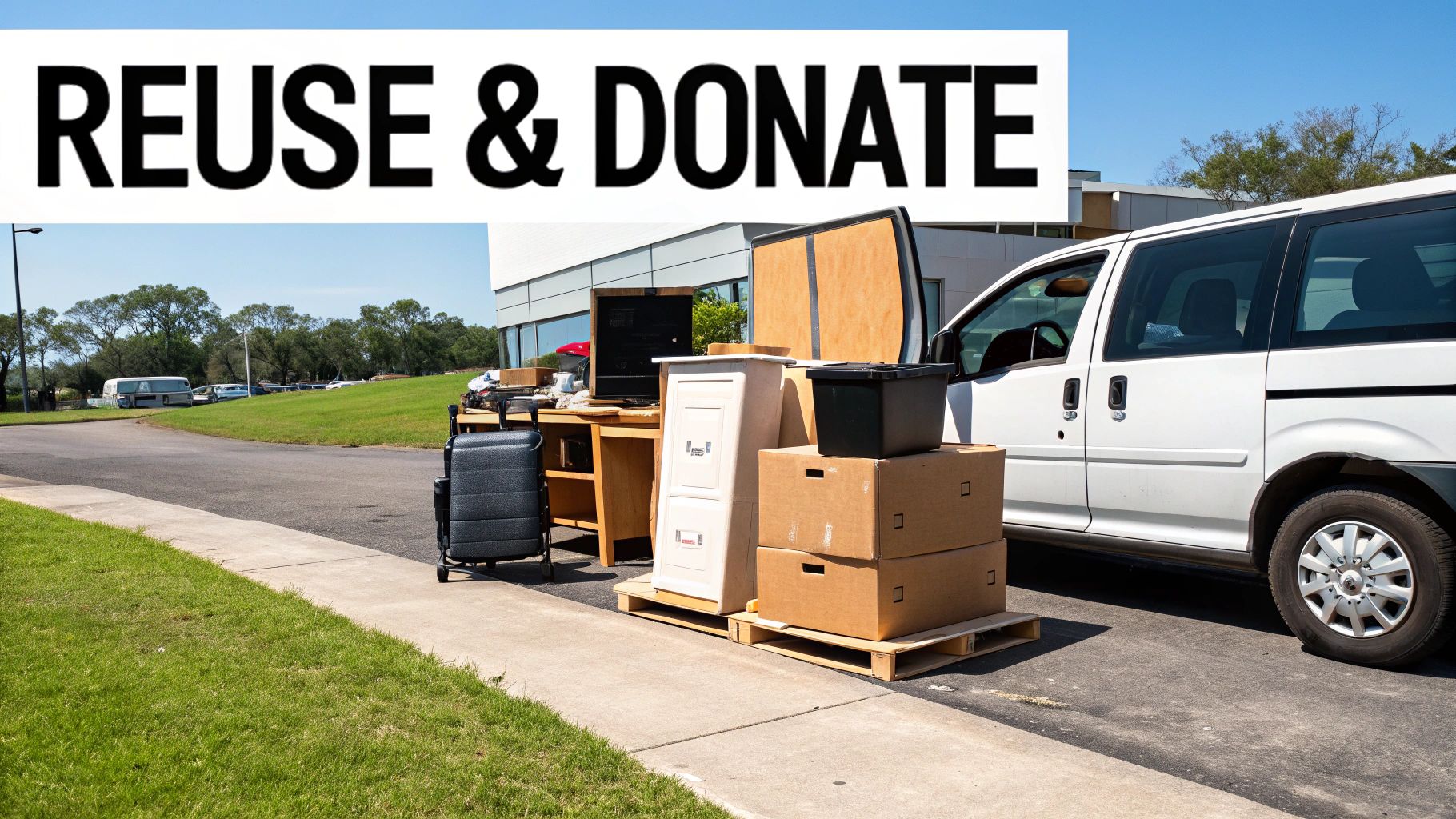
Before anything even gets close to a recycling bin, it’s worth asking one simple question: could this have a second life somewhere else? That’s the heart of reuse, and it's a game-changing strategy for anyone wondering how to reduce landfill waste. It’s all about shifting your perspective to see the hidden value in things you might otherwise call 'junk.'
For a business, this mindset opens up a ton of practical, high-impact opportunities. An office refresh doesn't have to mean sending dozens of perfectly good desks and chairs to the dump. Instead, those items could be a massive help to a local non-profit or a startup school. In the same way, outdated but functional equipment might find a new home on a secondary market, turning what was a disposal cost into a little extra revenue.
Turning Business 'Junk' into Community Assets
The key is finding those diversion pathways before you call for a standard junk pickup. You'd be surprised how many items that businesses get rid of still hold plenty of value for others.
Here are a few real-world examples we see all the time with offices, warehouses, and property managers:
- Office Furniture: Connect with local charities, schools, or community centers. They're often in desperate need of the exact desks, chairs, and filing cabinets you're getting rid of.
- Outdated Electronics: Don't toss them! Functional computers, monitors, and printers can be donated to organizations that refurbish them for students or low-income families.
- Shipping Materials: Got extra pallets, crates, or even packing peanuts? Offer them up on local online marketplaces. Other businesses will often scoop them right up.
This isn't just about keeping stuff out of the landfill. It's about building goodwill in your community and showing that your company is serious about corporate social responsibility.
Reuse is the ultimate form of recycling. It preserves the energy and resources that went into making an item in the first place, making it one of the most effective ways to shrink your environmental footprint.
How a Circular Partner Makes Reuse Simple
This is where a forward-thinking junk removal service becomes an essential partner. Most haulers take the path of least resistance: straight to the dump. But a circular-focused company actively hunts for reuse opportunities first. Fulton Junk Removal lives by this principle through our direct partnership with Beyond Surplus. Our teams are trained to spot items with repurposing potential.
Instead of just loading up a truck and driving off, we work to divert usable goods away from the waste stream. That old office furniture or pallet of outdated inventory gets assessed for donation or resale before recycling is even considered. This integrated process makes it dead simple for businesses to do the right thing without adding any extra work to their plate.
For property managers and businesses across the greater metro area, this approach is a game-changer. Our dedicated teams provide specialized commercial junk removal in Atlanta that puts reuse first, helping you clear out space responsibly while making a positive community impact. It’s not just eco-friendly disposal; it's about seeing value where others only see waste.
How to Choose an Eco-Friendly Junk Removal Partner
When it's time for a major cleanout, it’s easy to assume all junk removal services are pretty much the same. Most operate on a simple model: they pick up your stuff and haul it straight to the nearest landfill. It's fast, easy, and cheap for them, but it’s a huge contributor to our growing waste problem.
Choosing the right partner means looking beyond just the price and asking the tough questions. A genuinely eco-friendly junk removal company won't just say they're "green"—they'll have a transparent, verifiable process for keeping your items out of the dump.
Questions to Ask Any Junk Removal Company
To tell the difference between a landfill-first hauler and a true recycling partner, you need to know what to ask. Before you hire anyone, get clear answers to these questions:
- What percentage of your pickups are diverted from landfills? This is the most important question you can ask. A company that truly cares about sustainability will track this number and be proud to share it with you.
- Can you provide proof of recycling? For things like electronics, appliances, and scrap metal, you need to know they’re being handled correctly. Ask if they can give you diversion reports or certificates of recycling, especially if it’s for a commercial job.
- What’s your process for handling different materials? Do they actually sort items for donation, recycling, and reuse on the truck or at their facility? Or does it all just get tossed together and hauled away?
A truly eco-conscious partner will be ready and willing to answer these questions. If a company gets cagey or can’t give you specifics, that’s a big red flag.
Choosing a junk removal service is about more than just clearing out space. It's an opportunity to ensure your discarded items are handled responsibly, contributing to a circular economy rather than adding to a landfill.
The Difference Between Hauling and a Circular Solution
The gap between a traditional hauler and a sustainable service is massive. One is focused entirely on disposal, while the other is built around recovery and reuse.
A company like Fulton Junk Removal operates as part of a circular, eco-friendly system. You can read more about our commitment to responsible disposal, which explains how we go far beyond just hauling junk. Our whole model is designed to give items a second life.
This is where our partnership with our parent company, Beyond Surplus, makes all the difference. This integrated approach ensures that valuable materials like e-waste and scrap metals are properly and responsibly recycled, not just dumped.
The table below breaks down the key differences:
Traditional Haulers vs Eco-Friendly Solutions
| Feature | Traditional Junk Removal | Fulton Junk Removal (with Beyond Surplus) |
|---|---|---|
| Primary Goal | Fast disposal | Maximize recovery and landfill diversion |
| Material Handling | Items are mixed together and hauled directly to the landfill. | Items are sorted for recycling, donation, and reuse. |
| E-Waste & Metals | Typically dumped in the landfill with general waste. | Sent directly to Beyond Surplus, a certified recycling facility. |
| Transparency | Vague promises about being "green" with no data. | Provides proof of recycling and data destruction certificates. |
| Environmental Impact | Adds to landfill burden and potential pollution. | Supports a circular economy and reduces waste. |
| Best For | Quick, cheap disposal with no concern for the outcome. | Environmentally conscious homeowners and businesses. |
For businesses, warehouses, and property managers, our model offers incredible value. We can bundle your junk removal and electronics recycling pickups into one seamless service. This means all your old computers, scrap metal, and other recyclable materials are processed directly by Beyond Surplus.
It simplifies your logistics, makes sustainability reporting a breeze, and gives you total peace of mind that you’re meeting both compliance standards and your own corporate responsibility goals.
The Future of Waste is Circular
Looking ahead, the path to a sustainable future isn’t about digging bigger landfills; it's about making them obsolete entirely. The big idea driving this shift is the move toward a circular economy, where "waste" isn't an endpoint. Instead, it’s seen as a valuable resource just waiting for its next life. This isn't some far-off dream—it's a practical reality being built right now by forward-thinking businesses and conscious consumers.
The urgency here is impossible to ignore. Globally, we generate over two billion metric tons of municipal solid waste every single year. If we don't change course, that number is projected to balloon by 73% to nearly four billion tons by 2050. Even with all our current efforts, only about 19% of this waste actually gets recycled worldwide. That gap shows a massive opportunity for improvement. You can explore more facts about global waste generation and its staggering environmental impact.
Empowering Change Through Informed Choices
The power to build this circular future really comes down to our collective choices. Every decision—from the products we buy to the partners we hire for disposal—sends a clear signal to the market. For property managers, office leaders, and warehouse supervisors, this means actively choosing partners who are genuinely committed to landfill diversion.
Instead of just defaulting to traditional haulers who take the easy (and cheap) route straight to the dump, you can select an integrated service that prioritizes recovery. This is exactly where a company like Fulton Junk Removal, working hand-in-hand with its parent company Beyond Surplus, demonstrates the circular model in action.
Choosing a service committed to landfill diversion and transparent recycling isn't just a transaction. It's a strategic investment in a cleaner, more sustainable community and, ultimately, a healthier bottom line.
A Partnership Model for a Greener Tomorrow
Imagine an office cleanout where old electronics, metal filing cabinets, and outdated furniture don't get buried in the ground. With a circular partner, these items are methodically sorted and channeled toward their next best use.
Fulton Junk Removal's entire approach is designed for this exact purpose:
- Electronics and metals are sent directly to Beyond Surplus for responsible, certified recycling.
- Usable furniture and office equipment are identified and rerouted for donation or reuse.
- Bundled services combine junk removal with dedicated recycling pickups, which simplifies logistics and makes sustainability reporting straightforward for businesses.
This model is the future of waste management. It gives you a clear, verifiable chain of custody for your discarded materials, offering peace of mind and ensuring your business can meet its environmental, social, and governance (ESG) goals. Achieving a truly circular future requires a real shift in mindset; exploring the core principles of sustainable living practices can provide a powerful framework for both individuals and organizations aiming to make a lasting impact.
Ready to partner with a junk removal service that prioritizes the planet? Fulton Junk Removal offers a truly circular solution, turning your waste into resources. Get your free estimate today!
