
Sustainable Waste Management Practices for Atlanta
Sustainable waste management is a strategic approach to handling what you throw out, focusing on reduction, reuse, and recycling to keep as much as possible out of our landfills. Done right, this circular model can turn a liability into a genuine asset for businesses and communities.
Building Your Sustainable Waste Framework
For forward-thinking businesses in Atlanta, moving beyond basic recycling isn't just an option—it's a strategic advantage. The old 'haul-it-to-the-landfill' approach is outdated, surprisingly expensive, and environmentally irresponsible. A modern framework for sustainable waste management shifts the focus to a circular model that unlocks new efficiencies and strengthens your brand's reputation.
The scale of the problem is staggering. Globally, we generate over 2.01 billion tonnes of municipal solid waste every year. That number is projected to jump by 73% to nearly 3.8 billion tonnes by 2050. This drives home the urgent need for smarter, more sustainable solutions. You can dig deeper into the global waste crisis over on worldbank.org.
From Linear Waste to a Circular Model
The first step is simple: figure out what you're actually throwing away. A quick waste audit gives you the hard data needed to see where your biggest opportunities are. This isn't about adding another complicated task; it's about gaining the clarity to cut disposal costs, make compliance easier, and start making truly informed decisions.
This visual breaks down the foundational flow, moving from that initial assessment to actionable recycling.
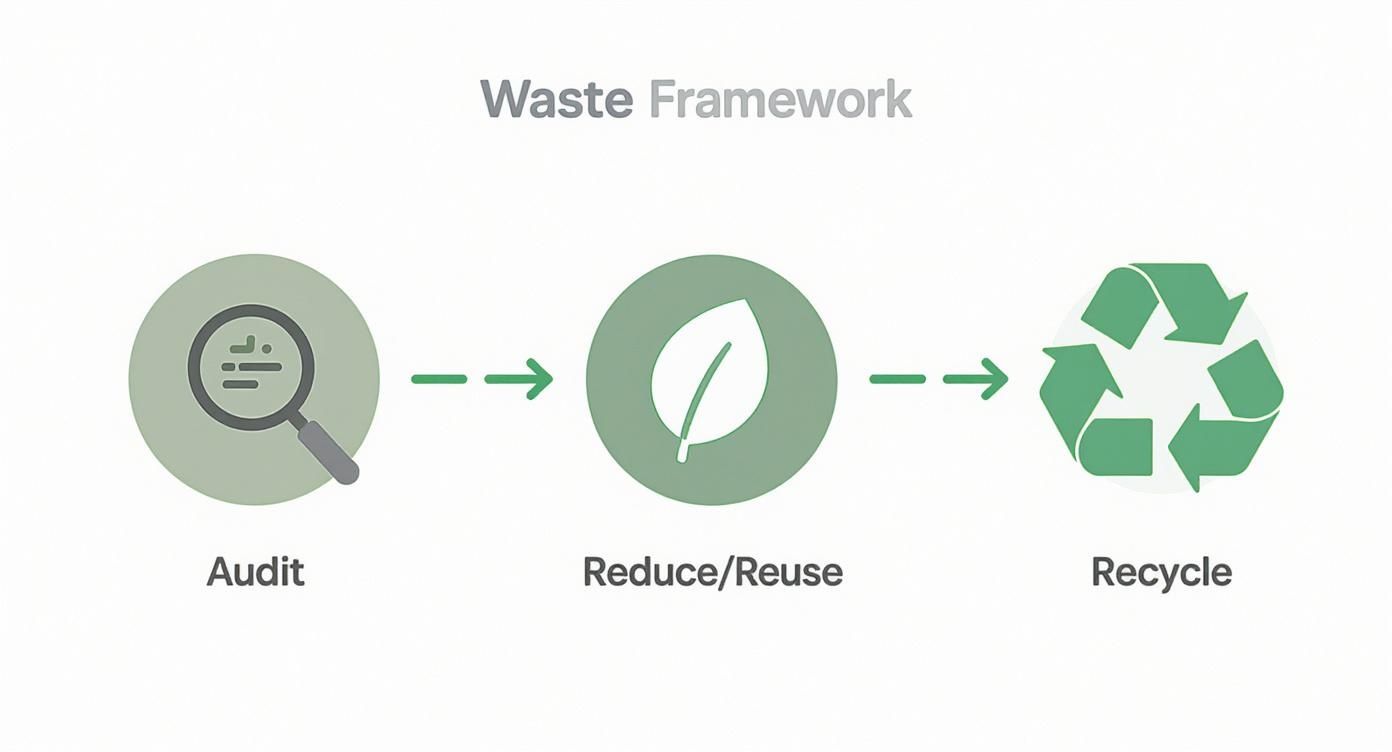
The key takeaway here is that you can't effectively reduce or recycle what you don't measure. The audit is where it all begins.
Before we dive deeper, let's look at the core components that make up a successful program. This table provides a quick-glance guide to the essential pillars.
Key Components of a Modern Waste Program
| Pillar | Objective | Key Actions |
|---|---|---|
| Waste Audit & Analysis | Establish a baseline understanding of waste streams, volumes, and composition. | Conduct physical waste sorts, analyze hauler invoices, and identify high-volume materials. |
| Source Reduction | Minimize waste generation at the source by changing processes and procurement. | Switch to reusable packaging, go paperless, and adjust inventory management to reduce spoilage. |
| Reuse & Donation | Extend the life of materials and equipment by finding secondary users. | Partner with local charities for furniture, donate surplus supplies, implement internal reuse programs. |
| Recycling & Composting | Divert materials from landfill by capturing recyclables and organics. | Set up clear bin systems, contract with certified recyclers, launch a commercial compost program. |
| Staff Training | Ensure employees understand the program and their role in its success. | Hold kickoff meetings, provide clear signage, and offer ongoing education and feedback. |
| Tracking & Reporting | Measure progress against goals and demonstrate the program's value. | Monitor diversion rates, track cost savings, and create sustainability reports for stakeholders. |
Putting these pillars into practice transforms waste management from a simple janitorial task into a strategic business function with measurable returns.
Partnering for a Purpose-Driven Cleanout
For most offices, warehouses, and property managers, the real challenge comes when dealing with diverse and complex waste—especially during cleanouts, renovations, or moves. This is where having the right partner becomes a game-changer. While most junk removal companies take everything to the landfill, we recycle through Beyond Surplus to minimize waste and maximize reuse.
At Fulton Junk Removal, we see things differently. As a commercial services provider operating under Beyond Surplus, we are part of a circular, eco-friendly solution that goes beyond traditional junk hauling.
Fulton Junk Removal works hand-in-hand with Beyond Surplus to recycle electronics, metals, and other materials responsibly. This integrated system allows us to divert a huge volume of materials away from landfills, ensuring they're properly repurposed or recycled. This approach appeals to environmentally conscious homeowners and businesses. You can learn more about the Fulton Junk Removal difference and see how this philosophy is central to our mission.
For offices, warehouses, and property managers, this partnership simplifies everything. Fulton can offer bundled junk removal + recycling pickup, where all electronic waste and recyclable materials are directly processed by Beyond Surplus. This gives you a single point of contact for streamlined logistics and makes your sustainability reporting and compliance easier with clear, verifiable data. It’s a straightforward path to turning your waste management from a cost center into a documented win for your company’s environmental goals.
How to Conduct a Commercial Waste Audit
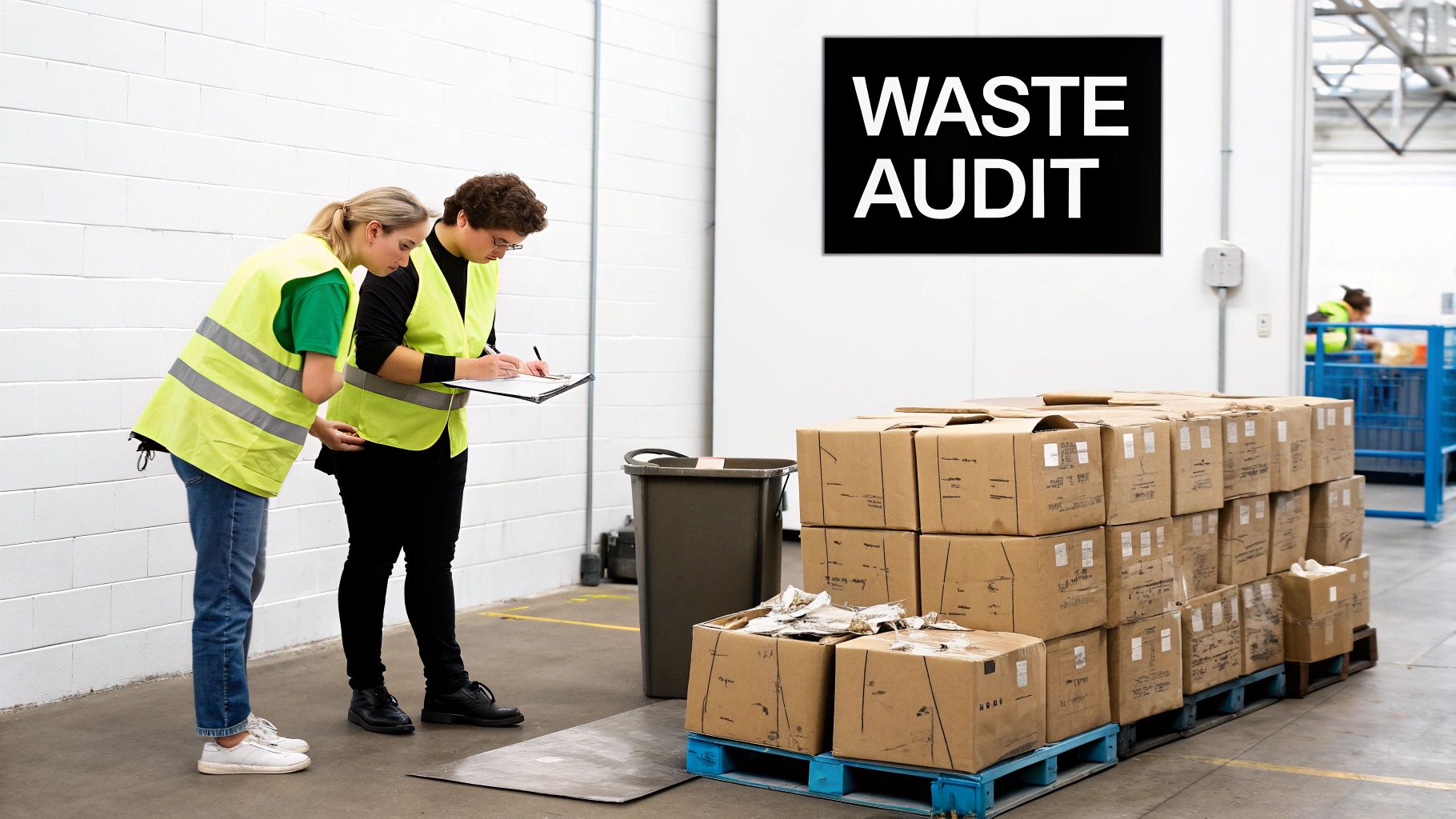
You can't manage what you don't measure. It’s an old saying, but when it comes to sustainable waste management, it’s the absolute truth. For any Atlanta business serious about reducing its environmental footprint, a waste audit is the non-negotiable first step. It’s a hands-on process that gives you a crystal-clear snapshot of what your facility is actually throwing away, moving you from guesswork to data-driven action.
Think of it as taking inventory of everything heading out your back door. The goal is to get a real handle on your waste stream's composition, identify the biggest offenders, and pinpoint the best opportunities for reduction, reuse, and recycling.
Laying the Groundwork: Scope and Team
Before you even think about sorting through bags, you need a solid plan. First, define the scope of your audit. Are you going to analyze a single office floor, an entire warehouse, or a specific production line? My advice? Start small. A narrower scope is far more manageable for a first-time audit and often provides surprisingly actionable insights.
Next, pull together a small, dedicated team. This usually looks like a facility or operations manager, someone from your sustainability team (if you have one), and a few engaged employees who don’t mind getting their hands dirty. You'll also need some basic gear:
- Protective Equipment: Gloves, safety glasses, and closed-toe shoes are a must.
- A Sorting Area: Find a designated space, like a loading dock or an empty corner of the warehouse, and lay down a tarp.
- Containers: Grab some clearly labeled bins or buckets for each waste category you want to track.
- A Scale: A digital floor scale is perfect for getting accurate weights for each category.
- Documentation Tools: A simple clipboard with a tracking sheet or a tablet works great for logging the data.
The Nitty-Gritty: Sorting and Documenting
This is where the magic happens. For a set period—I’ve found that 24 to 48 hours usually captures a representative sample—collect all the waste from your designated audit area. The key is to not change any of your team's normal disposal routines during this time.
Bring all the collected waste to your sorting area and start separating items into distinct categories. This is your chance to see what's really being tossed. For most commercial spaces in Atlanta, common categories include:
- Cardboard and Corrugated Boxes
- Office Paper (mixed paper, envelopes)
- Plastics (sorted by type, e.g., #1 PET, #2 HDPE)
- Scrap Metals (aluminum, steel)
- Electronic Waste (e-waste)
- Organic Waste (food scraps from a breakroom)
- Landfill/Trash (the true non-recyclable items)
As you sort, weigh each category and write everything down. This data is pure gold. It creates the baseline you’ll use to measure all future progress. To make sure your audit is thorough and hits all the right points, using a comprehensive waste management audit and compliance checklist can be a huge help.
Turning Data into Opportunity
Once you've tallied the numbers, the story of your waste starts to emerge. You might be shocked to find that 70% of your "trash" is actually clean, recyclable cardboard from incoming shipments. Or maybe you'll uncover a concerning pile of old keyboards, monitors, and cables—e-waste that carries serious compliance risks if not handled correctly.
The data from your audit doesn't just show you what you're throwing away; it shows you where your money is going. Every pound of recyclable material sent to a landfill is a missed opportunity for cost savings or even revenue generation.
This is exactly where a strategic partner becomes invaluable. Let’s say the audit reveals a stockpile of outdated office equipment and electronics. Don’t see it as a disposal problem—see it as a recycling opportunity. This is precisely where Fulton Junk Removal, working with our R2 certified partner Beyond Surplus, steps in.
We specialize in handling these complex, often regulated, waste streams. Fulton handles junk removal, and Beyond Surplus ensures responsible recycling, making compliance and sustainability reporting easier. This integrated approach turns a potential liability you found during your audit into a documented win for your sustainability goals, making compliance and reporting a breeze.
To see more strategies for turning your waste into a resource, check out our full collection of articles and guides.
Practical Strategies for Waste Reduction and Reuse
Once your waste audit peels back the curtain on what you're actually throwing away, the real work can start. Here's a little secret from the inside: the most powerful principle in sustainable waste management isn't recycling—it's reduction. Before you even think about the blue bin, the best question to ask is, "Can we stop this waste from ever being created?"
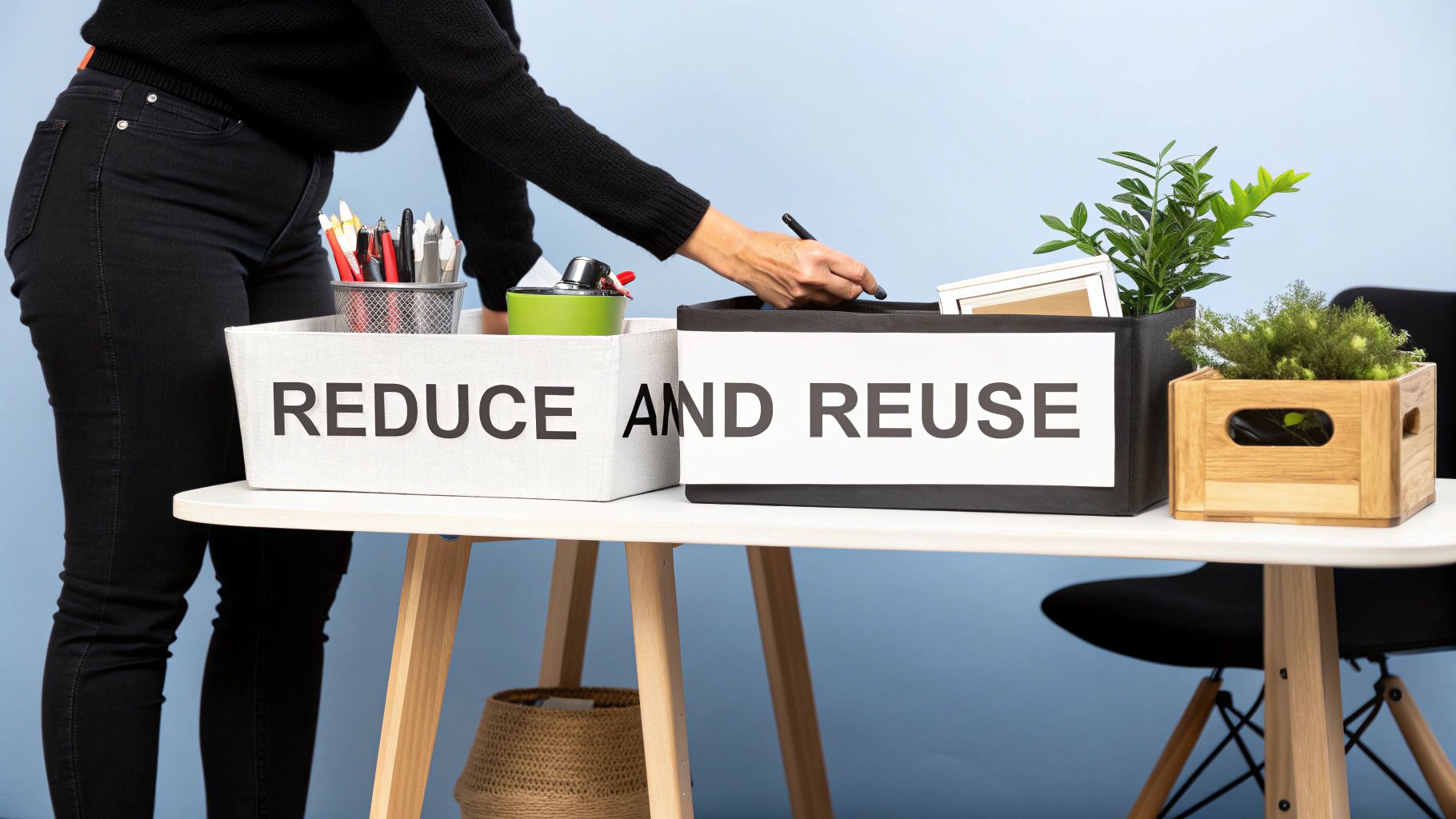
This is where we get into the nitty-gritty of the two most effective strategies that come before recycling: source reduction and creative reuse. This isn't about flipping your entire operation on its head overnight. It's about making smart, deliberate changes that add up, saving you money and lightening your environmental load.
Driving Down Waste at the Source
Source reduction is just a technical term for a simple idea: stop waste before it starts. For most businesses, this begins with a hard look at what you buy and how you work day-to-day.
- Rethink Your Procurement Policies: Start talking to your suppliers. Ask for minimal or returnable packaging. When you prioritize vendors who are also committed to sustainability, you create a positive ripple effect through the entire supply chain.
- Embrace Digital-First Workflows: The quickest way to kill your paper waste is to keep documents digital. Move things like invoicing, HR forms, and internal memos to the cloud. For those times when a hard copy is a must, just set all office printers to default to double-sided. Easy.
- Invest in Reusables: Ditch the disposable cups, plates, and cutlery in your breakroom. A one-time investment in durable, reusable alternatives can completely wipe out a steady stream of single-use plastic waste.
These changes aren't just about feeling good; they directly cut your purchasing and disposal costs. It's an operational win that aligns perfectly with any corporate responsibility goals.
Giving Items a Second Life Through Reuse
When you can't eliminate an item, the next best move is to reuse it. This simple shift in mindset extends the life of your materials, saves resources, and can even build stronger community ties.
For starters, you could set up an internal "swap station." It's a designated spot where departments can leave extra office supplies—binders, folders, pens—for others to grab as needed. Before anyone orders new supplies, they check the station first.
And for bigger items like old office furniture, desks, or chairs? Donating them to local charities or non-profits is a fantastic option. Not only does this keep bulky items out of the landfill, but it also helps out organizations doing great work in our community.
The real challenge for facility managers comes during a major cleanout or renovation. It’s one thing to donate a couple of chairs; it’s a whole different ballgame to manage an entire office floor's worth of furniture.
This is exactly where a smart junk removal partner makes all the difference. At Fulton Junk Removal, we don't operate like standard haulers who see everything as trash. Our crews are trained to spot items with reuse potential—from perfectly good office furniture to old equipment. We then make sure those items get to the right donation centers for a second life, embedding corporate responsibility right into your cleanout project.
The need to get serious about waste reduction has never been more urgent. The Global Waste Index 2025 points out that the U.S. leads in absolute waste generation, with each person creating a staggering 951 kilograms annually. That's a huge jump from previous years and a clear signal for businesses to get proactive.
If your organization is looking for a financial boost to get started, exploring available grants for waste prevention can provide the funding you need to launch impactful programs. By combining smart internal policies with the right partners, you can turn your waste stream into a powerful story of sustainability and efficiency.
Learn more about how our comprehensive junk removal services prioritize donation and recycling for businesses all across Atlanta.
Designing a High-Impact Recycling Program
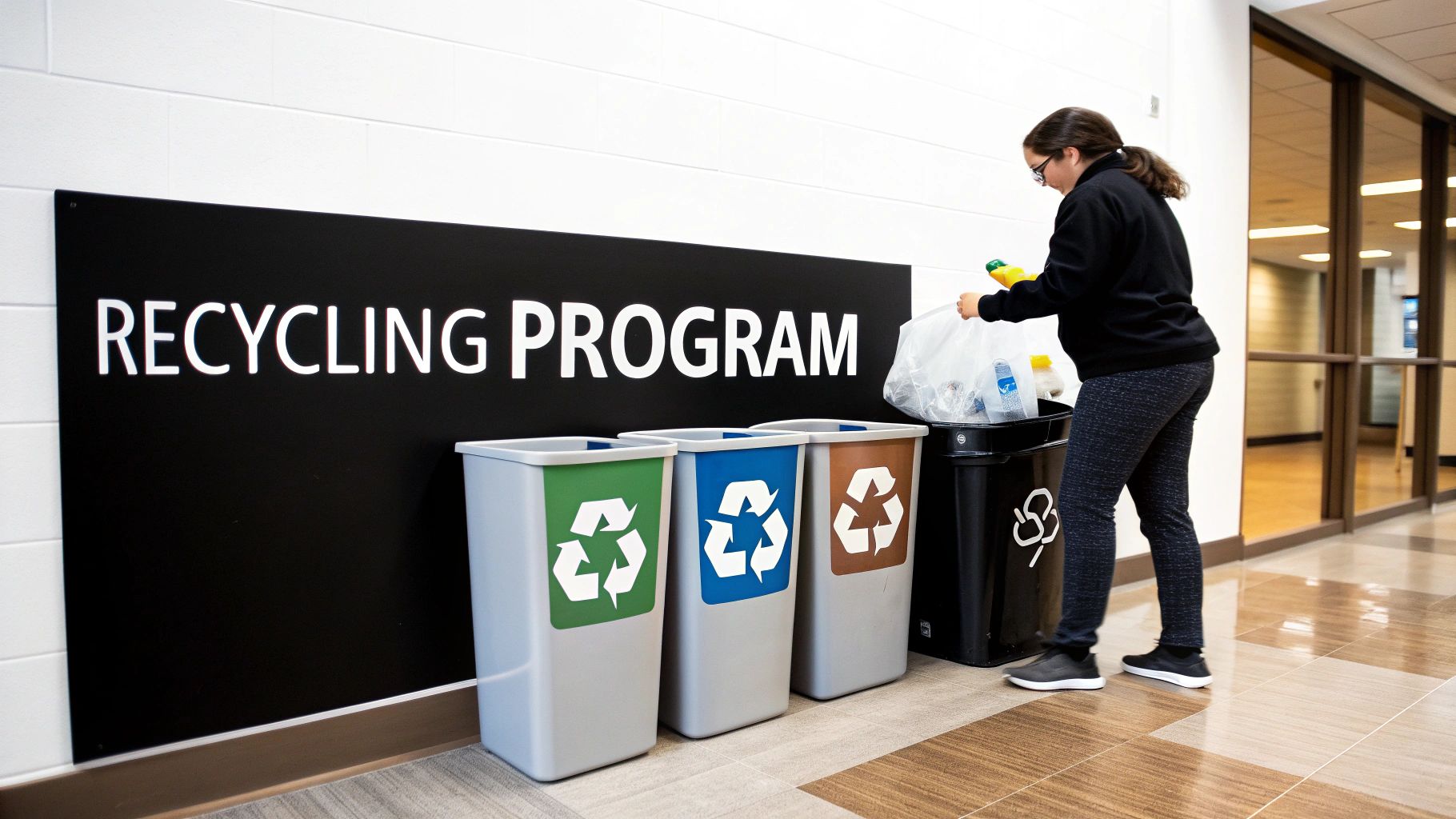
Let's be honest: a successful recycling program is about more than just setting out a few blue bins and hoping for the best. A truly high-impact program is a thoughtfully designed system, one that makes the right choice the easy choice for everyone in your facility. It all starts with visibility and simplicity—removing any guesswork that leads to contamination.
Think about the high-traffic areas in your building. Break rooms, copy centers, and production floors are magnets for recyclable materials. Placing clearly labeled bins in these strategic spots is your first move. But words aren't enough. Use clear, visual signage with images of what goes in each bin. This simple visual cue can dramatically reduce contamination, which is the single biggest threat to any recycling effort.
Beyond the Blue Bin Items
Office paper and aluminum cans are straightforward. But what happens when you need to get rid of the more complex stuff? Items like outdated electronics (e-waste), scrap metal from a renovation, or bulky office furniture require specialized handling that your standard municipal recycling service can't touch. This is often where even the best-intentioned sustainable waste management practices fall short.
These materials come with their own unique headaches:
- E-Waste: It's loaded with hazardous materials like lead and mercury, not to mention sensitive company data that requires certified destruction.
- Scrap Metal: Heavy and cumbersome, it has to be routed to specialized metal recyclers to be processed correctly.
- Bulk Items: Old furniture and fixtures are often a jumble of wood, metal, and fabric, requiring disassembly to recover anything of value.
Trying to manage these different streams on your own can quickly turn into a logistical nightmare for property managers and operations teams. You end up juggling multiple vendors, coordinating different pickup schedules, and chasing down separate paperwork for your records. It's exhausting.
An Integrated Solution for Complex Waste
This is exactly why the Fulton Junk Removal and Beyond Surplus partnership exists. We built a unified, circular solution that simplifies the entire process. Instead of seeing your "junk" as a single stream destined for the landfill, we see it as a collection of valuable resources waiting to be recovered.
Fulton Junk Removal handles the physical removal of general junk, unwanted furniture, and construction debris from your property. At the same time, all electronic waste and recyclable materials are directly processed by Beyond Surplus. As an R2 certified recycler, Beyond Surplus guarantees your e-waste is processed to the highest environmental and data security standards in the industry.
This integrated model means you get one point of contact, one streamlined process, and one set of reports proving your materials were handled responsibly. It’s designed to make compliance and sustainability reporting effortless for our clients.
For businesses all over the Atlanta area, this approach is a game-changer. We can offer bundled junk removal + recycling pickup, handling everything from office cleanout debris to pallets of old IT equipment. You can learn more about how we serve businesses with junk removal in Atlanta and help them smash their sustainability goals.
Standard Hauler vs Integrated Eco-Friendly Service
When you're choosing a partner, it's critical to understand the difference between a company that just hauls and one that provides a comprehensive, sustainable solution. The table below breaks down the key distinctions.
| Feature | Traditional Junk Hauler | Fulton Junk Removal + Beyond Surplus |
|---|---|---|
| Primary Goal | Remove items from property quickly | Maximize landfill diversion and resource recovery |
| Material Handling | Co-mingles all items; most ends up in a landfill | Sorts materials for recycling, reuse, and donation |
| E-Waste & Data | Not equipped for secure data destruction; e-waste often landfilled | R2 Certified e-waste recycling and certified data destruction |
| Reporting | Basic invoice | Detailed diversion reports and certificates of destruction |
| Vendor Management | You hire separate vendors for e-waste, metal, etc. | One point of contact for all waste streams |
| Environmental Impact | High landfill contribution | Low environmental impact; supports circular economy |
The choice is clear. An integrated model not only simplifies your operations but also delivers tangible proof of your company's commitment to sustainability.
The Power of Smart Systems
Globally, things like Deposit Return Schemes (DRS) are proving to be powerful drivers of higher recycling rates. Countries with well-designed programs consistently achieve top performance in waste management, showing just how effective smart, incentive-based systems can be. You can dive deeper into these global benchmarks and see how different countries stack up.
Our integrated service model brings that same principle of smart system design directly to your business. By creating a seamless, accountable process for all your waste streams, we make it easier than ever to implement and maintain a high-impact recycling program that delivers real, measurable results.
Tracking and Reporting Your Sustainability Wins
You've put in the hard work to create a sustainable waste management program. That's a huge win, but the job isn't quite done. The final, and arguably most important, step is proving its value. Your efforts deserve to be seen, and that happens by tracking your progress and sharing that success story.
When you measure your wins, you transform a behind-the-scenes operational task into a powerful, tangible asset for your entire organization. It doesn't have to be some complex, data-science project, either. At its core, it’s about measuring what you've kept out of the landfill and showing everyone the positive impact. Even a simple spreadsheet can reveal powerful trends over time.
Key Metrics to Keep an Eye On
To really get a grip on how your program is performing, you only need to focus on a few key indicators. These metrics will help you build a clear, data-backed narrative of your sustainability journey.
- Waste Diversion Rate: This is the big one. It’s the percentage of your total waste that you successfully diverted from the landfill through recycling, donation, or composting. A higher number is a direct measure of success.
- Cost Savings: Keep an eye on the reduction in your landfill hauling fees and compare that to any new recycling service costs. More often than not, a well-run program can lead to significant net savings.
- Volume by Material: Get specific. Document the weight or volume of materials like cardboard, e-waste, and scrap metal. This helps you pinpoint which parts of your program are hitting it out of the park.
These numbers aren't just for you. They're the hard data you need to justify the program, secure future budgets, and show a solid return on investment to leadership.
Let the Right Partner Do the Heavy Lifting
Manually tracking these metrics can be a real headache, especially for busy offices, warehouses, or property management teams. This is exactly where partnering with a service built for sustainability becomes a game-changer.
Most junk removal companies just haul everything to the landfill and give you a basic invoice. A truly circular, eco-friendly partner offers so much more.
Fulton Junk Removal, working hand-in-hand with Beyond Surplus, is built to make tracking and reporting effortless. We don’t just take your unwanted items away; we provide the documentation to prove they were handled responsibly. It’s a core part of our commitment to our commercial clients.
For every project involving recyclable materials, we provide detailed diversion reports and official certificates of recycling. This documentation isn't just a piece of paper—it's concrete proof that quantifies exactly what was recycled, repurposed, or donated on your behalf.
This takes the burden of tracking completely off your team's plate. We hand you the verifiable data you need, broken down by material type and weight, making your compliance and sustainability reporting easier than ever.
Turn That Data into a Competitive Edge
The documentation you get from a partner like Fulton Junk Removal and Beyond Surplus is invaluable. It’s not just for internal record-keeping; it’s a powerful tool you can use across your entire organization.
Here’s how our clients put their sustainability reports to work:
- ESG and CSR Reporting: They use our official data to populate their Environmental, Social, and Governance (ESG) or Corporate Social Responsibility (CSR) reports with accurate, third-party verified numbers.
- Marketing and Communications: They share their diversion rates and sustainability achievements on their websites, in press releases, and on social media to build their brand's reputation with environmentally conscious customers.
- Stakeholder Updates: They present their progress to investors, board members, and employees to demonstrate a clear commitment to corporate responsibility and operational efficiency.
When you partner with a service that provides this level of detailed reporting, you turn your waste practices into a tangible competitive advantage. If you're ready to build a program that delivers measurable results, reach out to discuss your project and see how our bundled junk removal and recycling services can simplify your goals. Let's turn a necessary task into a celebrated success story for your business.
Frequently Asked Questions About Commercial Waste Management
We get a lot of questions from Atlanta property managers, office leaders, and sustainability teams who are serious about improving how they handle waste. If you're navigating the world of commercial waste, you're not alone. Here are some of the most common questions we hear—and our straightforward answers.
How Can My Office Start a Program on a Tight Budget?
Great news: starting a solid waste reduction program doesn't have to cost a fortune. In fact, some of the most effective first steps actually save you money.
It all begins with a simple waste audit to see what you're actually throwing away. You can do this yourself with just a little bit of time—no expensive consultants needed. What you'll likely find is that your biggest wins come from small changes in behavior and processes.
For instance, setting all office printers to default to double-sided printing immediately cuts your paper consumption. Switching to reusable plates and silverware in the breakroom eliminates the recurring cost of disposables. These aren't just eco-friendly moves; they're smart for your bottom line.
When it comes to bigger projects like an office cleanout or equipment refresh, bundling services is the key to cost-efficiency. Instead of paying one company for junk hauling and another for specialized e-waste recycling, you can make one call. Fulton can offer bundled junk removal + recycling pickup, giving you a documented, sustainable result without the high overhead of juggling multiple vendors.
What Is the Biggest Challenge with Commercial E-Waste?
Hands down, the two biggest hurdles are data security and environmental compliance.
Tossing old electronics into a dumpster isn't just irresponsible—it's a massive liability. Old hard drives, servers, and even office printers can hold a treasure trove of sensitive company or client data. A single data breach can be catastrophic.
You absolutely need a certified partner who contractually guarantees your data will be destroyed and that all hazardous materials are handled correctly. This is exactly why the partnership between Fulton Junk Removal and Beyond Surplus is so crucial for our clients.
As an R2v3 certified recycler, Beyond Surplus ensures your data is completely obliterated according to the highest industry standards. This shields your business from liability and gives you total peace of mind.
How Do I Get Employees to Actually Recycle Correctly?
This is the million-dollar question, isn't it? Employee buy-in is everything, and the secret is making it incredibly simple for people to do the right thing. Success really boils down to clear communication and convenient systems.
- Go Visual. Words on a bin aren't enough. Use clear, pictorial signage on every single container showing exactly what goes where. A picture of an aluminum can is universal; the term "commingled recycling" is not. This removes all the guesswork.
- Launch with a "Why". Kick off your program with a quick training session. Don't just tell them what to do; explain why it matters to the company and the community.
- Share Your Wins. People love to see progress. Celebrate milestones by sharing your diversion rate or the total weight of materials recycled after a big project. A little recognition goes a long way.
And remember, when management visibly participates, it sends a powerful signal that this is a company-wide priority. For large-scale cleanouts, bringing in a professional service like ours reinforces that commitment. We keep the process organized and out of your employees' way, letting them focus on their jobs while we handle the heavy lifting.
What Documentation Should I Expect from a Junk Removal Partner?
A truly sustainable partner provides way more than a simple invoice. If you're serious about your environmental goals, you need verifiable proof of where your materials ended up. A standard hauler who just takes everything to the landfill can't give you that.
With an integrated service like ours, you should always expect to receive a Certificate of Recycling or a detailed diversion report. This document is your proof of responsible disposal.
It will break down the types and weights of materials recovered from your project—from electronics and metals to cardboard and furniture. It's the official confirmation that your items were handled according to environmental regulations and kept out of the landfill. This paperwork is essential for your ESG reporting, internal audits, and for genuinely backing up your company's commitment to sustainability.
Ready to simplify your commercial junk removal and recycling? Fulton Junk Removal provides a seamless, eco-friendly solution that makes sustainability reporting easy and keeps your property clutter-free. Get your free estimate today.
