
The Best Way to Organize Your Garage
The best way to get your garage organized isn't just about a weekend tidying session. It’s about a complete mindset shift—transforming that cluttered space from a chaotic dumping ground into a functional, valuable extension of your home.
This means tackling it with a real plan: decluttering first, then creating smart zones for all your gear, and finally, installing storage that actually gets everything up off the floor. Do it right, and your garage becomes a true asset.
Reclaiming Your Garage Starts Here

Let's be honest, an organized garage is about more than just looking good. It’s the difference between a stressful "clutter zone" and a genuinely useful space for your car, hobbies, and projects. The benefits go far beyond aesthetics, directly impacting your daily routine and even your family's safety.
When your garage is orderly, the daily stress of hunting for a specific tool or that box of holiday decorations simply vanishes. More importantly, you're eliminating dangerous trip hazards like stray power cords, forgotten garden tools, and precariously stacked boxes. A clean garage is a safe garage.
Redefining Your Space and Its Potential
Viewing your garage as a valuable part of your home—not just a storage shed—is the crucial first step. It's a shift more and more homeowners are making. In fact, the global garage organization market was valued at around USD 29.7 billion in 2024 and is on track to nearly double to USD 57.4 billion by 2033. This isn't just a niche trend; it shows a real desire to make these spaces work better. You can dig into the market data over at imarcgroup.com.
Before diving into the nuts and bolts of sorting and storing, let's look at the bigger picture. A successful project is built on four key ideas.
| The Four Pillars of Garage Organization |
| —————————————————————————————————————— | —————————————————————————————————————- | ———————————————————————— |
| Pillar | What It Means | Key Action |
| 1. Assessment & Planning | Taking stock of what you have and deciding how you want to use the space. | Measure your garage and create a rough layout of your ideal setup. |
| 2. Ruthless Decluttering | Making tough decisions to keep only what you truly need, use, and love. | Sort everything into "Keep," "Donate," "Recycle," and "Junk" piles. |
| 3. Strategic Zoning | Assigning specific areas for different categories of items (e.g., tools, sports gear, seasonal). | Group similar items together and map out where each zone will live. |
| 4. Smart Storage Solutions | Using vertical space and the right containers to get everything off the floor and easily accessible. | Install wall-mounted shelves, cabinets, and overhead racks. |
This simple framework will guide you from chaos to order.
This guide will walk you through a clear, actionable process based on those pillars. But before you even start sorting, it's smart to think about the final step: what are you going to do with everything you don't need?
The most successful garage cleanouts begin with a plan for responsible disposal. Knowing how you'll handle unwanted items—especially old electronics and scrap metal—prevents them from becoming a secondary pile of clutter in your driveway.
Instead of just defaulting to the landfill, a sustainable approach ensures your unwanted items are handled the right way. Partnering with an eco-conscious service from the start simplifies the entire project. For instance, professional junk removal services can work directly with certified recyclers to divert materials like old appliances, e-waste, and metals away from landfills, making sure they are repurposed responsibly.
Your Practical Decluttering Game Plan
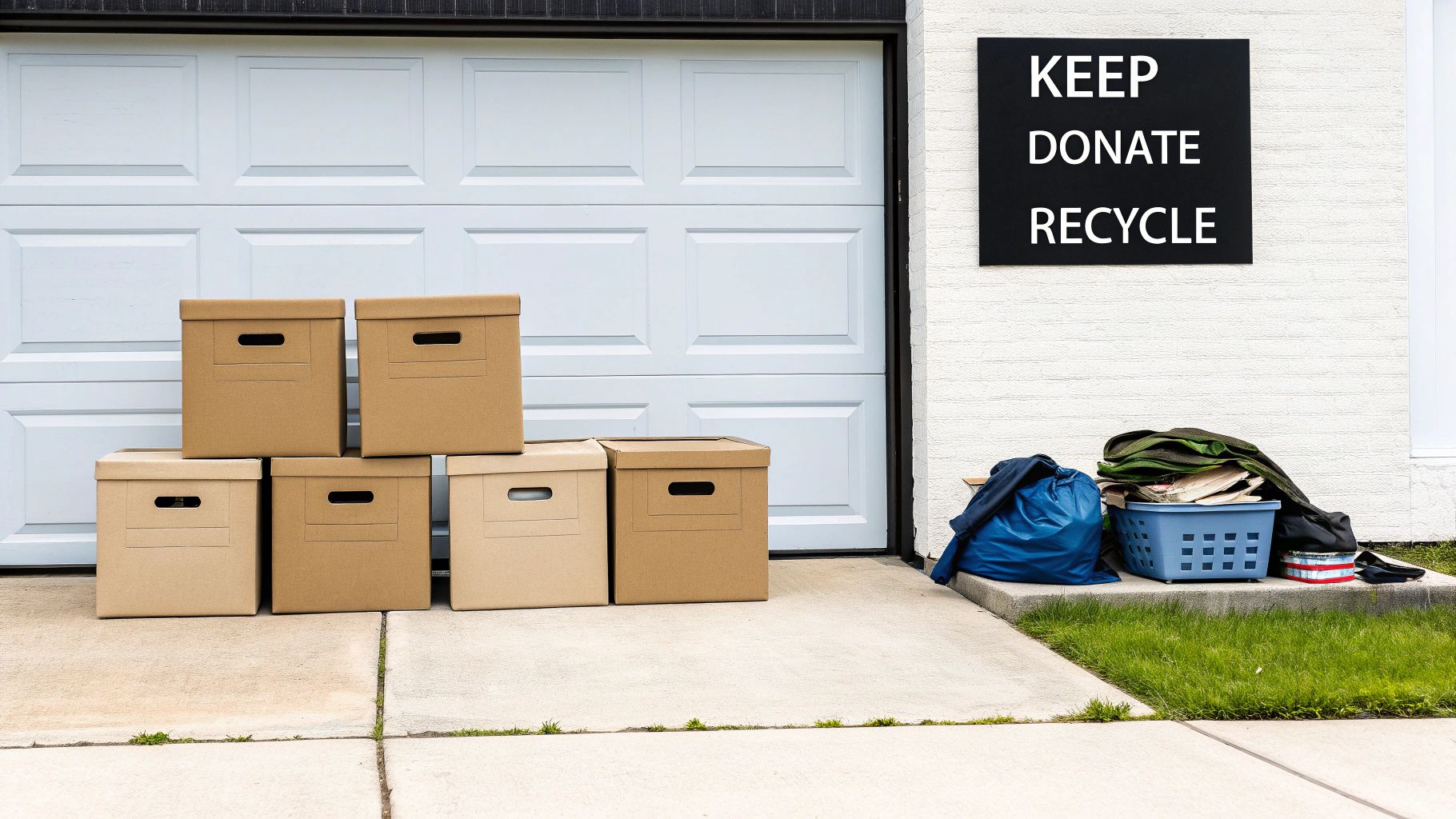
This is where the real work—and the real magic—happens. The single best way to get your garage organized is to first get it empty. This isn't about creating a bigger mess; it's about making clear, decisive choices that reclaim your space one item at a time.
The trick is to sidestep that feeling of being totally overwhelmed. Don't look at the entire garage. Just pick one corner, one shelf, or even a single cardboard box. Commit to sorting just that small area completely. That small win gives you the momentum to keep going.
The Four-Category Sorting System
To keep things moving, you need a simple system. Grab four big bins or just mark off four zones on your driveway. Every single thing you pick up goes into one of these piles. No exceptions, and definitely no "I'll decide later" pile.
- Keep: These are the things you actually use, have a definite plan for, or truly value. If you decide to keep it, you should be able to picture exactly where it’s going to live in your newly organized space.
- Donate: Perfect for items that are still in good shape but you no longer need. Think of the tools you upgraded, the sports gear the kids outgrew, or that extra set of garden shears.
- Recycle: This bin is for items that can't be donated but shouldn't end up in a landfill. We see a lot of scrap metal, old car batteries, mountains of cardboard, and specific plastics in this pile.
- Junk: For everything that's broken beyond repair, expired, or just plain trash. Be ruthless here. This is your chance to finally part with things that are doing nothing but taking up valuable real estate.
Struggling with decisions? We all do. Here’s a simple rule of thumb: if you haven't used it in 12 months and have no solid plans for it in the next 12, it’s time for it to go.
Tackling Common Garage Clutter
As you sort, you’ll inevitably run into the tricky stuff. I'm talking about old paint cans, half-empty bottles of chemicals, broken electronics, and random scraps of lumber. These items require special handling and can’t just be tossed in the bin.
That "Junk" pile is more than just trash—it's an opportunity to be responsible. A lot of what you might call junk, like e-waste or scrap metal, contains valuable resources that absolutely should not be rotting away in a landfill.
This is where a professional, eco-friendly junk removal service really shows its value. While most junk removal companies take everything to the landfill, a sustainable partner does the sorting and heavy lifting for you.
Fulton Junk Removal operates under Beyond Surplus, a circular, eco-friendly solution that goes beyond traditional junk hauling. Working hand-in-hand, Fulton Junk Removal and Beyond Surplus recycle electronics, metals, and other materials responsibly, diverting items from landfills to ensure they’re repurposed or recycled. This unique partnership appeals to environmentally conscious homeowners and businesses alike.
By planning for this final step, you make sure your decluttering project is as green as it is satisfying. You can check out the kinds of materials they handle through their eco-friendly junk removal services. It’s a simple way to clear out the clutter while knowing your unwanted items are being handled the right way.
Designing Smart Zones for Maximum Efficiency
Once you've sorted through everything, the real fun begins: designing the layout. An efficient garage isn't just about owning less stuff; it’s about putting that stuff in the right place. The absolute best way to do this is by creating 'zones'—basically, dividing your garage into distinct areas based on how you actually use things.
Think of it like setting up a kitchen. You wouldn't store your pots and pans in the living room or keep your spices on the other side of the room from the stove. Everything has a logical home to make cooking seamless. We're applying that same exact principle here to turn your garage from a chaotic dumping ground into a functional, purposeful space.
The Core Four Garage Zones
Most garages can be whipped into shape by creating four main zones. Of course, you should tweak these to fit your own life, but this framework is a fantastic starting point for bringing order to the chaos.
- Daily Use Zone: This is your prime real estate, the spot right by the door leading into your house. It’s for the items you grab on your way in or out every single day—think shoes, coats, backpacks, and maybe those reusable shopping bags you always forget. The goal is pure convenience.
- Workshop and DIY Zone: This is command central for all your projects. Group your tools, workbench, and supplies here. All your hardware, power tools, and even gardening equipment should live together to create a dedicated space for repairs, hobbies, and getting things done.
- Long-Term Storage Zone: This area is reserved for the things you only touch a few times a year. We're talking holiday decorations, camping gear, or those sentimental boxes of keepsakes. These items are perfect for higher, less accessible spots like overhead racks or the top shelves.
- Recreation and Sports Zone: Give all the fun stuff its own corner. Bikes, basketballs, skateboards, and other sports equipment belong here. Keeping it all together stops gear from migrating across the garage floor and becoming a serious trip hazard.
By assigning every item a home within a specific zone, you completely eliminate the guesswork. You’ll always know where to find something and, just as important, where it goes when you're done.
Making Each Zone Work for You
After you’ve mapped out where each zone will live, you can get smart about the storage inside it. A huge mistake people make is using the same type of storage everywhere. Instead, you need to match the storage solution to the zone’s function.
For example, your Workshop Zone is the perfect place for a pegboard or a slatwall system. It keeps frequently used tools like hammers and screwdrivers visible and right at your fingertips. But heavier items like power tool cases or cans of paint? Those should always go on sturdy, lower shelves for safety. Never store heavy things high up where they could fall and cause an injury.
The ultimate goal of zoning is to minimize friction. If an item is easy to get to and even easier to put away, you’re far more likely to maintain your organizational system long-term.
This strategic approach is what turns a cluttered space into a highly functional one. If you're looking for more ideas on how to tackle home organization projects, our team at Fulton Junk Removal has put together a ton of helpful guides. You can explore more decluttering tips in our comprehensive organizing blog.
Choosing the Right Garage Storage Systems
Now that you’ve done the hard work of decluttering and zoning, it's time for the fun part: installing the hardware that brings it all together. This is where your vision for an organized garage becomes a reality. Picking the right storage is what ensures every single item has a home—and that home isn't the floor.
The name of the game is maximizing vertical and overhead space. Think up, not out. A truly great setup usually isn't just one type of shelf; it’s a smart combination of different systems working together to handle everything you own.
This visual guide is a great way to picture how different zones work for daily use, workshop projects, long-term storage, and recreational gear.
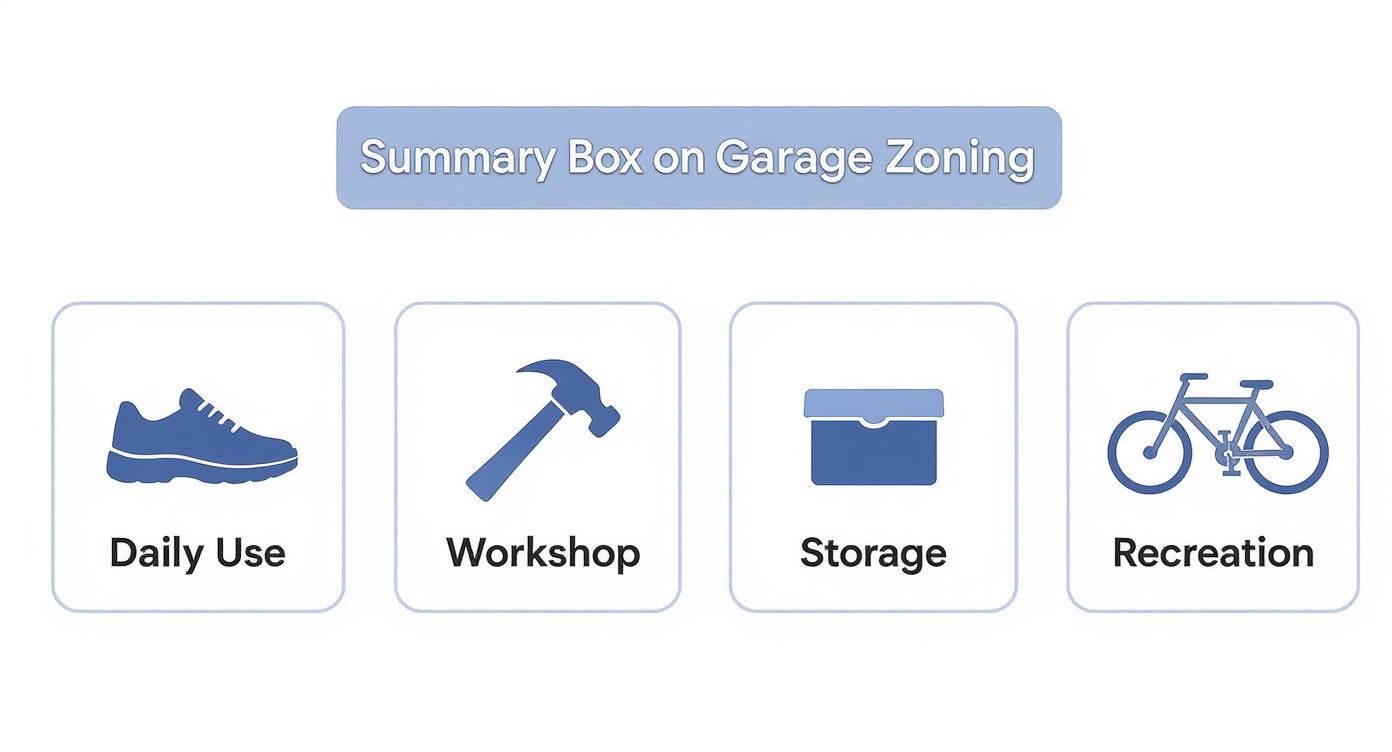
When you think about your garage in distinct areas like this, it becomes much easier to match the perfect storage solution to each zone.
Evaluating Your Storage Options
Your storage choices should be a direct reflection of what you're keeping in each zone. For that workshop area you mapped out, nothing beats vertical systems like pegboards or slatwall panels. They keep your most-used tools visible and right at your fingertips. The best part? They’re incredibly flexible—you can rearrange hooks, baskets, and shelves whenever your needs change.
When it comes to the heavy hitters—think big storage bins, power tools, and bulk supplies—sturdy freestanding shelving units are non-negotiable. I always recommend going for industrial-grade steel racks that can handle serious weight without buckling. Look for models with adjustable shelves so you can customize the height for those awkwardly tall containers.
A classic mistake I see all the time is underestimating just how heavy everything is when it's all piled together. Always, always check the weight capacity for each shelf and anchor any tall units to the wall. It’s a simple step that prevents a huge safety hazard.
If you need to keep certain things clean, secure, or just plain out of sight, lockable cabinets are a fantastic investment. They’re perfect for storing chemicals, valuable tools, or anything that might make the space feel cluttered. Homeowners clearly agree—in 2022, garage cabinets generated around $9.8 billion in revenue, which shows just how much people value enclosed storage. You can read the full research on garage organization trends for more details.
Choosing the right mix of storage systems can feel overwhelming, but breaking it down by function makes it manageable. Here’s a quick comparison of the most popular options to help you decide.
Garage Storage System Comparison
| Storage Type | Best For | Pros | Cons |
|---|---|---|---|
| Freestanding Shelves | Heavy bins, bulk items, paint cans | High weight capacity, easy to assemble, affordable | Can take up floor space, may look bulky |
| Wall-Mounted Shelves | Lighter items, tool cases, supplies | Frees up floor space, customizable height | Lower weight capacity, requires drilling into studs |
| Pegboard/Slatwall | Hand tools, gardening gear, cords | Highly versatile, tools are visible and accessible | Can look cluttered, not for heavy items |
| Cabinets | Chemicals, valuables, visual clutter | Secure and lockable, keeps items dust-free | More expensive, less flexible for odd-shaped items |
| Overhead Racks | Seasonal items, long-term storage | Utilizes unused space, massive storage potential | Can be difficult to access, professional installation often best |
Ultimately, the best approach is often a hybrid one. Combining heavy-duty freestanding racks for your bins with a slatwall system for your tools gives you the best of both worlds.
Reclaiming Unused Overhead Space
Don't forget to look up! The ceiling is probably the most neglected real estate in your entire home. Overhead ceiling racks are an absolute game-changer for long-term storage.
These racks are the perfect spot for things you only need once or twice a year:
- Holiday decorations packed in clearly labeled, sealed bins.
- Camping gear, coolers, and bulky sleeping bags.
- Archival boxes with old photos or important documents.
Getting these items up and out of the way frees up an incredible amount of wall and floor space for the stuff you use more often. Of course, if installing a whole new storage system feels like too much, or if you're still staring at a pile of junk after your big cleanout, calling in a pro can be a lifesaver. To get your space prepped and ready for its new life, you can easily schedule a junk removal pickup with Fulton Junk Removal to have any last unwanted items cleared out responsibly.
Maintaining Your Organized Garage for Good
Getting your garage organized is a fantastic accomplishment, but let's be honest—the real victory is keeping it that way. The secret to long-term success isn’t another marathon cleaning session; it's building simple, sustainable habits that stop clutter from ever taking root again.
Think of it as routine maintenance for one of your home's most valuable spaces. Just like mowing the lawn or cleaning the gutters, your garage needs a little regular attention to stay in top shape. By weaving a few key practices into your weekly and seasonal routines, you can permanently protect the order you worked so hard to create.
Creating Sustainable Organizational Habits
The key to a permanently clean garage isn't perfection; it's consistency. A great place to start is with a simple '10-Minute Weekly Reset'. Every weekend, just spend ten minutes putting things back where they belong, breaking down cardboard boxes, and giving the floor a quick sweep. It’s a tiny investment of time that prevents small messes from snowballing into overwhelming projects.
Another incredibly effective strategy is the 'One In, One Out' rule. Whenever you bring home a new tool, piece of sports gear, or storage bin, an old or unused equivalent has to go. This simple policy is your best defense against the slow, creeping accumulation of duplicates and unnecessary items that eventually leads to clutter.
Sustaining an organized garage is all about making it easier to put things away than to leave them out. Clear, bold labels on every bin, shelf, and cabinet are your best defense against future clutter. When everyone in the household knows exactly where things go, the system maintains itself.
The Semi-Annual Review and Responsible Purging
Twice a year—spring and fall are perfect for this—schedule a slightly more involved review. This is your chance to catch any new clutter before it really settles in. During this check-in, take a quick inventory of items you haven't used and decide if they still deserve prime real estate in your garage.
As you perform these reviews, you'll inevitably find things that need to go. When you need to clear out accumulated junk or outdated belongings, having a responsible disposal plan is crucial. Many homeowners have found that professional haulers can simplify this process immensely. If you're looking for support, you can explore the various Atlanta-area communities we serve to see how a streamlined service can help you clear out the excess responsibly.
Top-tier brands like Gladiator, GarageTek, and Rubbermaid have also become essential for long-term success by creating innovative modular systems. These durable cabinets and wall panels allow you to adapt your storage as your needs change over time, which makes maintaining order so much easier. You can learn more about the growing garage storage market and see how the right systems are empowering homeowners. By combining smart habits with adaptable storage, you can ensure your garage remains a functional, orderly, and valuable part of your home for years to come.
Common Garage Organization Questions
Even the best-laid plans run into snags. When you're knee-deep in a garage overhaul, it’s easy to get stuck on a small detail and lose all your momentum. Let's tackle some of the most common questions that pop up during the process.
Think of this as your quick-reference guide for troubleshooting on the fly. Having the answers ready is half the battle in getting your garage organized for the long haul.
Where Should I Start When My Garage Is Completely Overwhelming?
Start small. I mean really small. Forget the big picture for a moment, because trying to conquer the entire garage at once is a surefire way to burn out.
Pick one single corner. Or one small pile of boxes. Your only goal is to completely clear and sort that tiny area. This creates a quick win, which builds the confidence and momentum you need to keep going. It makes the whole project feel so much more achievable.
What Are the Most Common Items I Should Get Rid Of?
To make progress fast, focus on the easy targets first. These are the items that give you the biggest space-saving wins without a lot of emotional baggage attached.
Be on the lookout for these usual suspects:
- Expired Chemicals: This includes old paint that's separated, pesticides, fertilizers, and ancient household cleaners. Check your local guidelines for proper disposal.
- Broken Equipment: That lawnmower you were going to fix three years ago? Or the power tool with a frayed cord that’s been sitting on a shelf? It's time.
- Obsolete Electronics: Old computer monitors, VCRs (yes, people still have them), and dusty stereo systems are common culprits taking up prime real estate.
- The One-Year Rule: If you haven't used an item in the last 12 months, it's a strong candidate for donation or disposal. Be honest with yourself.
How Do I Organize Small Items Like Nails and Screws?
For all the tiny bits and pieces, containment is everything. Don't just toss them in a junk drawer. Your best bet is to use small, clear, and stackable containers or invest in a dedicated small-parts organizer with multiple drawers. The goal is to see what you have at a glance.
Label every single drawer or container. No exceptions. You can mount these organizers on a wall or place them on a dedicated shelf, which keeps them off your workbench and easy to grab when you need that one specific screw.
This same principle of sorting and responsible disposal applies on a much larger scale for commercial spaces. For offices, warehouses, and property managers, Fulton handles all junk removal while Beyond Surplus ensures responsible recycling of electronics and metals, making compliance and sustainability reporting easier. They can even offer bundled junk removal and recycling pickups.
What Is the Best Way to Store Bulky Items Like Ladders and Bikes?
The answer is almost always the same: go vertical. Get those big, awkward items off the floor by using your wall and ceiling space. This not only frees up valuable real estate for your car but also makes your garage a whole lot safer to walk through.
Here are a few proven solutions:
- Sturdy wall-mounted hooks are perfect for ladders, shovels, rakes, and even folding chairs.
- A ceiling-mounted hoist system is an excellent choice for bikes, kayaks, or seasonal items like rooftop cargo boxes.
A critical safety note: always check the weight capacity of any hooks or racks you install. And make absolutely sure they are anchored securely into wall studs or ceiling joists. This is one step you can't afford to skip.
When you're ready to clear out the clutter and need a hand with the heavy lifting, Fulton Junk Removal is here to help. Our eco-friendly approach ensures your unwanted items are recycled and disposed of responsibly, making your garage cleanout simple and sustainable. Schedule your free estimate today.
