
How to Dispose of Furniture the Right Way
When you're trying to figure out how to dispose of furniture, it really boils down to a few main paths: donating, selling, recycling, or calling in a professional removal service. If your furniture is still in decent shape, donating or selling it gives it a second chance at life. For pieces that are past their prime, recycling is a fantastic eco-friendly route, while a junk removal service is the fastest, most convenient solution for just about anything.
Your Guide to Smart Furniture Disposal Options
Deciding what to do with that old furniture can feel like a huge task, but you have more options than you might realize. Just dragging a worn-out couch to the curb isn't just an eyesore—it can get you fined and adds to the staggering 12 million tons of furniture waste that floods U.S. landfills every single year. The right approach not only frees up your space but also helps out your community and the environment.
Before you even think about hauling anything away, the very first step is to give it a quick, honest assessment. This simple check-up will point you toward the most responsible and hassle-free way to get rid of it.
Assess Your Furniture's Condition
First things first: is your furniture still in good shape? If a piece is gently used, structurally solid, and doesn't have any major damage, it's a prime candidate for reuse. Donation and resale should be your top choices here, as they extend the item's life and keep it out of the dump.
On the other hand, if an item is broken, badly stained, or just plain worn out, its journey isn't necessarily over. A lot of furniture that isn't fit for donation can be broken down and recycled. Things like metal frames, wood, and even some plastics can be recovered and turned into something new. This decision tree gives you a quick visual guide to help you choose the right path.
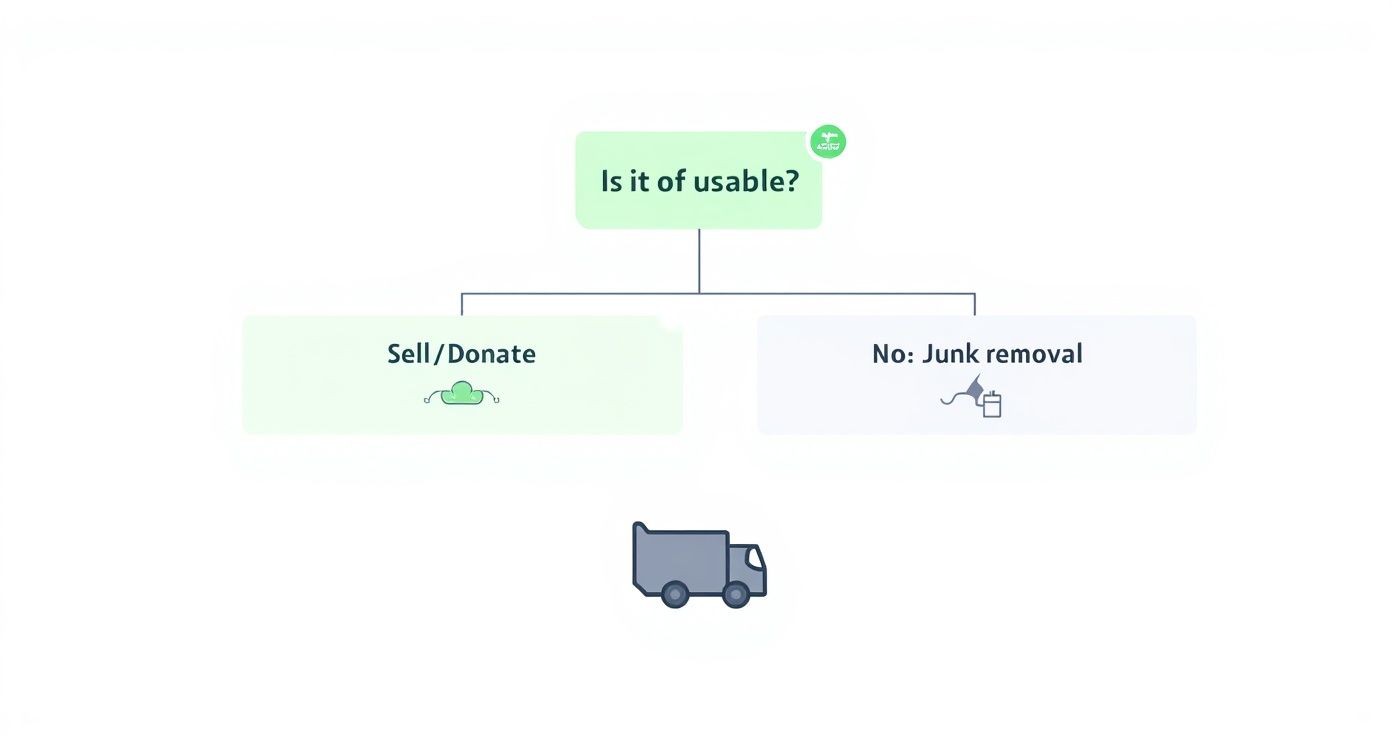
The main takeaway here is that every piece of furniture has a next step, and the landfill should always be your absolute last resort.
For businesses like offices, warehouses, or property management companies, this whole process gets a lot more complicated. That's where a professional service like Fulton Junk Removal comes in. As a commercial service operating under Beyond Surplus, we offer a circular, eco-friendly solution that goes beyond traditional junk hauling. We handle junk removal, and Beyond Surplus ensures responsible recycling, making compliance and sustainability reporting easier. If you're in the Atlanta metro area, you can check out the different commercial junk removal service areas we cover to find a local solution.
Comparing Furniture Disposal Methods
To help you decide, here's a quick look at the effort, cost, and environmental impact of your main furniture disposal choices.
| Disposal Method | Best For | Typical Effort Level | Potential Cost | Environmental Impact |
|---|---|---|---|---|
| Donation | Gently used, clean furniture in good, usable condition. | Medium | Free (pickup) to Low | Very Positive |
| Resale/Selling | High-quality, vintage, or desirable items. | High | Can make a profit | Very Positive |
| DIY Recycling | Broken or unusable items made of wood, metal, or other raw materials. | High | Low to Medium | Positive |
| Professional Removal | Multiple items, heavy pieces, or items in any condition. | Very Low | Medium | Varies (Positive with eco-friendly services) |
Each method has its place, depending on the condition of your furniture and how much time and effort you're willing to put in. Choosing a service committed to recycling ensures even the most convenient option remains an environmentally friendly one.
Give Your Furniture a Second Life
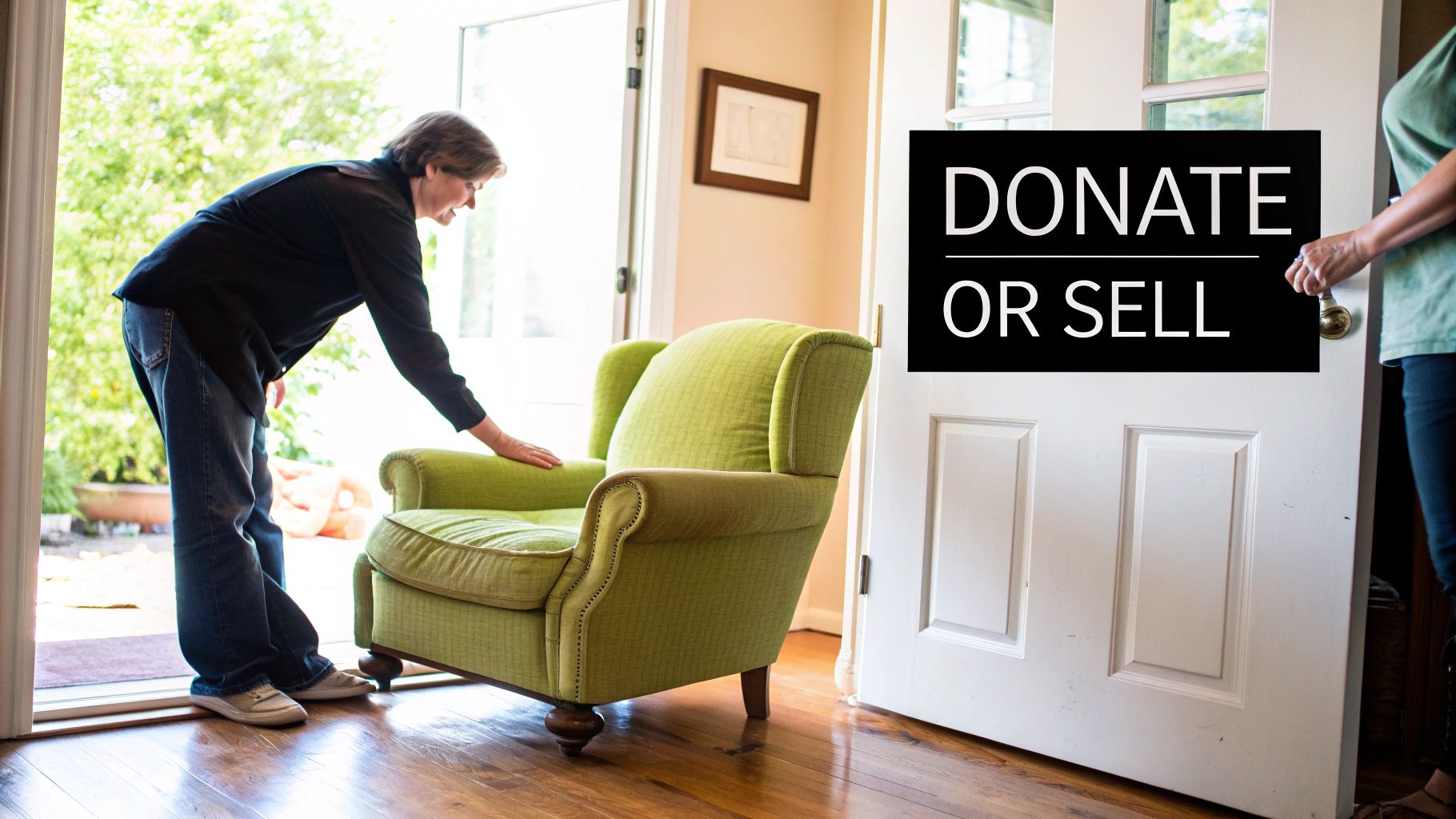
Before you label that old desk or armchair as "junk," take a second look. What might seem like clutter taking up space in your home could be exactly what someone else is looking for.
Choosing to donate or sell your gently used furniture does more than just clear out a room. It’s a powerful way to support the circular economy, keeping perfectly good items out of our already-strained landfills.
This isn't just a niche idea; it's a full-blown movement. The global furniture recycling market is booming, jumping from $12,727.6 million in 2021 to an estimated $16,789.6 million by 2025. That surge shows a massive shift in how we think about furniture disposal. You can dive deeper into the numbers in the furniture recycling market report.
Donating Your Gently Used Furniture
Local charities and non-profits are almost always looking for quality furniture to help families and individuals in the community. Giving your pieces a second home this way is one of the most direct and impactful ways to handle furniture you no longer need.
A quick search for "furniture donation near me" is your best starting point. You'll likely see familiar names like Goodwill, The Salvation Army, or Habitat for Humanity ReStores. But before you load up the truck, it pays to check their specific rules.
- Condition is Key: Organizations can only accept items that are in good, usable shape. That means no major rips, deep stains, pet damage, or broken frames.
- Know What They'll Take: Hop on their website or give them a quick call to confirm they accept the type of furniture you have. Some places might not have room for massive entertainment centers or may have restrictions on items like mattresses.
- Schedule a Pickup: Got something big like a sofa or dining set? Many charities offer a free pickup service. Just be sure to schedule it well in advance—their calendars fill up fast.
Here's a solid rule of thumb I always use: the "friend test." If you wouldn't feel comfortable giving the item to a friend, it’s probably not right for donation. Charities run on tight budgets and simply can't afford to fix up damaged goods.
Selling Your Furniture for Extra Cash
If your furniture is in great shape or has some unique vintage charm, selling it is a fantastic route to take. It's never been easier, thanks to platforms like Facebook Marketplace, OfferUp, and Craigslist that connect you directly with local buyers.
Putting in a little effort to create a standout listing really makes a difference.
Tips for a Successful Sale
- Take Great Photos: First, give the piece a good cleaning. Then, snap clear pictures in a well-lit space from several different angles. Be sure to highlight any cool details and be upfront about any minor scuffs or flaws.
- Write a Compelling Description: Don't just say "brown couch." Include the important stuff: dimensions, brand, materials, and maybe its age. A little honesty about its condition goes a long way.
- Price It Right: Do a quick search for similar items on the platform to see what they're selling for. This will help you set a fair, competitive price. And be ready for a little friendly negotiation.
- Prioritize Safety: If you can, arrange to meet buyers in a busy, public place. For big items that require a home pickup, make sure you have a friend or family member with you during the exchange.
By exploring these options, you're not just clearing out your space; you're helping build a more sustainable community. For more ideas on responsible disposal, you might be interested in exploring other topics on our blog.
Recycling Your Old and Worn Furniture
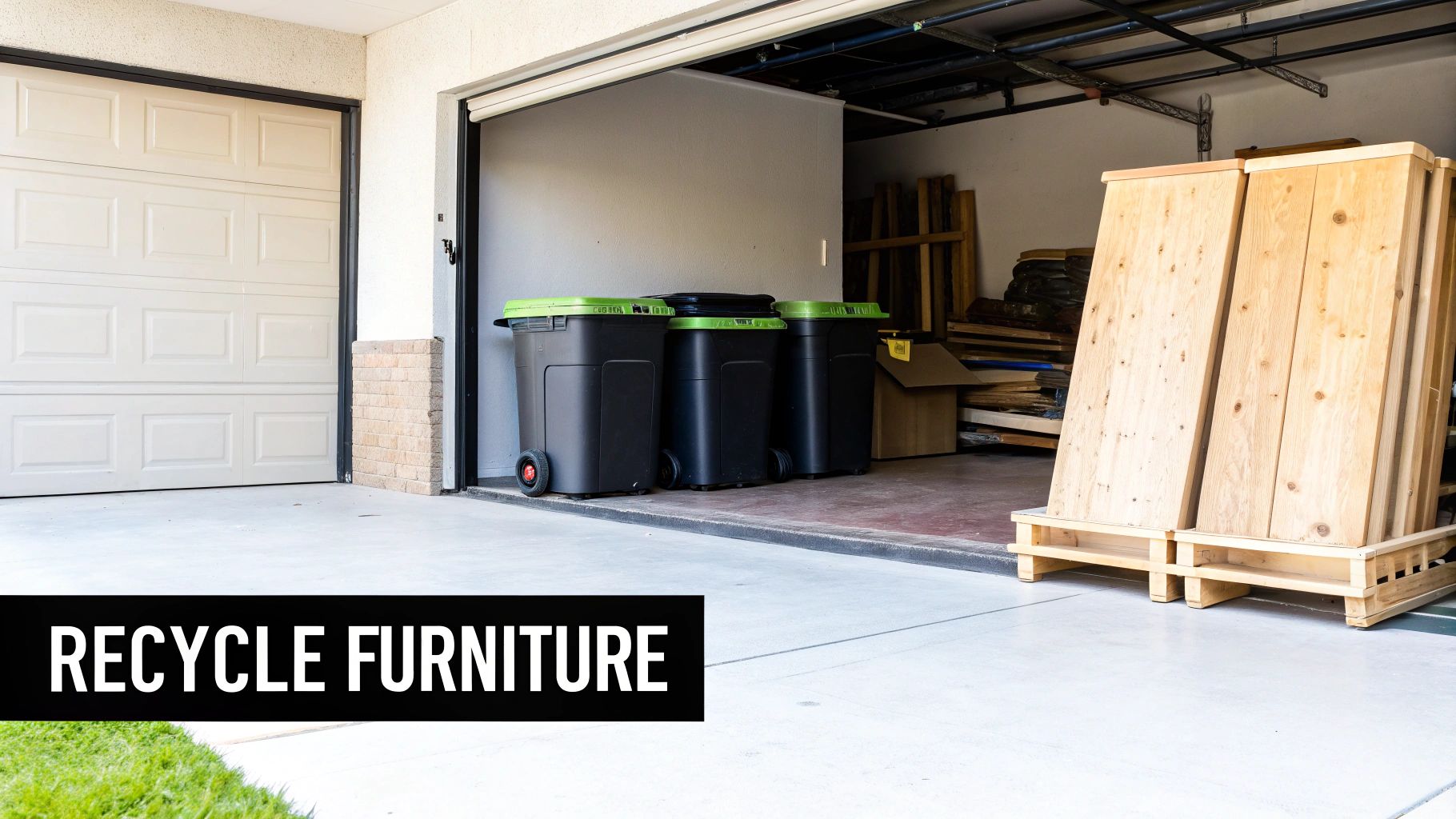
So, what do you do with that old dresser or couch that’s too broken, stained, or worn out to be donated or sold? Don’t just drag it to the curb. Your best and most eco-friendly move is recycling.
Instead of letting it sit in a landfill for decades, recycling gives your old furniture a new purpose. The process breaks down worn-out pieces into raw materials, ready to be transformed into something entirely new. It’s a key part of the circular economy, turning what would be waste into a valuable resource. This approach saves natural resources, cuts down on pollution, and eases the massive burden on our local landfills.
The push for sustainability has turned furniture recycling into a major global industry. North America and Europe are really leading the charge here, thanks to strong environmental regulations and more people demanding sustainable options. Europe, which makes up 26% of the global furniture market, has especially strict rules that encourage recycling. You can see how different regions are handling the challenge by exploring the full research on the furniture recycling market.
Breaking Down Your Furniture for Recycling
Before you can recycle furniture, you usually have to take it apart. Most pieces are a mix of materials, and recycling centers need them separated to process everything correctly. That old wooden dresser, for example, probably has metal handles, plastic drawer slides, and maybe even a glass mirror—and each material needs to go to a different place.
Think of it like sorting your kitchen recyclables, just on a bigger scale. Grab a few basic tools and start separating the different parts.
- Metals: Steel, aluminum, and other metals from bed frames, table legs, or hardware are highly recyclable. Most local scrap metal yards will happily take them off your hands.
- Wood: If the wood is unfinished and unpainted, it can often be chipped for compost or mulch. But things get trickier with treated, painted, or composite woods like particleboard, which require specialized facilities.
- Plastics: Look for the recycling number on any plastic parts. Not all plastics can go in your curbside bin, but many dedicated facilities can handle them.
- Fabric and Foam: These are the toughest materials to recycle. While some specialized programs are popping up, they aren't common yet. Often, this is the one part of the furniture that might still end up in the landfill.
Finding the Right Recycling Facilities
Once you’ve sorted your materials, the next step is figuring out where to take them. A quick search for "wood recycling near me" or "scrap metal yard" is a great place to start. Your local city or county waste management website is another goldmine of information, often providing a directory of local centers and exactly what they’ll accept.
Keep in mind that some facilities might charge a small drop-off fee, especially for bigger items or tricky materials like treated wood. It’s always a good idea to call ahead to confirm their hours, policies, and any prep requirements.
While the DIY route is rewarding, it can also be a ton of work. For businesses like offices, warehouses, or property managers clearing out a large volume of furniture, a professional service is much more efficient. This is where Fulton Junk Removal comes in. Working hand-in-hand with Beyond Surplus, we manage the entire process for you. We sort, deconstruct, and make sure every possible material—from metals to electronics—is diverted from the landfill and recycled responsibly, appealing to environmentally conscious businesses. We make sustainability simple.
Hiring a Junk Removal Service That Recycles
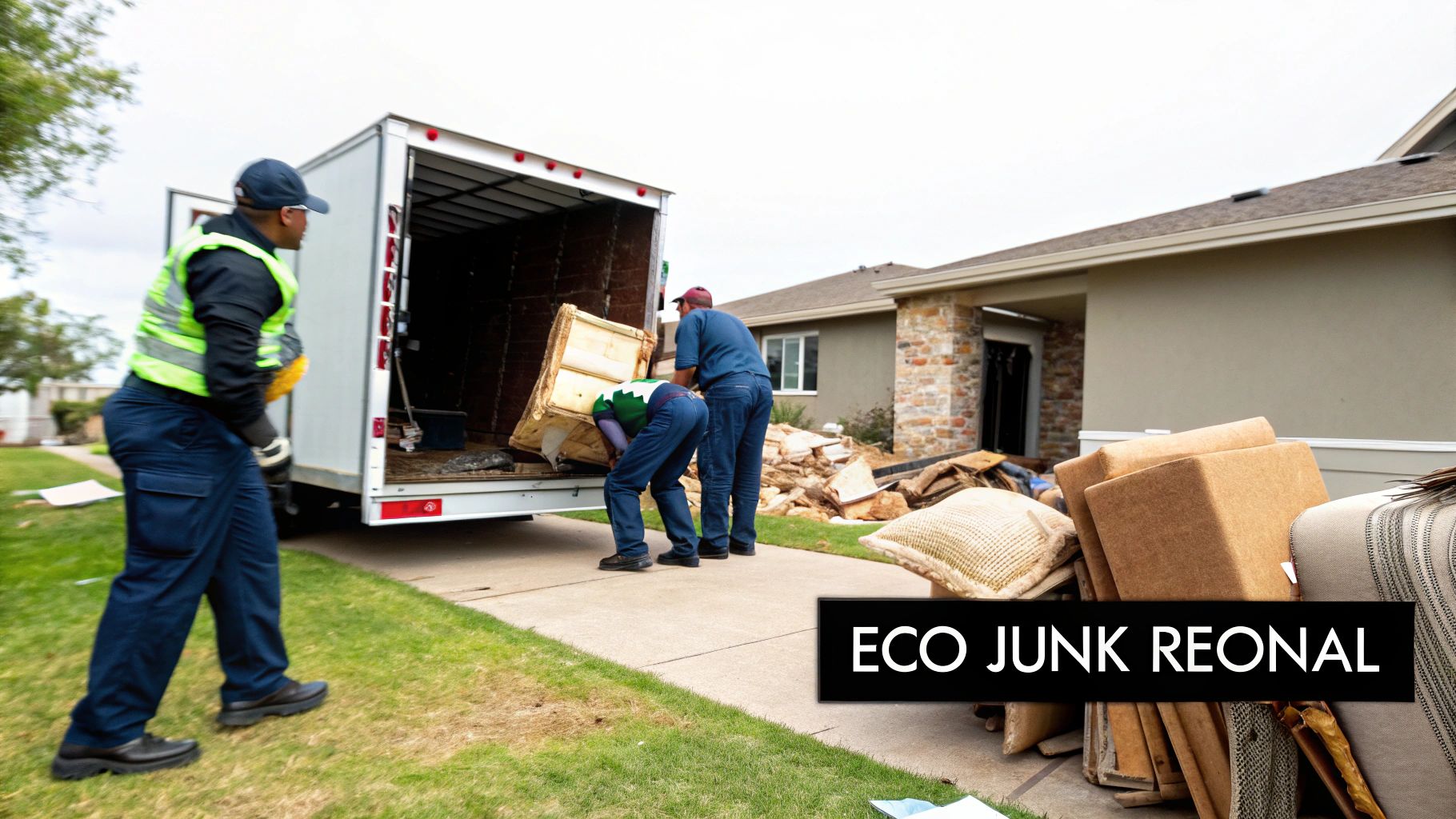
Sometimes, a cleanout is just too big for a weekend DIY project. When you're facing down multiple bulky items, heavy furniture, or just need the job done fast, calling in a professional junk removal service is the clear winner.
But here’s something most people don’t realize: not all junk removal companies are created equal. The default for many is the path of least resistance—a direct trip to the local landfill. This shortcut is a major reason why a staggering 12 million tons of furniture choke U.S. landfills every single year, wasting space and perfectly good materials.
If you want to make a sustainable choice, you have to look for a service that does more than just haul. You need a team that actively prioritizes recycling and responsible disposal by sorting your items to keep as much as possible out of the dump.
The Power of an Integrated Recycling Model
An eco-conscious junk removal company operates on a completely different model. Instead of tossing everything into one truck bound for the landfill, they have a sorting process baked into their operations. This is where a company like Fulton Junk Removal truly shines.
Operating under Beyond Surplus, a circular, eco-friendly solutions provider, we offer a service that goes beyond traditional junk hauling. This integrated approach means that when we haul away your old furniture and clutter, we're simultaneously identifying and separating valuable materials for a new life.
- Metals: Steel frames from desks, aluminum legs from chairs, and countless other metal components are pulled out and sent to be recycled.
- Electronics: Any e-waste we find, from old office printers to monitors, is processed responsibly by Beyond Surplus to ensure hazardous materials are handled safely.
- Other Materials: Wood, plastics, and other recyclables are sorted and routed to the right facilities.
This isn’t just junk hauling; it's a commitment to minimizing waste and maximizing resource recovery. It’s a smarter approach that resonates with environmentally conscious homeowners and businesses working to hit their own sustainability targets.
"The key difference is the destination. While most junk removal companies take everything to the landfill, we recycle through Beyond Surplus to minimize waste and maximize reuse. This appeals to environmentally conscious homeowners and businesses."
This process is becoming more important as people demand better options. The furniture recycling market is set to expand significantly through 2033, largely driven by homeowners looking for convenient, eco-friendly solutions like door-to-door pickup. You can read the full furniture recycling market analysis to learn more about this trend.
A Game Changer for Commercial Clients
For businesses, warehouses, and property managers, the benefits of this model are even more powerful. A large-scale office cleanout or property turnover often generates a messy mix of unwanted furniture, outdated electronics, and general debris. Typically, handling this mess means juggling multiple vendors—one for junk, another for e-waste recycling.
Fulton Junk Removal cuts through that complexity. We can offer bundled junk removal + recycling pickup, where all your electronic waste and recyclable materials are handled directly by Beyond Surplus. This single-vendor solution delivers huge advantages:
- Efficiency: One call, one team, and one invoice. Fulton handles junk removal, and Beyond Surplus ensures responsible recycling.
- Compliance: Beyond Surplus provides full documentation for all recycled materials, making your sustainability reporting and compliance much easier.
- Peace of Mind: You get the confidence of knowing your company's old assets are being disposed of ethically and responsibly, protecting your brand’s reputation.
By choosing an integrated service, property managers, office managers, and sustainability directors can finally align their disposal practices with corporate environmental goals. If you're planning a commercial cleanout, see how Fulton's comprehensive commercial services can deliver a tailored, sustainable solution.
Using the Landfill as a Final Option
So, you’ve tried to donate, sell, and recycle, but you’re still left with furniture that’s just… done. We’ve all been there. Some pieces are broken beyond repair, others are contaminated with mold, and some are just made from materials that nobody can recycle. In these cases, the landfill is the only place left for them to go.
While it should always be your last resort, knowing how to properly dispose of furniture at a landfill is key to staying on the right side of local laws. Just dragging a broken couch to the curb isn't just an eyesore—it's often illegal and can get you slapped with a fine for illegal dumping.
The first move is always to check your local city or county waste management website. Look for terms like "bulk item pickup," "special collections," or "landfill drop-off." A quick search will save you a lot of headaches.
Understanding Local Landfill Rules
Every municipality has its own playbook for this stuff, so you need to pay close attention to the details. The rules can vary wildly from one town to the next.
Here’s what you should be looking for:
- Scheduled Pickup Days: Many cities have specific days each month for large items. If you miss that window, you’re stuck storing that broken dresser until the next collection day rolls around.
- Fees and Limits: Don't be surprised if there's a fee for bulk pickup. Some places also limit the number or size of items you can put out at one time.
- Preparation Requirements: You might have to do a little prep work. Some areas require you to wrap mattresses in plastic, while others might ask you to break down large items so they meet certain size restrictions.
Following these local guidelines isn't just about avoiding a ticket. It’s about making the process smooth and safe for the sanitation workers who have to handle the collection.
When to Consider a Professional Service
For homeowners with a huge cleanout, and especially for businesses or property managers, trying to manage the disposal of multiple items can turn into a logistical nightmare. Imagine an office cleanout with dozens of broken chairs and desks—each one subject to local disposal rules. It’s just not practical to handle that on your own.
This is where a professional service really shines. A company like Fulton Junk Removal, working with our recycling partner Beyond Surplus, can take the entire process off your hands. We don’t just handle the heavy lifting and transportation; we sort through everything to make sure as much as possible stays out of the landfill.
Even if some items are truly at the end of their life, we ensure that any recyclable parts like metals or electronics are pulled out and processed the right way. This bundled approach is a lifesaver for our commercial clients who need proper documentation for their sustainability reports. If you're facing a complex disposal job, feel free to reach out to us for a custom solution.
Your Furniture Disposal Questions Answered
When you're staring down an old couch or a worn-out office chair, a lot of questions pop up. Getting straight, practical answers is the key to figuring out the best way to handle your furniture disposal without any headaches. Here, we tackle some of the most common queries we hear from our customers.
Can I Just Leave My Old Furniture on the Curb?
This is easily one of the most common questions we get, but the answer really depends on where you live. Some cities have scheduled bulk pickup days where leaving items on the curb is totally fine. In many other places, though, it's considered illegal dumping and can land you a hefty fine.
Before you drag anything out to the street, your best bet is to check your local waste management authority's website or just give them a quick call. They'll tell you the right way to do it and save you from a potential penalty.
How Do I Know if My Furniture Is Good Enough to Donate?
A great rule of thumb I always suggest is the "friend test"—would you feel comfortable giving this item to a friend or family member? Any furniture you donate should be structurally sound and free from major problems like deep stains, big tears, pet damage, or strong odors.
Charities and non-profits run on tight budgets and almost never have the resources to make repairs. They need items that are clean, safe, and ready for a new home right away. Always check the organization’s website for a list of accepted items and their specific condition guidelines before you schedule a pickup.
What’s the Best Way to Get Rid of an Old Mattress?
Mattresses are a real challenge. They're bulky, and their materials aren't meant for landfills. Plus, because of strict hygiene laws, donation is almost never an option.
The most eco-friendly route is to find a specialized mattress recycling facility. These centers actually deconstruct mattresses into their core components—steel springs, foam, and fabric—all of which can be recycled. The easiest way to make sure this happens is to hire a junk removal company that partners directly with mattress recyclers to handle it responsibly for you.
What’s the Most Efficient Option for an Office Clear-Out?
For businesses, property managers, or anyone handling a big commercial clear-out, efficiency is everything. A professional junk removal service that offers integrated recycling is, by far, the best solution.
A provider like Fulton Junk Removal, which works hand-in-hand with its recycling partner Beyond Surplus, manages the entire process seamlessly. We handle all the heavy lifting while also separating general junk from electronics, metals, and other recyclables. This bundled approach saves you from juggling multiple vendors and gives you the documentation needed for your company’s sustainability reporting. You can learn more about our eco-friendly approach to junk removal and see how we simplify the process for our commercial clients.
When you need a reliable, eco-conscious solution for your furniture disposal needs, Fulton Junk Removal is here to help. We offer fast, professional service for both homeowners and businesses, ensuring your items are handled responsibly every time.
