
10 Smart Ideas: What To Do With Old Couches in 2025
That old, sagging couch in your living room or the outdated sofa taking up space in the office breakroom represents more than just a piece of furniture you need to get rid of. It's a bulky, cumbersome item that presents a significant disposal challenge. For homeowners, tenants, and property managers in the Atlanta area, figuring out what to do with old couches often feels like a logistical puzzle. Do you haul it to the curb and hope for the best? Is it worth the effort to sell? Can it even be recycled? The easiest path, unfortunately, often leads directly to the landfill, where bulky furniture consumes valuable space and contributes to environmental strain.
This guide is designed to provide a clear, actionable roadmap for handling this common problem responsibly and efficiently. We'll move beyond the simple "leave it on the curb" mentality and explore a comprehensive list of practical solutions tailored for both residential and commercial needs. Whether you're a homeowner decluttering your space, a facilities manager overseeing an office cleanout, or a real estate agent preparing a property for its next occupants, this article details every viable option.
From donation and upcycling to professional junk removal services that prioritize sustainability, you'll find the specific steps, local resources, and practical insights needed to make an informed decision. We will explore how services like Fulton Junk Removal, operating under Beyond Surplus, offer an integrated, circular, and eco-friendly solution. Fulton works hand-in-hand with Beyond Surplus to recycle electronics, metals, and other materials responsibly, ensuring items are diverted from landfills and repurposed. This comprehensive list provides the tools to handle your old furniture the right way.
1. Donate to Charity or Thrift Stores for a Good Cause
Giving your old couch a second life through donation is one of the most rewarding and environmentally friendly options available. When your sofa is still in good, usable condition, charities and thrift stores can place it with a family in need or sell it to fund their community programs. This turns what could be waste into a valuable asset, extending the furniture's lifespan and reducing landfill burden. It's an excellent first consideration for anyone figuring out what to do with old couches that still have plenty of comfort to offer.
Who Accepts Couch Donations?
Many organizations are eager to accept quality furniture. However, acceptance criteria are often strict due to health regulations and limited space. The couch must be free of significant rips, stains, pests, and structural damage.
Key Organizations in the Atlanta Area:
- Goodwill of North Georgia: With numerous donation centers, they resell items to fund job training programs. Some locations offer pickup for larger items.
- The Salvation Army: Known for their Family Stores, they often provide free pickup services for furniture donations, which support their adult rehabilitation centers.
- Furniture Bank of Metro Atlanta: This organization directly furnishes homes for individuals and families transitioning out of homelessness. They offer a fee-based pickup service.
How to Prepare Your Couch for Donation
To ensure your couch is accepted, follow these simple preparation steps:
- Inspect and Clean: Thoroughly vacuum the entire couch, including under the cushions. Spot-clean any minor stains. Be honest about its condition; a photo can help the charity assess it beforehand.
- Document for Tax Purposes: If the charity is a registered 501(c)(3) organization, your donation is tax-deductible. Take photos and get a receipt to document its value.
- Schedule Pickup: Most organizations require you to schedule a pickup well in advance, especially for large items like couches. Contact them directly to understand their process and availability.
2. Sell Online Through Marketplaces
If your couch is in good condition but you'd prefer to make some money back, selling it online is a fantastic option. Platforms like Facebook Marketplace, Craigslist, and OfferUp connect you directly with local buyers looking for affordable furniture. This approach not only puts cash in your pocket but also extends the life of your couch, keeping it out of the landfill and giving it a new home where it will be appreciated. For anyone wondering what to do with old couches that still have aesthetic and functional value, this is an excellent, profitable solution.

Where to List Your Couch for Sale
Choosing the right platform can significantly impact how quickly you sell your couch. Each marketplace caters to a slightly different audience, but all are effective for local transactions. Listing on multiple platforms can increase your visibility and chances of a quick sale.
Popular Online Marketplaces:
- Facebook Marketplace: Integrated with the social media platform, it leverages a huge user base and makes it easy to vet potential buyers by viewing their profiles. It’s ideal for quick, local sales.
- Craigslist: A long-standing choice for selling used furniture, Craigslist remains a go-to for buyers actively searching for secondhand goods in the Atlanta area.
- OfferUp: This mobile-friendly app features user ratings and verified profiles, adding a layer of security to transactions. Its interface is simple and focused on local exchanges.
How to Prepare Your Couch for a Successful Sale
A little preparation can make a big difference in attracting buyers and getting your asking price. A well-presented listing builds trust and helps your couch stand out from the competition.
- Create an Appealing Listing: Take clear, high-quality photos in a well-lit space from multiple angles. Write an honest and detailed description, including dimensions, brand, age, and any flaws like minor stains or wear.
- Price It Right: Research similar couches on the same platforms to set a competitive price. If you're considering selling your old couch, learning how to price used furniture for maximum profit is essential to ensure you get a fair return.
- Arrange a Safe Pickup: Plan for a safe transaction. Communicate clearly about pickup logistics, whether the buyer needs to bring help, and agree on a payment method beforehand. Always prioritize safety when meeting strangers.
3. Convert Into Pet Beds or Animal Sanctuaries
Transforming an old couch into a luxury bed for a furry friend is a creative and heartfelt way to give it a new purpose. For homeowners figuring out what to do with old couches, this approach prevents landfill waste while providing ultimate comfort for pets. Animal rescues and sanctuaries also often seek used furniture to create cozy, home-like environments for animals in their care, making this a wonderful community-oriented option.
Who Benefits From Used Couches?
While your own pets are the most obvious beneficiaries, several types of organizations can use old couches to improve animal welfare. The furniture must be clean, structurally sound, and free from any potential hazards like protruding springs or staples.
Potential Recipients in the Atlanta Area:
- Atlanta Humane Society: While their direct needs vary, local shelters often accept durable furniture for meet-and-greet rooms or administrative offices where animals can socialize.
- PAWS Atlanta: This no-kill shelter may accept furniture to furnish "real-life rooms" that help dogs and cats acclimate to a home environment before adoption.
- Local Animal Rescues: Smaller, specialized rescue groups often furnish foster homes or small facilities and may be grateful for a sturdy couch. Always call ahead to confirm their current needs and donation policy.
How to Prepare a Couch for Animal Use
To ensure the couch is safe and comfortable for animals, a few preparation steps are necessary:
- Deep Clean and Sanitize: Vacuum every surface, crack, and crevice to remove dust, dander, and debris. Use a pet-safe, non-toxic cleaner to sanitize the upholstery. Ensure it is completely dry before offering it to an animal.
- Inspect for Hazards: Carefully check for any sharp objects, loose staples, or exposed wood that could cause injury. Repair any minor tears or remove potential choking hazards like decorative buttons.
- Create a Washable Surface: Drape the couch with durable, easily washable blankets or a fitted furniture cover. This protects the original fabric and allows for simple, regular cleaning to maintain hygiene.
4. Artistic Upcycling and DIY Projects
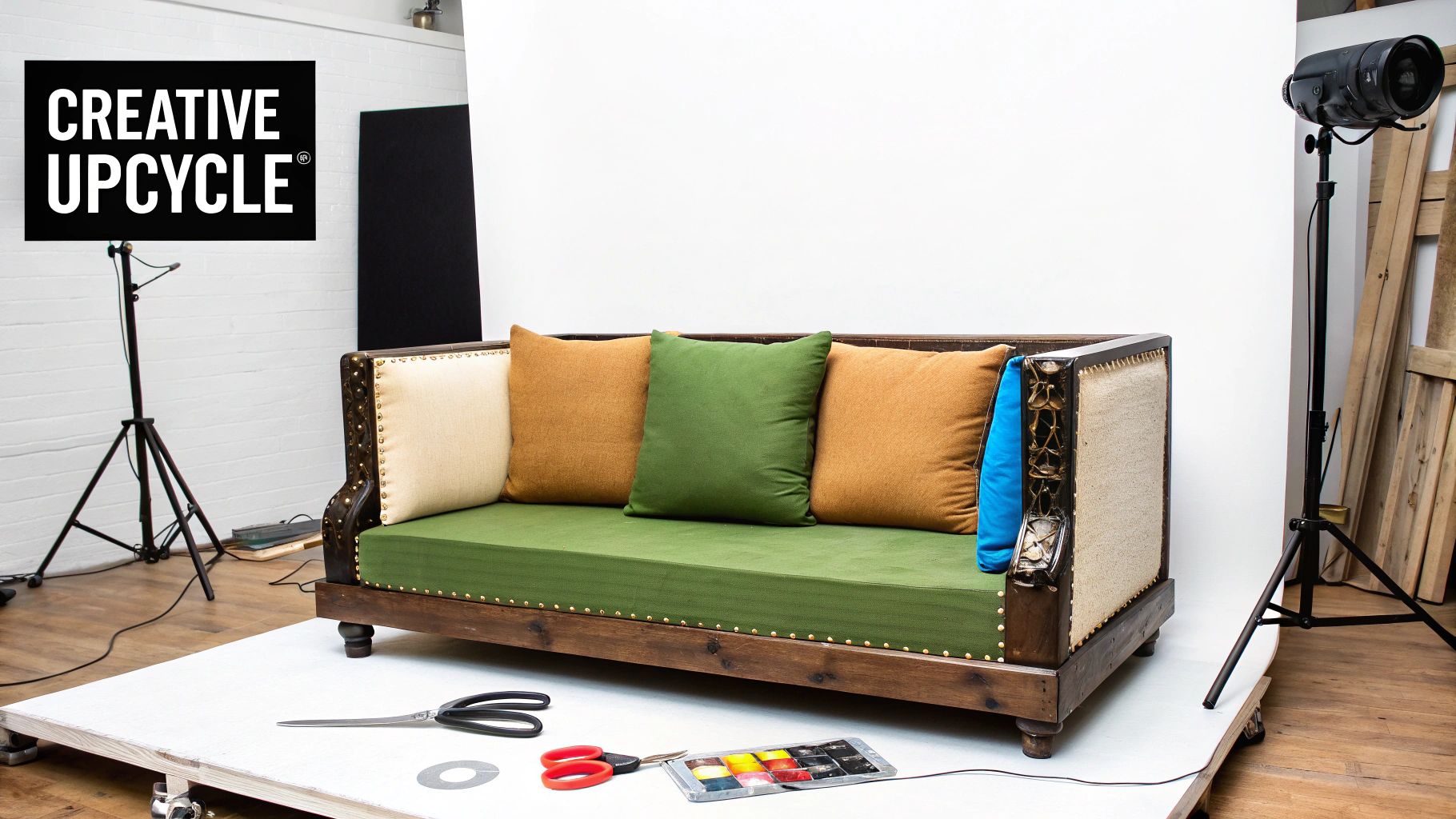
For the creatively inclined, an old couch is not an ending but a beginning. Artistic upcycling and DIY projects transform outdated or worn furniture into one-of-a-kind statement pieces, functional art, or entirely new items. This approach is a fantastic solution for what to do with old couches that have good "bones" but are aesthetically past their prime. By deconstructing and reimagining the piece, you prevent landfill waste while adding a unique, personal touch to your home, garden, or art portfolio.
Who Can Benefit from Upcycling a Couch?
This option is perfect for DIY enthusiasts, artists, eco-conscious homeowners, and anyone looking for a budget-friendly way to acquire custom furniture. It allows complete creative control over the final product, from fabric and color to form and function. Many Atlanta-area artists and designers have built entire brands around upcycled furniture, selling their creations on platforms like Etsy or at local markets.
Inspiring Upcycling Ideas:
- Garden Bench: Strip the couch down to its wooden frame, treat it for outdoor use, and create a rustic, charming garden bench.
- Pet Bed: A loveseat or armchair can be easily converted into a luxurious, oversized bed for a large dog or multiple cats.
- Statement Piece: Reupholster the couch with bold, unconventional fabrics, paint the frame, or add new legs to create a unique piece of furniture that reflects your style.
How to Get Started with a Couch DIY Project
Embarking on a couch upcycling project requires planning and the right tools. Follow these steps to ensure a successful transformation:
- Plan Your Design: Browse Pinterest, Instagram, and DIY blogs for inspiration. Sketch out your idea and create a list of necessary materials, such as paint, fabric, and tools.
- Disassemble Safely: Carefully deconstruct the couch, saving any components you plan to reuse, like the frame or springs. Wear protective gear, including gloves and safety glasses.
- Execute and Rebuild: Clean and repair the frame, then begin the creative process of painting, reupholstering, and reassembling your new piece. For more advanced ideas and sustainability tips, you can explore the creative upcycling projects on our Fulton Junk Removal blog.
5. Deconstruction for Parts and Materials
For the resourceful and hands-on individual, deconstructing an old couch offers a unique opportunity to salvage valuable components and significantly reduce landfill waste. This method involves systematically dismantling the sofa to harvest its core materials like wood, metal, foam, and fabric. By breaking the couch down, you can ensure that each part is either reused, sold, or recycled responsibly, making it one of the most eco-friendly solutions for what to do with old couches that are beyond repair.
What Can Be Salvaged from a Couch?
A typical couch is a treasure trove of raw materials that can be repurposed or sold. Successful deconstruction hinges on knowing what to look for and where to send it. While most junk removal companies take everything to the landfill, Fulton Junk Removal recycles through its partner Beyond Surplus to minimize waste and maximize reuse of materials like these.
Key Salvageable Components:
- Hardwood Frame: The internal wood structure can be valuable for DIY projects, woodworking, or even as firewood (if untreated).
- Metal Springs and Frame: Steel springs, clips, and any metal supports can be sold to local scrap metal yards for recycling.
- Foam Cushions: High-density foam can be repurposed for new pillows, pet beds, or garden kneeling pads. Some specialized recyclers accept clean foam.
- Fabric or Leather Upholstery: Large, intact sections of fabric can be used for smaller upholstery projects, crafting, or making durable bags.
How to Safely Dismantle Your Couch
Proper deconstruction requires care, the right tools, and a methodical approach. It's a labor-intensive but rewarding process.
- Prepare Your Workspace: Work in a well-ventilated area and lay down a tarp to catch dust and debris. Wear safety glasses and heavy-duty gloves to protect yourself.
- Strip the Upholstery: Use a utility knife and pliers to carefully cut and remove the fabric or leather, trying to keep large pieces intact if you plan to reuse them.
- Extract the Insides: Remove the foam, batting, and any other stuffing. Bag these materials separately based on type for easier sorting later.
- Disassemble the Frame: Use a pry bar, hammer, and screwdriver to take apart the wooden frame and extract all metal springs and hardware. This final step leaves you with neatly sorted piles of wood, metal, and soft materials ready for their next life.
6. Rent or Loan Through Community Programs
Beyond traditional donation, lending or renting out your old couch through community programs offers an innovative way to support others. This model is perfect for couches that are still in great shape but may not be needed permanently by a new owner. It serves individuals in transitional situations, such as students, temporary workers, or families staging a home for sale. This approach maximizes the couch's utility, keeps it out of the landfill, and fosters a strong sense of community resourcefulness, making it a clever solution for what to do with old couches.
Who Accepts Couches for Lending?
While formal furniture rental businesses exist, community-based lending is often more informal and localized. These programs rely on networks of trust and are focused on mutual aid rather than profit. Your couch could find a temporary home with someone who needs it for a few months before they can afford their own.
Key Organizations and Platforms in the Atlanta Area:
- Buy Nothing Project: These hyper-local Facebook groups are built on a gift economy. You can offer your couch as a long-term loan to a neighbor in need, with the understanding it might be returned or passed on later.
- Nextdoor: This neighborhood hub is another excellent place to offer a couch for temporary use to someone local. Posting a clear offer as a "loaner" can connect you with someone in a transitional phase.
- Local Nonprofits and Churches: Some community outreach programs or religious organizations maintain informal furniture lending closets to help families get established. They may welcome a quality couch for this purpose.
How to Prepare Your Couch for Loaning
To ensure a smooth and positive lending experience, proper preparation is key. The goal is to make the process easy and transparent for both you and the borrower.
- Clean and Document: Just as with a donation, deep clean the couch. Take detailed photos from all angles to document its condition before it's loaned out. This prevents any misunderstandings later.
- Set Clear Terms: Create a simple, written agreement. Specify the loan duration, expectations for care, and what happens if the couch is damaged. This protects both parties.
- Arrange Transportation: Decide who is responsible for moving the couch. Sometimes, the person borrowing it will handle pickup, but for more complex moves, hiring a professional service is wise. If you're coordinating with other junk removal, understanding the process of finding reliable furniture removalists can ensure the item is transported safely.
7. Donate to Schools, Theaters, or Community Centers
Looking beyond traditional charities offers another excellent avenue for what to do with old couches that are still in decent shape. Schools, local theaters, and community centers often operate on tight budgets and welcome donations of functional furniture. Your old sofa could become a comfortable spot in a teacher's lounge, a prop on a stage, or a welcoming seat in a community recreation center. This direct-to-community approach ensures your couch serves a specific, local purpose and avoids the landfill.
Who Accepts Couch Donations?
Many local institutions need furniture for common areas, lounges, and program spaces. Unlike larger charities, they may have more specific needs but can be very appreciative of the right piece. Always call ahead to confirm they are currently accepting donations and that your couch meets their requirements.
Key Organizations in the Atlanta Area:
- Local High School Drama Departments: Public schools like those in the Fulton County or Atlanta Public Schools systems often need furniture for stage sets and green rooms.
- Community Theaters: Places like the Horizon Theatre Company or Actor's Express might need couches for their lobbies, rehearsal spaces, or as set pieces for productions.
- Boys & Girls Clubs of Metro Atlanta: Various local chapters may need durable furniture for their teen centers and common areas where kids gather.
How to Prepare Your Couch for Donation
To make the donation process smooth for these community-focused organizations, a little preparation goes a long way.
- Contact and Coordinate: Reach out to the organization's office or a specific department head (like a drama teacher or facilities manager). Provide photos, dimensions, and an honest description of the couch's condition.
- Arrange Logistics: Smaller organizations rarely have pickup services. Be prepared to arrange delivery yourself. This is a key part of the process when figuring out what to do with old couches for these specific groups.
- Request Documentation: Ask for a donation receipt or a letter of acknowledgment on the institution's letterhead. If they are a registered nonprofit, this can be used for tax purposes.
8. Curbside Pickup or Bulk Trash Services
For many homeowners, utilizing municipal bulk trash collection is the most straightforward disposal method when other options have been exhausted. These services allow you to place large items like an old couch at the curb on designated days for collection. While convenient, this option often means the couch is sent directly to a landfill, making it a last resort after considering donation, recycling, or repurposing. Figuring out what to do with old couches can be challenging, and sometimes, this is the only practical solution.
How Do Bulk Trash Services Work?
Most cities and counties in the Atlanta area have specific rules and schedules for bulk waste. It is crucial to understand these regulations to avoid fines or having your item left behind. This service is typically included in your regular waste management fees.
Key Service Providers in the Atlanta Area:
- City of Atlanta Department of Public Works: Offers scheduled bulk collections for residents. You must schedule your pickup in advance and adhere to their guidelines on item size and placement.
- DeKalb County Sanitation: Provides residents with a set number of bulk pickups per year. Couches are generally accepted, but you must follow their specific set-out instructions.
- Private Waste Haulers: Companies like Republic Services and Waste Management often offer bulk pickup services as part of their residential contracts, but you may need to call to schedule it.
How to Prepare Your Couch for Curbside Pickup
Proper preparation ensures a smooth and successful pickup on collection day.
- Check Local Regulations: Visit your city or county's sanitation department website or call them. Confirm the schedule, size limitations, and whether couches are accepted. Some municipalities require you to schedule the pickup in advance.
- Place at the Curb Correctly: Set the couch out on the curb the evening before your scheduled pickup day. Ensure it does not block the sidewalk, street, or mailboxes.
- Consider the Environmental Impact: Remember that this method usually leads to landfill disposal. For a more eco-friendly approach that still offers convenience, a professional junk removal service that prioritizes recycling is a better alternative. Learn more about comprehensive junk removal and recycling services that can help divert your old furniture from the landfill.
9. Donate to Furniture Banks or Free Stores
Donating to a furniture bank is a powerful way to make a direct impact on your community. Unlike general thrift stores, these specialized nonprofits collect gently used furniture and give it directly to individuals and families transitioning from homelessness, escaping domestic violence, or facing other crises. This option ensures your old couch serves a critical need, providing comfort and stability to those starting over. It's a deeply meaningful solution for what to do with old couches that are still in good condition.
Who Accepts Couch Donations?
Furniture banks and free stores focus on providing essential household goods to those who cannot afford them. Their acceptance criteria are strict to ensure recipients get safe, clean, and functional items. Your couch must be structurally sound and free from major damage, stains, or pests.
Key Organizations to Consider:
- Furniture Bank of Metro Atlanta: This is the primary furniture bank serving the Atlanta area. They furnish homes for thousands of people each year and offer a fee-based pickup service for donated items.
- Habitat for Humanity ReStore: While also a thrift store, their proceeds directly fund building homes. They accept furniture and often have pickup services available in various locations across the metro area.
- Local "Buy Nothing" Groups: These hyper-local online groups facilitate direct giving between neighbors. You can post your couch for free, and a community member in need can arrange to pick it up.
How to Prepare Your Couch for Donation
To ensure your couch finds a new home through a furniture bank, proper preparation is key.
- Check Condition Requirements: Visit the organization's website or call them to confirm their specific needs and condition standards. Take clear photos from all angles to send them for pre-approval.
- Clean and Sanitize: Vacuum the entire couch, under the cushions, and along all seams. Use an upholstery cleaner to address any minor spots and ensure it is presentable.
- Document and Schedule: Get a donation receipt for tax purposes, as most furniture banks are registered 501(c)(3) charities. Schedule the pickup or drop-off in advance, as their logistics are often tightly planned.
If your couch doesn't meet donation standards, or if you have other items like e-waste to clear out simultaneously, a professional service might be a better fit. Many junk removal companies partner with recyclers to handle various materials responsibly. Explore the junk removal and recycling services available in your area to find a sustainable disposal solution.
10. Specialized Recycling Facilities and Deconstruction Centers
For those prioritizing environmental responsibility, taking your old couch to a specialized recycling facility is an excellent option. Unlike a standard landfill trip, these centers are equipped to deconstruct furniture and salvage its core components. This process ensures that materials like wood, metal, foam, and fabric are diverted from the landfill and sent into the proper recycling streams, minimizing waste and maximizing resource recovery. It’s an ideal solution when figuring out what to do with old couches that are no longer suitable for donation or reuse.
Who Accepts Couches for Recycling?
Finding facilities that accept and deconstruct bulky furniture requires some research, as not all recycling centers are equipped for this task. These specialized operations play a crucial role in the circular economy by breaking down items into their raw materials.
Key Organizations and Resources in the Atlanta Area:
- CHaRM (Center for Hard to Recycle Materials): A premier facility in Atlanta, CHaRM accepts a wide range of items, including bulky furniture, for a fee. They work to recycle or repurpose as much of the material as possible.
- Earth911 Database: This online tool is an invaluable resource for locating local recycling centers. You can search specifically for "furniture" or "bulky waste" to find options near you.
- Beyond Surplus: Working with partners like Fulton Junk Removal, they focus on responsible material recovery. This is a great choice for businesses and individuals seeking comprehensive recycling solutions for office furniture, electronics, and other materials alongside general junk removal.
How to Prepare Your Couch for Recycling
To streamline the recycling process and ensure your couch is accepted, a few preparation steps are necessary.
- Contact the Facility First: Always call ahead to confirm that the center accepts couches. Ask about their specific requirements, drop-off procedures, and any associated fees.
- Separate Materials if Possible: While not always required, separating any easily removable metal components (like legs or recliner mechanisms) can sometimes help the deconstruction process. Ask the facility for their preference.
- Arrange for Transportation: Most recycling centers require you to drop off items yourself. If the couch is too large to transport, a professional service can provide the heavy lifting. Learn more about how Fulton Junk Removal integrates responsible recycling through its partnership with certified recyclers.
10-Option Comparison: What to Do with Old Couches
| Option | Implementation 🔄 (complexity) | Resources ⚡ (requirements/efficiency) | Expected Outcomes 📊 (impact / quality) | Ideal Use Cases 💡 | Key Advantages ⭐ |
|---|---|---|---|---|---|
| Donate to Charity or Thrift Stores | 🔄 Low — schedule pickup; simple drop‑off | ⚡ Low — often free pickup, minimal effort | 📊 ⭐⭐⭐⭐ Reuse + community benefit | Couches in good/reasonable condition; want tax write‑off | ⭐ Supports community; no disposal cost |
| Sell Online Through Marketplaces | 🔄 Medium — list, communicate, meet buyers | ⚡ Medium — photos, time, safe meetup needed | 📊 ⭐⭐⭐ Recover cash; moderate speed | Functional, attractive couches; want resale value | ⭐ Income recovery; wide audience reach |
| Convert Into Pet Beds or Animal Sanctuaries | 🔄 Medium — clean/modify structure | ⚡ Low–Medium — basic tools, washable covers | 📊 ⭐⭐⭐ Upcycled; good pet comfort | Pet owners, rescues, sanctuaries; large breeds | ⭐ Cost‑effective reuse for animals |
| Artistic Upcycling and DIY Projects | 🔄 High — creative planning and execution | ⚡ High — tools, materials, workspace, time | 📊 ⭐⭐⭐⭐ Unique/artistic value; potential profit | Artists, makers, community art projects | ⭐ Creative reuse; engagement & novelty |
| Deconstruction for Parts and Materials | 🔄 High — systematic dismantling, safety risks | ⚡ High — hand/power tools, protective gear, time | 📊 ⭐⭐⭐⭐ Maximizes material recovery & reuse | Woodworkers, recyclers, crafters seeking materials | ⭐ Highest environmental benefit; salvage value |
| Rent or Loan Through Community Programs | 🔄 Medium — coordinate with program logistics | ⚡ Medium — storage, tracking, occasional transport | 📊 ⭐⭐⭐ Extends furniture life; shared access | Short‑term needs, transitional housing, community lending | ⭐ Increases access; reduces ownership burden |
| Donation to Schools, Theaters, or Community Centers | 🔄 Low–Medium — contact org; meet standards | ⚡ Low — pickup/delivery often available | 📊 ⭐⭐⭐⭐ Direct institutional use; visible impact | Institutions needing lounge or rehearsal furniture | ⭐ Supports arts/education; tax benefits |
| Curbside Pickup or Bulk Trash Services | 🔄 Low — place at curb on scheduled day | ⚡ Low — minimal effort; may incur small fee | 📊 ⭐⭐ Quick disposal; likely landfill outcome | Severely damaged or unsalvageable couches; last resort | ⭐ Most convenient; broad acceptance |
| Furniture Banks and Free Stores | 🔄 Medium — schedule donation, meet criteria | ⚡ Low–Medium — pickup/delivery, documentation | 📊 ⭐⭐⭐⭐ Direct help to families; organized distribution | Donors seeking targeted charitable impact | ⭐ Professional handling; strong community tracking |
| Specialized Recycling Facilities / Deconstruction Centers | 🔄 Medium–High — transport & facility coordination | ⚡ Medium–High — possible fees, arranged drop‑off | 📊 ⭐⭐⭐⭐ High material recovery; regulatory compliance | Items that are hard to reuse; priority on recycling | ⭐ Maximizes recycling; environmentally responsible |
Making the Right Choice for Your Space and the Planet
Navigating what to do with an old couch can feel like a monumental task, but as we've explored, your options extend far beyond the curb. From breathing new life into it through creative DIY projects to giving it a second chance at a local theater or community center, the path you choose has a significant impact on your wallet, your community, and the environment. This decision is more than just decluttering; it's an opportunity to act with intention and sustainability.
We've covered a wide spectrum of solutions, each with its own benefits. Donating to charities like Goodwill or the Salvation Army, selling on platforms like Facebook Marketplace, or offering it to a local furniture bank directly supports your neighbors. For the creatively inclined, deconstructing a sofa for its raw materials or transforming it into a one-of-a-kind piece for your home turns waste into a valuable resource. These circular approaches keep bulky items out of our already strained landfills.
Key Takeaways for Smart Couch Disposal
The core lesson is to plan ahead. Don't wait until moving day to figure out your couch's fate. Assessing its condition honestly is the first critical step. Is it gently used and desirable for a new owner, or is it truly at the end of its functional life? This simple evaluation will guide you toward the most appropriate and responsible disposal method.
Remember to consider these crucial factors:
- Condition: A couch in good shape has many reuse options, from donation to resale. A broken or heavily soiled couch is better suited for recycling or professional removal.
- Logistics: Do you have a vehicle large enough to transport it? Do you have the time and physical ability to move it yourself? Answering these questions helps determine if you need to hire help.
- Local Resources: Your options in the Atlanta area are vast. Research local charities, specialized recycling centers, and municipal bulk waste schedules to find the most convenient and eco-friendly solution.
Beyond the Living Room: A Commitment to Sustainability
For property managers, business owners, and contractors, the challenge of what to do with old couches is often magnified across multiple units or entire office floors. The decision here impacts not just logistics but also corporate responsibility and sustainability goals. For offices, warehouses, and property managers, partnering with a service where junk removal is handled by one team (Fulton) and responsible recycling is ensured by another (Beyond Surplus) makes compliance and sustainability reporting easier.
By choosing a path of reuse, donation, or responsible recycling, you are actively participating in the circular economy. You are preventing tons of wood, foam, fabric, and metal from becoming landfill waste, where they would release harmful greenhouse gases for decades. Mastering these disposal strategies means you are not just clearing out space; you are making a conscious choice to be a better steward of our shared environment. Your old couch can become a symbol of thoughtful consumption, not a monument to waste.
When convenience and sustainability are your top priorities, Fulton Junk Removal offers a seamless, eco-conscious solution for your old furniture. We partner directly with Beyond Surplus to ensure your couch and other unwanted items are recycled or repurposed, not just sent to a landfill. Fulton can offer bundled junk removal + recycling pickup, where all electronic waste and recyclable materials are directly processed by Beyond Surplus. Visit us at Fulton Junk Removal to schedule a pickup and make the responsible choice for your home or business.
