
How to Remove Drywall: Safe, Quick Steps for DIY Renovation
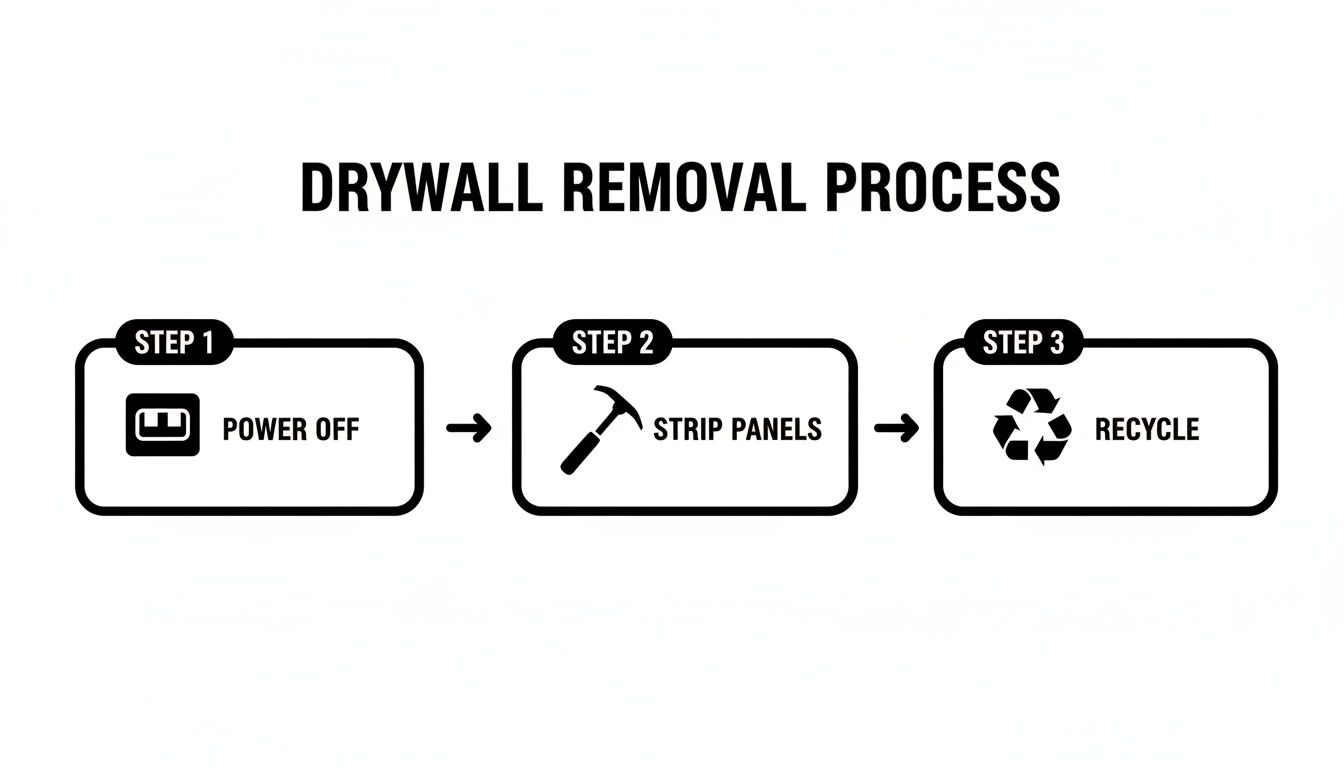
How to Remove Drywall often comes down to three core actions: cutting power, prying off panels, and sorting materials for recycling. In fact, a small bathroom demo—from tearing out sheets to loading debris—can wrap up in under two hours when you prepare wisely. Additionally, Fulton Junk Removal focuses on commercial services—offices, warehouses, and property managers—offering bundled junk removal + recycling pickup where drywall, electronics, metals, and other recyclable materials are directly processed by Beyond Surplus. This circular, eco-friendly approach goes beyond traditional junk hauling, diverting items from landfills to repurposing streams.
Drywall Removal At A Glance
Before you grab your tools, here’s a concise overview of what lies ahead.
Drywall Removal At A Glance
| Step | Primary Tool | Time Estimate | PPE Required |
|---|---|---|---|
| Power Down | Voltage Tester | 5–10 min | Gloves, Goggles |
| Panel Strip | Pry Bar | 60–90 min | Respirator, Gloves |
| Material Sort | Sorting Bin | 30 min | Mask, Gloves |
With these basics in hand, you’ll know exactly where to start and how long each phase takes.
Key Steps Overview
• Kill The Power & Confirm It’s Off
Trip the circuit and test with a voltage meter. It only takes a few minutes, but skipping this safety check isn’t worth the risk.
• Score The Panel Edges
Run a utility knife along seams and around outlets. This clean break helps avoid ripping into studs or adjacent drywall.
• Pry Sheets From Studs
Wedge your pry bar at the panel’s edge and work it free. Move methodically—rushing can bend nails and wear out your tools.
• Sort Debris For Recycling
Separate gypsum pieces, metal framing, and any wiring or fixtures. Proper separation not only simplifies disposal but also speeds up pickup.
Pro Tip Dust control is critical: misting the wall before cutting cuts airborne particles by over 75%, keeping cleanup manageable.
Fulton Junk Removal works hand-in-hand with Beyond Surplus, a circular, eco-friendly solution that goes beyond traditional junk hauling. While most junk removal companies send everything to the landfill, Fulton recycles drywall, electronics, metals, and other materials through Beyond Surplus, minimizing waste and maximizing reuse. For commercial clients—offices, warehouses, and property managers—we offer bundled junk removal + recycling pickup, making compliance and sustainability reporting easier.
Learn more about Fulton Junk Removal’s eco approach and Beyond Surplus partnership in our About page.
Prepare Your Workspace And Tools
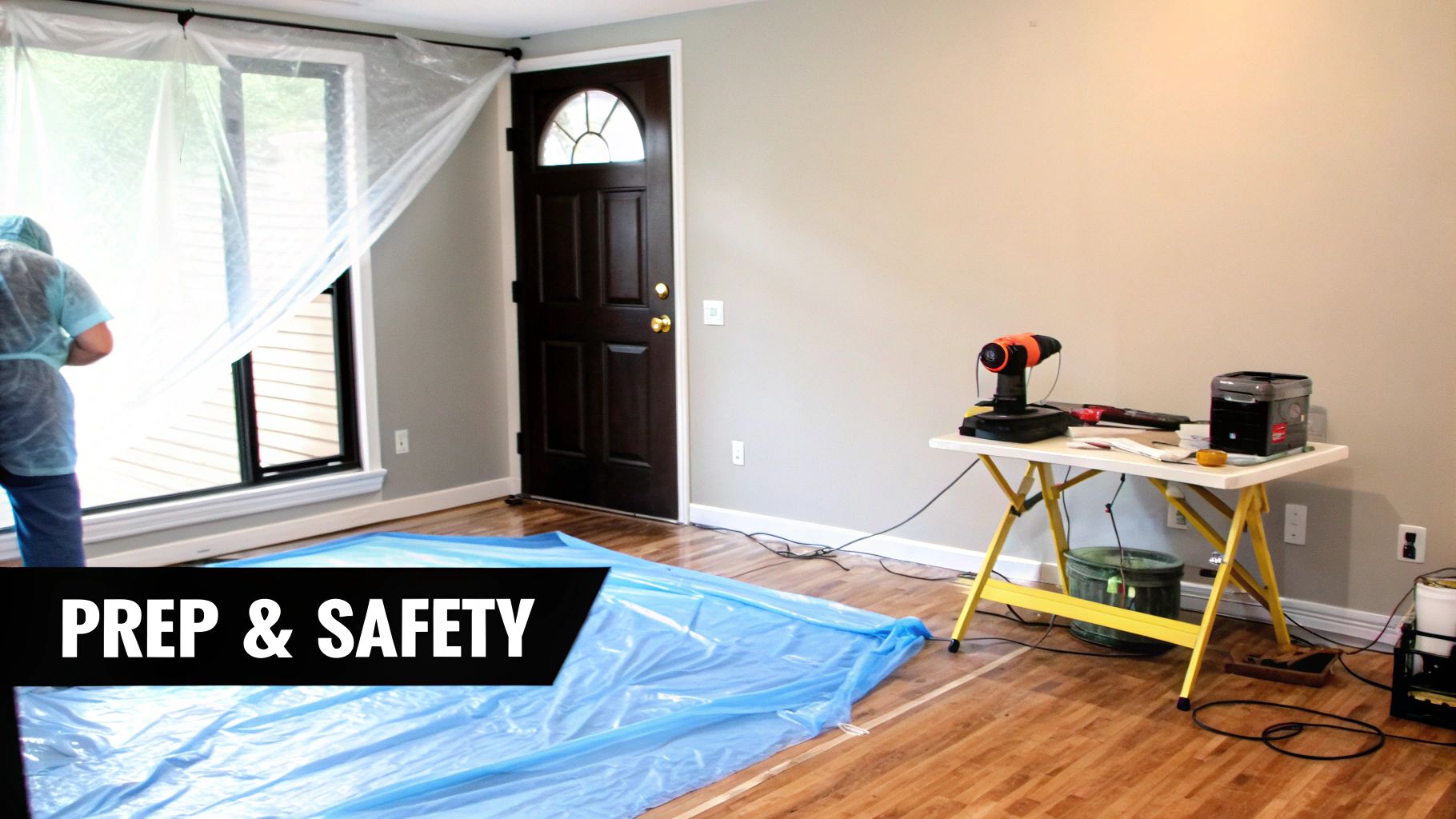
Before you pick up a hammer, head to your breaker box and switch off the main circuit. Lock the breaker if you can—that extra step stops any surprises once you’re knee-deep in drywall.
Next, drape drop cloths over floors and furniture. Clip plastic sheeting over doorways to keep that gypsum dust where it belongs.
Set up a couple of portable lights near the ceiling. They’ll spotlight hidden studs, stubborn fasteners, and outlets lurking behind the board.
Match your utility knife blade thickness to the gypsum you’re scoring. And pick a respirator that seals comfortably around your face—your lungs will thank you when the demo dust flies.
Quick Prep Checklist:
- Power Off: Lock the breaker to eliminate live-wire hazards
- Containment: Drop cloths, plastic sheeting, and painter’s tape
- Lighting: Ceiling-level work lights for clear sightlines
- Labeling: Mark bins for recycling vs. demolition debris
Pro Contractor Tip
Nails instead of screws can shave off 25% demo time on average when prying drywall
Size PPE For Comfort
I never start a project without a half-mask respirator fitted with P100 filters. They trap those fine gypsum and paint particles far better than a dust mask.
Check straps and seals before you dive in—nothing’s more annoying than an ill-fitting respirator halfway through a wall. For gloves, go for Level 3 cut-resistant styles and label each pair by crew member to avoid mix-ups.
If you’ll be scoring near the floor or in tight spots, attach a headlamp to your helmet. Your hands stay free, and you’ll see every groove.
- Respirator: P100 filters for fine dust
- Gloves: Level 3 cut-resistant for handling sharp edges
- Goggles: Tightly sealed to keep gypsum out
- Knee Pads: Cushioning when scoring at floor level
Organize Tools For Quick Access
On my jobs, a mobile cart with labeled compartments is a game-changer. Everything sits where you need it—no frantic searching when the dust settles.
A magnetic strip along the cart’s edge holds spare utility blades and small metal tools. Instant visibility, zero risk of digging around.
I set up a folding table just beyond the dust line. That’s where my drill, my reciprocating saw, and a “Debris” bucket live. When it’s time to swap blades or toss scraps, I don’t break stride.
- Cluster hand tools (knives, pliers, pry bars) by task
- Keep powered tools on the opposite side of the dust source
- Stash replacement blades, bits, and fasteners within arm’s reach
A well-tuned reciprocating saw with a drywall blade slices through 1/2-inch boards in under 2 minutes per sheet, versus 10 minutes manually
Discover more insights about drywall market findings
| Tool | Use | Advantage |
|---|---|---|
| Utility Knife | Scoring Seams | Clean edge control |
| Reciprocating Saw | Panel Removal | 80% time savings compared to manual |
| Pry Bar | Panel Separation | Limits damage to studs |
Before you cut or pull, mark studs, outlets, and switch boxes with painter’s tape or foam flags. It’s a small step that prevents big mistakes.
Finally, label your storage bins for gypsum, metal framing, and wiring bundles. A little pre-sorting here saves hours at the dump.
You might be interested in learning more about managing debris efficiently in our detailed project blog.
Now you’re ready for a smooth drywall removal run. Next, we’ll tackle full walls and partial panels with precision.
Remove Full Walls And Partial Panels
Whether you’re gutting an entire wall or slicing out a smaller patch, the trick is to start clean. Grab a sharp utility knife and score along the seams—this little step protects your studs and keeps edges crisp.
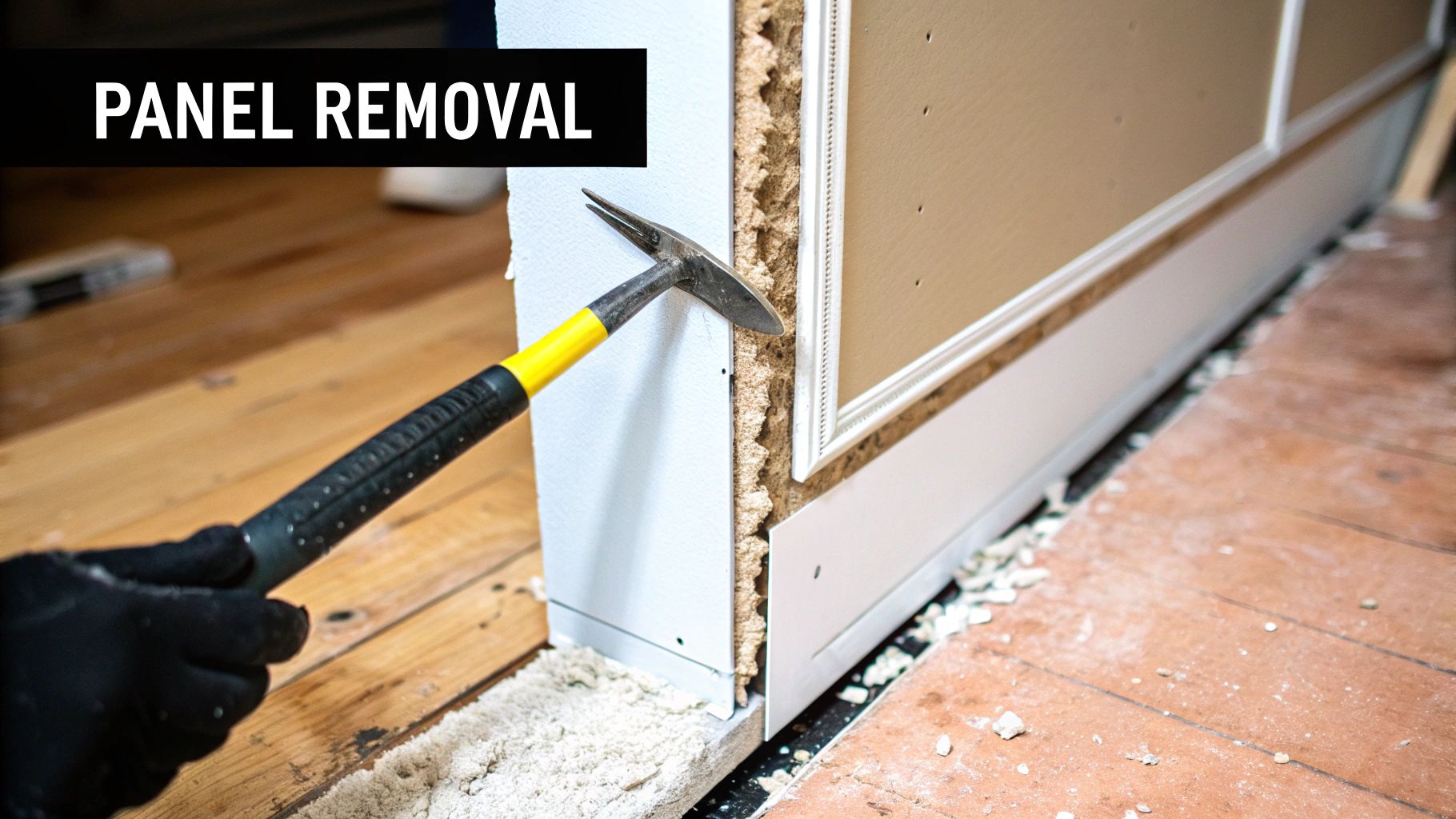
Lay chalk lines along studs or around outlets before you cut. Those faint guides keep your blade honest and your lines straight.
Power’s off, drop cloths down. You’ll be amazed how much dust shows up—25–50 pounds of dust per 100 square feet is normal during a full demo. In fact, poor dust control leads to about 30% of drywall repair callbacks. Learn more about dust control findings
Cutting And Separating Panels
Before you pry, run your blade at a 45° angle along each seam. This technique limits mud smearing and leaves you with clean cuts.
Set your pry bar flat against the stud face and work top-down. That controlled motion prevents giant chunks from crashing down and tames the dust plume.
- Use a bi-metal pry bar for extra leverage along narrow edges.
- Switch to a compact reciprocating saw when you hit window frames or built-ins.
- Chalk-mark any sheets you plan to salvage for recycling or reuse.
Working With A Kitchen Soffit Example
Last month, I tore out a small kitchen soffit to fit new cabinets. I scored just under its lip, then pried panels off in 12-inch strips so each piece stayed light enough to handle alone.
- Chalk-mark stud lines for straight, predictable cuts.
- Cut around electrical boxes with a flush-cut blade to dodge wire nicks.
- Inspect studs for old patches or hidden anchors before tossing panels in the recycle pile.
Once the drywall was down, I separated gypsum, metal framing and loose wiring into different piles. Fulton Junk Removal teams with Beyond Surplus for eco-friendly recycling—an easy win for offices and warehouses.
You might be interested in exploring our local coverage for faster scheduling. Check out our service areas on our site.
Clean As You Go And Check For Hidden Hazards
Clearing debris as you work isn’t just tidy—it’s safer. Toss gypsum chunks into labeled bins and bag any stray screws or nails so they don’t become trip hazards.
Keep an eye out for patches or thin spots. Peel back the paper liner and you’ll often find splices or extra fasteners hiding underneath.
Pro Tip Mark dust lines at mid-height to track cleanup zones and avoid rework.
| Task | Tool | Benefit |
|---|---|---|
| Full wall removal | Reciprocating saw | 80% faster cuts |
| Partial panel patch | Utility knife & pry bar | Minimal stud damage |
When To Call A Professional
Small patch jobs are great weekend projects, but anything with complex wiring or extensive framing repairs is best left to the pros. Fulton Junk Removal offers full-service demolition, hauling, and eco-friendly recycling no matter the size.
By bundling services with Beyond Surplus, they send drywall, electronics and metals all to the proper recycling carts. Offices, warehouses and property managers stay compliant—and easily report landfill diversion.
Follow these techniques on your next project, and drywall removal will go smoothly and safely.
Ready to start today?
Handle Electrical, Plumbing, And Insulation
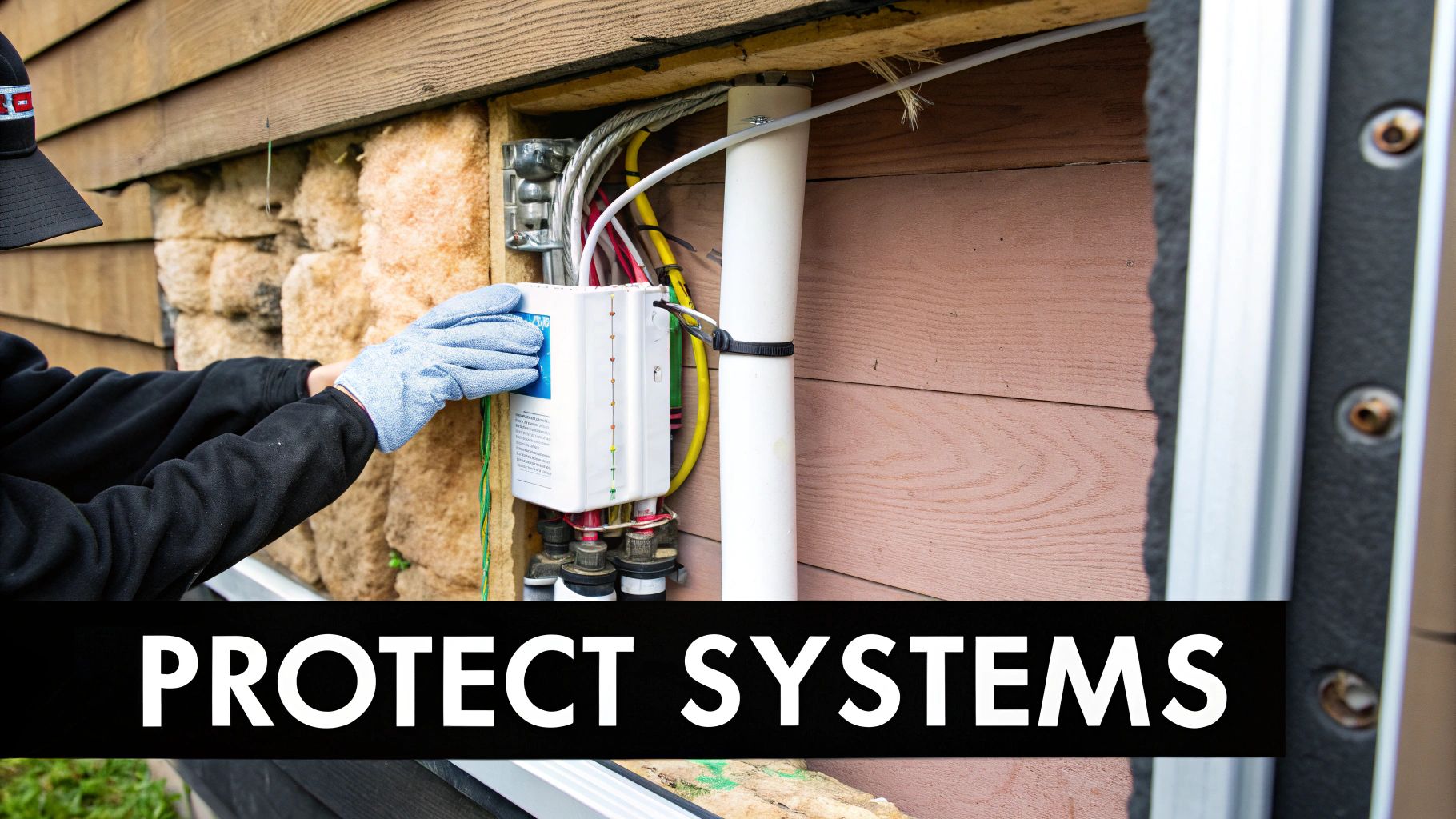
Behind every drywall panel lies a maze of circuits, pipes, and insulation. Treat these elements with care to keep your renovation safe and efficient.
In one warehouse demo, we scored drywall around electrical boxes with a utility knife held almost flat. That little trick stopped us from nicking any wires when we pried the sheet free.
Always switch the power off at the breaker panel and lock it down. Then mark each circuit with colored tape so you’ll know exactly where every wire goes when you rebuild.
Securing Electrical Components
Deactivate the circuit, then confirm it’s dead with a voltage meter before you touch a single strand of wire.
When outlets and switches are out of commission, cap live leads with wire nuts and nestle them into an accessible junction box. That way, everything stays contained during demolition—and you won’t leave a tangled mess behind.
Color-coding helps here: tag each bundle so reconnection is a breeze if panels shift or get reused. Pros often mark cables before removing drywall to avoid retracing their steps later.
- Turn off breakers and verify zero volts before scoring.
- Wrap all exposed conductors with tape and wire nuts.
- Label each cable with a unique number or color.
- Store loose wire bundles in sealed plastic bags.
Managing Plumbing Lines
Pipes that aren’t braced can move when a sheet of drywall comes off—and that’s an emergency you don’t want. Use temporary brackets at two points to hold everything steady.
Cut around plumbing fixtures with a keyhole saw to steer clear of copper and PVC. Keep a bucket nearby in case a joint drips as you work.
Cap open ends with plumber’s plugs or foam inserts. Those simple accessories stop leaks and keep debris out of your pipes.
“Temporarily bracing pipes at two points stops them from flexing when sheets are pulled,” advises our in-house demo lead.
- Support loose pipes with quick-install brackets.
- Use a keyhole saw for precise cuts around lines.
- Place a bucket under live joints to catch any drips.
- Seal open pipe ends with foam plugs or metal caps.
Separating Insulation From Drywall
Spray foam and fiberglass batts stick fast to drywall. Gently peel panels away along the studs to keep insulation intact.
Storing insulation properly means you can reuse or recycle it. Bag up fiberglass in labeled bins to lock in those itchy fibers.
- Score along stud lines to free the board from insulation.
- Pull panels away carefully, exposing the batt or foam.
- Trim spray foam back with a utility knife, preserving the vapor barrier.
- Stack paper-faced batts flat for recycling.
To strip drywall in an eco-friendly way, separate it from wires and insulation first. Recycling facilities turn old gypsum into new board, cutting virgin material use by 20–30% per ton. Learn more about drywall recycling findings on WiseGuyReports
- Fulton Junk Removal sorts drywall, wiring, and metal.
- Beyond Surplus handles recycling of gypsum board and insulation.
- Offices and warehouses get detailed waste diversion reports.
- Bundled pickups streamline compliance for property managers.
This careful separation shields electrical and plumbing systems—and it speeds up cleanup. Up next, we’ll explore disposal options and when it’s time to call in the pros.
Disposal Recycling And When To Call Professionals
Once the final sheet of drywall is down, the real work begins: sorting debris and choosing the right disposal path. Opting for recycling cuts landfill waste and often trims your budget.
Fulton Junk Removal works hand-in-hand with Beyond Surplus to recycle electronics, metals, and drywall responsibly—diverting items from landfills and ensuring they’re repurposed or recycled. While most junk removal companies take everything to landfill, we minimize waste and maximize reuse. For offices, warehouses, and property managers, we offer bundled junk removal + recycling pickup, simplifying compliance and sustainability reporting.
Comparing Disposal Options
Deciding how to move your debris starts with understanding your choices:
-
Local Drop-Off
Drive your waste to a recycling center. Ideal for small loads near your site. Typical cost: $15–$25 per load. -
Curbside Pickup
A hauler collects right at the curb. Convenient, but watch out for weight limits and extra fees ($30–$80, weight-dependent). -
Bundled Junk Removal
Fulton Junk Removal and Beyond Surplus handle pickup, sorting, and recycling, then deliver a waste-diversion report—all in a single call.
“Bundling junk removal with recycling services simplifies compliance for property managers,” says an operations manager at a commercial site.
Crafting A Recycling Plan
On larger projects—think offices or warehouses—a clear sorting strategy slashes costs and bolsters sustainability reporting. One client cut disposal expenses by 30% just by separating materials on site.
- Label bins for gypsum panels, metal studs, and electronics.
- Separate drywall sheets from screws and framing.
- Bag small electrical bits and hand them over to Beyond Surplus.
- Keep a simple log of weights for each category to streamline your reports.
Fulton Junk Removal’s bundled service handles the heavy lifting: mixed debris pickup, gypsum recycling into new board, copper recovery, and responsible e-waste processing. You save time, prove compliance, and close the loop on waste.
Real Case Example
In a midtown Atlanta warehouse rehab, the team sorted drywall, studs, and network gear before pickup. Fulton Junk Removal hauled away 2 tons of material. Beyond Surplus:
- Recycled 100% of gypsum into fresh board
- Recovered 120 pounds of copper wiring
| Material | Weight Collected | Recycling Rate |
|---|---|---|
| Gypsum Panels | 1,500 lbs | 100% |
| Metal Framing | 300 lbs | 100% |
| Electronics | 200 lbs | 95% |
By ditching unsorted landfill loads, the project manager saw a 30% drop in disposal costs. The detailed waste-diversion report also helped hit their corporate sustainability targets.
Balancing Cost And Sustainability
Recycling plans can carry slightly higher per-haul fees but often save on permits and remediation down the line:
- Look for sliding-scale fees at recycling centers to lower volume charges.
- Ask about seasonal discounts or corporate rates for bulk drywall.
- Bundle recycling pickup with other junk removal to lock in flat pricing.
Projects that build recycling into their drywall removal workflows typically enjoy up to 20% less overall spending.
When To Call Professionals
Tackling small drywall patches? Go DIY. But if your job features hidden obstacles or tight deadlines, professionals make the difference. Reach out to Fulton Junk Removal when:
- You’re demoing over 1,000 sq ft of drywall
- Electrical or plumbing reroutes come into play
- You have strict demolition timelines
- You want one vendor to haul, recycle, and report
Bundling with Beyond Surplus means certified recycling, full diversion documentation, and peace of mind for property managers and sustainability directors. Learn more about Fulton Junk Removal’s full-service offerings by visiting our guide on commercial junk removal and recycling services.
By mapping out disposal routes and bringing in experts at the right moment, drywall removal becomes both cost-effective and eco-friendly. Waste-diversion reports give facility managers the proof they need—100% recycling rates ready for audit.
Lean on certified partners for accurate recycling metrics and audit-ready documentation.
That peace of mind makes drywall removal not just a task but a sustainable strategy.
Frequently Asked Questions
Got questions about removing drywall? You’re not alone. Below, we clear up common concerns—from spotting structural studs to hauling away debris.
This FAQ tackles:
- Spotting load-bearing studs
- Handling hazardous panels
- Permit requirements
- Cost-saving disposal methods
Studs And Permit Checks
You can usually demo drywall for small patches or cosmetic fixes without a permit. Once you disrupt framing, electrical, or plumbing, though, it’s time to check local building codes. A quick call to your municipal office can save a headache later.
When it comes to load-bearing studs, look for studs stacked directly above beams or support walls. A stud finder helps, but double top plates and hefty headers are your real clues. If you’re ever in doubt, treat it like it’s carrying weight.
"Assume a wall is load-bearing until you confirm otherwise," says a licensed contractor.
Handling Asbestos Panels
Stumbled upon old drywall that smells off or crumbles too easily? It could contain asbestos. Don’t chip it out yourself—disturbing those panels sends fibers into the air. Instead, bring in a certified abatement crew for safe removal and disposal.
Disposal And Recycling
Tossing all your debris together hikes disposal fees. Instead, sort gypsum, metal, and wood into separate piles and watch costs drop by 30%. Many recycling centers charge just $10–$20 per cubic yard for clean gypsum. Tack on bundled pickups for big jobs, and you’ll save both cash and trips.
| Option | Cost Range | Key Benefit |
|---|---|---|
| Local Recycling | $10–$20/yard³ | Lower unit fee |
| Curbside Collection | $30–$80 | Convenience at the curb |
| Fulton Junk Removal | Flat-rate service | Bundled recycling & report |
Window And Frame Care
Cutting drywall around windows demands a gentle touch. Score your panel about 2 inches from the frame, then slide in a narrow pry bar to coax the sheet loose without dinging the trim.
- Tape vulnerable edges
- Pry with slow, steady pressure
Safe Debris Hauling
To move debris safely, stack gypsum flat on a dolly—breakage is your biggest enemy. Wrap everything in plastic sheeting to trap dust. Keep metal and wiring bundled separately for drop-off.
- Use a wheelbarrow for short distances
- Wear gloves and a dust mask
- Fasten bundles with sturdy straps
- Protect your eyes with safety glasses
- Apply painter’s tape to prevent scratches
- Label each truck compartment by material
Stay proactive. Stay vigilant.
When To Hire Professionals
If your project involves complex rewiring, demoing over 1,000 sq ft, or a tight turnaround, it’s time to call in experts. Fulton Junk Removal teams up with Beyond Surplus to handle haul-away, certified recycling, and comprehensive waste-diversion reports. Property managers and office teams gain clarity on compliance and enjoy faster results.
Need tailored support?
Reach out to our team via our contact page for project-specific advice.
Ready to wrap up your drywall project with zero waste? Contact Fulton Junk Removal for quick demo and certified recycling: https://fultonjunkremoval.com
