
VoIP Service Providers Near Me: Compare Top Business Systems
A customer calls while your crew is finishing a warehouse loadout. The office needs to confirm pickup timing, the field lead needs the update fast, and the caller expects an answer from your business number, not a personal cell. That is usually when a search for “voip service providers near me” stops being a directory search and becomes a service delivery problem.
The right provider for a local business is not always the company with the closest sales office. In practice, the better test is whether a national or regional VoIP vendor can meet local requirements cleanly. Can it provide and port your area code? Does it support E911 correctly for desk phones, softphones, and mobile users who work from different locations? Can your staff answer calls, transfer them, and see call history without fighting the app during a busy day?
Those questions matter more than brand familiarity. A provider can look strong on paper and still be a poor fit if local number inventory is thin, emergency address management is clumsy, or onboarding depends entirely on self-service when your setup includes an office, remote admins, and field crews.
Industry adoption has continued to shift toward cloud calling for service businesses that need routing, mobile access, and less dependence on one front desk phone, as noted in the 2024 State of the Connected Customer report from Salesforce at salesforce.com. The reason is straightforward. Businesses need calls to follow the work, not the building.
1. RingCentral MVP
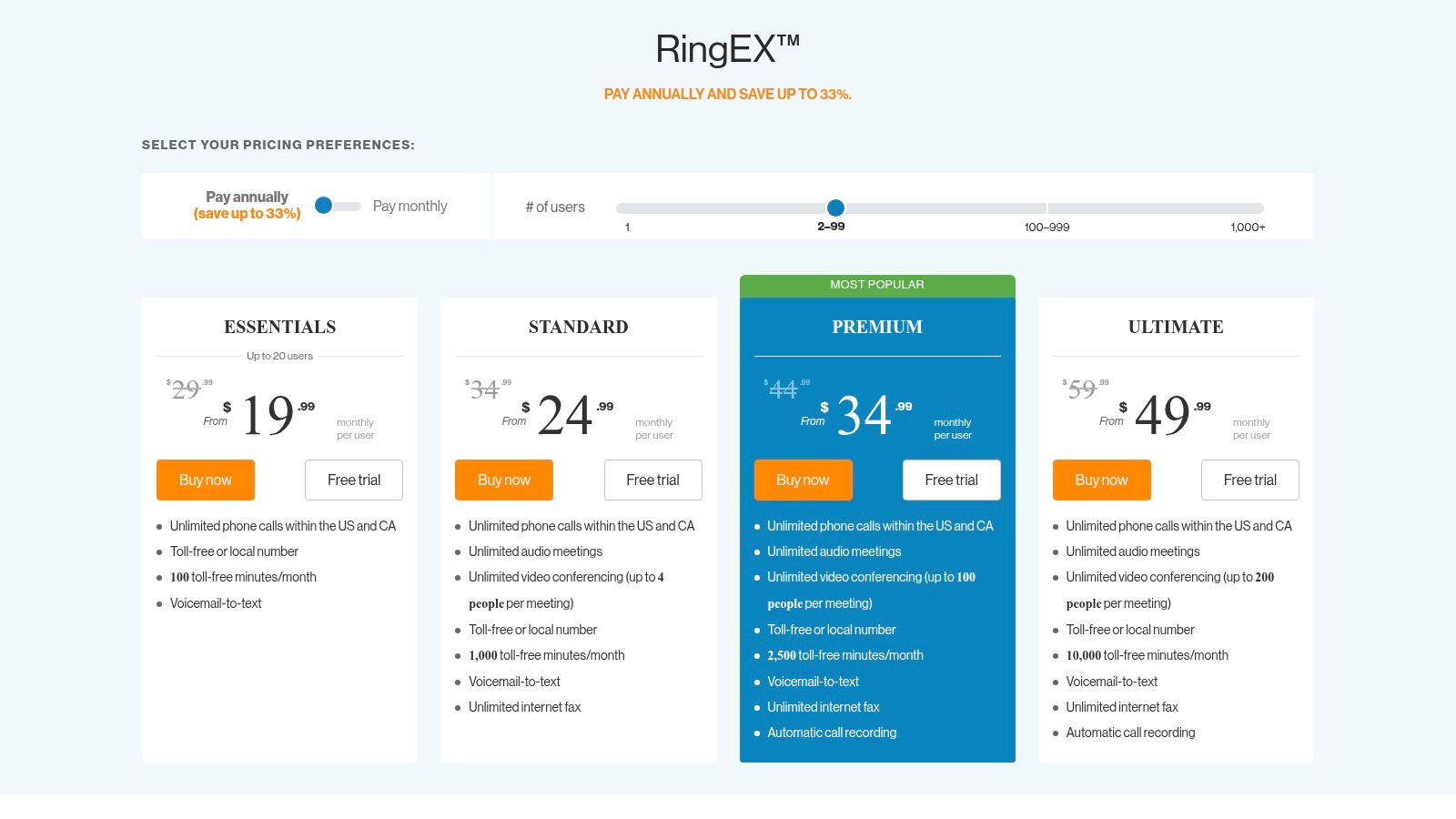
RingCentral MVP pricing and plans fits businesses that need a phone system with enough structure for day-to-day operations now, plus room for more users, locations, and call handling rules later. It bundles voice, business SMS, team messaging, video, routing, analytics, and app integrations in one platform, which reduces the need to stitch together separate tools.
For companies searching for voip service providers near me, RingCentral is a strong option when the actual question is whether a national provider can support local service requirements properly. Check the local details first. Confirm that your area code is available, ask how number porting is handled for your specific rate center, and verify how E911 is managed for desk phones, softphones, and staff who answer calls from home, the office, and the field. RingCentral has the depth to support that kind of setup, but the fit depends on your locations and workflows, not just the logo.
Where RingCentral fits best
RingCentral works well for businesses with several call paths and clear role separation. A property management office, HVAC company, or restoration firm can route new leads, dispatch traffic, tenant calls, billing questions, and after-hours overflow without relying on one receptionist to sort everything manually.
Its scale in the business phone market is also widely recognized. Analysts at Gartner included RingCentral in the UCaaS field in the 2024 Gartner Magic Quadrant for Unified Communications as a Service, which is a useful signal that the platform is established and broadly adopted. That does not answer every local buying question, but it does matter if you want a provider with mature administration, a large support operation, and a long product roadmap.
Practical rule: If you need call queues, multi-level IVR, reporting by user or department, and consistent policies across office staff and mobile users, RingCentral belongs on the shortlist.
There are trade-offs. RingCentral can get expensive once you move beyond core calling, and the plan structure deserves a careful review before you sign. Recording, deeper analytics, and some advanced workflows may push you into higher tiers or add-on costs. That is manageable for teams that will use those tools. It is wasteful for a five-person office that only needs reliable calling, voicemail, and basic routing.
- Best for structured operations: Teams with front desk, dispatch, sales, and management roles usually get good value from its routing and admin controls.
- Best for mixed-location staff: It suits companies that need one business number across office phones, laptops, and employee mobile devices.
- Less ideal for simple replacements: A tiny office that only wants a basic line swap may find the platform heavier and pricier than necessary.
One more local checkpoint matters. If a provider says it serves your city, ask whether it also has local implementation help, certified hardware support in your area, or at least a clear process for onboarding multi-site businesses without sending everything through self-service. RingCentral can handle complex setups well. The buying decision gets easier when the local number inventory, E911 process, and support model are confirmed before migration.
2. Nextiva
A common buying scenario looks like this. A growing company has one main office, a few people answering phones, field staff using mobile devices, and no appetite for a phone migration that turns into a six-week IT project. Nextiva pricing tends to fit that situation well because the core offer is easy to explain and easier to roll out than platforms built around heavier customization.
Nextiva works best for businesses that want one provider for calling, business texting, team messaging, and video, with support that feels closer to guided implementation than pure self-service. That matters in small and midsized companies where the person approving the budget is not the same person who will port numbers, test call flows, and train staff.
Why it makes sense for local needs
For businesses searching "VoIP service providers near me," Nextiva is a national provider worth checking against local requirements, not just feature lists. The practical questions are straightforward. Can it provision local numbers in your area code? How clearly does it handle E911 setup for each user and device? If you have a front desk, remote staff, and a second location, how much onboarding help do you get when those details need to be configured correctly?
That is where Nextiva usually earns consideration. It is generally a good fit for companies that need reliable business communications without asking an admin to fine-tune every routing rule from scratch. Office staff can answer from desk phones or apps, field employees can keep using the business number, and managers can standardize call handling without building a complicated system on day one.
I also put weight on customer retention with providers like this, but only when the source is solid. Rather than repeat a duplicated market link, the more practical takeaway is simple: Nextiva has stayed in the SMB conversation for years because many smaller businesses want stability, support, and a platform they can understand quickly.
The trade-off is real. If your team expects deep CRM automation, highly custom call routing, or contact-center-style workflows, Nextiva can become a more involved purchase than it first appears. Costs can rise as requirements get more advanced, and that is usually the point where buyers should compare feature tiers carefully instead of assuming the base package will cover future needs.
A useful shortlist for Nextiva:
- Best for support-led rollouts: Good for businesses that want onboarding help, number porting guidance, and a cleaner setup process.
- Best for mixed office and mobile use: Strong fit when calls need to follow employees across desk phones, laptops, and smartphones.
- Best for straightforward standardization: Works well when leadership wants one business communications system without a long implementation cycle.
- Less ideal for highly custom environments: Teams with complex queue logic, advanced integrations, or heavy contact center demands may outgrow the simpler plans.
Before signing, confirm the local pieces that affect daily operations. Ask about number availability in your city, the process for assigning and updating E911 information, and whether support can help with a multi-site rollout if you have more than one location. That is how to judge whether a national provider fits a local business requirement.
3. Dialpad
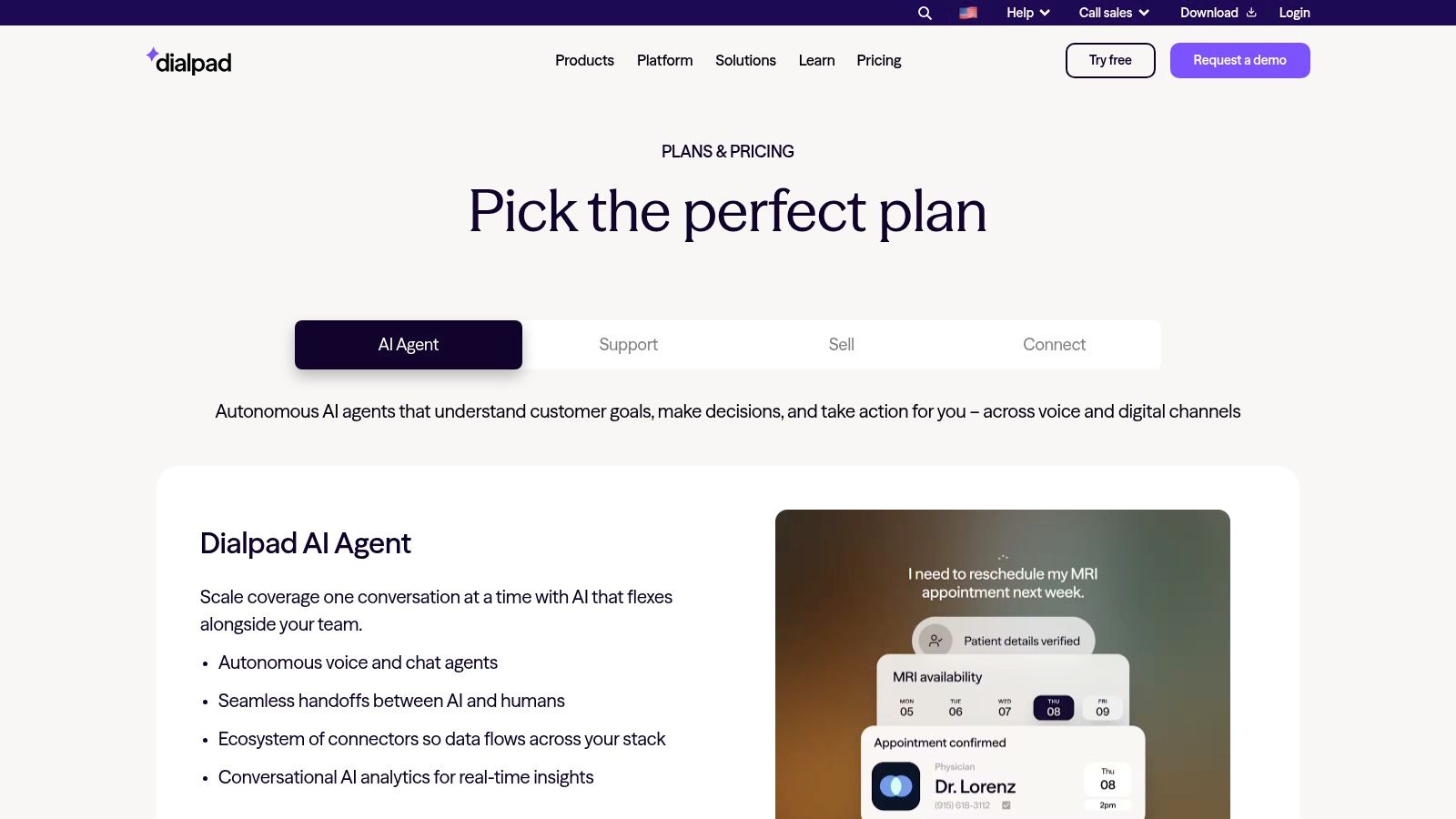
Dialpad pricing is the option I'd put in front of a distributed team that wants fast rollout and a modern interface. It's built around cloud use from the start, so desktop, browser, and mobile experiences feel more natural than platforms that still seem designed around desk phones first.
That's valuable when your team works from trucks, warehouses, home offices, and temporary job sites. Number porting, local numbers, and app-first use are all part of the normal buying path rather than special exceptions.
Where Dialpad stands out
The strongest reason to look at Dialpad is its AI-forward experience. Real-time transcription and post-call notes are useful in businesses where staff need to move quickly from one job to the next and can't stop to type detailed call summaries after every conversation.
That trend is broader than one vendor. In 2025 VoIP analytics, 85% of U.S. SMBs in logistics-adjacent industries prioritized providers with AI-driven features, according to this industry summary from DT Solutions. For operators, that translates into fewer lost details, easier handoffs, and less dependence on someone remembering what a caller said an hour earlier.
Dialpad's trade-off is that simple buying can get less simple as requirements expand. Some advanced packages still push you toward a sales conversation, and total cost can rise once you add features outside the base use case.
- Strong fit for mobile-first teams: Dispatchers, estimators, and crew leads can all work from the same business identity.
- Strong fit for speed: It's a good choice when you want deployment without much hardware drama.
- Weaker fit for highly specialized telephony: If your business has unusual call center or compliance needs, verify those details early.
If your current system breaks because nobody is ever at the desk, Dialpad is worth serious consideration.
For buyers searching “voip service providers near me,” Dialpad is the reminder that local relevance doesn't require a local legacy phone vendor. Sometimes the better answer is a cloud platform with strong local number support, good app quality, and clean administration.
4. Zoom Phone
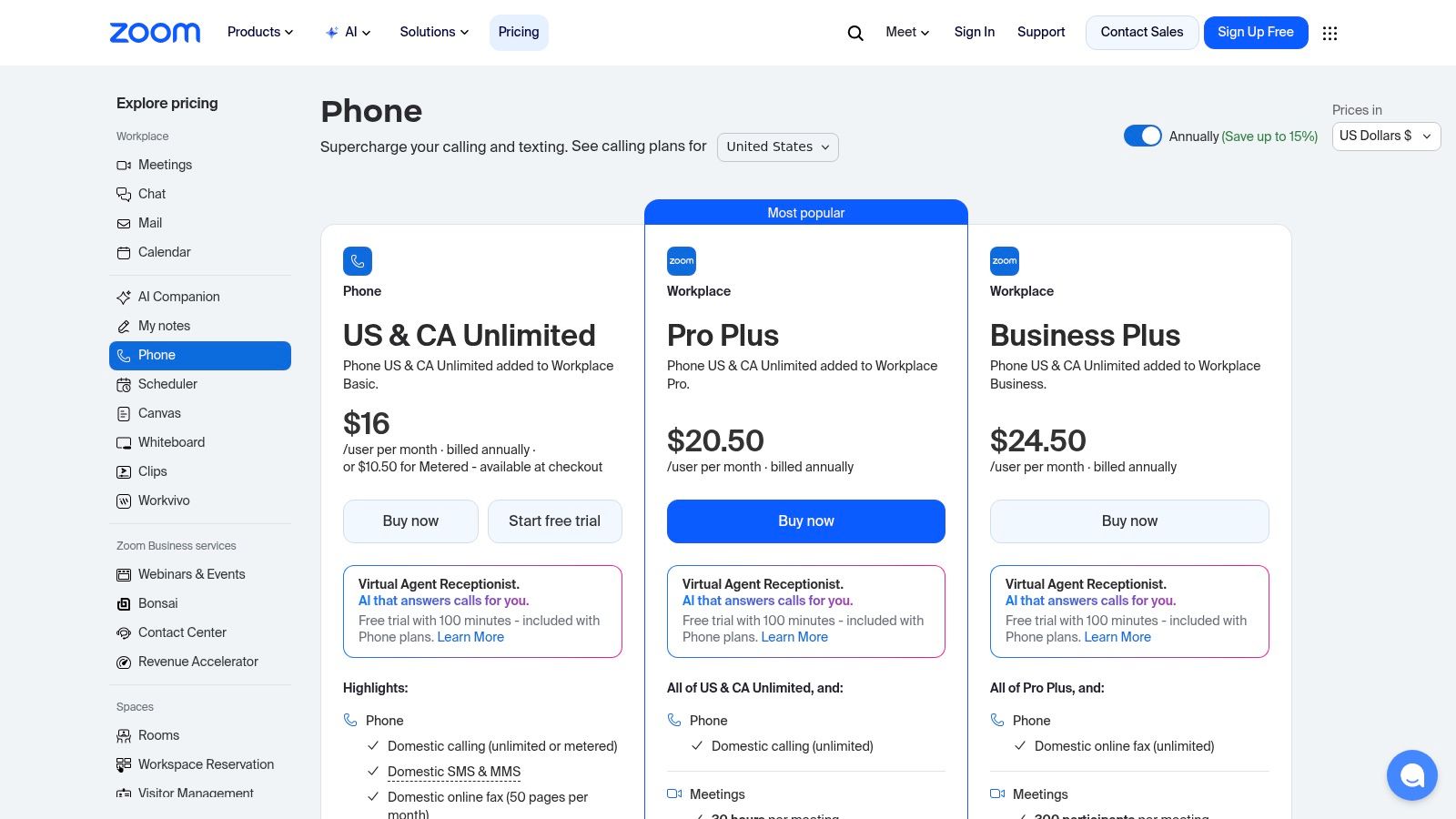
A common buying scenario looks like this. The team already runs meetings, internal chat, and client calls through Zoom, but the phone system still sits off to the side with separate admin, separate billing, and separate support. In that case, Zoom Phone pricing deserves a serious look because it can cut operational friction faster than a feature-by-feature replacement project.
That is the primary argument for Zoom Phone. Familiarity reduces training time, and one vendor stack usually makes user provisioning, account changes, and troubleshooting easier for lean IT teams.
Best use case
Zoom Phone fits businesses that already treat Zoom as a daily workspace, not just a meeting app. Hybrid offices, professional services firms, and multi-location teams often benefit most because staff move constantly between video meetings, chat, voicemail, and external calling.
For companies searching “voip service providers near me,” Zoom Phone is also a good example of how a national platform can still serve local requirements. The practical checks are straightforward. Confirm that the provider can supply local numbers in the cities you serve. Verify E911 setup for each office, remote employee, and shared device. If local presence matters for onboarding or support, check whether Zoom can meet that through a partner, reseller, or your existing IT provider instead of assuming a national brand will handle every local detail directly.
The trade-off is buying clarity. Zoom's pricing and plan selection can take more work to sort through than simpler small-business packages, especially if you need calling plans, BYOC options, common area phones, or country-specific coverage. Buyers who skip that review step can end up comparing headline prices instead of real deployed cost.
A practical filter:
- Strong fit if Zoom is already company standard: You gain efficiency by keeping meetings, chat, and calling in one environment.
- Strong fit for distributed teams: Zoom Phone is built for businesses that need to set up users across offices, homes, and mobile devices with E911 controls in place.
- Weaker fit if you want the fastest price comparison: You need to map locations, number needs, and call flows before the quotes mean much.
Zoom Phone is not always the best pure telephony buy. It is often the best operational buy for a business that already depends on Zoom and wants local number coverage, compliant emergency calling, and simpler administration without stitching together another platform.
5. 8×8
A common buying scenario looks like this. A company starts with one office, then adds remote staff, a second location, and a small support team. The phone system that felt adequate six months ago suddenly needs better routing, call reporting, and a cleaner way to manage users across sites. 8×8 business phone is built for that kind of growth path.
8×8 makes sense for businesses that do not want to shop for a basic VoIP platform now and then replace it when operations get more complex. Its product line covers business calling, contact center options, analytics, and integrations, so there is room to expand without rebuilding the entire stack.
What it does well
The strength here is range. 8×8 can handle standard cloud PBX needs, then extend into queues, recording, reporting, mobile access, and connections to tools like Microsoft Teams and CRM systems. For a company with sales, service, and back-office teams working in different places, that matters.
For local buying decisions, the practical checks are different from the generic feature list. Confirm that 8×8 can provide local numbers in the cities where customers expect to see a familiar area code. Review E911 setup for each office, remote user, and shared phone. If your business wants hands-on onboarding, also verify whether support will come directly from 8×8 or through a local partner.
8×8 also has real enterprise weight. Gartner includes 8×8 in its UCaaS market evaluations, which supports the basic point that this is an established platform for businesses that expect to scale, not just a low-cost line replacement.
The right reason to buy 8×8 is growth planning. Buy it because your call handling will likely get more complex, not because the homepage price looks close to a basic VoIP plan.
The trade-off is predictable. As you add advanced features, international calling options, or contact-center-related capabilities, pricing and contract terms need closer review. Seat changes, number management, and feature mix can have a bigger cost impact than buyers expect if they only compare entry plans.
- Good for growing, multi-location companies: 8×8 is a strong candidate if you expect one site to become several or if teams are split across office and remote environments.
- Good for operations that use call data: Reporting and analytics are more useful here than in stripped-down small-business plans.
- Less ideal for simple replacements: If you only need local numbers, a main line, and basic call routing, there are easier options to price and deploy.
If your search for voip service providers near me is really a search for a national provider that can still meet local number, E911, and support requirements, 8×8 deserves a serious look.
6. Vonage Business Communications
Vonage pricing for business communications is often easier for small teams to understand because the plans step up in a recognizable way. You can see where the entry point is, where desk phone support appears, and where more advanced capabilities begin.
That transparency is useful when an owner, office manager, or procurement lead wants to compare options without getting trapped in a quote-only process from the first click.
Why it works for smaller teams
Vonage Business Communications is a good fit for companies that want core UCaaS functionality with room to expand. Mobile and desktop apps, unlimited domestic calling, messaging, video meetings, and integrations are all in the conversation. It can serve a compact office well while still supporting a more mobile field operation.
Vonage also matters historically. By 2004, Vonage became the first major consumer VoIP provider to offer unlimited calling plans for $14.99 per month, reached 1.3 million subscribers within two years, and helped pressure traditional telcos like AT&T to cut landline prices by up to 50%, according to VoIP Review's market history. That's not a direct statement about today's business platform, but it does explain why the brand still has weight in VoIP buying discussions.
The trade-off with Vonage is common in telecom. Promotional pricing and annual terms can look straightforward until you need to verify what happens after the introductory period or what early termination means in practice. Read the commercial terms, not just the plan grid.
A realistic view of where Vonage lands:
- Best for straightforward tiered buying: It's easier to compare than some enterprise bundles.
- Best for SMBs that may add features over time: The path upward is clear.
- Watch the commercial details: Verify promotional versus regular pricing and any annual commitment terms.
For local businesses that want a nationally recognized provider without jumping straight to the most enterprise-heavy platform, Vonage remains a sensible option.
7. Comcast Business VoiceEdge
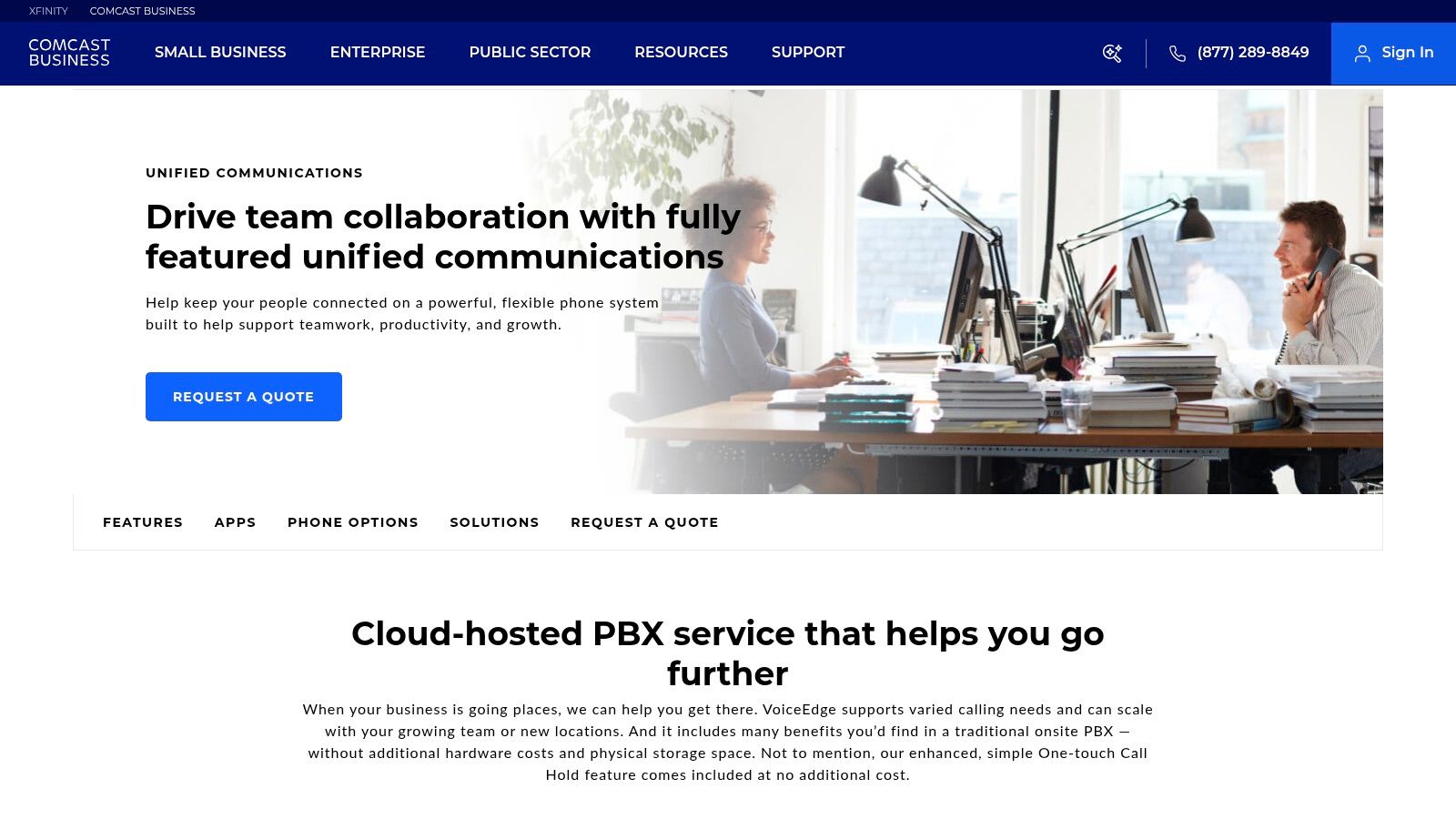
Comcast Business VoiceEdge deserves a place on this list for one reason many national comparisons miss. Sometimes local support matters more than feature elegance. If your business wants one provider for internet and phones, plus on-site help during cutover, Comcast can be the practical answer.
This is especially true for businesses with a physical office, warehouse, or multi-line environment where number porting and handset deployment need coordination. Not every buyer wants a fully self-serve migration.
The local advantage
When people search for voip service providers near me, they often mean one of two things. They either want local phone numbers and E911 alignment, or they want a provider with an actual field presence that can show up when there's a problem. Comcast is one of the more obvious examples of the second category.
That matters because downtime handling is still an under-discussed buying issue. A 2025 FCC report cited in VoIP Portland's discussion of local provider reliability gaps found that 68% of small business disruptions lasted over four hours due to local provider issues, compared with under one hour for national carriers like Verizon. The lesson isn't “always choose Comcast.” It's that support model, failover planning, and restoration expectations deserve real scrutiny.
Ask every provider the same question: who owns the cutover, and who answers when calls fail on a Monday morning?
Comcast's limitations are also clear. Published pricing is less transparent, and some advanced features may require add-ons or external tools. If you want a highly polished software-first experience, other providers may feel more modern.
- Choose Comcast if you value local field support: This is the strongest buying reason.
- Choose it if you already use Comcast connectivity: Bundling can simplify vendor management.
- Look elsewhere if software depth is the top priority: Its advantage is operational support, not necessarily the sleekest app experience.
Top 7 Local VoIP Service Providers Comparison
| Product | 🔄 Implementation Complexity | ⚡ Resource Requirements | 📊 Expected Outcomes | 💡 Ideal Use Cases | ⭐ Key Advantages |
|---|---|---|---|---|---|
| RingCentral MVP | Moderate–High: feature‑rich setup, tiering and admin training required | Mid–High: multiple licenses, admin time, possible add‑ons/integrations | Enterprise‑grade reliability, deep IVR, reporting and scalable UC | SMBs needing robust telephony, IVR, reporting and mobile field apps | Broad feature depth, mature admin tools, large integrations marketplace |
| Nextiva | Low–Moderate: simple setup with guided onboarding and 24/7 support | Low–Mid: competitive entry price; vendor support reduces internal load | Balanced UC and CX capabilities; optional AI/transcription on higher tiers | Small teams seeking easy setup, support and cost predictability | Good price–capability balance and strong onboarding/support |
| Dialpad | Low: fast deployment with modern UX and straightforward admin | Low: minimal IT effort; AI features may need higher tiers | Rapid rollout, built‑in real‑time transcription and AI summaries | Distributed/mobile teams wanting quick deployment and AI insights | AI‑forward features, strong mobile apps, competitive entry price |
| Zoom Phone | Low–Moderate: easy if already on Zoom; plan/region selection adds steps | Low–Mid: leverages existing Zoom stack; optional device services | Unified meetings + telephony under one vendor; flexible calling plans | Organizations already using Zoom that want a single collaboration stack | Tight integration with Zoom Meetings and flexible calling options |
| 8×8 (XCaaS / 8×8 Work) | Moderate: flexible plan choices and optional contact center add complexity | Mid: planning for analytics, global routing, and optional devices | Scalable UCaaS with strong analytics and global reach | Businesses needing global scale, analytics and CRM/Teams integrations | Mix‑and‑match plans, good CRM/Teams tie‑ins and global routing |
| Vonage Business Communications (VBC) | Low–Moderate: clear tiering; add‑ons for advanced functions | Low–Mid: straightforward for small teams; optional network upgrades | Transparent UC with room to add omnichannel and SD‑WAN | Small teams wanting transparent pricing and easy feature expansion | Clear plan structure, broad integrations and install assistance |
| Comcast Business VoiceEdge | Moderate: vendor‑specific onboarding with onsite cutover options | Mid: best when bundled with Comcast internet and local field support | Reliable local support and single‑vendor management; feature variability | Businesses needing internet+phone bundles and onsite provisioning | Local field support, single‑vendor install/support and metro presence |
Making the Right Call
A manager searches for voip service providers near me after a missed-call problem turns into a revenue problem. The phones work, but calls route to the wrong person, a technician's mobile app drops audio off site, and nobody is fully sure what address will appear for E911 if a remote employee dials out in an emergency. That is the point where provider selection stops being a feature comparison and becomes an operations decision.
National platforms can serve local needs well, but only if you test the local details before you sign. The shortlist should be built around practical fit for your market: local number availability, number porting in your rate center, E911 setup for desk phones and mobile users, and whether the provider has local implementation help or a field partner if cutover gets messy. A law office, a multi-site contractor, and a warehouse with a front office can all buy the same system and get very different results.
As noted earlier, smaller businesses continue to adopt cloud phone systems because they often reduce telecom overhead and simplify management. The savings are real in many cases, but they disappear fast if quoting is vague or onboarding assumptions are wrong. App reliability, call routing, support response, and admin usability usually matter more than a small difference in seat price.
For Atlanta and similar metro markets, I would narrow the final decision with a few direct questions:
- Can the provider supply local numbers in the specific area codes and exchanges you need? Some national vendors have broad coverage, but availability can still vary by rate center.
- How clean is the porting process for your current numbers? Ask who manages the port, what documentation is required, and how failed or delayed ports are handled.
- How is E911 configured for office phones, remote staff, and mobile users? Nomadic E911 is useful, but only if the location procedures are clear and employees follow them.
- Is the mobile app good enough for daily use? Test it with the people who will rely on it, not just with admins or IT.
- What happens on cutover day? Determine whether the vendor offers local installation support, remote-only onboarding, or a certified partner in your area.
- What does the monthly bill include? Verify taxes, hardware, SMS, call recording, contact center add-ons, and integration costs before approval.
Unexpected fees are common enough that they should be treated as a procurement issue, not an annoyance. Nextworks' discussion of VoIP cost transparency highlights how add-ons such as international calling, advanced analytics, and integrations can change the effective monthly cost. Ask each finalist for a fully scoped quote tied to your actual use case, not a plan page screenshot.
A practical buying process works better than chasing the biggest brand name. Shortlist two or three providers. Run a live demo with front-desk staff, managers, and mobile users. If your setup allows it, port a small set of numbers first and test call flow, voicemail, SMS, and emergency address handling before a full rollout.
The right system is the one that fits your local operation without creating admin drag later.
If you're also trying to improve how customers find and contact your business locally, this guide to mastering local SEO is worth reading alongside your phone system review.
If your Atlanta property, office, warehouse, or retail site needs a fast cleanout backed by responsible recycling, Fulton Junk Removal is built for that job. Through its connection to Beyond Surplus, Fulton can pair haul-away service with electronics, metal, and recyclable material processing, making sustainability reporting and compliance easier for property managers, facilities teams, and operations leaders who want more than landfill disposal.
