
How to Dispose of Construction Waste The Right Way
Properly disposing of construction waste isn't rocket science, but it does require a solid plan. It's all about sorting your materials, picking the right disposal method—whether that's a dumpster rental or bringing in a professional crew—and making sure you're following all the local rules.
For commercial jobs, this usually means finding a service partner that actually prioritizes recycling. It's the only way to manage all that debris efficiently and keep your project on the green side of things.
Your Guide to Smart Construction Debris Management
Let's be honest, the aftermath of a renovation or construction project can feel like a whole separate job. You're left staring at piles of broken concrete, scrap wood, old fixtures, and a mountain of packaging. That debris adds up fast.
Putting together a smart waste management plan isn't just about cleaning up the site. It’s a critical step that directly hits your project's budget, timeline, and environmental footprint. If you just wing it, you risk overpaying for disposal, getting hit with fines for non-compliance, and worst of all, sending perfectly recyclable materials straight to a landfill.
This isn't a small problem. The amount of construction waste we generate is staggering.
Global construction waste is projected to hit roughly 2.2 billion tons annually by 2025. This massive stream is everything from concrete and wood to metals and plastics, which really drives home the need for smarter disposal practices. If you want to dig deeper, you can explore more data on global construction waste trends to see the full picture.
Comparing Construction Waste Disposal Methods
For property managers, contractors, and business owners, the first step is knowing your options. Each method has its pros and cons, and the right choice really depends on the scale and pace of your project. Let's break down the common choices.
| Disposal Method | Best For | Key Considerations | Sustainability Impact |
|---|---|---|---|
| Roll-Off Dumpster Rental | Projects with a steady stream of debris over several days or weeks. Good for on-site sorting. | You'll need space for the container. Pricing can vary based on size, weight, and rental duration. You do all the loading. | Mixed debris often goes straight to the landfill unless you work with a company that offers sorting/recycling services. |
| Self-Hauling | Very small projects with minimal, easy-to-handle debris (e.g., a single room reno). | Requires a suitable truck, time, and physical labor. You need to know the specific rules of the local landfill or recycling center. | High potential for recycling if you're willing to sort and take materials to the right facilities yourself. |
| Professional Junk Removal | Commercial projects, office cleanouts, or any job needing a fast, hands-off solution. Perfect for tight deadlines. | Typically priced by volume (how much space your debris takes up in the truck). It's a full-service option. | Varies by company. A recycling-focused service will divert significant amounts from the landfill. |
Choosing the right method is about balancing convenience, cost, and your project's sustainability goals. A professional service often provides the best blend of efficiency and responsible disposal, especially for larger commercial jobs where compliance is key.
A professional partner like Fulton Junk Removal, operating with Beyond Surplus, takes things a step further. While most junk removal companies take everything to the landfill, we recycle through Beyond Surplus to minimize waste and maximize reuse. Our bundled junk removal and recycling pickups are designed to make sure materials like electronics and metals are diverted from landfills and processed the right way.
This approach not only helps the environment but also makes sustainability reporting for your business a breeze, aligning perfectly with modern ESG goals. For more practical tips on managing waste for different types of projects, our blog is full of additional insights.
Sorting Debris For Maximum Value and Efficiency
Let's be honest, effective construction waste management starts long before a truck ever leaves your property. The smartest, most cost-effective moves happen right there on the job site with a simple practice: sorting as you go.
Think of it less like a chore and more like creating an organized workflow for your waste instead of just making one giant pile of problems.
By setting up designated areas for different materials, you immediately start turning a costly waste stream into a set of manageable resources. This isn't just about being green; it's a direct line to cutting your disposal fees. Landfills hit you with premium "tipping fees" for mixed debris because they have to do the sorting or, worse, just bury valuable stuff.
When you show up at a recycling facility with a clean load of pre-sorted concrete, metal, or wood, the costs are almost always lower. In some cases, like with scrap metal, you might even get paid for your debris instead of paying someone to take it. It’s a total shift in mindset—from disposal to resource recovery—and it’s the cornerstone of handling construction waste like a pro.
Setting Up Your Site For Sorting Success
You don't need a bunch of fancy equipment to create a good sorting system. All it takes is a clear plan and making sure your crew is on the same page. The goal is simple: make the right choice the easiest choice.
Here’s a practical setup that works for most commercial or residential projects:
- Designated Bins or Piles: Clearly label separate containers or just mark off areas on the ground for your main material types. Use big, easy-to-read signs: "Clean Wood Only," "Concrete & Brick," "Scrap Metal," and "Drywall."
- Hazardous Waste Isolation Zone: Pick a spot far from the main action and clearly mark it as the zone for anything you suspect might be hazardous. This is for items with potential lead-based paint, asbestos-containing materials, or old chemical containers.
- General Trash: Always have a separate bin for the true garbage—food wrappers, contaminated packaging, and other stuff that can’t be recycled. This keeps your valuable recycling streams clean.
Getting your crew bought in is everything. A quick huddle at the start of the job to walk through the sorting stations and explain why it matters can make a huge difference. Stress that keeping the streams clean—no plastic in the woodpile, no drywall in the metal bin—is what makes the whole system actually save money.
This simple chart breaks down the process into its core stages: sorting, deciding on the best disposal path, and the final removal.
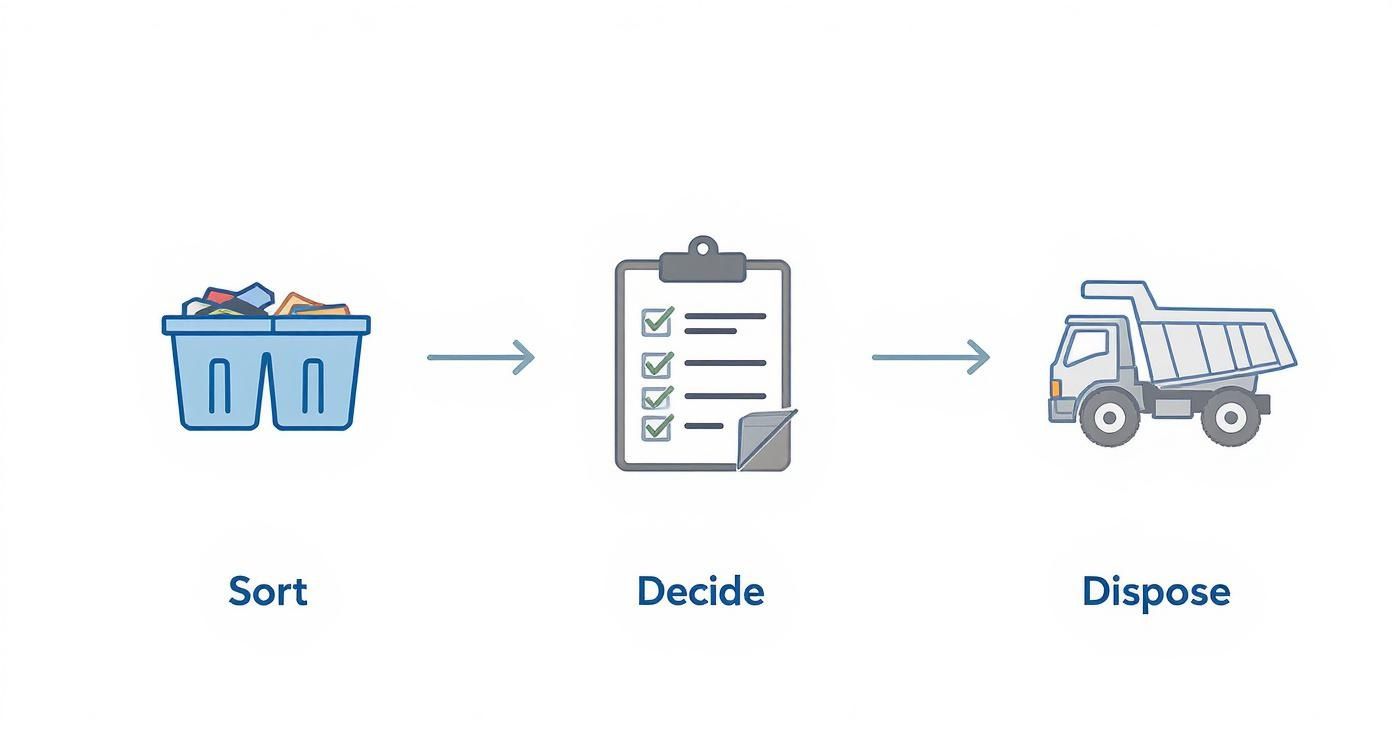
As the graphic shows, sorting is the foundational step that dictates everything else, directly impacting both your costs and your project's sustainability.
From Sorting Bins To Bottom-Line Benefits
The payoff from sorting goes way beyond just lower landfill fees. For businesses, offices, and property managers, it creates a transparent and trackable system for waste. This is a game-changer for companies with sustainability goals or those needing waste diversion reports for compliance.
Properly sorted materials also hold their value. For larger job sites where valuable metals like copper and aluminum are present, implementing effective loss prevention services can be crucial to protect these assets from theft and ensure you get the maximum return.
A well-organized site isn't just about compliance; it's about turning a liability into a potential asset. Proper sorting is the first step toward a circular approach, where materials are kept in use for as long as possible.
This is where bringing in a professional partner can make all the difference. While you and your team focus on the project itself, a dedicated junk removal crew can handle the logistics of hauling those sorted materials to all the right facilities.
Fulton Junk Removal works hand-in-hand with Beyond Surplus to make sure sorted materials are actually recycled and repurposed. Our bundled junk removal + recycling pickup means all electronic waste and recyclable materials are directly processed by Beyond Surplus, making it simple for offices and warehouses to clear out everything responsibly.
Take a look at our commercial services to see how an integrated plan can handle everything from old office furniture to outdated IT gear, ensuring maximum landfill diversion and simplified reporting for your business.
Meeting Legal and Environmental Regulations
Knowing how to handle construction waste isn't just about keeping a job site clean—it’s about navigating a maze of legal and environmental rules. Getting this wrong is more than just irresponsible. It’s a fast track to steep fines, painful project delays, and a black eye on your company’s reputation. For any business, especially offices, warehouses, and managed properties, compliance simply isn't optional.
A solid waste management strategy is your best defense, ensuring every piece of debris is handled according to local, state, and federal laws. This means knowing which permits to pull, what records to keep, and how your disposal methods stack up against environmental standards. It's not just about dodging penalties; it's about being a good corporate citizen.
And the pressure is only mounting. The global construction waste management market was valued at around USD 232 billion in 2024 and is expected to blow past USD 426 billion by 2035, a surge driven almost entirely by stricter environmental regulations. As both governments and clients demand greener practices, proving you're compliant is becoming a real competitive edge. You can discover more insights about the growing construction waste market and see for yourself how these rules are reshaping the industry.
Securing the Right Permits and Documentation
Your compliance journey starts long before the first wall comes down. It begins with permits. Demolition and major renovations almost always require a permit from your local municipality. Think of these not as bureaucratic hoops but as safeguards that ensure projects are done safely and waste is managed correctly from the get-go.
To stay on the right side of the law, here’s what you’ll typically need:
- Demolition Permits: These are non-negotiable for most structural teardowns. Often, the application will require you to submit a basic waste management plan outlining how you'll deal with the debris.
- Special Waste Permits: If you’re dealing with hazardous materials like asbestos or lead-painted wood, you'll need special permits. This work must be handled by certified pros who know how to manage and dispose of it safely.
- Hauling Documentation: Keep a paper trail of everything. This means holding onto "trip tickets" or receipts from landfills and recycling centers. These documents should detail the material type, weight, and date of disposal.
This paperwork is your proof of compliance. If an inspector ever comes knocking, these documents are your first line of defense.
Aligning Waste Management with ESG Goals
For modern businesses, especially those overseeing large properties or corporate facilities, waste management is a huge piece of the Environmental, Social, and Governance (ESG) puzzle. How you handle your project's debris is a direct reflection of your company's commitment to sustainability, and it impacts everything from investor confidence to public perception.
A sloppy disposal plan that just sends tons of recyclable material to the landfill can completely undermine all your other green initiatives. On the flip side, a transparent, responsible plan makes your ESG profile stronger.
By partnering with a service that prioritizes landfill diversion and provides detailed reporting, you can turn a compliance requirement into a powerful statement about your company's values. This is where your waste stream becomes an asset for sustainability reporting.
This is exactly why a simple "haul-it-all-away" service doesn't cut it anymore. Businesses today need a partner who gets the circular economy. Focused on commercial services, Fulton Junk Removal operates under Beyond Surplus, a circular, eco-friendly solution that goes beyond traditional junk hauling.
Our bundled services for offices and warehouses make sure general junk is cleared out efficiently while valuable materials like electronics and metals are processed correctly through Beyond Surplus. This two-pronged approach simplifies your logistics and gives you the clear, verifiable diversion reports needed to meet—and even exceed—your ESG targets. You can learn more about our circular, eco-friendly solution and see how it supports our commercial clients.
Finding Sustainable Alternatives to the Landfill
The old way of doing things—hauling every last scrap of construction debris to the dump—is more than just outdated. It’s expensive, wasteful, and a missed opportunity. Today, smart businesses are looking at sustainable alternatives that help both their bottom line and the planet. It's all about adopting a circular economy mindset, where "waste" is just a resource waiting for its next life.
This means actively finding ways to keep materials out of landfills by recycling, reusing, and donating them. It's a strategic move that does more than just slash your disposal fees; it builds a powerful green credential that gives you a competitive edge with clients who care about sustainability.
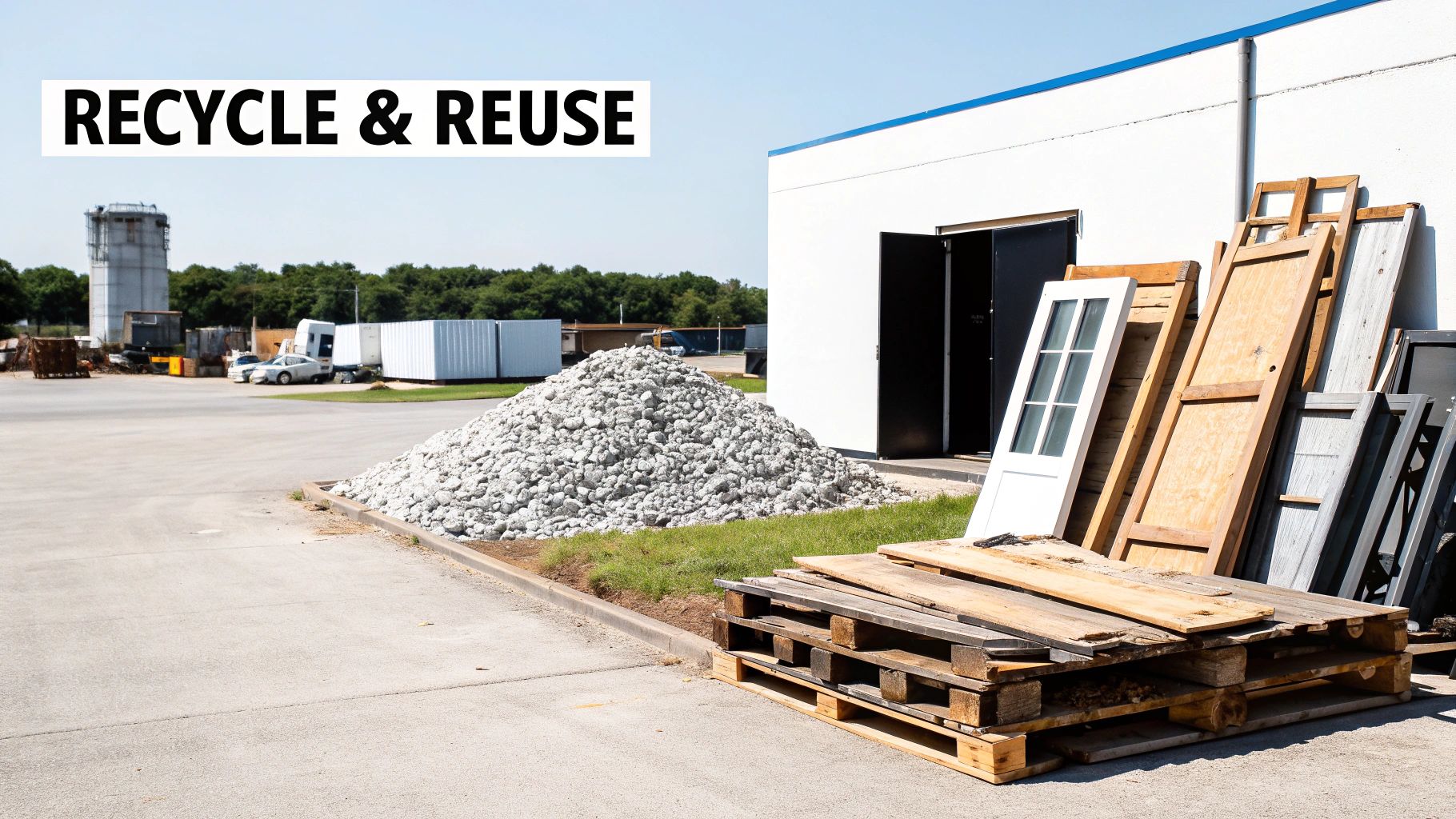
From Debris Pile to New Products
You'd be surprised how many common construction materials can have a second life. Instead of being buried forever, they can be transformed into new products. This cuts down on the need for virgin resources and saves a massive amount of energy in manufacturing.
Here’s where some of the most common materials can end up:
- Concrete and Masonry: This heavy debris gets crushed and repurposed as aggregate for new concrete, roadbeds, or even landscaping fill.
- Scrap Metal: Steel, aluminum, and copper are rockstars of recycling. They can be melted down and reformed into new products, from structural beams to wiring, without losing their properties.
- Untreated Wood: Clean lumber can be chipped into mulch, compost, or fuel for biomass energy plants.
- Drywall (Gypsum): Recycled drywall can be processed right back into new sheets or used as a soil amendment in agriculture.
The scale of the problem really drives home the need for recycling. Back in 2018, the U.S. sent nearly 145 million tons of construction and demolition waste to landfills. The shocking part? Over 75% of materials like wood, drywall, and bricks are still being buried instead of recycled.
Salvaging and Donating Usable Materials
It’s not just about raw materials. Renovation and demo projects often turn up items that are perfectly functional. Salvaging these for donation is one of the best ways to divert waste while supporting your community.
Think about things like:
- Doors and windows
- Kitchen cabinets and countertops
- Lighting fixtures and plumbing hardware
- Appliances that still work
Organizations like Habitat for Humanity ReStores are always looking for these items. They resell them to fund housing projects, keeping bulky materials out of the landfill and providing affordable supplies for others.
This takes a slight shift in mindset from demolition to deconstruction. Instead of just smashing everything, crews carefully remove items to keep them intact. It turns a waste stream into a community asset.
Partnering for a True Circular Solution
Let’s be honest. For a busy office, warehouse, or property manager, trying to coordinate separate recycling, donation, and disposal pickups is a logistical nightmare. This is where a professional service that’s genuinely committed to sustainability makes all the difference. Most junk removal companies just take the easy route: straight to the landfill.
A true partner does things differently. For instance, Fulton Junk Removal works hand-in-hand with Beyond Surplus to offer a genuinely circular, eco-friendly solution. This appeals to environmentally conscious homeowners and businesses looking for responsible disposal.
We can bundle junk removal with recycling pickups, ensuring that all your e-waste, scrap metal, and other recyclables go directly to Beyond Surplus for responsible processing. This approach minimizes landfill use, maximizes reuse, and makes sustainability reporting for your business incredibly simple.
To close even more loops, we also look at innovative methods for organic debris. Beyond just recycling wood, exploring the power of mulching for sustainable land management can turn tree and plant debris into a valuable resource for local landscapes. It's a holistic approach that ensures every possible material gets a new purpose.
Why Partnering with a Pro Service Makes Sense
For most commercial projects, whether it's a warehouse cleanout or a full office renovation, trying to manage construction waste in-house is a logistical nightmare just waiting to happen. It pulls your crew away from their real jobs, opens you up to potential liabilities, and demands a deep understanding of complex disposal regulations.
Sure, the DIY approach might look cheaper on paper, but the hidden costs—crew time, fuel, trips to the dump, and the risk of fines—add up faster than you'd think.
Partnering with a professional service takes waste disposal off your plate entirely. It's no longer a messy problem but a streamlined, predictable part of your project. A dedicated partner handles all the heavy lifting, transportation, and compliance, freeing up your team to do what they do best. More importantly, the right partner ensures your debris is managed responsibly, meeting today's sustainability standards.
Beyond the Dumpster: A Circular Approach
Let's be clear: not all junk removal services are created equal. The traditional model is painfully simple—a truck picks up your debris and makes a beeline for the nearest landfill. While this gets the junk off your site, it’s an outdated, inefficient, and environmentally costly way to operate. It completely misses the chance to recover valuable materials.
A modern, eco-friendly service works on a totally different principle: the circular economy. This is where Fulton Junk Removal truly stands apart. Focused on commercial services, we operate as a key part of Beyond Surplus, a company built from the ground up to be a circular solution that goes far beyond typical junk hauling.
Instead of seeing a pile of debris, we see a collection of resources. Our entire process is designed to divert as much material as possible from landfills, ensuring items are repurposed, recycled, or properly processed.
The Power of an Integrated System
So, what does this circular approach look like in the real world? It means we offer a smarter, bundled service that handles all your waste streams in one coordinated effort. This integrated system is especially valuable for offices, warehouses, and property managers juggling mixed debris.
Here's how it works:
- Junk Removal Handled by Fulton: Our crews efficiently clear out all the general construction debris, old furniture, and non-hazardous junk from your site.
- Recycling Processed by Beyond Surplus: All electronics, scrap metals, and other recyclables are funneled directly to Beyond Surplus for responsible processing.
This hand-in-hand partnership ensures nothing falls through the cracks. The old office computers and monitors from a renovation don't get tossed in a dumpster—they're managed by e-waste experts. The scrap metal isn't buried—it's recovered and sent back into the supply chain.
For businesses and property managers, this integrated model is a game-changer. It means one point of contact for all your disposal needs, from junk hauling to certified electronics recycling, making your entire cleanout process seamless.
Making Compliance and Reporting Easy
In today's business world, proving your commitment to sustainability is more important than ever. ESG (Environmental, Social, and Governance) goals are no longer just buzzwords; they are core metrics that clients, investors, and regulators are watching.
Simply saying you recycle isn't enough anymore. You need the data to back it up.
This is another area where a true waste management partner shines. Because we're directly involved with the recycling process through Beyond Surplus, we can provide clear and accurate diversion reports. These documents detail exactly what was collected from your site and how much of it was successfully kept out of the landfill.
This documentation makes your sustainability reporting simple and credible. You get verifiable proof that your company is meeting its environmental obligations—a powerful asset for compliance audits and corporate responsibility initiatives. The right partner doesn't just remove your junk; they give you the data that reinforces your green credentials.
If you're ready to see how a professional partnership can simplify your waste management, you can get in touch with our team to discuss your project.
Your Top Construction Waste Questions Answered
When you're knee-deep in a renovation or managing a construction site, the last thing you want is a headache over what to do with the debris. Questions about disposal are bound to come up, and navigating the rules, costs, and best practices can feel like a job in itself.
We get it. To cut through the noise, here are some straight-up answers to the questions we hear most often from contractors, property managers, and business owners.
What Is the Most Cost-Effective Way to Dispose of a Large Amount of Construction Debris?
For big jobs, the smartest financial move is almost always a one-two punch: sort on-site and hire a professional removal service that actually recycles.
Think about it. When you separate materials like metal, concrete, and clean wood right there on your property, you can send them directly to specialized recycling facilities. These places often have much lower tipping fees than a standard landfill. In fact, with scrap metals, you might even walk away with a small rebate instead of a disposal bill.
Then, for everything else—the mixed debris—a service like Fulton Junk Removal brings the right-sized container and handles the hauling, making the whole process efficient.
Partnering with a service that has a built-in recycling pipeline is the key. You stop relying on expensive landfills for everything. This approach just works better, saving you way more money in the long run than making a dozen trips to the dump yourself or hiring a crew that just dumps everything in one place.
Can I Recycle Painted or Treated Wood from a Demolition Project?
This is a big one, and the answer is a firm "it depends." The type of treatment is everything.
Clean, unpainted, and untreated wood is a recycler's dream. It gets turned into mulch, compost, or particleboard without much fuss. But the moment chemicals enter the picture, the game changes.
- Treated Wood: Anything treated with creosote (think old railroad ties or utility poles), preservatives, or heavy stains is generally considered contaminated.
- Painted Wood: Wood slathered in lead-based paint is straight-up hazardous material and needs to be handled by certified pros. Even newer paints can ruin an entire batch of clean wood at a recycling facility.
These chemically-altered materials can't go through standard wood recycling. They're often classified as special or even hazardous waste, which means they're destined for specific landfills with strict handling rules. To keep your project compliant and maximize what you can recycle, always keep treated or painted wood separate from the clean stuff.
How Can My Business Track and Report Our Waste Diversion and Recycling Rates?
Tracking waste diversion isn't just a feel-good metric anymore. It's a critical part of sustainability reporting and hitting corporate ESG (Environmental, Social, and Governance) goals. The only reliable way to get this done is to work with a waste management partner who provides clear, detailed paperwork.
This is exactly what a service like Fulton Junk Removal, working with our partner company Beyond Surplus, is built for. We provide comprehensive diversion reports that give you a transparent look at your project's entire waste stream.
These reports typically spell out:
- The total weight of all debris collected from your site.
- A specific breakdown of how much material went to recycling facilities.
- The volume of items that were repurposed or donated.
- The final, unavoidable amount that ended up in a landfill.
This kind of data lets you accurately calculate your diversion rate—the percentage of waste you successfully kept out of the ground. It’s the verifiable proof you need for compliance audits, internal reports, and genuinely showing your company’s commitment to doing things the right way.
For office managers, warehouse operators, and property managers, this service turns a logistical nightmare into a powerful tool for corporate responsibility.
Ready to partner with a team that makes construction waste disposal simple, sustainable, and transparent? Fulton Junk Removal works with our parent company, Beyond Surplus, to provide a circular, eco-friendly solution that goes beyond traditional junk hauling. We help Atlanta-area businesses manage debris responsibly and meet their sustainability goals with ease. Learn more about our commercial services and get your free estimate today at fultonjunkremoval.com.
