
How to Dispose of Construction Waste: A Simple Guide
Every construction project ends with the same inevitable challenge: a mountain of debris. Figuring out how to dispose of construction waste is a lot more than just a final cleanup task. It's about managing real costs, navigating local regulations, and making smart, sustainable choices.
From my experience, the key is to have your waste strategy locked in from the very beginning. A little planning upfront saves a ton of time, money, and headaches down the line.
Why a Construction Waste Disposal Plan Matters
Thinking about dumpsters before you’ve even swung a hammer might feel like putting the cart before the horse, but it's one of the smartest moves you can make on any job site.
Without a clear plan, project sites quickly become a cluttered, unsafe mess, and those disposal costs can spiral out of control. This is especially true for commercial jobs—think office renovations, warehouse clear-outs, and multi-unit property updates—where the sheer volume of debris is massive.
A solid first step is understanding the value of comprehensive waste management planning in construction. This isn't just about scheduling a pickup; it’s a proactive approach that helps you anticipate exactly what kinds of waste you'll generate and how much of it there will be.
The Scale of the Problem
The amount of debris the building industry generates is staggering. Globally, C&D projects produce over two billion tonnes of waste every single year. Here in the United States, these projects sent nearly 145 million tons of waste straight to landfills in just one recent year.
That number represents a huge opportunity for contractors, businesses, and even homeowners to adopt more responsible disposal methods.
A strategic plan isn't just about logistics. It has a direct impact on your budget and the environment. Good planning helps you:
- Reduce Landfill Contributions: By identifying recyclable materials early, you can divert a huge chunk of your waste stream away from the dump.
- Control Project Costs: Landfill fees, or "tipping fees," are a major project expense. Recycling and reusing materials can dramatically lower these costs.
- Ensure Regulatory Compliance: Local Fulton County and Georgia regulations have strict rules for how certain materials must be handled. A plan ensures you stay compliant and avoid fines.
- Enhance Site Safety: An organized site with designated areas for different types of debris is simply a safer site for everyone working there.
For our commercial clients like property managers and office administrators, a documented waste plan is absolutely essential. It simplifies compliance and makes sustainability reporting much easier, showcasing a real commitment to corporate responsibility.
Focused on commercial services, Fulton Junk Removal operates under Beyond Surplus, providing a circular, eco-friendly solution that goes beyond traditional junk hauling. We work hand-in-hand with Beyond Surplus to recycle electronics, metals, and other materials responsibly, diverting items from landfills to ensure they’re repurposed or recycled. This approach is central to our mission of providing sustainable junk removal for forward-thinking businesses.
Setting Up Your Site for Efficient Waste Sorting
Look, proper construction waste disposal doesn’t start when the truck leaves for the landfill. It starts the moment you swing the first hammer on your job site. A smart sorting strategy isn't just about keeping things tidy—it’s the secret to saving serious money, staying on the right side of regulations, and making recycling actually happen.
Whether you're tearing out a kitchen or managing a full commercial build-out, getting a system in place from day one is non-negotiable.
The whole idea is simple: sort your waste as you create it. Don't just toss everything into one massive, messy pile. Once wood, metal, and drywall are all jumbled together, trying to separate them is a nightmare of extra labor and costs. A little bit of planning upfront saves a massive headache down the road.
This is especially true on commercial jobs. Think about a property manager overseeing an office renovation. A basic sorting plan can divert tons of material away from the landfill. That doesn't just cut down your tipping fees; it gives you solid numbers for sustainability reports that clients and stakeholders love to see.
Creating Designated Waste Zones
The easiest, most practical way to sort on-site is to set up clearly marked zones for different materials. You don’t need a huge amount of space, just a logical layout that your crew can follow without having to think too much. It's basically like setting up recycling bins, just on a much bigger scale.
You'll want to create dedicated spots for the main types of debris your project will generate. For most jobs, that means separating:
- Wood: This is for your untreated lumber, pallets, and clean offcuts. Remember to keep painted or pressure-treated wood separate, since that often has to be handled differently.
- Metals: It’s worth making two piles here—one for ferrous metals like steel studs and rebar, and another for non-ferrous like copper pipes and aluminum siding. Metals are valuable recyclables, so separating them can literally pay off.
- Concrete, Brick & Masonry: These heavy materials are often crushed and reused as aggregate. The key is to keep this pile clean and free of other trash.
- Drywall (Gypsum): Drywall is recyclable, but it's useless if it gets wet or contaminated. It needs its own dry, protected spot.
- Cardboard & Plastics: All that packaging from new fixtures and materials adds up fast. A dedicated bin keeps it clean and ready for the standard recycling stream.
When you set up these zones with big, clear signs, you make it almost automatic for your team. Debris goes into the right pile from the start, which means no one wastes time sorting through a giant mess later.
Handling Hazardous and Special Materials Safely
Most of the debris from a construction site is harmless, but some materials are a whole different story. They pose real health and environmental risks and require special handling. You can never mix these in with your general C&D waste. One mistake here can lead to hefty fines and serious legal trouble.
Knowing what to look for is half the battle. Keep a sharp eye out for:
- Asbestos: If you're working on an older building, this can be in insulation, old floor tiles, or roofing. If you even suspect asbestos, stop. Don't touch it. You are legally required to bring in a licensed abatement professional.
- Lead-Based Paint: A common hazard in any structure built before 1978. Any debris with lead paint—from wood trim to drywall—needs to be contained and disposed of following strict EPA rules.
- Chemicals: This bucket includes old paint cans, solvents, adhesives, and other liquid waste. These have to go to a proper hazardous waste facility, not the dump.
- Electronics (E-waste): Things like old thermostats, wiring, and light fixtures contain heavy metals. They can't be landfilled and need to be recycled properly.
When you find any of these hazardous materials, the process is simple and non-negotiable: isolate it, label it, and secure it. It must be kept completely separate from everything else until a certified expert can take it away.
This is where calling in a professional makes all the difference. Fulton Junk Removal can offer a bundled junk removal and recycling pickup, where all electronic waste and recyclable materials are directly processed by Beyond Surplus. For offices, warehouses, and property managers, Fulton handles the junk removal, and Beyond Surplus ensures responsible recycling, making compliance and sustainability reporting easier.
Choosing Your Disposal Method From DIY to Pro Services
Once your construction debris is sorted and piled up, you’re staring at the next big question: how do I get this stuff off my property? This isn't just about finding the cheapest way out. It’s a classic trade-off between your time, your back, and your desire for a truly sustainable outcome. You really have three paths: rent a dumpster, haul it yourself, or call in the pros.
For a small weekend project, the DIY options might look tempting. But if you’re a property manager, an office administrator, or a warehouse operator facing a mountain of debris, the math changes completely. The sheer volume and the absolute need for compliant, documented disposal make a professional service the only choice that makes sense.
This decision tree gives you a good visual on how to think about sorting your waste. It shows the clear line between general debris that's manageable and hazardous waste that needs to be isolated immediately.
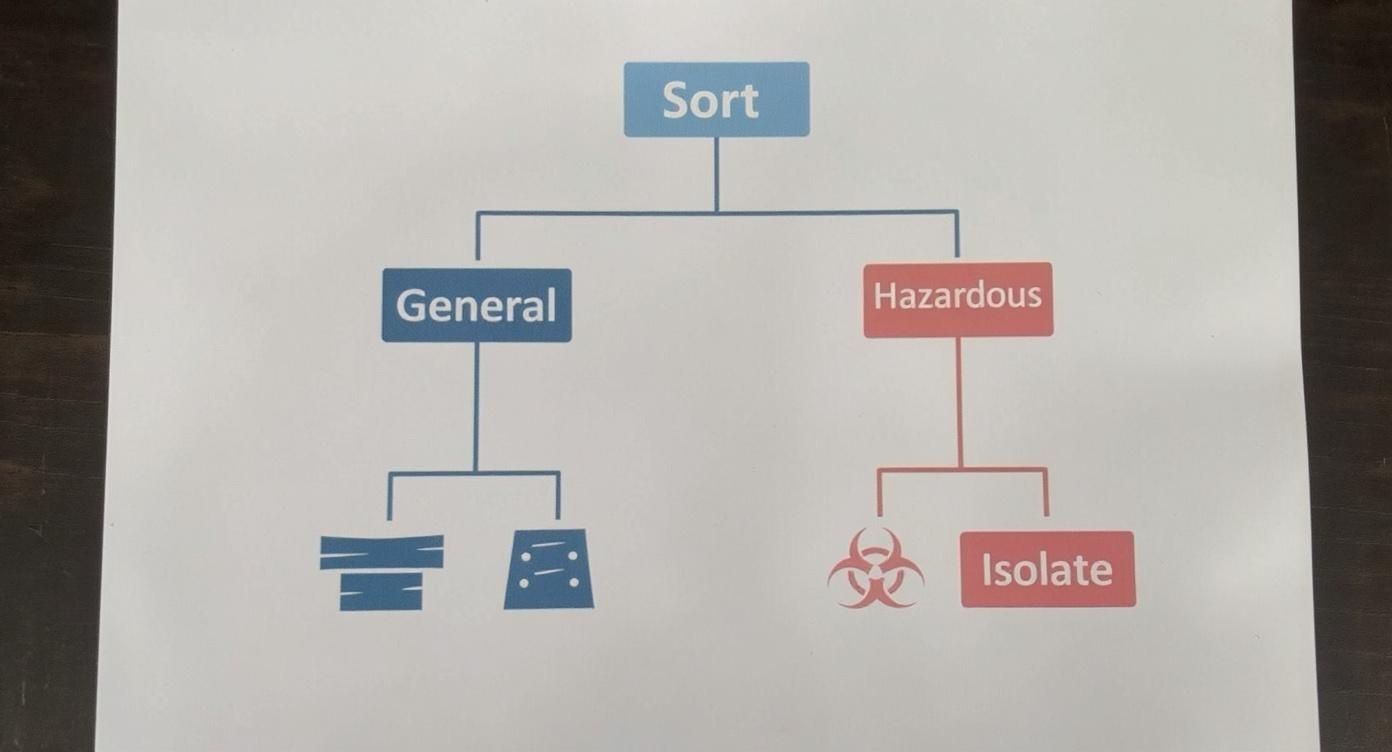
As the flowchart shows, spotting hazardous materials is job number one. Getting that right from the start keeps everyone safe and ensures you stay on the right side of the law, no matter which disposal method you choose.
The True Cost of Dumpster Rentals
Renting a big roll-off dumpster is what most people think of first. A container gets dropped off, you fill it, and they haul it away. Simple, right? Not so fast. The price they quote you rarely tells the whole story.
First off, you're on the hook for all the labor. Every single piece of drywall, every splintered 2×4, every chunk of concrete has to be loaded by you or your crew. That adds a ton of time and physical effort to a project you’re probably already tired of.
Then you have the hidden costs and logistical headaches:
- Permits: Need to place that dumpster on a public street? You'll almost certainly need a permit from the city, which means more paperwork and another fee.
- Weight Limits: Every dumpster has a weight limit. Heavy stuff like concrete, soil, and tile can push you over that limit in a hurry, sticking you with some serious overage charges.
- Rental Duration: Most rentals are for a set time, maybe a week. If your project hits a snag and runs long, you’ll be paying extra for every day that dumpster is just sitting there.
The DIY Hauling Approach
For smaller reno jobs, loading up a pickup truck and heading to the dump yourself can feel like the most straightforward solution. You have total control over the timing, and you get it done on your schedule.
But it's almost always the most labor-intensive and time-consuming option out there. You have to think about fuel costs, the wear and tear on your vehicle, and the tipping fees at the transfer station, which are always charged by weight. This path also means you’re solely responsible for knowing and following every local disposal regulation.
The Professional Service Advantage for Businesses
This is where hiring a professional junk removal service becomes a no-brainer, especially for our commercial clients. Instead of just dropping a box and leaving, a full-service company handles everything—the sorting, the heavy lifting, the loading, and the hauling.
If you're an office manager coordinating a renovation or a property manager cleaning out a unit after a tenant leaves, this hands-off approach is a game-changer. It lets your team stick to what they do best instead of getting sidetracked with manual labor. The demand for organized, professional waste management is booming, with the global market expected to hit over $13 billion by 2033. This growth shows that businesses are looking for smarter solutions that go beyond just hauling. You can dig into more construction waste management market data to see these trends for yourself.
Choosing a professional service isn't just about convenience; it's a strategic decision. For businesses, it translates to reduced risk, guaranteed compliance, and a clear path to meeting sustainability goals.
A Smarter, Greener Solution with Fulton Junk Removal
While most junk removal companies take everything to the landfill, we recycle through Beyond Surplus to minimize waste and maximize reuse. Fulton Junk Removal operates as a circular, eco-friendly solution through our partnership with Beyond Surplus. This integrated model is built for environmentally conscious businesses that need more than just a clean site—they need proof of responsible disposal.
Here’s what sets our approach apart:
- Integrated Recycling: We don’t just take your debris to the nearest landfill. Through Beyond Surplus, we actively recycle electronics, metals, and other valuable materials, pulling them out of the waste stream.
- Bundled Services: We offer a unique bundled pickup that covers both general junk removal and e-waste recycling. That means one call handles everything from old office furniture to outdated computers, ensuring every single item is processed the right way.
- Simplified Compliance: For offices, warehouses, and property managers, tracking waste diversion rates is essential for sustainability reporting. We provide the documentation you need to prove your commitment to environmental responsibility, making your compliance reports a breeze.
By partnering with a company that shares your sustainability goals, you turn a simple cleanup into a positive contribution to the circular economy. You can explore the full range of our commercial junk removal services to see how we can help with your next project.
How to Maximize Recycling and Landfill Diversion
Thinking beyond the dumpster is where smart construction waste disposal really shines. Maximizing your recycling isn't just a feel-good move for the planet; it's a savvy strategy that can seriously slash your costs and boost your company’s reputation. The trick is to stop seeing debris as trash and start seeing it as a collection of resources just waiting for a second life.
For our commercial clients—property managers, warehouse operators, and office administrators—this mindset shift is a complete game-changer. It elevates the conversation from just "clearing a site" to actively managing assets. A solid recycling plan gives you hard data for your sustainability reports, proving a level of corporate responsibility that tenants, customers, and stakeholders truly value.
Identifying High-Value Recyclables
Let's be honest: not all debris is created equal. Some materials are worth their weight in gold (almost literally) at recycling facilities. By focusing on separating these items first, you can dramatically cut your landfill tonnage and sometimes even get a small check back from the scrap yard.
Here’s where to focus your sorting efforts:
- Metals: This is your big-ticket item. Make sure to separate ferrous metals like steel studs from non-ferrous ones like copper pipes, aluminum siding, and brass fixtures. Copper, especially, fetches a high price.
- Untreated Wood: Clean lumber, pallets, and wood scraps can be turned into mulch, biomass fuel, or composite wood. Just keep it separate from any painted, stained, or pressure-treated wood, which needs to be handled differently.
- Concrete and Asphalt: These heavyweights can be crushed and reused as aggregate for new road bases or foundations. Keeping these piles clean is key to their recyclability.
- Cardboard: All that packaging from new fixtures, appliances, and materials adds up fast. Break it down, bundle it up, and it’s ready for any standard recycling stream.
Landfill diversion isn’t just a niche practice anymore—it’s a core part of modern business. When you successfully divert materials like metal and concrete, you're not just saving on tipping fees. You’re building a powerful story of environmental stewardship that’s invaluable for corporate reports and your brand.
Choosing Deconstruction Over Demolition
Here’s a simple but powerful mental shift: think "deconstruction," not "demolition." Demolition is the brute-force approach—fast, destructive, and leaving you with a messy pile of mixed rubble. Deconstruction, however, is the careful, surgical process of taking a building apart to salvage every reusable component.
This method is perfect for renovations where you want to save valuable pieces.
- Architectural Elements: Old doors, windows, hardwood flooring, and light fixtures can often be salvaged for donation or resale.
- Kitchen & Bath Fixtures: Cabinets, countertops, sinks, and toilets in good shape are hot commodities at reuse centers.
- Structural Materials: Big beams and dimensional lumber can sometimes find a new home in another project.
Yes, deconstruction takes more time and labor upfront. But the value of the materials you salvage can often offset the cost, and the environmental payoff is huge. You can dig into more strategies for sustainable cleanouts over on the Fulton Junk Removal blog.
The Power of a Bundled, Eco-Friendly Service
This is where things can get messy for a busy property manager or office administrator. Trying to coordinate separate pickups for general debris, scrap metal, e-waste, and donations is a logistical nightmare. That’s exactly the problem a bundled, eco-friendly service solves.
While most junk removal companies take everything to the landfill, Fulton Junk Removal is built differently. We operate under Beyond Surplus as part of a circular solution that weaves junk removal and responsible recycling together into one seamless process.
Here’s a look at how our bundled service gives you a clear advantage:
| Feature | Standard Junk Hauler | Fulton Junk Removal & Beyond Surplus |
|---|---|---|
| Recycling Focus | Landfill-first; recycling is an afterthought, if it happens at all. | Circular, eco-friendly model that actively diverts materials from the landfill. |
| Material Handling | Everything gets mixed and hauled to a transfer station or dump. | Metals, electronics, and recyclables are separated and processed by Beyond Surplus. |
| Client Benefit | Quick removal, but with zero environmental benefit or documentation. | Simplified compliance and sustainability reporting with clear diversion data. |
| Service Scope | Usually just handles general junk, leaving you to manage e-waste on your own. | Offers a bundled pickup for junk and electronics, streamlining the whole process. |
For an office getting a refresh or a warehouse being cleared out, this means one call handles everything. Fulton Junk Removal takes care of the heavy lifting for furniture and debris, while Beyond Surplus makes sure every last computer and server is recycled responsibly. This partnership ensures nothing of value gets buried, making your sustainability goals not just achievable, but easy to track and report.
Getting Familiar With Local Disposal Rules and Staying Compliant
Getting rid of construction waste is about more than just clearing a site—it’s about navigating a tricky web of local and state rules. The moment you start dealing with construction and demolition (C&D) debris, you’re not just a project manager anymore. You’re also legally responsible for compliance.
Every single city and county has its own rulebook for what you can toss, where it can go, and what permits you need.
Ignoring these rules just isn't worth the risk. The fines for illegal dumping or messing up hazardous material disposal can get steep, fast. We're talking thousands of dollars, and in some situations, even legal trouble. That’s why your very first move, before a single piece of debris leaves your property, should be a quick call or visit to your local municipality's website.
What Your Local Mandates Really Mean
Before you even think about hauling away that first piece of drywall, you need to get answers to some critical questions from your local authorities. These rules aren't the same everywhere; they can change dramatically from one town to the next.
For example, the rules for a project inside our Atlanta service areas might be totally different from a job just one county over. This is where having real local knowledge is a game-changer.
Make sure you know the score on:
- What's Accepted: Find out exactly what types of C&D waste your local landfill or transfer station will take. Some won't accept mixed loads and might flat-out ban items like old tires or electronics.
- Permit Needs: Will you need a permit for that dumpster, especially if you plan to park it on a public street? What about permits for hauling certain kinds of waste?
- Hazardous Waste Rules: How does your city or county define hazardous waste? You absolutely have to know the proper, legal steps for disposing of things like wood covered in lead paint, materials containing asbestos, or chemical solvents.
When it comes to hazardous materials, you also have a legal duty to keep detailed records, including a complete hazardous substance register that tracks everything on your site.
The bottom line? "I didn't know" won't get you out of trouble. Taking a little time to understand your local obligations saves you from massive fines and keeps your project moving without any legal headaches. For any business, this isn't just a good idea—it's non-negotiable.
Why Local Rules Matter on a Global Scale
The need for local expertise really snaps into focus when you look at the bigger picture. Construction waste management is handled very differently around the world. Europe is way ahead with advanced technologies because of their strict environmental laws.
Meanwhile, the Asia Pacific region is set to produce the most construction waste globally, thanks to explosive urban growth. In fact, China's market alone is expected to grow at a 7.0% CAGR from 2025 to 2035. These massive regional differences show why a "one-size-fits-all" disposal plan is doomed to fail and why mastering the local playbook is so important. You can dig deeper into these global construction waste trends on futuremarketinsights.com.
The Value of a Pro for Compliance and Reporting
This is exactly where bringing in an insured, professional company like Fulton Junk Removal becomes a lifesaver, especially for our commercial clients like offices, warehouses, and property managers. We don’t just see a pile of junk; we see a checklist of compliance points that have to be met. Our team knows the local regulations inside and out, making sure every scrap of material is handled and disposed of by the book.
For businesses, the perks go way beyond just getting the site cleared. One of the biggest headaches for sustainability managers and operations directors is documenting waste diversion for compliance and corporate responsibility reports.
While most junk removal companies take everything to the landfill, we recycle through Beyond Surplus to minimize waste and maximize reuse. This allows us to give you all the paperwork you need to prove your disposal was compliant and eco-friendly, making your sustainability reporting a breeze. It turns a logistical nightmare into a smooth, documented process that protects your business and boosts your green credentials.
Common Questions About Construction Waste Disposal
Even the best-laid plans can hit a snag. When you're in the thick of a project, questions about how to properly get rid of construction waste always seem to pop up, especially for property managers or contractors juggling large-scale renovations.
Let’s clear up some of the most common questions we hear. These answers will help you navigate the final steps of your project with confidence, reinforcing the importance of sustainability, compliance, and professional service.
What Is the Best Way to Handle a Small Amount of Renovation Debris?
For a tiny weekend project, like swapping out a bathroom vanity, you might think about hauling the debris to a local transfer station yourself. But once you add up your time, the cost of gas, and the dump fees, that DIY trip often ends up being more hassle than it's worth.
A much smarter choice is a minimum-load pickup from a professional service. You save yourself the backache of loading and hauling, and you get the peace of mind knowing everything is handled correctly in one quick stop.
Can I Throw Construction Debris in My Regular Trash Bin?
This is a hard no, almost every time. Your municipal trash service is designed for household garbage, not construction and demolition (C&D) waste. Materials like lumber, drywall, concrete, and roofing shingles are strictly forbidden in most residential bins.
Trying to sneak C&D waste into your regular trash will likely get your bins left at the curb and could even earn you a fine from the local sanitation department. You have to use a designated disposal method, whether that's a dumpster or, for a more streamlined approach, a professional junk removal service.
One of the biggest perks of a junk removal service over a dumpster is sidestepping the permit headache. If a dumpster needs to sit on a public street or sidewalk, you’ll almost certainly need a permit from the city. A professional crew loads and hauls the debris away on the same day, which means no permits are needed at all.
How Does a Pro Service Help My Company's Sustainability Goals?
Hiring an eco-conscious hauler is one of the most effective ways to hit your company's sustainability targets. The right partner does more than just clear a site—they act as an extension of your commitment to the environment.
A company like Fulton Junk Removal, for example, works hand-in-hand with Beyond Surplus to recycle electronics, metals, and other materials responsibly, diverting items from landfills so they can be repurposed or recycled.
Here’s what that looks like in practice:
- Diverting Metals: Steel, aluminum, and copper are pulled out and sent to scrap processors instead of being wasted in a landfill.
- Managing E-waste: Old electronics from office renovations are handed over to specialists for responsible recycling.
- Providing Documentation: This is the game-changer. You get documented proof of waste diversion, giving you the hard data needed for sustainability reports and showing stakeholders your tangible commitment to corporate responsibility.
What Differentiates an Eco-Friendly Hauler?
Plenty of companies say they recycle, but the real proof is in their process. A genuinely eco-friendly hauler doesn't just operate on a linear "haul-and-dump" model; they embrace a circular one. While the default for many junk removal companies is to take everything straight to the landfill, a sustainability-focused service will always prioritize reuse and recycling first.
This is the core of our model at Fulton Junk Removal. We work hand-in-hand with Beyond Surplus to make sure materials get a second life, not just buried in the ground. For property managers, warehouses, and offices, our bundled junk removal and recycling pickup makes compliance and sustainability reporting that much easier. It's simply a smarter, more responsible way to manage waste.
If you have specific questions about your project, you can get a free, no-obligation estimate by contacting our team directly.
