
A Guide to Remove Construction Debris Smartly
When a construction or renovation project finally wraps up, the job isn’t really done until the last pile of leftover material is gone. The trick is to handle this final step efficiently and responsibly, which today means doing more than just hauling everything to the nearest landfill. A modern cleanup strategy is circular and eco-friendly, focusing on separating materials for reuse and recycling—a move that helps both your project timeline and the planet.
Rethinking How We Remove Construction Debris
The end of a project often leaves property managers, office administrators, and contractors staring at a mountain of debris. For years, the standard procedure was simple: load it all up and dump it. But that old-school "haul and dump" model is quickly becoming unsustainable and, frankly, too expensive.
A smarter way to remove construction debris starts by seeing that waste not as garbage, but as a resource. This shift in thinking is where the real opportunities for cost savings and environmental wins open up. It all begins with identifying and separating the different types of materials right there on-site—from valuable scrap metals and clean wood to bulky drywall and discarded electronics.
The Integrated Service Model
Instead of juggling one company to haul junk and another to handle recyclables, an integrated service model rolls both jobs into one. This is exactly where Fulton Junk Removal, operating under the circular, eco-friendly solution of Beyond Surplus, proves its worth. Fulton handles the heavy lifting—the physical junk removal from offices, warehouses, and commercial sites—while Beyond Surplus makes sure every single recyclable item is processed correctly. This partnership diverts items from landfills and ensures they’re repurposed or recycled, appealing to environmentally conscious businesses.
This two-in-one approach gives businesses some serious advantages:
- Simplified Logistics: You get a single point of contact for both junk hauling and certified recycling. No more coordinating multiple vendors.
- A Greener Footprint: It guarantees that materials like e-waste, metals, and plastics are kept out of landfills and fed back into the circular economy.
- Easy Compliance: For property and office managers, Fulton handles the junk removal, and Beyond Surplus ensures responsible recycling, making compliance and sustainability reporting easier.
By partnering with an eco-conscious junk removal service, you're not just cleaning up a site. You're making a verifiable contribution to waste reduction that seriously boosts your company's green credentials.
The global construction and demolition waste stream is absolutely massive, generating an estimated two billion tons every year. That accounts for about one-third of all global waste, which underscores just how urgent the need for responsible disposal is. You can dive deeper into this issue by checking out the 2024 global status report for buildings and construction.
Let's break down how this modern approach stacks up against the old way of doing things.
Traditional vs. Integrated Debris Removal
| Feature | Traditional Debris Hauling | Integrated Eco-Friendly Service (Fulton/Beyond Surplus Model) |
|---|---|---|
| Primary Goal | Quick removal to landfill | Maximize recycling and reuse |
| Material Sorting | Minimal; often mixed loads | On-site or off-site segregation |
| Sustainability | Low; contributes to landfill waste | High; supports circular economy |
| Vendor Management | Multiple vendors (hauler, recycler) | Single point of contact |
| Cost Structure | Based on volume and landfill fees | Can be offset by recycling credits |
| Reporting | Basic disposal receipts | Detailed sustainability reports |
Fulton can offer a bundled junk removal and recycling pickup, where all electronic waste and recyclable materials are directly processed by Beyond Surplus. It aligns your operations with modern green building practices and resonates with environmentally conscious clients and tenants. For more ideas on managing different types of waste, feel free to explore the topics on our blog. This integrated method ensures your cleanup isn't just complete—it's also compliant and conscientious.
Your Blueprint for a Seamless Cleanup
Any successful construction debris removal effort is built on a foundation of smart planning. Before the first truck even arrives, having a clear, actionable game plan is non-negotiable for warehouse managers, property managers, and contractors alike. This initial groundwork is what minimizes costly downtime, prevents disruptions to your operations, and guarantees a safe, compliant cleanup from start to finish.
The first move? Know exactly what you're dealing with. A simple waste audit doesn't have to be a huge undertaking; it’s really just about taking inventory of the materials your project has generated. This quick assessment helps you accurately estimate the volume and types of debris, from bulky items like scrap metal and concrete to specialized waste that needs a little more attention, like old electronics.
Conducting a Practical Waste Audit
For a typical office renovation or warehouse clear-out, you can break down your audit into a few manageable tasks. Just walk the site and visually categorize what you see. You'll want to make a note of the major material types piling up.
- Structural Debris: This is your big stuff—think wood, drywall, leftover concrete, and various metals.
- Fixtures and Furnishings: Old office desks, chairs, shelving units, and worn-out carpeting all fall into this category.
- Electronic Waste (E-Waste): Pay close attention here. Computers, monitors, printers, and old wiring can’t just be tossed; they require special handling.
- Packaging Materials: All that cardboard, plastic wrap, and the mountain of pallets from new equipment deliveries can accumulate fast.
Once you estimate the quantity of each, you can figure out the right size containers and how often you'll need pickups. This is a crucial step for managing costs and site logistics effectively. Taking this proactive step also ensures that recyclable materials are identified early, setting them up for a dedicated recycling partner like Beyond Surplus.
A well-executed waste audit is the foundation of an efficient cleanup. It transforms a chaotic pile of debris into a manageable set of resources, streamlining the entire removal process and making sustainability reporting far more accurate.
Setting Up for Success On-Site
Once you know what you have, the next step is organizing the space to make sorting and removal as efficient as possible. Designating specific on-site sorting areas is a must for a smooth operation. This simple action prevents cross-contamination of different materials and makes the pickup process a whole lot faster for the crew.
Try setting up clearly labeled zones: one pile for scrap metal, a designated pallet for e-waste, and a separate area for general junk. This kind of segregation is exactly what allows an integrated service to work so well. Fulton Junk Removal can handle all the mixed junk, while our partnership with Beyond Surplus ensures your sorted electronics and valuable metals are responsibly recycled, not just dumped in a landfill.
This visual process flow shows the core steps for managing your debris effectively.
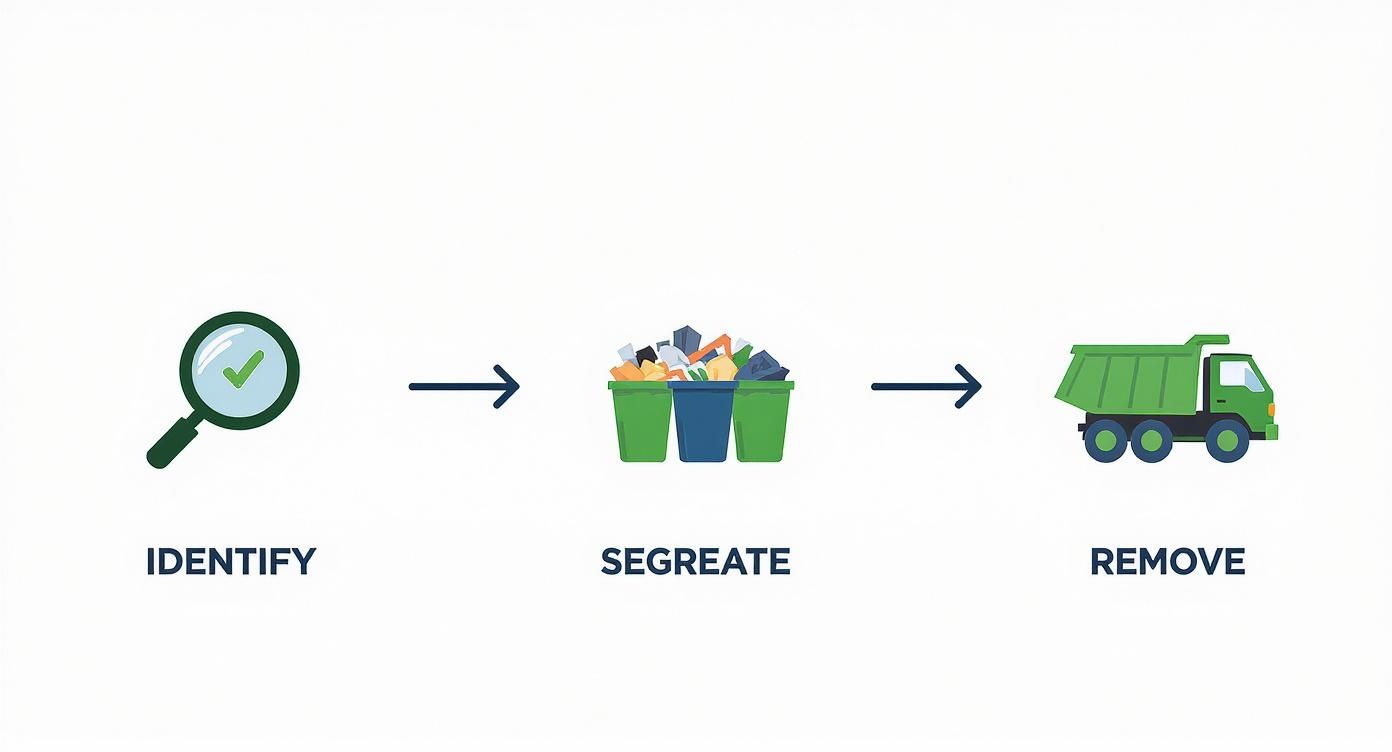
The infographic highlights a simple yet powerful sequence: identify your materials, segregate them properly, and then schedule the removal. Following this blueprint makes the entire operation predictable and efficient. Explore our full range of commercial junk removal services to see how we can put this strategy to work for your business.
A little planning ahead not only keeps your site safe but also maximizes the value you can recover from your waste stream.
Navigating Waste Regulations with Confidence

When you're running a commercial construction or renovation project, waste disposal rules aren't just a suggestion—they're the law. One wrong move can lead to hefty fines and legal troubles that no contractor or property manager has time for. Honestly, the web of regulations governing how to remove construction debris can feel like a maze, but it doesn't have to be overwhelming.
These rules dictate everything from how you handle hazardous materials to hitting mandatory recycling targets. Many cities now have strict ordinances requiring a certain percentage of construction waste to be diverted from landfills, especially on larger jobs. This isn't just a local trend; it's a global response to a massive problem.
Construction waste is a serious issue, with the global management market hitting an estimated USD 232.1 billion in 2024. As governments tighten the screws on regulations, staying compliant becomes even more crucial. You can explore the full construction waste market analysis to see just how fast this sector is growing. This intense focus makes finding the right removal partner more critical than ever.
Simplifying Compliance with a Professional Partner
This is exactly where bringing in a professional junk removal service saves the day. Instead of losing hours trying to decode local laws and track different materials, you can lean on a team that lives and breathes this stuff. They keep up with the latest rule changes so you don't have to.
A service like Fulton Junk Removal, working hand-in-hand with our recycling partner Beyond Surplus, cuts through all that complexity. We do more than just haul debris away; we deliver a transparent, compliant disposal plan designed for offices, warehouses, and other commercial properties. Our crew gets it—responsible material handling is non-negotiable.
For property managers, the right removal partner provides more than just a clean site—they deliver peace of mind. Knowing that every piece of debris is handled legally, ethically, and with an eye on sustainability is a powerful asset for your business.
The Power of Proper Documentation
One of the biggest perks of working with an eco-conscious team is the paperwork they provide. This documentation is your proof of compliance and a huge boost to your company’s green reputation.
- Certificates of Recycling: We can provide official records proving that materials like electronics and metals were processed responsibly by Beyond Surplus, not just dumped.
- Diversion Reports: These reports break down the weight and types of materials we kept out of the landfill, giving you hard data for your sustainability goals.
This paperwork is gold for internal audits, LEED certification efforts, or any corporate sustainability reporting. It’s verifiable proof that your project met its environmental obligations. Our commitment to eco-friendly practices isn't just a talking point; it’s fundamental to how we work, ensuring your business stays aligned with modern best practices.
The Real Impact of Eco-Friendly Disposal
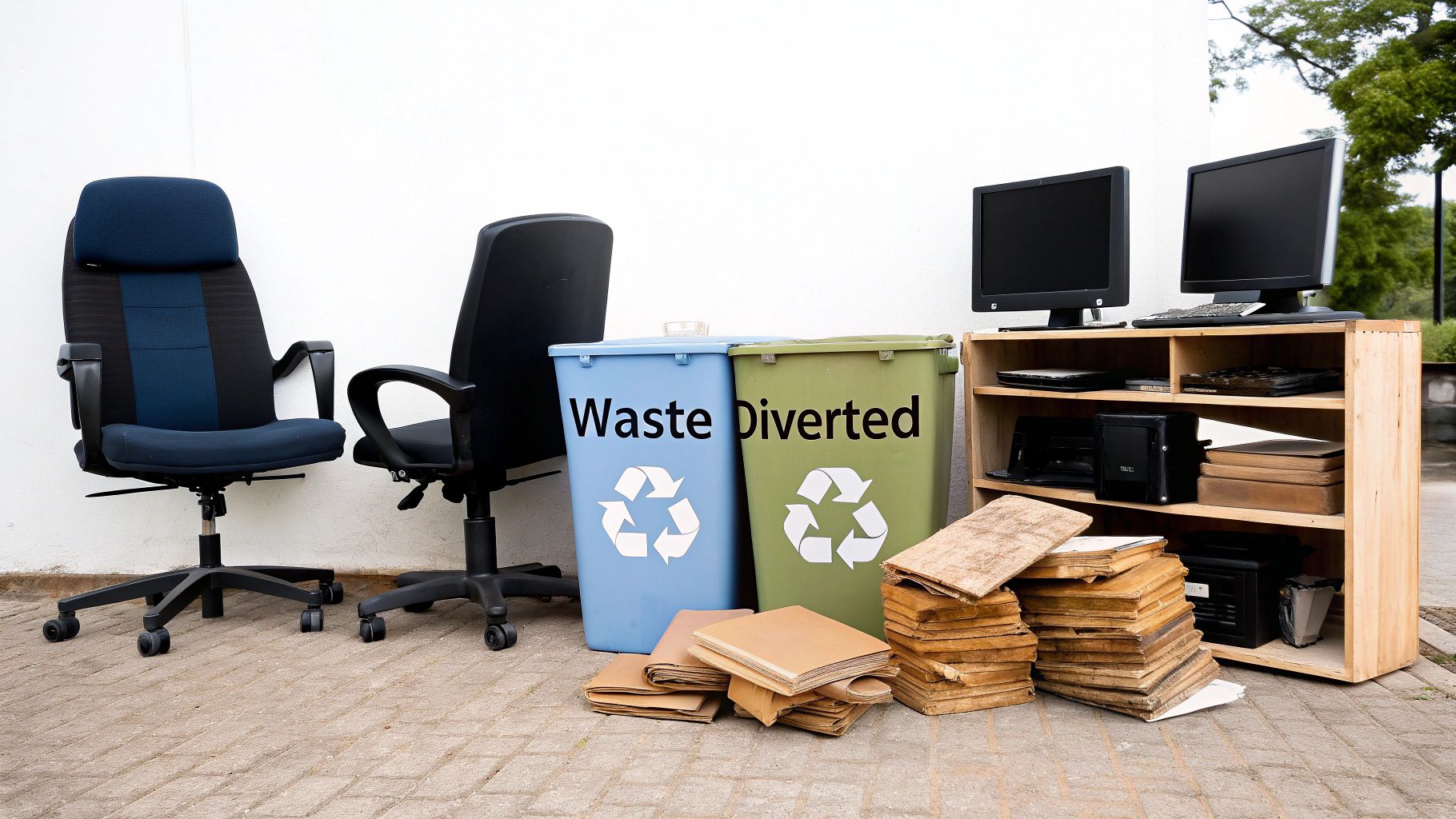
Choosing a sustainable partner to remove construction debris isn't just a feel-good PR move. It’s a smart, strategic decision that directly benefits your bottom line and builds a stronger brand reputation. The "why" is simple: going green turns discarded materials into valuable resources, creating a positive ripple effect for your project and the environment.
This modern approach completely flips the script on the old "haul-it-all-to-the-landfill" model. An integrated service actively diverts tons of waste by recovering materials for the circular economy. This is exactly how the partnership between Fulton Junk Removal and Beyond Surplus works to minimize waste and maximize reuse.
Think about a massive office renovation. In the past, every piece of old furniture, outdated computer, bundle of cabling, and light fixture would end up in a single dumpster, destined for a landfill. With an eco-friendly model, that story has a much better ending.
From Landfill Liability to Recycled Asset
In an integrated system, those same materials are meticulously sorted. The old office desks might get donated or refurbished. The computers and other e-waste are responsibly processed by a certified recycler like Beyond Surplus. Scrap metal is separated and sold right back into the supply chain.
For property managers, office managers, and contractors, this method delivers some huge wins:
- Enhanced Brand Reputation: Showing a real commitment to sustainability attracts environmentally conscious clients, tenants, and top talent.
- Simplified Reporting: You get clear, verifiable data on waste diversion rates. This makes sustainability reporting for compliance or corporate goals a breeze.
- Cost-Effective Disposal: When you segregate valuable materials like metal and e-waste, you can often lower your overall disposal fees.
The market is already shifting in this direction. The demand to properly remove construction debris is growing, thanks to increased urbanization and the widespread adoption of green building standards. This push is creating better recycling infrastructure, making it easier than ever to reuse materials like concrete, wood, and metal.
Choosing an eco-friendly disposal partner isn't just about waste management. It’s a direct investment in your company's sustainability credentials, providing concrete proof that you operate responsibly.
Unlocking the Value in Your Debris
Almost every single item removed from a construction or renovation site has the potential for a second life. A true eco-friendly partner knows how to spot the value hidden within what most people see as just trash. They have the expertise to identify, sort, and channel these materials to the right processing facilities.
The table below breaks down the recycling potential for materials commonly found on commercial job sites. It really highlights the massive impact you can make by choosing to recycle instead of just sending it all to the landfill.
Recycling Potential of Common Construction Debris
| Material Type | Common Examples | Recycling Outcome | Landfill Impact if Not Recycled |
|---|---|---|---|
| Metals | Steel beams, copper wire, aluminum fixtures | Melted down and reused in new products | Wasted finite resources, high energy cost to create new metal |
| Electronics | Computers, monitors, printers, servers | Valuable metals recovered, plastics recycled | Toxic materials like lead and mercury can leach into soil |
| Wood | Untreated lumber, pallets, framing | Chipped for mulch, used as biomass fuel | Decomposes slowly, releasing methane gas |
| Concrete | Slabs, bricks, blocks | Crushed and used as aggregate for roads | Takes up massive landfill space, resource-intensive to produce |
As you can see, the choice is clear. Responsible disposal doesn’t just prevent harm; it actively creates value by conserving resources and keeping materials in circulation.
Choosing the Right Debris Removal Partner
Picking a company to haul away debris from a commercial site is about a lot more than just finding the cheapest quote. Your removal partner is basically an extension of your own operations team, and the right one helps you hit deadlines, stay compliant, and meet your sustainability goals.
That low-ball offer from a standard hauler might look good on paper, but if their trucks are just making a beeline for the nearest landfill, you're leaving real environmental—and financial—benefits on the table.
For anyone managing an office, warehouse, or commercial property, the vetting process has to go deeper. The conversation needs to shift from "how much?" to "how do you do it?" A real pro should be able to tell you exactly where your stuff is going without breaking a sweat.
Key Questions to Ask Potential Vendors
Before you sign on the dotted line, you need to know precisely how a company works. Their answers will tell you if they're just a basic disposal service or a true partner in waste management.
Here's what every property manager should be asking:
- What’s your official environmental policy? A serious company will have this documented. Vague promises about being "green" don't cut it.
- Can I see sample recycling and diversion reports? Talk is cheap. Ask for real reports to see the data they provide. This documentation is gold for your own sustainability reporting.
- How do you handle electronic waste (e-waste)? This is a huge compliance issue. E-waste is packed with hazardous materials and needs certified handling, something a generic junk hauler is rarely equipped for.
- Do you bundle services? Finding a partner who can manage general junk, scrap metals, and electronics in one coordinated pickup is a massive time-saver and cuts down on administrative headaches.
These questions quickly separate the simple haulers from a specialized service like Fulton Junk Removal. While most junk removal companies take everything to the landfill, we recycle through Beyond Surplus to minimize waste and maximize reuse.
The real value in a removal partner isn’t just in what they take away, but in the verifiable data they provide. Certificates of recycling and detailed diversion reports transform your cleanup from a simple expense into a measurable sustainability achievement.
The Fulton Junk Removal Advantage
Our entire approach is built on a circular model. Fulton Junk Removal works directly with our partner company, Beyond Surplus, to make sure every single recyclable item is processed the right way. It’s an integrated system that guarantees valuable materials from your site are diverted from landfills and given a second life.
When we clear out an office, for example, those old computers, printers, and servers aren’t just tossed. They go straight to Beyond Surplus, a certified electronics recycler. This ensures you’re compliant and that we’re recovering as much value as possible.
For property managers juggling projects across multiple locations, having one reliable partner makes all the difference. You can see all the communities we cover on our detailed service areas map. This partnership doesn't just make your sustainability reporting easier—it gives you the confidence that your debris is handled correctly, every single time.
Your Top Construction Debris Questions, Answered
When you’re staring down a pile of debris on a commercial site, a few key questions always come up. Property managers, contractors, and business owners all want the same thing: a clean, compliant, and cost-effective process. Here are the straight-up answers to the questions we hear most often.
What Is the Most Cost-Effective Way to Remove Construction Debris?
The cheapest quote isn't always the most cost-effective solution. True savings come from a smarter, long-term approach that sidesteps fines, cuts down on landfill fees, and even boosts your company's green credentials.
It all starts on-site by smartly separating valuable recyclables like scrap metal and old electronics from the general waste. Then, instead of juggling multiple vendors, partner with a service like Fulton Junk Removal that offers a bundled junk removal and recycling pickup. This integrated approach is far more efficient, protects you from hefty fines for improper disposal, and turns a messy cleanup into a win for your sustainability reports.
How Can I Be Sure My Construction Waste Is Actually Recycled?
This is a big one, and the answer is simple: demand proof. The only way to guarantee your waste is being recycled is to work with a partner who provides clear, verifiable documentation. Don't be shy about asking for a certificate of recycling or a diversion report. These documents should detail exactly what was collected and how it was processed.
A reputable service with a direct line to a certified recycler like Beyond Surplus will have no problem providing this. In fact, companies that are genuinely committed to sustainability are proud to show you their process and give you the environmental metrics you need. It gives everyone peace of mind.
A partner that values transparency will always provide proof of recycling. This documentation is your assurance that your commitment to sustainability is being met with real, verifiable action, protecting your business and the environment.
Can You Remove Debris While My Business Is Still Operating?
Of course. A professional removal service knows how to work in live environments—like active offices and warehouses—without grinding your operations to a halt. The secret is all in the planning.
We coordinate closely with your site manager to schedule pickups during your slowest hours or even on weekends. Our crew sets up clear safety zones, uses specific paths to move debris, and works fast to get in and out. Constant communication is what makes it all work, ensuring a smooth cleanup that lets your team keep doing their job.
Ready to manage your construction debris the right way? Fulton Junk Removal provides integrated junk removal and certified recycling services built for commercial properties. We give you all the documentation you need for easy compliance and sustainability reporting. Visit us online to get your free estimate at https://fultonjunkremoval.com.
