
What Happens to Recycled Electronics After Pickup
When you toss an old office computer or smartphone, its journey is just getting started. A lot of people imagine a digital graveyard—a massive landfill where old tech goes to rust. But when handled right, it’s actually the beginning of a sophisticated process of recovery and renewal.
This isn’t just about being green; it’s a massive economic opportunity. In 2022, the world generated a staggering 62 million tonnes of electronic waste, which is an 82% jump from 2010. The crazy part? Only 22.3% of it was properly recycled, meaning billions in gold, copper, and other valuable metals were literally thrown away. You can see the full scale of the problem in the latest Global E-waste Monitor report.
From Your Doorstep to a New Beginning
The moment a professional service like ours picks up your e-waste, the real work begins. Unlike most junk removal companies that take everything to the landfill, our unique structure guarantees responsible recycling. This is where Fulton Junk Removal, working hand-in-hand with our parent company Beyond Surplus, provides a circular, eco-friendly solution that goes beyond traditional junk hauling.
For offices, warehouses, and property managers in the Atlanta area, our process is seamless. Fulton Junk Removal handles the junk hauling and logistics, while Beyond Surplus ensures all electronics, metals, and other materials are recycled responsibly. We divert these items from landfills to maximize reuse and minimize waste.
This chart gives you a bird's-eye view of what happens to recycled electronics once they're in the system.
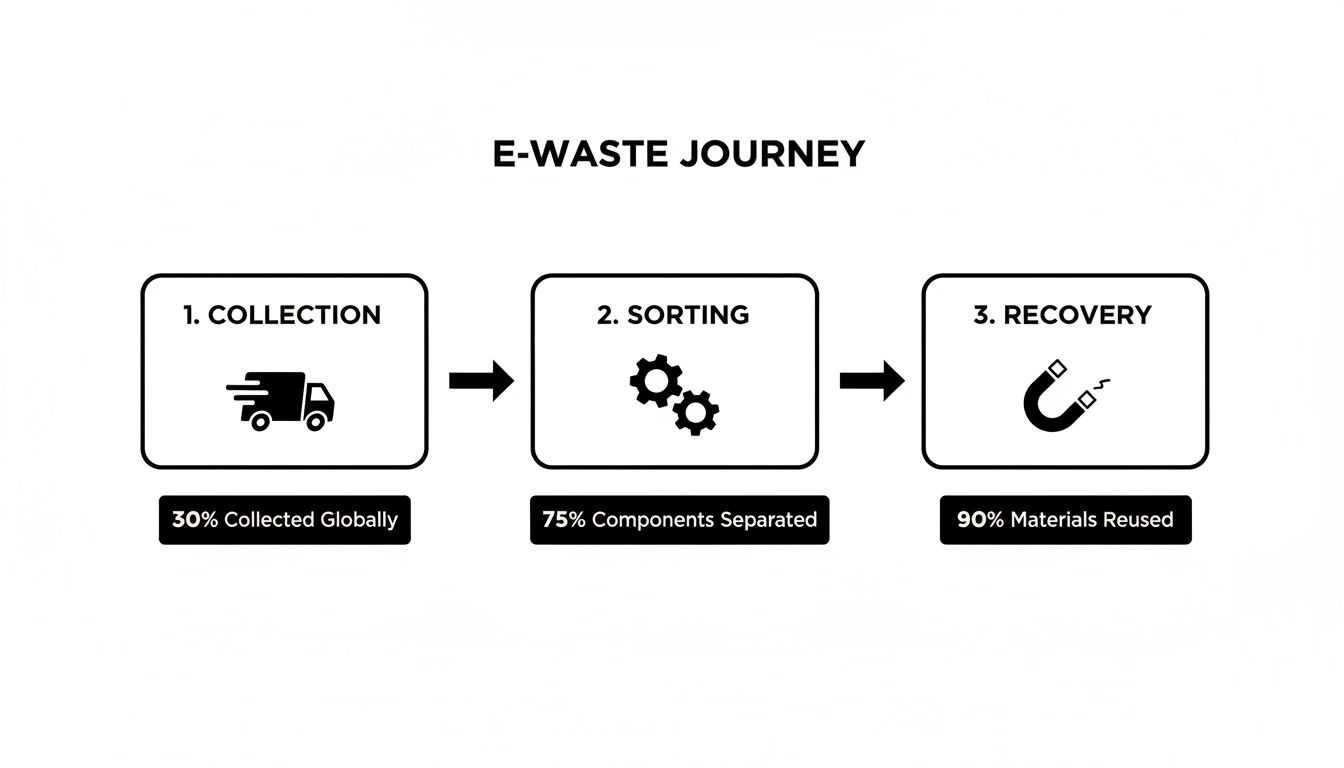
As you can see, it all boils down to three key phases: collection, sorting, and recovery. Each step is designed to transform what was once considered trash back into a valuable resource.
To break it down even further, here’s a summary of the typical lifecycle for a device that enters a certified recycling stream.
The Journey of a Recycled Electronic Device
This table outlines the key stages a device goes through, from the moment it leaves your hands to its final destination as a renewed resource.
| Stage | Process | Primary Goal |
|---|---|---|
| Collection & Transport | Your e-waste is picked up and securely transported to a certified facility. | To safely move devices from your location to a controlled processing environment. |
| Data Destruction | All data-bearing devices are wiped clean or physically shredded. | To permanently eliminate sensitive information and protect your privacy and security. |
| Sorting & Triage | Devices are sorted by type and condition to see what can be repaired, resold, or dismantled. | To maximize the value of each item, prioritizing reuse whenever possible. |
| Dismantling | Items are manually or mechanically broken down into their core components. | To separate materials like circuit boards, plastics, metals, and glass for specialized processing. |
| Material Recovery | Components are shredded, smelted, and refined to extract raw materials. | To reclaim valuable commodities (gold, copper, aluminum) for use in new products. |
| Responsible Disposal | Any hazardous materials (like mercury or lead) are safely isolated and disposed of. | To prevent environmental contamination and comply with all state and federal regulations. |
Each stage is a critical link in the chain, ensuring that electronics are handled in a way that protects both data and the planet.
Why This Process Matters for Your Business
For any office, warehouse, or property manager, responsible e-waste recycling isn't just an environmental feel-good—it’s a sharp business move. Every single electronic device is a cocktail of valuable materials and potentially toxic components.
By treating e-waste as a resource, we not only prevent toxic materials from contaminating our soil and water but also reduce the need for destructive mining operations. It’s a direct investment in a sustainable future.
Here’s what that means in practical terms for your operations:
- Compliance Assurance: Proper recycling keeps you on the right side of local and federal environmental laws, helping you dodge hefty fines.
- Airtight Data Security: The first and most critical step is certified data destruction, which is your best defense against a potential data breach.
- Stronger Green Credentials: Working with Fulton Junk Removal and Beyond Surplus gives you the paperwork to back up your company's sustainability claims, making compliance and sustainability reporting easier.
To get a deeper dive into the journey, check out a comprehensive guide to mobile phone recycling in Australia. While the specific rules might vary, the core principles of recovery and security are the same everywhere. The more you know, the smarter your decisions will be. For more insights tailored to the Atlanta area, head over to our Fulton Junk Removal blog.
Securing Your Data Before It Leaves the Building
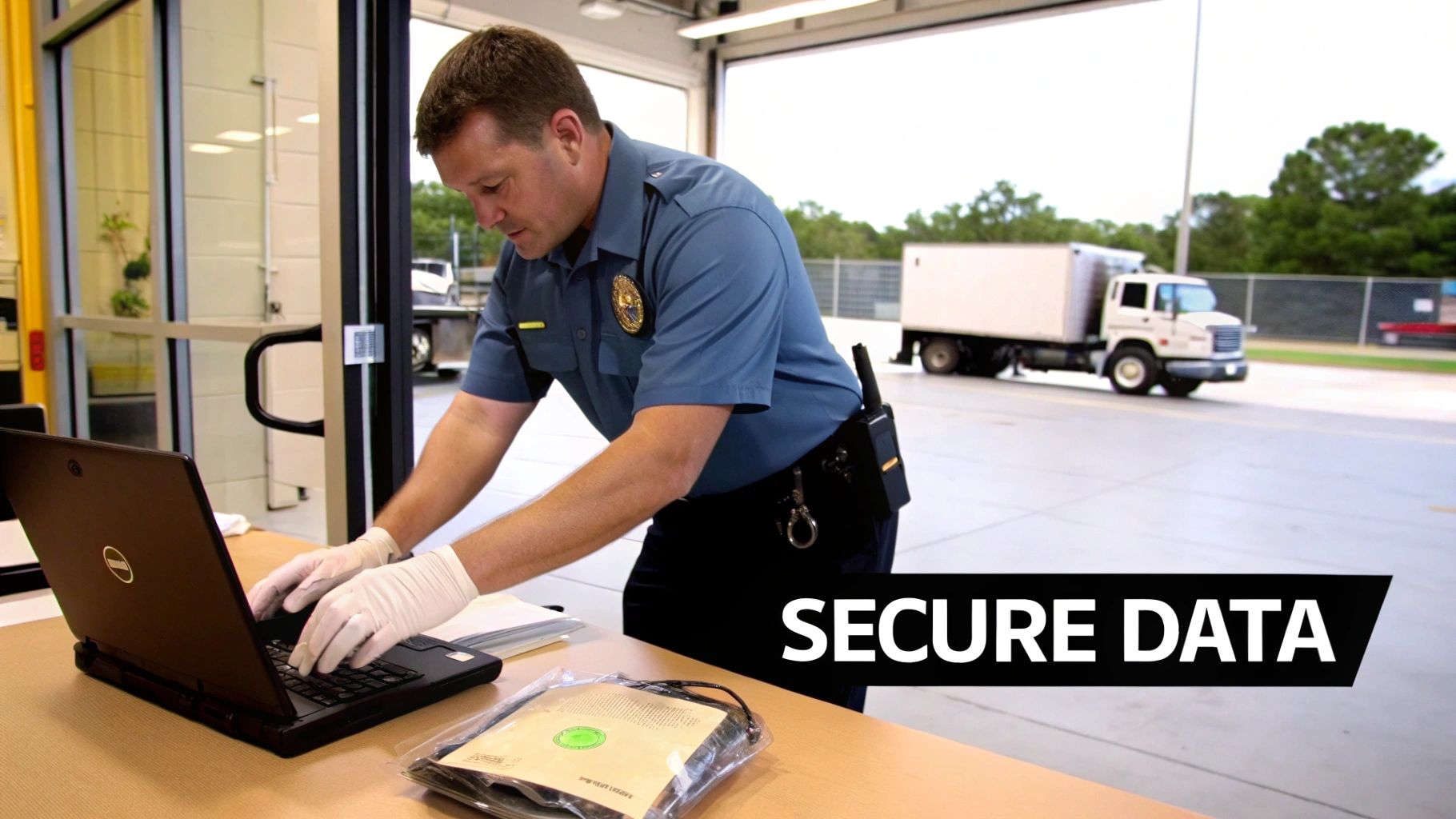
Before a single server, laptop, or hard drive gets sorted for recycling, the most critical step has to happen first: securing your data. For any business, property manager, or warehouse, this isn't just a smart move—it’s a non-negotiable defense against devastating data breaches and legal headaches. The real journey of recycled electronics begins not with dismantling, but with destruction.
When you schedule a pickup with a professional service, the entire process is built around security from the get-go. At Fulton Junk Removal, we know our commercial clients need more than just hauling. Through our partnership with Beyond Surplus, we establish a secure chain of custody the moment our truck arrives, guaranteeing your sensitive assets are tracked and protected until every last byte is permanently gone.
Don't skip this part. So many people think deleting files or reformatting a drive is enough. It’s not even close.
Deletion vs. Destruction: Why Wiping Isn’t Enough
Thinking a deleted file is gone for good is like erasing a message on a whiteboard. Sure, the words are gone, but you can almost always see a faint impression left behind. With the right tools, someone can easily bring that "erased" information right back.
This is where professional data destruction comes in. We aren't just erasing the whiteboard; we're grinding it into dust. Two primary methods ensure your data is gone forever:
- Software Wiping: This involves using specialized software to overwrite the entire hard drive with random data, often multiple times. It makes the original information completely unrecoverable.
- Physical Shredding: For the highest level of security, the device itself—like a hard drive or SSD—is fed into an industrial shredder that turns it into a pile of tiny, useless metal and plastic bits.
For any business, the ultimate proof of secure data handling is the Certificate of Data Destruction. This official document is your legal record, verifying the exact date, method, and serial numbers of the devices that were sanitized or destroyed. Think of it as your shield against compliance issues and potential lawsuits.
The right method depends on your company’s security policies and how sensitive the data is. Fulton offers bundled junk removal and e-waste pickup, where all electronic waste and recyclable materials are directly processed by Beyond Surplus, streamlining this entire process. You can learn more about our bundled junk removal and recycling services.
The Importance of a Secure Chain of Custody
From the second our truck leaves your loading dock, every single device is accounted for. A secure chain of custody means there’s a detailed, unbroken record of who handled your assets and where they went. This protocol is absolutely essential for meeting regulations like HIPAA or GDPR and gives you peace of mind that nothing gets lost or mishandled along the way.
This careful handling is what happens to recycled electronics when you work with a certified partner. It transforms a simple cleanout into a documented risk-management strategy. To really understand why this matters, it helps to be familiar with professional data recovery expertise—it's shocking how easily data can be pulled from improperly wiped devices.
Ultimately, by putting data security first, you protect your company’s reputation, your customers’ privacy, and your bottom line. Once this crucial step is complete, the electronics are finally ready for the next phase of their journey: triage.
The Triage Stage: Deciding Between Reuse and Recovery
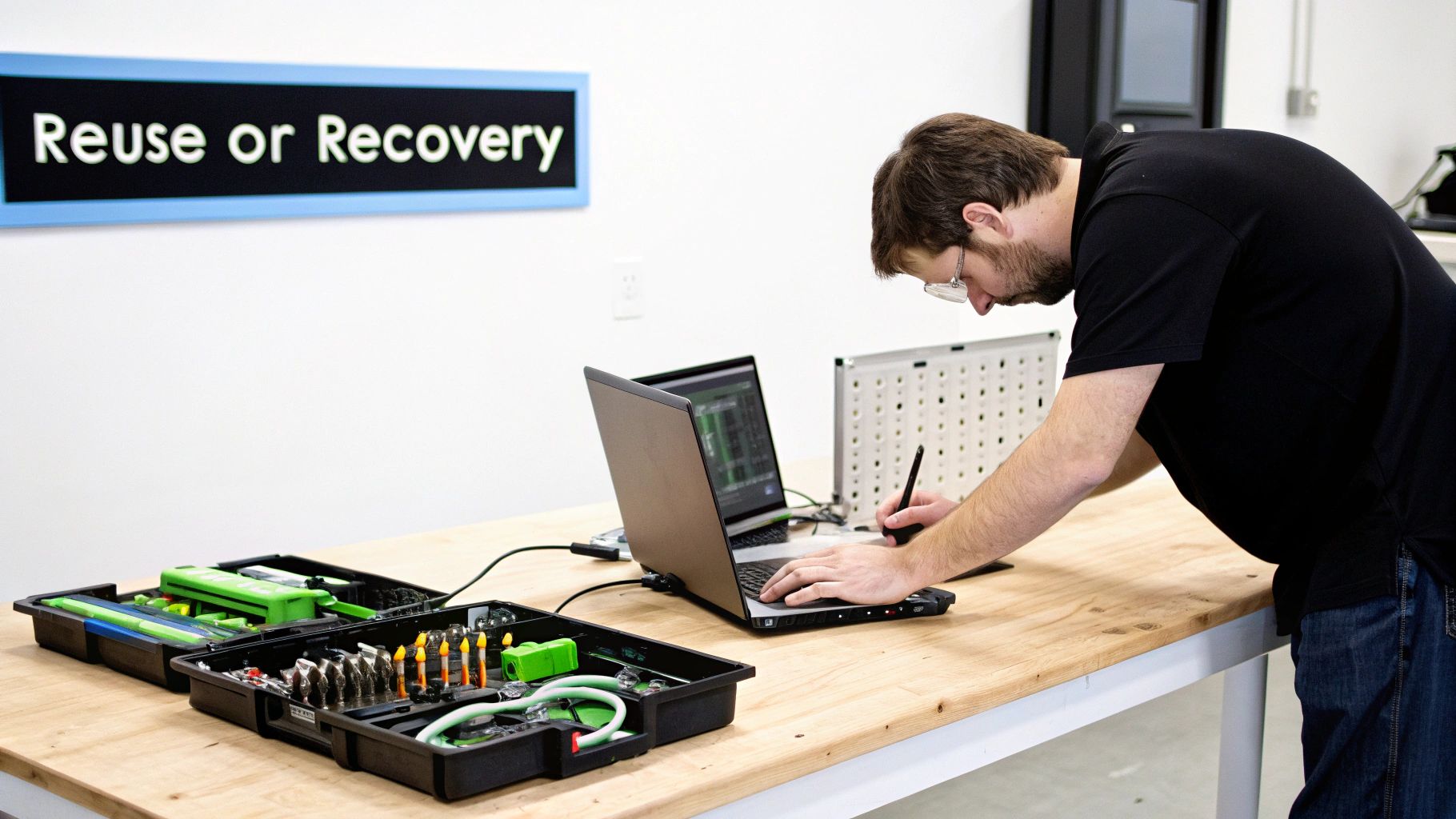
Once your data has been completely wiped, your old electronics hit a critical fork in the road. We call this the triage stage—the point where a decision is made: will this device get a second life, or is it time to break it down into its raw materials?
Think of it like an organ donor system for technology. Skilled technicians act as surgeons, carefully assessing each item to see if it has the potential for a new life through refurbishment.
This isn't just a simple sorting line. It's a detailed evaluation that puts extending a device's lifespan first. For environmentally conscious homeowners and businesses, this is a huge deal. Our partner, Beyond Surplus, handles all the materials we collect at Fulton Junk Removal and is fully committed to this reuse-first philosophy, turning potential waste into a genuine asset.
The Criteria for Reuse
Not every piece of equipment is a candidate for refurbishment. Technicians follow a strict set of criteria to make the call, weighing a device's age, condition, and current market demand. It’s not always obvious—a five-year-old high-end server might actually be a better candidate for reuse than a one-year-old budget laptop.
Here’s what they’re looking for:
- Functional Condition: Does it power on? Does it run without major issues? Technicians run diagnostics on core components like the CPU, memory, and hard drive.
- Cosmetic Condition: A few minor scuffs are okay, but significant damage like a cracked screen or a broken casing usually means the device is heading straight for materials recovery.
- Age and Model: Is the tech still useful? A device might work perfectly fine, but if it’s too old to run modern software, it’s not a great candidate for resale.
- Repairability: Is it even worth fixing? If repairing a broken part costs more than the entire device is worth, it makes more sense to just harvest its working components.
This careful inspection makes sure that only truly viable electronics get put back into the market, guaranteeing quality for their next owner.
The decision to reuse an electronic device is one of the most impactful actions in the entire recycling chain. It conserves the immense energy and resources required to manufacture a new product, representing the pinnacle of the circular economy.
The Economic and Environmental Wins of Reuse
When we choose to reuse something instead of immediately recycling it, the benefits are massive. For instance, refurbishing and reselling just one corporate laptop prevents over 400 pounds of CO2 emissions from being generated to manufacture a new one. That's a powerful number for any company’s sustainability report.
The economics are just as impressive. The global electronics recycling market is expected to explode from USD 43.2 billion in 2025 to USD 147.9 billion by 2035. This growth is fueled by high demand for both refurbished electronics and recovered raw materials. PCs and laptops lead the pack, holding a 45% market share and showing just how much value is sitting in typical office equipment. You can explore the full market analysis and trends to grasp the sheer scale of this industry.
For companies working with a service like Fulton Junk Removal, this process offers a clear, responsible path for retiring old assets. Our commitment to diverting items from landfills aligns perfectly with corporate sustainability goals. You can learn more about the eco-friendly mission behind Fulton Junk Removal and how our partnership with Beyond Surplus works.
If a device is deemed unsuitable for a second life, its journey isn't over. It simply moves on to the final stage: materials recovery.
Unlocking Value Through Materials Recovery
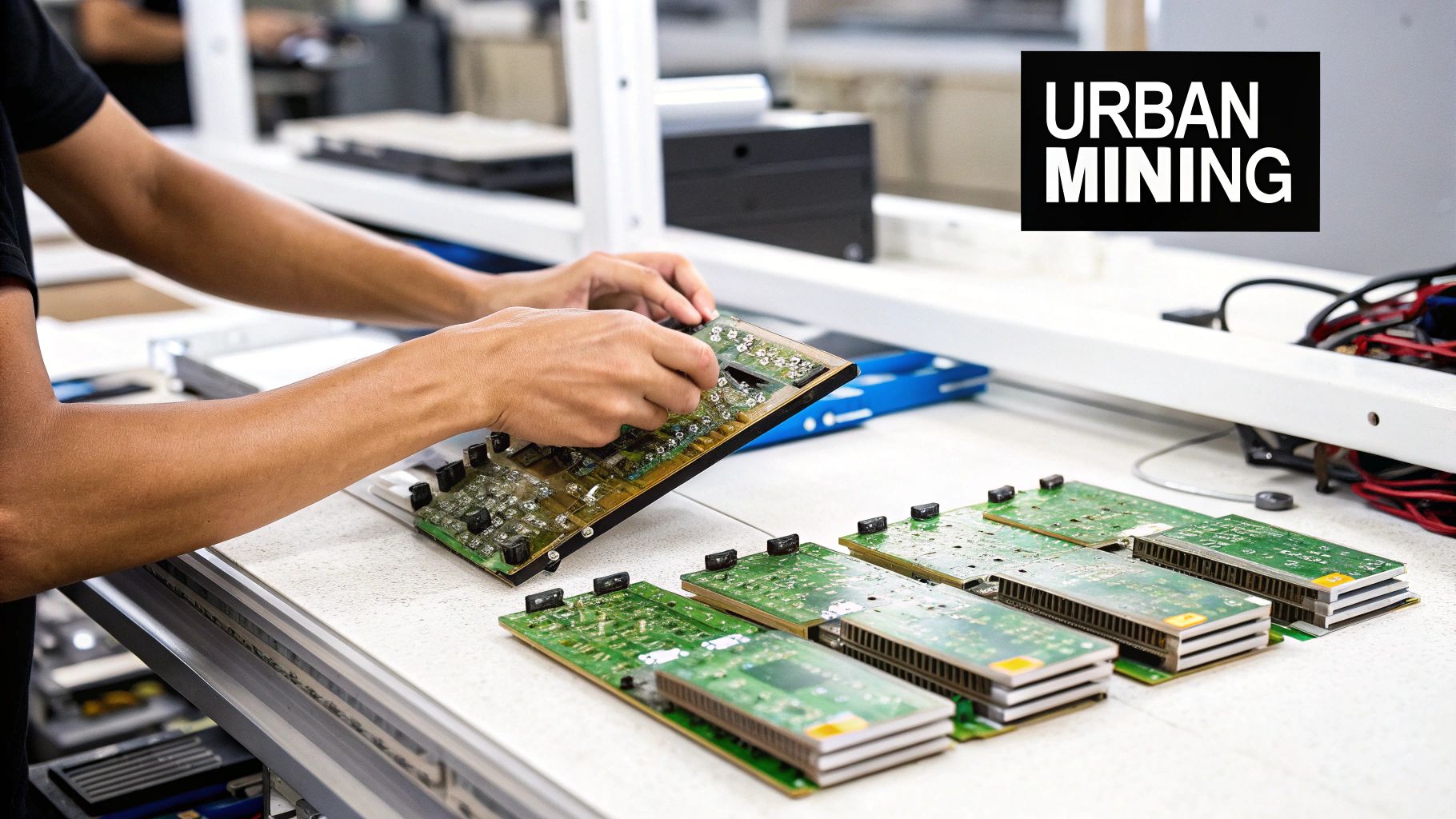
When a device can't be refurbished, its journey is far from over. Instead of heading to a landfill, it enters the fascinating world of materials recovery. This is where we get into urban mining—the process of extracting valuable raw materials from our old tech instead of digging them out of the earth.
This is the stage that separates a true recycling partner from a standard junk hauler. While most junk removal companies take everything to the landfill, we recycle through Beyond Surplus to minimize waste and maximize reuse.
Through our partnership, Fulton Junk Removal guarantees that every non-reusable electronic device is processed by Beyond Surplus, where this intricate recovery work takes place. It's how we turn potential e-waste into valuable resources.
The Initial Breakdown Manual Dismantling
The first stop on the recovery line is a hands-on one. Skilled technicians carefully take devices apart by hand, allowing them to separate key components with precision. It’s a crucial step for isolating parts that are either highly valuable or highly hazardous.
Think of an old monitor. A technician will manually pull out the circuit board, the battery, and the leaded glass CRT screen before the plastic and metal casing moves on to the shredder. This targeted approach is essential for keeping the different material streams pure for later processing.
This manual dismantling is a critical control point. It’s how we ensure hazardous items like mercury lamps and lithium-ion batteries are safely removed and managed. This prevents them from contaminating the entire recycling batch—a risk many general junk removal companies completely overlook.
Advanced Sorting and Separation Technology
After the initial breakdown, a powerful combination of machinery and smart tech takes over. The mixed stream of plastics, metals, and other fragments travels down a conveyor belt through a series of automated sorting stations.
- Powerful Magnets: Huge magnets lift ferrous metals like steel and iron—common in computer cases and frames—right off the line.
- Eddy Currents: This clever process uses electrical currents to create a magnetic field that repels non-ferrous metals like aluminum and copper, literally pushing them into a separate collection bin.
- Controlled Shredding: Industrial shredders chop the remaining materials into small, uniform pieces, which makes the final separation much more efficient.
This mechanical sorting is incredibly effective at isolating different materials into clean, marketable commodities. For any business needing to clear out old equipment, this is the process that offers a truly responsible alternative to the landfill.
Recovering Precious Metals and Hazardous Materials
The real treasure is often found on the circuit boards. These tiny components are packed with precious metals, including gold, silver, palladium, and copper. To get them out, the boards undergo a highly specialized smelting process.
They're heated to extreme temperatures, which melts the metals and separates them from the fiberglass and resin. After some further refining, these pure metals are ready to be sold back into the manufacturing supply chain to create the next generation of electronics.
The table below breaks down what we typically find inside the equipment we collect from Atlanta-area offices.
| What's Inside Your Office Electronics |
| :— | :— | :— |
| Component | Recoverable Materials | Hazardous Elements |
| Circuit Boards | Gold, Silver, Copper, Palladium, Aluminum | Lead (solder), Brominated Flame Retardants |
| CRT Monitors | Copper (yoke), Glass | Lead, Cadmium, Mercury |
| LCD/LED Screens | Plastics, Glass, Copper Wiring | Mercury (in some older backlights) |
| Hard Drives | Aluminum, Steel, Platinum (platters) | None (data is the primary hazard) |
| Batteries | Lithium, Cobalt, Nickel, Cadmium | Corrosive Acids, Heavy Metals |
| Computer Casing | Steel, Aluminum, ABS Plastic | Brominated Flame Retardants |
As you can see, responsible recycling is a two-sided coin: recovering the good stuff while safely managing the bad.
Just as important as recovering gold is the safe handling of toxic substances. A certified e-waste partner like Beyond Surplus is equipped to properly manage:
- Batteries: Which can be corrosive and a fire hazard.
- Leaded Glass: Found in all those old, bulky CRT monitors.
- Mercury: Used as backlighting in some older flat-screen models.
These hazardous components are carefully isolated and sent to specialized facilities for proper treatment and disposal, ensuring they never touch a landfill or harm the environment. It’s this meticulous approach that gives businesses the peace of mind and compliance needed for modern sustainability reporting.
Why Your Business Needs a Certified E–Waste Partner
Figuring out what to do with old office equipment might feel like just another task on your to-do list, but who you choose to handle it has huge implications for your company's security, compliance, and even your brand's reputation. What happens to your electronics after they leave your property is a direct reflection of the partner you hire.
Calling a standard junk hauler often means your e-waste—and the sensitive data still on it—gets tossed into a landfill. This isn't just wasteful; it's a massive, unnecessary risk.
A certified e-waste partner plays in a completely different league. Their entire operation is built on a foundation of accountability and verified processes. For offices, warehouses, and property managers, Fulton Junk Removal handles the hauling, and Beyond Surplus ensures responsible recycling, making compliance and sustainability reporting easier.
The Power of Certification
You've probably seen logos for standards like R2 (Responsible Recycling) or e-Stewards on websites. These are much more than just badges. They represent comprehensive frameworks that dictate exactly how a recycler must manage every single piece of electronic equipment, from the moment they pick it up to its final destination.
Think of it like an FDA approval for food. These certifications are your guarantee that the recycler meets the highest standards for:
- Data Security: They don't just promise to wipe your data; they are mandated to follow secure, documented data destruction protocols.
- Environmental Compliance: This is a big one. It prohibits the illegal export of hazardous e-waste to developing countries and ensures toxic materials are managed safely, right here at home.
- Worker Health and Safety: It also means they are protecting their own employees from the very real hazards involved in dismantling electronics.
When you hire a certified partner, you're actively preventing your company’s old assets from becoming someone else’s environmental problem or a source for a data breach.
Documentation Is Your Defense
In the world of corporate compliance and sustainability reporting, if it isn’t documented, it never happened. A certified partner provides the essential paper trail that protects your business. This documentation is your proof for sustainability reports, a key defense during audits, and a powerful way to demonstrate corporate social responsibility.
The most critical documents you should always receive are a Certificate of Data Destruction and a Certificate of Recycling. These legally prove you did your due diligence, transferring liability and confirming your e-waste was handled in an environmentally sound manner.
These reports aren't just extra paperwork—they're tools for building trust with clients, investors, and stakeholders who are paying more attention to corporate ethics than ever before.
Simplifying Compliance with an Integrated Solution
Juggling a general junk removal for an office cleanout while also ensuring your e-waste is recycled responsibly can feel like two separate, complicated jobs. This is where a bundled service becomes a game-changer. Fulton Junk Removal works hand-in-hand with our certified parent company, Beyond Surplus, to offer a seamless, single-point-of-contact solution.
We handle all the logistics of the cleanout—clearing out everything from old desks in offices to entire warehouses—while Beyond Surplus manages the entire certified recycling and data destruction process. This integrated approach ensures every last electronic item is diverted from landfills and processed correctly. This is absolutely vital when you consider that a shocking 75-80% of electronics worldwide never make it into formal recycling channels, and e-waste accounts for 70% of the toxic waste in our landfills. When you properly manage your company's devices, you're helping close that dangerous gap. You can discover more insights on these e-waste statistics to see the full picture.
For busy property managers and operations directors, this streamlined system is a lifesaver. It saves time, cuts down on administrative headaches, and makes compliance incredibly simple. You get one trusted partner who can clear out an entire space while guaranteeing your electronics are handled to the highest industry standards. To see how this all-in-one service can work for your next project, get in touch with our commercial services team.
We Get It—You've Got Questions
Even with a clear picture of the recycling journey, most businesses, property managers, and office admins we talk to still have questions about the nuts and bolts—logistics, security, and the real value of doing it right. It can all seem a bit complicated, but a good partner makes the answers simple and the process straightforward. Here are the most common questions we hear, and our honest, no-fluff answers.
The real key to smart e-waste management is making a mental shift from a "disposal" mindset to a "recovery" mindset. For our commercial clients, that means you stop seeing old equipment as a headache and start seeing it as an asset that demands secure, compliant handling.
"Is My Company's Data Really Secure When We Recycle Old Computers?"
Yes, but that "yes" comes with a huge asterisk: your security is only as good as the partner you choose. A certified e-waste recycler isn't just winging it; they operate under strict, audited protocols to guarantee your data is gone for good. This is a whole different ballgame than just deleting files or formatting a drive.
True, professional data security boils down to one of two certified methods:
- Software Wiping: We use specialized software to run a multi-pass overwrite on the entire storage drive, burying the original information under layers of random data. It's impossible to recover.
- Physical Shredding: This is exactly what it sounds like. The hard drive, SSD, or other storage media gets fed into an industrial shredder that reduces it to tiny, useless fragments of metal and plastic.
The single most important part of this whole process is getting a Certificate of Data Destruction. This is your official, legal proof that every bit of sensitive information was handled and destroyed according to industry best practices. It's what protects your business from the massive liability and catastrophic fallout of a data breach.
Without that piece of paper, you're leaving your company completely exposed. It’s the final word, confirming that the journey for your recycled electronics began with impenetrable security.
"What’s the Difference Between a Junk Hauler and a Real E-Waste Recycler?"
The difference is night and day, and it all comes down to their primary goal and where your stuff ultimately ends up. A standard junk hauler gets paid to make things disappear, and the landfill is usually the fastest, cheapest way to do that. Their business model is built around removal, not recovery.
An actual e-waste recycler, on the other hand, operates on a totally different philosophy: recover and reuse. This is the core of the partnership between Fulton Junk Removal and our parent company, Beyond Surplus. We handle the pickup and logistics, and they execute the certified recycling.
Here’s how it breaks down:
| Feature | Standard Junk Hauler | Certified E-Waste Recycler (like us) |
|---|---|---|
| Primary Goal | Get items off your property, fast. | Maximize material recovery and reuse; keep 100% out of landfills. |
| Final Destination | The local landfill or transfer station, most of the time. | A certified processing facility for sorting, data destruction, and recovery. |
| Data Security | Not a core service. Data-bearing devices are often left completely intact. | Certified data destruction is the mandatory first step. No exceptions. |
| Hazardous Waste | Lacks the permits and training to handle toxic materials like lead or mercury safely. | Fully equipped and certified to manage hazardous components safely. |
| Documentation | A simple receipt for the hauling service. | Official Certificates of Recycling and Data Destruction for your records. |
One service simply takes things away. The other provides a complete, compliant, and secure solution for managing your old assets.
"Can We Recycle More Than Just Computers And Phones?"
Absolutely. A real commercial e-waste program is built to handle just about anything that has a cord or a battery. While office computers and phones are definitely the most common items we see, the scope is so much broader. This is a game-changer for businesses and property managers planning a major cleanout who need a single-source solution.
A bundled junk removal and recycling service can take care of it all:
- Standard Office Gear: Printers, big copiers, scanners, and old-school fax machines.
- IT Infrastructure: Servers, networking racks, routers, switches, and heavy uninterruptible power supplies (UPS).
- Audiovisual Equipment: Monitors, projectors, speakers, and entire conference room systems.
- Warehouse and Industrial Items: Old machinery, electronic testing equipment, and power tools.
- Breakroom Appliances: Microwaves, coffee makers, and even refrigerators.
By using an integrated service like ours, the whole clear-out process becomes dead simple. You can rest easy knowing that while we're hauling away the old desks and chairs, every single electronic item is being routed directly to a certified facility for proper processing—not becoming a long-term environmental problem.
"How Does Responsible Recycling Actually Help Our Business's Bottom Line?"
The return on investment you get from working with a certified e-waste recycler is huge, even if it's not always a direct check in the mail. It shows up in four critical areas that protect your finances and polish your reputation.
First, it’s a powerful form of risk mitigation. The fines for improperly dumping hazardous e-waste can be staggering. Even worse, the cost of just one data breach—from legal fees to customer notification and brand damage—can be absolutely devastating. Certified recycling is basically an affordable insurance policy against those massive liabilities.
Second, it's a direct boost to your brand and corporate social responsibility (CSR) goals. Today’s customers, partners, and top-tier employees want to work with companies that are genuinely committed to sustainability. Talking about your responsible recycling program isn't just fluff; it's a tangible way to build brand loyalty and attract better talent.
Third, it makes compliance and reporting incredibly simple. The official documentation we provide is exactly what you need for your ESG (Environmental, Social, and Governance) reports, which are quickly becoming standard for investors and corporate partners. That paper trail proves your commitment and makes sustainability reporting a breeze.
Finally, it just delivers operational efficiency. Why juggle multiple vendors? Consolidating your junk removal and e-waste compliance with a single, integrated provider saves your team a ton of time, slashes administrative overhead, and ends the logistical nightmare of coordinating different companies. It's just a smarter, cleaner way to handle your end-of-life assets.
Ready to turn your e-waste problem into a sustainability win? Fulton Junk Removal offers a seamless, all-in-one solution for Atlanta businesses. We handle the junk removal, and our partner Beyond Surplus ensures every electronic device is recycled responsibly, with certified data destruction and full documentation for your peace of mind. Schedule your free estimate today!
